
新北市高中英文教師教學專業能力指標建構之研究 - 政大學術集成
201
0
0
全文
(2) ii. A STUDY ON THE DEVELOPMENT OF PROFESSIONAL TEACHING COMPETENCE INDICATORS FOR SENIOR HIGH SCHOOL ENGLISH TEACHERS IN NEW TAIPEI CITY. A Master Thesis. 治. 立. 政 Presented to. 大 學. National Chengchi University. ‧. ‧ 國. Department of English,. n. er. io. sit. y. Nat. al. i n U. Ch. v. e nFulfillment gchi In Partial. of the Requirements for the Degree of Master of Arts. By Wen-Hsiu Feng January 2012.
(3) ii. 立. 政 治 大. ‧. ‧ 國. 學. n. er. io. sit. y. Nat. al. Ch. engchi. i n U. v.
(4) iii. To Dr. Ping-Huang Sheu 獻給我的恩師許炳煌教授. 立. 政 治 大. ‧. ‧ 國. 學. n. er. io. sit. y. Nat. al. Ch. engchi. i n U. v.
(5) iv. Acknowledgements I would like to show my gratitude to those who helped the completion of this dissertation. First, I would like to thank my mentor, Dr. Ping-Huang Sheu, for his expertise and instruction in the planning, construction, and writing of this dissertation. I am deeply grateful for the tremendous patience and time he invested in guiding me to write the proposal, to design the questionnaires, and to step by step put this dissertation into shape. I’m fortunate enough to be one of Dr. Sheu’s students. From him, I not only learn the rigorous learning attitude but was led to the world of knowledge. I also want to thank all the professors who helped the completion of the questionnaire: Dr.. 政 治 大. Huang and Dr. Ye in Department of English, National Chengchi University, Dr. Lin in. 立. Department of English, Tamkang University, and Dr. Jane and Dr. Yang in Department of. ‧ 國. 學. Children English Education, National Taipei University of Education.. ‧. I would like to thank my parents and my parents in law for supporting me through this research venture. It was their love and patience that encouraged me to insist on this dream. io. sit. y. Nat. bravely.. n. al. er. I am grateful to my husband and my two sons, who have been supportive on the way of. i n U. v. carrying out my dream for so many years. Their inspiration and thoughtfulness have always. Ch. engchi. been the source of my creativity and courage. I would especially express my deep gratitude and love to my dear husband, whose wisdom and love have guided me on the long journey of life. I wish to express my sincere thanks to the classmates and colleagues who offered opinions on the revision of my questionnaire. Without their insightful comments, I could not have my questionnaire, the most important tool in this study, finished. For the grade coordinators in every public senior high school in New Taipei City and the respondents of the questionnaires, I want to thank them for taking their precious time to help me deliver the questionnaires and to provide me with information during their tight schedules..
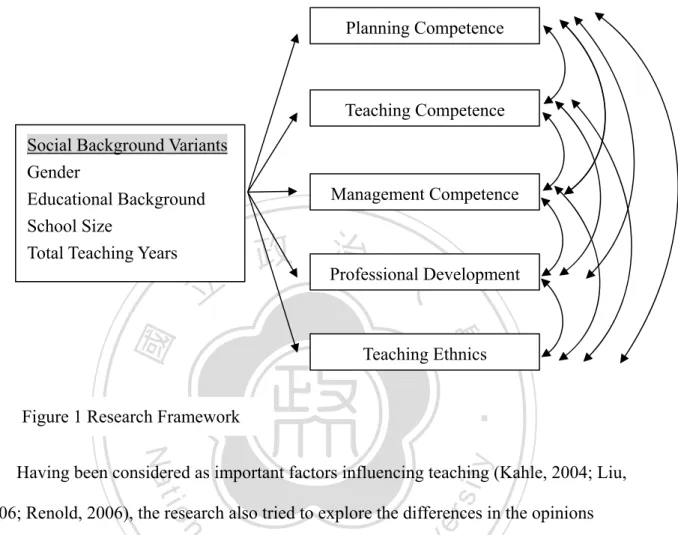
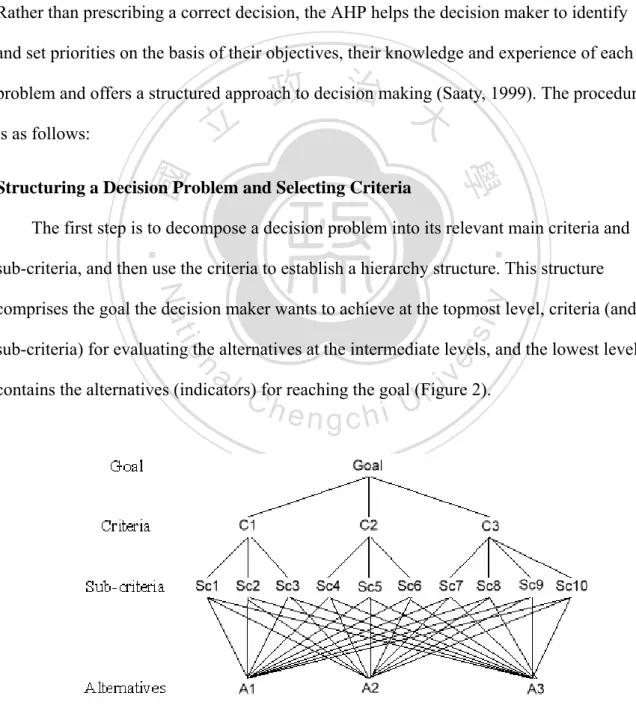
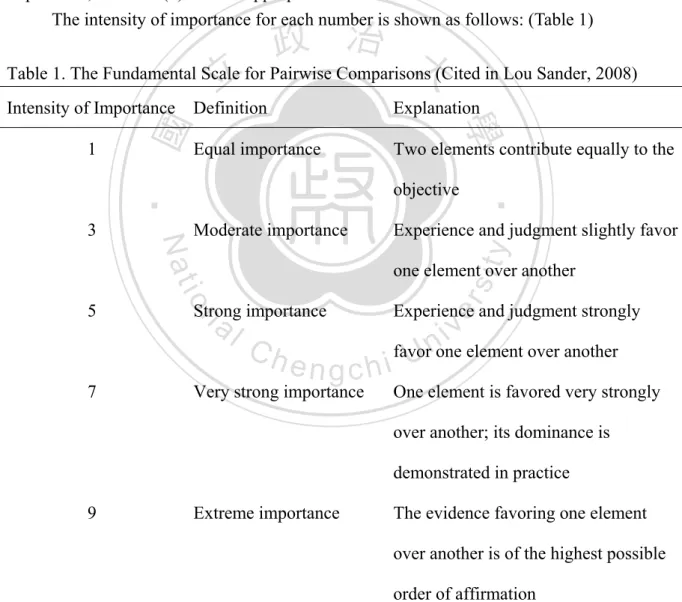
(6) v. TABLE OF CONTENTS Acknowledgements ....................................................................................................................iv Chinese Abstract ........................................................................................................................xv English Abstract .................................................................................................................... xviii CHAPTER ONE INTRODUCTION .......................................................................................1 Background and Motivation ................................................................................................1 Purposes of the Study and Research Questions...................................................................4 Definition of Terms..............................................................................................................4 Significance of the Study.....................................................................................................6. 政 治 大. CHAPTER TWO LITERATURE REVIEW ..........................................................................9. 立. Current English Instruction in Taiwan and in New Taipei City ..........................................9. ‧ 國. 學. Establishment of Criteria and Indicators for Evaluating English Teachers’ Professional Competence.......................................................................................................................12. ‧. Criticism and Conclusion ..................................................................................................33. Nat. sit. y. CHAPTER THREE METHODOLOGY...............................................................................35. n. al. er. io. Research Framework .........................................................................................................35. i n U. v. The Analytic Hierarchy Process (AHP).............................................................................37. Ch. engchi. Subjects .............................................................................................................................42 Instruments ........................................................................................................................44 Research Procedure ...........................................................................................................51 Data Analysis.....................................................................................................................53 CHAPTER FOUR RESULTS AND DISCUSSION..............................................................55 Overall Weighing Analysis of the Sub-criteria and the Indicators ....................................55 Weighing Analysis of the Sub-criteria and Indicators between Genders ..........................67 Weighing Analysis of the Sub-criteria and Indicators among Educational Backgrounds .79 Weighing Analysis of the Sub-criteria and Indicators among School Sizes......................90 Weighing Analysis of the Sub-criteria and Indicators among Teachers’ Teaching Years 101.
(7) vi. CHAPTER FIVE CONCLUSION AND SUGGESTION .................................................. 115 Conclusion....................................................................................................................... 115 Suggestion .......................................................................................................................131 Limitations of the Study ..................................................................................................134 References ...............................................................................................................................137 Appendix .................................................................................................................................149 Appendix 1 Census for the Number of Public Senior High School Teachers in New Taipei City...............................................................................................................149 Appendix 2 Example of Filling in the Questionnaire......................................................150. 政 治 大. Appendix 3 Catalogue for Experts Consulted (Listed According to the Strokes of the Last. 立. Name)...........................................................................................................151. ‧ 國. 學. Appendix 4 Catalogue for Experts Consulted (Listed According to the Strokes of the Last Name)...........................................................................................................152. ‧. Appendix 5 The Hierarchical Structure of Professional Teaching Competence Indicators. sit. y. Nat. for Senior High School English Teachers ....................................................153. n. al. er. io. Appendix 6 Questionnaire (The Second Revision) .........................................................155. i n U. v. Appendix 7 Chinese Explanation Added after Pilot Study..............................................182. Ch. engchi.
(8) vii. LIST OF TABLES Table 1 Related Studies on Indicators for Evaluating Teachers’ Professional Teaching Competence ..............................................................................................................18 Table 2 The Fundamental Scale for Pairwise Comparisons ..................................................40 Table 3 The Number of the Response Questionnaires...........................................................43 Table 4 Distribution of Social Background Variants .............................................................43 Table 5 Criteria for Evaluating English Teachers’ Professional Competence .......................44 Table 6 Sub-criterion and Indicators that Underwent Changes of Wording..........................46 Table 7 Indicators that Underwent Enlargement of Ideas .....................................................46. 政 治 大. Table 8 Indicators that Underwent Combination of Ideas .....................................................47. 立. Table 9 Indicators that Underwent Addition of Ideas............................................................47. ‧ 國. 學. Table 10 Sub-criterion and Indicators that Underwent Changes of Wording........................49 Table 11 Indicators that Underwent Separation of Ideas.......................................................49. ‧. Table 12 Indicators that Underwent Deletion of Ideas ..........................................................50. sit. y. Nat. Table 13 Indicators that Underwent Addition of Ideas..........................................................50. n. al. er. io. Table 14 Indicators that Underwent Reclassification of Ideas ..............................................50. i n U. v. Table 15 Weighing Analysis of the Sub-criteria for Planning Competence ..........................56. Ch. engchi. Table 16 Weighing Analysis of the Indicators for Course Planning......................................56 Table 17 Weighing Analysis of the Indicators for Teaching Planning...................................57 Table 18 Weighing Analysis of the Sub-criteria for Teaching Competence ..........................58 Table 19 Weighing Analysis of the Indicators for Presentation of Teaching Materials.........58 Table 20 Weighing Analysis of the Indicators for English Teaching Techniques..................60 Table 21 Weighing Analysis of the Indicators for Language Assessment Ability.................61 Table 22 Weighing Analysis of the Indicators for English Language Competence ..............61 Table 23 Weighing Analysis of the Indicators for Communicative Competence..................62 Table 24 Weighing Analysis of the Sub-criteria for Management Competence....................62 Table 25 Weighing Analysis of the Indicators for Classroom Management .........................63.
(9) viii. Table 26 Weighing Analysis of the Indicators for Resources Management ..........................64 Table 27 Weighing Analysis of the Sub-criteria for Professional Development ...................65 Table 28 Weighing Analysis of the Indicators for Conducting Teaching Research and Teaching Innovation................................................................................................65 Table 29 Weighing Analysis of the Indicators for Grasping Opportunities to Learn ............66 Table 30 Weighing Analysis of the Sub-criteria for Teaching Ethics ....................................66 Table 31 Weighing Analysis of the Indicators for Professionalism.......................................67 Table 32 Weighing Analysis of the Indicators for Working Attitude.....................................67 Table 33 Weighing Analysis of the Sub-criteria for Planning Competence on Gender ........68. 政 治 大. Table 34 Weighing Analysis of the Indicators for Course Planning on Gender ....................68. 立. Table 35 Weighing Analysis of the Indicators for Teaching Planning on Gender.................69. ‧ 國. 學. Table 36 Weighing Analysis of the Sub-criteria for Teaching Competence on Gender ........69 Table 37 Weighing Analysis of the Indicators for Presentation of Teaching Materials on. ‧. Gender.....................................................................................................................70. sit. y. Nat. Table 38 Weighing Analysis of the Indicators for English Teaching Techniques on Gender 71. n. al. er. io. Table 39 Weighing Analysis of the Indicators for Language Assessment Ability on Gender. i n U. v. .................................................................................................................................72. Ch. engchi. Table 40 Weighing Analysis of the Indicators for English Language Competence on Gender.....................................................................................................................73 Table 41 Weighing Analysis of the Indicators for Communicative Competence on Gender 73 Table 42 Weighing Analysis of the Sub-criteria for Management Competence on Gender..74 Table 43 Weighing Analysis of the Indicators for Classroom Management on Gender........75 Table 44 Weighing Analysis of the Indicators for Resources Management on Gender ........75 Table 45 Weighing Analysis of the Sub-criteria for Professional Development on Gender .76 Table 46 Weighing Analysis of the Indicators for Conducting Teaching Research and Teaching Innovation on Gender..............................................................................76.
(10) ix. Table 47 Weighing Analysis of the Indicators for Grasping Opportunities to Learn on Gender .....................................................................................................................77 Table 48 Weighing Analysis of the Sub-criteria for Teaching Ethics on Gender ..................77 Table 49 Weighing Analysis of the Indicators for Professionalism on Gender .....................78 Table 50 Weighing Analysis of the Indicators for Working Attitude on Gender...................78 Table 51 Weighing Analysis of the Sub-criteria for Planning Competence on Educational Background .............................................................................................................79 Table 52 Weighing Analysis of the Indicators for Course Planning on Educational Background .............................................................................................................80. 政 治 大. Table 53 Weighing Analysis of the Indicators for Teaching Planning on Educational. 立. Background .............................................................................................................81. ‧ 國. 學. Table 54 Weighing Analysis of the Sub-criteria for Teaching Competence on Educational Background .............................................................................................................81. ‧. Table 55 Weighing Analysis of the Indicators for Presentation of Teaching Materials on. sit. y. Nat. Educational Background .........................................................................................82. n. al. er. io. Table 56 Weighing Analysis of the Indicators for English Teaching Techniques on. i n U. v. Educational Background .........................................................................................83. Ch. engchi. Table 57 Weighing Analysis of the Indicators for Language Assessment Ability on Educational Background.........................................................................................84 Table 58 Weighing Analysis of the Indicators for English Language Competence on Educational Background.........................................................................................84 Table 59 Weighing Analysis of the Indicators for Communicative Competence on Educational Background.........................................................................................85 Table 60 Weighing Analysis of the Sub-criteria for Management Competence on Educational Background ........................................................................................85 Table 61 Weighing Analysis of the Indicators for Classroom Management on Educational Background ............................................................................................................86.
(11) x. Table 62 Weighing Analysis of the Indicators for Resources Management on Educational Background ............................................................................................................87 Table 63 Weighing Analysis of the Sub-criteria for Professional Development on Educational Background.........................................................................................87 Table 64 Weighing Analysis of the Indicators for Conducting Teaching Research and Teaching Innovation on Educational Background..................................................88 Table 65 Weighing Analysis of the Indicators for Grasping Opportunities to Learn on Educational Background.........................................................................................88 Table 66 Weighing Analysis of the Sub-criteria for Teaching Ethics on Educational. 政 治 大. Background ............................................................................................................89. 立. Table 67 Weighing Analysis of the Indicators for Professionalism on Educational. ‧ 國. 學. Background.............................................................................................................89 Table 68 Weighing Analysis of the Indicators for Working Attitude on Educational. ‧. Background.............................................................................................................90. sit. y. Nat. Table 69 Weighing Analysis of the Sub-criteria for Planning Competence on School Size .90. n. al. er. io. Table 70 Weighing Analysis of the Indicators for Course Planning on School Size.............91. i n U. v. Table 71 Weighing Analysis of the Indicators for Teaching Planning on School Size..........92. Ch. engchi. Table 72 Weighing Analysis of the Sub-criteria for Teaching Competence on School Size .92 Table 73 Weighing Analysis of the Indicators for Presentation of Teaching Materials on School Size .............................................................................................................93 Table 74 Weighing Analysis of the Indicators for English Teaching Techniques on School Size .........................................................................................................................94 Table 75 Weighing Analysis of the Indicators for Language Assessment Ability on School Size.........................................................................................................................95 Table 76 Weighing Analysis of the Indicators for English Language Competence on School Size .............................................................................................................95.
(12) xi. Table 77 Weighing Analysis of the Indicators for Communicative Competenceon School Size .........................................................................................................................96 Table 78 Weighing Analysis of the Sub-criteria for Management Competence on School Size .........................................................................................................................96 Table 79 Weighing Analysis of the Indicators for Classroom Management on School Size 97 Table 80 Weighing Analysis of the Indicators for Resources Management on School Size .98 Table 81 Weighing Analysis of the Sub-criteria for Professional Development on School Size..........................................................................................................................98 Table 82 Weighing Analysis of the Indicators for Conducting Teaching Research and. 政 治 大. Teaching Innovation on School Size.......................................................................99. 立. Table 83 Weighing Analysis of the Indicators for Grasping Opportunities to Learn on. ‧ 國. 學. School Size .............................................................................................................99 Table 84 Weighing Analysis of the Sub-criteria for Teaching Ethics on School Size .........100. ‧. Table 85 Weighing Analysis of the Indicators for Professionalism on School Size............100. sit. y. Nat. Table 86 Weighing Analysis of the Indicators for Working Attitude on School Size..........101. n. al. er. io. Table 87 Weighing Analysis of the Sub-criteria for Planning Competence on Total. i n U. v. Teaching Years ......................................................................................................101. Ch. engchi. Table 88 Weighing Analysis of the Indicators for Course Planning on Total Teaching Years ......................................................................................................................102 Table 89 Weighing Analysis of the Indicators for Teaching Planning on Total Teaching Years......................................................................................................................103 Table 90 Weighing Analysis of the Sub-criteria for Teaching Competence on Total Teaching Years......................................................................................................104 Table 91 Weighing Analysis of the Indicators for Presentation of Teaching Materials on Total Teaching Years.............................................................................................104 Table 92 Weighing Analysis of the Indicators for English Teaching Techniques on Total Teaching Years......................................................................................................106.
(13) xii. Table 93 Weighing Analysis of the Indicators for Language Assessment Ability on Total Teaching Years......................................................................................................107 Table 94 Weighing Analysis of the Indicators for English Language Competence on Total Teaching Years ......................................................................................................107 Table 95 Weighing Analysis of the Indicators for Communicative Competence on Total Teaching Years ......................................................................................................108 Table 96 Weighing Analysis of the Sub-criteria for Management Competence on Total Teaching Years ......................................................................................................108 Table 97 Weighing Analysis of the Indicators for Classroom Management on Total. 政 治 大. Teaching Years ......................................................................................................109. 立. Table 98 Weighing Analysis of the Indicators for Resources Management on Total. ‧ 國. 學. Teaching Years ...................................................................................................... 110 Table 99 Weighing Analysis of the Sub-criteria for Professional Development on Total. ‧. Teaching Years...................................................................................................... 111. sit. y. Nat. Table 100 Weighing Analysis of the Indicators for Conducting Teaching Research and. n. al. er. io. Teaching Innovation on Total Teaching Years...................................................... 111. i n U. v. Table 101 Weighing Analysis of the Indicators for Grasping Opportunities to Learn on. Ch. engchi. Total Teaching Years ........................................................................................... 112 Table 102 Weighing Analysis of the Sub-criteria for Teaching Ethics on Total Teaching Years.................................................................................................................... 112 Table 103 Weighing Analysis of the Indicators for Professionalism on Total Teaching Years.................................................................................................................... 113 Table 104 Weighing Analysis of the Indicators for Working Attitude on Total Teaching Years.................................................................................................................... 113 Table 105 Overall Results of the Weighing Analysis for Planning Competence ................ 116 Table 106 Overall Results of the Weighing Analysis for Course Planning ......................... 116 Table 107 Overall Results of the Weighing Analysis for Teaching Planning...................... 117.
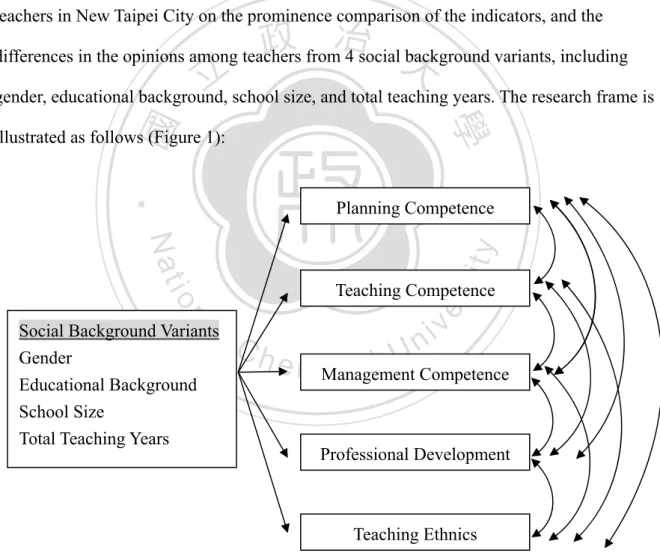
(14) xiii. Table 108 Overall Results of the Weighing Analysis for Teaching Competence ................ 118 Table 109 Overall Results of the Weighing Analysis for Presentation of Teaching Materials ............................................................................................................. 119 Table 110 Overall Results of the Weighing Analysis for English Teaching Techniques.....120 Table 111 Overall Results of the Weighing Analysis for Language Assessment Ability ....121 Table 112 Overall Results of the Weighing Analysis for English Language Competence..122 Table 113 Overall Results of the Weighing Analysis for Communicative Competence .....123 Table 114 Overall Results of the Weighing Analysis for Management Competence..........123 Table 115 Overall Results of the Weighing Analysis for Classroom Management.............125. 政 治 大. Table 116 Overall Results of the Weighing Analysis for Resources Management .............126. 立. Table 117 Overall Results of the Weighing Analysis for Professional Development .........126. ‧ 國. 學. Table 118 Overall Results of the Weighing Analysis for Conducting Teaching Research and Teaching Innovation............................................................................................127. ‧. Table 119 Overall Results of the Weighing Analysis for Grasping Opportunities to Learn 128. sit. y. Nat. Table 120 Overall Results of the Weighing Analysis for Teaching Ethics ..........................128. n. al. er. io. Table 121 Overall Results of the Weighing Analysis for Professionalism ..........................129. i n U. v. Table 122 Overall Results of the Weighing Analysis for Working Attitude........................129. Ch. engchi.
(15) xiv. LIST OF FIGURES. Figure 1 Research Framework...............................................................................................36 Figure 2 A Basic Hierarchy Model of AHP ..........................................................................38 Figure 3 The Procedures of the Experiment ..........................................................................52. 立. 政 治 大. ‧. ‧ 國. 學. n. er. io. sit. y. Nat. al. Ch. engchi. i n U. v.
(16) xv. 國立政治大學英國語文學系英語教學碩士在職專班 碩士論文提要. 論文名稱:新北市高中英文教師教學專業能力指標建構之研究. 指導教授:許炳煌 博士. 研究生:馮文秀. 論文提要內容:. 立. 政 治 大. 有鑑於近年來教育當局對於提升教師教育專業能力的重視以及陸續於一般中等學校. ‧ 國. 學. 計劃實施教師專業評鑑的努力,本研究旨在建構高中英語教師之教學專業能力指標,瞭 解 279 位現職於 22 所公立高中之新北市高中英文教師對於各指標重要性看法之差異,並. ‧. 針對性別、學歷、學校規模、教學年資等社會背景的教師分析其看法之不同。依據文獻. Nat. sit. y. 探討與專家效度實施之結果,共建立 5 大能力層面、13 個向度、以及 47 個指標。問卷. n. al. er. io. 分析採用階層程序分析法(AHP),得出各向度之權重值,排序結果如下:. i n U. v. 1. 規劃能力:教學規劃比課程規劃重要;這兩項中分別又以規劃適當教學活動及規 劃教學程序為重要指標。. Ch. engchi. 2. 教學能力:溝通能力與英文能力尤其重要;這兩項中分別又以良好口頭溝通技巧 及自我表達能力為重要指標。 3. 管理能力:班級管理比資源管理重要;而班級管理中又以良好師生互動為重要指 標。 4.. 專業成長:掌握學習機會比進行教學研究與革新重要;而掌握學習機會中又以. 反思個人教學與追求專業成長為重要指標。 5.. 教學道德:工作態度比專業精神重要;而工作態度中又以與學校同事、學生家. 長、與附近社區建立良好工作關係為重要指標。 在各向度的指標中,與教學有關係者較受青睞。各背景的教師與所有教師的看法傾.
(17) xvi. 向於一致,只顯示些微的差別。 依據研究結果,本研究亦針對教育當局及高中英文教師提出建議,對於未來研究方 向也提出一些看法,以期對英文教學有些許貢獻。. 立. 政 治 大. ‧. ‧ 國. 學. n. er. io. sit. y. Nat. al. Ch. engchi. i n U. v. 關鑑字:高中英文教師,階層程序分析法(AHP),英文教學,高中英文教師教學專業能 力指標.
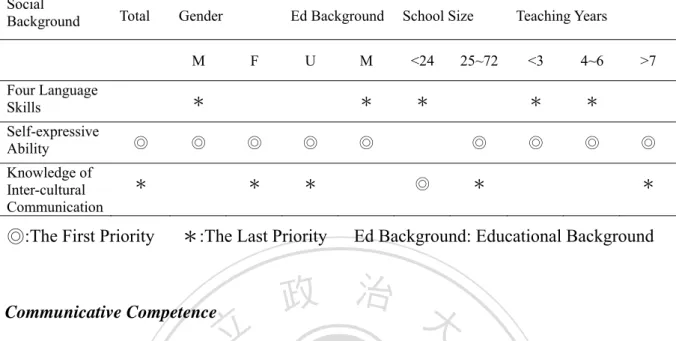
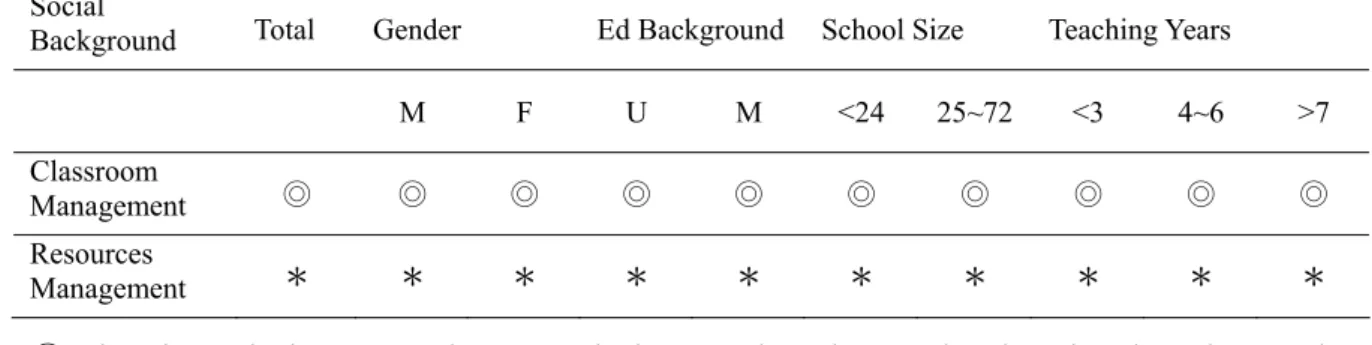
(18) xvii. Abstract Academic authorities have recently laid their prominence on upgrading teachers’ professional competence with the reform efforts of implementing evaluating professional competence on teachers in middle schools. The current study aimed to explore the indicators for evaluating senior high school English teachers’ professional competence, and at the same time, to provide English teachers access to improve and increase teaching efficiency by showing the rankings of indicators under each sub-criterion investigated from 279 English teachers with 4 social background variants in 22 public senior high schools in New Taipei City. The social background variants included gender, educational backgrounds, school size,. 政 治 大. and total teaching years. In accordance with literature review and expert validity, 5 criteria,. 立. 13 sub-criteria, and 47 indicators were established as evaluating standards. The Analytic. ‧ 國. 學. Hierarchy Process (AHP) was employed and the results indicated that: 1. Planning competence: Teaching planning was more important than course planning.. ‧. Planning appropriate teaching activities and developing teaching procedures were considered. y. sit. Nat. to be the most important in the two sub-criteria respectively.. n. al. er. io. 2. Teaching competence: Communicative competence and English language competence. i n U. v. were the first two priorities, but presentation of teaching materials the last. Good oral. Ch. engchi. communicative skills and self-expressive ability were labeled as the most essential indicators respectively. 3. Management competence: Classroom management was rather prominent than resources management. Good teacher-student interaction was especially viewed as important in classroom management. 4. Professional development: Grasping opportunities to learn was taken more significant than conducting teaching research and teaching innovation. In grasping opportunities to learn, reflecting on one’s teaching and seeking professional development were seen as more important than others. 5. Teaching ethics: Working attitude was of higher significance than professionalism,.
(19) xviii. especially establishing good working relationship with school staff, students’ parents, and surrounding communities. In conclusion, indicators which were more helpful to teaching were more favored. Despite their different social backgrounds, teachers tended to show similar opinions on the development of their professional competence. According to the results of the study, some suggestions were provided for professional development of English teachers, teacher training, gender differences of English teachers, teaching experiences, and future studies.. 立. 政 治 大. ‧. ‧ 國. 學. n. er. io. sit. y. Nat. al. Ch. engchi. i n U. v. Keywords: senior high school English teachers, Analytic Hierarchy Process (AHP), English language teaching, professional teaching competence indicators for senior high school English teachers.
(20) 1. CHAPTER ONE INTRODUCTION As being recognized by educators over many years, good English proficiency always contributes to success, not only in exploring the world of knowledge, but also in surviving in this competitive world. Knowing English and using it appropriately will help one get access to knowledge, communicate with people and thus build links with different cultures, push one’s career forward, and enjoy various art forms. To benefit from the advantages through good English proficiency, successful English learning is, thus, very important. In fact, it relies on effective English teaching, which usually stems from instruction of. 政 治 大. professional English teachers. So to speak, English teachers, undoubtedly, need to improve. 立. their professional teaching competence for the purpose of promoting student’s learning. ‧ 國. 學. effect. If there is a sound set of indicators which can serve as a tool of inspecting and improving teachers’ professional competence, it may offer great help in teaching, and. ‧. students’ successful learning effects can be expected.. sit. y. Nat. This chapter was divided into 5 sections. Section one was on the background and. n. al. er. io. motivation of conducting the study, followed by the purposes of the study, and the research. i n U. v. questions. Section three presented the definitions of key terms used in the present study.. Ch. engchi. And finally, the significance of the study was given.. Background and Motivation According to British Council (2010), about 1,500 million people in the world speak English, with about 375 million as native language and as second language, and the rest as a foreign language. Another 1,000 million are learning it. The reasons of learning are many. First, English provides the most prevalent access of knowledge. English is typically the language of books, science, the press, news report, programs, social media networks, and websites. Moreover, English provides better communication of information. 75% of the world's letters and postcards are written in English. In addition, English is the most.
(21) 2. frequently used language in international conferences, associations, organizations, competitions and academy. Third, knowing English helps gain professional knowledge, use computer more effectively, express oneself without difficulty, and learn new skills in jobs. All of these offer people better opportunities in jobs. Of course, life can be expanded with better language ability. Through the media of English, people are capable of enjoying more art forms of varied cultures. In sum, if one can speak English, he is able to get access to knowledge, communicate with people, obtain advanced training or higher education, higher employment opportunities, and even higher living quality. Since learning English has become important in this increasingly interconnected and. 政 治 大. globalized world, the ability of teaching English efficiently appears to be more important.. 立. In Taiwan, English plays a vital role from fostering socioeconomic development,. ‧ 國. 學. facilitating scientific and technological advances, to enhancing national competitiveness. Consequently, when considering Taiwan’s English education, English teachers’ knowledge. ‧. of the target language and teaching competence should be viewed as an essential factor for. sit. y. Nat. successful English learning. Research has revealed that many teachers are reluctantly to. n. al. er. io. learn and to implement other adequate methodologies except relying on their own beliefs. i n U. v. processing from their own personal experiences and prior knowledge (Chuang, Chuang, &. Ch. engchi. Fu, 2010; Duarte, 1998; Freeman, 1993). To teach English more efficiently, English teachers are expected to change, being more professional and teaching in more creative ways. The necessity for English teachers to strengthen their professional competence can also be seen from the competitive reality in nowadays teaching environment. According to Teacher Education Act (MOE, 2010) in Taiwan, those who hold the following three qualifications can be certified as teachers in public schools: (1) holding educational qualifications of a university degree or higher, (2) having completed the ordinary curriculum, specialized courses, and education concentration courses, and practicum, and (3) having graduated from university and obtained a certificate of pre-service teacher education..
(22) 3. For the first qualification, according to Department of Statistics (2009), 57% out of the 35,580 senior high school teachers hold an English bachelor’s degree, and the rest an English master’s degree. The lower and lower birth rate in Taiwan’s society brings another source of competitive pressure. In a society that fewer and fewer couples are willing to give birth to a child, to find a vacancy in a public school becomes more difficult. As a result, English teachers need to be more competent for the purpose of getting a teaching job. Clearly, in order to respond to the urgency of cultivating outstanding English teachers and to the promotion of professional competence, English teachers are required to be responsible for their own professional development, and a sound system of indicators for. 政 治 大. evaluating the development regularly becomes indispensable.. 立. Three reasons contributed to the motivation of conducting the present study. First, the. ‧ 國. 學. studies on English teaching competence in Taiwan mainly focus primarily on elementary (Chang, 1996; Cheng, 1996; Qian, 1998; Shi, 1998; Wu, 1999) and junior high schools. ‧. (Chang, 2002; Sheu, 2004; Shieh, 1997). As to the stage of preparing learners for advanced. y. sit. n. al. er. io. senior high schools.. Nat. study and language use in the near future, few research are found on English teachers in. i n U. v. Second, New Taipei City is the biggest administrative district in Taiwan. Most. Ch. engchi. inhabitants come from different parts of Taiwan to seek better career development. They hold different socio-cultural backgrounds. This creates the complexity of the teachers and students sources, which may not be fully accounted for by the research done on other cities in Taiwan. Last, while the previous research focused mainly on establishing the indicators for evaluating teachers’ professional competence, few of them investigated teachers’ beliefs about the indicators. The present research attempted to combine both, and furthermore, identified the rankings of the indicators based on New Taipei City English teachers’ beliefs with the employment of the Analytic Hierarchy Process (AHP)..
(23) 4. Purposes of the Study and Research Questions This research aimed to ascertain senior high school English teachers’ beliefs about teaching competence in New Taipei City. Besides, the researcher was interested in the relative prominence of indicators to English teachers. Therefore, an Analytic Hierarchy Process (AHP) was carried out to find out the ranking of the indicators to reveal the opinions of the senior high school English teachers in New Taipei City. This study attempted to answer the following questions: 1. To senior high school English teachers in New Taipei City, what was the importance of the indicators for evaluating their professional teaching competence?. 政 治 大. 2. To senior high school English teachers in New Taipei City, what was the relative. 立. prominence among the professional teaching competence indicators?. ‧ 國. 學. 3. To senior high school English teachers with different social backgrounds in New Taipei City, what were the differences among their thinking about the relative prominence. ‧. Nat. y. among the professional teaching competence indicators?. io. sit. Definition of Terms. n. al. er. Some terms used in this study needed to be defined for better understanding of the study.. Ch. Senior High School English Teachers. engchi. i n U. v. This indicates the certified English teachers, who have been recognized by MOE in Taiwan to be English teachers in public senior high schools. In the present study, senior high school English teachers meant the qualified English teachers teaching in public senior high schools in New Taipei City. Professional Teaching Competence Teaching is a profession which involves demanding and challenging tasks. Meeting the demands takes not only tremendous will, capacity, preparation but also continuous learning and enthusiasm. According to Benveniste (1987), “profession” includes (1).
(24) 5. techniques based on scientific knowledge, (2) on-going in-service professional development and training, (3) control and choice of professional members, (4) working ethics and regulations, (5) enthusiasm, and (6) a professional organization. National As marked by Freeman (1993), teaching is a professional rather than a discipline. Therefore, teacher’s professional teaching competence is seen as important in the area of education. According to Shulman (1986, 1987), professional teaching competence which contributes to effective teaching includes teaching knowledge (subject matter knowledge, and how teachers conceptualize the teaching curricular and content) (Shulman, 1987), teaching skills, and dispositions that underlie the capacity to teach effectively. As was. 政 治 大. contended by Bradley (1995), a teacher’s professional teaching competence mainly lies in. 立. his capacity to motivate and guide students during the process of learning.. ‧ 國. 學. English Teachers’ Professional Teaching Competence. ‧. Shulman (1986, 1987) and Bradley (1995) defined that English teachers’ professional teaching competence in this study meant the overall capacity necessary to achieve effective. y. Nat. io. sit. teaching, no matter in developing English teaching knowledge or in successfully carrying. n. al. er. out teaching tasks or in communicating ideas with students by means of English, and the. i n U. v. skills to motivate and to guide students effectively during the teaching and learning process.. Ch. engchi. English Teachers’ Professional Teaching Competence Indicators According to Johnstone (1981), indicators are a type of statistics for measurement, which reflects the influential factors of an event which the researcher takes interest in. Cuttance (1990) took indicators as instruction, used to understand and measure the quality and quantity of an event. From the definitions above, in this study, “indicators” were not only the competence that English teachers were expected to have but the standards used for measuring senior high school English teachers’ professional competence. In the present study, the indicators system was classified into three levels, criteria, sub-criteria, and indicators, so as to give an account of the professional competence senior high school.
(25) 6. teachers were expected to have in New Taipei City. Among the three levels, criteria referred to the main category of teaching competence, sub-criteria the main content of each criterion, and indicators the knowledge, techniques, and attitude under each sub-criterion. In this study, 47 indicators were found out, which were further categorized into 13 sub-criteria, and then 5 criteria, to be used as standards to evaluate English teachers’ professional teaching competence. Analytic Hierarchy Process (AHP) According to Satty (1977), by means of the comprehensive and rational hierarchical framework constructed by the complex factors in relation to the overall goal, a decision. 政 治 大. maker is able to evaluate the relative prominence of the multiple factors, the interaction. 立. among the factors, and thus to make an appropriate decision.. ‧ 國. 學. Based on Yang’s (2010) model, which applied AHP as a tool in investigating. ‧. Elementary English teachers’ beliefs in Taipei City, a similar model was established in the. sit. io. er. Nat. senior high school English teachers in New Taipei City.. y. present study. The goal was to find out the professional teaching competence indicators for. n. a lSignificance of the Study i v nresults might offer at least 4 C himportant in that the This topic was identified as being U engchi. functions to both English teachers and academic authorities:. Firstly, the results could be seen as one of the guidelines for senior high school English teachers to check and improve their teaching proficiency. To respond to the need of opening the door of knowledge, communication with other countries, culture exchanges, information collection, social and science advancement, and all the benefits English language brings, English teachers are due to develop sufficient English competence and take on the responsibility of improving students’ English ability. Therefore, a checking system for English teachers themselves to evaluate and promote their teaching proficiency seems necessary..
(26) 7. Furthermore, the indicators could serve as an evaluating system for the educational administrators to examine senior high school English teachers’ teaching competence. As far as teaching is considered, a profession and all the teaching members are expected to possess the proficiency required to do the job well, and an evaluating system for the educational administrators to maintain teachers’ teaching quality is indispensable. Third, from the opinions reflected by English teachers, especially through AHP, educational administrators can know the fuci to help teachers to enrich their professional competence. To effectively increase teaching efficiency by means of teacher training, workshops, or seminars, the opinions expressed by the English teachers in this study may. 政 治 大. provide constructive suggestion for the authorities concerned in holding related activities. 立. for teachers.. ‧ 國. 學. Last, this checking system provided English teachers chances to see the defects in their teaching and access to making improvement on their professional knowledge, promoting. ‧. students’ English learning success.. n. er. io. sit. y. Nat. al. Ch. engchi. i n U. v.
(27) 8. 立. 政 治 大. ‧. ‧ 國. 學. n. er. io. sit. y. Nat. al. Ch. engchi. i n U. v.
(28) 9. CHAPTER TWO LITERATURE REVIEW As an important component of English education, professional competence of English teachers has received more attention and support in recent years. To ensure the successful implementation of English education, it has been imperative to strengthen the professional competence of English teachers, and to establish a set of indicators to evaluate the professional competence. In this chapter, three major parts were discussed. The first section was on current English instruction in Taiwan and in New Taipei City, in which some policies made by the. 政 治 大. government of Taiwan and New Taipei City were reviewed. Then the second was on the. 立. procedures of the establishing the indicators for evaluating English teachers’ professional. ‧ 國. 學. competence. After the exploration of evaluating indicators for general teachers and the review of competence required on English teachers from related studies, a set of evaluating. ‧. indicators for English teachers was preliminarily established. On the basis of this system,. sit. y. Nat. the indicators were reassured by experts in English teaching area, and the questionnaire was. n. al. i n U. conclusion of the benefits the present study would provide.. Ch. engchi. er. io. thus ascertained after a pilot study. The last part was criticism on the related studies and. v. Current English Instruction in Taiwan and in New Taipei City The English language has been the common language of the world for decades and the interchange in culture, economy, and politics among countries has demonstrated the significance of English. Because of this, when the government of Taiwan started to promote the role of Taiwan as Asia-Pacific Operations Center, Nine-Year Integrated Curriculum was announced by the Minister of Education (MOE) in 2001 for the purpose of upgrading the English education in Taiwan. The implementation of English education on both the fifth- and sixth- graders in elementary schools made a fundamental change on Taiwan’s English education. After Taiwan joined the World Trade Organization (WTO) in.
(29) 10. 2002, Challenge 2008--National Development Plan—E-generation Talent Development Program (Executive Yuan, 2002) was carried out for raising e-generation’s English ability as a primary goal. In 2009, Research, Development and Evaluation Commission of the Executive Yuan was appointed to deliberate English Promotion Project, so as to improve Taiwan people’s English ability (Executive Yuan, 2009). English education in Taiwan is basically divided into three stages now. The nine years from elementary to junior high school marks the first stage under the guidance of Nine-Year Integrated Curriculum (MOE, 2003). Following that, the three years in senior high schools leads students into the second stage of English learning. At this stage, students. 政 治 大. have learned English for almost seven to nine years, aiming at equipping students with. 立. sufficient English proficiency to help them enter universities. The third stage is in. ‧ 國. 學. universities, in which students are instructed to learn English for professional purposes and to make use of the language to pursue professional knowledge in certain areas.. ‧. With regard to elementary school English education, the implementation carried our. sit. y. Nat. in New Taipei City was almost the same with other places in Taiwan except some. n. al. er. io. differences. From 1999, New Taipei City had decided to start its English education from. i n U. v. the third-graders in public elementary schools. The practice was then extended to the. Ch. engchi. fourth-graders in 2000. In response to Nine-Year Integrated Curriculum (MOE, 2003), both fifth- and sixth-graders participated in the practice, with two English hours in each week. A year later, the second-graders were also brought into the practice, though the practice was cancelled in 2003. In August 2006, English education in New Taipei City conducted its own English Medium-range Plan (New Taipei City, 2006) and such aspects like a comparison of English education with other Asian countries, curriculum development, moving English education forward to the first- and second-year elementary school students, teaching training, supporting measures, and evaluation of learning performance, were emphasized. After that, in 2008, English Revitalization Program (New Taipei City, 2008) was.
(30) 11. piloted in certain elementary schools, and was implemented in September, 2010, aiming at increasing English learning hours and activating teacher education, by which the New Taipei City government expected to strengthen students’ English proficiency, to enhance students’ interest and shorten learning gap between urban and rural areas. The High School Revision Provisional Curriculum Guidelines (95 Guidelines) (MOE, 2004) and the Newly Revised High School Curriculum Guidelines (99 Guidelines) (MOE, 2008) maintained the continuity of Nine-Year Integrated Curriculum (MOE, 2003) and prepared high school students for the Joint College Entrance Examination. In improving English education, the Guidelines aimed to (1) help students put the four skills into practice. 政 治 大. in their daily communication, (2) cultivate logic thinking through creative and critical. 立. thinking trainings, (3) instruct students efficient learning strategies in order to develop. ‧ 國. 學. autonomous learning, (4) elevate students’ learning motivation and interest to autonomously explore the world knowledge, and (5) promote understanding and respect of. ‧. diverse cultures. Consequently, the 99 Guidelines (MOE, 2008) differentiated curriculum. sit. y. Nat. into two tracks, basic (core curriculum) and advanced levels (core and enrichment. n. al. er. io. curriculum), for reducing the twin-peak distribution of students’ English scores on the. i n U. v. senior high school entrance examination; and at the same time, provided students chances. Ch. engchi. to adaptive learning under clear accounting of teaching objectives. In the learning process, to respect students’ multi-intelligence, they were guided to comprehend, apply, analyze, conclude, and evaluate the points referred to in learning materials. According to 99 Guidelines (MOE, 2008), the teaching was rather learner-centered, multiple-intelligence concerned, and mass-media oriented. For the purpose of taking on the new challenge effectively, teachers were encouraged to develop professionalism, autonomy and flexibility in course planning. Therefore, teachers were urged to be engaged in professional development of subject content knowledge, material design and choice, teaching strategies, and evaluation skills through participation of teaching training activities and teaching research..
(31) 12. To sum up, from the efforts made by New Taipei City on English education, it was true to say that English education in New Taipei City was carried out with careful planning and long-term consideration. First, it was realized with different methods in response to different educational purposes in every period of education, no matter in elementary, junior, or senior high schools. Teaching foci were taken care of with the implementation of different educational policies, from the Nine-Year Integrated Curriculum (MOE, 2003) to the 95 Guidelines (MOE, 2004) and the 99 Guidelines (MOE, 2008). Second, the courses were designed consistently and coherently for the preparation of the next period. The teaching hour was also arranged in an orderly way and step by step.. 政 治 大. Then, the teaching approach was rather student-centered. The course content was. 立. more related to students’ life; the teaching methods were more creative than traditional. ‧ 國. 學. ones; and not only learning attitude but also learning strategies and motivation were at the same time stressed.. ‧. Finally, both the students and the teachers needed to be aware of the changes of. sit. y. Nat. English education nowadays. While the students were engaged in learning English in new. n. al. er. io. ways, the teachers were encouraged to adjust their ways of teaching English through varied teaching training and research.. Ch. engchi. i n U. v. Establishment of Criteria and Indicators for Evaluating English Teachers’ Professional Competence Based on the definition given to English teachers’ professional competence in chapter one, in this section, the researcher planned to find a set of competence criteria and indicators for evaluating English teachers’ professional competence out of three ways. First, since English teachers were also one type of teachers, the researcher was able to set some criteria and indicators for evaluating English teachers’ competence from the studies on competence recognized as important for evaluating general teachers’ professional competence. Then, some competence criteria and indicators regarded as peculiar to.
(32) 13. language teachers needed to be found out for English teachers from related studies to highlight the characteristics they were required to have. Third, through literature review, the realization of expert validity, pilot study, and re-categorization, a set of criteria and indicators appropriate for evaluating English teachers could be established. Criteria and Indicators for Evaluating Teachers’ Professional Competence Effective professional development for teachers plays a critical and long-term role in promoting students’ learning success. This belief leads us to explore the criteria and indicators for evaluating a teacher’s professional competence which may help achieve the goal of successful learning and accelerate our nation’s future development. Based on the. 政 治 大. subjects of the related studies, these studies could be divided into three groups: indicators. 立. teachers. They would be discussed below.. ‧. For Elementary School Teachers. 學. ‧ 國. for evaluating elementary school, junior high school, senior high school, and general. sit. y. Nat. In 1976, Taiwan Provincial Institute for Elementary Teachers’ In-service Education. io. er. (1976) published a report on elementary school teachers’ basic teaching competence, in which a set of criteria and indicators for elementary school teachers was recorded,. al. n. v i n C hcompetence, counseling including subject knowledge, teaching e n g c h i U ability, and operational capacity of school administration.. To effectively improve the teaching evaluation in Taiwan, Chang (1996), based on the ideas from Harris and Hill (1982), developed the criteria for evaluating elementary teachers’ professional competence through literature review and the use of questionnaires on elementary teachers and administrators. In the study, he proposed that teachers should be encouraged to report on their positive teaching experiences. Besides, he noticed that teachers’ moral was also important. Therefore, the indicators set for elementary teachers included subject knowledge and teaching techniques, professional teaching methods, knowledge and techniques of classroom management, doing teaching research and sharing.
(33) 14. good practices, participation of teacher training activities, student counseling ability, leading a moral life, frequency of leave and sick leave, and absenteeism, and maintaining harmonious working relationship with colleagues and parents. Zhu (1998), by means of literature review and questionnaire investigation on Taiwan’s public elementary teachers and administers, set seven criteria for evaluating elementary teachers’ professional competence. The criteria comprised teaching planning and preparation, taking the initiative to implement strategies in teaching, professional development in teaching, communication and expressive skills, teacher cooperation and collaboration, strategies of activating teacher-student interaction, classroom management,. 政 治 大. and the last, providing administrative support and coordination.. 立. Utilizing fuzzy Delphi, fuzzy AHP, fuzzy comprehensive evaluation method of. ‧ 國. 學. application and literature review, Wu (1999) developed a set of indicators for evaluating Taiwan’s elementary school teachers. He included the abilities of applying different. ‧. teaching resources to teaching and participation of school affairs aside from the indicators. sit. y. Nat. mentioned by other scholars. The indicators he set for elementary school teachers were. n. al. er. io. professional knowledge, professional preparation, teaching strategies and implementation. i n U. v. capacity, learning evaluation, ability to use teaching resources, classroom management, a. Ch. engchi. sense of responsibility, interpersonal communication skills, and school affair participation and service performance. For Junior High School Teachers With the application of Delphi, Shieh (1997) set some criteria for evaluating Taiwan’s junior high school teachers’ professional competence through the use of questionnaires on junior high school teachers. The criteria he set focused on teachers’ attitude toward teaching and students and expected that the criteria could be a reference for course planning for teacher training and in-service training. The main criteria were teaching techniques, teaching attitude and standards, teaching and learning environment, and relationships with.
(34) 15. colleagues and students. Thirty-five indicators were thus developed from the four criteria. Some junior high schools in Taiwan also tried to find suitable indicators to evaluate teachers in their schools through periodical seminars. Kaohsiung Rui-feng Junior High School was a good example. In 2009, they built some indicators for “Teacher Professional Development Evaluation.” The major criteria were knowledge of education, knowledge of teaching and counseling, classroom management, interpersonal relationships, participation of school affairs, participation of teacher training activities and seminars, and crisis management ability. Sheu (2004) investigated the opinions of southern Taiwan junior high school teachers’. 政 治 大. on teachers’ professional competence evaluation and established a model. His model put. 立. special emphasis on teachers’ ability of crisis management and interaction with. ‧ 國. 學. communities around the school. More importantly, he reminded teachers of the potential resources, which could be found easily in surrounding communities. The abilities he. ‧. suggested for teachers to develop included professional knowledge, teaching methods,. sit. y. Nat. assessment, doing research and participating in seminars, moral standards, classroom. n. al. er. io. management, student counseling ability, crisis management skills, administrative support. i n U. v. and coordination, and good interaction with surrounding communities.. Ch. For Senior High School Teachers. engchi. Pitifully, for Taiwan’s senior high school teachers, one research was available on the criteria or indicators for evaluating teachers’ professional competence. Zhuo (2009) summarized the research of Danielson (2007), Texas Teacher Appraisal System (TTAS) (1996), and Massachusetts’ Principles of Effective Teaching (2005), set a preliminary system of indicators for evaluating senior high school teachers, and then after the realization of fuzzy Delphi for three times, gained the four criteria and 20 sub-criteria: teaching planning and preparation (effective teaching planning, effective learning evaluation, teaching results evaluation, representation of subject knowledge, learning results evaluation) , classroom management (establishing suitable learning environment,.
(35) 16. effective management of students’ conduct, effective management of teaching hours, physical arrangement, attention to justice and individual differences) , effective teaching (clear account of learning objectives, appropriate teaching techniques, creativity and reflection on teaching strategies, offering chances of success and participation, spontaneous evaluation and rewards), and professional responsibilities (professional development, participation of professional communities, promoting and evaluating students’ development, interaction with parents, keeping teaching files), in terms of prominence. From the sub-criteria, 57 indicators were developed. For General Teachers. 政 治 大. In fact, teacher competence evaluation has long been recognized as important, and has. 立. been widely implemented. For example, National Board Certified Teachers (NBCTs). ‧ 國. 學. (1987), a department under American government developed a set of criteria to help. ‧. American teachers to evaluate themselves. In their model, we found that respect to individuals and to individual differences was crucial. Therefore, they not only paid. y. Nat. io. sit. attention to teachers’ professional development but to students’ learning process. The. n. al. er. teachers were expected to monitor students’ performance and emotional conditions. Their. i n U. v. teaching aimed to make students learn happily and completely understand what was taught under diverse teaching activities.. Ch. engchi. According to Shulman (1987), the knowledge for teaching comprises the following criteria: subject matter knowledge, general pedagogical knowledge, curricular knowledge, pedagogical content knowledge, knowledge of learners and their characteristics, knowledge of Educational contexts, and knowledge of educational purposes. Entrusted by MOE, Ou et al. (1992) set some criteria for evaluating general teachers’ competence with the implementation of literature review and questionnaires on Taiwan’s general teachers, parents, and school administrators, in which the importance of promoting teaching quality and continuity of education development were manifested. His model.
(36) 17. included the indicators like teaching knowledge and skills, knowledge and skills of classroom management, student counseling ability, doing teaching research and sharing good practices, participation of teacher training activities, participation of teaching organizations, teaching enthusiasm and professionalism of teaching, and the last, maintaining good working relationship with school administrators, teachers, and students’ parents. Under MOE’s request, Pan et al. (2004) established a set of indicators for evaluating elementary and junior high school English teachers’ teaching competence. The job involved a large scale of investigation, from literature review, panel discussions, to questionnaires. 政 治 大. and on-site investigation on both experts, elementary, and junior high school teachers. The. 立. indicators set in this study consisted of five criteria (planning, teaching, management,. ‧ 國. 學. evaluation, and professional development), twelve sub-criteria (course planning, teaching planning, presentation of teaching materials, teaching techniques, learning evaluation,. ‧. classroom management, resource management, teaching evaluation, course evaluation,. y. sit. n. al. er. io. indicators were built.. Nat. self-growth, professional growth, and professional attitude), under which thirty-five. i n U. v. Clearly, successful language learning stems from teachers’ efforts in teaching.. Ch. engchi. Taiwan’s government has long been dedicated to promoting teachers’ professional growth. In 2006, Ministry of Education proposed a suggestive version for teachers to check their teaching competence. Four major criteria listed in this system were course design and teaching, classroom management and counseling, conducting research and participating in teacher training activities, and professionalism and attitude. Under the criteria, eighteen sub-criteria and 62 indicators were set up. California Department of Education (2009) designed “California Standards for the Teaching Profession (CSTP)” to evaluate her teachers. The whole model could be described as learner-centered. It anticipated the learning success of ALL students; consequently, the teachers need to develop their curriculum with the consideration of.
(37) 18. students’ prior knowledge and life experience, to create enjoyable learning environment, and to adjust their curriculum according to students’ needs. In sum, the findings of the related studies above are summarized in the following table. Table 1 Related Studies on Indicators for Evaluating Teachers’ Professional Teaching Competence Researcher. Level. Elementary. Taiwan Provincial. School. Institute for Elementary. Teachers. Teachers’ In-service. English. Teachers. Teachers 4 Criteria and 12 Indicators. 政 治 大 10 Indicators. Zhu (1998). ◎. 8 Indicators. Wu (1999). ◎. 9 Indicators ◎. High. Kaohsiung Rui-feng. School. Junior High School. Teachers. (2009). 4 Criteria and 26 Indicators. ◎. 7 Indicators. sit. io. al. n. Sheu (2004). ◎. y. Shieh (1997). Nat. Junior. 4 Criteria, 8 Sub-criteria, and 29 Indicators. ‧. Yang (2010). 學. ◎. ‧ 國. Chang (1996). General. ◎. 立. Education (1976). Senior. Criteria, Sub-criteria, or Indicators. Subjects. er. School. v i n C ◎h U 20 Sub-criteria, and 57 Indicators e n g c h i4 Criteria, ◎. 10 Criteria and 40 Indicators. ◎. 5 Criteria and 21 Indicators. Shulman (1987). ◎. 7 Indicators. Ou et al. (1992). ◎. 8 Indicators. Pan et al. (2004). ◎. 5 Criteria, 12 Sub-criteria, and 35 Indicators. MOE (2006). ◎. 4 Criteria, 18 Sub-criteria, and 62 Indicators. California Department. ◎. 6 Criteria and 37 Indicators. Zhuo (2009). High School Teachers General. National Board Certified. Teachers. Teachers (1987). of Education (2009).
(38) 19. As discussed above, among the criteria or indicators referred to by researchers, some competences are highly emphasized when discussing general teachers’ professional competence. While subject knowledge can contribute greatly to teacher development, constant professional training constitutes a cornerstone of teachers' professional development. It can be fulfilled by professional exchanges, instructional experimentations, and lesson observations (Sparks & Loucks-Horsley, l990). The workplace also plays an important role in promoting teachers’ teaching competence (Feiman-Nemser, 2001; Hargreaves, 1992; Little, 1990). It reflects the truth that teachers should not only be dedicated to their teaching but also need to cooperate with the colleagues (Hu, 2005).. 政 治 大. Furthermore, some individuals suggested that reflective capacity, which means the ability. 立. to engage in reflective thinking and teaching, helps teachers to grow professionally when. ‧ 國. 學. they are faced with complex changes, uncertainty, and perplexity (Dewey, 1933; Schon, 1983) in teaching profession.. ‧. However, English education differentiates from other education in school greatly. It is. sit. y. Nat. teaching a language, which can be applied to help live in this ever-changing world, so it. n. al. er. io. involves not only the competence a teacher should have but the competence a language. i n U. v. teacher expected to possess to guide students to use English appropriately. Therefore, the. Ch. engchi. evaluating indicators for general teachers were not detailed enough to describe the competence of English teachers. Besides these indicators, more indicators set for language teachers needed to be discovered. Criteria and Indicators for Evaluating English Teachers’ Professional Competence English teachers’ professional competence can be generalized as the competence leading to effective English teaching and learning, which calls for teachers to develop the required knowledge, including the subject knowledge, pedagogical knowledge, methods to motivate and guide students, sensitivity to adjust teaching in accordance with individual differences, and understanding the expectations of the social, economic, and cultural.
(39) 20. context. Since English has become the most widely learned foreign language in the world, effective teaching is considered the first priority for successful English learning. Therefore, as English teachers, how to extend one’s professional competence in response to the demands entrusted by the society and students is essential. For language teachers, apart from the common teaching competences, foreign language proficiency is viewed as crucial (Buchmann, 1984; Lafayette, 1993; Schulz, 2000; Shi, 1998). In other words, good language proficiency encompasses good command of language teaching theories and approaches, language curriculum and learning materials, instructional techniques, language assessment, language learning strategies, individual. 政 治 大. differences in language learning process, and effects of language education (Arnold, 1999;. 立. Brown, 2000; Richards & Rodgers, 2001). That means language teachers, besides being. ‧ 國. 學. equipped with the knowledge of language teaching, are also required to understand the difficulties students encounter when learning the language through the use of appropriate. ‧. assessments, teaching of learning strategies, and even the attention to individual. sit. y. Nat. differences.. n. al. er. io. Furthermore, the knowledge of language and language use is highly emphasized in. i n U. v. today’s language teaching (Ellis, 2003; Hedgcock, 2002; Macaro, 2003) since language is. Ch. engchi. regarded as an important means for communication (Brumfit & Johnson, 1979; Canale & Swain, 1980; Halliday 1970; Hymes, 1972; Savignon, 1983). Therefore, language teachers are supposed to have good mastery of communicative competence no matter for guiding students or for self-expression. Theoretically, communicative competence generally consists of linguistic competence, sociolinguistic competence, discourse competence, and strategic competence. Language teachers are expected to have the competence, and then pass it on to students in the process of teaching or interacting with students. At the same time, to facilitate the transmission of information and mutual understanding with people of the target language during the course of communication, culture knowledge (Qian, 1998; Guntermann, 1992) and correct pronunciation (Chang, 2000; Cheng, 1999; Mcdonough &.
(40) 21. Shaw, 1993) are parts of the core elements of language teaching. After all, only when English teachers are able to demonstrate the knowledge of language and use the language appropriately with students can they persuade students that language is for communication and can they make language learning meaningful, beneficial to students’ life. Among the studies reviewed, Yang’s (2010) was the one found on establishing indicators for evaluating elementary English teachers in Taipei City. Through the Analytic Hierarchy Process (AHP) (Saaty, 1977), she set up four criteria (planning competence, teaching competence, management competence, and evaluation competence), eight sub-criteria (course planning, teaching planning, teaching methods, learning evaluation,. 政 治 大. classroom management, resources management, course evaluation, and teaching. 立. evaluation), and twenty-nine indicators for evaluating the professional teaching competence. ‧ 國. 學. of elementary English teachers. In her study, a questionnaire was applied to investigate teachers’ beliefs on the relative prominence of the indicators. Besides, the teachers’ beliefs. ‧. were also analyzed in terms of four variants, including gender, educational background,. sit. y. Nat. total teaching years, and the teacher training they had ever received.. n. al. er. io. In the present study, the researcher planned to build a set of indicators and criteria for. i n U. v. evaluating senior high school English teachers’ professional competence. The procedure. Ch. engchi. could be divided into four stages. First, combining the indicators of evaluating general teachers’ and language teachers’ professional competence reviewed from literature, those which were mentioned most often were taken into account and then a set of criteria and indicators could be broadly established. Second, the set of criteria and indicators, through the application of expert validity, was revised and expected to become more specific to describe English teachers’ professional competence. Third, after the design of questionnaire based on the criteria and indicators finally developed, a pilot study was implemented. Last, the questionnaire was further revised, delivered to gain the opinions of senior high school English teachers in New Taipei City, and a set of criteria and indicators appropriate to evaluate senior high school English teachers in New Taipei City could be established..
數據

+6
相關文件
http://www.edb.gov.hk/attachment/en/edu-system/special/overview/factsheet/special-edu/spschc16-17.pdf 新高中學制在
The study finds that in 2009, the average number of household subscribers per cable system was 88,000, and the average revenue per system was NTD620 million; the total revenue of
附 附件二 件二 件二 件二、 、 、教師專業成長 、 教師專業成長 教師專業成長(海外研習營 教師專業成長 海外研習營 海外研習營 海外研習營)相關證明文件 相關證明文件
論文寫作指導 釋覺興 佛光山國際學部英文佛學院 佛教史、英文、國文 釋覺培 南華管理學院比較宗教研究所 佛教經典研究、佛門禮儀 釋覺機
• To enhance teachers’ knowledge and understanding about the learning and teaching of grammar in context through the use of various e-learning resources in the primary
vs Functional grammar (i.e. organising grammar items according to the communicative functions) at the discourse level2. “…a bridge between
本校為一科技大學,學生之來源大多屬技職體系之職業高中及專科學
The ECA Co-ordinator should design an evaluation and appraisal system for the proper assessment of various activities, school clubs, staff and student performance.. This
