
促進中小企業創新之智慧型激勵故事生成 - 政大學術集成
159
0
0
全文
(2) Abstract Service innovation is one of the tendencies to cope with the environmental change in the current fierce competition, but the most SMEs in Taiwan don’t know how to put service innovation into practice in their business. On the other hand, the most SMEs don’t know what service innovation is; however, even they know service innovation could rescue their poor business; they have no courage to do so. For these reasons which mentioned above, the aim of this research is to reference the motivation theory and try to generate the mini customized advertising-like to stimulate SMEs and let them know the advantage of service innovation and have confidence to do so. In. 政 治 大. order to achieve this goal, we use Probabilistic Extended FSM as the implementation. 立. approach to integrate the private information of our target SMEs with the story. ‧ 國. 學. framework which is constituted by the three-act Structure including the Dramatica elements and the elements of ten types of innovation. By this kind of stimulating mini. ‧. customized advertising-like story, the SMEs could get some enlightenment to. y. Nat. n. al. er. io. sit. ameliorate the precarious business to achieve the ideal of their mind.. i n U. v. Keywords: Service Innovation, SME, Motivation, Probabilistic Extended FSM, Story. Ch. Generator, Narrative Advertising.. engchi. i.
(3) Table of Content CHAPTER 1 INTRODUCTION ......................................................................................... 1 1.1. RESEARCH BACKGROUND AND MOTIVATIONS ......................................................... 1. 1.2. RESEARCH QUESTIONS............................................................................................. 4. 1.3. RESEARCH OBJECTIVES ........................................................................................... 6. 1.4. ATTEMPTED RESEARCH CONTRIBUTIONS ................................................................ 7. 1.5. RESEARCH METHOD ................................................................................................. 8. 1.6. CONTENT ORGANIZATION ........................................................................................ 9. CHAPTER 2 LITERATURE REVIEW ............................................................................ 11 2.1. NARRATIVE ADVERTISING ...................................................................................... 12. 2.2. MOTIVATION ........................................................................................................... 16. 治 政 大 CHAPTER 3 MOTIVATION APPLICATIONS .............................................................. 29 立 3.1 T C F ............................................................................ 29 2.3. STORY GENERATOR ................................................................................................ 22. ONCEPTUAL RAMEWORK. 學. ‧ 國. HE. 3.2. THE CONCEPTUAL ARCHITECTURE ........................................................................ 30. 3.3. IMAGECONS SYSTEM ARCHITECTURE ................................................................... 32. ‧. CHAPTER 4 TOWARDS MOTIVE DRIVEN STORY GENERATION FOR SMES INNOVATION 35. y. Nat. 4.2. THE SYSTEM ARCHITECTURE ................................................................................. 43. 4.3. SMES INFORMATION MODULE............................................................................... 47. 4.4. PROBABILISTIC EXTENDED FSM MODULE ............................................................ 52. er. sit. THE CONCEPTUAL FRAMEWORK ............................................................................ 35. io. 4.1. al. 4.4.3. Story Element Suggestion Module ..................................................................... 73. 4.4.4. Matching Module ............................................................................................... 77. 4.4.1. n. 4.4.2. v i n C h .............................................................................. SMEs Classification Module 58 engchi U Story Framework Identification Module............................................................ 61. CHAPTER 5 APPLICATION SCENARIO ..................................................................... 81 5.1. AN OVERVIEW OF APPLICATION CONTEXT .............................................................. 81. 5.2. THE SYSTEM JOURNEY OF THE APPLICATION .......................................................... 82. CHPATER 6. EVALUATION ........................................................................................... 92. 6.1. PROPOSITIONS ........................................................................................................ 93. 6.2. ASSUMPTIONS AND EXPERIMENT DESIGN DETAILS ............................................... 97. 6.2.1. Assumptions ....................................................................................................... 97. 6.2.2. Experiment Design Details ................................................................................ 98 ii.
(4) 6.3. EXPERIMENTS AND RESULTS .................................................................................112. 6.4. DISCUSSION OF FINDINGS .................................................................................... 132. CHPATER 7. CONCLUSION ........................................................................................ 136. 7.1. CONTRIBUTIONS ................................................................................................... 136. 7.2. MANAGERIAL IMPLICATIONS ............................................................................... 138. 7.3. LIMITATIONS AND FUTURE WORKS ...................................................................... 139. 7.4. CONCLUSION REMARKS ....................................................................................... 140. APPENDIX 1 ....................................................................................................................... 142 APPENDIX 2 ....................................................................................................................... 143 APPENDIX 3 ....................................................................................................................... 145 APPENDIX 4 ....................................................................................................................... 147. 政 治 大. REFERENCE ...................................................................................................................... 149. 立. ‧. ‧ 國. 學. n. er. io. sit. y. Nat. al. Ch. engchi. iii. i n U. v.
(5) Figure Content Figure 1.1 Information System Research Framework (Hevner et al., 2004) 9 Figure 2.1 The succinct presentation of the existing literatures.................. 11 Figure 2.2 The concept of the theory to support the service advertising-like story as the ultimate mechanism .......................................................... 16 Figure 2.3 The effectiveness of the stimulus (David Freemantle, 2000) .... 17 Figure 2.4 The effectiveness of the stimulus (David Freemantle, 2000) .... 18 Figure 2.5 A model of five stages in the innovation-decision process (Everett M. Rogers, 1962) ................................................................... 20 Figure 2.6 The concept of theories about the motivation toward innovation .............................................................................................................. 21 Figure 2.7 System components and their interactions (Barber & Kudenko, 2007) .................................................................................................... 23. 政 治 大. Figure 2.8 The overview of the system moving between states based on plans, dilemmas and user decisions (Barber & Kudenko, 2007) ......... 24. 立. ‧ 國. 學. Figure 2.9 The example of the Picture Book (Solis et al, 2009) ................. 25 Figure 2.10 An example axiom to represent a female child RabbitCharacter whose name will be “Rizzy” (Pease et al, 2010) ................................. 26. ‧. Figure 2.11 The architecture of SUMOs (Pease et al, 2010) ...................... 26. y. Nat. Figure 2.12 The gaps and advantages of the existing story generator theory .............................................................................................................. 27. sit. Figure 3.1 Architecture of goal imagery creation (Yuan, 2011).................. 31. n. al. er. io. Figure 3.2 ImageCons Service System Platform Architecture ................... 32 Figure 4.1 Conceptual framework of the motive story generator ............... 36 Figure 4.2 System architecture.................................................................... 44 Figure 4.3 The coding of the context table ................................................. 50 Figure 4.4 The coding of the SMEs personal element ................................ 51. Ch. engchi. i n U. v. Figure 4.5 The coding of the extended FSM............................................... 53 Figure 4.6 The schematic diagram of the extended FSM ........................... 54 Figure 4.7 The pseudo code of the extended FSM implemented in the story generator machine ................................................................................ 55 Figure 4.8 The coding of the addition value in each paragraph of the story .............................................................................................................. 55 Figure 4.9 The schematic diagram of the probabilistic extended FSM ...... 57 Figure 4.10 The pseudo code of the probabilistic extended FSM implemented in the story generator machine ....................................... 57 Figure 4.12 The pseudo code of SMEs Classification Module ................... 61 Figure 4.13 The finer classification of the Story Mind (16 types) (Phillips & iv.
(6) Huntley, 2001)...................................................................................... 63 Figure 4.14 The example of using the 16 type of Dramatica ...................... 64 Figure 4.15 The ten types of innovation (SIT) (Larry Keeley, 1999) ......... 65 Figure 4.16 The plot of advertising-like story juxtaposing with the Three-act Structure............................................................................... 66 Figure 4.17 The story framework of Safety needs’ PEFSM ....................... 68 Figure 4.18 The story framework of Love needs’ PEFSM ......................... 69 Figure 4.19 The story framework of Esteem needs’ PEFSM ...................... 70 Figure 4.20 The story framework of Self-actualization needs’ PEFSM ..... 72 Figure 4.21 The example of Story Framework Identification Module ....... 73 Figure 4.22 The coding of the System random element database ............... 75 Figure 4.23 The coding of the Adjective database ...................................... 76 Figure 4.24 The pseudo code of Story Element Suggestion Module .......... 77 Figure 4.25 The pseudo code of Matching Module .................................... 78 Figure 5.1 The system journey of the user .................................................. 82 Figure 5.2 The motivation advertising generator journey and internal process.................................................................................................. 84. 立. 政 治 大. ‧ 國. 學. Figure 5.3 The stage 1 story without the user’s personal information ........ 85. ‧. Figure 5.4 Questionnaire inputs .................................................................. 85. n. al. er. io. sit. y. Nat. Figure 5.5 The stage 2 story with the user’s personal information ............. 86 Figure 5.6 The practical operation circumstances of PEFSM ..................... 87 Figure 6.1 The system UI process and internal process .............................. 99 Figure 6.2 ARF Model Expanded for Interactive (to 12 levels) ............... 104 Figure 6.3 The text process with five sections .......................................... 105 Figure 6.4 Questionnaire input.................................................................. 105 Figure 6.5 The web page shown as one of story paragraph ...................... 106 Figure 6.6 An exemplar of the two choices............................................... 111. Ch. engchi. i n U. v. Figure 6.7 The proposition testing ............................................................ 114 Figure 6.8 Mathematical symbols ............................................................. 115 Figure 6.9 Value of t α ............................................................................... 117 Figure 6.10 The Technology Acceptance Model (TAM) (Davis, 1989) ... 120. v.
(7) Table Content Table 4.1 The example of the coding context table ..................................... 50 Table 4.2 The example of the coding SMEs personal element ................... 51 Table 4.3 The example of the coding of the addition value in each paragraph of the story .......................................................................... 56 Table 4.4 The example of the System random element database ................ 75 Table 4.5 The example of the Adjective database ....................................... 76 Table 5.1 The context table ......................................................................... 87 Table 5.2 The SMEs personal element ........................................................ 88 Table 5.3 The modify context table ............................................................. 90 Table 6.1 The details background of every experimental subjects............ 101 Table 6.2 The type of interview................................................................. 102 Table 6.3 The interview questions for Proposition 1................................. 107 Table 6.4 The interview question for Proposition 2 .................................. 109 Table 6.5 The interview question for Proposition 3 .................................. 111 Table 6.6 Descriptive statistics .................................................................. 115 Table 6.7 The formula and interpretation of the One-Samples T test ....... 116 Table 6.8 One-Sample T test ..................................................................... 116. 立. 政 治 大. ‧ 國. 學. ‧. Table 6.9 The summary of the Proposition 2 ............................................ 123 Table 6.10 The summary of the Proposition 3 .......................................... 132. n. er. io. sit. y. Nat. al. Ch. engchi. vi. i n U. v.
(8) CHAPTER 1. INTRODUCTION. 1.1 Research Background and Motivations In recent years, there has been a dramatic proliferation of research concerned with business service innovation. With the increasingly fierce competition between enterprises, effective strategies for competition have become critical. For decades, the importance of services to the global economy has grown steadily while the importance of goods is being declined. Services are believed to be. 政 治 大 Spielkamp, 2003). Because of this exigency the companies are constantly seeking to 立. one of the main drivers of technical changes and economic progress (Czarnitzki &. provide better services, regardless of whether they are in a “pure” service business or. ‧ 國. 學. in a manufacturing industry that must increasingly rely on its service operations for. ‧. continued profitability. So the academics define an idea: ”Market-creating service. sit. y. Nat. innovation” for a performance enhancement that customers perceive as offerings of. io. er. new benefits of sufficient appeal that dramatically influence customers behavior, as well as the behavior of competing companies (Berry et al., 2006)).. al. n. v i n C h enterprises) areUalso facing the same situations SMEs (Small- and Medium-sized engchi. of fierce competition. For survival, the SMEs must do some efforts in innovation (Sun & Wu, 2008). Although SMEs demand for service innovation to continue improvements in their business, but most of them don’t know how to put it into practice. Actually, even if they know how to put service innovation in their business, they may be afraid to do diversification and don’t have enough determination to do it. Not to mention the fact that some SMEs have no ideas when they confront the fierce competition. They don’t know which they need to do is service innovation. A growing number of research studies are now available to shed some light on service innovation. Some academic researches mention about innovation motivation, 1.
(9) and use the cases study to do research. For example, Jian-ying LI used commercial banks as a survey-based empirical study to discuss service innovation motive (Li& Feng, 2007). The regression result shows that strategic management and organizational factors play a vital role in driving service innovation by commercial banks. Other academics who define an strategy idea : ”Market-creating service innovation” used Google (incorporated in 1998) and eBay Inc. (started in 1996) to be the successful innovation examples, and the other instances include Rent-A-Car Company of revenues exceeding $8 billion (Berry et al., 2006). These academic. 政 治 大 not constitute the intention for SMEs to do service innovation. We have tried to 立. researches furnish some motivation and fluky case, but this enterprise strategy does. convince SMEs which situate in the Mt. Pillow Recreational Agriculture Area in Ilan. ‧ 國. 學. County that service innovation is a useful way to face the impact of WTO policies,. ‧. and used Google as an example. However, this instance couldn’t resonate. SMEs. sit. y. Nat. consider that the large enterprises like Google there are many human and resources.. io. al. n. service innovation.. er. Therefore, we need to find some ways specifically for encouraging SMBs to do. Ch. On the other hand, for governments, (e.g., Administration. of. Ministry. engchi. of. Economic. http://www.smecluster.org.tw/en/index.php),. i n Small U. v. and Medium Enterprise. Affairs there. are. in. Taiwan some. (URL: resources. particularly made for the SMEs, such as setting websites to furnish SMEs some information about the innovation, industry analysis and transition counseling. The governments go through surveys and other methods to identify skills / knowledge requirements to enable SMEs to do innovation in both the product way and the service way. However, for the SEMs there are gaps between using these resources given by governments and knowing they need to use these resources. As we mentioned before, we need to let the SMEs know their demands. 2.
(10) It should be noted, however, that there have been few attempts to establish a direct method to encourage SMEs do service innovation. SMEs demand more vivid and close their daily life’s instance that them know not only large enterprises can do service innovation. Also, lets some SMEs know why they need to do service innovation, and let them understand only do service innovation can help their precarious business. In this case, we argue that we can use short customized motivation stories to encourage SMEs do service innovation. Functioning as narrative advertisements,. 政 治 大 S. Mattil, 2000). A narrative is a story that is created in a constructive format that 立. story-based communication might be highly applicable to services advertising (Anna. describes a sequence of fictional or non-fictional events. The word derives from the. ‧ 國. 學. Latin verb: Narrare. Narratives are uniquely effective in portraying and conveying. ‧. experience (Boller, 1988), and story-based appeals might be especially effective for. sit. y. Nat. communicating the value of experiential services (Padgett & Allen, 1997). For this. io. er. reasons, we consider that SMEs can be inspired by the short customized motivation story, and have some idea about how to implement in their small business.. al. n. v i n C motivation About this short customized we create it by a story generating h e n g cstory, hi U. machine. We hope this story generating machine will investigate the information from. every SME, and generate unique story for them. Dr. Bernd Schmitt mentioned: “Only link target consumer’s psychological perspective with their life experience and touching memory, brand can be truly in customer’s mind thoroughly and create loyalty (Schmitt, 1999).” When we simulate events, we frequently think about our own actual or potential behaviors, creating behavioral scenarios, similar to stories, in which we are the main character (Escalas, 2004). For this reason, since the motivating stories are created based on the SME’s situation, the high similarities of the plot will create a sense of empathy to SME and makes the story more convincing. Therefore, 3.
(11) our story can reinforce SME’s courage, prosecuting and innovating their enterprise just like what the protagonist do in a story.. 1.2 Research Questions Given the theoretical positions taken for the study and the status of the field as briefly reviewed above, the study aims to provide a short vivid customized story functioning as advertising to stimulate SMEs. Further, we hope the story can be generated automatically.. 政 治 大 question that arises concerns what kind of the element and content of story can do 立. In considering the SMEs stimulated to do service innovation issue, the first. this.. ‧ 國. 學. Holbrook and Hirschman (1982) argue that consumption is by definition. ‧. experiential. Therefore, we can say that service is parts of consumption and. sit. y. Nat. identically can use experience to render. Many services are experiential, so we can use. io. er. the service experience as a consumer-oriented concept for addressing service innovation advertising. We delimit service innovation advertising as an advertisement. al. n. v i n C h innovation, andUlet them know how important for encouraging SMEs to do service engchi service innovation is.. Drama has been used to describe a series of consumption-related contexts, including rituals (Wallendorf and Arnould, 1991), consumer experiences (Holbrook and Hirschman, 1982), and services (Grove and Fisk, 1983). Hence, we can use a story as some kind of drama to form the advertising. Understanding experience is the domain of narrative psychology (J. Bruner, 1986). The basic premise of narrative psychology is that “people have a natural propensity to organize information about people and their actions in story format” (Padgett & Allen, 1997). Jerome Bruner (1986) suggested that people use the 4.
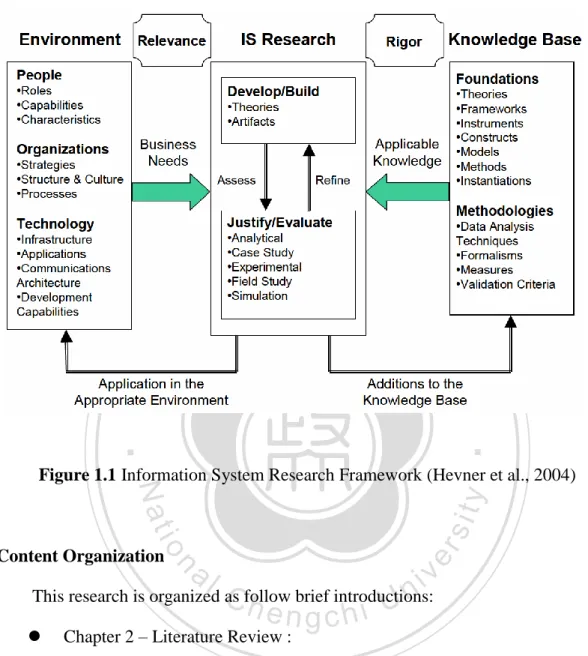
(12) paradigmatic mode of thought when presented with stimuli that include implicit or explicit arguments and also narrative mode of thought to understand storied stimuli. Based on the above research, we know we can use personal experience to be a story’s element and content. A story form by personal experience does really can irritate someone to do some change. In sum, there are four issues that to be resolved in this regard: (a) Whether we can incorporate the SME’s information into the story generator design?. 政 治 大 story generator with SME’s. We design an automatic story generator to generate different story for different SMEs. How to implement. 立. personal information. systematic is our main objective.. ‧ 國. 學. (b) Whether we can determine the similarity without causing SMEs resentment?. ‧. If we provide a situation describing a person who is old, poverty-stricken and. sit. y. Nat. hopeless, people may be opposed to connect this role with him and can’t emerge. io. er. sympathetic response. This is an unsuccessful story which can urge SMEs to do service innovation. For the encouraging purpose, we have faith in the positive. al. n. v i n C hpsychology “The aim psychology. Base on the positive of positive psychology is to engchi U. begin to catalyse a change in the focus of psychology from preoccupation only with. repairing the worst things in life to also building positive qualities (Seligman & Csikszentmihalyi, 2000).” We need to provide a positive story to incite SMEs. Let them know they can have a better life as long as do some transformation. (c) How can we improve previous story generator? Recent studies that have attempted to establish story generator have not been very successful. For example, SUMO is an automatic story generator that generates story text for children from a given input set of picture elements (backgrounds, characters and objects) (Pease et al., 2010). They have a series of stationary element 5.
(13) (backgrounds, characters and objects). If the user use with a few more, they may dig out that the story generator have a foolproof method. Moreover, the story is senseless and cannot moving people. (d) Whether we can assess the SMEs moving degree? Our ultimate goal is to encourage SMEs to do service innovation, so it’s important to measure whether this story is adequate or insufficient in the emboldened. The aforementioned questions then lead to the following research objectives.. 政 治 大 The overall goal of this research is to develop a creative and automatic approach 立. 1.3 Research Objectives. that can create a story to embolden SMEs to do service innovation.. ‧ 國. 學. In order to ensure the story can be generated automatically, the first thing we. ‧. need to do is find some common story structure. We choose Dramatica as a part of the. sit. y. Nat. elements required. “The Dramatica theory of story explores both the aspects of the. io. er. writing process providing structural guidelines to clarify communication and the artistic techniques for enhancing style (Phillips & Huntley, 2001)”.. al. n. v i n C h demand for innovation, Second, responding to different we put SIT (Service engchi U. Innovation Type) as another part of element. SIT is the abbreviation of the ten service innovation types, including four categories – Process, Offering, Delivery and Finance (FPOD), defined by Larry Keeley, the President of Chicago-based Doblin, Inc (1999). We then combine the two kinds of elements, and use “Three-act Structure“ to render. The Three-Act Structure is a model used in writing and evaluating modern storytelling which divides a screenplay into a three parts called the Setup, the Confrontation and the Resolution (Syd Field, 1979). The most story models and Dramatic approaches are more or less derived from the classical three-act structure of Aristotle providing an arc model with exposition, rising action to climax and 6.
(14) denouement (Göbel et al., 2006). For this reason, we choose three-act structure as our story’s architecture. Based on the above theory and examination we can further take advantage of FSM (Finite-state machine) to generate different purpose stories for SMEs. To achieve our goal, the following list of more specific objectives is to established. (a) To construct FSMs of states mapping to story elements, generating favorable and vivid stories. The most important thing is to ensure stories to embody. 政 治 大 SMEs into different regimentations 立. some peaks that can let SMEs feel moving. (b) To separate. according to different. requirement of service innovation in order to attain unequal types of stories.. ‧ 國. 學. (c) To implement a prototype system to demonstrate the feasibility and. ‧. practicability of the proposed method, together with measuring those. sit. y. Nat. automatically generated stories. We can reference the innovation system. io. er. usage to measure the level of impact by our efforts. Supposing that SMEs feel our moving story truly touching their hearts, they will be engaged in the. al. n. v i n subsequent developmentCof their service innovation. h e n g c h i U Therefore, we can simply inspect their system usage to assess our moving story’s effect.. By successfully forming a unique and attractive story, SMEs can then feel stauncher and have inspiration to do service innovation.. 1.4 Attempted Research Contributions The aim of this research is to demonstrate an automatic story generation system that uses personal experiences to construct unique stories for SMEs, and provokes them to do service innovation, hoping for encouraging SMEs who are afraid to do service innovation but need to do some change in their small business. 7.
(15) In addition, we try to reform traditional automatic story generation systems; the design, method, and architecture of this system could be domain-independent and used for other applications.. 1.5 Research Method This research follows information system (IS) research framework proposed by Hevner (2004) as the research methodology. The seven guidelines of this methodology illustrates that the research should produce viable artifact from relevant. 政 治 大 The contributions of IS research are assessed as they are applied to the business 立. business problems on the basis of related theories and methodologies.. need in an appropriate environment and as they add to the content of the knowledge. ‧ 國. 學. base for further research and practice. IS research framework provides a foundation to. ‧. test the artifact of our implemented service system.. sit. y. Nat. First of all, we define the environment. “For IS research, it is composed of. io. er. people, (business) organizations, and their existing or planned technologies (Silver et al. 1995)”. In it are the goals, tasks, problems, and opportunities that define business. al. n. v i n needs as they are perceived byCpeople within the organization (Hevner, 2004). Our hengchi U. target SMEs have encountered bottlenecks and need to do service innovation, but they. don’t know why they need to do or lack of courage to do. Therefore, follow the IS research we build service innovation advertising system to urge SMEs, and through our system we can evaluate the effect.. 8.
(16) Finally the service innovation advertising system can be added to the knowledge base, and reused for other IS researcher.. 立. 政 治 大. ‧. ‧ 國. 學 sit er. io. 1.6 Content Organization. y. Nat. Figure 1.1 Information System Research Framework (Hevner et al., 2004). al. . n. v i n This research is organized C as follow brief introductions: hengchi U Chapter 2 – Literature Review :. This chapter first compares different existing mechanisms about the story generator. Each of them has their own merits and shortcomings. Second, we will do some survey about FSM, and explain why we choose FSM as our methodology. After investigating different kinds of methodologies, we survey some dissertations about the content. We begin with the structure of story, and then find some theories to support our story content. From a psychological theory point of view to illustrate our story substance is a convincing. 9.
(17) . Chapter 3 – Motivation Applications : This chapter depicts the whole picture of our research project and demonstrates the role of the proposed approach in the application context.. . Chapter4 – Towards Motive Driven Story Generation For SMEs Innovation : In this chapter we introduce the conceptual framework and the system architecture of the automatic story generation systems. The particulars of the design and methodology will be described, including the explanation of Probabilistic Extended FSM Module, Story Framework. 政 治 大 Chapter 5 – Application Scenario 立. Module, Story Element Module and Matching Module.. . Chapter 6 – Evaluation. 學. ‧ 國. . Hypotheses and experiments for evaluation are depicted in this chapter. Chapter 7 – Conclusion. ‧. sit. y. Nat. Contributions, implications, limitations, and future works of our research are provided in this chapter.. io. n. al. er. . Ch. engchi. 10. i n U. v.
(18) CHAPTER 2. LITERATURE REVIEW. In Chapter 1, we have shown the background and motivation of our research, and indicated the objective of the ultimate mechanism. For the encouraging SMEs to do service innovation purpose, we need a service advertising-like story which could be generated automatically. Based on IS research (Figure 1.1), before we develop the system architecture we need to reference the existing applicable knowledge and this is the aim of Chapter 2.. 政 治 大 our settlement mechanism and providing the interrelated domain for consultation and 立 Figure 2.1 is a succinct presentation of the existing literatures which supporting. comparing.. ‧. ‧ 國. 學. n. er. io. sit. y. Nat. al. Ch. engchi. i n U. v. Figure 2.1 The succinct presentation of the existing literatures. First, we briefly introduce and discuss the domain of Narrative Psychology 11.
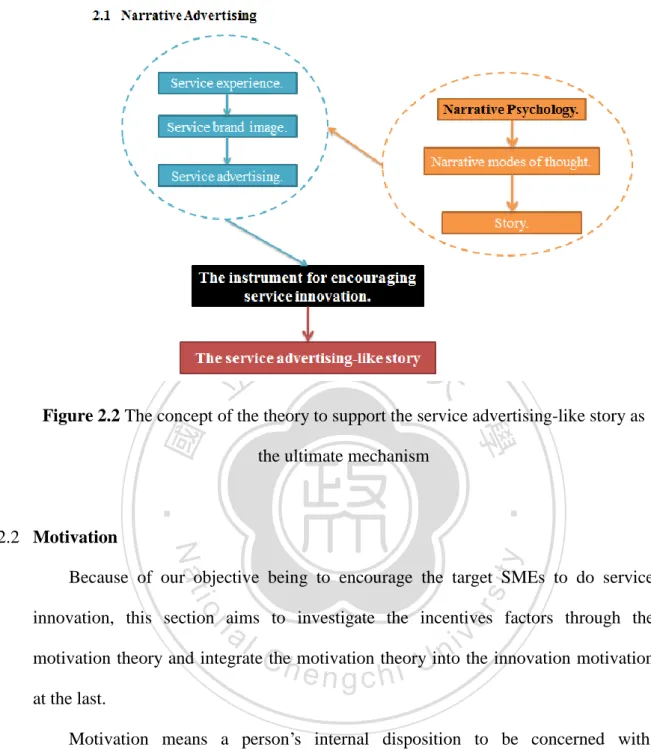
(19) (Section 2.1), supporting why we use “story” as the intermediary to communicate with our target SMEs, and explain the relationship among the story, service experience, service brand image and service advertising to create a narrative advertising. Second, we focus on the emphasis of the stimulation’s formulation by investigating the Motivation Theory (Section 2.2). In other word, we discuss the motivation theory deeply and find out the potential incentive formula, and then divert the same incentives element to our instrument of the incentive in the domain of service innovation for the encouraging purpose. Finally, Because of the many target. 政 治 大 story” as the instrument of the incentive which presented later) to be generated 立. SMEs, we need this instrument of the incentive (we will use “service advertising-like. automatically for different target users. That’s the reason why we refer to the. ‧ 國. 學. mechanism, orientation and content of the other story generator machine, and. ‧. expound the advantage of the existing mechanism which we use to build our story. sit er. io. 2.1 Narrative advertising. y. Nat. generator machine.. al. n. v i n C h why we locate U This section wants to investigate our settlement mechanism as an engchi. advertisement, and communicate with our target SMEs in the form of story which called “service advertising-like story”.. From the advertising function point of view, some scholars suggest that general advertising objectives should include informing, persuading, and reminding consumers (Kotler & Armstrong, 1996). Colley (1961) defined that the advertising goal is the specific communication issues which must be reached on the certain extent in a certain period of time for the specific audience. These are the functional side of the advertising which corresponds to our target goal (encouraging our target SMEs to do service innovation) and give a definition as “the advertising-like”. 12.
(20) On the school of advertising, more examination emphasized the emotion of people which could affect the advertising (Holbrook & Batra, 1987) (Peterson et al., 1986), and stand on the customer’s perspective to view the advertisements (focusing on the experience, emotion, culture and lifestyle of customer, not only popularize the features of product) (Celsi & Olson, 1988). Based on the motivational perspective, constructing the connection between the brand attributes and the abstract consumer values is the appropriate advertising goal (Padgett & Allen, 1997). In other word, the content of the advertising will be diverted from emphasizing the function of the. 政 治 大 The above-mentioned theories are all about the actual product advertising, 立. product to the emotion of customer.. however, there is facing different questions about advertising effect in the service. ‧ 國. 學. advertising (we delimit our advertising should be classified as the service advertising. ‧. which could communicate the intangible qualities of a service to their target audiences. sit. y. Nat. (Sheth et al., 1999), because we want to promote the intangible qualities of the service. io. er. innovation). Padgett and Allen (1997) suggested the concept of service brand image as a more encompassing construct which is more helpful in providing a foundation for. al. n. v i n C hadvertising. Brand U considering the effects of services image which functions to define engchi the product’s position for consumers and make the differentiation from the other competitor. (Padgett & Allen, 1997) is the concept of summary that imply the. customer buy their brand for the physical attribute, functions and the symbolic meaning of the brand (Levy, 1973). Therefore, for service, the definition of the service brand image includes the attributes and functional consequences and the symbolic meanings which the consumers associate with a specific service (Padgett & Allen, 1997). On the other hand, the symbolic meanings of the service brand are appending the personal experience through the service, communication with other people, and advertising (Padgett & Allen, 1997). 13.
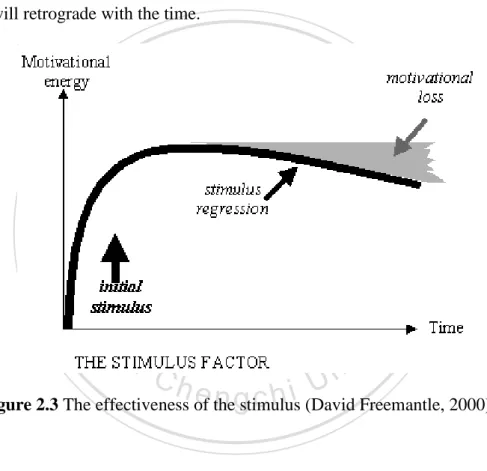
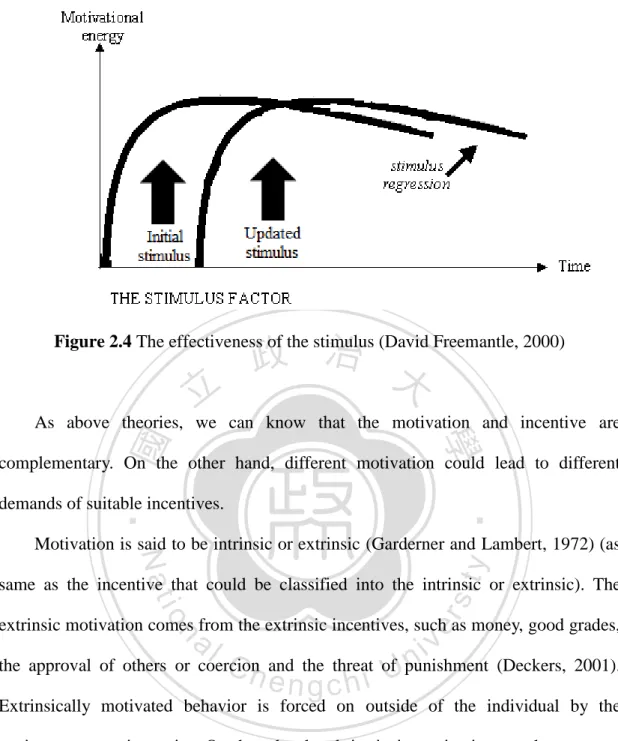
(21) In sum, the concept of service brand image is a customer-oriented concept, prompting a discussion of the customer’s point of view to understand the meaning of service, because what the customer’s “think” about services is the important part of the service brand image (Padgett & Allen, 1997). In the Padgett and Allen s’ opinion, the consumer's perspective of a service and the attaching of self-relevant meaning to service are the important part to build the service brand image. Based on the above theory, in order to understand service brand image (the customer’s perspective of a service), we need a customer-oriented conceptualization. 政 治 大 consumption behavior is by definition experiential (Holbrook and Hirschman, 1982). 立. of service and interpret the service from the customer’s point of view. The. In the same view, we can understand consumption of service to be an experience.. ‧ 國. 學. Padgett and Allen (1997) considered that many services are experiential and we can. ‧. use the service experience as a customer-oriented conceptualization for understanding. sit. y. Nat. the service brand image issues. On the other hand, Padgett and Allen (1997) defined. io. a specific service event.. er. service experience as the cognitive, affective, and behavioral reactions associated with. al. n. v i n Understanding experience C is the domain of narrative h e n g c h i U psychology (Robinson &. Hawpe, 1986). Narrative psychology is considered as the "storied nature of human conduct" (Sarbin, 1986). In the other words, the narrative psychology is about how. people deal with experience by constructing story or listening to other’s story. Jerome Bruner (1986, 1990) suggested there are two modes of cognitive functioning order experience, the paradigmatic and the narrative modes of thought. The paradigmatic modes of thought attempts to achieve an idea of a formal, mathematical logic system to interpret and describe experience. On the other hand, the objective of narrative modes of thought is to understand the story’s stimuli, and include the causally/chronologically connected events enacted by characters (including ad form 14.
(22) or presentation format—drama, song, dance, mime, etc.). Based on the Bruner (1986, 1990), the advertising which describes the actors (or brands) to achieve some objective will be interpreted through the narrative modes of thought because people will create a story to give explanatory notes of the story’s stimuli. Based on the above theory, we can understand that a narrative mode of thought is branches of the narrative psychology, which can represent the experience through the form of the story and let people comprehend the stimuli of the story. Figure 2.2 is the concept of the theory to support the service advertising-like. 政 治 大 innovation. First, connecting our ultimate mechanism with the service advertising, 立. story as our ultimate mechanism for encouraging the target SMEs to do service. and delimit the service brand image implied the content of service advertising which. ‧ 國. 學. use the customer's perspective. In order to understand the service brand image, we. ‧. need the customer-oriented conceptualization of service which is expressed as the. sit. y. Nat. service experience. Finally, the narrative modes of thought which is the branch of the. io. er. narrative psychology are used to understand the service experience and be presented in the form of the story (a form of the narrative modes of thought). The. al. n. v i n Ctohconceiving our ultimate above-mentioned are the theory mechanism: the service engchi U advertising-like story.. 15.
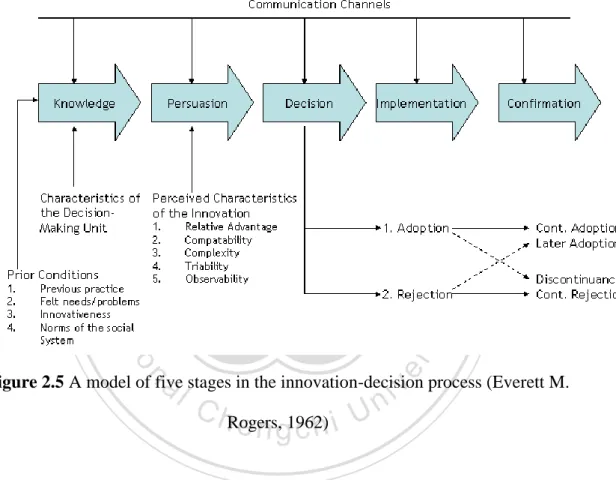
(23) 立. 政 治 大. 學. the ultimate mechanism. ‧ sit. y. Nat. 2.2 Motivation. ‧ 國. Figure 2.2 The concept of the theory to support the service advertising-like story as. io. er. Because of our objective being to encourage the target SMEs to do service innovation, this section aims to investigate the incentives factors through the. al. n. v i n motivation theory and integrateC the motivation theoryUinto the innovation motivation hengchi at the last.. Motivation means a person’s internal disposition to be concerned with, approached by positive incentives, or avoided by negative incentives which refer to the anticipated reward or aversive event available in the environment (Atkinson, 1958). Schopenhauer and Kolenda (1960) also proposed that the motivation is impossible to be existent independently and it should have the relationship between motivation and behavior, according to people being always motivated toward something or avoid for something. In other words, there are must be something to motivate people: incentives. 16.
(24) Incentive means a reward, no matter tangible or intangible, is performed after the occasion of an action (i.e. behavior) with the deliberate intention to cause the behavior to occur again (Deckers, 2001). However, the same incentive couldn’t have same effectiveness for the encouraging. David Freemantle (2000) proposed that the effect of the specific incentives will decline if continued use. Repetitive action-reward combination will cause this to be a habit. Figure 2.3 is the effectiveness of the stimulus proposed by David Freemantle, which we can understand clearly that the stimulus will retrograde with the time.. 立. 政 治 大. ‧. ‧ 國. 學. n. er. io. sit. y. Nat. al. Ch. engchi. i n U. v. Figure 2.3 The effectiveness of the stimulus (David Freemantle, 2000). Therefore, for sustaining and effecting of motivational energy, David Freemantle suggested that if we want to provide effective motivation level, it must use the unequal and updated incentive (Figure 2.4).. 17.
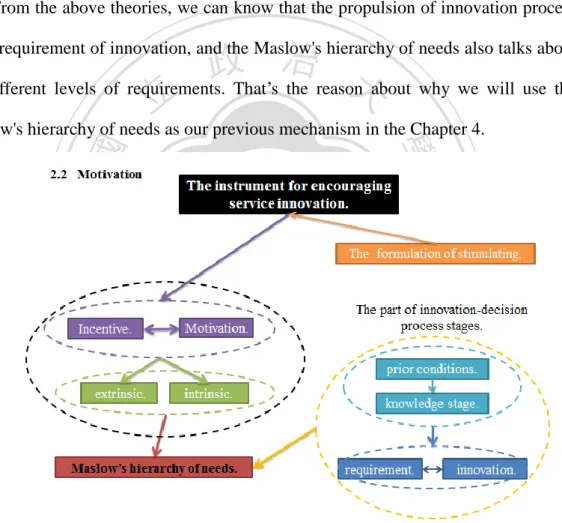
(25) 政 治 大. Figure 2.4 The effectiveness of the stimulus (David Freemantle, 2000). 立. As above theories, we can know that the motivation and incentive are. ‧ 國. 學. complementary. On the other hand, different motivation could lead to different. ‧. demands of suitable incentives.. sit. y. Nat. Motivation is said to be intrinsic or extrinsic (Garderner and Lambert, 1972) (as. io. er. same as the incentive that could be classified into the intrinsic or extrinsic). The extrinsic motivation comes from the extrinsic incentives, such as money, good grades,. al. n. v i n C h and the threat ofUpunishment (Deckers, 2001). the approval of others or coercion engchi. Extrinsically motivated behavior is forced on outside of the individual by the environment contingencies. On the other hand, intrinsic motivation, on the contrary, does not be affected by the external source but instead is driven by an interest or enjoyment in the task itself and freely chosen (Deckers, 2001). The behavior of the. intrinsic motivation is not coerced by the environmental events, substituting it is spontaneous and autonomous. On the Deckers’ (2001) point of views, the intrinsic motivation could be classified as psychological needs including drives, needs, glory, and awareness, and the extrinsic motivation could be classified as the relationship between life events and stress including money, coping and health (close to the 18.
(26) physiological needs). According to the above theories, we can simply classify motivation into two categories, physiological needs and psychological needs. Based on the Abraham Maslow’s (1943) theory, the activities about the human needs all belong to the motivated behavior. From the basic physiological need to the complex needs of self-actualization, Maslow divided the human needs into five categories (including physiological needs, safety needs, love needs, esteem needs and self-actualization needs). Maslow proposed the theory Z which mentioned the Over Actualization level. 政 治 大 Over Actualization which usually appears 立. in 1969. If the self-actualization needs are fully satisfied, it will appear the short-lived experience called. when implement. something or accomplish something. It is the experience about ecstasy and transient.. ‧ 國. 學. Maslow claimed that if the needs of low-level (physiological needs) are fulfilled, the. ‧. needs of high-level (psychological needs) will occur immediately. On the other words,. sit. y. Nat. in the theory of motivation satisfaction and shortage are the same important concepts. io. er. because the satisfaction will liberate the low-level needs into the next level and the shortage of current level will lead people committed to meet this shortage. In addition,. n. al. Ch. the highest-level (Over Actualization) is satisfied. engchi. v i n temporarily and U. no more level. above the Over Actualization, so there are always shortage of next level. For instance, if people are long-term satisfied in the physiological need, the physiological need will not be considered as the determinants of the active behavior, but it will exist in the potential way and appear again if people are frustrated. From the innovation’s perspective, an investigation of the motivation and the incentive should begin with the innovation-decision process (Figure 2.5) (Proposed by Everett M. Rogers, 1962). The scholar in the diffusion of innovation considers that the personal innovation-decision process is not making decisions immediately; instead it occurs in a period of time and actions (Everett M. Rogers, 1962). Rogers (1962) 19.
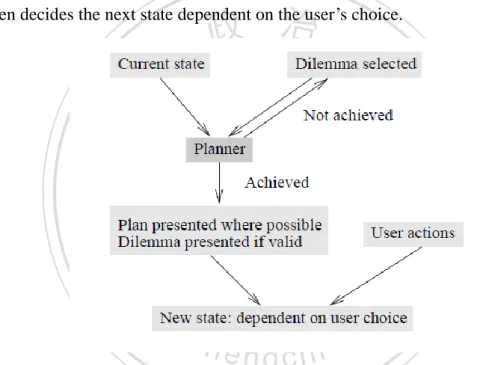
(27) proposed five major stages (Figure 2.5) including knowledge (exposed to an innovation’s existence and understanding the function of innovation), persuasion (forming an attitude of innovation with favorable or unfavorable), decision (acting about accepting or rejecting), implementation (putting a new idea into use) and confirmation (seeking further confirmation of the previous decisions. If encountering the opposite information, the decision-makers may reverse these previous decisions).. 立. 政 治 大. ‧. ‧ 國. 學. n. er. io. sit. y. Nat. al. i n U. v. Figure 2.5 A model of five stages in the innovation-decision process (Everett M.. C hRogers, 1962) engchi. In our research, we will focus on the knowledge stage and the prior conditions (Figure 2.5) (because these are two crucial stages to investigate the motivation of innovation). Hassinger (1959) argued that individuals seldom notice the information of innovation, if they begin to feel that they need this innovation. In other words, unless this innovation is considered unanimously with the individual's mentality or requirement, the contact of innovation is meaningless (Everett M. Rogers, 1962). This process is a selective perception, which is using the personal mentality and conviction 20.
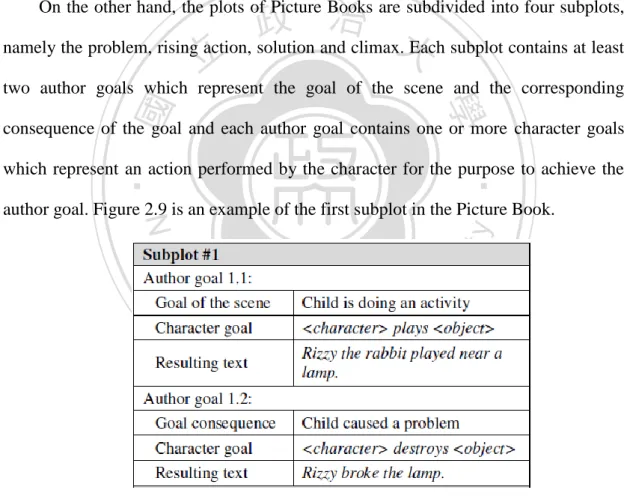
(28) to interpret the communication message (Everett M. Rogers, 1962). The selective exposure and selective perception support the Hassinger’s point of view that the needs for an innovation usually precede awareness-knowledge of innovation. However, the requirement is defined as if someone’s appetence exceeds the load of their own and appears as dissatisfaction and frustration. In the other word, the individual may develop a demand when they are aware of the existence of the innovation (Everett M. Rogers, 1962). Therefore, innovation could drive the requirement, and vice versa. From the above theories, we can know that the propulsion of innovation process. 政 治 大 the different levels of requirements. That’s the reason about why we will use the 立. is the requirement of innovation, and the Maslow's hierarchy of needs also talks about. Maslow's hierarchy of needs as our previous mechanism in the Chapter 4.. ‧. ‧ 國. 學. n. er. io. sit. y. Nat. al. Ch. engchi. i n U. v. Figure 2.6 The concept of theories about the motivation toward innovation. Figure 2.6 is the concept of theories about the motivation toward innovation. Because of the requirement of stimulating to inspire SMEs to do innovation, we investigate the theory of motivation and the motivation of innovation. First, we 21.
(29) understand that the motivation and incentive are interdependent, and both can assort into extrinsic and intrinsic. In other words, based on the different requirements, we can give appropriate incentive to inspire. That’s the reason why we investigate the Maslow’s hierarchy of needs to resolve the different requirements. On the other hand, from the innovation point of view, the issue of the motivation is discussed in the previous parts of stages on the innovation-decision process, i.e., the prior conditions and knowledge stage. These two stages also mentioned the relationship between the innovation and requirement. In sum, the two perspectives (from the motivation point. 政 治 大 adopt the Maslow’s hierarchy of needs in motivating toward innovation. 立. of view and the innovation point of view) of the requirements lead this research to. ‧ 國. 學. 2.3 Story Generator. ‧. In this section we will consider the domain of story generator, for the automatic. sit. y. Nat. generation of service advertising-like story purpose. The ultimate objective of our. io. er. research is generating the customized service advertising-like story based on every different target users. For this reason, there are two necessary points of the story. n. al. C h and automation.U n i generator in our research, customized engchi. v. The existing examination of story generator can be divided into the following: (a) Constructing a rule-based approach for the text processing (Alfred Correiea, 1980). (b) Interacting with user and adapting the behavior of user to generate the story (Barber & Kudenko, 2007). (c) Utilizing a given input set of element, such as backgrounds, characters and objects, and let user to choose then generating the story (Solis et al, 2009). Alfred Correiea (1980) proposed the Story Tree which was based on the. rule-based computational model for text comprehension. The theoretical basis is the 22.
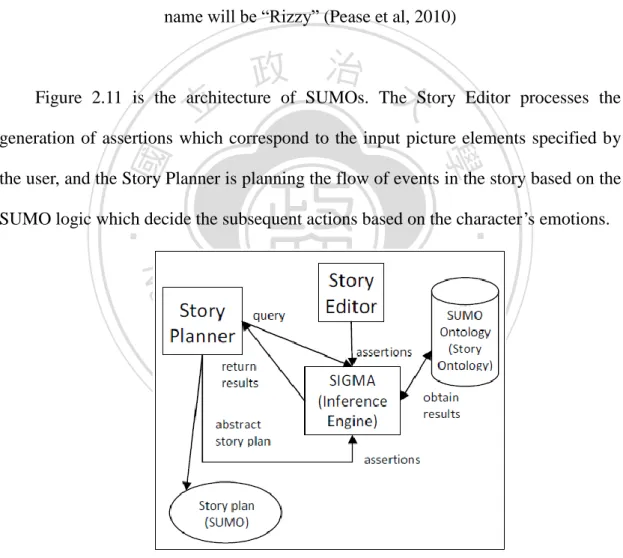
(30) macrostructures proposed by Kintsch and van Dijk (1978). There is a simple formulation: A <= B, C, and D which proposed by Kintsch and van Dijk (1978). The meaning of the formulation is “you may assert the truth (presence) of macrostructure A if you can find the (nearly) contiguous propositions B, C, and D present in the input text” (Alfred Correiea, 1980). The rules of coherence could involve several criteria: causal connectedness (B causes/is the result of C, which causes/is the result of D), or temporal ordering (B happens before/after C, which happens before/ after D). Alfred Correiea (1980) organized this macrostructure into tree hierarchies and described their. 政 治 大. interrelationships in rule-based story grammars which related to the Kowalski logic based.. 立. Simply put, the Story Tree is a series of existing plots of the story, and. ‧ 國. 學. constitutes in the form of tree structure. For maintaining the continuity of the. ‧. sentence’s purpose, the sentence’s structure of each node is formed by the concept of. sit. y. Nat. the formulation: A <= B, C, and D which was proposed by Kintsdch and van Dijk. io. advance.. er. (1978). In this circumstance, the stories are generated steadfastly and are written in. al. n. v i n On the other hand, there C is an interactive wayUto generate story between the hengchi. system and the users. Barber and Kudenko (2007) proposed a structure of system that can generate the interactive stories and adapt to the user’s behavior (Figure 2.7).. Figure 2.7 System components and their interactions (Barber & Kudenko, 2007). 23.
(31) The knowledge base consists of the information of the characters, story action, and the dilemmas which can occur in the story world. In order to make sure that the dilemmas which may be chosen by the user is met within the story world, the narrative generator (planner) finds out the possible dilemmas and let users choose based on the situation of the current state. Figure 2.8 is the overview of the system moving between states dependent on plans, dilemmas and user decisions (the part of relationship between the narrative generator and user). Based on the situation of the current state, the planner selects the appropriate dilemma and lets user to make choice,. 政 治 大. and then decides the next state dependent on the user’s choice.. 立. ‧. ‧ 國. 學. n. er. io. sit. y. Nat. al. Ch. engchi. i n U. v. Figure 2.8 The overview of the system moving between states based on plans, dilemmas and user decisions (Barber & Kudenko, 2007). The function of the user model is to achieve the aims of predicting the user’s decisions based on presentation of a dilemma accurately. This model is used to identify which decision is the user’s most likely choice, and build up by observing previous user actions assumptions made. The example of last approach is Picture Books (Solis et al, 2009) which is an automatic story generator that generates story for children from a given input set of 24.
(32) picture elements (backgrounds, characters and objects). Background is the critical to set up the story and combine the object to decide the theme of the story. The linkage among the backgrounds, object and the story theme are defined by the author them self. For example, if user chooses the background as the bedroom, the associate objects may be the lamp or the toy block. Integrating the background as bedroom and the object as lamp will generate the story theme about the bravery (defined by the author). Such associations in the Picture Books are manually determined and entered into the database.. 政 治 大 namely the problem, rising action, solution and climax. Each subplot contains at least 立. On the other hand, the plots of Picture Books are subdivided into four subplots,. two author goals which represent the goal of the scene and the corresponding. ‧ 國. 學. consequence of the goal and each author goal contains one or more character goals. ‧. which represent an action performed by the character for the purpose to achieve the. n. al. er. io. sit. y. Nat. author goal. Figure 2.9 is an example of the first subplot in the Picture Book.. Ch. engchi. i n U. v. Figure 2.9 The example of the Picture Book (Solis et al, 2009). Based on the Picture Book, there was another new architecture, SUMO (Pease et al, 2010). Instead of creating the associations among the backgrounds, characters and object manually determined and encoding into narrative knowledge, these 25.
(33) associations are inferred automatically through axioms that should be the commonsense in the SUMO (Figure 2.10).. Figure 2.10 An example axiom to represent a female child RabbitCharacter whose name will be “Rizzy” (Pease et al, 2010). 政 治 大 Figure 2.11 is the architecture of SUMOs. The Story Editor processes the 立. generation of assertions which correspond to the input picture elements specified by. ‧ 國. 學. the user, and the Story Planner is planning the flow of events in the story based on the. ‧. SUMO logic which decide the subsequent actions based on the character’s emotions.. n. er. io. sit. y. Nat. al. Ch. engchi. i n U. v. Figure 2.11 The architecture of SUMOs (Pease et al, 2010). Based on the theory mentioned above, we sort out some gaps between the aim of our research and the existing story generator theory, and point out the advantages of the existing story generator theory (Figure 2.12). 26.
(34) The existing story generator theory proposed the sentence structure and rule-based (the Story Tree (Alfred Correiea, 1980)), interactive approach to reference the determination of user (Barber & Kudenko, 2007) and the story plot which combine backgrounds, characters and objects (Picture Books (Solis et al, 2009), SUMOs (Pease et al, 2010)).. 立. 政 治 大. ‧. ‧ 國. 學 er. io. sit. y. Nat. Figure 2.12 The gaps and advantages of the existing story generator theory. n. al. Ch. engchi. i n U. v. The aim of our research is to generate the customized service advertising-like story based on every different target users automatically. Our research wont’ involves the aspect of interactive story generation because we want our story serve as the advertising-like and users could read the stories directly instead of interactively. (The “interactive” in here means that user could modify the story by interacting with system. In the after chapter, we also use the world “interactive”, but it means interacting with the system process; like press the button; not modifying the story content.) However, if we want to achieve the aim of customization, we need the opinion and information from our target users that’s the interactive story generation 27.
(35) can do directly. For this reason, we need to find out a method to anticipate the information and opinion into our story to replace the advantage of the interactive story generation methods. Referencing the Picture Book (Solis et al, 2009) and SUMOs (Pease et al, 2010), we can set the opinion and information of our target user as a given input element for the customized purpose. In other words, we can reference the method of the Picture Book (Solis et al, 2009) and SUMOs (Pease et al, 2010) to implement the customization aspect of inputs required as did by the interactive story generation methods in customized domains.. 政 治 大 so we couldn’t use Story Tree immediately (Alfred Correiea, 1980). However, we 立. On the other hand, the sentence structure of Chinese is different from the English;. could use the advantage of the tree structure to present the story plot, and use the. ‧ 國. 學. other mechanism such as rule-based to move current node to the next node. ‧. automatically.. sit. y. Nat. In sum, we need the tree structure-like to form the story plots and combine with. io. al. n. advertising-like story.. er. the set of user’s opinion and information element to generate the customized service. Ch. engchi. 28. i n U. v.
(36) CHAPTER 3. MOTIVATION APPLICATIONS. This chapter depicts the whole picture of our research project- “ImageCons”, and demonstrates the role of the proposed approach in the application context. Moreover, our research project is built on top of the previous research results of the uVoyage project.. 3.1 The Conceptual Framework. 政 治 大 value to customers is influential (Cagan, 2002) (Kim, 2005). Kim (2005) argued that 立. For the business success, there is a growing recognition that providing standout. creating advances in customer-centric value can make competition irrelevant by. ‧ 國. 學. opening up entirely new markets. In addition, customers rely more on the intrinsic. ‧. aspects, except when these are not available or when their evaluation requires too. sit. y. Nat. much effort or time (Zeithaml, 1988). Therefore, we need to start from the. io. er. psychological if we want to attract customers enduringly.. An important intrinsic aspect of customer-centric values is the sign value. n. al. approach. (Boztepe,. C h considering engchi. 2007). i n that U. v. value. come. from. socio-cultural-environmental contexts and is subjective with the socially assigned meaning as the service outcome. Owing to the foregoing researches, Yuan (2011) advanced sign value based service systems. Based on the research “Service System Design: A Sign-Value-Based Approach” proposed by Yuan (2011), we conduct two projects: uVoyage and ImageCons. uVoyage is one part of the sign approach of service system design: Goal Imagery Delivery. This part contains a set of methods/models/tools that can enable SMEs to locate appropriate partners within a geographical cluster. SMEs can use this approach to find some partners to achieve the co-created imagery that can leave a deep 29.
(37) impression in the customers’ minds. After fulfilling this idea in the Mt. Pillow Recreational Agriculture Area in Ilan County, the uVoyage team found some issues. The most important one is that SMEs don’t know how to describe their imagery. They told us they have perfect cropper and lovely scenery, but they can’t give these a meaningful touching package for customers. They do not even know what their distinguishing feature is (please see the Appendix 1). Furthermore, the uVoyage team also observed that SMEs consider that service innovation is important, but they don’t know how to put it into practice.. 政 治 大 deficiency identified by the uVoyage team. In other words, we aim to implement the 立. Thence, we initiate the ImageCons project for the purpose of making up the. other part of the sign approach of service system design: Goal Imagery Creation.. ‧ 國. 學 ‧. 3.2 The Conceptual Architecture. sit. y. Nat. In the Goal Imagery Creation part, we utilize the design thinking paradigm. io. er. (Brown, 2009) that fosters a collaborative and iterative style of work to achieve practical, creative resolution of the problem of goal imagery creation for driving. n. al. business success.. Ch. engchi. i n U. v. There are an iterative sequence methods/models/tools (Figure 3.1) for creating goal imageries, and could motivate SMEs to change their commercial activity.. 30.
(38) 政 治 大. 立. ‧ 國. 學. Figure 3.1 Architecture of goal imagery creation (Yuan, 2011). ‧. There are six procedures for creating goal imageries:. y. Nat. Understanding the culture where the business is located and the internal. io. sit. (a). n. al. er. situation, aims to provide the service innovation typology models that. i n U. v. can represent and compare the capabilities, socio-cultural and. Ch. environmental context. (b). engchi. Using a mini story to encourage SMEs to do some change, and appropriately connect the elements of story with the content of the context in order to automatically generate communication stories. Stated another way, the mini story could move SMEs to engage the subsequent development of their goal imageries toward innovation.. (c). “Inspiring” means the inner intangible level rehearsal of the selected focus of innovation.. (d). Co-developing the goal imagery attempts to provide the imagery model 31.
(39) and the co-creation network model that can bestead SMEs to co-create the goal imagery with their collaborators and customers. (e). Evaluating the goal imagery anticipates devising the measurement models that can identify and quantify the gap between derived goal imagery and the current status quo of the SME context.. (f). Finally, testing the goal imagery attempts to provide the methods interactively prototyping the created goal imagery in order to automatically generate full communication stories (hinting how to. 政 治 大 delivery that can lead to the goal imagery delivery). 立. fulfill the service innovation including finance, process, offering or. ‧ 國. 學. 3.3 ImageCons System Architecture. ‧. There are mainly five modules ImageCons as shown in Figure 3.2.. n. er. io. sit. y. Nat. al. Ch. engchi. i n U. v. Figure 3.2 ImageCons Service System Platform Architecture 32.
(40) After receiving SMEs’ input data, ImageCons does some analysis which about the interaction pattern and culture (the top middle region in Figure 3.2). Interaction Pattern is investigating the cooperation aspiration toward the other SMEs, and the Culture part is investigating the local culture whether it can affect the behavior or not. Both analyses aim to find some patterns to provide the service innovation typology models to help SMEs construct the image which is the ultimate goal of ImageCons. Finally, both service innovation typology models will connect to the FPOD (SIT (Service Innovation Type) including four categories – Process, Offering, Delivery and. 政 治 大. Finance) (Keeley, 1999) as the output of the models to communicate with the other part.. 立. The analysis output and the SMEs’ input data will deliver to two parts, the. ‧ 國. 學. stimulating part (the right region in Figure 3.2) and the co-developing the goal. ‧. imagery part (the middle region in Figure 3.2), and both parts will join to the. sit. y. Nat. Prototyping Story Interaction. The aim of the stimulating part is using a mini story to. io. er. encourage SMEs to do some change. This part of system platform will evaluate the input data first and utilize this consequence in the story generator to create a. n. al. Ch. customized and touching story to achieve its aim.. engchi. i n U. v. On the other hand, the co-developing goal imagery part aims to create each SMEs’ distinctive imagery. Based on the information of SMEs and the utilization of the models of the imagery bank to conjecture the default imagery (the current imagery of SMEs), the system will help them to co-develop the goal imagery through the recommendation and coordination by different interpreters (e.g., customers and partners) to find the most suitable service innovation imagery which could be associated with the SME. The stimulating part and the co-developing the goal imagery part both lead to the prototyping story interaction part (the bottom middle region in Figure 3.2) which aims 33.
(41) to generate the complete story through the interaction pattern. This part will utilize the mini stimulating story as the basic story framework and the SMEs’ goal imagery, by way of interaction patterns to create a complete manual-like story to instruct the innovation direction to the SMEs. In the process of interaction, if the imagery of innovation is not meet what the SMEs want, it will return to the co-developing the goal imagery part to make correction. The left region in Figure 3.2 is about the imagery assessment, which assesses the result of ImageCons service system. Imagery assessment includes three levels of. 政 治 大 service imagery in terms of the degree about how the SME provides correspond to the 立 function, the macroscopic experience of the service imagery, the measuring of the. feeling of the customer from different angle view dimensions and the multiple. ‧ 國. 學. imagery comparing, extraction of imagery element, selection / extension of the. ‧. imagery element and adjustment the service imagery for the SMEs. For these reasons,. sit. y. Nat. we can learn in Figure 3.2 that the imagery assessment will assess the analysis of. io. er. interaction pattern and culture in the imagery components assessment part, but this process is of a loosely boundary that if there is no management the process still. al. n. v i n moving (The dashed arrow inChere means the bothUanalysis including interaction hengchi. pattern and cultural could do some evaluation or not, not affecting the result of. ImageCons service experiences). On the other hand, the imagery assessment part will evaluate the co-developing the goal imagery part. In sum, finally, the imagery assessment, the goal imagery, the prototyping story and the moving story all will guide our target SMEs to go through ImageCons service experiences.. 34.
(42) CHAPTER 4. TOWARDS MOTIVE DRIVEN STORY GENERATION FOR SMEs INNOVATION. This chapter describes the implementation details of motive-driven story generation machine for encouraging SMEs do service innovation. First of all, we define the environment that refers to the goals, tasks, problems, and opportunities defining business needs (Hevner et al., 2004). The foremost problem is that our SMEs are afraid to do service innovation but they need to do so. Next, following the IS. 政 治 大 system to motivate SMEs. Finally, the service innovation advertising system can be 立. research (Figure 1.1) we figure out that we can build service innovation advertising. added to the knowledge base, and reused for other IS researchers.. ‧ 國. 學. The primary purpose of this chapter is twofold. First, it elaborates the. ‧. connections between different concepts including encouraging SMEs, motive driven. sit. y. Nat. story generation, and narrative advertisement and how to integrate them into the. io. er. system architecture. Second, it provides a comprehensive description of system modules and exhibits its ability to generate unconventional solutions. Throughout this. n. al. chapter, we make several. v i n C h to evidence U instances the required engchi. data and related. computations in terms of algorithms and formula performed at each step in the process so as to justify the feasibility and creativity of the system.. 4.1 The Conceptual Framework The underlying conceptual framework (i.e., the main ideas) of our method is shown in Figure 4.1 prescribing the interrelationships (arrow (1)~(4)) of the basic concepts (encouraging SMEs, motive driven story generation, and narrative advertisement). In Figure 4.1, we assume that we can form stories based on the narrative 35.
(43) advertisement’s theory to drive SMEs to do service innovation, that is, SMEs can be inspired by the short customized motivation story.. 立. 政 治 大. Figure 4.1 Conceptual framework of the motive story generator. ‧ 國. 學 ‧. SMEs’ situations of fierce competition: With the international trend of. sit. y. Nat. financial liberalization and globalization, the enterprises are facing fierce and fast. io. er. competition. Traditional research and development technology are insufficient to contend global competitive society. Not to mention the vulnerable and faraway. al. n. v i n C hrestaurants, hostelsUand agriculture). There is a local SMEs (i.e. local stores, like engchi general consensus that the pace of change including the globalization of markets; the spread of information technology and computer networks; the dismantling of hierarchy and the revolution in management; the information economy; has increased over the past few decades (Stewart, 1993). Undergoing fundamental transitions may well pose a particular challenge to the small and medium enterprises (SMEs), which restrict their abilities to maintain their position against. larger competitors in quickly and violently changing business environments (Winch & McDonald, 1999). For this reason, we need to figure out some solutions to support them do several effort. 36.
(44) For hoping SMEs to survive, there are many methods. The government departments (small and medium enterprise administration, ministry of economic affairs) is also reaching out actively, such as loans for SMEs policy, information application. guidance,. and. quality. improvement. guidance. etc.. (URL:. http://www.moeasmea.gov.tw/np.asp?ctNode=606&mp=1) However, because of the international trend of financial liberalization and globalization, that the method mentioned before is not enough. Our natural resources and human resources are inferior to other powerful countries. The only way to have competitive is that build. 政 治 大 put above-mentioned elements (i.e., Taiwan’s culture and characteristics) into 立. our own brand, including Taiwan’s culture and characteristics. Therefore, we can. service innovation. One of the directions of service innovation mentioned “Brand”. ‧ 國. 學. and “Customer Experience” (from FPOD), defined by Larry Keeley, the President. ‧. of Chicago-based Doblin, Inc (1999).. sit. y. Nat. As mentioned before, for survival, the SMEs must do some efforts in. io. er. innovation (Sun & Wu, 2008). The problem is that SMEs have no idea about service innovation. They can’t comprehend the features of service innovation, and. al. n. v i n C service don’t know why they need to do Our field research in the Mt. U h e ninnovation. i h gc. Pillow Recreational Agriculture Area in Ilan County lets us dig out that the vulnerable SMEs don’t think they need to do service innovation. Actually, even we. told them service innovation can support their business, they can’t have any experience of this idea. “Service innovation” just like a new strategy substantive for SMEs, they don’t think this will be closely related to them. For example, there was an agriculture SME producing red guava (a special cropper growing in the Mt. Pillow Recreational Agriculture Area in Ilan County in Taiwan). This SME comprehended that they must to do some change in this radical change times, and told their ideas to other peasants. However, these ideas were 37.
(45) difficult to popularize. In addition, to promote the ideas, it was required to coordinate other peasants’ busy farming season time and need some material incentives (e.g., a free cup for participants to attend the innovating courses). Arrow (1): Comprehending the SMEs’ situation, we must find some method to improve this kind of dilemma. On the other hand, we need to let the vulnerable SMEs know that to do service innovation is good for their business, not just for some material reason as exemplified above. Encouraging SMEs: In order to achieve encouraging SMEs to do service. 政 治 大 Maslow's Hierarchy of Needs Theory (Abraham Maslow, 1943). Maslow proposed 立. innovation, first we have to delimit motivation that could be engaged using. that the personal growth is based on intrinsic motivation, and motivation is. ‧ 國. 學. composed of multiple, different levels and nature of the demand. Maslow’s theory. ‧. include five levels: physiological needs, safety needs, love needs, esteem needs and. sit. y. Nat. self-actualization needs.. io. er. Based on our field research, we consider our target SMEs’ growth motivation coinciding with the four parts of Maslow’s theory. There are safety needs, love. al. n. v i n Ch needs, esteem needs and self-actualization needs. Based on the Maslow’s theory, engchi U. after people satisfy the low-level needs, they can pursue high-level needs. We consider that physiological needs and safety needs in lowest level of our target SMEs is difficult to distinguish. They all need a stable life, and their characteristics are something like that “the works not going well”, “meager salary”, “too poor to feed their families” and so on. We repute it is unnecessary to subdivision between physiological needs and safety needs, and. For this reason, we define the lowest-level of our SMEs as the safety needs in Maslow’s theory. The SMEs which belonged to love needs in the Maslow’s theory have the following features: they demand cooperating with other business, and believe 38.
數據
+7

相關文件
Due to the limitation of space, this paper only deals with the above-mentioned problems by referring to the `sutras` and
In order to solve the problems mentioned above, the following chapters intend to make a study of the structure and system of The Significance of Kuangyin Sūtra, then to have
` Sustainable tourism is tourism attempting to make a low impact on the environment and local culture, while helping to generate future employment for local people.. The
To convert a string containing floating-point digits to its floating-point value, use the static parseDouble method of the Double class..
We try to explore category and association rules of customer questions by applying customer analysis and the combination of data mining and rough set theory.. We use customer
This research is based on the TRIZ theory, try to enhance the function of pencils and personalize the design1. TRIZ theory includes contradiction matrix, physical contradictions, and
Theory of Project Advancement(TOPA) is one of those theories that consider the above-mentioned decision making processes and is new and continued to develop. For this reason,
This research project is to analyze and research a specific laser configuration to obtain complete knowledge、technologies and experiences to transfer to the project initiator for
