國立臺灣師範大學英語學系
碩士論文
Master’s Thesis
Graduate Institute of English
National Taiwan Normal University
WebQuest 對英語學習者閱讀及批判性思考發展研究
The Development of EFL Learners
’
Reading and Critical
Thinking Ability in WebQuest-A Qualitative Study
指導教授:林至誠 博士
Advisor: Dr. Chih-Cheng Lin
研究生:蕭伊珊
Graduate: Yi-Shan Hsiao
中華民國一百零三年六月
I
摘要
隨著網際網路(以下簡稱為網路)及相關科技的發展,如何將其應用於實際課 堂教學成為一研究課題。語言教學領域在探討將網路科技應用於實際課堂教學可 能性的同時,相關衍生問題也接踵而至。網路資訊包羅萬象,訊息量大且豐富, 易造成學生在學習時的理解困難與在搜尋閱讀時迷失方向。過去研究已提出數個 引導學生利用網路學習的方式,其中之一便是 WebQuest。WebQuest 為一網路探 究學習活動,引領學生循序漸進,有目標地和網路資訊互動,進而學習相關主題 知識。文獻顯示其在提升 EFL 學生閱讀及批判性思考上有顯著成效,但並未細 述 WebQuest 如何促使學生此兩方面能力進步。此外,學生在 WebQuest 網路探 究學習活動中需頻繁地閱讀、分析網路資訊,閱讀能力及批判性思考能力二者實 為密不可分,應納入同一研究探討。 本研究旨在探討台灣 EFL 學生在進行 WebQuest 網路探究學習活動時,閱讀 及批判性思考兩者能力的發展情形。九位高中學生分成三組進行活動,參與此項 為期兩個多月的 WebQuest 學習研究。期間學生們共完成兩個長期(long-term) WebQuest,主題分別為英雄故事,以及世界飲食文化。研究者觀察並記錄每一 次課堂活動(task),並將各組學生上課討論對話錄音轉譯成逐字稿,供後續分析 之用。學生在每堂課後需填寫一份課堂心得日誌,詳細記錄今天上課活動進行過 程,學習心得等。研究者在每一 WebQuest 結束後與學生進行訪談:第一次為團 體訪談,第二次為個人訪談。 結果顯示學生在閱讀及批判性思考兩方面皆有所發展。在閱讀能力方面,學 生自我發展出閱讀策略,學生的閱讀理解能力也有所提升。在批判性思考能力方 面,學生設立了不同的資訊篩選標準,發展出個人網路資訊搜尋模式,以及進行 了深刻批判思考。最後,本研究提供英語教師在進行 WebQuest 教學時的具體建 議。 關鍵字:WebQuest 探究學習,批判性思考,EFL 學習者,閱讀,質性研究II
ABSTRACT
The World Wide Web (WWW) has been considered to have extensive
pedagogical affordances for teaching. The Web not only provides a vast global
database of authentic materials for teachers, but also, with the assistance of internet
communication technology (ICT), enriches students’ learning experiences.
However, problems regarding the use of WWW in classroom teaching/learning
arise, such as navigational disorientation and information overload. Several attempts
have been made to systematically direct students’ inquiry of WWW, one of which is
WebQuest. Previous WebQuest studies have reported positive results in promoting
learners’ critical thinking ability and reading ability respectively, while questions
remain as to which aspect of the WebQuest activity contributes to their development
of these abilities. Thus the paper aims to explore how EFL learners’ critical thinking
ability and reading ability develop when engaged in a WebQuest activity.
A qualitative approach is adopted in order to have an in-depth understanding of
the development process of reading and critical thinking ability among EFL learners.
The participants are a group of students recruited from a senior high school in
Northern Taiwan. The data collected for the current study are mainly from class
observation, semi-structured interview, and students’ reflection journals. During the
two cycles of WebQuest activity, the researcher also takes field notes of class
activities and of important events occurred in the classroom. The data analysis is
guided by Marshall and Rossman’s (2006) suggested procedure and by the identified
patterns from the data collected.
The results showed that participants demonstrated reading strategies while doing
WebQuest reading. Participants reading comprehension was enhanced and advanced
III
screening criteria and developed individual searching pattern. They joined a process
of negotiation in group discussion, which cultivated their critical thinking ability. The
facilitating factors that led to participants’ development reading ability as well as
critical thinking ability were group discussion, presentation of sequenced tasks, and
guided questions embedded in each reading task.
Finally, based on the findings of present study, several pedagogical implications
are offered for the English instructors, who would like to implement WebQuest in
classroom teaching. Limitations and suggestions for future research were also
provided.
IV
ACKNOWLEDGEMENTS
For the completion of the thesis, I would like to express my gratitude to many
people who have accompanied me in this long journey.
First, I would like to express my deepest gratitude to my advisor, Dr. Chih-cheng
Lin, who helped me complete the thesis with his patient guidance, enduring academic
support, and warm-hearted encouragement. I benefitted considerably from every
meeting with him, inspiring me and propelling me forward. I would also like to thank
Dr. Mei-zhen Wu and Dr. Huei-chun Teng, who gave me valuable ideas and insightful
advice to help me improve my thesis. In particular, Dr. Wu’s Qualitative Research
class not only aroused my interest to do a study from a non-numerical perspective, but
also gave me an opportunity to reflect my way of thinking and the view of the world.
Second, my thanks go to the teacher Betty and the nine participants joined in the
present study, the eleventh graders in the year of 2013. Without their collaboration
and participation, this research could have been impossible. My special thanks would
definitely go to teacher Betty, who provided me with teaching as well as technical
assistance, and demonstrated me a role model of a creative, energetic, and
professional English teacher. I am very lucky to have a chance to learn with teacher
Betty before becoming an English teacher.
My thanks should extend to my family, my mother and my brother. My mother
always prepared delicious meals for me, and my bother gave me “paper-and-ink”
support. From time to time they need to be tolerant of my poor temper and moodiness
under pressure. I would like to share the joy and achievement with them.
Finally, I would like to express my thanks to the one who plucked up courage
and embarked on the adventure four years ago. Without you and your faith in yourself,
V
TABLE OF CONTENTS
CHAPTER ONE INTRODUCTION ... 1
Background and Motivation ... 1
Purpose of the Study ... 3
CHAPTER TWO LITERATURE REVIEW ... 5
Constructivism ... 5
Constructivism in Learning. ... 5
Constructivism in Second Language Acquisition. ... 7
Computer Applications in Second Language Acquisition (CASLA) through a Constructivist Perspective. ... 10
WbebQuest ... 13
Construction of a WebQuest... 13
Learning with WebQuest ... 17
Second Language Learning with WebQuest ... 25
The Present Study... 27
CHAPTER THREE METHODOLOGY ... 30
Participants ... 30
The Teacher ... 30
The Students ... 30
The WebQuest ... 31
The WebQuest Design ... 31
The Interface and The Tool ... 32
Data Collection ... 33
Instruments ... 34
Date Collection Procedure ... 35
VI
CHAPTER FOUR RESULTS AND DISCUSSION ... 37
Reading ... 37
Learners Demonstrated Diverse Reading Strategies for WebQuest Reading ... 37
Group Discussion Enhances and Advances Learners’ Reading Comprehension ... 39
Development of Reading Ability: The Continuous Dialogue with the Texts, with Other Minds ... 44
Critical Thinking ... 47
Learners Developed Individual Information-screening Criteria ... 47
Learners Established Individual Information-searching Pattern ... 50
Group Discussion Engaged Learners in a Process of Negotiation ... 52
Development of Critical Thinking Ability: The Direct Dialogue with Online Information ... 56
CHAPTER FIVE CONCLUSION ... 61
Summary of the Findings ... 61
Pedagogical Implications ... 63
Limitations and Suggestions for Future Research ... 65
REFERENCES ... 66
APPENDIX A ... 76
APPENDIX B ... 78
APPENDIX C ... 81
VII
LIST OF TABLES
Table 1: Six Attributes of a WebQuest ...14
VIII
LIST OF FIGURES
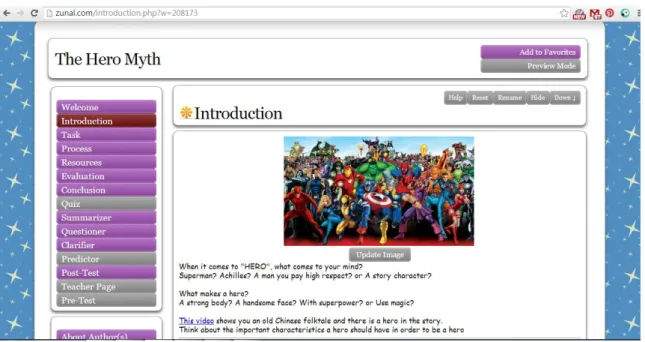
Figure 1: Interface of the WebQuest (Cycle 1) ...33
1
CHAPTER ONE
INTRODUCTION
Background and Motivation
The introduction of Internet or World Wide Web (WWW or Web) has brought
about a shift in the way people interact, communicate, and learn. Along with the
advance of information communication technology (ICT), people can stay connected
to each other and to the world, not being restricted by the physical and spatial borders.
Moreover, the accessibility and availability of Internet change the way people retrieve
information. It is quite convenient and natural for people nowadays to request the
needed information from the Web search engines anytime anywhere, especially the
younger generations.
The younger generations born after 1980s are named as “Digital Natives”
(Prensky, 2001). Digital natives have grown up in a context of digital ICTs, which
influence their preference and skills on thinking as well as learning in various ways
(Oblinger & Oblinger, 2005). For instance, they prefer graphics rather than written
texts; they work best when networked in a group. Nevertheless, researches showed
that these children encounter problems in locating relevant information on the Web,
and have difficulties in evaluating the relevance of the acquired information when
surfing the Internet for the answer to a formulated question (Fidel et al., 1999;
Wallace et al., 2000; Large et al., 2002).
As far as the education concerned, the use of Internet has been claimed to have
2
Neo, 2003; Wallace, 2004; Smeets, 2005). The most obvious pedagogical advantage is
that Web establishes a global database of authentic materials in various formats which
learners can easily approach to and teachers can refer to as a source pool (Son, 2007).
In addition to the materials and resources, the updated ICTs offer learners real-life
interaction experiences (Kim, 2008). The impact of ICT on pedagogy has led to
redefinition of teacher’s role (Punie, 2007; Larsen-Freeman & Freeman, 2008).
Teachers now are not the only information transmitter since learners can self-access to
the massive amount of information available on the Web. Learners as digital natives
in most cases even possess superior technical skills than the teachers. Teacher
assumes a different role that “encourages students to think about what they are
learning and why they are learning it” (Nguyen, 2008, p.136). Also, students need
instruction and assistance as to cultivate critical skills in order to find the reliable
information and to utilize the information collected effectively (Kuiper et al., 2005).
However, how to use the Internet sources wisely and pedagogically appropriately
remains an issue. There exists a gap between information and instruction; putting
content on a Web page does not necessarily result in learning (Foshay & Bergeron,
2000). The major problems concerning learning through the Web lie in navigational
disorientation, and cognitive overload (Bradshaw et al., 2002). Learners may get lost
in the vast cyber space and have difficulties concentrating on the tasks (Segers &
Verhoeven, 2009). Hypertext provides learners numerous possible paths to obtain
information, but the nonlinear structure demands high cognitive processing ability on
learners’ side to reach comprehension (MacGregor & Lou, 2005). Other than technical
skills, learners need to be equipped with search skills and hypertext reading strategies,
and learn how to assess the reliability and relevance of gathered information.
WebQuest developed by Dodge (1995) devises an inquiry-oriented activity that
3
online resources support learners in completing the WebQuest tasks, which helps
diminish the problem of information overload (Milson & Downey, 2001). Besides,
WebQuest tasks provide a context and a purpose for reading. The tasks require
learners to search for more information online beyond the materials prepared by the
teacher. Learners are also required to synthesize, evaluate, and then convert gathered
information into a new form. They acquire their knowledge of a specific area by
constantly reading and analyzing information gathered from the Internet. In other
words, these tasks set a goal of reading for learners, and polish their critical thinking
ability as well as reading ability during the read-and-think process in WebQuest
activity.
Purpose of the Study
The purpose of the present study is to investigate the development process of
reading ability and critical thinking ability among EFL learners when they are
engaged in WebQuest activity. WebQuest is an inquiry-oriented activity that learners “quest for” knowledge by constantly reading and thinking. Previous studies have
shown that WebQuest as a medium of instruction has positive impact on learners’
reading ability (Tsai 2006a; Kocoglu, 2010; Tuan, 2011), and critical thinking ability respectively (Ikpeze & Boyd, 2007; Ç ìgrìk & Ergül, 2010; Chen et al., 2010).
Nevertheless, little attempts have been paid to the process where learners’ reading and
critical thinking ability emerge. In the process of inquiry, learners need to read
through the information retrieved from the Internet, analyze it critically, and
eventually apply it to a new context. Learning is the result of the cooperation between
reading and critical thinking in WebQuest activity. Therefore, it is believed that the
process lies in potentials for advancing our understandings of how WebQuest
4
indeed interrelated with each other in the WebQuest activity, while there is a lack of
discussion including these two skills in one WebQuest study. This qualitative study
aims to examine how EFL learners reading and critical thinking ability develop when
involved in WebQuest activity, in the hope to give more insights into how WebQuest
5
CHAPTER TWO
LITERATURE REVIEW
This chapter first presents the discussion of Constructivism in first language (L1)
and second language (L2) learning, followed by the computer applications of the
Constructivism, focusing on the use of WebQuest. The second section introduces
WebQuest and reviews literatures concerning WebQuest, emphasizing how WebQuest
promotes learning in four dimensions. The chapter ends with a section about the
present study.
Constructivism
Constructivism in Learning.
Constructivists describe learning as an active process of interpretation, and
knowledge is the result of interaction between learners’ prior experience and the
world. Learners are not considered as a controlled respondent to stimuli or recipients
of instruction (Jonassen 1990; Perkins, 1991), but as “already a scientist” (Solomon,
1994, p.16) who constructing their own interpretation of the world while actively
participating in their learning process. Knowledge cannot be imposed or transferred
directly from the external world into learners’ minds: “It is the individual who
imposes meaning on the world, rather than meaning being imposed on the individuals”
(Karagiorgi & Symeou, 2005, p.18).
Learning theories based on Constructivism draws from the works of Bruner
(1960, 1962), Dewey (1938), Piaget (1977), and Vygotsky (1978). Piaget (1977) and
6
Constructivism on a continuum: cognitive constructivism and social constructivism.
Piaget (1977) developed a theory of children’s cognitive development and perceived
their learning as a progressive mental process of knowledge re-organization. Children
construct their own intellectual representation of the world on the basis of their
experiences through interactions with the social and physical environment. Learning
is a developmental process which involves assimilating the newly acquired
information and accommodating it to the pre-existing cognitive schema. The outcome
of this process is a state of equilibrium (Piaget, 1973), i.e., a state of cognitive balance
between one’s cognitive structure and his environment. The pre-existing cognitive
schema mediates input from the outside world and determines what children actually
acquire. Thus, Piaget characterizes children’s development as individual developing
independent capabilities. On the other side of the continuum, Vygotsky viewed
children’s cognitive development from a socio-cultural perspective. He posited the
importance of culture and context in forming the understanding (McMahon, 1997).
Individual’s thought develops through social interactions with advanced peers or
adults, which is a prerequisite to cognitive development. Learning in fact is a social
construction of meaning mediated by language via social discourse.
One crucial notion in Vygotsky’s theory of social construction of knowledge is that of “zone of proximate development” (ZPD) (Vygotsky, 1978), which is defined as
“the distance between the actual developmental level as determined by individual
problem-solving and the level of potential development as determined through
problem-solving under adult guidance or in collaboration with more capable peers”
(Vygotsky, 1978). In other words, ZPD points to the individual’s learning potential
(Zuengler & Miller, 2006) and describes the range of tasks that one is able to do with the assistance of the “more knowledgeable other” (MKO). Vygotsky coined the term
7
higher ability level than the learner, in relation to a particular task, process, or concept.
MKO is therefore able to guide children to go from not being able to do something, to
being able to do it with help, and to being able to do it on one’s own by interacting
with them.
There has been a vigorous debate among the literatures between the Piagetian
and Vygotskian theorists regarding how the two learning theories differ from or
complement to each other. Recently, there has been a trend towards a convergence of
the two (Shepard, 2000; DeVries, 2000; Felix, 2005), with adherents believing that
knowledge is both constructed individually and mediated socially (Windschitl, 2002).
DeVries (2000) proposed a reciprocal assimilation of Piagetian and Vygotskian
learning theories in educational practices. He proposed that in order to join the
educational forces of the two theories, we should move toward a fuller integration of
the individual with the social. The social practices should be considered as being “interactively constituted by the actions of actively interpreting individual” (Cobb et
al., 1993 in DeVries, 2000). When interacting with others, individuals would
construct their own knowledge of the world by constructing the meaning of others’
actions, which indeed is incorporating others’ construction of the world. Now
Constructivism not only acknowledges the prominent role of the construction process,
but also emphasizes the internal factors in the learning process that enable learners to
be aware of their construction process and hence reforms learners’ internal schema by
consciously reflecting upon that constructive process.
Constructivism in Second Language Acquisition.
With respect to the L2 learning, learners draw upon their knowledge structure in
an effort to internalize the input received and make sense of the meaning (Ruschoff &
8
prior knowledge needs to be activated in order for the new information to be
incorporated into the existing knowledge structure. Information is not only processed
based on learners’ current knowledge but also through inquiry (Powell & Kalina,
2009). The prior knowledge comprises of learners’ native language as well as their
general knowledge of the world. Their native language functions as a reference point
based on which learners test out the acquired L2, receive feedback, and revise their
system. Learners, input, teacher, and classroom community all take part in the
construction of meaning. Internal representations of the target language are thus
constantly revised and reorganized as proficiency advances.
Learners’ native language could exert positive as well as negative impact on their
formation of L2: the linguistic elements shared similarly by the two languages would
be more easily acquired by the learners, while the negative interference occurs at the
most distinct points of the two languages. This is termed as the cross-linguistic
influence (CLI) (Kellerman, 1995), the weak version of Contrastive Analysis
Hypothesis (CAH) (Ellis, 1994; Larsen-Freeman & Long, 1991).
In this trial and err process, learners develop a unique language system which
locates somewhere between their native language and the target language (Hadley,
2001). Selinker (1972) characterized this intermediate system as “interlanguage”.
Learners’ use of L2 may manifest various aspects of their native language at the initial
stage, but variability can be observed in their language performance (Ellis, 1985) as
well. As learners construct their own personal interpretation in the situational social
context, learners’ interlanguage would evolve differently and vary from individual to
individual. Consequently, each learner develops their interlanguage idiosyncratically
because of their individual information gathering and processing process.
The information gathering process requires interactions. Interactions with more
9
understanding and social context. Social interaction serves as a mechanism through
which individual internal interpretations of L2 are re-structured, modified and later
subsumed into the existing knowledge structure (Ohta, 2000). It is through the social
interaction that learners are able to internalize the input as well as “form and test
hypotheses in order to acquire a target language” (Simina & Hamel, 2005, p.221).
Learners’ construction of meaning is negotiated through their interactions with both
peers and/or teacher (Pica, 1991; Long, 1996), in Vygotsky’s words, with “more
knowledgeable others” (MKO), who provide the appropriate assistance just enough to
complete the task (Abdullah et al., 2013).
These appropriate assistances can be viewed as “scaffolding”, coined by Wood,
Bruner, and Ross in 1976, describing the support given by a teacher or peers to
facilitate learning during the learning process (Stone, 1998). Scaffolding bridges what
learners have already known and what they do not know. The scaffold will be
removed gradually once the learners are able to take the full responsibility for their
learning and work independently. Scaffolding can take the form of “technology tools,
peer interactions, and discussions aimed at the whole class” (Puntambeker &
Hubscher, 2005, p.1). Dynamic scaffolds, which emerge at the moment out of the
context, are believed to be the most beneficial support to high-level conceptual tasks
(Wang & Hannafin, 2008). Teachers have to observe learners’ ZPD and determine the
level as well as the range of scaffolding learners require for achieving learning tasks
(Kaufman, 2004). In practice, language classroom should be carefully designed as a
social context where interactions take place. As a guide or a facilitator, teachers or
instructors should create a learning environment where “provide multiple paths for learners to explore” (Keengwe et al., 2013, p.3) and “allow learners to develop,
compare, understand multiple perspectives on an issue” (Karagiorgi & Symeou, 2005,
10
(Ruschoff & Ritter, 2001), and work cooperatively towards the same goal (Brooks &
Brooks, 2001).
To conclude, language learning is both a socially and individually interactive
process. Learners receive input from the interactions with the environment; the
received input further interacts with learners’ existing knowledge structure and would
be transformed into a new form through a variety of cognitive operations. The
environment learners are exposed to occupy an essential position in the learning
process, which initiates and scaffolds their learning. The implementation of
constructivist learning theory has been realized in different learning environments;
more recently, the proliferation of ICT sets a new stage for Constructivism. In the
following section, ICT in L2 acquisition through the Constructivist perspective will be
discussed.
Computer Applications in Second Language Acquisition (CASLA) through a Constructivist Perspective.
Chapelle (2001) defined the domain of CASLA as including computer-assisted
language learning (CALL), computer-assisted language testing, and computer-assisted
second language research. Chapelle (1997) noted that computer-assisted second
language research needs to be anchored in the instructed SLA. Instructed SLA
recognizes the importance of interaction in the learners’ language development
(Chapelle, 1997), and identifies the “conditions under which ideal input and
interactions take place” (Chapelle, 1999, p.5). Chapelle (2004) indicated that most of
the researchers now have acknowledged the significance of learner interaction for
language development in instructed SLA, either from a cognitive or socio-cultural
point of view. Accordingly, the contexts of interactions remain the primary focus in
11
the successful instructed SLA: cognitive and socio-affective conditions. Cognitive
conditions are suggested to be implemented through a task-based instruction (Skehan,
1998, in Chapelle, 2001). Teachers should utilize the tasks to concentrate learners’
attention to the linguistic forms, i.e. the meaning as well as the structures of the target
language, and to arouse learners’ awareness of what they are learning. The tasks
should expose learners to a wide range of target structures, which do not reach beyond
the learners’ level and help them to accomplish the tasks. Also, the tasks should be
selected and sequenced for the purpose of a balanced goal development. Fluency,
accuracy, and complexity are viewed as three principal goals of L2 acquisition;
therefore, tasks should guide learners’ to progress towards these goals.
Another condition for successful instructed SLA concerns the social and
affective aspects of learning. The emphasis is placed on encouraging learners’ “willingness to communicate”, i.e. learners’ intention to use their L2 to communicate
in a specific situation (MacIntyre, Clement, Dornyei, & Noels, 1998 in Chapelle,
2001). Teachers should establish a learning environment in view of promoting a
positive disposition in learners in searching for moments for communication, and
cultivating their willingness to communicate in this learning environment. Classroom
activities should create spaces for social interactions and collaborations to occur,
fostering learners’ willingness of communication.
On Constructivist accounts, L2 learning is the consequence of learners’
interactions with the environment, from which learners receive input and produce
output. Learners are engaged in authentic meaningful tasks and cooperate with peers
through which create their own interpretations of the target language. Teachers take
the responsibility of constructing the learning environment and thus scaffold learners’
learning. Juxtaposing the conditions for successful CASLA and the Constructivist
12
drawn as following. First, social interaction plays a vital role in such an environment.
Social interaction provides learners with opportunities to negotiate for meaning, and
reflect and monitor their own learning. Second, the environment embeds scaffolding
that enables learners to collaboratively construct their linguistic knowledge.
Researchers have addressed the potentials of the ICT in education as a type of
environment in facilitating a more interactive learning in the classroom and beyond
the classroom. Davies (2011) contended that ICT can “augment and build on
traditional forms of social learning”, and “give birth to an improved and more
multifaceted approach to knowledge acquisition” (p.13). In fact, the use of ICT
enhances learning socially as well as personally. For one thing, ICT enables teacher to
easily monitor learner’s individual learning and accommodates various learners’ styles
(Nguyen, 2008); for another, ICTs ensure a much more diverse and interactive
learning context (Tam, 2000). For example, the incorporation of computer-mediated
communication (CMC) tools into the classroom facilitates the teacher-learner, and
learner-learner interactions for internet-based collaborative learning (e.g. Kitade, 2000;
Smith, 2005; Knight, 2005; Tutty & Klein, 2008; Kessler & Bikowski, 2010; Wang &
Chen, 2009; Yang, 2011). Most importantly, the revolution of the Internet increases
the opportunity for interactions and opens a new avenue for learning. The Web now is
more than a mechanism or medium for communication, but a learning environment
that fosters interconnections among learners and teachers, and provides abundant
learning resources for teaching and learning. Learners can resort to the wealth of
information on the Web for support from different sources other than their instructors.
Now it is the ICT that becomes the MKO, the more knowledgeable others, to the
learners, and assists learners’ learning throughout their learning process (Puntambekar
& Hubscher, 2005).
13
seems to be a good practice of CASLA through socio-constructivist perspective.
WebQuest developed by Dodge (1995) is an inquiry-oriented learning that helps
learners to organize the information retrieved from the Web and to apply the
knowledge gained to an authentic task or a project. WebQuest contains 6 critical
elements that guide learners’ web-based learning: introduction, task, process,
resources, evaluation, and conclusion. WebQuest learning benefits learners’
development critical thinking ability, and constructs a cooperative learning
environment among learners (Leahy & Twomey, 2005). With reference to language
learning, the use of WebQuest is claimed to improve learners’ reading as well as
writing ability (e.g. Tsai, 2006; Kocoglu, 2010; Tuan, 2011).
WebQuest is in favor of Constructivist learning principles (March, 2003;
Laborda, 2010). First, learning is contextualized within the tasks. The tasks in
WebQuest usually involve group work, where learners assume different roles and
work collaboratively to compete the tasks. Second, WebQuest constructs a scaffolding
learning structure by providing teacher-selected links learners need and sequencing
the tasks into clear steps, directing learners to effectively learn a content matter.
Finally, learners are led to interact with Internet information, from which acquire
knowledge of a content area. WebQuests structure web-based learning “by providing
structure, focus, and purpose to an increasingly unstructured mass of information that was available on the Internet” (Abbit & Ophus, 2008, p.453).
WbebQuest
Construction of WebQuest
WebQuest was developed by Bernie Dodge and Tom March in 1995 in an effort to “help teachers integrate the power of the Web with student learning” (March, 1998).
14
all of the information that learners interact with comes from resources on the Internet”.
For both teachers and learners, WebQuest offers not only access to online resources
(Milson & Downey, 2001), but guidance and structure that direct learners to navigate
the Internet in a planned way with a clear objective in mind (Dodge, 1997 & 2001).
According to Dodge (1995), two levels of WebQuests should be differentiated:
short-term and long-term. The instructional goal of a short-term WebQuest is
knowledge gain and knowledge integration. At the end of a short-term WebQuest,
learners are expected to equip with a substantial amount of new information and “make sense of it” (p.1). A short-term WebQuest is designed to be completed in one to
three class periods. On the subject of a long-term WebQuest, the instructional goal is
to extend and to refine knowledge. Learners would be able to “analyze a body of
knowledge deeply, transform it in some way, and demonstrate an understanding of the
material by creating something that others can respond to, either on-line or off-line”
(p.1). A long-term WebQuest usually takes between one week and a month in a
classroom setting.
A typical WebQuest consists of six critical attributes: Introduction, Task,
Resources, Process, Evaluation, and Conclusion (see Table 1).
Table 1
Six Attributes of a WebQuest
Attributes Definition
Introduction An introduction sets the stage and provides some
background information.
Task A task that is doable and interesting and may
15
Resources A set of information sources needed to complete
the task.
Process A description of the process the learners should
go through in accomplishing the task.
Evaluation An evaluation describes the criteria needed to
meet performance and content standards.
Conclusion A conclusion that brings closure and encourages
reflection.
(Dodge, 1995, 1997)
A well-designed WebQuest begins with an Introduction, which usually constructs
a scenario or a story (Halat, 2008) in a form of an open-ended, main question. The
question presented to learners serves to arouse a cognitive dissonance, and to direct
learners throughout the process from the beginning stages to the end of the process
(Pelliccione & Craggs, 2007). The use of an open-ended question is believed to
activate learners’ prior knowledge and thus to motivate them to explore a topic in depth, “bringing about a more robust understanding of the material” (March, 2003).
The second element is Task, which, is the core of a WebQuest. The task defines
the goal and the focus for learners’ activities, and “it makes concrete the curricular
intentions of the designer” (Dodge, 2002). A quality task is achievable and engaging,
and “elicits thinking in learners that goes beyond rote memorization and
comprehension” (p.1). Tasks challenge learners to acquire conflicting information and
to formulate different perspectives (Pelliccione & Craggs, 2007). A WebQuest usually
consists of a set of authentic, context-situated tasks (Luzón-Marco, 2010) interrelated
16
learners’ journey of inquiry with the prepared websites. They often cast learners in
specialized roles (Zheng et al., 2005), and require learners to work cooperatively as a
group. Moreover, tasks in a series enable learners to convert the acquired information
into deeper understanding of the content knowledge, which is the ultimate goal of
WebQuest learning (March, 2003). This transformation process “moves learners
through a crucial transition phase toward a more autonomous, learning-centered
educational process” (p. 46).
The third element, Resource, addresses teacher-selected and teacher-organized
Internet-based resources that students will use to complete the assigned tasks. The
target, and learners’ developmental appropriateness as well as needs should be taken
into consideration when teacher-designers compile a list of useful websites or online
resources. Because pointers to resources are included, learners are not left to drift
aimlessly around the vast web sea (Dodge, 1997). The Tasks together with the
Resources scaffold learners’ exploration and learning in the process of inquiry.
The Process section delineates explicitly the detailed steps that learners should
go through in order to be able to answer the main question proposed in the
Introduction and to accomplish the given tasks. Role descriptions and guidance on
how to organize the various aspects of information are required; scaffolding tools
such as visual organizers and advice on completing particular activities are also
embedded in this section (Fiedler, 2002).
The last two attributes are Evaluation and Conclusion. Evaluation is an addition
to the original WebQuest model (Dodge, 1997), which explains to learners how their
performance and works will be assessed. Teachers are strongly advised to design a rubric “that aligns with the culminating project or performance outlined in the task
section of the WebQuest” (Dodge, 1997). The assessment should also specify which
17
The end product should not be the only source for evaluation; creativity and
development through the process are also two important aspects suggested to be
included in the Evaluation (Şen & Neufeld, 2006).
Finally, the Conclusion section is likely to be a wrap-up of a lesson. It
summarizes what learners have learned during the entire process (Chatel, 2002), and
what learners have accomplished or learned from this WebQuest activity or lesson. It
encourages learners to reflect upon their learning experiences (Fiedler, 2002), and
may include some rhetorical questions or additional links to extend their thinking and
learning experiences into other domains (Halat, 2008).
Learning with WebQuest
An extensive amount of literatures has been published on describing the role of
WebQuest in learning. WebQuest is claimed to facilitate learning in four major
aspects: critical thinking, scaffolding, cooperative learning and knowledge application.
This section presents the discussion concerning the impact of the use of WebQuest on
learning in these four dimensions.
Critical thinking.
Dodge (2012) pointed out one of the key features which distinguish WebQuest
from other web-based experiences is that WebQuest is built around a series of
engaging and doable tasks which elicit higher-order thinking of some kind. They
prompt learners to utilize cognitive and meta-cognitive strategies rather than their
simple web-searching skills. They challenge learners to think (Dodge, 2001), and “support learners’ thinking at the levels of analysis, synthesis and evaluation” (p.7).
WebQuest leads learners to use reasoning skills. The use of reasoning skills is not
18
involved in a problem-based learning process, and from exercising the diverse
information collected from the Internet.
Vidoni and Maddux (2002) compared WebQuest to Weinstein’s (2000) critical
thinking framework. Weinstein adopted Lipman’s definition and defined critical
thinking as “skillful, responsible thinking that facilitates good judgment because it: (a)
relies on criteria, (b) self-correcting, and (c) is sensitive to context” (p.41). He then
established a framework of critical thinking consisting of six components. First,
critical thinking is skillful thinking since it is embedded in contexts that offer reliable
information and certified methodology. Second, critical thinking is a non-routine
thinking. Critical thinking involves considering context-specific situations in which
priorities are assessed and truth and relevance are determined. Thirdly, critical
thinking is responsible thinking. A critical thinker addresses the relationship between
him- or herself and the community when making claims or presenting arguments and
analyses. A responsible critical thinker presents and reflects upon his/ her judgment in
light of standards subject to the people in the field involved in the issues. In addition,
a critical thinker develops his/her criteria,and challenge or even revise the developed
criteria as critical thinking progresses. The applied criteria reflect the fundamental
factors the critical thinker takes into account when presenting analysis. Consequently,
the critical thinker is required to establish the criteria in order to his/her considerations
clear to the audience. Finally, a critical thinker scrutinizes the application of criteria in
relation to the context for the appropriateness or plausibility of the criteria employed,
and “considers specific alternations to the criteria” (p.42).
Comparing to Weinstein’s framework, Vidoni and Maddux (2002) argued that
WebQuest has the capacity to provoke critical thinking in learners. WebQuest
constructs a learning environment where learners are exposed to reliable sources and
19
WebQuest make WebQuest a non-linearly designed lesson. Learners enjoy the
freedom to visit other connected hyperlinks that interest them or provide further
information. The sources are authentic materials, exposing students to real-world
contexts. “WebQuests invite students to think about how they might think, feel, or live
as they might in different contexts” (Dodge, 2001 p.112). Additionally, WebQuest
usually presents an issue in multifaceted perspectives, based on which learners
formulate their own interpretations and criteria. WebQuest is often practiced via group
work, and required a final product. Learners are able to constantly make critical
reflections with their group members, and receive feedback from the teacher. They concluded that “WebQuests meet all six of Weinstein’s key elements in critical
thinking, and therefore are powerful tools for inspiring critical thinking skills in students” (p.101).
A number of studies have examined the use of WebQuest on promoting students’
critical thinking ability or higher-order thinking ability (Murray, 2006; Ikpeze & Boyd, 2007; Pelliccione & Craggs, 2007; Ç ìgrìk & Ergül, 2010; Chen et al., 2010), and
stressed the importance of critical thinking ability in the implementation of a
WebQuest activity (Perkins & McKnight, 2005; Zheng, 2008; Yang et al., 2011). In
comparison to the traditional instruction, WebQuest was found to better facilitate
critical thinking in students. Students in the WebQuest group scored higher than the
group receiving traditional instruction in the critical thinking test. There was a significant difference between the two groups (Ç ìgrìk & Ergül, 2010; Chen et al.,
2010). Learners’ progress in critical thinking ability can be attributed to several
features of WebQuest. First, when outlining a WebQuest, the teacher simultaneously
determines the appropriate level of scaffolding learners need in order to complete the
tasks (Ikpeze & Boyd, 2007). Teachers can incorporate techniques, such as a study
20
(MacGregor & Lou, 2005). Learners are guided to think in the process of inquiry,
which facilitates learners’ development of critical thinking. Second, the presentation
of the sequenced tasks (Murray, 2006) and guided questions (Pelliccione & Craggs,
2007) direct learners’ search for information online, and give them opportunities to
have an in-depth study of the content. Furthermore, the variety of tasks students
engaged in earn them opportunities to express themselves, and hence foster their
critical thinking ability (Chang et al., 2011). Members in a group spent considerable
time talking about what they discovered from the searching, and from time to time
commented on each other’s findings.
Scaffolding.
A WebQuest in nature devises a web-learning method which scaffolds learners’
development of individual expertise through organized links and step-by-step
procedure. March (2003) defined WebQuest as a scaffolding learning structure which
integrates sound learning strategies with effective use of web resources. Dodge (2000)
proposed that a well-designed WebQuest should incorporate three types of scaffolding:
Reception, Transformation, and Production. A reception scaffold offers learners
guidance in respect of understanding, gathering, and synthesizing information, and
retaining what learners have learned. A transformation scaffold facilitates learners to
reconstruct what they have learned and change them into a new form. A production
scaffold helps learners in producing the outcome. Over the time, learners are expected
to internalize the structure teachers provide “until they can work autonomously” (p.5).
From Dodge’s (2001) point of view, scaffolding is considered as “a temporary
structure used to help learners act more skilled than they really are”, and the role of scaffolding is to “transform what they read into some new form” (p.58). A good
21
WebQuest explains and leads learners’ action. Meanwhile, the appropriately-selected
websites and resources are made available and accessible to learners. The
task-sub-task design allows different degrees of guidance from teacher and helps
learners manage the complexity of online information, from which learners gradually
become self-reliant and develop autonomy (Simina & Hamel, 2005).
WebQuest researches have revealed that scaffolding is perceived as critical
factors to the construct of a WebQuest (Zheng et al., 2005; Zheng et. al, 2008; Sox &
Rubinstein-Avila, 2009), and is identified as an important part in the completion of a
WebQuest project (MacGregor & Lou, 2005; Murray, 2006; Ikpeze &Boyd, 2007). In
an examination of the existing WebQuests, Sox and Rubinstein-Avila (2009) found
that each WebQuest reviewed in the study contains scaffolding feature. From the
perspective of users and designers, i.e. learners and teachers, scaffolding learning is
recognized as one of the crucial components to WebQuest learning (Zheng et al., 2005;
Zheng et. al, 2008). Practically speaking, the scaffolding students need is more than
academic support. Materials, note-taking and search tools are three sources of
scaffolding identified in Zacharia et al.’s (2010) study: The materials should be rich
and transparent; the note-taking as well as search tools should be convenient.
The use of WebQuest introduced a layer of structure between students and
Internet, and sheltered their learning of content knowledge (Segers & Verhoeven,
2009). Zheng et al. (2005) reported in a survey study that scaffolding learning in
WebQuest is indeed more than structuring instructional cognitive and academic
support, but including knowledge application as well as problem solving skills for
more meaningful learning. In a similar vein, WebQuest not only produced different
effect size of learning, from moderate to high, but “bridged the gap between the
content literacy and technology literacy” (p.431). Ikpeze and Boyd (2007) pointed out
22
facilitates learners’ thoughtful literacy. It directs learners’ attentions to substantial
information, and helps them to make internal and external connections. By virtue of
scaffolding, learners can articulate the acquired knowledge and notice ineffective
strategies and misconceptions. MacGregor and Lou (2005) suggested that scaffolding
in a form of a concept mapping template supported students as they were engaged in
learner-centered, resource-based learning. In other words, the concept mapping
template serves as learners’ cognitive guide, which helps learners extract the needed
information from the websites and to help them remember, present, and organize that
information.
Cooperative learning.
WebQuest has been an instructional tool designed to foster cooperative learning
in the classroom practice since its inception. In the article of 2001, Dodge connected
WebQuest to cooperative learning theory. According to Johnson and Johnson (2000,
as cited in Dodge, 2001), a successful cooperative learning environment consists of a
number of critical attributes, including: positive interdependence, promotive
interaction, individual and group accountability, interpersonal and small group skills,
and group processing. First, learners have to be aware of that they cannot complete
the task without each other. Second, learners need to help each other and collaborate
in dealing with authentic task. Third, each group is accountable for the assigned tasks,
and each member of a group is accountable to his/her piece of the task. Fourthly,
learners as well as the instructor need to learn how to cooperate with each other.
Lastly, communications about how to maximize effectiveness of group work are
deliberately included in the process. Dodge contended that a quality WebQuest “has these qualities as well” (p.8). WebQuest draws on the links of essential online
23
process that transforms newly acquired information into a more sophisticated understanding” (March, 2003 p.2). The tasks in WebQuest coordinate learners and
resources and give students opportunities to interact with each other in a realistic
context (Laborda, 2009).
Cooperative learning is perceived to be an essential component in WebQuest
activity by both teachers as well as students, either as a method of teaching or as a
learning activity (Perkins & Mcknight, 2005; Zheng et al., 2005; Zheng et al., 2008;
Gülbahar et al., 2010). Teachers consider the interactive nature of WebQuest to be
advantageous to social interactions among learners, engaging learners in their learning
process (Perkins & Mcknight, 2005). In a research of learning experience with
WebQuest, Zheng et al. (2005) found that college student who had learned with or
created a WebQuest before viewed cooperative learning as an important element for
WebQuest learning.
In WebQuest activity, cooperative learning is commonly realized as group work.
Learners are usually allocated specialized roles in each group task. It is important for
learners to gain an individual perspective on a topic since they are obliged to
collaborate to complete the task. Group work increases learners’ active engagement in
the process of learning, and therefore facilitates their social interactions. Social
interaction is more than the collaboration among students, but as “an act involving
collective efforts to actively applying knowledge to learning” (Zheng et al., 2008 p.7).
Yet, these studies tend to focus on the perceptions of teachers and students, while
limited attempts have been made to report in what way a WebQuest nurtures and
elicits cooperative learning in learners (Abbit & Ophus, 2008). WebQuest tasks could
bring about interactions, but meaningful negotiations do not necessarily take place
24 Knowledge application.
Both as a medium and as a method, WebQuest scaffolds learners to probe into
certain knowledge area and to develop individual expertise. The six components of
the WebQuest model are parallel to the stages of a knowledge inquiry process. With
the assistance of a driving question and guided tasks, learners are led to search,
analyze, synthesize and evaluate information retrieved from online sources.
Accordingly, learners are able to conduct an in-depth exploration on a topic and gain
content knowledge in a systematic way. It was the variety of activities built in
WebQuest that affords opportunities for students to carry out the study of content
thoroughly. The presentation of their final product enables students to assimilate
learned content knowledge into their existing knowledge structure.
WebQuest is a learning tool allowing for a thematic, interdisciplinary teaching
(Ikpeze & Boyd, 2007). Nevertheless, previous studies regarding the effectiveness of
WebQuest in knowledge gain have been inconsistent (Richards, 2005; Allan & Street,
2007; Chang et al., 2011). Allan and Street (2007) reported that college students had
widespread perceptions towards the impact of WebQuest on their subject-specific
learning. 40 % of the students thought their learning was at a lower-order level during
the WebQuest session, whereas 60 % felt that they learned at a higher-order level. In
contrast, the WebQuest in Chang et al.’s (2011) received quite positive feedback from
students. Chang et al. (2011) investigated the impact of WebQuest as an alternative
teaching strategy on elementary school students’ learning in an environmental
education class. The quantitative and qualitative data showed that learning groups
adopting the WebQuest, either as a complementary material or as a main instruction,
outperformed the other group in the final performance assessment. The results of
questionnaire revealed that students considered accomplishing tasks in real situations
25
learning experiences. Considerably more work will need to be done to examine the
influence WebQuest exerts on learners’ knowledge applications.
Second Language Learning with WebQuest
“TalenQuest” was the first WebQuest designed specifically for foreign language
learning. “TalenQuest”, or LanguageQuest in English, is “a WebQuest with a focus on
foreign language learning” (Koenraad & Westhoff, 2005 p.2). It was a research
project sponsored by the Dutch education bureau and launched by a group of
language teachers and researchers in the two life cycles (2000-2002 & 2002-2004).
The outcome of the project was a website and an evaluation rubric. The website offers
abundant downloadable lesson templates for language teachers and holds a database
of a collection of quality-assured TalenQuest. The developed rubric is used to assess
LanguageQuest or any WebQuest for language learning. The rubric can be categorized
into three sets of criteria: the critical attributes of the original WebQuest model,
communicative language teaching (CLT) approaches, and principles of SLA. However,
now only the rubric is accessible to teachers, and language teachers can utilize the
developed rubric to self-assess the created language learning WebQuest.
Second language learning with WebQuest has been researched as a means of
language instruction in previous empirical studies, specifically for reading and writing
(Tsai, 2006a 2006b; Chuo, 2007; Kocoglu, 2010; Laborda, 2009, 2010; Luzón-Marco,
2010; Tuan, 2011; Alshumaimeri & Almarsi, 2012). It has been suggested that
WebQuest enhance students’ vocabulary acquisition (Tsai, 2006b), and reading ability
(Kocoglu, 2010; Tuan, 2011; Alshumaimeri & Almarsi, 2012). Tsai (2006a)
investigated the role of a WebQuest learning module as a supplement to EFL
instruction. The majority of the students commented that WebQuest learning module
26
WebQuest activities were especially identified. For instance, WebQuest allowed them
to easily re-read the articles, offered links of online dictionary, and helped identify
contextual clues in reading (Tsai, 2006a). Tuan (2011) found that college students’
reading performance improved after the WebQuest-based reading course. There was a
significant difference between their pre-test and post-test on reading. The post-course
survey indicated thatstudents held a positive attitude towards this web-based reading
program, in agreement with Tsai’s (2006a) findings. In Kocoglu’s (2010) study, the
researcher compared the effects of WebQuest tasks on a group of college EFL
students with the traditional teacher-led reading tasks. Comparisons between the two
groups were made using independent sample t-test. The reading scores of WebQuest
group were reported significantly than the teacher-led group.
In terms of writing, limited researches have conducted in this respect, and the
results have not achieved consistency. Chuo’s (2007) study was one of the first
applying writing WebQuest in EFL context, i.e. in Taiwan. Chuo (2007) examined the
effects of a WebQuest writing instruction (WQWI) program on Taiwanese EFL
learners’ writing performance, writing apprehension, and perceptions of web-source
integrated language learning. Two classes of college students were recruited and
divided into experimental and control group respectively. The statistical results
showed that the class who experienced WQWI achieved greater improvement, though
their level of writing apprehension was reduced much the same as the traditional class
group. Students had a positive perception of the WQWI program, recognizing more
merits than disadvantages of language learning through online texts. This finding
contrast with that of Kocoglu’s (2010), who found the use of WebQuest in writing
instruction did not improve college students’ academic writing ability.
In English for Specific Purpose (ESP) courses, WebQuest has been proposed to
27
and as an oral development task (Laborda, 2009). Laborda (2010) studied the
incorporation of the use of WebQuest into a class of Travel and Tourism. Students
mostly expressed satisfaction on the type of tasks and the way to obtain online
information. They acknowledged WebQuest to contextualize their learning in the
authentic tasks, simulating the real-life situations they would encounter later in the
career life. Learners in the study could work with materials advantageous to their
college studies as well as to their future professional careers. By means of intensive
rehearsal, repetition, continuous oral interaction and presentations on sub-tasks,
students were observed to learn useful expressions and how to use them appropriately
in context. The use of WebQuest in English in fact connects directly to the teaching of
regular professional contents in the target language (Laborda, 2009). Moreover, this
kind of authentic content-based tasks could train students to communicate effectively
in their disciplinary community and raise their genre-awareness (Luzón-Marco, 2010).
The genre awareness would help students notice the genres used by the specific
discourse community, i.e., how language choices are used by the interlocutors to
achieve communicative goals in such community.
The Present Study
WebQuest is an inquiry-oriented activity that establishes structure, focus, and
purpose for learning. The sequenced tasks in WebQuest lead learners to explore the
knowledge of a particular area in depth. The rich sources online are the major learning
materials. In addition to teacher-selected links, learners need to find out more on their
own in order to complete the tasks. When searching online, learners read extensively,
try to comprehend each piece of information, and analyze and evaluate the
information collected. That is to say, the process of inquiry requires learners to
28
Literatures on WebQuest have confirmed the positive effects of WebQuest on
promoting students’ reading and critical thinking. As an alternative reading instruction,
WebQuest was found to have facilitative effects on students’ reading performance.
Students who experienced WebQuest-based reading instruction improve their reading
ability (Tsai, 2006a; Tuan, 2011), and outperform those receiving traditional reading
instruction (Kocoglu, 2010). As to critical thinking, students’ critical thinking ability improves after learning with WebQuest (Ikpeze & Boyd, 2007; Ç ìgrìk & Ergül, 2010;
Chen et al., 2010). The tasks, the instructor, the context of the group, and the
well-supplied information available online contribute to the growth of critical thinking
ability (Murray, 2006; Pelliccione & Craggs, 2007).
However, these studies have been mainly devoted to the instructional effect of
WebQuest, namely, the product of WebQuest learning, while insufficient attention has
been paid to the process of WebQuest learning. It is the process of WebQuest where
learners’ reading and critical thinking ability actively operate. As discussed in the
prior paragraph, the inquiry process of WebQuest learning involves both reading and
critical thinking. Learners need to understand the meaning of information before they
can determine the value of it. Besides, in the view of Constructivism, reading is a
thinking process to construct meaning (Huang, 2009). In WebQuest activity, reading is
the process of online information searching, and of critically reflecting on the
information retrieved. The thinking process is to construct learner’s own interpretation
of a knowledge area. This knowledge construction process is built around a series of
tasks, and takes place in the interactions between learners and the information, and
among group members. Learning is the result of the collaboration between learners’
reading and critical thinking ability, and in turn cultivates these two skills in learners.
Thus, study examining the effect of WebQuest on learners’ reading ability should
29
learning should be brought into central stage, and lies in the potential for enhancing
our understandings about how WebQuest develops learners’ reading and critical
thinking. Most studies to date have been carried out in either reading or critical
thinking aspect, and have not addressed critical thinking and reading in one single
study. The researchers have tended to concentrate on the pedagogical effects of
WebQuest learning, while there is a lack of qualitative insight into learners’ process of
development. With these in mind, the present study raises the following research
question: How do Taiwanese EFL learners’ reading and critical thinking ability
30
CHAPTER THREE
METHODOLOGY
This chapter first presents a description of the participants, the instructor, and the
WebQuest curriculum. The instruments used to collect data and the methods adopted
to conduct the subsequent data analysis are described in the second and third section.
Participants
The Teacher
Teacher Betty was an experienced senior high school teacher who had taught
English for 25 years. She was the English teacher for the students in the present study,
and the instructor for the WebQuest class.
The Students
The students were recruited from a senior high school in the Northern Taiwan.
There were 9 students, including 5 female students and 4 male students (Table 2).
Within each WebQuest activity cycle, they were divided into 3 groups, and switched
members for the next new cycle. In this way, they had opportunity to interact and
cooperate with different group members. Their English proficiency reached
intermediate level: 7 out of 9 students passed the General English Proficiency Test
(GEPT) intermediate level first test, i.e. reading test and listening test.
Table 2
31
Name Gender GEPT
(Intermediate)
Grouping (Cycle 1)
Grouping (Cycle 2)
Brad Male passed Group 3 Group 1
Bonnie Female failed Group 2 Group 2
Donna Female passed Group 3 Group 3
Flora Female passed Group 1 Group 1
Kelly Female passed Group 3 Group 2
Lily Female passed Group 1 Group 1
Leo Male failed Group 2 Group 2
Steven Male passed Group 2 Group 3
Victor Male passed Group 1 Group 3
Note: The present study uses pseudo names for each participant student.
The WebQuest
The WebQuest Design
The WebQuest design in the present study followed Dodge’s (1997) framework,
and included two cycles of long-term WebQuest. The two WebQuests were created
by the researcher and reviewed by a university professor and an experienced senior
high school English teacher. The use of long-term WebQuest allowed students to
study a topic thoroughly and eventually generate their own knowledge. The topic of
the first cycle was about heroes in the tales, and the second cycle was food culture
around the world. There were sub-topics under each main topic. For example,
students explored issues concerning food safety, dining etiquette, and food culture in
the food culture WebQuest.