
奈米線場效電晶體生物感測器於腸病毒71型之高靈敏度、無標記且即時檢測
62
0
0
全文
(2) 奈米線場效電晶體生物感測器於腸病毒 71 型 之高靈敏度、無標記且即時檢測 Poly Silicon Nanowire Field Effect Transistor for High Sensitivity, Label-Free and Rapid Detection of Enterovirus 71. 研 究 生:賴音汝 Student:Yin-Ju Lai 指導教授:楊裕雄 Advisor:Yuh-Shyong Yang 國 立 交 通 大 學 生 物 科 技 系 所 碩 士 論 文 A Thesis Submitted to Department of Biological Science and Technology College of Biological Science and Technology National Chiao Tung University in partial Fulfillment of the Requirements for the Degree of Master in Biological Science and Technology July 2009 Hsinchu, Taiwan, Republic of China. 中華民國九十八年七月. .
(3) 奈米線場效電晶體生物感測器於腸病毒 71 型 之高靈敏度、無標記且即時檢測. 學生:賴音汝. 指導教授:楊裕雄. 教授. 國立交通大學生物科技學系(研究所)碩士班. 摘. 要. 對世界各地的幼童而言腸病毒七十一型 (Enterovirus 71, EV71)是一 種重要的致病原且比其他非小兒麻痺腸病毒 (non-polio enterovirus)具 有高致病率及致死率,其感染屬於神經性症狀,且平均會在三天內惡化。 傳統的臨床確認檢驗方式需要先病毒培養再進行病毒分離 (virus isolation)和藉由反轉錄聚合酶鏈式反應(RT-PCR),這些過程耗時、昂貴 且無法達到立即診斷 EV71。在文獻中,多晶矽奈米線場效電晶 (polysilicon nanowire field-effect transistor, poly SiNW- FET)可 被製成且具有高靈敏度、無標誌且立即偵測腸病毒七十一型的置能轉換器 (transducer)。對特定 EV71 的 DNA 序列有專一性的單股 DNA 序列先被固定 在多晶矽奈米線場效電晶體表面,用來偵測 EV71 的多晶矽奈米線場效電晶 體具有高靈敏度,且能對 EV71 產生反應,並且在有無交互作用的離子分子 -18. 下仍是穩定的,最低可偵測到 aM (attomolar, aM,10 M)範圍。此結果表 示多晶矽奈米線場線電晶體具有靈敏、無標誌且可立即偵測的淺能,此特 性可發展成生物感測系統用來偵測 EV71 的感染,以便早期發現早期治療,. i .
(4) Poly Silicon Nanowire Field Effect Transistor for High Sensitivity, Label-Free and Rapid Detection of Enterovirus 71 Student: Yin-Ju Lai. Advisor: Dr. Yuh-Shyong Yang. Department of Biological Science and Technology National Chiao Tung University ABSTRACT. Enterovirus 71 (EV71) is an important pathogen that cause higher morbidity and mortality in children around the world than those of other non-polio enteroviruses. Its infection is neurotropic and followed by rapid deterioration within average 3 days. The conventional clinical methods for EV71 identification require virus isolation from cell culture and DNA amplification by reverse transcription polymerase chain reactions (RT-PCR), which is time-consuming, expensive and cannot meet the urgent need for the diagnosis of EV71. In this report, polysilicon nanowire field-effect transistor (poly SiNW- FET) was fabricated and function as a transducer for ultrasensitive, label-free and real-time detection of EV71. Specific single-strand DNA sequences that the unique DNA sequence of EV71 were first immobilized on poly SiNW-FET. The fabricated poly SiNW-FET based EV71 biosensor exhibit a high sensitive and specific in respond to EV71. The functionalized poly SiNW-FET was stable in the presence of non-interacting ion molecules and was able to detect EV71 RNA at the aM range. The results of this study suggest that the poly SiNW-FET has a potential to be useful developed to a real-time, sensitive and label-free detection. The characteristics make it a potential biosensing system for early recognition that helps the treatment for EV71 infection. ii .
(5) Acknowledgement. 歷經兩年的碩士生涯,我學習也體驗到了很多東西,不僅學到實驗所需 的技能,也從中加強了提出問題、解決問題等邏輯思考,很感謝我的指導 教授楊裕雄老師,提供這麼好的學習及實驗環境,不吝給我指導、幫助和 包容。我所研究的論文,希望可以供未來有興趣研究奈米線場效電晶體的 同學做參考,也歡迎大家一起討論研究。 實驗室的氣氛非常和諧,大家也相處得很融洽,沒有拘泥於形式的學長 姐學弟妹制度,都親切友善且樂於討論。謝謝實驗室所有的學長姐、學弟 妹,不論是酵素組或生電組,謝謝美春學姊細心的帶領新生訓練,之後也 教導了很多關於酵素方面的實驗,其實她是一個很風趣的人;謝謝漢平學 長總是在歡笑中教導我們;謝謝郁吟學姐、Rich學長,兩位真是學士淵博 的人,和他們聊天可以知道很多東西;陸宜學長對實驗的熱忱及豐富的知 識也是讓人望塵莫及;小胖雖然一開始講話很難懂,但也很關心我的實驗, 提供實驗的方向和設計;小米學姊總是溫柔的和我討論,也辦我度過換題 目的那段歲月;普普學長幫我想怎麼合成dopamine-sulfate;最感謝程允 學長,教導所有電子相關的知識及想法,在我最後衝實驗的時候還幫我想 可以怎麼解決實驗上所遇到的問題;淵仁學長也是,也總是提供我意見; 政哲學長常不斷分享他人生的理念,也讓我學到不少;小志學長當實驗的 前鋒,省去不少的摸索;秀華學姐也幫了很多;謝謝咏馨在我剛進實驗室 好心的待我去搭車,還介紹了分生給我這個外行人聽,靠她講解的分生, 是進入這個實驗室一個很重要的起頭;謝謝欣怡,因為有她在實驗室,才 讓我覺得不孤單;sonia很辛苦的幫我問關於補助錢的事,一直被我騷擾; 謝謝實驗所有的學長姐和活潑的學弟妹們,讓我在實驗室最後的歲月過的 這麼開心,很開心能夠認識你們所有的人,希望大家實驗可以很順利、發 很多paper,可以順利如期的畢業,找到好工作,前程似錦。 最後感謝我的爸媽、我的家人他們是我支持下去的原動力,謝謝你們在 背後默默的支持我,讓我感動不已。 我會好好規畫我未來的路,人生不能一直活在後悔當中。. iii .
(6) Contents Abstract (Chinese). …………………………………………………………………. i. Abstract (English). …………………………………………………………………. ii. Acknowledgement. …………………………………………………………………. iii. Contents. …………………………………………………………………. iv. Contents of Tables. …………………………………………………………………. vi. Contents of Figures. …………………………………………………………………. vii. Abbreviations. …………………………………………………………………. ix. I.. Literatures review……………………………………………... 1. Enterovirus…………………………………………………….. 1. 1.1.1. An introduction to enterovirus……………………………….... 1. 1.1.2. Mode of transmission………………………………………….. 2. 1.1.3. Pathogenesis………………………………………………….... 2. 1.1.4. Epidemiology………………………………………………….. 4. 1.1.5. Conventional clinical diagnosis……………………………….. 7. Polysilicon nanowire field-effect transistor (poly SiNW-FET). 10. 1.1. 1.2 1.2.1. Introduction of SiNW…………………………………………. 10. 1.2.2. Applications of poly SiNW-FET to biomedical sensing………. 11. Commercialize products………………………………………. 13. 1.3 1.3.1 II. DR. EV IVD Kit (晶宇- 腸病毒體外診斷試劑套組)……….. 13 Materials and Methods……………………………………….... 14. 2.1. Fabrication of poly SiNW-FET devices……………………….. 14. 2.2. Immobilization of captured DNA probe on poly SiNW-FET…. 14. iv .
(7) 2.2.1. Materials ……………………………………………………… 14. 2.2.2. Equipments……………………………………………………. 18. 2.2.3. Functionalized poly SiNW-FET with capture DNA probe……. 19. Microfluidic system integrated with poly SiNW-FET……….... 21. 2.3.1. Preparation of microfluidic channel with PDMS……………... 21. 2.3.2. Poly SiNW-FET integrated with microfluidic system……….... 21. 2.3. 2.4. Electric mearsurements of poly SiNW-FET…………………... 23. 2.4.1. The measurement of ID-VG curves…………………………….. 23. 2.4.2. The measurement of ID-time curves………………………….... 24. III. Results and Discussion ……………………………………….. 25 3.1 3.2 3.2.1 3.2.2 3.2.3 3.2.4. To confirm the immobilization step with target DNA labeled FAM…………………………………………………………… Electronic responses from specific DNA/DNA interaction on poly SiNW-FET……………………………………………….. NW immobilized with EV71capture DNA probe and ID-VG curve was obtained with micro pipette……………………………… NW immobilized with EV71capture DNA probe and ID-time curve was obtained with microfluidic system………………… NW immobilized with CA16capture DNA probe and ID-time curve was obtained with microfluidic system………………… Concentration-dependent electric response of EV71capture functionalized poly-SiNW FET device………………………... 28 28 32 36 40. IV. Summary and perspective……………………………………... 43. V. References……………………………………………………... 44. Appendix I. DNA Immobilize to the Nanowire Surface……………………. 51. v . 25.
(8) Contents of Tables Table 1. Enterovirus were classified based on their genomic sequences…………….. 1. Table 2. Proposed pathogenesis of severe Enterovirus 71 infections………………... 3. Table 3. The common disease related enterovirus serotypes………………………... 3. Table 4. Historical perspective and case incidences of Enterovirus 71 in worldwide.. 5. Table 5. The detection limit of all kinds of novel sensors………………………….... 12. Table 6. Compare the advantages and drawbacks of poly SiNW-FET and traditional 13 clinical diagnosis……………………………………………………………. vi .
(9) Contents of Figures Figure 1. The epidemiology of enterovirus around the world, since 1969.. Figure 2. Epidemic situation of Enterovirus infection with severe complications in 6 Taiwan, 1998-2008. Figure 3. The distribution of serotypes of virus isolation from severe fatal case, 6 1998~2006. Figure 4. Comparison of time of clinical diagnosis and Enterovirus life cycle in 9 host is related to transmission speed.. Figure 5. Schematic diagram of DNA probe immobilization. Figure 6. The microfluidic channel are used for the biosensing with poly 22 SiNW-FET. Figure 7. The apparatus for electric measurement. Figure 8. Fluorescence microscopic image of the unmodified EV71 capture DNA 26 probe with poly SiNW-FET device following reaction with 5-FAM dye.. Figure 9 Figure 10. 5. 20. 22. Fluorescence microscopic image was observed EV71 capture DNA probe immobilized on the silicon oxide surface in the absence of 26 glutaraldehyde. Fluorescence microscopic image was observed the device functionalized with specific EV71 capture DNA probe gave the expected fluorescence 27 image.. Figure 11. ID-VG curve illustrating n-type behavior of poly SiNW-FET after 30 functionalization.. Figure 12. The ID–VD curves for varying VG from 0 to 5V at ΔV = 1V. Figure 13. Electric responses of functionalized poly-SiNW FET to specific 31 EV71target in aqueous solution.. Figure 14. Concentration-dependent electric response of EV71capture functionalized 31 poly-SiNW FET device following by EV71target.. Figure 15. Electric responses of functionalized poly-SiNW FET to specific EV71target in aqueous solution was determined before and after ID-time 33 measurement.. vii . 30.
(10) Figure 16. ID-time curves of functionalized poly-SiNW FET to specific EV71target in 33 PBS.. Figure 17. Electric responses of functionalized poly-SiNW FET to specific EV71target in aqueous solution was determined before and after ID-time 34 measurement.. Figure 18. ID-time curves of functionalized poly-SiNW FET to specific EV71target in 35 PBS.. Figure 19. Electric responses of functionalized poly-SiNW FET to specific CA16target in aqueous solution was determined before and after ID-time 37 measurement. Figure 20. ID-time curves of functionalized poly-SiNW FET to specific CA16target in 37 PBS.. Figure 21. Electric responses of functionalized poly-SiNW FET to specific CA16target in aqueous solution was determined before and after ID-time 38 measurement.. Figure 22. ID-time curves of functionalized poly-SiNW FET to specific CA16target in 39 PBS.. Figure 23. Electric responses of functionalized poly-SiNW FET to specific 41 EV71target was determined before and after ID-time measurement.. Figure 24. comparing unmodified and EV71capture functionalized poly-SiNW FET 42 device concentration-dependent electric response.. viii .
(11) Abbreviations. EV71: Enterovirus 71 Poly SiNW-FET: poly Silicon nanowire field-effect transistor CA16: Coxsackievirus 16. ix .
(12) I.. 1.1. Enterovirus. 1.1.1. An introduction to enterovirus. Literatures review. The enterovirus belongs to family Picornaviridae, single-strand RNA virus. They consist of poliovirus (PV, 1-3 serotypes), coxsackievirus group A (CA, 1-22, 24 serotypes), group B (CB, 1-6 serotypes), and echovirus (EV, 1-33 serotypes, except 8, 10, 28) [1]. Since the 1960s, 4 newer enteroviruses have been discovered and named with serial number only, such as enterovirus 68-71 [2, 3]. Since 2000, enteroviruses were classified by genomic sequencing to human poliovirus and human enteroviruses A to D [4] (Table 1). The major outbreak occurred in Taiwan in the summer of 1998 is Enterovirus 71 [5].. Table 1 Enterovirus were classified based on their genomic sequences Classified Serotypes Human enterovirus A Coxsackievirus A2-8, 10, 12, 14, 16 (HEV-A) Enterovirus 71, 76, 89-92 Human enterovirus B Coxsackievirus A9 (HEV-B) Coxsackievirus B1-6 Echovirus 1-7, 9, 11-21, 24-27, 29-33 Enterovirus 69, 73-75, 77-88, 93, 97-98, 100-101 Human enterovirus C Coxsackievirus A1, 11(15), 13(18), 17, 19-22, 24 (HEV-C) Enterovirus 95-96, 99, 102 Poliovirus 1-3 Human enterovirus D Enterovirus 68, 70, 94 (HEV-D) New (unclassified). 1 .
(13) Enterovirus 71 (EV71) belongs to human enterovirus A (HEV-A). EV71 was further classified by their nucleotide sequence to genotype A, B, and C. Genotype B could be further classified into subtypes B1 to B5; and genotypes C into subtypes C1 to C5 [6, 7]. EV71 and coxsackievirus group A16 (CA 16) are similar very much and both cause hand-foot-mouth disease (HFMD). However, EV71 associated with the further development of acute neurological disease, including poliomyelitis-like paralysis, encephalitis, and aseptic meningitis. The primary agent in fatal case was EV71 which defined by the endemic in Taiwan in 1998 [3].. 1.1.2. Mode of transmission Enterovirus infection occurs worldwide. Human is the only known natural host for enterovirus. EV71 is primarily transmitted through the fecal-oral route. Respiratory droplets are another route of transmission. Enteroviruses have been detected in water, soil, vegetables and shellfish and may possibly be transmitted in the community by contact with contaminated food or water. By Dr. Chang LY’s research during the 1998 epidemic, the isolation rate of throat swabs was higher than rectal swabs. EV71 could survive 1-2 weeks in the pharynx and 6-8 weeks in feces. It suggest that during the acute phase of disease, the respiratory droplets or saliva of patients are highly contagious and indicates that in limiting the spread of the epidemic, the respiratory isolation of HFMD patients could be important [8].. 1.1.3. Pathogenesis Clinically, it’s difficult to distinguish the specific cause of most enterovirus infection. Most enterovirus infection usually develops no clinical symptoms, mild upper respiratory symptoms, a flu-like illness with fever, or self-limited infections, 2 . .
(14) like Hand-foot-and-mouth disease (HFMD) and herpangina. But some may develop severe neurologic disease or die, especially in young children[3]. After the incubation period ranges from 2-10 days, usual duration of illness is 3 to 6 days, symptoms start with fever and general malaise[9]. After morbidity, its rapid deterioration within average 3 days, and the majority of EV71 infected with severe complications are myoclonic jerks, hyperglycemia, encephalomyelitis and cardiopulmonary failure…etc [3, 5, 10].. Table 2 Proposed pathogenesis of severe Enterovirus 71 infections [3] Stage Syndrome 1 Hand-foot-and-mouth disease (HFMD)/ herpangina. Underlying cause -. 2. Encephalomyelitis. Direct invasion or viremia. 3. Cardiopulmonary failure A: Hypertension B: Hypotension. Neurogenic inflammatory response. 4. Convalescence. -. Table 3. The common disease related enterovirus serotypes[11].. Common diseases. Virus serotype Coxsackievirus group A16 (CA16), CA4, 5, 9, 10, CB2, 5, EV71. hand-foot-mouth disease (HFMD). CA 1-10, CA16, CA22, EV71. Herpangina. Coxsackievirus group B (CB). Pleurodynia. CB. Acute myocarditis and pericarditis. CA10. Acute meningitis and encephalitis. Coxsackievirus, poliovirus, echovirus, EV71 Coxsackievirus, echovirus. Aseptic meningitis and encephalitis Febrile illness with rash. 3 .
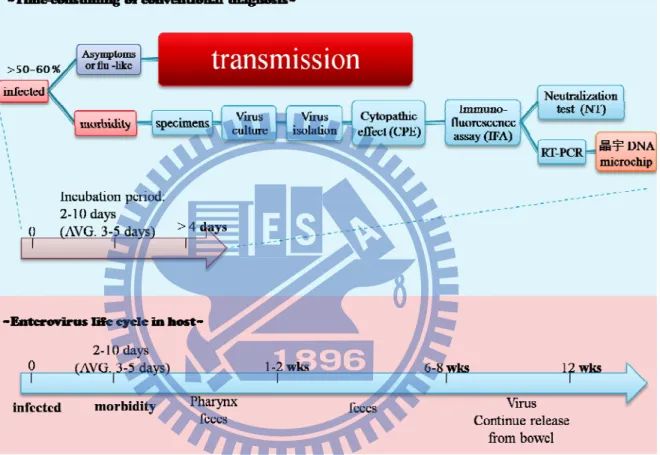
(15) 1.1.4. Epidemiology Young children are most susceptible to EV infection. Males more often develop clinically-recognizable disease than females [12]. Enterovirus 71 was first isolated from the stool of an infant with aseptic meningitis in California in the United States in 1969 [13]. Since then, EV 71 has been identified in many parts of the world. Two patterns of EV 71 outbreak have been classified. Small outbreaks involve with occasional patient death, this occurred in the United States, Australia, Sweden, and Japan [14-17]. The other severe outbreaks associated with high mortality, which occurred in Bulgaria in 1975 with 44 deaths [18], in Hungary in 1978 with 45 deaths [19], in Malaysia with at least 30 deaths [20], and in Taiwan in 1998 with 78 deaths [21], in 2000 with 25 deaths, in 2001 with 26 deaths [3]. Outbreaks of aseptic meningitis associated with enterovirus infection have been reported from Cyprus in 1996 and Gaza strip in 1997 [22]. Table 4 and Fig. 1 showed the historical perspective and case incidences worldwide [3, 18, 19]. To sort the incidence and case-fatality rate of enterovirus infection from 1998 to 2008 in Taiwan show in Fig. 2.. 4 .
(16) Table 4 Historical perspective and case incidences of Enterovirus 71 in worldwide. Year 1969. First isolated in California. 1972 1974. Melbourne, Australia Sweden. 1973 1975 1978. Japan Bulgaria with 44 deaths Hungary with 45 deaths Japan Hong Kong. 1985. Description. 1986 1997. Nan-ao, Taiwan. 1998. Taiwan with 78 deaths. 2000 2001. Taiwan with 25 deaths. Malaysia with at least 30 deaths. Taiwan with 26 deaths. Figure 1 The epidemiology of enterovirus around the world, since 1969.. 5 .
(17) Figure 2 Epidemic situation of Enterovirus infection with severe complications in Taiwan, 1998-2008. (redraw from CDC, 疫情報導 676, 938). Figure 3 The distribution of serotypes of virus isolation from severe fatal case, 1998~2006 [11]. 6 .
(18) 1.1.5. Conventional clinical diagnosis The traditional “gold standard” for the diagnosis of Enterovirus infection is virus isolation from clinical specimens in cell culture, followed by serotype identification by neutralization test (NT) and detection of specific enterovirus serotype by the indirect immunofluorescence assay (IFA) [23-25]. The final identification was carried out using a number of. different molecular approaches, including reverse transcription. polymerase chain reaction (RT-PCR), restriction fragment length polymorphism (RFLP) analysis, and nucleotide sequence analysis of amplicons from various regions of the genome[23, 25-27]. By classification principles set by CDC, March, 2008 is below: z. Enterovirus isolation in cell culture Diagnosis is made by detecting virus in throat or fecal samples, or more convincingly, from specimens collected from the affected part of the body, for example, cerebrospinal fluid (CSF), biopsy material, and skin lesions. A monkey cell line (LLC-MK2), human lung cell line (MRC-5), human rhabdomyosarcoma cell line (RD), African green monkey kidney cell line (Vero), human lung carcinoma cell line (A549), and human epidermoid carcinoma cell line (Hep-2) were used to grow viruses [23, 25]. Preliminary identification is based on the appearance of a minimum of 14 days for characteristic of a viral cytopathic effect (CPE)[28, 29].. z. Enterovirus antisera neutralization test (NT) Serotype identification was performed by neutralization using Lim Benyesh-Melnick (LBM) pools of types-specific antisera. The serum specimen was diluted by PBS, mixed well, and the mixtures were heated. Then the method 7 . .
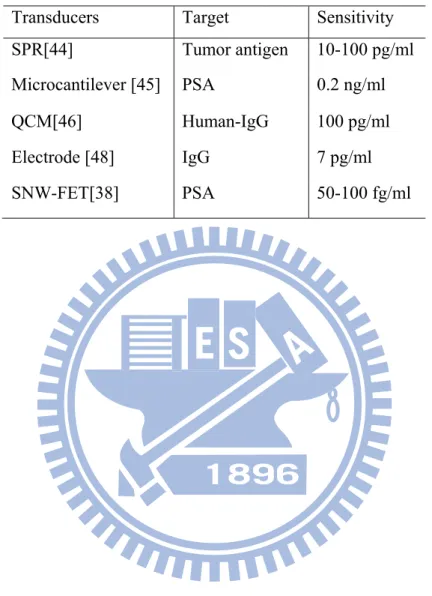
(19) of gold standard procedure was followed to make a two-fold serial dilution out of the sample, and a definite amount (100 CCID50 / 50 μl) of virus was added to each of diluted solutions. The mixture was then incubated 4 days before its neutralization antibody titer determined [25, 30, 31]. At least a four-fold rise in the level of neutralization antibody titer in serum collected during the acute and convalescent phase of illness, which provides the best evidence of a recent infection[2].. z. Immunofluorescence assay (IFA) When cytopathic effect was observed, infected cells were scraped off the vessels, washed in PBS, spotted on the slides. The monoclonal antibody blends were directly applied to specific wells on each slide. The slides were incubated with. a. prestandardized. dilution. of. anti-mouse. immunoglobulin. G. fluorescence-conjugated antibody. After mounting, slides were then examined under a fluorescence microscope [23-25]. In Rigonan’s research, the sensitivity of the IFA was 73% for polioviruses, 85% for coxsackieviruses type B, and 94% for echoviruses. Specificity was near 100% for polioviruses and coxsackieviruses type B and 94% for echoviruses[24].. z. Reverse transcription polymerase chain reaction (RT-PCR) After RNA extraction, the purity and concentration of RNA was determined both measuring OD at A260/280 and by quantitating the ethidium-stained agarose gel bands. RT-PCR were carried out by RT-PCR beads. The beads contained recombinant Moloney Murine Leukemia virus (M-MuLV) reverse transcriptase for cDNA synthesis, Taq DNA polymerase for amplification, RNase inhibitor, 8 . .
(20) buffer, dNTPs. RT-PCR products were examined by electrophoresis through 1~ 3% agarose gels and ethidium bromide staining. The bands migrating at the predicted size were excised and purified for further sequencing analysis [23, 25, 32].. Figure 4 Comparison of time of clinical diagnosis and Enterovirus life cycle in host is related to transmission speed.. These methods often require a relatively high level of sample manipulation that isn’t convenient for infection materials. The ability to detect rapidly, directly, and selectively individual virus particles has the potential to significantly impact health care, since it could enable diagnosis at the earliest stages of replication within a host system. We currently lack a sensitive method of diagnosing enterovirus early. 9 .
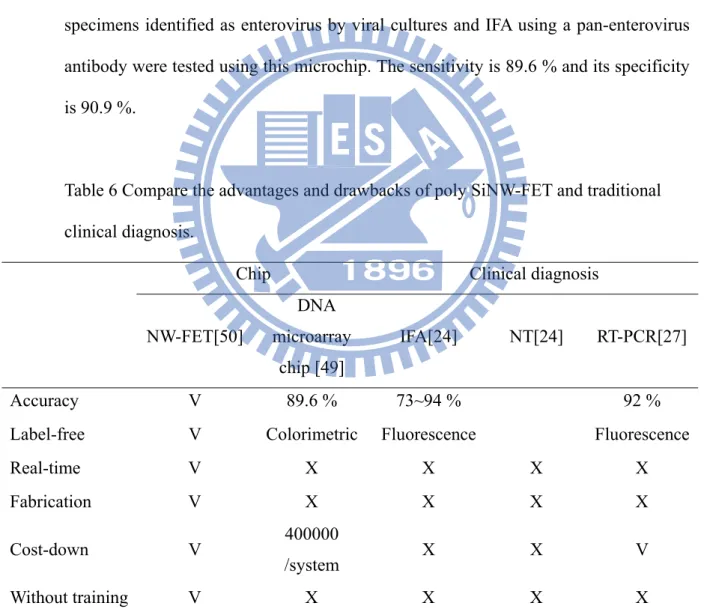
(21) 1.2. Polysilicon nanowire field-effect transistor (poly SiNW-FET). 1.2.1. Introduction of SiNW There are two common ways to fabricate silicon nanowires. Chemical vapor deposition (CVD) method was used to fabricate silicon nanowires by using metal nanoclusters and silane (SiH4) as the vapor phase reactant. The most famous group is led by Charles M. Liber in Harvard University. Their research focused on was about how to control the growth rate and electrical properties of the carbon nanotube and silicon nanowire was published in Nature in 2000[33]. Then they reported that they can fabricate silicon nanowire field effect transistor in Science in 2001 [34] and they claimed the application of their silicon nanowire field effect transistor which can be used as pH sensor and biosensor , which also published in Science in the same year[35]. They used APTES to modify the surface of the silicon nanowire to improve the performance for pH values sensing and used the biotin to functionalize the surface of silicon nanowire to detect the streptavidin. Furthermore, they announced many researches in many famous internal journals, such as detection of DNA and DNA sequence variations [36], detection of single viruses [37], multiplexed electrical detection of cancer markers and detection to at least 9pg/ml [38], and detection, stimulation, and inhibition of neuronal signals [39]. Charles M. Liber et al. prove that silicon nanowire field effect transistor can not only measure but also detect many kinds of targets. It is worth studying that the silicon nanowire field effect transistor has the capability as a sensor. However, the electrodes of the silicon nanowires which are fabricated by CVD method are arranged difficultly. In order to overcome this obstacle, some groups tried to use e-beam lithography to define nanowire pattern on silicon on insulator (SOI) substrate [40, 41].. Although the width of the silicon nanowire is. wider than that fabricated by CVD, it showed good performance of pH values and 10 .
(22) proteins detections, for instance, Eric Stern used the biotin to functionalizing the silicon nanowire to detect streptavidin and avidin and can detect at least 10fM. Moreover it can detect to at least 100fM in immunoassay [42]. This kind of fabrication method is easy to arrange the electrodes of the silicon nanowire and to suit the standard CMOS fabrication process. So the difficulty of the fabrication process is minimized. Nevertheless, the cost of the SOI is much higher than silicon wafer to increase the prime cost of the developed sensors.. 1.2.2. Applications of poly SiNW-FET to biomedical sensing Conventional techniques for the detection of biomolecular interactions are limited by the need for exogenous labels, time- and labor-intensive protocols, as well as by poor sensitivity performance levels[35]. Material scientists and engineers have progressively miniaturized the materials with advanced CMOS fabrication process that constitute the building blocks of various biomedical devices, such as carbon nanotubes[43], surface plasma resonances (SPR)[44], cantilever[45], quartz crystal microbalance (QCM)[46], and quantum dots[47]. Some of these sensing devices, such. as those based on cantilevers and quantum dots, are highly specific, ultrasensitive, and have a short response. However, these devices require integration with optical components in order to translate phenomena on sample surface into a readable signal. The requirement for detection optics is expected to significantly increase the cost of operation for such a device. This progressive downscaling has led to the creation of materials with at least one critical dimension less than the scale of approximately 100 nm. Table 5 compared the relative methods of biosensing, NW-FET can be developed to a highly sensitive, label-free, and real-time biosensor. In the present method, NW-FET has the highest sensitivity, and many research teams consider it as an 11 .
(23) important study direction.. Table 5 The detection limit of all kinds of novel sensors. Transducers. Target. Sensitivity. SPR[44]. Tumor antigen. 10-100 pg/ml. Microcantilever [45]. PSA. 0.2 ng/ml. QCM[46]. Human-IgG. 100 pg/ml. Electrode [48]. IgG. 7 pg/ml. SNW-FET[38]. PSA. 50-100 fg/ml. 12 .
(24) 1.3. Commercialize products. 1.3.1. DR. EV IVD Kit (晶宇- 腸病毒體外診斷試劑套組) [49] The novel approach is based on hybridization of amplified DNA specimens with oligonucleotide DNA probes immobilized on a microchip. Two oligonucleotides were used as detection probe, the pan-enterovirus located in the 5’-noncoding region (5’-NCR) and the EV71-specific sequence located in the VP2 region. The diagnostic procedure takes 6 hr, exclude specimens pretreatment, such as virus isolation, PCR amplification…etc. The experiment result is presented by colorimetry. All of the specimens identified as enterovirus by viral cultures and IFA using a pan-enterovirus antibody were tested using this microchip. The sensitivity is 89.6 % and its specificity is 90.9 %.. Table 6 Compare the advantages and drawbacks of poly SiNW-FET and traditional clinical diagnosis. Chip. Clinical diagnosis DNA. NW-FET[50]. microarray. IFA[24]. NT[24]. RT-PCR[27]. chip [49] Accuracy. V. 89.6 %. 73~94 %. 92 %. Label-free. V. Colorimetric. Fluorescence. Fluorescence. Real-time. V. X. X. X. X. Fabrication. V. X. X. X. X. Cost-down. V. X. X. V. Without training. V. X. X. X. 400000 /system X. Define “V” as yes, and “X” as no.. 13 .
(25) II. Materials and methods. 2.1. Fabrication of poly SiNW-FET devices. Poly SiNW-FET devices were fabricated at the National Nano Device Labratories (Hsinchu, Taiwan) according to previously reported procedures with same modifications to reduce the current leakage in aqueous solution[51]. N-type devices with two poly SiNW channels, 80 nm width and 2 μm length, were fabricated based on poly-silicon sidewall spacer technique. This approach was compatible with current commercial semiconductor process [50, 52-55].. 2.2. Immobilization of captured DNA probe on poly SiNW-FET. 2.2.1. Materials. 1.. 3-Aminopropyltriethoxysilane (APTES): H2N(CH2)3Si(OC2H5)3 H2N. O. Si. O. O. Company: Sigma-Aldrich (USA) (A3648) CAS Number : 919-30-2 Assay: ≥98%. 14 .
(26) 2.. Sodium cyanoborohydride: NaBH3CN Na+ -. H3B. N. Company: Sigma-Aldrich (USA) (71435) CAS Number : 25895-60-7 Assay: ≥95% (RT). 3.. Ethanolamine hydrochloride: NH2CH2CH2OH‧HCl HO. H NH2. Cl. Company: Sigma-Aldrich (USA) (E6133) CAS Number : 2002-24-6 Assay: ≥99%. 4.. Glutaraldehyde solution: OHC(CH2)3CHO. O. O. Company: Fluka (USA) CAS Number : 111-30-8 Grade: technical Concentration: ~25% in H2O (2.6M). 15 .
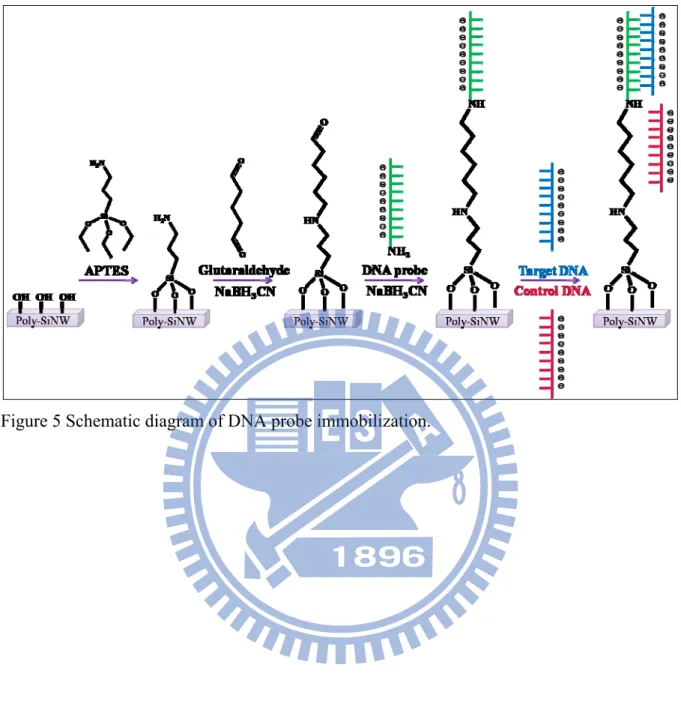
(27) 5.. Potassium phosphate monobasic: KH2PO4 OH HO. O-. P. K+. O. Company: J.T.Baker (USA). 6.. potassium phosphate dibasic: K2HPO4 K+ OHO. O-. P. K+. O. Company: J.T.Baker (USA). 7.. Ethanol (99.5%): CH3OH Company: Echo Chemical Co. (Taiwain). 8.. Polydimethylsiloxane (PDMS): (H3C)3SiO[Si(CH3)2O]nSi(CH3)3. Si. O. Si. O. Si. n Company: Sil-More (Taiwan). 16 .
(28) 9.. EV71 DNA sequences were designed for capture probe and the target DNA used on this project are listed as below and based on previous publication [27]. All synthetic oligonucleotides were purchased from MDBio Inc. (Taiwan). 5’-amino C6 modified captured DNA probe 5’-6 – Carboxyfluorescein (FAM) modified EV71 target DNA. DNA sequences (5’-3’) 5’-H2N C6 modified. Target DNA. captured DNA probe EV71. a. GTG GCA GAT GTG ATT GAG AG. CTC TCA ATC ACA TCT GCC AC. GAG TGA TGG TTC AAC ACA CA. TGT GTG TTG AAC CAT CAC TC. CA16 b a. relative to BrCr nt 2448-2467. b. relative to G-10 nt 2666-2685. 10. Phosphate buffer solution (PBS) was prepared in deionized water (DIW) and its pH was adjusted to 7.0.. 11. Deionized water (DIW) resistance of water: 18.2 MΩcm ultra-pure water system (Barnstead).. 17 .
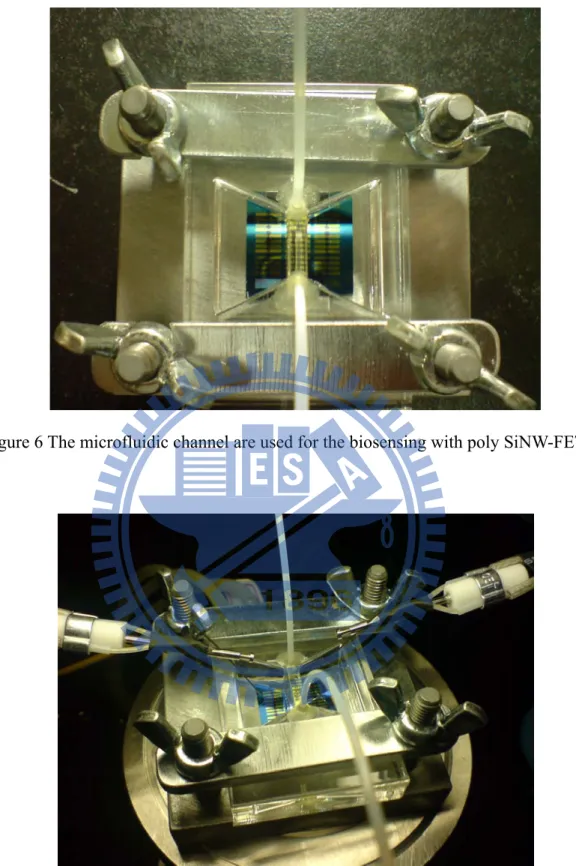
(29) 2.2.2. Equipments. 1.. Fluorescence microscope. Company: Olympus. 2.. Probe station. Company: Calfa (奕葉). 18 .
(30) 3.. Model 2636 Dual-channel System SourceMeter Instrument (Low Current). Company: Keithley. 2.2.3. Functionalized poly SiNW-FET with capture DNA probe. The. microfluidic. channel,. which. was. made. with. acrylic. and. polydimethylsiloxane (PDMS) was placed on top of the device integrated with metal holder to hold the aqueous solution surrounded poly-SiNW. The poly-SiNWs were firstly washed by ethanol solution to remove contaminants before 2.0% APTES ethanol solution was pumped into the microfluidic channel for 17 min to introduce amino group onto the poly-SiNW surface. The device was then washed with pure ethanol (99.5%) once, and heated at 120 °C for 10 min to remove the surplus ethanol. Secondly, the device surface was covered with 2.5% glutaraldehyde in 10 mM PBS (pH 7.0) and 4 mM sodium cyanoborohydride for 1 hr followed by PBS wash. Finally, the 10 μM 5’-amniomodified captured DNA probe was coupled to the surface of the nanowire in PBS containing 4 mM sodium cyanoborohydride for 1 hr. The un-reacted aldehyde groups were blocked by mixing with 50 mM ethanolamine for 35 min and the modified poly-SiNW FET was washed with PBS.. 19 .
(31) Figure 5 Schematic diagram of DNA probe immobilization.. 20 .
(32) 2.3 Microfluidic system integrated with poly SiNW-FET 2.3.1. Preparation of microfluidic channel with PDMS To still and mix reagent A and B (gravity ratio A:B = 10:1) well. Use vacuum pump to degas about 30min until most bubbles are gone. Pour it to mother mode (glass). Bake PDMS with oven at 70℃ for 30 minutes. Peel PDMS structure off carefully from mother mode. Punch input and output holes. Surface may need to be clean with acetone. 2.3.2. Poly SiNW-FET integrated with microfluidic system. Clean PDMS microflidic channel with acetone to clean the dust and organical particles. Bond PDMS microfluidic channel to nanowire devices. A mechanical gear was designed which uses a limpid blanket of acrylic to compress the PDMS structure and to make it stick to the wafer surface (Fig. 6). Backside of the wafer contacts with a stainless steel, allowing a bias applied to the substrate serving as a back gate of the NW devices and could be adjusted in the subthreshold region of the transfer characteristics of the NW device. (Fig. 7). 21 .
(33) Figure 6 The microfluidic channel are used for the biosensing with poly SiNW-FET. Figure 7 The apparatus for electric measurement.. 22 .
(34) 2.4. Electric mearsurements of poly SiNW-FET The gate potential and source/drain bias voltage were controlled by chip analyzer (Keithley 2636). Generally, the ID was measured at several constant bias voltage (VG from 0 to 3 V with a step of 0.5 V) for the measurement of ID-VD curves while sweeping the VD from 0 to 1.5 V to test the performance of poly SiNW-FET. We divide the biosensing parameters into two electric measurements. They are ID-VG measurement and ID-time measurements:. 2.4.1. The measurement of ID-VG curves In the general ID-VG curve measurement parameters, the drain current (ID) was measured at constant bias voltage (VD = 0.5V) while sweeping the gate potential (VG) from 0 to 1.5 V. We performed a sweep started at 0 V bias. To ensure that the device was in the initial state after the stabilized base ID-VG curves was obtained as PBS (10 mM, pH 7.0) was injected, and the EV71 target DNA in PBS (about 0.1 μl) was load directly on the nanowire device with a micro pipette. When comparing ID-VG curve behavior to those controlled experiments, we noted that the biosensing test gave the current shift at the same bias conduction. The electric characteristic of DNA/DNA hybridization was observed as soon as the target DNA was added. It took 30 sec to obtain and ID-VG curve and the ID-VG curve remained stable during the incubation. In a typical experiment, the determination of ID-VG curves was repeated at least 3 times or until it become stable without current shift to make sure that no further variation can be observed.. 23 .
(35) 2.4.2. The measurement of ID-time curves. After the stabilized base ID-VG curves was obtained in PBS (10 mM, pH 7.0), VG was choose from the linear region that have the largest variation of ID. Generally, in the ID-time curve measurement parameters, the ID was measured at constant bias voltage (VD = 0.5 V) and gate potential each experiments to test the poly SiNW-FET performances in aqueous solution. ID-time data were recorded while buffer solutions, flowed through the microfluidic channel. DNA sensing experiments were performed in the microfluidic channel under a flow rate of 1.8 ml/hr (100 μl / 200 sec) in PBS and continuously measured about 300 seconds each reactions. The orders of each experiment were obtained including PBS, non-complementary target DNA, PBS, and target DNA, respectively.. 24 .
(36) III. Results and Discussion. 3.1. To confirm the immobilization step with target DNA labeled FAM. The EV71 DNA functionalized device was monitored by fluorescence labeling using 5’-5-FAM modified EV71 target DNA (5’-5-FAM-EV71 DNAtarget) as the fluorescence reporter. EV71 capture (EV71capture )DNA probe is a single-strand DNA sequences which is used to recognize the complementary EV71 target (EV71target) DNA. EV71capture DNA probe was functionalized on the surface of poly SiNW-FET according to the procedure diagramed in Fig. 8 Fluorescence was observed with some background on the surface of the device with the addition of 5’-5-FAM-EV71 DNAtarget on unmodified EV71 capture DNA probe under blue light excitation (Fig. 8). EV71 capture DNA probe cannot be linked to the silicon oxide surface in the absence of glutaraldehyde, and thus the fluorescence was not observed in Fig. 9 either. Clear distinction in fluorescence was observed in Fig. 10. Only the device functionalized with specific EV71 capture DNA probe gave the expected fluorescence upon hybridization with 5’-5-FAM-EV71 DNAtarget under blue light excitation.. 25 .
(37) Figure. 8 Fluorescence microscopic image of the unmodified EV71 capture DNA probe with poly SiNW-FET device following reaction with 5-FAM dye.. Figure. 9 Fluorescence microscopic image was observed EV71 capture DNA probe immobilized on the silicon oxide surface in the absence of glutaraldehyde.. 26 .
(38) Figure. 10 Fluorescence microscopic image was observed the device functionalized with specific EV71 capture DNA probe gave the expected fluorescence image.. 27 .
(39) 3.2. Electronic responses from specific DNA/DNA interaction on poly SiNW-FET. 3.2.1. NW immobilized with EV71capture DNA probe and ID-VG curve was obtained with micro pipette. Typical characteristic of poly SiNW-FET at room temperature was shown in Fig. 11 and Fig. 12 The ID versus VG (ID-VG, from 0 to 2 V) output characteristic of with the constant VD (0.5 V) exhibited excellent semiconductor FET characteristics, illustrating n-type behavior. A good device performance with high on/off current ratio (around five orders) (Fig. 11). The ID versus VD output characteristics of a representative poly SiNW-FET were shown in Fig. 12 for VG varying from 0 to 5 V with 1 V per step. The measured ID-VD characteristics show well-saturated behavior with back-gate controlled. In the linear region, at constant VD, the current increase with gate potential. The electrical characterization verified that this fabrication approach produced high-performance poly SiNW-FET device. Sensitivity and specificity of functionalized poly SiNW-FET for biosensing DNA/DNA interactions are shown in Fig. 13 and 14. The increase in negative charges resulted from hybridization between capture DNA probe (DNAcapture) and complementary target DNA (DNAtarget) can affect greatly the surface conductivity of SiNW-FET. For an N-type NW-FET, a decrease of the current will be expected when negative charges comes from phosphoric acid of DNA were introduced on sensing surface of n-type device[56]. In Fig. 13 the ID–VG curves were obtained in PBS buffer (10mM, pH 7, black square), and following the addition of coxsackievirus A16 (10 pM, red circle) and addition of EV71 (10 pM, blue triangle), respectively. PBS and CA16 about 0.1 μl was load directly on the nanowire device with a micro pipette as controlled experiments and continuously measured until it become stable without 28 .
(40) current shift to ensure that no further variation can be observed. The ID-VG curves remained unchanged indicated that the electric property of poly SiNW-FET was stable in the presence of non-interacting charged molecules, which may exist in a variety of biological samples. However, when a complementary EV71 target DNA (EV71target) hybridized with EV71 capture DNA probe (EV71capture), the current decrease was observed. The lowest detectable concentration and detection range of EV71target with EV17 capture modified poly SiNW-FET was further demonstrated electric responses in Fig. 14 A constant VD was set at 0.5 V for all the electric measurement. The ID–VG curves were determined as described above by using different concentrations of EV71target. After the base ID–VG curve was obtained in PBS buffer, PBS buffer contained EV71target at varied concentrations, respectively, and their ID–VG curves were determined. For the EV71capture functionalized poly SiNW-FET, ID-VG curves were. indistinguishable. in. PBS. and. in. the. presence. of. CA16target.. Concentration-dependent electric responses were observed for EV71target concentration increasing from 1 fM to 10 pM. The concentration more increase, the influence on the current smaller was evidences when EV71target concentration is 10 pM. This characteristic further confirmed that change of current in ID-VG curve was specifically affected by the interactions between EV71target and EV71capture on the SiNW surface. The ID-VG curve become change-less after saturation even much higher concentration of EV71target (10 pM) was added. According to the approximate volume of EV71target used (0.1 μl), the number of EV71target molecules were about 600 at 1 fM. This number is the same as our research[57].. This research is expected because they are. both composed by 20-mer DNA, produces about twenty extra negative charges.. 29 .
(41) Figure 11 ID-VG curve illustrating n-type behavior of poly SiNW-FET after functionalization.. Figure 12 The ID–VD curves for varying VG from 0 to 5V at ΔV = 1V.. 30 .
(42) Figure 13 Electric responses of functionalized poly-SiNW FET to specific EV71target in aqueous solution.. Figure 14 Concentration-dependent electric response of EV71capture functionalized poly-SiNW FET device following by EV71target.. 31 .
(43) 3.2.2. NW immobilized with EV71capture DNA probe and ID-time curve was obtained with microfluidic system. In Fig. 15 the ID–VG curves were obtained in PBS buffer (black square) first. To choose the ID (about 10-9) was induced by VG (0.7 V) in the linear region with great variation and starts to measure the electric response in the PBS buffer as ID baseline. PBS buffer solution contained CA16target (10 pM) and EV71target (10 pM). PBS buffer, CA16target, PBS, and EV71target were injected into the channel (arrow indicated), respectively, and ID-time curve was determined (Fig. 16). Adding PBS buffer as controlled experiments and continuously measured until it become stable without current shift to ensure that no further variation can be observed. When the electric response of PBS to surface of device was stable, then adding next flowing reagent and continuously measured about 300 seconds each reaction. When comparing current curve behavior to those controlled experiments, such as non-complementary CA16target DNA and PBS buffer, we noted that the biosensing test gave the current shift is smaller than complementary EV71target DNA hybridized with EV71capture DNA probe, the current decrease was observed. After measuring ID-time curve, the electric characteristic of the same device was shown in Fig. 15 (red circle). The range of current shift of before and after ID-time measurement is matched between ID-VG curves and ID-time curve. To compare the experiment results among Fig. 14, Fig. 15 and Fig. 16, the current shift was observed in Fig. 16. It might be the variation of scale is too small to see the significantly change which was shown in ID-VG curves. It proves that the characteristic of each device might be different, so we observed the current shift by time afterward.. 32 .
(44) Fig. 15 Electric responses of functionalized poly-SiNW FET to specific EV71target in aqueous solution was determined before and after ID-time measurement.. Figure 16 ID-time curves of functionalized poly-SiNW FET to specific EV71target in PBS.. 33 .
(45) The experimental method is the same as above and observed the same result which is shown in Fig. 17 and Fig. 18. These two experiments is done in the same die and day. It proves that the experiment is reproducible.. Figure 17 Electric responses of functionalized poly-SiNW FET to specific EV71target in aqueous solution was determined before and after ID-time measurement.. 34 .
(46) Figure 18 ID-time curves of functionalized poly-SiNW FET to specific EV71target in PBS.. 35 .
(47) 3.2.3. NW immobilized with CA16capture DNA probe and ID-time curve was obtained with microfluidic system. The selectivity of functionalized poly SiNW-FET is shown in this section. Other captured DNAs, CA16capture, were modified on the surface of poly SiNW-FET. The electric responses of the functionalized poly SiNW-FET were demonstrated to be dependent on the presence of CA16target. In Fig. 19 the ID–VG curves were obtained in PBS buffer (black square). To choose the ID (about 10-9) was induced by VG (0.75 V) in the linear region with great variation and starts to measure the electric response in the PBS buffer as ID baseline. PBS buffer solution contained CA16target (10 pM) and EV71target (10 pM). PBS buffer, EV71target, PBS, and CA16target were injected into the channel (arrow indicated), respectively, and ID-time curve was determined (Fig. 20). Adding PBS buffer as controlled experiments and continuously measured until it become stable without current shift to ensure that no further variation can be observed. When the electric response of PBS to surface of device was stable, then adding next flowing reagent and continuously measured about 300 seconds each reaction. When comparing current curve behavior to those controlled experiments, such as non-complementary EV71target DNA and PBS buffer, we noted that the biosensing test gave the current shift is smaller than complementary CA16target DNA hybridized with CA16capture DNA probe, the current decrease was observed. After measuring ID-time curve, the electric characteristic of the same device was shown in Fig. 19 (red circle). The range of current shift of before and after ID-time measurement is matched between ID-VG curves and ID-time curve.. 36 .
(48) Figure 19 Electric responses of functionalized poly-SiNW FET to specific CA16target in aqueous solution was determined before and after ID-time measurement.. Figure 20 ID-time curves of functionalized poly-SiNW FET to specific CA16target in PBS.. 37 .
(49) The experimental method is the same as above and observed the same result which is shown in Fig. 21 and Fig. 22. These two experiments are still done in the same day. It also proves that the experiment is reproducible.. Figure 21 Electric responses of functionalized poly-SiNW FET to specific CA16target in aqueous solution was determined before and after ID-time measurement.. 38 .
(50) Figure 22 ID-time curves of functionalized poly-SiNW FET to specific CA16target in PBS.. 39 .
(51) 3.2.4. Concentration-dependent electric response of EV71capture functionalized poly-SiNW FET device Sensitivity and specificity of functionalized poly SiNW-FET for biosensing DNA/DNA interactions are shown in Fig. 23 and 24. The increase in negative charges resulted from hybridization between EV71capture and EV71target can affect greatly the surface conductivity of SiNW-FET. For an N-type NW-FET, a decrease of the current will be expected when negative charges comes from phosphoric acid of DNA were introduced on sensing surface of n-type device[56]. In Fig. 23 the ID–VG curves were obtained in PBS buffer (black square), and following the addition of PBS, CA16 (10 pM), PBS and variety concentration of EV71, respectively. PBS and CA16 were load directly on the nanowire device with a microfluidic system as controlled experiments and continuously measured until it become stable without current shift to ensure that no further variation can be observed. However, when a complementary EV71target hybridized with EV71capture DNA probe, the current decrease was observed. Controlled experiments with unmodified poly SiNW-FET are shown in Fig. 24. The current change-less in PBS, CA16target, and EV71target indicated that the electric characteristic was stable in the presence of non-interacting charged molecules. The lowest detectable concentration and detection range of EV71target with EV17 capture modified poly SiNW-FET was further demonstrated electric responses in Fig. 23. A constant VD was set at 0.5 V for all the electric measurement. The ID–time curves were determined as described above by using different concentrations of EV71target. For the EV71capture functionalized poly SiNW-FET, ID-time curves were indistinguishable in PBS and in the presence of CA16target. Concentration-dependent electric responses were observed for EV71target concentration increasing from 100 aM to 100 fM. The concentration more increase, the influence on the current smaller was 40 . .
(52) evidences when EV71target concentration is 10 fM. This characteristic further confirmed that change of current in ID-time curve was specifically affected by the interactions between EV71target and EV71capture on the SiNW surface. The ID-time curve become change-less after saturation even much higher concentration of EV71target (100 fM) was added.. Figure 23 Electric responses of functionalized poly-SiNW FET to specific EV71target was determined before and after ID-time measurement.. 41 .
(53) Figure 24 comparing unmodified and EV71capture functionalized poly-SiNW FET device concentration-dependent electric response.. 42 .
(54) IV. Summary and perspective. In our research, we have demonstrated for the first time that a semiconductive poly SiNW-FET could be developed as a highly specific sensor for EV71 and CA16 nucleic acid with sensitivity in aM range. Throughout the fabrication of the poly SiNW-FET, no expensive lithography tools were need for definition of nanoscale patterns. Our result indicate the fabrication of poly SiNW-FET for sensitive and specific biosensing device can be achieved using commercially available procedures. Therefore, the poly SiNW-FET should has a great potential for real-time molecular diagnostics and direct surveillance of infection diseases. 43 .
(55) V. [1]. References. 行政院衛生署疾病管制局. "腸病毒感染併發重症(含非小兒麻痺病毒之腸病毒感 染症)," http://www.cdc.gov.tw/index_info_info.asp?data_id=1007.. [2]. K. Y. Huang, and T. Y. Lin, "Enterovirus 71 infection and prevention," Taiwan Epidemiology Bulletin, 24, https://teb.cdc.gov.tw/main_e/news_list.aspx?id=2136, 2008].. [3]. T. Y. Lin, L. Y. Chang, S. H. Hsia et al., “The 1998 enterovirus 71 outbreak in Taiwan: Pathogenesis and management,” Clinical Infectious Diseases, vol. 34, pp. S52-S57, 2002.. [4]. King AM, Brown F, and Christian P, "Picornaviridae 2000, In Virus Taxonomy.," Seventh Report of the International Committee on Taxonomy of Viruses, pp. 657-678, San Diego: Academic Press.. [5]. T. Y. Lin, S. J. Twu, M. S. Ho et al., “Enterovirus 71 outbreaks, Taiwan: occurrence and recognition,” Emerging Infectious Diseases, vol. 9, no. 3, pp. 291-293, 2003.. [6]. S. F. Wang, "An epidemiological analysis of enterovirus 71: Taiwan, 1998-2004," Taiwan Epidemiology Bulletin, 21, https://teb.cdc.gov.tw/main/news_list.aspx?id=512, 2005].. [7]. H. S. Wu, Y. P. Huang, T. L. Lin et al., “Update on the Molecular Epidemiology of Human Enterovirus 71 in Taiwan Since 1998,” International Journal of Infectious Diseases, vol. 12, no. Supplement 1, 2008.. [8]. L. Chang, T. Lin, Y. Huang et al., “Comparison of enterovirus 71 and coxsackie-virus A16 clinical illnesses during the Taiwan enterovirus epidemic, 1998,” The pediatric infectious disease journal, vol. 18, no. 12, pp. 1092-1096, 1999. 44 . .
(56) [9]. 行政院衛生署疾病管制局, "腸病毒感染併發重症臨床處理注意事項," 2006].. [10]. "傳染病防治工作手冊-腸病毒感染併發重症," 台灣疾病管制局, 2008.. [11]. 行政院衛生署疾病管制局, "腸病毒感染防治手冊," 行政院衛生署疾病管制局, 2007.. [12]. Y. Wu, J. Xiang, C. Yang et al., “Single-crystal metallic nanowires and metal/semiconductor nanowire heterostructures,” Nature, vol. 430, no. 6995, pp. 61-65, 2004.. [13]. Schmidt NJ, Lennette EH, and H. HH, “An apparently new enterovirus isolated from patients with disease of the central nervous system,” The journal of infectious disease, vol. 129, no. 3, pp. 304-309, 1974.. [14]. Deibel R, Gross LL, and C. DN, “Isolation of a new enterovirus ” Proceedings of the Society for Experimental Biology and Medicine, vol. 148, no. 1, pp. 203-207, 1975.. [15]. Blomberg J, Lycke E, Ahlfors K et al., “New enterovirus type associated with epidemic of aseptic meningitis and-or hand, foot, and mouth disease,” Lancet, vol. 13, no. 2, pp. 112, 1974.. [16]. Tagaya I, and T. K, “Epidemic of hand, foot and mouth disease in Japan, 1972-1973: difference in epidemiologic and virologic features from the previous one,” Japanese journal of medical science & biology, vol. 28, no. 4, pp. 231-234, 1975.. [17]. G. L. Gilbert, K. E. Dickson, M. J. Waters et al., “Outbreak of enterovirus 71 infection in Victoria, Australia, with a high incidence of neurologic involvement,” Pediatric Infectious Disease Journal, vol. 7, no. 7, pp. 484-488, 1988.. [18]. L. M. Shindarov, M. P. Chumakov, M. K. Voroshilova et al., “Epidemiological,. 45 .
(57) clinical and pathomorphological characteristics of epidemic poliomyelitis-like disease caused by enterovirus 71,” Journal of Hygiene Epidemiology Microbiology and Immunology, vol. 23, no. 3, pp. 284-295, 1979. [19]. G. Nagy, S. Takatsy, E. Kukan et al., “Virological diagnosis of enterovirus type 71 infections: experiences gained during an epidemic of acute CNS diseases in Hungary in 1978,” Archives of Virology, vol. 71, no. 3, pp. 217-227, 1982.. [20]. WHO, “Outbreak of hand, foot and mouth disease in Sarawak. Cluster of deaths among infants and young children,” Weekly epidemiological record, vol. 72, pp. 211-212, 1997.. [21]. M. T. Ho, E. R. Chen, K. H. Hsu et al., “An epidemic of enterovirus 71 infection in Taiwan,” New England Journal of Medicine, vol. 341, no. 13, pp. 929-935, 1999.. [22]. WHO. "Enterovirus - non polio," http://www.who.int/mediacentre/factsheets/fs174/en/index.html.. [23]. S. R. Shih, M. S. Ho, K. H. Lin et al., “Genetic analysis of enterovirus 71 isolated from fatal and non-fatal cases of hand, foot and mouth disease during an epidemic in Taiwan, 1998,” Virus Research, vol. 68, no. 2, pp. 127-136, 2000.. [24]. A. S. Rigonan, L. Mann, and T. Chonmaitree, “Use of monoclonal antibodies to identify serotypes of enterovirus isolates,” Journal of Clinical Microbiology, vol. 36, no. 7, pp. 1877-1881, 1998.. [25]. S. Manzara, M. Muscillo, G. La Rosa et al., “Molecular identification and typing of enteroviruses isolated from clinical specimens,” Journal of Clinical Microbiology, vol. 40, no. 12, pp. 4554-4560, 2002.. [26]. T. C. Chen, G. W. Chen, C. A. Hsiung et al., “Combining multiplex reverse transcription-PCR and a diagnostic microarray to detect and differentiate enterovirus 71 and coxsackievirus A16,” Journal of Clinical Microbiology, vol. 44, 46 . .
(58) no. 6, pp. 2212-2219, 2006. [27]. J. J. Yan, I. J. Su, P. F. Chen et al., “Complete genome analysis of enterovirus 71 isolated from an outbreak in Taiwan and rapid identification of enterovirus 71 and coxsackievirus A16 by RT-PCR,” Journal of Medical Virology, vol. 65, no. 2, pp. 331-339, 2001.. [28]. S. M. Lipson, K. David, F. Shaikh et al., “Detection of precytopathic effect of enteroviruses in clinical specimens by centrifugation-enhanced antigen detection,” Journal of Clinical Microbiology, vol. 39, no. 8, pp. 2755-2759, 2001.. [29]. C. Guney, E. Ozkaya, M. Yapar et al., “Laboratory diagnosis of enteroviral infections of the central nervous system by using a nested RT-polymerase chain reaction (PCR) assay,” Diagnostic Microbiology and Infectious Disease, vol. 47, no. 4, pp. 557-562, 2003.. [30]. S. Y. Wang, T. L. Lin, H. Y. Chen et al., “Early and rapid detection of enterovirus 71 infection by IgM-capture ELISA,” Journal of Virological Methods, vol. 119, no. 1, pp. 37-43, 2004.. [31]. K. A. Lim, and M. Benyeshmelnick, “Typing of viruses by combinations od antiserum pools- application to typing of enteroviruses (Coxsackie and Echo),” Journal of Immunology, vol. 84, no. 3, pp. 309-317, 1960.. [32]. K. C. Tsao, P. Y. Chang, H. C. Ning et al., “Use of molecular assay in diagnosis of hand, foot and mouth disease caused by enterovirus 71 or coxsackievirus A 16,” Journal of Virological Methods, vol. 102, no. 1-2, pp. PII S0166-0934(01)00376-7, 2002.. [33]. J. T. Hu, M. Ouyang, P. D. Yang et al., “Controlled growth and electrical properties of heterojunctions of carbon nanotubes and silicon nanowires,” Nature, vol. 399, pp. 48-51, 1999. 47 . .
(59) [34]. Y. Cui, and C. M. Lieber, “Functional nanoscale electronic devices assembled using silicon nanowire building blocks,” Science, vol. 291, no. 5505, pp. 851-853, 2001.. [35]. C. Yi, W. Qingqiao, P. Hongkun et al., “Nanowire nanosensors for highly sensitive and selective detection of biological and chemical species,” Science|Science, vol. 293, no. 5533, pp. 1289-92, 2001.. [36]. J. Hahm, and C. M. Lieber, “Direct ultrasensitive electrical detection of DNA and DNA sequence variations using nanowire nanosensors,” Nano Letters, vol. 4, no. 1, pp. 51-54, 2004.. [37]. F. Patolsky, G. F. Zheng, O. Hayden et al., “Electrical detection of single viruses,” Proceedings of the National Academy of Sciences of the United States of America, vol. 101, no. 39, pp. 14017-14022, 2004.. [38]. G. F. Zheng, F. Patolsky, Y. Cui et al., “Multiplexed electrical detection of cancer markers with nanowire sensor arrays,” Nature Biotechnology, vol. 23, no. 10, pp. 1294-1301, 2005.. [39]. F. Patolsky, B. P. Timko, G. H. Yu et al., “Detection, stimulation, and inhibition of neuronal signals with high-density nanowire transistor arrays,” Science, vol. 313, no. 5790, pp. 1100-1104, 2006.. [40]. Y. Chen, X. H. Wang, S. Erramilli et al., “Silicon-based nanoelectronic field-effect pH sensor with local gate control,” Applied Physics Letters, vol. 89, no. 22, pp. 223512, 2006.. [41]. S. Q. Lud, M. G. Nikolaides, I. Haase et al., “Field effect of screened charges: Electrical detection of peptides and proteins by a thin-film resistor,” Chemphyschem, vol. 7, no. 2, pp. 379-384, 2006.. [42]. E. Stern, J. F. Klemic, D. A. Routenberg et al., “Label-free immunodetection with 48 . .
(60) CMOS-compatible semiconducting nanowires,” Nature, vol. 445, no. 7127, pp. 519-522, 2007. [43]. S. S. Wong, E. Joselevich, A. T. Woolley et al., “Covalently functionalized nanotubes as nanometre-sized probes in chemistry and biology,” Nature, vol. 394, no. 6688, pp. 52-55, 1998.. [44]. C. Campagnolo, K. J. Meyers, T. Ryan et al., “Real-Time, label-free monitorine, of tumor antigen and serum antibody interactions,” Journal of Biochemical and Biophysical Methods, vol. 61, no. 3, pp. 283-298, 2004.. [45]. G. H. Wu, R. H. Datar, K. M. Hansen et al., “Bioassay of prostate-specific antigen (PSA) using microcantilevers,” Nature Biotechnology, vol. 19, no. 9, pp. 856-860, 2001.. [46]. H. Ogi, K. Motohisa, K. Hatanaka et al., “High-frequency wireless and electrodeless quartz crystal microbalance developed as immunosensor,” Japanese Journal of Applied Physics Part 1-Regular Papers Brief Communications & Review Papers, vol. 46, no. 7B, pp. 4693-4697, 2007.. [47]. X. Michalet, F. F. Pinaud, L. A. Bentolila et al., “Quantum dots for live cells, in vivo imaging, and diagnostics,” Science, vol. 307, no. 5709, pp. 538-544, 2005.. [48]. Y. C. Zhang, and A. Heller, “Reduction of the nonspecific binding of a target antibody and of its enzyme-labeled detection probe enabling electrochemical immunoassay of an antibody through the 7 pg/mL-100 ng/mL (40fM-400pM) range,” Analytical Chemistry, vol. 77, no. 23, pp. 7758-7762, 2005.. [49]. S. R. Shih, Y. W. Wang, G. W. Chen et al., “Serotype-specific detection of enterovirus 71 in clinical specimens by DNA microchip array,” Journal of Virological Methods, vol. 111, no. 1, pp. 55-60, 2003.. [50]. C. Y. Hsiao, C. H. Lin, C. H. Hung et al., “Novel poly-silicon nanowire field effect 49 . .
(61) transistor for biosensing application,” Biosensors & Bioelectronics, pp. 1223-9, 2009. [51]. H. C. Lin, M. H. Lee, C. J. Su et al., “A simple and low-cost method to fabricate TFTs with poly-Si nanowire channel,” Ieee Electron Device Letters, vol. 26, no. 9, pp. 643-645, 2005.. [52]. C. J. Su, H. C. Lin, and T. Y. Huang, “High-performance TFTs with Si nanowire channels enhanced by metal-induced lateral crystallization,” Ieee Electron Device Letters, vol. 27, no. 7, pp. 582-584, 2006.. [53]. C. H. Lin, C. Y. Hsiao, C. H. Hung et al., “Ultrasensitive detection of dopamine using a polysilicon nanowire field-effect transistor,” Chemical Communications, no. 44, pp. 5749-5751, 2008.. [54]. H. C. Lin, C. J. Su, C. Y. Hsiao et al., “Water passivation effect on polycrystalline silicon nanowires,” Applied Physics Letters, vol. 91, no. 20, pp. 202113, 2007.. [55]. C. J. Su, H. C. Lin, H. H. Tsai et al., “Operations of poly-Si nanowire thin-film transistors with a multiple-gated configuration,” Nanotechnology, vol. 18, no. 21, 2007.. [56]. Z. Li, Y. Chen, X. Li et al., “Sequence-specific label-free DNA sensors based on silicon nanowires,” Nano Letters, vol. 4, no. 2, pp. 245-247, Feb, 2004.. [57]. C. H. Lin, C. H. Hung, C. Y. Hsiao et al., “Poly-silicon nanowire field-effect transistor for ultrasensitive and label-free detection of pathogenic avian influenza DNA,” Biosensors & Bioelectronics, vol. 24, no. 10, pp. 3019-3024, 2009.. 50 .
(62) Appendix. DNA Immobilize to the Nanowire Surface DNA probe + complementary DNA-FAM. 1E : APTES + glutaraldehyde + DNA probe + ethanolamine + complementary DNA-FAM 1C : APTES + glutaraldehyde + X + ethanolamine + complementary DNA-FAM 2C : APTES + X + DNA probe + ethanolamine + complementary DNA-FAM. Silicon Nanowire 3 times washing with ethanol (1) 20 μl APTES + 1000 μl ethanol. 17 mins 2% ethanol solution of APTES (Aldrich). (2) 100 μl (25% glutaraldehyde) + 890 μl coupling buffer + 10 μl 400mM NaBH3CN (25 mg/1 ml, MW: 62.84=400 mM). 3 times. rinsing with ethanol. 10 min. 120℃. 1 hr add 2.5% glutaraldehyde (w/v) in ddwater (add 4 mM sodium cyanoborohydride). 3 times wash the nanowire with coupling buffer (3) 20 μl 10 μM DNA + 0.2 μl 400mM NaBH3CN (25 mg/1 ml, MW: 62.84=400 mM). 1 hr. 2 times (4) 7.5 μl 2M ethanolamine (195.1mg, MW: 97.55+ 1ml PBS) + 289.5 μl PBS buffer + 3 μl 400mM NaBH3CN (25 mg/1 ml, MW: 62.84=400 mM). 30 min. 3 times. ~10 μM DNA probe (in 10 mM PBS pH=7) (add 4 mM sodium cyanoborohydride) wash the nanowire with coupling buffer. blocking with 50 mM ethanolamine (add 4 mM sodium cyanoborohydride) wash the nanowire with coupling buffer. complementary DNA labeled FAM or electric measurements. 51 .
(63)
數據


![Table 2 Proposed pathogenesis of severe Enterovirus 71 infections [3]](https://thumb-ap.123doks.com/thumbv2/9libinfo/8411213.179854/14.892.156.733.435.1145/table-proposed-pathogenesis-severe-enterovirus-infections.webp)

+7
![Figure 3 The distribution of serotypes of virus isolation from severe fatal case, 1998~2006 [11]](https://thumb-ap.123doks.com/thumbv2/9libinfo/8411213.179854/17.892.154.780.452.981/figure-distribution-serotypes-virus-isolation-severe-fatal-case.webp)
相關文件
十七、 因應新型冠狀病毒肺炎(COVID-19)疫情,防疫期間請隨時至衛生福利部疾病 管制署全球資訊網(https://www.cdc.gov.tw)之新型冠狀病毒肺炎(COVID-
否有浮懸物存在,發現有任何不尋常時,應記錄於檢體監管紀錄表 之重要特殊跡象欄內。必要時,採集之尿液可立即量測溫度(4 分鐘 內) ,若超出攝氏 32
FIGURE 23.22 CONTOUR LINES, CURVES OF CONSTANT ELEVATION.. for a uniform field, a point charge, and an
• Figure 21.31 below left shows the force on a dipole in an electric field. electric
雙極性接面電晶體(bipolar junction transistor, BJT) 場效電晶體(field effect transistor, FET).
Though there are many different versions of historical accounts regarding the exact time of his arrival, Bodhidharma was no doubt a historical figure, who, arriving in
主要感染硬碟的開 機區 ,電腦開機 時,病毒就會載入 記憶體,伺機感染
【Figure 4-50】 The difference of electrical capacity characteristics of specimens at 5 minutes deposition time with various dispersing percentage carbon
