行政院國家科學委員會專題研究計畫 成果報告
基於 P2P SOA
之具生物特徵認證的無所不在的多媒體分享--在異質網狀無線網路下多媒體傳輸的服務品質機制之研製
研究成果報告(精簡版)
計 畫 類 別 : 整合型 計 畫 編 號 : NSC 97-2221-E-151-014- 執 行 期 間 : 97 年 08 月 01 日至 98 年 07 月 31 日 執 行 單 位 : 國立高雄應用科技大學電機工程系 計 畫 主 持 人 : 黃文祥 計畫參與人員: 碩士班研究生-兼任助理人員:柯旭峰 碩士班研究生-兼任助理人員:蔡明勇 碩士班研究生-兼任助理人員:呂家銘 碩士班研究生-兼任助理人員:陳建宇 博士班研究生-兼任助理人員:林政翰 報 告 附 件 : 出席國際會議研究心得報告及發表論文 處 理 方 式 : 本計畫可公開查詢中 華 民 國 98 年 10 月 17 日
報告內容
ㄧ、前言
近來,由於網際網路所提供的服務已從低頻寬需求的應用程式轉變為高頻寬需求的多媒 體應用,如視訊會議(video conferencing)和隨選視訊(video on demand)。大部分的多媒體資料 跟網路上所傳輸的傳統資料最大的不同點為多媒體資料有時效性的限制,因此當在網路上傳 輸這些多媒體資料時,必須讓這些多媒體資料符合特定的服務品質(quality of service; QoS), 如頻寬、延遲等等,而造成使用者端對於網路服務的要求越來越高。現今普遍的無線網路設 備大部分為 IEEE 802.11 (WiFi)無線區域網路標準,對於高頻寬需求的應用程式,IEEE 802.11 亦提供一些具有高速頻寬的標準,如 802.11a、802.11g、802.11n;然而對於所有的 IEEE 802.11 系列的標準,其傳輸距離限制於數百公尺內的範圍,為了改善距離限制的問題,IEEE 發展了 另 外 一 個 適 用 於 遠 距 離 的 都 會 型 無 線 網 路 標 準 —IEEE 802.16 (WiMAX , Worldwide Interoperability for Microwave Access),這是一種可以用在固定式網路的一套標準,而 WiMAX 最主要是用來解決都會型網路上的高頻寬無線存取的問題,它可以在 70 公里的範圍內提供數 百 Mbps 的資料率。而未來 IEEE 802.16 的標準也被期許可以用在行動式網路上面,如 IEEE 802.16e 將會把可移動性帶進都會型網路,並且與其它的無線網路作連結,如無線區域網路、 行動電話網路等等,最後形成所謂的”4G”網路。
在本計畫中,我們完成 IEEE 802.16 和 IEEE 802.11 標準傳輸間的整合性 QoS 機制,所採 用的網路架構如圖一所示。在此網路架構中,網路可以傳送任何型態的服務和應用給終端使 用者,IEEE 802.16 被當作是存取網路(Access Network)的延伸,除了提供終端和核心網路 (Core Network)間的高速頻寬存取服務。另一方面,IEEE 802.16 網路可連接 IEEE 802.11 無線 區域網路到終端使用者;所以在此網路架構下,資料會從核心網路進入到 IEEE 802.16 的網 路,然後透過 IEEE 802.16 Subscriber Station 與 IEEE 802.11 無線區域網路連結而提供給使用 者一個高速的無線傳輸服務。對於具有 IEEE 802.11 及 IEEE 802.16 的異質存取網路,由於兩 者所提供的 QoS 機制不盡相同,為了提供良好的端點對端點 QoS,必須對兩種不同網路的傳 輸服務作對應(mapping)的動作,使得兩網路之間能夠互相溝通使其所提供的傳輸服務達到一 致。另外,在無線網路的傳輸過程中先天上存在有多個不利因素可影響傳輸的品質,因此本 計畫的傳輸機制中將考量這些因素所造成的影響並提供改善之方案。本計畫原提出三年期計 畫,分別探討多媒體應用在異質無線網路上的透通式服務品質映射機制、多媒體應用在同質 網狀無線網路上的多重速率服務品質研究 、多媒體應用在異質網狀無線網路上的服務品質映 射機制;但由於本計畫被核定為一年期,故本精簡報告內容將僅會著重於第一年的部份,即 針對多媒體應用在無線網路傳輸提出透通式的服務品質映射機制與服務品質映射的縯繹法; 除了傳輸機制間的溝通與改善外,對於不同的應用程式來說,其所需要的 QoS 也都不盡相同, 故資料於傳輸之前應先告知傳輸機制所需的 QoS 資訊,而傳輸機制可以根據這些資訊提供相 等的 QoS 服務,因此像是即時性資料這類應用才能夠擁有良好的傳輸品質。 二、研究目的 本計畫內容在於針對混合 802.16 與 802.11e 無線網路傳輸資料時,設計一多媒體傳輸機 制達到端點對端點的 QoS 需求。由於多媒體資料在異質性無線網路傳輸隨著不同傳輸機制其 受到的傳輸待遇亦不同,對此問題本計畫提出”QoS mapping 機制”,首先用戶端在 802.11e 網 路中根據影音資料的重要性給予適當的傳輸優先權,並根據網路流量狀態做動態 mapping 的 判斷,以提昇傳輸品質並降低佇列的封包丟棄機率; 此外,針對無線區域網路上各式各樣的 影響傳輸品質的因素進行探討並針對’效能異常現象’提出可行的解決方案以提升整體無線網 路的傳輸效能。在此方案中根據兩點原則做設計: (一) 系統效能的提升,當無線網路中出現 效能異常現象時,則系統效能明顯降低,因此提升傳輸效能為首要目標; (二) 根據傳送資料 的重要性,對不同資料提供差異性的服務。故本研究計畫將著重在 802.11e 上聲音及影像品質 的改善並考慮傳送機制的特性與多重傳輸速度環境造成效能異常的影響,希望達到當節點環 境變異時仍能提供穩定服務品質的目標。 三、文獻探討
目前有關改善 IEEE 802.11e 傳輸品質的研究中,大多是修改 MAC 層的運作方式或是傳 輸參數來達到提升系統效能的目的。在[1-2]中作者設計動態調整 Contention Window size 以提 高系統的傳輸量。在[3-4]中作者是以不同的 TXOP limit 值來提供不同的傳輸服務等級。在[5] 中,作者計算影片在接收端的播放時間期限(play-out deadline)來調整遺失封包重傳的先後順
序,以改善影像品質。然而,在這些方法中,都沒有針對該資料本身在其整體資料的重要性 作為傳輸服務等級的判斷依據,所以在研究中所提出之方法對於傳輸品質的改善是有限的。 為了能在傳送過程中判斷影像資料的重要性,勢必要將應用層的相關資訊傳送給 IEEE 802.11e 的 MAC 層,因此 cross-layer 架構會是一個可行的方式。[6-8]就是在 cross-layer 的架 構下提出一套可針對影像資料的重要性提供不同等級的傳送服務。在其研究當中,所使用的 影像編碼是 H.264 [9],並將影像資料透過 IEEE 802.11e 無線網路傳輸。如圖二,當 H.264 影 像資料經由 Video coding layer 後會產生 Slices,接下來 Network abstraction layer 會根據 Slices 的重要性給予適合的 NRI (Nal_Ref_Idc)欄位值。當 Slices 進入到 MAC layer 時,會依據其設 定的 NRI 值來決定要將此 Slice 放入到哪個 AC 佇列,如圖中之設定,比較重要的資料(NRI=11) 會放入到傳輸優先等級最高的 AC3,次重要的(NRI=10)放入到傳輸優先等級次高的 AC2,其 餘的(NRI=01)放入 AC1。這是一種 static mapping 的方式,因為是將 H.264 的影片編碼後所產 生的資料依據其編碼的重要性直接對應放入不同優先等級的 AC queues。這樣的方式有別於 傳統的 IEEE 802.11e 是將所有的影像資料都放入到同一個 AC queue(AC2),此研究是將影像 資料先分等級並利用其他優先權較低的佇列來分攤影像資料流量,如此一來,可降低佇列因 為滿載所產生的封包丟棄機率,除此之外,並可給予較重要的資料有較高的傳輸優先權。
Light load 0 5 10 15 20 25 30 35 40 45 50 0 50 100 150 200 250
Video frame number
PSNR( dB ) 802.11e Static Mapping 圖三、影像傳輸品質之比較(802.11e、Static mapping)—低負載。 Heavy load 0 5 10 15 20 25 30 35 40 45 50 0 50 100 150 200 250 300
Video frame number
PS NR (d B ) 802.11e Static Mapping 圖四、影像傳輸品質之比較(802.11e、Static mapping) —高負載。 然而,[6-8]所提的架構並不適用於所有的網路狀況。舉例來說,當網路負載較輕時,如 圖三所示,即在 MAC 層中 queue 仍有空間時,以 static mapping 方式來傳送影像資料,將會 因為部分資料被放入到傳輸優先等級較低的佇列,而增加傳輸上的延遲時間,因為在傳輸優 先等級較低的佇列中,相關的傳輸參數設定是較弱勢的,例如 Contention Window 值較大, TXOPlimit 較短,所花在競爭傳輸通道的時間會比放入傳輸優先權較低的 AC 佇列多,所分配 到的傳輸時間也較短。經由模擬實驗可以得知,如圖四所示,當網路負載較重時,[6-8]所提 的方法確實比 802.11e 有較好的傳輸品質,這是因為資料量被其它佇列分攤而降低封包被丟棄 的機率。因此,基本上 static mapping 的方法是比較適合網路負載重的時候,因為這時候 queue 比較容易發生封包丟棄的情形,可利用分散負載的方式降低封包丟棄機率,提昇影像傳輸品
質。為了改善 static mapping 的問題,我們希望可以提出一個新的 QoS mapping 的機制,使得 影像資料在 802.11e 中傳輸時,可依據影像資料的重要性而有不同的傳輸方式,有效利用佇列 的空間,更重要的是不會因為網路流量的改變而造成影像傳輸品質的影響。
四、研究方法
為了提供無線網路具有擴充性以及便於管理的 QoS 架構,標準的無線網路協定大都提供 以服務類別(service class)來達成差異性服務(service differentiation)的功能,在 IEEE 802.11e 無 線區域網路中,最多可以使用多達八種不同的類別。屬於不同服務類別的資料便依據各類別 所設定的資源優先權,例如頻寬、時間延遲等,來進行網路傳輸。為了使應用程式能夠藉由 QoS 的傳輸以達到最佳化的品質,必須有 QoS mapping 的機制將多樣的應用程式依照傳輸需 求不同對應到所屬的流量類別中,甚至同一應用程式的傳輸資料也可依重要性不同等屬性作 更精細的分類﹔在這種情況下,一個應用程式的資料封包可能會對應到不同的服務類別進行 傳輸。一般而言,QoS mapping 所需的分類參數包含有來源 IP 位址/傳輸埠(source IP address/port),目的 IP 位址/傳輸埠(destination IP address/port),協定號碼或者是 IP 表頭中的 TOS(type of service)欄位。對於應用程式所產生的資料 QoS mapping 機制便可憑藉這些參數來 作分類的工作。
4.1 影像串流編碼與網路傳送優先等級
IEEE 802.11e 在設計上加入了 QoS 的考量,將原先 IEEE 802.11b 單一服務類別增加到最 多八個類別,依據應用程式重要性的不同對應到相關的服務類別,各類別會採取不同的競爭 參數以提供優先順序的 QoS 服務。除此之外,雖然 802.11e 使用了多個不同的服務類別並用 不同的優先權來進行傳送,但是當在傳送影像時仍會發生如下所述的問題:當影像資料在網 路上傳輸時,發送端會先在應用層將影像資料進行編碼(encoding),並產生影像封包,再經由 下層進行傳送。而影片資料如採用具優先權的編碼方式(H.264、MPEG-4),會依據編碼方式 而有不同的重要性。 I B B P B B P B B GOP I 圖五、 MPEG-4 影像資料架構 G(9, 3)
以 MPEG-4 影像資料為例,影像經過編碼後會產生三種 video frame,包含 I (Intra-coded) frame、P (Predictive-coded) frame、和 B (Bi-directionally predictive-coded) frame,其中在進行 編/解碼時,I frame 是獨立進行的,也就是不需要參考其他的 frame,P frame 則必須參考前一 個 I 或 P frame,B frame 都必須參考相關的前一個和後一個 I 或 P frame 才能進行編/解碼,如
圖五所示,箭頭所指的方向即為影像在進行編/解碼時會影響到的 video frame。由此可知,I frame 在 MPEG-4 影像資料中是最重要的,其次是 P frame,最後是 B frame。此外,在 MPEG-4 中將影像傳輸資料定義成較小的傳輸單元,GOP (Group of Picture),每個 GOP 中會包含的 frame 數量可以用兩個參數來描述,G(N, M),其中 N 表示在影像資料中 I frame 與 I frame 之 間的距離,而 M 表示 I frame 與 P frame 的距離,如圖五所示,其架構為 G(9, 3)。當影像資 料發生遺失時,由於影像本身的重要性不同,所造成的影響也會不同,例如一個 B frame 遺 失時,只有該 video frame 會受到影響,可是當一個 I frame 遺失時,因為編碼參考性的關係, 會造成整個 GOP 中的 video frame 都受到影響。因此,雖然 802.11e 可以將影像資料和其他類 型的資料分開傳送,並給適當的傳輸優先權,可是,當佇列中塞滿了等待傳送的封包而必須 開始進行封包丟棄時,卻無法依據影像資料本身的重要性來決定丟棄的順序,而是直接將最 後進入到佇列的封包丟棄(Drop-Tail),這將會造成影像傳輸品質上的影響,因為被丟棄的如果 是 I frame,將會使得相關的 P 和 B frame 也無法進行解碼的工作,反之,如果是 B frame 被 丟棄,則受影響的只有這一個 B frame。
4.2 服務品質映射的縯繹法 (QoS mapping algorithm)
在 QoS mapping 的設計上,可以分成兩個部份說明。首先,要先決定影像資料的重要性 與如何將此重要性和 802.11e 中的 AC queue 作對應。以 MPEG-4 編碼方式為例,影像資料的 重要性是 I frame > P frame > B frame,所以在進行 QoS mapping 與設定傳輸優先等級時必須 以此順序作為考量。再者,因為 802.11e 中的四個 AC 佇列都有其規定的對應資料型態,我們 在設計上,以不影響到比影像資料優先權高的 AC 佇列為考慮,也就是說,在進行 QoS mapping 時,將不會使用到 AC3(AC_VO)。另一方面,為了可以適應網路流量的變化,我們採取 dynamic mapping 的方式,也就是說 mapping 的進行會參考網路目前的流量狀況,再動態決定此影像 資料該放入到哪個 AC 佇列。
I
P
B
圖六、動態 QoS mapping 機制如圖六,當 MPEG-4 影像資料經由編碼之後進入到 MAC 層,在此過程中,影像的相關 資訊會利用封包的表頭(Header)傳送下來,因此,在 MAC 層可判斷該影像封包的重要性。這 是一種 cross-layer 架構的設計方法。而影像封包要被分配到哪一個 AC 佇列則是透過 mapping algorithm 來決定。我們提出的 dynamic mapping 機制,是依據網路流量狀態和影像資料的重 要性來決定將影像封包放入的 AC 佇列;在此當中,基本觀念是當網路流量低時,盡量將影 像封包放入到傳輸等級較高的 AC 佇列;反之,當網路負載變重時,即傳輸等級較高的 AC 佇列開始滿了,則將接下來的封包放入到傳輸等級較低的 AC 佇列,以降低封包因為佇列滿 載被丟棄的機率。因此,如何判斷網路的負載與維持影像資料的重要性等級,將是我們設計 中的關鍵點。為了能給予不同類型的影像資料有不同的傳輸優先權,我們利用了”進入機率” 的概念,公式如下: low threshold high threshold low threshold AC qlen TYPE ob New ob _ _ _ ]) 2 [ ( * _ Pr _ Pr − − =
表一、Dynamic mapping algorithm 參數說明
Prob_TYPE Downward mapping probability of each type video packet e.g. Prob_I, Prob_P, Prob_B
Prob_New New calculated downward mapping probability threshold_low The lower threshold of queue length
threshold_high The upper threshold of queue length qlen(AC[2]) The queue length of access category 2
此機率代表的意思是為了避免造成佇列滿載的現象而必須將封包放入到傳輸等級較低的 AC 佇列時,該封包被放入到傳輸等級較低的 AC 佇列的機率。因此,根據影像資料本身的重要 性,例如 MPEG-4 影像中的 I, P, B frame,B frame 的機率值為最高,因為其重要性最低,所 以給予最低的傳輸等級;P frame 則是介於 B 和 I frame 之間,而 I frame 有最低的機率,即表 示 I frame 會盡量被放到傳輸等級較高的 AC 佇列,藉此即可維持影像資料的重要性等級。另 一方面,除了進入機率外,為了讓 mapping 的判斷能更接近網路的狀態,在機率判斷上,除 了針對影像資料的重要性給予不同的傳輸優先等級之外,可以再引入佇列長度比例的判斷, 設定高低臨界值(threshold_high, threshold_low),用網路流量作為動態 mapping 的依據,並搭 配 queue management 中相當著名的方法,Random Early Detection (RED) [10],這將可提高影 像的傳輸品質,完整之動態映射演繹法如下:
z 服務品質動態映射縯繹法
When a video data frame arrives: if(qlen(AC[2]) < threshold_low) video packet Æ AC[2];
low threshold high threshold low threshold AC qlen TYPE ob New ob _ _ _ ]) 2 [ ( * _ Pr _ Pr − − =
RN = a random number generated from Uniform function (0.0, 1.0); if(RN > Prob_New)
video frame Æ AC[2]; else
video frame Æ AC[1]; }
else if(qlen(AC[2]) > threshold_high){ if(RN > Prob_TYPE){
video frame Æ AC[1]; else
video frame Æ AC[0]; }
4.3 系統效能的模擬與分析
本計畫以 MPEG-4 影像串流在 IEEE 802.11e 無線區域網路傳輸進行分析比較,網路拓墣 如圖七,影像檔案(Foreman)的格式為 YUV QCIF (176 x 144),包含 400 張 video frames(如下 表),模擬程式以 Network Simulator 2 軟體撰寫,並將結果與傳統的 IEEE 802.11e 和 static mapping 機制比較[6-8]。
Video Format Frame number Total Packet number Total
I P B I P B
Foreman QCIF 45 89 266 400 237 149 273 659
五、結果與討論
圖八至圖十所示為在無線網路中只有傳送影像資料時所觀察到的佇列長度變化。圖八是 使用傳統的 IEEE 802.11e 方式傳送,即所有的 I, P, B video frame 都會被放入 AC[2]中傳送, 觀察到的佇列變化只有 AC[2]的部份,AC[1]與 AC[0]的佇列因為無資料傳送,所以觀察到的 值均保持為零;如果使用 static mapping 的方式傳送影像串流,如圖九,video frame 會根據本 身的 frame type 被分配到 AC[2](I frame), AC[1] (P frame)或 AC[0] (B frame),所以三個 queue 的長度均產生變化。相同的情形也發生在我們所設計的 dynamic mapping algorithm,如圖十, 但是比較圖九和圖十可以發現,我們所設計的傳送方式可以有效利用網路資源,因為具有高 優先權的 AC[2]被用來傳送資料的機會提高了,當網路負載較輕時,我們所設計之方法會盡 量利用 AC[2]來傳送影像資料,而 static mapping 在此時只能依據影像資料本身的類型作固定 的傳送分配。因此,比較這三種傳送方法,如下表,傳統的 802.11e 所得到的影像品質是最差 的,static mapping 雖然有所改善,但是仍無法適應網路負載的變化,我們所提出的 dynamic mapping 方式因為可以有效利用 AC queue 的資源,因此所傳送的影像品質是最佳的。
Average PSNR (dB)
Frame loss number
I frame P frame B frame Total
Adaptive mapping 29.73 0 3 8 11
Static mapping 27.51 0 7 44 51
802.11e EDCA 26.59 4 8 59 71
圖九、Queue space 利用率(static mapping)
圖十、Queue space 利用率(adaptive mapping)
圖十一顯示在不同的網路負載下,三種不同的傳送方式所得到的影像品質(average PSNR)。為了提供不同的網路負載,除了影像串流外,我們還增加了三種不同的資料流,分 別為:voice traffic (64k, in AC [3]), TCP (in AC [1]), and UDP (in AC [0]). 五種不同數量的資料 流代表不同的網路負載,如下表所示。
Audio (AC[3]) TCP (AC[1]) UDP (AC[0]) Case 1 1 1 1 Case 2 2 2 2 Case 3 3 3 3 Case 4 5 5 5 Case 5 10 10 10
在圖十一中可以看出我們所設計的 dynamic mapping 機制不論在哪一種 case 下,都可以 得到最佳的影像品質,當網路負載較低時(case 1, 2),dynamic mapping 的表現會比較接近 802.11e,因為此時的 static mapping 把部份的影像資料交由優先權較低的 AC queue 傳送,這 會造成傳輸效能下降。反之,當網路負載高的時候(case 3, 4, 5),dynamic mapping 的表現會比 較接近 static mapping,因為 802.11e 將所有的影像資料都放到 AC[2]去傳送,但是因為負載高 所以 AC[2]並無法在時間內將所有資料送出,而導致影像資料被丟棄(drop)。 Foreman Case 1 2 3 4 5 Average PSNR (dB) 14 16 18 20 22 24 26 28 30 32 34 Adaptive mapping Static mapping 802.11e EDCA 圖十一、不同的網路負載下之影像傳輸品質比較( Average PSNR)
參考文獻
[1] S. Takeuchi, K. Sezaki, Y.Yasuda,”Dynamic Adaptation of Contention Window Sizes in IEEE 802.l1e Wireless LAN,” 2005 Fifth International Conference on Information, Communications and Signal Processing (ICICSP 2005), pp. 659 – 663, 06-09 December 2005.
[2] W. Yan, H. Benxiong, “Performance improvement of IEEE 802.11e,” The 13th IEEE Workshop on Local and Metropolitan Area Networks, pp. 51 – 54, 25-28 April 2004.
[4] M. Jakub, P. F. Casadevall, “Dynamic TXOP configuration for Qos enhancement in IEEE 802.11e wireless LAN,” International Conference on Software in Telecommunications and Computer Networks, SoftCOM 2006., pp. 66 – 70, Sept. 29 2006-Oct. 1 2006.
[5] T. Hasegewa, T. Kato, and K. Suzuki, “A video retrieval protocol with video data prefetch and packet retransmission considering play-out deadline,” in IEEE International Conference of Network Protocols Proceeding, 1996.
[6] A. Ksentini et al., “A New MAC Protocol in IEEE 802.11e Networks for Sensitive Multimedia Applications,” The 48th Proc. IEEE GLOBECOM 2005, November 2005.
[7] A. Ksentini et al., “Novel Architecture for Reliable H.26L Video Transmission over IEEE 802.11e,” Proc. IEEE PIMRC ’04, Barcelona, Spain, September 2004.
[8] A.Ksentini, M. Naimi, A. Gueroui, ”Toward an improvement of H.264 video transmission over IEEE 802.11e through a cross-layer architecture.” IEEE Communications Magazine, Vol. 44, Issue 1, pp. 107 – 114, January 2006.
[9] ITU-T Rec. H.264/ISO/IEC 14496-10 AVC, JVT-G050, Joint Video Team (JVT) ISO/IEC MPEG, ITU-T VCEG, “Final Draft, International Standard on Joint Video Specification,” 2003. [10] S. Floyd and V. Jacobson, “Random early detection gateways for congestion avoidance,”
IEEE/ACM Transaction on Networking, Vol. 4, pp. 397 – 413, August 1993.
[11] C.-H. Lin, C.-K. Shieh, W.-S. Hwang, C.-H. Ke, “An Exponential-Linear Backoff Algorithm for Contention-based Wireless Networks,” ACM Mobility Conference, September, 2008. [12] J.H.Ho and W.-S. Hwang, 2008, "Supporting Multiple Classes of Services in IP over WDM
Ring Network," IEEE IIH-MSP 2008, pp.60-63, August 15-17, Harbin, 2008. (大陸哈爾濱) [13] P.C. Tseng, C.Y. Chen, and W.-S. Hwang, 2008, "An Embedded QoS-aware Residential Gateway in Advanced Home Network," 4th Workshop on Wireless Ad Hoc and Sensor Networks, pp. 231-236, Sep. 4-5, 2008.
[14] S.Y. Li and W.-S. Hwang, "A Dynamic Threshold Bandwidth Reservation Scheme in IEEE 802.16e Networks," 4th Wireless Ad Hoc and Sensor Networks, pp. 439-446, Sep. 4-5, 2008. [15] Y.T. Kuo and W.-S. Hwang, 2008, "A Load-Balancing Routing scheme for Upstream
Transmissions in Wireless Mesh Networks," 4th Workshop on Wireless Ad Hoc and Sensor Networks, pp. 208-214, Sep. 4-5, 2008.
[16] 106 W.T. Hu, and W.-S. Hwang, 2008, "A Dynamic Adjust Handover Margin Mechanism for Hotspot Cell Problem in Cellular Networks," 4th Workshop on Wireless Ad Hoc and Sensor Networks, pp. 475-480, Sep. 4-5, 2008.
[17] C.H. Shih, J.N. Guo, C.K. Shieh, and W.-S. Hwang,2008, "Employing In-packet Segmentation with Wireless ARQ Protocols to Improve the Quality of TFRC Video Streaming," 4th Workshop on Wireless Ad Hoc and Sensor Networks, pp. 266-270, Sep. 4-5, 2008.
[18] H. J. Liao, T. H. Wu, M. F. Tsai, C. K. Shieh and W.-S. Hwang, 2008, "Bandwidth and Burst aware Adaptive Forward Error Correction in Video Streaming over Wireless Networks," 4th Workshop on Wireless Ad Hoc and Sensor Networks, pp. 271-276, Sep. 4-5, 2008.
[19] C.H. Lin, C.K. Shieh, W.-S. Hwang, C.H. Ke, "An Exponential-Linear Backoff Algorithm for Contention-based Wireless Networks," ACM Mobility Conference, September, 2008.
[20] M.F.Tsai, C.H.Ke, T.H.Wu, C.K. Shieh, and W.-S. Hwang, "Burst-aware Adaptive Forward Error Correction in Video Streaming over Wireless Networks," IEEE International Conference on High Performance Computing and Communications, September, 2008, 625- 628, DaLian. [21] W.P.Chen, S.W. Kau, W.-S. Hwang, B.Y.Liao, and W.T.Hu, 2008, "A Collision Avoidance
Protocol for Supporting All-optical Ring Network," 8th International Confernece on Intelligent Systems Design and Applications, pp. 535-540, Nov. 26-28, 2008. ISDA2008
[22] W.P.Chen, S.W. Kau, B.Y.Liao, W.-S. Hwang, and W.T.Hu, 2008, "A Sort-based DBA Algorithm for EPON System," 4th Workshop on Wireless Ad Hoc and Sensor Networks, pp. 223-228, Nov. 26-28, 2008. ISDA2008
[23] H.L.Lin,W.P.Chen, and W.-S. Hwang, 2009, "A Cost-Effective Embedded Scheme for a Fiber Monitoring System," 3th International Conference on Ubiquitous Information Management and Communication, pp. 442-445, Jan. 15-16, 2009. ICUIMC-2009 (韓國)
[24] M.Y.Tsai and W.-S. Hwang, 2009, "A High Performance WiMAX DBA Algorithm by Using Max-Min Fair Sharing Policy," 5th Workshop on Wireless, Ad Hoc and Sensor Networks, D1-2, Sep. 10-11, 2009.
[25] C.Y. Chen and W.-S. Hwang, 2009, "Design and Implementation of WLAN AP selection mechanism by using RSS and AP load," 2009 Conference on Information Technology and Applications in Outlying Islands, May 22-24, 2009.
[26] H.F.Ko and W.-S. Hwang, 2009, "An Interference-aware Channel Assignment Strategy in Multi-Radio Wireless Mesh Networks," TANET 2009, Oct. 28-30, 2009.
[27] W.P.Chen, J.H.Ho, W.S.Hwang, and C.K.Shieh, 2009, "Novel MAC Protocol with Idle Detection for All-optical WDM Ring Networks," Journal of Optical Networking, vol. 8, no.2,pp.112-129, Feb. 2009. (SCI, EI)
[28] W.P.Chen, F.H. Shih, and W.-S. Hwang, "The Multiple Path Protection of DWDM Backbone Optical Networks", Journal of Information Science and Engineer, vol.25, no.3, May 2009.
(SCI, EI)
[29] J.H.Ho and W.-S. Hwang, "Supporting Multiple classes of services in IP over WDM ring network", Journal of Communication and Computer, ISSN1548-7709, USA, vol.6, no.2, pp.11-15, Feb.2009.
[30] P.C.Tseng, C.Y.Chen, W.-S. Hwang, J.S.Pan and B.Y.Liao, "QoS-aware Residential Gateway Supporting ZigBee-related Services Based on a Service-oriented Architecture" accepted by International Journal of Innovative Computing, Information and Control, Aug. 2009. (SCI, EI) [31] M.F.Tsai, C.K.Shieh, W.-S. Hwang, and D.J.Deng,"An Adaptive Multi-hop FEC Protection
Scheme for Enhancing the QoS of Video Streaming Transmission over Wireless Mesh Networks," International Journal of Communication Systems, Volume 22, Issue 10, pp. 1297-1318, 2009. (SCI, EI)
計畫結果自評
首先感謝國科會給予本人順利完成這個研究計畫的機會。回顧本計畫的研究成果已達成 到計畫申請書的目標,即為在現有的 802.11e 無線網路架構上,提出一個新的動態跨層對映演 算法,讓影像在無線網路上傳輸時,可以有動態調整適應的機制,改善影像在無線網路上傳 輸的品質。這個跨層的動態對映機制,除了利用階層式影像編碼技術的特性,將不同種類的 影像封包在應用層產生的重要性,帶到下層作為判斷的依據,使影像傳輸的過程中,能給予 比較重要的影像封包較高的優先傳送機率,藉此提升影像服務品質;此外,利用演算法中的 適應性調變,對目前網路負載的情形做動態的判斷,將不同重要性的影像封包指派到最適合 的傳送佇列中,希望能藉此更有效的利用網路資源,並使這個機制能夠適應各種不同的網路 負載狀況。主持人在本年度中共發表了 5 篇期刊論文[27-31]及 16 篇國內外的會議論文 [11-26],其中 2 篇期刊論文及 12 篇國內外的會議論文是與本計畫相關。出席國際學術會議心得報告
計畫編號 NSC 97-2221- E -151-014-計畫名稱 基於 P2P SOA 之具生物特徵認證的無所不在的多媒體分享 -在異質網狀無線網路下多媒體傳輸的服務品質機制之研製 出國人員姓名 服務機關及職稱 黃文祥 國立高雄應用科技大學電機系教授會議時間地點 98 年 1 月 15-16 日,Sungkyuukwan 大學, Suwon, Korea(韓國).
會議名稱 The 3rd International Conference on Ubiquitous Information Management and Communication
發表論文題目 A Cost-Effective Embedded Scheme for a Fiber Monitoring System
一、 參加會議經過
由ACM SIGMOD 及ACM SIGKDD主辦的 ICUIMC 2009 國際會議地點是選在韓國,
會議時間是 98 年 1 月 15-16 日,它的主題是 Ubiquitous Information Management and Communication。1 月 14 日的清晨搭乘中華航空的接駁機到桃園國際機場,再轉乘到韓 國首爾,抵達時已是當地的 14 時多。雖然這個會議中大約有一百多篇論文發表,但會議 的場地並不大;同時間僅有三個 Session 進行。會議探討的課題分別有:Wireless LAN & Mesh Networks, Telecommunication Networks, Communication Technologies, Ad Hoc Networks, Sensor networks, Intelligent Systems, Signal Processing and OFDM, System and Applications, Data Search, Security, Data Analysis and Mining. 我的論文被安排在 1 月 16 日 10 時 45 分的 Session: Systems and Applications III,報告約為 16 分鐘,會場參與的人數 也不少。在這次的會議中,我大約聽了幾場與我最近研究相關的 Session: Wireless LAN & Mesh Networks, Telecommunication Networks, Communication Technologies, Ad Hoc Networks, Sensor networks,藉此對世界各地研究 Ubiquitous Communication 的近況有了
更進一步的認識。綜合來說,本次會議可以讓我感受到韓國人對國際會議的認真與經費
使用的節儉態度;此次參與研討會有來自全球的 Ubiquitous Communication 和 Information Management 學者,對當今的研究議題提出了許多的寶貴且實際經驗和論點;這個討論會 議是一個非常典型的國際會議。我的班機是在當地的 1 月 16 日下午起飛,所以當天後面 的大會的活動我便無法繼續參與。飛回到了桃園國際機場,我選擇了搭乘高鐡返回高雄, 然後再轉搭高雄捷運回家,結束了這次豐碩的學術會議之旅。 二、 與會心得 參加國內外的學術會議往往都會啟發我一些研究思考的能量,每回在會議結束後, 我都有獲得一些新的想法與見解。在這次會議討論中,感受到由於網路頻寬的提高及各 型網路交握技術的成熟、及嵌入式系統技術不斷地精進,帶動 Ubiquitous 網際網路應用
大幅提高;其次在無線網路技術不斷地進步下,異質性網路 WiMAX、WiFi、與 Sensor network 的整合與 Mesh 化,使得寬頻無線行動化的成果,很快地讓各式各樣網路的應用 普及。Ubiquitous Communication 網路的研究,近來無論是在國內或是國外,都有難以計 數的研究,獲得長足的進展和豐碩的成果。 綜合以上,本人的研究主要在探究網路系統的效能與其服務的品質,範圍涵蓋光纖 網路、無線網路、居家閘道器、端點系統、及網路應用與安全。對如何提供更快速、更 穩定、高品質的異質性光纖、無線網路通訊平台,及不斷地提升端點到端點的網路速度 與品質,使得多媒體通訊應用愈來愈廣泛、愈普及,是本人覺得當下值得更進一步探索 的議題。藉由不斷地參加國際學術性會議,可以交換各國研究人才的研究心得,以在日 新月異的網路通訊技術進展中知己知彼調整自己的研究方向、吸收別人的智慧,進而增 進研究的成果。整體而言;在這整個會議中聆聽各專家學者的成果與心得後,給了我不 少研究的參考,對日後研究上相信有很大的助益。 三、其它 承蒙國科會對本計畫的支持,方能使本人參與這次的國際會議報告得以順利成行, 而有豐碩難得的經驗與收獲,在此特別提出感謝。此一預算的編列確實對國內學術研究 有很好影響,進而可刺激做更多研究工作的動力。
A Cost-Effective Embedded Scheme for a Fiber Monitoring
System
Hao-Lee Lin
National Kaohsiung University of Applied Sciences
415 Chien Kung Road, Kaohsiung 886-7-3814526 ext.5566, 807 [email protected]
Wen-Ping Chen
National Kaohsiung University of Applied Sciences
415 Chien Kung Road, Kaohsiung 886-7-3814526 ext.5552, 807
Wen-Shyang Hwang
National Kaohsiung University of Applied Sciences
415 Chien Kung Road, Kaohsiung 886-7-3814526 ext.5533, 807
ABSTRACT
In optical networks, the existing Network Management System (NMS) fails to accurately distinguish the fault point of the Optical Loss of Signal (OLOS) between fiber breaks and equipment faults. Hence, there are numerous unnecessary alarms and it is more difficult to locate the fault point, making it a significant issue for the network manager. This paper proposes a cost-effective embedded scheme in the fiber monitoring system for this issue, and the scheme has been implemented and tested in the existing APTG optical networks. The results of the field-test show that it improves network stability and system performance of the telecommunication systems.
Keywords
OA&M, OTDR, optical monitoring, fiber monitoring, fault management.
1. INTRODUCTION
Current, optical fiber networks provide various heterogeneous services (voice, video and data) as well as diverse protocols such as IP, ATM, PDH, SONET/SDH and Ethernet etc. As a result, the transmission is very complicated and it is difficult to locate the fault points when numerous alarms are involved in the high bandwidth WDM networks [1]. Moreover, the current lack of NMS interoperability causes the manager to fail to accurately distinguish the fault point of OLOS between fiber breaks and equipment faults. Generally, the O&M (Operation and Maintenance) department of the operator is divided into two teams: circuit (for optical fiber) and equipment (for transmission/access). In this case, without accurate knowledge, it is possible for a manager to assign an incorrect task to a team for fixing faults, which is termed an erroneous diagnosis. With increasing erroneous diagnosis there is more fault- recovery time and unnecessary argument. Error diagnosis leads to a serious problem, especially with the high density of fault occurrences; and in this situation customers’ demands can not be met. This is a worthy topic for the operator.
There are two traditional solutions to resolve the problem of erroneous diagnosis. The first is to periodically sample the optical fiber quality by Optical Time Domain Reflectometer (OTDR)[2-3, 7-8]. However, this will waste extra manpower and interrupt the fiber monitoring [7], so it is not suitable for a Passive Optical Network (PON) [4]. The second solution is to build a superior but expensive fiber monitoring system such as Anritsu RFTU 9611A
[5] or TTC RFTS2000 [6]; Fig.1(a) shows a system architecture where the communication equipment nodes A and B are connected by fibers, except that dedicated fiber 3 is used to connect Remote Fiber Testing Unit (RTUs) for fiber monitoring. In addition to the dedicated fiber, the system has to set up a new fiber monitoring NMS with poor interoperability. This solution is expensive and consumes too much of the network’s limited resources.
(a) Traditional
(b) Embedded
Figure 1. System architectures for fiber monitoring.
In order to resolve these drawbacks of the traditional solutions, this paper proposes a low cost Optical Monitor Box (OM-BOX) that can be embedded in the communication equipment, as shown in Fig. 1 (b), without requiring dedicated fiber, staff, or other fiber monitoring system support. Furthermore, this scheme can interoperate with the existing NMS to accurately distinguish at once the fault point of OLOS between a fiber break and an
equipment fault. This embedded scheme provides scalability, interoperability, and cost-effect fiber monitoring; it has been implemented and tested in the existing optical networks of APTG.
2. SYSTEM ARCHITECTURE 2.1 OM-BOX (Optical Monitor Box)
The block diagram of OM-BOX is composed of optical and electrical components, as shown in Fig. 2. The optical components include a 90/10 splitter and an optical receiver, while the electricity parts include pre-amp, driver circuit, and alarm interface. The splitter splits the optical signal to Optical out (90%) and Monitor out (10%). The latter must be converted to electrical signal by Optical receiver, then amplified by the pre-amp and read at signal level by the driver circuits. The OM-BOX sends the related alarm to the network management system by the alarm interface if a fault occurs.
Figure 2. Optical Monitor Box (OM-BOX)
2.2 EFMX (Embedded Fiber Monitoring System)
The EFMS architecture is shown as in Fig. 1 (b) where the OM-BOX is placed in the physical layer for monitoring the optical signal. While the peer-to-peer OM-BOX associated with a node is installed, the fault point can be accurately distinguished between equipment fault and fiber break. For example, if node B detects an alarm from OM-BOX port2 OLOS (OLOS2) but there is no alarm from node A, then the fault should be classified as a fiber break. This is because optical signals were sent out from node A, but node B did not receive anything. The other decision rules for trouble-shooting are shown in Table 1. The alarm signal can be sent to existing NMS by connecting the Alarm-Interface of OM-BOX to the External Alarm Point of the communication equipment, and then show and/or log the correct alarm message through updating the definition of the External Alarm.
The proposed EFMS system realizes the monitoring fiber by inspecting the quality of the fibers in service. In general, the received level of optical power in this equipment is -28 dBm; the OM-BOX can appropriately adjust the threshold level to detect a soft alarm of fiber for predicting a faulty alarm.
Node A alarm
Node B
alarm Failure Cause
OLOS1 OLOS2 Node A equipment fault
NA OLOS2 Fiber break
OLOS2 OLOS1 Node B equipment fault
OLOS2 NA Fiber break
(a) Alcatel Litespan
(b) Alcatel 1353DN NMS
(c) UTStarcom AN2000
Compared with traditional fiber monitoring systems, EFMS not only can detect fiber breaks and equipment faults but also can provide the alarm function as shown in Table 2. Because of the goodness of popularity and scalability, the FEMS can be embedded and combined between the exiting access nodes and network management system. The EFMS advantages are not occupying the fiber resource and not adding any more manpower, moreover it could distinguish a fault point in real time that will reduce maintenance time and cost. As a result of low installation cost (OM-BOX is approach only $200), EFMS should find acceptance with groups of telecommunication. Base on above consideration, OM-BOX has provided a great contribution in current fiber technology.
(d) UTStarcom Netman2000 NMS
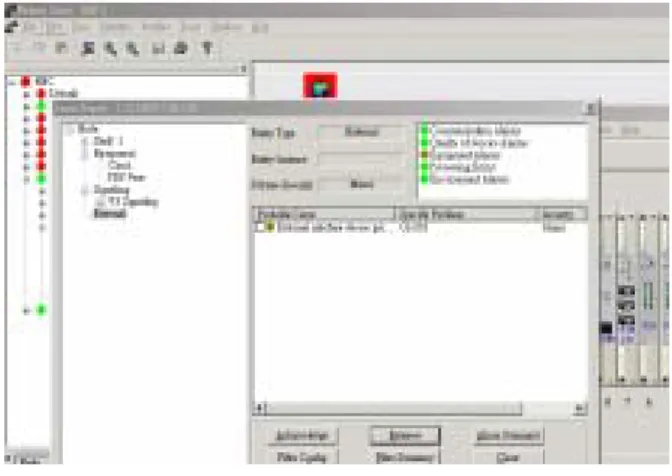
Figure 3. The on-line field-test and alarm screen of NMS detecting an OLOS failure.
3. EXPERIMENTAL RESULTS AND PERFORMANCE ANALYSIS
The platform of the experimental system can be based on a SONET/SDH multi-access node such as Alcatel Litespan or UTStarcom AN2000. The proposed system currently works successfully with the Alcatel 1353DN and Netman 2000 NMS. Fig.3. illustrates the on-line field-test and alarm screen of NMS by the detected OLOS failure.
In Fig. 4, the experimental results show that the ratio of fiber breaks to equipment faults is 3:1 in the optical networks of APTG (Asia Pacific Telecom Group) for southern Taiwan in 2004; and the erroneous diagnosis is up to 15%. However, all erroneous diagnosis can be avoided and the real fault point can be exactly detected by using EFMS. That is to say that EFMS can minimize the fault-recovery time and gain approximately 25% saving on maintenance costs.
Table 2. EFMS V.S. Traditional Fiber Monitoring System.
EFMS Traditional
Cost Low ($200) High ($1,500~30,000)
Occupy a fiber N Y
New NMS N Y
Real-time High High
Compatibility Good Weak
Reliability High Median
Detect equipment fault Y N Fiber fault location N Y (need OTDR module) 4. CONCLUSIONS
This paper proposes a scalable, interoperable, and cost-effective fiber monitoring scheme. The OM-BOX can be easily installed to equipment and interoperate with the existing NMS, accurately distinguishing the fault point between a fiber break and an equipment fault. The benefit to the operator is in effectively minimizing the fault-recovery time, improving network stability and system performance. Experimental results show the scheme saved 25% on maintenance costs for the APTG south area in 2004.
2004Trouble Tickets 0 5 10 15 20 25 30 35 40 45
Jan. Feb. Mar. Apr. May Jun. Jul. Aug. Sep. Oct. Nov. Dec.
Month C ount Equipment-fault Fiber-broken Erroneous diagnosis
Figure 4. Trouble tickets of APTG south area, 2004.
5. ACKNOWLEDGMENTS
The authors would like to thank National Science Council (NSC) of Taiwan for supporting this research under project number NSC 96-2221- E-151-029.
6. REFERENCES
[1] C. Mas and P. Thiran, “An Efficient Algorithm for Locating Soft and Hard Failures in WDM Networks”, IEEE Journal of Selected on Areas Communications, vol. 18, (Oct 2000), 1900-1911.
[2] Hongxin Chen; Leblanc, M., “Reduction of the impairment of online OTDR monitoring by use of a narrow bandwidth OTDR and an optical bandpass filter”, IEEE Photonics Technology Letters, vol. 16, (Sep. 2004), 2198-2200. [3] Reichmann, K.C.; Frigo, N.J.; Iannone, P.P.; Zhou, X.;
Leblanc, M.; Chabot, S., “In-service OTDR limitations in CWDM systems caused by spontaneous Stokes and
anti-Stokes Raman scattering”, IEEE Photon. Technol. Lett., vol 16, (Jul. 2004), 1787-1789.
[4] Pellegatta, M., Monguzzi, M., Mazzarese, A. and Zucchetti, A, “Fiber networks maintenance in the all-optical network Era,” IEEE/IFIP Network Operations and Management Symposium, (Apr. 2002), 855-868.
[5] http://www.us.anritsu.com. [6] http://www.ttcone.com.
[7] B.D. Mulder, W. Chen, J. Bauwelinck, J. Vandewege, and X.Z. Qiu, “Nonintrusive fiber monitoring of TDM optical
networks,” Journal of Lightwave Technology, vol.25, no.1, (Jan. 2007), 305-317.
[8] “Tunable OTDR based on direct modulation of self-injection-locked RSOA for In-service monitoring of WDM-PON,” IEEE Photonics Technology Letters, vol. 20, no. 15, (Aug. 2008), 1323-1325.