行政院國家科學委員會專題研究計畫 成果報告
解析台灣教育的效果與功能: 個體與總體分析(第 2 年)
研究成果報告(完整版)
計 畫 類 別 : 個別型 計 畫 編 號 : NSC 96-2415-H-004-002-MY2 執 行 期 間 : 97 年 08 月 01 日至 98 年 12 月 31 日 執 行 單 位 : 國立政治大學經濟學系 計 畫 主 持 人 : 莊奕琦 報 告 附 件 : 出席國際會議研究心得報告及發表論文 處 理 方 式 : 本計畫可公開查詢中 華 民 國 99 年 03 月 29 日
Summary of final report
In this research project, I have tried to identify what’s the “true” rate of return to education in Taiwan. Using Instrumental variable method and heterogeneous human
capital theory, I had developed three empirical models to estimate and discover the rate of return to education in Taiwan. The main sources of data are from varies years
of Taiwan’s Manpower Utilization Survey. As education is an important form of human capital accumulation, can education be also an effective means for fostering
intergenerational social mobility? Using Taiwan’s Panel Study of Family Dynamics data, I also investigate education and intergenerational social mobility in Taiwan.
The major conclusions from my research are that the estimated rates of return to education are relatively higher by the IV method than by the OLS method. The
estimated rate of return to education is 5.97% for males and 14.69% for females, higher than that by OLS especially in the female group. Due to the severe influence
by family factors on females’ education, we also find that the female rate of return to education is significantly underestimated the by OLS. The Taiwan empirical study
also shows that significant heterogeneous return to education does exist and the educational choice was made according to the principle of comparative advantage.
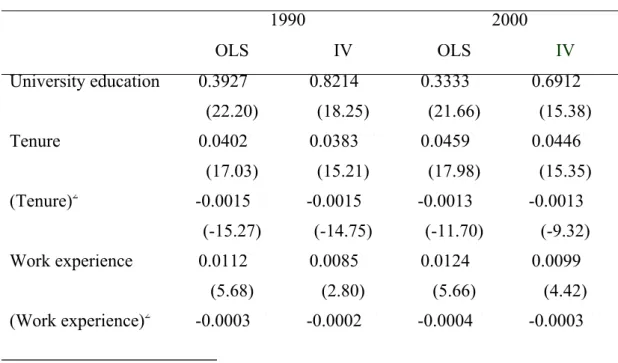
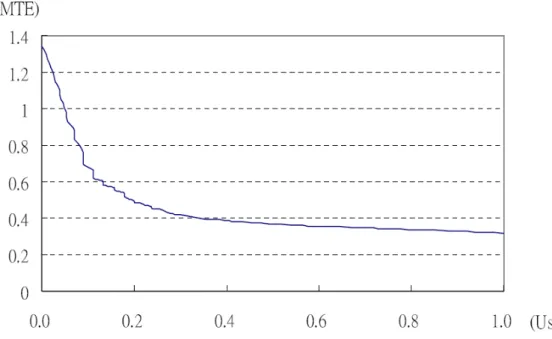
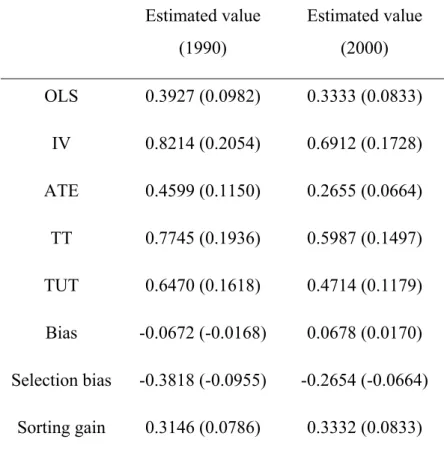
The estimated rates of return for attaining university were 19% and 15%, much higher than the average rate of return of 11.55 and 6.6%, for 1990 and 2000, respectively.
The decline trend of return to university education may be caused by the rapid expansion of the number of colleges and universities and the increasing supply of
college graduates in the 1990s. Quantile regression with cohort data also confirms the same result. Moreover, we find that education and ability are complements for the old
cohort, while they are substitutes for the young cohort, i.e., education can compensate disadvantage in ability. The important policy implication is that general education
may consolidate and even create social diversity.
Empirical results from PSFD data find that father’s social status affects an
individual’s educational attainment. Offspring whose father is in the upper class have the best advantage of receiving higher education than those whose father is not.
Moreover, education has a profound influence on social status. The higher the educational attainment is, especially for university and above, the greater the chance
will be in the upper-class and the advantage of education to enter the upper class does not vary among different cohorts. This implies that the upper-class may dominate
education to preserve their social status. However, other things being equal, for those with junior college education but their fathers are not in the upper-class, tend to have
a greater chance to be in the upper-class than those whose father is in the upper-class. Hence, education can still be an effective means to compensate the disadvantage in
one’s father’s social status. We also find that senior high school and junior college education has the greatest chance to be in the middle class, which is conducive to
social stability. Our results confirm that popularization of education is beneficial to intergenerational social mobility. Thus, equal opportunity to attain education and
prevention of monopoly in education by the upper class should be the ultimate goal of a government’s educational policy as it not only enhances one’s earning capability but
also fosters social mobility.
The above research has developed into four papers: 1. Endogeneity and
Investment in Education: Estimating Rates of Return to Education for Taiwan, 2. Heterogeneity, Comparative Advantage, and Return to Education: The Case of
Taiwan, 3. Return to education and ability in Taiwan: an cohort analysis, 4. Education and Social Mobility in Taiwan. The following attachment is the complete version of
Endogeneity and Investment in Education: Estimating Rates of
Return to Education for Taiwan
Abstract
To avoid the endogenous bias of the education variable in the OLS estimation of return to education, this paper applies the 2SLS instrumental variable method to estimate the rate of return to education using data from the 1990 Taiwan’s Manpower Utilization Survey. Instrumental variables include the nine-year compulsory education policy, area of residence, sibling status, and father’s education. Tests are also conducted to choose the most effective valid instrument from all combinations of IVs. Consistent with the literature, the estimation results show that the estimated rate of return to education is relatively higher by the IV method than by the OLS method. Due to the severe influence by family factors on females’ education, we also find that the female rate of return to education is significantly underestimated by the OLS.
Keywords: Human capital investment, return to education, endogenous bias, ability bias, instrumental variable, local average treatment effect
Endogeneity and Investment in Education: Estimating Rates of
Return to Education for Taiwan
I. Introduction
Human capital investment and accumulation have been identified as one of the
important sources for a country’s long-run economic growth.1 For the past four
decades, Taiwan, a small island of 36,000 kilometers with limited natural resources,
has achieved the so-called “economic miracle” with average annual economic growth
rate of 8.45% between 1960 to 2000. Taiwan’s remarkable economic performance is
consistent with the human capital theory to a large extent due to the development of a
well-educated and better-trained labor force, which speeds up industrialization
processes and upgrading of technology to sustain the long-run growth of the economy.
Chuang (1999) finds that during the 1964-1994 period, 30% of Taiwan’s average
annual economic growth can be attributed to human capital. Lin (2004) also discovers
that higher education had a positive effect on economic growth in Taiwan for the
period 1965-2000; one additional percent of higher education stock is estimated to
increase real output by approximately 0.19%. Moreover, examining the relation
between education and growth, Chuang (2000) finds that unidirectional causality runs
from higher education to economic growth in Taiwan over the period 1952-1995. Wu
(2003) notices an increasing trend of rates of return to education in Taiwan from 1978
to 2001.
These findings on the education-growth nexus of Taiwan’s economic miracle can
be described as follows. Since the adoption of an open trade policy in the early 1960s,
Taiwan has experienced drastic and rapid structural changes from an
agriculture-oriented to an industry-oriented economy. In fact, the output share of
industry increased from 23.03% in 1961 to 39.36% in 1978, subsequently remaining
relatively stable until the mid 1980s. The structure of exports changed from
labor-intensive products in the 1960s, to capital-intensive in the 1970s and
technology-intensive in the 1980s. This open trade and rapid industrialization process
increased the demand for skilled labor, which increased the return on education, and
the increase in the quality of workers facilitated the process of accessing, absorbing,
and applying technology upgrades and thus the subsequent economic growth.
The Human capital theory emphasizes education and on-the-job training to
enhance labor productivity and hence wage rates of workers.2 The economic return to
education not only influences an individual’s educational choice but also affects the
labor quality of the whole society. Therefore, from both individual and social points
of view, the estimation of return to education is an important measure for human
capital investment decisions and thus has a profound effect on human development.3
For the past forty or more years, investment in education has expanded greatly in
Taiwan due to the government’s expansionary education policy, the process of rapid
industrialization, and the conventional wisdom that “To be a scholar is to be at the top
of society.” The average years of education for employed workers in Taiwan has
increased tremendously from 7.18 years in 1978 to 11.03 years in 2006, while for the
same period, the per capita income rose from US$1,461 to US$14,455, a roughly
ten-fold increase. According to the human capital theory, education enhances labor
productivity and hence increases wage rates. But what is the economic return for an
additional year of schooling? Previous empirical studies on returns to education in
Taiwan, e.g., Psacharopouls (1985); Gindling, Goldfarb, and Chang (1995); Chuang
and Chao (2001); and Wu (2003), among others, have neglected either the
endogeneity problem of education or the heterogeneity of unobserved ability, thus
tending to encounter the endogeneity bias and ability bias for the estimates of returns
to education.4 Two exceptions are Gurgand (2003) and Spohr (2003), who adopted
3 Return to education is one of important measures in constructing the human development index,
which is considered to be a more inclusive index for measuring human welfare and has been announced every year by the United Nations since 1990.
4 The former is caused by educational decisions and is endogenous rather than exogenous, and the
the IV method, but with a simple instrumental variable or special attention to specific
groups only. Gurgand (2003) estimates the influence of education on a farmer’s
income, adopting a simple instrumental variable of the share of primary and high
school farmers to replace the formal years of education, while Spohr (2003) uses the
nine-year compulsory education policy as the instrumental variable and adopts the
yearly wage instead of the hourly wage as the dependent variable.5 Instead of using a
single instrumental variable, this paper intends to deal with the problems by using
four different instrumental variables, namely the nine-year compulsory education
policy, area of residence, sibling status, and father’s education, and their combinations,
to identify an unbiased and consistent estimate of the rate of return to education for
Taiwan. Tests of the validity of various combinations of instruments are conducted.
We find that the combination of the compulsory education policy and area of
residence is the most efficient valid instrument and may give a better estimation for
the rate of return to education.
Due to the heterogeneity of an individual’s ability, the conventional OLS
estimation of the wage equation will be subject to the ability bias because the
intercept of the wage equation by the OLS method reflects personal ability, which is
correlated with the marginal cost of receiving education. Moreover, if the
heterogeneity of an individual’s ability is revealed by the different slopes of the wage
equation, i.e., the greater the return to education, the higher the incentive for
educational investment, then under this situation, the estimation results by the OLS
method will be further inflated. As there exist heterogeneous returns to education,
reflected by the intercept and slope of the wage equation, the adoption of the OLS
method to estimate the return to education requires that explanatory variables and the
error term be mutually independent. Failure to satisfy this condition will render a bias
in estimation by the OLS method. More importantly, educational investment is an
endogenous decision process that is heavily influenced by personal characteristics and
family background factors. As the education variable is not exogenous, conventional
OLS estimation will be subject to bias.6
Griliches (1977) proposes to use the instrumental variable method to tackle the
problems of ability bias and endogeneity.7 However, the major difficulty is to find a
valid instrumental variable, especially for cross-section data analysis such as the
estimation of return to education. Heckman and Vytlacil (1999) point out that the
instrumental variable has to be correlated with an individual educational choice and
6 For discussion of factors that determines an individual’s educational choice, see, for example,
Haveman and Wolfe (1995).
7 Griliches (1977) uses the viewpoint of the efficiency unit in the labor market and considers human
capital to be homogenous; thus, people choose to have different stocks of human capital. In this regard, to solve for the problems of ability bias and measurement error, an effective estimation method is the instrumental variable method. Sometimes this type of model is also called the common coefficient
uncorrelated with an individual’s ability. Most of the existing literature has shown
that it will be relatively difficult to find a valid instrumental variable from the demand
side of education, as we are not quite certain that the demand factor for education has
no correlation with an individual’s wage rate. Therefore, economists are inclined to
use supply factors for education such as family background factors as the instrumental
variable. For example, Trostel, Walker and Woolley (2002) use parents and spouse’s
education as instrumental variables to estimate male and female return to education
for 28 countries, finding that the estimated rate of return to education is typically
higher when calculated by the IV method than by the OLS method. Other studies,
such as Arcand, D’hombers and Gyselnck (2004), Patrinos and Sakellariou (2005),
and Sakellariou (2006), adopt the father’s years of education as the instrumental
variable; all of these find results similar to those of Trostel, Walker and Woolley
(2002).8
As we are not convinced that family background factors are uncorrelated with an
individual’s ability, recent studies have switched to supply side factors of the labor
market as the instrumental variable.9 For example, Angrist and Krueger (1991) use
8 See Card (2001) for a detailed comparison and discussion of the estimation results by OLS and IV
methods.
9 If there is an inter-generational transfer effect, family background factors such as parents’ education
birth season as the instrumental variable, as differences in birth season cause different
dates of school enrollment and hence different times for completing compulsory
education. Apparently, birth season has a correlation with years of schooling, but
none with an individual’s ability. Harmon and Walker (1997) use the compulsory
educational policy in the U.K. as the instrumental variable because the change in
educational policy is exogenous but in fact influences people’s minimum years of
schooling. As the instrumental variable is subject to the educational choice of
particular demographic groups, the results estimated by the IV method can be
interpreted as the marginal rate of return to education for those particular
demographic groups. Likewise, the estimated rate of return to education for the IV
method is usually higher than that for the OLS method.10
There are other instrumental variables in the literature. For instance, Duflo (1999)
chooses birth date before and after institutional change, and personal residential area,
as the educational resources may be different under different policies, as instrumental
variables. Moretti (2004) uses estimated demographic structure in the city and
land-grant university as instrumental variables to estimate estimated spillover effect of
education and social rate of return to education.
10 Card (2001) has an alternative interpretation. He thinks that people with low education tend to have
Conventionally, under the assumption of mutual independence of the explanatory
variables and the error term, estimates from the OLS method are interpreted as the
average marginal rate of return to education. However, if it is not the case, as it
usually is, the OLS estimates will subject to the endogeneity bias.
Based on the results from the literature, this paper intends to estimate the rates of
return to education for Taiwan. The major contributions of the paper are to take the
endogeneity of education and the individual’s heterogeneity into account to estimate
an unbiased and consistent rate of return to education using the IV method. Second,
tests are conducted to choose the most effective valid instrument from all
combinations of IVs. Third, conducting a case study of Taiwan, a country
characterized by an economic miracle with rapid accumulation in education
investment, may provide useful implications for other developing countries.
This paper is organized as follows. Section II specifies the empirical model.
Section III contains data description, estimation results, and sensitivity analysis. The
conclusion follows in Section IV.
As in the literature, we use Mincer's (1974) specification of wage equation as the
basic model for the estimation of rate of return to education, and an additional
educational choice equation is also stated as
i i i X S u Y = ′δ +β + , i i i Z v S = 'α + ,
where Y is the real hourly wage in logarithmic form; X is other variables
affecting an individual’s wage rate, such as work experience, marital status, industry,
and firm size; S denotes years of schooling; Z is explanatory variables including
instrumental variables that determine one’s educational choice; u and v are error
terms for wage and educational choice equations, respectively; and the coefficient β represents the average rate of return to education for additional years of schooling.
To cope with the endogeneity problem of investment in education, a 2SLS
instrumental variable estimation method is used. Furthermore, as the samples are
subject to those who work for a wage payment, the direct estimation of the wage
equation will encounter the problem of sample selection bias. Thus, we adopt
Heckman’s (1976) two-stage selection model to explicitly correct for the problem of
selection bias.11
The selection of instrumental variables
The use of instrumental variables to estimate return to education requires that
instrumental variables satisfy the orthogonality condition; i.e., instrumental variables
have no correlation with the individual’s ability or error term. Furthermore, under the
heterogeneous return to education, instrumental variables have to be uncorrelated with
one’s earning capability in addition to the orthogonality condition; i.e.,
Z
isuncorrelated with β . In other words, allowing for a heterogeneous return to education, the instrumental variable should be correlated with one’s educational
choice, but uncorrelated with one’s wage rate.12
We first adopt the nine-year compulsory education policy as our instrumental
variable. Numerous studies have shown that the compulsory educational policy has a
significant effect on return to education; see, e.g., Angrist and Krueger (1991); Cruz
and Moreira (2005); and Sakellariou (2006), among others. From a policy perspective,
the implementation of a compulsory educational policy significantly enhances the
structure of labor quality of the developing countries, especially for those groups
subject to family liquidity constraints.13 Thus, the use of the compulsory educational
12 See, for example, Blundell et al. (2003) for detailed discussion on this point.
policy as the instrumental variable not only solves for problem of endogeneity and
ability bias caused by the OLS method but also gives us estimates for the rate of
return to education for those who are subject to liquidity constraints, an important
factor that hinders educational investment for economically disadvantaged people.
Most research on return to education in developing countries has proved that using
institutional factors as the instrumental variable tends to result in a higher estimated
rate of return to education than that found by the OLS method.14
Compulsory educational policy is an institutional change that includes the
building of new junior high schools and recruitment of new educational staff and
teachers, and thus it is closely related to an individual’s educational investment but
has no direct relationship with an individual’s ability. As educational resources are
different among different residential areas, it thus has different impacts on
individual’s educational achievement, while having nothing to do with an individual’s
ability. From the viewpoint of the life cycle of household income, elder children tend
to have less family education resources than their young siblings do, as family income
is usually low in the early stage.15 Moreover, the greater the number of siblings for a
to credit constraints.
14 See, for example, Card (2001) for a detailed literature review on this line of research.
15 Using data from the 1989 Survey of Women's Living Status in the Taiwan Area, Parish and Wills
given family budget constraint, the fewer the educational resources that are given to
each child. Thus, both the existence of young siblings and the number of such siblings
will be correlated with an individual’s educational achievement, but these factors have
no correlation with an individual’s ability or wage. Therefore, this paper adopts the
nine-year compulsory education policy, residential area, and the existence of younger
siblings as instrumental variables for educational choice.16 In the literature, some
research, see, e.g., Trostel, Walker and Woolley (2002); Arcand, D’hombers and
Gyselnck (2004); Patrinos and Sakellariou (2005); and Sakellariou (2006), among
others, use family background variables such as the father’s education as the
instrumental variable; for comparison, we thus also include father’s education as an
additional instrumental variable.17
Tests of validity for instrumental variables
Econometrically, in the 2SLS estimation, a valid instrumental variable should
satisfy two conditions: Instrument relevance and Instrument exogeneity. The relevant
tests include using the partial coefficient of determination or F-test to test the
explanatory power and sign of the instrumental variable on the endogenous education
16 We also regard the number of siblings as the instrumental variable; the estimated results are similar
to what we have reported here.
variable at the first step of regression.18 As for the exogeneity test, the
over-identifying restrictions test is used on the orthogonality condition for all the
instruments.19 In the second stage of regression, we adopt the Durbin-Wu-Hausman
test for exogeneity.20
III. Data analysis and estimation results
As the paper uses the nine-year compulsory educational policy, which was
implemented in Taiwan in 1968, as one of the instrumental variables for a broader
inclusion of samples, we adopt data from the 1990 Taiwan Manpower Utilization
Survey conducted by the Directorate-General of Budget, Accounting and Statistics,
Executive Yuan, Taiwan, Republic of China.21 The MPUS data are repeated cross
18 See Bound, Jaeger, and Baker (1995) and Staiger and Stock (1997) for detailed descriptions of the
relevant tests. The F-test can be used to joint test the significance of coefficients of all the instrumental variables. A rule of thumb is that F statistics should be greater than 10, and that any values below 10 imply that the selected instrumental variables have insignificant explanatory power and thus generate estimation bias.
19 Assume that the number of selected instruments is m and the number of relevant endogenous
variables is k. If m=k, the regression coefficients are exactly identified. If m>k, the regression coefficients are over-identified. If m<k, the regression coefficients are under-identified.
20 The estimation process is similar to test for the omitted variable, as it was first proposed by Durbin
(1954), Wu (1973), and Hausman (1978), respectively; hence it is also called the Durbin-Wu-Hausman (DWH) test. For a discussion of DWH test of exogeneity, see, for example, Davidson and MacKinnon (2003).
21 We also tried the Taiwan Manpower Utilization Survey data for 1995 and 2000. The results are
similar to what we report in this paper. However, data for the 1995 and 2000 MPUSs may encounter limited sample problems. For example, the proportion of samples having received nine-year compulsory education is as high as 95% and 99% for 1995 and 2000, respectively. Thus, the use of the nine-year compulsory educational policy as the instrumental variable for 1995 and 2000 data will be subject to insufficient samples of those who were not affected by the compulsory education policy. For
sections and stratified random samples of around 20,300 households (about 60,000
persons aged 15 and above in these sampled households) from about 532 villages and
neighborhoods in Taiwan, and they are not panel data. For the use of instrumental
variables, we choose samples only with complete intergenerational information, such
as father’s education and number of siblings. A total of 7,193 samples are obtained.22
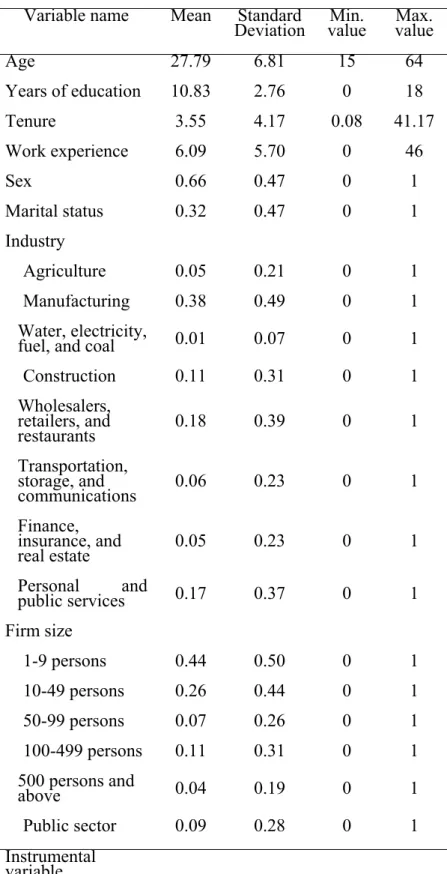
Tables 1 and 2 present all the variable names, definitions, and basic statistics.
22 As the samples with complete intergenerational information are smaller than the original survey
samples, then to ensure the representation property of the selected sample, we further conducted conventional OLS estimation for return to education for our selected sample and the original survey sample, finding that the estimation results for the two samples are similar, which justifies the
Table 1. Variable name and definition Name Definition
Wage Real hourly wage in logarithmic form. Years of
education Education levels include illiterate and self educated, primary school, junior high school, senior high school, vocational school, junior college, university, graduate school and above. The corresponding years of education are 0, 6, 9, 12, 12, 14, 16, and 18 years, respectively.
Tenure Years working at current job. Work
experience Work experience is proxied by age-years of education-6-tenure. As males in Taiwan need to serve two years in the army, an additional 2 years is thus further subtracted for males.
Sex Dummy variable: 0 for female, 1 for male. Marital status Dummy variable: 0 for single, 1 otherwise.
Industry Industry in which the individual works are dummy variables, which include agriculture, forestry, fishery, and husbandry; manufacturing; water, electricity, fuel, and coal; construction; wholesalers, retailers, and restaurants; transportation, storage, and communications; finance, insurance, and real estate; and public and personal services. Wholesalers, retailers, and restaurants is the reference group.
Firm size Dummy variables include 1-9 persons, 10-49 persons, 50-99 persons, 100-499 persons, 500 persons and above, and the public sector. 1-9 persons is the reference group.
Residential
area Residential area is classified into urban and rural areas and represented by a dummy variable: 0 for rural area, 1 for urban area. Based on the official classification of Taiwan’s Ministry of Interior, cities, towns, or villages with a population of residences of over fifty thousand are classified as urban areas.
Number of
siblings Having younger siblings in the family is represented by a dummy variable: 1 for yes and 0 for no. Compulsory
educational policy
People affected by the nine-year compulsory educational policy implemented in1968. A dummy variable: 0 for those who were born before 1956 (not affected by the policy) and 1 for those who were born after 1956 (affected by the policy).
Table 2. Summery of basic statistics for variables Variable name Mean Standard
Deviation value Min. value Max.
Age 27.79 6.81 15 64 Years of education 10.83 2.76 0 18 Tenure 3.55 4.17 0.08 41.17 Work experience 6.09 5.70 0 46 Sex 0.66 0.47 0 1 Marital status 0.32 0.47 0 1 Industry Agriculture 0.05 0.21 0 1 Manufacturing 0.38 0.49 0 1 Water, electricity,
fuel, and coal 0.01 0.07 0 1
Construction 0.11 0.31 0 1 Wholesalers, retailers, and restaurants 0.18 0.39 0 1 Transportation, storage, and communications 0.06 0.23 0 1 Finance, insurance, and real estate 0.05 0.23 0 1 Personal and public services 0.17 0.37 0 1 Firm size 1-9 persons 0.44 0.50 0 1 10-49 persons 0.26 0.44 0 1 50-99 persons 0.07 0.26 0 1 100-499 persons 0.11 0.31 0 1 500 persons and above 0.04 0.19 0 1 Public sector 0.09 0.28 0 1 Instrumental variable Educational policy (IV1) 0.86 0.35 0 1 Residential area (IV2) 0.68 0.47 0 1
Number of
Siblings (IV3) 0.26 0.44 0 1
Father’s
education (IV4) 6.05 3.86 0 18
Observations 7193
Source: 1990 Manpower Utilization Survey, DGBAS, Taiwan
Industry includes 8 one-digit and 76 two-digit classifications, according to the
Standard Classification of Industry of the Republic of China, DGBAS.23 Residential
area is classified into urban and rural areas. Based on the official classification of
Taiwan’s Ministry of the Interior, cities, towns, or villages with over fifty thousand
residences are classified as urban areas. Due to data limitations, it is not possible to
acquire residence information for samples during their study period. We use current
residence as a proxy for the residence during schooling age.24
The total sample is 7,193 persons, average age is 28 years old, average years of
education is 10.83 years, with an average tenure of 3.55 years and work experience of
6.09 years. Among them, females comprise 34% and males 66%; 23% are married;
38% work in manufacturing, 18% in wholesalers, retailers, and restaurants; 17% in
23 The original classification of industry includes 9 one-digit and 85 two-digit industries, for simplicity
and research purposes, we had aggregated some industries, which results in 8 one-digit and 76 two-digit industries.
24 A possible bias from this assumption is that current residence may not be the same as the residence
of schooling age, i.e., the residence of schooling age was in a rural (urban) area, but current residence is in an urban (rural) area. However, according to data from Panel Study of Family Dynamics, conducted by Academia Sinica since 1999, for those who were born between 1953 and 1963, the percentage of those living in rural areas during their schooling years but currently living in urban areas is 1.23%, while that for those living in urban areas during their schooling years but currently living in rural areas
personal and public services; 70% worked at small- and medium-size firms (below 50
persons); only 4% worked at large enterprises (500 persons and above); and 9%
worked in the public sector; 86% received nine-year compulsory education; 68%
lived in urban area and 32% in rural area.
Estimation results
We use the IV method or so-called 2SLS method to estimate rate of return to
education for Taiwan. The results of first stage regression for educational choice are
presented in Table 3. The four instrumental variables, educational policy (IV1),
residence area (IV2), number of siblings (IV3), and father’s education (IV4), as
expected, all have a positive effect on individual’s education achievement. These
results imply that those who receive compulsory education, live in urban areas, have
no younger siblings, and have fathers with higher education tend to have more
education. Moreover, even including all four instrumental variables into the
educational choice regression, as in column 5 of Table 3, the estimated coefficients all
remain significant and have expected signs.
IV1 IV2 IV3 IV4 IV1+IV2+IV3+ IV4 Age 0.4908*** 0.4883*** 0.4809*** 0.4473*** 0.3958*** (17.59) (17.85) (16.73) (17.52) (15.12) Age2 -0.0083*** -0.0089*** -0.0088*** -0.0079*** -0.0066*** (-18.68) (-21.33) (-20.10) (-20.21) (-15.77) Educational policy 0.9974*** 0.9635*** (6.75) (7.17) Residence area 1.1235*** 0.7144*** (16.47) (11.15) Number of siblings -0.3104*** -0.2150*** (4.17) (3.18) Father’s education 0.2764*** 0.2592*** (37.33) (34.75) Constant 3.2259*** 3.8294*** 4.5216*** 3.2363*** 2.1664*** (6.98) (8.93) (10.29) (8.09) (5.09) Partial R2 0.0057 0.0327 0.0022 0.1460 0.1647 F-test 19.6*** 67.7*** 11.4*** 579.4*** 609.1*** Adj-R2 0.1063 0.1333 0.1028 0.2466 0.2650 Observations 7193 7193 7193 7193 7193
Notes: 1. Figures in the parentheses are t statistics.
2. *, **, and *** stand for statistical significance levels at 90%, 95%, and 99%, respectively. 3. The F-test is for the instrument relevance condition (the significance of coefficients of all the
instrumental variables). A rule of thumb is that F statistics should be greater than 10, and that any values below 10 imply that the selected instrumental variables have insignificant
explanatory power and thus generate estimation bias.
To ensure that our instrumental variables are valid instruments, we further test for
determination and the F-test of first stage regression in Table 3, all four instrumental
variables have significant correlations with years of education. Among them, the
father’s education has the most explanatory power for an individual’s education. As
for the exogeneity test, from Table 4, the over-identifying restrictions test shows that
the four instruments are not all exogenous, suggesting that potential endogeneity
within the four instruments may bias the estimation.25
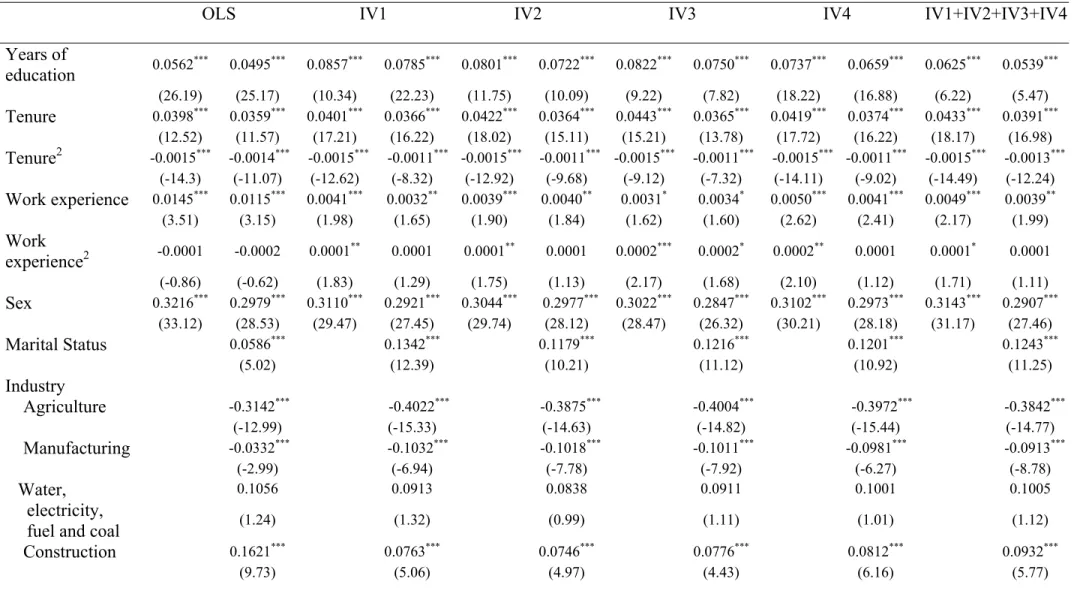
Table 4 lists the estimation results for the rates of return to education for the OLS
and IV methods. First, by considering a parsimonious formulation of the Mincerian
wage equation, which includes only variables like tenure and work experience in
addition to education, the estimated rates of return to education, tenure, and work
experience are 5.62%, 3.98%, and 1.45%, respectively. Including additional
explanatory variables, which include marital status, industry, and firm size, the
estimated rates of return to education, tenure, and work experience drop to 4.95%,
3.59%, and 1.15%, respectively. It should be noted that by construction, a valid
instrumental variable should not be correlated with wage or any variable that explains
wage; therefore, in the spirit of the IV method for estimating wage equation, the
omitted variable bias problem should be negligible. We find that those additional
explanatory variables are all significant with the expected signs; in general, those who
are married, work in construction and finance, insurance, and real estate sectors, and
work at large enterprises tend to receive higher wages. Note that from Table 4, the
result of the conventional OLS estimation rejects the null hypothesis of the DWH test
that the education variable is exogenous; hence, this result justifies the use of the IV
method for the estimation of return to education
From Table 4, using the nine-year compulsory education policy (IV1) as the
instrument, the estimated rate of return to education is 8.57%, higher than that found
by the OLS method. This result remains true (7.85% for IV and 4.95% for OLS) even
after controlling for additional explanatory variables. Thus, the estimated average rate
of return to education by the conventional OLS method will be biased downward
because of the endogeneity of education variable. The instrument variable by the
compulsory education policy suggests that compulsory education will increase the
rate of return to education, as the implementation of compulsory education reduces
the marginal cost of education, especially for those children whose families are
subject to credit constraints.
The instrument of residence area (IV2) also shows an estimated rate of return to
education of 8.01%, higher than the estimate found by the OLS. This result implies
to provide more and better educational resources and thus lower marginal costs of
education than rural areas do.
As for the instruments of family background variable, the estimated rates of
return to education for the number of siblings (IV3) and father’s education (IV4) are
8.22% and 7.37, respectively, again higher than that found by the OLS method. This
result implies that one with no younger siblings or a father with more education will
tend to receive more family educational resources, thus resulting in more education
and a higher rate of return to schooling.
However, taking four instrumental variables jointly, the estimated rate of return
to education is still higher for the IV method than for the OLS method but lower than
estimates by any single instrument. The reason is that an estimate using a single
instrumental variable usually represents the rate of return for one particular
demographic subgroup, and as we increase the number of instruments in the first stage
regression, the estimated educational achievement will in general become closer to the
real value and thus approach the average marginal rate of return to education for the
whole group.
Comparing the estimates through four instruments, we find that the estimated
residence area, father’s education, and number of siblings. This result suggests that
institutional factors such as compulsory education have a stronger effect on return to
education than do family background factors such as number of siblings or father’s
education. In other words, as the compulsory education is a comprehensive
institutional change which generally reduces the marginal cost of education for people,
especially those subject to credit constraints, it is thus the most significant effect on
return to education.
Actually, the estimated rate of return to education found by the OLS method is
not the average marginal rate of return to education, or so-called average treatment
effect (ATE); it also encounters the problems of the endogeneity bias and the ability
bias. In contrast, estimates by the IV method not only avoid the problems of the
endogeneity and ability biases but also provide an estimate of the marginal rate of
return to education for a particular demographic subgroup (Card (1999, P.1855)), an
estimate close to the local average treatment effect (LATE) (Heckman, Lalonde, and
Table 4. Estimated rates of return to education: OLS vs. IV
OLS IV1 IV2 IV3 IV4 IV1+IV2+IV3+IV4
Years of education 0.0562*** 0.0495*** 0.0857*** 0.0785*** 0.0801*** 0.0722*** 0.0822*** 0.0750*** 0.0737*** 0.0659*** 0.0625*** 0.0539*** (26.19) (25.17) (10.34) (22.23) (11.75) (10.09) (9.22) (7.82) (18.22) (16.88) (6.22) (5.47) Tenure 0.0398*** 0.0359*** 0.0401*** 0.0366*** 0.0422*** 0.0364*** 0.0443*** 0.0365*** 0.0419*** 0.0374*** 0.0433*** 0.0391*** (12.52) (11.57) (17.21) (16.22) (18.02) (15.11) (15.21) (13.78) (17.72) (16.22) (18.17) (16.98) Tenure2 -0.0015*** -0.0014*** -0.0015*** -0.0011*** -0.0015*** -0.0011*** -0.0015*** -0.0011*** -0.0015*** -0.0011*** -0.0015*** -0.0013*** (-14.3) (-11.07) (-12.62) (-8.32) (-12.92) (-9.68) (-9.12) (-7.32) (-14.11) (-9.02) (-14.49) (-12.24) Work experience 0.0145*** 0.0115*** 0.0041*** 0.0032** 0.0039*** 0.0040** 0.0031* 0.0034* 0.0050*** 0.0041*** 0.0049*** 0.0039** (3.51) (3.15) (1.98) (1.65) (1.90) (1.84) (1.62) (1.60) (2.62) (2.41) (2.17) (1.99) Work experience2 -0.0001 -0.0002 0.0001** 0.0001 0.0001** 0.0001 0.0002*** 0.0002* 0.0002** 0.0001 0.0001* 0.0001 (-0.86) (-0.62) (1.83) (1.29) (1.75) (1.13) (2.17) (1.68) (2.10) (1.12) (1.71) (1.11) Sex 0.3216*** 0.2979*** 0.3110*** 0.2921*** 0.3044*** 0.2977*** 0.3022*** 0.2847*** 0.3102*** 0.2973*** 0.3143*** 0.2907*** (33.12) (28.53) (29.47) (27.45) (29.74) (28.12) (28.47) (26.32) (30.21) (28.18) (31.17) (27.46) Marital Status 0.0586*** 0.1342*** 0.1179*** 0.1216*** 0.1201*** 0.1243*** (5.02) (12.39) (10.21) (11.12) (10.92) (11.25) Industry Agriculture -0.3142*** -0.4022*** -0.3875*** -0.4004*** -0.3972*** -0.3842*** (-12.99) (-15.33) (-14.63) (-14.82) (-15.44) (-14.77) Manufacturing -0.0332*** -0.1032*** -0.1018*** -0.1011*** -0.0981*** -0.0913*** (-2.99) (-6.94) (-7.78) (-7.92) (-6.27) (-8.78) Water, electricity, fuel and coal
0.1056 0.0913 0.0838 0.0911 0.1001 0.1005 (1.24) (1.32) (0.99) (1.11) (1.01) (1.12)
Construction 0.1621*** 0.0763*** 0.0746*** 0.0776*** 0.0812*** 0.0932***
Transportation, storage, and communicatio ns 0.0544*** 0.0152 0.0151 0.0150 0.0177 0.0163 (3.14) (0.64) (0.75) (0.66) (1.09) (0.95) Finance, insurance, and real estate 0.1121*** 0.1522*** 0.1512*** 0.1561*** 0.1492*** 0.1422*** (4.72) (6.92) (7.01) (7.44) (6.98) (6.43) Personal and public services -0.0251* -0.0438*** -0.0427*** -0.0387** -0.0412*** -0.0402*** (-1.68) (-2.77) (-2.53) (-2.42) (-2.67) (-2.51) Firm size 10-49 persons 0.0441*** 0.0901*** 0.0888*** 0.0909*** 0.0878*** 0.0776*** (3.92) (7.82) (7.44) (7.27) (7.44) (6.32) 50-99 persons 0.0511*** 0.1165*** 0.1167*** 0.1201*** 0.1125*** 0.1088*** (3.41) (6.27) (6.45) (6.21) (5.93) (5.87) 100-499 persons 0.0542*** 0.1322*** 0.1307*** 0.1409*** 0.1324*** 0.1228*** (3.19) (9.39) (8.93) (7.93) (7.74) (7.21) 500 persons and above 0.0817*** 0.1698*** 0.1622*** 0.1711*** 0.1544*** 0.1412*** (3.69) (6.66) (6.37) (7.02) (6.02) (5.93) Public sector 0.1176*** 0.2501*** 0.2498*** 0.2488*** 0.2341*** 0.2219*** (6.82) (12.66) (12.47) (11.87) (12.21) (11.43) Correction term λ -1.1700*** -1.012*** -0.5598*** -0.4445*** -0.5300*** -0.4112*** -0.5217*** -0.4266*** -0.4655*** -0.3676*** -0.4688*** -0.3617*** (-6.04) (-5.09) (21.79) (-17.08) (-20.64) (-16.04) (-19.76) (-15.71) (-17.91) (-13.77) (-18.20) (-14.04) Constant 3.8071*** 3.6191*** 3.5583*** 3.6048*** 3.5713*** 3.6807*** 3.4428*** 3.4165*** 3.4614*** 3.5245*** 3.4225*** 3.5128*** (72.71) (122.65) (34.36) (33.27) (41.18) (44.22) (26.48) (27.12) (71.00) (73.86) (70.45) (74.29) Observations 7193 7193 7193 7193 7193 7193 6376 6376 7193 7193 7193 7193
Adj-R2 0.3020 0.3494 0.1962 0.2889 0.209 0.2975 0.1928 0.286 0.2335 0.3115 0.2313 0.3100 DWH test for exogeneity -8.07 *** -7.68*** Over-identifying restrictions test 12.48*** 10.68**
Notes: 1. Figures in the parenthesis are t statistics; *, **, *** represent statistical significance levels at 90%, 95%, and 99%, respectively. 2. Reference group: wholesalers, retailers, and restaurants for industry; 1-9 persons for firm size.
3. Instrumental variables: IV1 for compulsory educational policy, IV2 for residence area; IV3 for number of siblings, and IV4 for father’s education.
4. Heckman’s (1979) two-stage selection method is used for correcting selection bias. Variables in the Probit model include years of education, marital status, number of children, and residency area, and λ is the sample selection-corrected term (or the inverse Mills ratio).
5. Null hypothesis of DWH test for exogeneity is that education variable is exogenous.
Sensitivity Analysis
Previous analysis shows that the estimated rate of return to education found by
the conventional OLS method will be biased downward, as the education variable is
endogenous. The IV method not only solves the endogeneity problem but also
provides an estimated rate of return to education for a particular demographic
subgroup. Theoretically, a valid instrument needs to satisfy both the instrument
relevance and instrument exogeneity conditions. However, Donald and Newey (2001)
point out that the most difficult task is to choose the most suitable instrumental
variable from a set of IVs.26 Likewise, for sensitivity analysis, we further perform
tests for relevance and exogeneity conditions for all the possible combinations of our
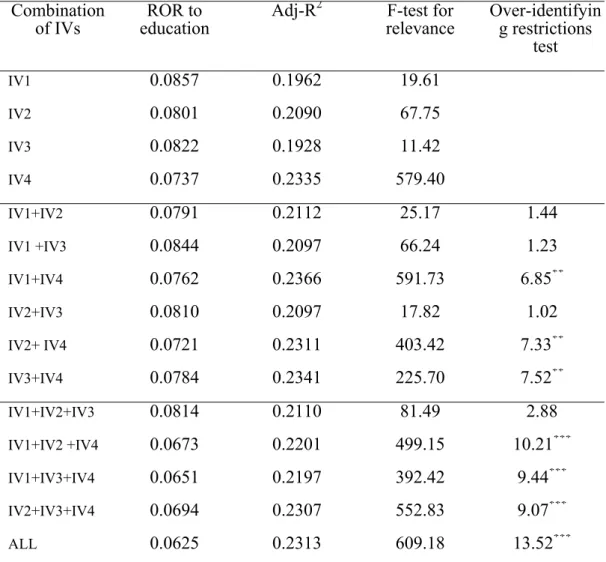
four instrumental variables to verify the most appropriate instruments. The results are
shown in Table 5.
Table 5. Estimated rates of return to education for various combinations of IVs Combination
of IVs education ROR to Adj-R
2 F-test for
relevance Over-identifying restrictions test IV1 0.0857 0.1962 19.61 IV2 0.0801 0.2090 67.75 IV3 0.0822 0.1928 11.42 IV4 0.0737 0.2335 579.40 IV1+IV2 0.0791 0.2112 25.17 1.44 IV1 +IV3 0.0844 0.2097 66.24 1.23 IV1+IV4 0.0762 0.2366 591.73 6.85** IV2+IV3 0.0810 0.2097 17.82 1.02 IV2+ IV4 0.0721 0.2311 403.42 7.33** IV3+IV4 0.0784 0.2341 225.70 7.52** IV1+IV2+IV3 0.0814 0.2110 81.49 2.88 IV1+IV2 +IV4 0.0673 0.2201 499.15 10.21*** IV1+IV3+IV4 0.0651 0.2197 392.42 9.44*** IV2+IV3+IV4 0.0694 0.2307 552.83 9.07*** ALL 0.0625 0.2313 609.18 13.52***
Notes: 1. IV1 for compulsory educational policy; IV2 for residence area; IV3 for number of siblings; and IV4 for father’s education.
2. If F-statistic is smaller than 10, it implies that the selected IV has no explanatory power and will cause an estimation bias for return to education.
3. Null hypothesis of over-identifying restriction is that all the including instrumental variables are jointly exogenous.
4. *, **, and *** represent the statistical significance levels at 90%, 95%, and 99%, respectively.
From Table 5, we find that the inclusion of more IVs will reduce the estimated rate
of return to education, as the result from one single IV represents one particular
demographic subgroup. The inclusion of further IVs will increase the explanatory
return to education will conceptually approach the real average marginal rate of return
to education at the second stage wage regression.
However, the two conditions of instrument relevance and exogeneity still need to
be satisfied as valid instruments. Moreover, the criterion for the most effective valid
instrument among the IVs is the one that provides the minimum mean square error
(MSE) for the estimation of rate of return to education at the second stage wage
regression. From Table 5, we find that any single instrumental variable satisfies the
instrument relevance condition; however, every IV combination that includes the
father’s education (IV4) will reject the null hypothesis of the over-identifying
restrictions test, suggesting that the father’s education fails to satisfy the instrument
exogeneity condition and thus is not a valid instrument for education. Among all the
IV combinations, the combination of compulsory education policy (IV1) and
residence area (IV2) not only satisfies both the relevance and exogeneity conditions
but also has the lowest MSE value. Thus, the combination of IV1 and IV2 is the most
effective valid instrument for education variable. Table 6 shows the estimated rates of
return to education for both males and females using IV1+IV2 as the instrument for
Table 6. Estimated rates of return to education for males and females
OLS IV1+IV2
Explanatory
variable Male Female Male Female
Years of education 0.0531*** 0.0465*** 0.0771*** 0.0621*** 0.0572*** 0.0480*** 0.1407*** 0.1009*** (21.21) (18.66) (26.96) (21.01) (7.33) (7.05) (13.07) (11.25) Tenure 0.0471*** 0.0401*** 0.0566*** 0.0551*** 0.0410*** 0.0312*** 0.0363*** 0.0302*** (16.88) (13.28) (11.32) (10.98) (13.65) (11.95) (4.11) (4.95) Tenure2 -0.0017** * -0.0015 ** * -0.0015 ** * -0.0017 ** * -0.0015 ** * -0.0011 ** * 0.0005 -0.0005 (-14.46) (-11.78) (-4.66) (-3.87) (-12.62) (-10.13) (1.12) (-0.77) Work experience 0.0209*** 0.0178*** 0.0266*** 0.0243*** 0.0015 -0.0014 -0.0069* 0.0054 (9.13) (7.42) (8.98) (8.22) (0.77) (-0.98) (-1.66) (0.77) Work experience2 -0.0003 ** * -0.0003** -0.0005 ** * -0.0004 ** * 0.0002** 0.0002** 0.0005*** 0.0002 (-4.11) (-3.07) (-3.16) (-2.96) (2.66) (2.17) (2.43) (0.98) Marital status 0.0868*** 0.0092 0.1212*** 0.0081 (8.21) (0.29) (9.95) (0.44) Industry Agriculture -0.3672** * -0.0941 -0.4166 ** * -0.0883 (-11.45) (-0.74) (-15.11) (-0.76) Manufacturing -0.0086 -0.0642** * -0.0583 ** * -0.1744 ** * (-0.67) (-2.71) (-3.07) (-9.12) Water, electricity, fuel, and coal 0.1862** (3.23) 0.1177 (0.41) 0.1566** (1.82) 0.2256 (0.17) Construction 0.1544*** 0.0011 0.0849*** 0.0064 (8.03) (0.21) (3.93) (0.08) Transportation, storage, and communications 0.0569 *** (2.66) 0.0476 (1.33) 0.0432 (1.50) 0.0481 (0.87)
Finance, insurance, and real estate 0.1369*** (3.98) 0.0612** (2.78) 0.1897*** (5.93) 0.0668*** (2.62) Personal and public services -0.0054 (0.56) -0.0671** * (-3.34) -0.0107 (-0.43) -0.0763** * (-3.77) Firm size 10-49 persons 0.0393** 0.0887*** 0.0497*** 0.1043*** (2.91) (4.07) (3.21) (6.44) 50-99 persons -0.0072 0.1487*** 0.0526* 0.2284*** (-0.43) (6.01) (1.79) (9.93) 100-499 persons 0.0104 0.1266*** 0.0796*** 0.2088*** (0.66) (5.88) (2.99) (8.12) 500 persons and above 0.0388 (1.12) 0.1702*** (6.33) 0.1203*** (4.41) 0.2227*** (6.77) Public sector 0.0533** 0.2875*** 0.1621*** 0.3605*** (2.66) (10.43) (7.12) (14.94) Correction term λ -0.5321 ** * -0.4817 ** * 0.3144*** 0.2907*** -1.4532 ** * -1.3783 ** * 0.7328*** 0.5568*** (-20.62) (-19.11) (11.25) (9.69) (-9.93) (-8.45) (7.76) (6.94) Constant 3.8622*** 3.9328*** 3.2918*** 3.1084*** 4.0221*** 3.9029*** 2.6891*** 3.1209*** (111.73) (101.45) (78.66) (69.33) (43.45) (40.19) (21.12) (26.43) Observations 4769 4769 2424 2424 4769 4769 2424 2424 Adj-R2 0.1483 0.2203 0.2750 0.3164 0.1046 0.1715 0.1302 0.2401
Notes: See Notes in Table 3.
Results from Table 6 suggest that the estimated rate of return to education is
higher for females than for males for both the OLS and IV methods, and that the
estimated return to education is higher for the IV method than for the OLS method for
method. For the parsimonious formation of wage equation with only education, tenure,
and work experience as the explanatory variables, the estimated rate of return to
education is 5.31% for males and 7.71% for females by the OLS, and that of the IV
method is 5.72% for males and 14.07% for females.27 Including additional
explanatory variables of marital status, affiliated industry, and firm size, the estimated
rate of return to education is 4.65% for males and 6.21% for females by the OLS, and
that of the IV method is 4.80% for males and 10.09% for females. These results imply
that the downward bias by OLS estimation is greater for females than for males, as
females are likely to be underinvested in or discriminated against in education due to
family background factors. Thus, for those whose educational choice is critically
influenced by family factors, such as females, the IV method will mitigate the
endogenous downward bias and provide a better estimate for their marginal rates of
return to education.
IV. Conclusion
Conventional OLS estimation of rate of return to education by the Mincerian
wage equation has its statistical simplicity in empirical studies, provided that the
assumption is not true, as is indeed the case in educational choice, the endogeneity of
the education variable will cause the estimated rate of return to education to be biased
downward by the OLS method. To solve for the endogeneity problem, this paper uses
the IV method to estimate rate of return to education using data from the 1990 Taiwan
Manpower Utilization Survey. Instrumental variables include the nine-year
compulsory education policy, residence area, number of siblings, and father’s
education. Except the father’s education, the other three IVs satisfy both the
instrument relevance and exogeneity conditions.
The results show that the estimated rate of return to education is higher for the
IV method than for the OLS method. Among them, the highest estimated rate of
return to education (8.57%) is for the instrument of compulsory education policy,
implying that a comprehensive institutional change such as a nationwide compulsory
educational policy significantly reduces the marginal cost of education for the people,
especially those who are subject to family credit constraints. Thus, the impact on
education is greater for the compulsory educational policy than for residence area or
family factor.
As there is more than one instrument, any combination of IVs can be a valid
stage wage regression as the most effective valid instrument. The result shows that the
combination of compulsory education policy (IV1) and residence area (IV2) is the
most efficient valid instrument, which may give a better estimation for the rate of
return to education. Using this instrument, we further estimate rates of return to
education for both males and females, finding that the estimated rate of return to
education is 5.72% for males and 14.09% for females, which is higher than that found
by OLS, especially in the female group. As females are likely to be underinvested or
discriminated against in education due to family credit constraints, this paper shows
that the downward bias will become more serious for females than for males through
References
Angrist, J. D. and A. B. Krueger (1991), “Does Compulsory Schooling Attendance After Schooling and Earning?” Quarterly Journal of Economics, 106(4), 979-1014.
Arcand, J. L., B. D’hombres and P. Gyselinck (2004), “Instrument Choice and the Returns to Education: New Evidence from Vietnam,” Economics Working Paper Archive at WUSTL, 0510011.
Barro, R. J., and X. Sala-i-Martin (1995), Economic Growth, Cambridge, MA: MIT Press.
Bound J., Jaeger D. A. and R. Baker (1995), “Problems with Instrumental Variables Estimation When the Correlation between the Instruments and the Endogenous Explanatory Variable is Weak,” Journal of the American Statistical Association, 90, 443-450.
Card, D. (1999), “The Causal Effect of Education on Earnings,” In Ashenfelter, O. and D. Card, (eds) Handbook of Labor Economics, Vol. 3A, Amsterdam: Elsevier.
Card, D. (2001), “Estimating the Return to Schooling: Progress on Some Persistent Econometric Problems,” Econometrica, 69(5), 1127-1160.
Chuang, Y. C. (1999), “The Role of Human Capital in Economic Development: Evidence from Taiwan,” Asian Economic Journal, 13, 117-144.
Chuang, Y. C. (2000), “Human Capital, Exports, and Economic Growth: A Causality Analysis for Taiwan, 1952-1995,” Review of International Economics, 8, 712-720.
Chuang, Y. C. and C. Y. Chao (2001), “Educational Choice, Wage Determination, and Rates of Return to Education in Taiwan,” International Advances in Economic Research, 7, 479-504.
Cruz, L. M. and M. J. Moreira (2005), “On the Validity of Econometric Techniques with Weak Instruments: Inference on Returns to Education Using Compulsory School Attendance Laws,” Journal of Human Resources, 40 (2), 393–410.
Davidson R. and J. G. MacKinnon (2003), Econometric Theory and Methods, Oxford, UK: Oxford University Press.
Donald, S. and W. Newey (2001), “Choosing the Number of Instruments,” Econometrica, 69(5), 1161-1191.
Duflo, E. (1999), “Schooling and Labor Market Consequences of Schooling in Indonesia: Evidence from an Unusual Policy Experiment,” Mimeo, Department of Economics, MIT
Durbin, J. (1954), “Errors in Variables,” International Statistical Review, 22, 23-32.
Gindling, T. H., M. Goldfarb and C.C. Chang (1995), “Changing Return to Education in Taiwan,” World Development, 23(2), 343-356.
Griliches, Z. (1977), “Estimating the Return to Schooling: Some Econometric Problems,” Econometrica, 45(1), 1-22.
Gurgand, M. (2003), “Farmer Education and the Weather: Evidence from Taiwan (1976–1992),” Journal of Development Economics, 71, 51–70.
Hansen L. P. (1982), “Large Sample Properties of Generalized Method of Moments Estimators,” Econometrica, 45, 1-22.
Harmon, C. and I. Walker (1995). “Estimates of the Economic Return to Schooling for the UK,” American Economic Review, 85, 1279-1286.
Hausman J. (1978), “Specification Test in Econometrics,” Econometrica, 46(3), 262-280.
Haveman, R. and B. Wolfe (1995), “The Determinants of Children’s Attainments: A Review of Methods and Findings,” Journal of Economic Literature, 33, 1829-1878.
Heckman J. J. (1976), “The Common Structure of Statistical Models of Truncation, Sample Selection, and Limited Dependent Variables and a Simple Estimator for Such Models” Annals of Economic and Social Measurement,5, 475-492.
Heckman, J. J., R. J. Lalonde, and J. A. Smith (1999), “The Economics and Econometrics of Active Labor Market Programs,” In Ashenfelter, O. and D. Card, (eds) Handbook of Labor Economics, Vol. 3A, Amsterdam: Elsevier.
Heckman, J. J., L. J. Lochner, and P. E. Todd (2003), “Fifty Teatrs of Mincer Earnings Regressions,” Working Paper 9732, National Bureau of Economic Research, Cambridge, MA.
Heckman J. J. and E. Vytlacil (1999), “Local Instrumental Variable and Latent Variable Models for Identifying and Bounding Treatment Effects,” Proceedings of the National Academy of Sciences, 96, 4730-4734.
Johnston, J. and J. Dinardo (1997), Econometrics Methods, 4th edition, Macraw-Hill.
Lin, T. C. (2004), “The Role of Higher Education in Economic Development: An Empirical Study of Taiwan Case,” Journal of Asian Economics, 15, 355–371
Mincer, J. (1974), Schooling Experience and Earning, New York: Columbia University Press.
Moretti, E. (2004), “Estimating the Social Return to Higher Education: Evidence from Longitudinal and Repeated Cross-Sectional Data,” Journal of Econometrics, 121(1-2), 175-212.
Patrinos, H. and C. Sakellariou (2005), “Schooling and Labor Market Impacts of a Natural Policy Experiment,” Labour, 19(4), 705-719.
Psacharopouls, G. (1985), “Return to Education: A Further International Update and Implications,” Journal of Human Resources, 20(4), 583-604.
Sakellariou C. (2006), “Education Policy Reform, Local Average Treatment Effect and Returns to Schooling from Instrumental Variables in the Philippines,” Applied Economics, 38, 473-481.
Sargen J. (1958), “The Estimation of Economic Relationships Using Instrumental Variables,” Econometrica, 26(3), 393-415.
Spohr, C.A. (2003), “Formal Schooling and Workforce Participation in a Rapidly Developing Economy: evidence from ‘Compulsory’ Junior High School in Taiwan,” Journal of Development Economics, 70, 291–327.
Steiger D. and J. H. Stock (1997), “Instrumental Variables Regression with Weak Instruments,” Econometrica, 65(3), 557-586.
Trostel P., I. Walker and P. Woolley (2002), “Estimates of the Economic Return to Schooling for 28 Countries,” Labour Economics, 9(1), 1-16.
Wu, D. (1973), “Alternative Tests of Independence Between Stochastic Regressors and Disturbances,” Econometrica, 41, 733-750.
Wu, H. Y. (2003), “An Economic Evaluation of Taiwan’s Educational Development: 1978-2001,” Taiwan’s Economic Forecast and Policy, 33(2), 97-130. (in Chinese)
Heterogeneity, Comparative Advantage, and Return to Education:
The Case of Taiwan
Abstract
By considering heterogeneity in abilities and self-selection in educational choice, this paper adopts the heterogeneous human capital model to estimate rate of return to university education using data from the 1990 and 2000 Taiwan’s Manpower Utilization Surveys. The Taiwan empirical study shows that significant heterogeneous return to education does exist, and that the educational choice was made according to the principle of comparative advantage. The estimated rates of return for attaining university were 19% and 15%, much higher than the average rate of return of 11.55 and 6.6%, for 1990 and 2000, respectively. The declining trend of return to university education may have been caused by the rapid expansion of the number of colleges and universities and the increasing supply of college graduates in the 1990s.
Keywords: Heterogeneous human capital; Sorting gain; Selection bias; Return to education; Marginal treatment effect; Average treatment effect
Heterogeneity, Comparative Advantage, and Return to Education:
The Case of Taiwan
I. Introduction
According to human capital theory, people invest in education to accumulate
human capital, enhance personal productivity, and in return receive higher life-cycle
earnings profiles.28 The economic return to education not only affects the individual’s
educational choice and hence his life-cycle earnings but also influences the labor
quality of the whole society, an important factor for the aggregate performance of the
economy and for the planning of government educational policy. Thus, the estimation
of the return to education has become one of the most essential issues in modern labor
economics.
What is the “true” rate of return to education? Education is a form of human
capital investment and accumulation; however, the formulation and identification of
human capital may be quite diverse and usually result in different estimation methods
for the rate of return to education. There are two viewpoints on the formulation of
human capital. One is, human capital is homogenous, and people may choose to have
different units of human capital through investment like education and on-the-job
training, ending up with different stocks of human capital by themselves.29 Following
28 See, for example, Card (1999) for a complete theoretical and empirical survey on the relationship
this line of view, researchers use the common coefficient model to estimate the return
to education from the Mincerian wage equation and emphasize the problems of ability
bias and measurement error. The OLS or instrumental variables methods are usually
employed. Another opinion, as in Roy (1951),Willis and Rosen (1979), and Willis
(1986), views human capitals as heterogeneous multidimensional attributes, and
people choose their educational attainment based on the comparative advantage of
their different attributes of abilities. In the case of heterogeneous human capital, the
random coefficient model is usually adopted to estimate the returns on education.
A major problem in the estimation is that education is an investment decision,
and thus the schooling variable is endogenous, which is against the basic exogeneity
assumption of explanatory variables in OLS estimation. Moreover, education is a
self-selection process. In the real world, the data that we observe are results after
selection, and thus not a random sample. For example, it is not possible to find the
wages for those who have received college and university education if instead they
enter the labor market right after they graduate from high school. As a result, the error
term in the regression equation is truncated, and it renders selection bias for the
estimator. If human capital is heterogeneous, as in the Roy model, then heterogeneity
in abilities will reinforce the process of self-selection and thus exacerbate the effect of
selection bias.
Following Roy’s (1951) heterogeneous human capital model and Bjorklund and
Moffitt’s (1987) concept of marginal treatment effect (MTE), Heckman and Vytlacil
(1999, 2000), and Carneiro, Heckman, and Vytlacil (2001) develop a model to
estimate the return to education with heterogeneous human capital.30 The main
features of the model are that the estimation results can be used to test the hypothesis
of heterogeneous human capital and further estimate the average treatment effect
(ATE) and trace the selection bias.
For the past four decades, Taiwan, a small island of 36,000 kilometers with
limited natural resources, has achieved a so-called “economic miracle,” with an
average annual economic growth rate of 8.45% between 1960 and 2000. The
investment in education has expanded greatly in Taiwan. The average years of
education for employed workers in Taiwan have increased tremendously from 7.18
years in 1978 to 11.03 years in 2006, while for the same period, the per capita income
rose from US$1,461 to US$14,455, a roughly ten-fold increase. Thus, the estimation
of the economic return from education is especially relevant. Using data from the
30 The marginal treatment effect is the average return for those who are at the critical status of
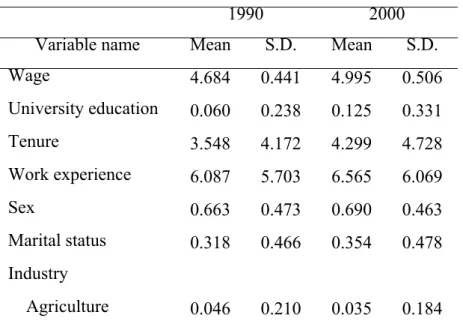
1990 and 2000 Taiwan’s Manpower Utilization Surveys, this paper adopts the
heterogeneous human capital model to estimate the rate of return to college and
university education in Taiwan and compares the estimation results with that from the
conventional OLS or IV estimation methods.
This paper is organized as follows. Section 2 lays out the theoretical framework
and empirical method for the heterogeneous human capital model. Section 3 contains
data description and analysis. Section 4 presents estimation results of Taiwan’s
2. An empirical model for heterogeneous human capital
Heterogeneous return on education
In the conventional Mincerian earning equation with the assumption of
homogeneous human capital, the common coefficient model can be expressed as
i i i i S X U Y =β +γ + ln , (1)
where i is an index for the individual; ln is the worker’s average hourly real Yi
wage in logarithmic form; Si is years of schooling; Xi represents other variables
that influence an individual’s real wage, including tenure, work experience, sex,
marital status, affiliated industry, and firm size; and Ui is random error. The
coefficient β is the rate of return to an additional year of education.
Due to ability bias and selection bias, OLS estimation for equation (1) will result
in the estimation of the average marginal rate of return to education being biased. A
useful tool to deal with the problem is the instrumental variable method, that is, to
find a set of relevant instruments which is correlated with the schooling variable but
uncorrelated with the real wage or error term; see, for example, Angrist and
Krueger(1991), Trostel, Walker, and Woolley(2002), Patrinos and Sakellariou (2005),