a country-by-country approach, The Cambridge Economic History of Modern Europe rethinks Europe’s economic history since 1700 as unified and pan-European, with the material organised by topic rather than by country. Thisfirst volume is centred on the transition to modern economic growth, whichfirst occurred in Britain before spreading to other parts of western Europe by 1870. Each chapter is written by an international team of authors who cover the three major regions of northern Europe, southern Europe, and central and eastern Europe. The volume covers the major themes of modern economic history, including trade; urbanization; aggregate economic growth; the major sectors of agriculture, industry and services; and the development of living standards, including the distribution of income. The quantitative approach makes use of modern economic analysis in a way that is easy for students to understand.
Stephen Broadberryis Professor of Economic History at the University of Warwick and a Co-ordinator of the Economic History Initiative at the Centre for Economic Policy Research. His recent publications include The Economics of World War I (2005, as co-editor) and Market Services and the Productivity Race, 1850–2000: Britain in International Perspective (2006).
Kevin H. O’Rourke is Professor of Economics at Trinity College Dublin and a Co-ordinator of the Economic History Initiative at the Centre for Economic Policy Research. His recent publications include The New Comparative Economic History:
Essays in Honor of Jeffrey G. Williamson (2007, as co-editor), and Power and Plenty:
Trade, War, and the World Economy in the Second Millennium (2007, with Ronald Findlay).
of Modern Europe Volume 1
1700 –1870
e d i t e d b y
Stephen Broadberry and
Kevin H. O’Rourke
Cambridge University Press
The Edinburgh Building, Cambridge CB2 8RU, UK
First published in print format
ISBN-13 978-0-521-88202-6 ISBN-13 978-0-521-70838-8 ISBN-13 978-0-511-72970-6
© Cambridge University Press 2010
2010
Information on this title: www.cambridge.org/9780521882026
This publication is in copyright. Subject to statutory exception and to the provision of relevant collective licensing agreements, no reproduction of any part may take place without the written permission of Cambridge University Press.
Cambridge University Press has no responsibility for the persistence or accuracy of urls for external or third-party internet websites referred to in this publication, and does not guarantee that any content on such websites is, or will remain, accurate or appropriate.
Published in the United States of America by Cambridge University Press, New York www.cambridge.org
Paperback
eBook (NetLibrary) Hardback
List of fi gures page viii List of tables ix List of contributors xi Preface xiii
Introduction to Volume 1 1
Stephen Broadberry and Kevin H. O’Rourke Part I: Aggregate growth and cycles
1 Understanding growth in Europe, 1700–1870: theory and evidence 7 Joel Mokyr and Hans-Joachim Voth
2 The demographic transition and human capital 43 George Alter and Gregory Clark
3 State and private institutions 70
Dan Bogart, Mauricio Drelichman, Oscar Gelderblom, and Jean-Laurent Rosenthal
4 Trade and empire 96
Kevin H. O’Rourke, Leandro Prados de la Escosura, and Guillaume Daudin
5 Business cycles 122
Lee Craig and Concepción García-Iglesias Part II: Sectoral analysis
6 Agriculture 147
Tracy Dennison and James Simpson 7 Industry 164
Stephen Broadberry, Rainer Fremdling, and Peter Solar 8 The services sector 187
Regina Grafe, Larry Neal, and Richard W. Unger Part III: Living standards
9 Standards of living 217
Şevket Pamuk and Jan-Luiten van Zanden 10 Urbanization 235
Paolo Malanima
11 Europe in an Asian mirror: the Great Divergence 264 Bishnupriya Gupta and Debin Ma
Bibliography 286 Index 325
1.1 The Malthusian model page 14
2.1 The fertility history of England, 1540–2000 45 2.2 The Malthusian regime 46
2.3 Wealth and surviving children, England, 1585–1640 50
2.4 Rate of natural increase (1850–1900) by GDP per capita in 1850 54 2.5 Vital rates and population in Sweden 54
2.6 Crude birth and death rates for France, Russia, and Sweden for selected dates 55
2.7 Earliest date of a 10 percent decrease in fertility, by province 61 2.8 Index of marital fertility by gross domestic product per capita, 1870 and
1930 63
2.9 Effects of demand and supply changes for education 67
2.10 Marital fertility for 1870 and 1930 by school enrollment in 1870 68 3.1 Tax pressure in various European countries, expressed as the number of
(silver) day wages per capita, 1740–1790 79 4.1 Number of ships sailing to Asia, per decade 98 4.2 Spice markups, 1580–1890 105
4.3 Anglo-American wheat trade, 1800–2000 107
4.4 Spanish terms of trade vis-à-vis Britain, 1714–1882 117 4.5 Demand versus supply during the Industrial Revolution 119 7.1 Primary wrought-iron industry 182
7.2 Share of coke pig iron 185
8.1 The European network of merchant exchanges in the eighteenth century 191
8.2 Government bond interest rates, 1789–1870 196 8.3 Railways in Europe, 1840, 1850, and 1880 202
9.1 Real wages of European unskilled construction workers, 1700–1870 224 10.1 European urbanization in 1800 239
10.2 Urbanization in 1750 240
10.3 Rank–size distribution England (Wales) and Italy 1800 243 10.4 European urbanization, 1300–1870 244
10.5 European urbanization in 1870 246 10.6 The urban transition 251
10.7 Three views on urbanization 1300–1870 258 11.1 Real wages in Europe and China 272 11.2 Real wages in Europe and Asia 273
I.1 GDP per capita in European countries, 1500–1870: growth rates and comparative levels page 2
2.1 Births per woman per year, married women, northwest Europe before 1790 48
2.2 Total fertility rates before 1790 and in 1870 49
2.3 Total fertility rates in different pre-industrial societies 49 2.4 Growth rates and rate of natural increase, selected countries,
1750–1900 53
2.5 Index of proportion married (Im) for European countries, 1850–1900 59
2.6 Primary school students per thousand children aged 5–14, 1870–1930 66
3.1 Annual public revenue of European states around 1765, in pounds sterling, and estimated share of direct taxes in totalfiscal revenue in 1770 78
3.2 Business law reform in Europe 85 3.3 Road policies, 1700–1840 89 3.4 Waterway policies, 1700–1870 91 3.5 Railroad policies, 1825–1870 93 4.1 European trade c.1790 103
4.2 European merchantfleet, c.1790 104 4.3 European real trade, 1820–1870 104 4.4 Entrepôt and special trade 105
4.5 Exports plus imports as share of GDP 106
4.6 Composition of European overseas imports, 1513–1780 108 5.1 Economic downturns in Great Britain, 1700–1750 133
5.2 Economic downturns in seven European countries, 1750–1816 134 5.3 Candidates for continent-wide recessions, 1750–1816 134
5.4 Summary of European central banking before 1914 140
5.5 Economic downturns in eight European countries, 1816–1870 142 5.6 Candidates for continent-wide recessions, 1816–1870 143
6.1 The percentage of the European workforce employed in agriculture 149 6.2 European agricultural labor productivity 150
6.3 European agricultural labor productivity in 1890 151 7.1 Industry in Europe, c.1870: overall distribution 170
7.2 Industry in Europe, c.1870: major branches and countries 171
7.3 Per capita levels of industrialization, 1750–1860 172 7.4 Output of coal in 1860 173
7.5 British labor productivity growth and the contribution of steam technology 175
7.6 National shares of iron production in Europe, 1725–50 and 1860–61 181
8.1 Tonnage of merchant marines in Europe, 1675–1870 199 8.2 Manning ratios in Europe: tons served per man 201
8.3 Comparison of services sector and industrialization, c.1870 212 9.1 Estimates of GDP per capita in European countries, 1700–1913 221 9.2 Estimates of economic growth and real wages in Great Britain,
1780–1870 223
9.3 Life expectancy at birth across Europe, 1820–1870 227 9.4 Literacy across Europe, 1820–1870 229
9.5 Human Development Index, 1820–1870 231 10.1 Urbanization rate in 1800 238
10.2 European urbanization, 1700–1870 245
10.3 Number of European cities and their population, 1700–1870 246 10.4 Number of European centers with 10,000 inhabitants or more and urban
percentage of a sample of 147 cities, all exceeding the threshold of 10,000 inhabitants in the period between 1700 and 1870 248
10.5 European urbanization rate in 1700–1870, per area 248
10.6 Percentage of the European urban population by area in 1700–1870 248 10.7 Levels of urbanization in the continents and the world in
1800–1980 255
10.8 Inequality in urbanization in Europe, 1300–1870 255 11.1 Indian silver and grain wages, 1595–1874 267
11.2 A comparison of the daily wages of English and Indian unskilled laborers, 1550–1849 268
11.3 A comparison of the daily wages of English and Chinese unskilled laborers, 1550–1849 269
11.4 Comparison of consumption basket costs, c.1750 271 11.5 Wheat and rice prices: coefficients of variation 277 11.6 Insurance rates on interregional trade 280
George Alter,Department of History, University of Michigan.
Dan Bogart,Department of Economics, University of California, Irvine.
Stephen Broadberry,Department of Economics, University of Warwick.
Gregory Clark,Department of Economics, University of California, Davis.
Lee Craig,Department of Economics, North Carolina State University.
Guillaume Daudin,Université Lille-I (Equippe) and OFCE, Sciences Po.
Tracy Dennison,Division of Humanities and Social Sciences, California Institute of Technology.
Mauricio Drelichman,Department of Economics, University of British Columbia and CIFAR.
Rainer Fremdling,Faculty of Economics, University of Groningen.
Concepción García-Iglesias,Department of Social Science History, University of Helsinki.
Oscar Gelderblom,Department of History, Utrecht University.
Regina Grafe,Department of History, Northwestern University.
Bishnupriya Gupta,Department of Economics, University of Warwick.
Debin Ma,Department of Economic History, London School of Economics.
Paolo Malanima,Institute of Mediterranean Societies, IISM-CNR, Naples.
Joel Mokyr,Departments of Economics and History, Northwestern University, and Eitan Berglas School of Economics, Tel Aviv University.
Larry Neal,Department of Economics, University of Illinois, Urbana-Champaign.
Kevin H. O’Rourke, Department of Economics, Trinity College Dublin.
Şevket Pamuk, Ataturk Institute for Modern Turkish History, Bogaziçi University, Istanbul, and European Institute, London School of Economics.
Leandro Prados de la Escosura,Department of Economic History and Institutions and Instituto Figuerola, Universidad Carlos III de Madrid.
Jean-Laurent Rosenthal,Division of Humanities and Social Sciences, California Institute of Technology.
James Simpson,Department of Economic History and Institutions, Universidad Carlos III de Madrid.
Peter Solar,Vesalius College, Vrije Universiteit Brussel, and Facultés Universitaires Saint-Louis.
Richard W. Unger,Department of History, University of British Columbia.
Hans-Joachim Voth,Department of Economics, Universitat Pompeu Fabra, Barcelona.
Jan-Luiten van Zanden,Department of History, Utrecht University.
It would be unthinkable for American undergraduates to be offered courses in the economic history of their own state, rather than the United States as a whole. In sharp contrast, most existing textbooks on European economic history are country-specific, implying the risk that students will misinterpret continent-wide phenomena as having been purely national in scope, and as having had purely national causes. The time has come for a textbook on European economic history that takes an explicitly pan-European approach, with the material organized by topic rather than by country.
This project thus aims to provide a unified economic history of modern Europe, explicitly modelled on the pathbreaking Cambridge Economic History of Britain (Floud and McCloskey,1981). Each chapter has been written by two or three leading experts in thefield, who between them were able to cover each of the three major European regions (northern Europe, southern Europe, and central and eastern Europe). Following the pattern established by Floud and McCloskey, we have broken down the project into two volumes, covering the periods 1700–1870 and 1870–2000 respectively. Each volume contains chapters based on the dominant themes of modern economic history: aggregate growth and cycles, sectoral analysis, and living standards. The approach is quantitative and makes explicit use of economic analysis, but in a manner that is accessible to undergraduates.
This is a project that would have been simply unthinkable two decades ago.
That there has always been a tradition of pan-European economic history is evident from a glance at the earlier volumes of the Cambridge Economic History of Europe, and many of the giants in the discipline represented there have provided us with sweeping accounts of the economic development of the continent as a whole. It is striking, however, that the later volumes in that series, from the Industrial Revolution onwards, tend to comprise a series of national histories, with a highly selective coverage of both countries and topics.
Meanwhile, the quantitative economic history that was beginning to be written in European economics departments from the 1970s onwards was more often than not purely national in scope– which was perhaps inevitable, as economic historians started using their own country’s national statistics to quantify economic growth over the long run. Furthermore, the number of cliometricians working outside the British Isles remained comparatively small. The result was a European economic history profession that was both small and fragmented, especially when compared with our colleagues in North America.
How things have changed. A crucially important turning point came with the founding of the European Historical Economics Society in 1991, which aimed to bring together quantitative economic historians from across Europe working in both economics and history departments. In 1997, the society launched the European Economic History Review, which has provided a com- mon forum for economic historians across the continent. Another major breakthrough was the launching in 2003 of an Economic History Initiative at the Centre for Economic Policy Research in London, Europe’s largest econom- ics research network. In combination with European Union funding for pan- European research initiatives, the result has been the development of a vibrant economic history profession in Europe which can genuinely describe itself as
“European.”
We put our contributors through two gruelling conferences at which we discussed chapter drafts, in Lund in 2006, and at the CEPR in 2007. We are naturally extremely grateful to the local organizers of both events. We would also like to thank all the contributors for the enthusiasm and stamina which they displayed on both occasions, and also for delivering their chapters in a timely fashion.
This project is an outgrowth of the EU-funded Marie Curie Research Training Network“Unifying the European Experience: Historical Lessons of pan-European Development,” Contract no. MRTN-CT-2004–512439. It goes without saying that we are extremely grateful to the European Commission for their very generous financial support, without which this project could never have gotten off the ground. We are also grateful to the CEPR staff who provided such expert assistance in applying for the grant and administering this project.
Much of the work on this book took place while O’Rourke was a Government of Ireland Senior Research Fellow, and he thanks the Irish Research Council for the Humanities and Social Sciences for their generous support.
Our training network was struck by tragedy in 2007, when one of our most respected and well-liked members, Stephan (Larry) Epstein died suddenly, at the age of just 46. Larry is an enormous loss to our profession, and we shall miss him greatly. These volumes are dedicated to him.
Stephen N. Broadberry Kevin H. O’Rourke
Stephen Broadberry and Kevin H. O ’Rourke
Volume 1 of this new economic history of modern Europe is centered on the transition to modern economic growth, which Kuznets (1974) defined in terms of the following six characteristics: (i) high rates of growth of per capita product and population; (ii) a high rate of growth of output per unit of all inputs– that is, total factor productivity; (iii) high rates of structural transformation from agriculture to industry and services, and from personal enterprise to large-scale impersonal organization offirms; (iv) changes in the structure of society and its ideology, including urbanization and secularization; (v) opening up of interna- tional communications, or globalization; and (vi) the limited spread of growth, leading to the divergence of living standards between“developed” and “under- developed” nations. The transition to modern economic growth occurred in Europe between 1700 and 1870, beginning in Britain, but spreading quite rapidly to other parts of western Europe.
Viewed in the grand sweep of history, this change was undoubtedly radical, and must be ranked alongside other epoch-making changes such as the change from hunting and gathering to settled agriculture. In recent decades, however, as it has proved increasingly possible to reconstruct the path of economic develop- ment at this time, it has become clear that the changes were more gradual and spread more widely across the economy than earlier generations had thought, thus calling into question the use of the term“Industrial Revolution.” We have nevertheless retained the term, partly because it has becomefirmly embedded in the popular consciousness as well as the professional literature. However, per- haps more importantly, it should also be borne in mind that although the growth rate was slower than once thought, the economic changes of this period were nevertheless revolutionary in the sense that they proved irreversible and became an ideal type (de Vries,2001). This is the true meaning of the attachment of the term“French Revolution” to the events of 1789, rather than the fact that the storming of the Bastille happened in a short space of time. Furthermore, it
remains true that industry came to play a greater role in the economy as the modernizing economies shifted resources away from agriculture (Crafts,1985a).
How rapidly did Europe grow between 1700 and 1850, and how much of a radical break with the past was this growth performance? In recent years, economic historians of Europe have made dramatic progress in quantifying the process of economic growth, andTable I.1sets out the basic data for annual growth rates and comparative levels of gross domestic product (GDP) per capita. The systematic monitoring of comparative levels of per capita income is a relatively recent development, and helps to provide a consistency check on the growth rates for particular countries, which have normally been derived on an individual country basis.
Table I.1 GDP per capita in European countries, 1500–1870: growth rates and comparative levels
A Growth rates of GDP per capita (% per annum)
1500–1700 1700–1750 1750–1820 1820–1870
UK 0.12 0.35 0.20 1.25
Netherlands 0.24 0.00 −0.02 0.83
Belgium 0.09 0.19 0.02 1.44
France n.a. n.a. n.a. 0.85
Italy −0.08 0.14 −0.22 0.61
Spain −0.02 −0.10 0.10 0.27
Sweden 0.02 0.03 0.06 0.65
Poland −0.13 −0.24 0.21 0.59
Russia n.a. n.a. n.a. 0.64
Turkey n.a. 0.16 0.07 0.52
B Comparative levels of GDP per capita (United Kingdom in 1820 = 100)
c.1500 c.1700 c.1750 1820 1870
UK 57 73 87 100 187
Netherlands 67 109 109 107 162
Belgium 58 69 76 77 158
France n.a. n.a. n.a. 72 110
Italy 83 71 76 65 88
Spain 63 61 58 62 71
Sweden 64 66 67 70 97
Poland 50–54 38–42 34–37 41 55
Russia n.a. n.a. n.a. 40 55
Turkey n.a. 35 38 40 52
Sources: Derived from van Zanden,2001; Maddison,2001; Pamuk,2006; A´lvarez-Nogal and Prados de la Escosura,2007.
The first thing that is apparent fromTable I.1is that the growth rate was much higher during the period 1820–1870 than during the early modern period 1500–1700. Indeed, during the early modern period, information on the parts of southern and eastern Europe for which we have data suggests declining living standards, in contrast to the slowly rising incomes of northwestern Europe, particularly Britain and the Low Countries. This is part of the well-known reversal of fortunes within Europe following the opening of new trade routes to the East via the Cape of Good Hope and the discovery of the Americas. The accompanying shift of per capita income leadership from the Mediterranean region to the Atlantic-facing economies of northwestern Europe has recently been termed the Little Divergence, to distinguish it from the Great Divergence of living standards between Europe and Asia which occurred after 1800 (Pomeranz,2000; Allen,2001; Broadberry,2007).
The second result which is apparent fromTable I.1is that the transition to modern economic growth was a long-drawn-out process. Even in the lead country, the United Kingdom, the annual growth rate of per capita income remained less than 0.5 percent until well into the nineteenth century. Only after 1820 were rates of growth above 1 percent per annum seen, and then only in a handful of countries. The third conclusion which can be drawn fromTable I.1 is that although its origins were British, modern economic growth transferred relatively easily to the rest of Europe, and indeed to the European settler colonies of the New World. All European countries in Table I.1 show an increase in per capita income growth after 1820, and this led to the Great Divergence of living standards between Europe and Asia.
The organization of this volume reflects our belief in the centrality of this transition to modern economic growth to understanding European economic history between 1700 and 1870. Part I focuses on aggregate developments, including shorter run business cyclefluctuations inChapter 5as well as longer run economic growth inChapter 1. The inclusion of a separateChapter 2on population as well as a chapter on economic growth reflects the distinction that Kuznets made between modern economic growth and pre-industrial growth.
As Malthus (1798) famously argued, rising living standards were typically only short-lived in the pre-industrial period, as population growth almost literally ate away any temporary gain in real wages. The Industrial Revolution period, by contrast, was marked by the coexistence of rapid population growth and rising per capita incomes, before Europe entered a demographic transition to a regime of lower population growth accompanied by sustained per capita income growth.Chapter 4, on trade and empire, reflects Kuznets’s emphasis on global- ization, as well as addressing the long-running debate on whether the West grew rich by exploiting the periphery. For a long time now, economic historians have established that the scale of the interaction between Europe and the wider
world was not large enough on its own to explain the rise of the West (O’Brien, 1982). The alternative way of understanding the“European Miracle” is through institutional change, allowing Europe to achieve modern economic growth through the establishment of a system of incentives embedded deeply in the institutional framework of society. This is considered inChapter 3, on state and private institutions.
Part IIthen provides a more detailed sectoral breakdown, examining devel- opments in agriculture inChapter 6 and in services inChapter 8, as well as industry inChapter 7. These three chapters focus on the issues of output and productivity growth as well as the changes in structure and organization that Kuznets emphasized.Part IIIthen considers the upshot for living standards. In this section, as well as Chapter 9 on real wages and other indicators of the standard of living, we have includedChapter 10on urbanization. This is one of the structural changes emphasized by Kuznets, which clearly also had a major impact on living standards. Finally, we address the issues of globalization and the divergence of living standards throughChapter 11on Europe in an Asian mirror.
I Aggregate growth
and cycles
1
Understanding growth in Europe, 1700 –1870: theory and evidence
Joel Mokyr and Hans-Joachim Voth
Contents
Theoretical approaches 8 Malthus vanishing 13 Institutions, good and bad 21 Human capital and culture 28 Technology 36
Conclusion: progress out of misunderstandings 40
Incomes of ordinary citizens in developed countries today dwarf those enjoyed even by the wealthy elite during most of mankind’s history. John Maynard Keynes, with slight incredulity, observed in 1930 that the economic problem of mankind (in Europe and North America at least) had been solved (Keynes, 1930). People no longer go hungry. Clean clothes, shelter, and warmth have gone from luxuries to necessities. By 1870, developments that would eventually deliver this full complement of riches were already in full swing. This chapter summarizes recent research by growth economists on how mankind escaped from a life that was, in the words of Thomas Hobbes, “nasty, brutish, and short.” It contrasts these interpretations with the existing historical evidence and recentfindings of economic historians. Four areas are of particular con- cern– demography, institutions, human capital, and technology. We conclude with suggestions for future research.
Theoretical approaches
In the late 1980s and early 1990s, macroeconomists began to turn their attention from business cycles to the determinants of long-run economic growth. Papers in the endogenous growth literature sought to explain why some countries had grown more rapidly than others. The main period of interest to which these models were applied was the post-war era. They returned to Kuznets’s classic argument that current growth rates, when extrapolated backward, implied absurdly low incomes in early modern times and before. Therefore there must have been a long period of stagnation before modern growth started. But what was the source of the phase transition from a world of very low or zero rates of growth to a modern world of rapid and sustained growth?
From the 1990s onwards, scholars started to search for an overarching theory that could encompass both slow growth and the transition to rapidly increasing per capita incomes– a “unified growth model.” The field has flourished since. A number of themes stand out – demography, the influence of institutions, human capital and culture, and the role of technology. We first summarize some of the most prominent contributions in the theoretical literature. In the main part of the chapter, we compare the theorists’ predictions with the main facts unearthed by economic historians. Our conclusion offers some sugges- tions on how progress can be made.
Early models in unified growth theory, such as Kremer’s (1993) paper, mod- elled the transition from stagnation to growth as one long, gradual acceleration of growth rates. As in some other papers in the endogenous growth literature, Kremer’s model assumes that more people spell faster technological change,
since the probability of a person having a bright idea is more or less constant.
Because ideas are non-rivalrous, growth accelerates. Kremer showed that some of the basic predictions derived from such a simple growth model hold both over time and in cross-sections. Since 1,000,000B.C., growth rates of population can be predicted from the current size of the population. Also, geographically separated economic units with greater surface areas produced bigger populations and higher densities. As population size and technology increase jointly, there is no steady state in Kremer’s model. To avoid all variables showing explosive behav- ior, a demographic transition is necessary, so that fertility responds negatively to higher incomes above some threshold level.
In contrast, in exogenous growth models, technology “just happens,” and adoption decisions are not explicit. Size itself does not affect technology or productivity change. In one application of exogenous growth to the transition to self-sustaining growth, Hansen and Prescott (2002) model the transition
“from Malthus to Solow” by assuming that technological change in both the land-using (diminishing returns) and the non-land-using modes of production is exogenously given and constant. Initially, only the Malthus technology is used. In every generation, each lasting thirty-five years, productivity in their model increases by 3.2 percent in the“Malthus sector” (i.e. agriculture, where labor is subject to declining marginal returns) and by 52 percent in the“Solow sector” (where all factors of production are reproducible). Eventually, as the productivity of the unused technology increases exponentially, the Solow technology becomes competitive and is adopted. In this setup, an Industrial Revolution is inevitable, and does not depend on anything other than the differential growth rates of productivity used in the calibration.
A second class of models in which size matters also takes technological change to be exogenous. Here, the focus is on the conditions under which new techniques will be adopted. Early models in the tradition of Murphy, Shleifer and Vishny (1989) relied on demand effects, and hence the size of economies, to explain when a“big push” might occur. By “big push,” authors in the tradition of Rosenstein-Rodan mean the simultaneous adoption of advanced technologies in many sectors. In order to pay thefixed cost necessary for adopting modern production, demand needs to be sufficiently high. This will often be the case only if a whole range of industries industrializes. The chances of this occurring increase with total output. One implication of these models is that industrialization might have been feasible long before it got under way – if only everybody had decided to invest earlier in fixed-cost technology, profits would have been high enough to justify the expense.
Advances in technological knowledge themselves need not translate into greater output. Coordination failure can thus undermine the transition to modern technology.
Highfixed costs and indivisibility also play a crucial role in models that put risk diversification at the heart of adoption decisions. Acemoglu and Zilibotti (1997) present a model with a tension between production requirements and household investment. Productive projects using new technology require sub- stantial set-up costs. At the same time, households want to diversify their invest- ments to minimize risks. Because of this, investment in the new, productive technology is initially very low, and so is output. This changes as households become richer – their savings become sufficiently large, relative to the capital requirements of new technologies, to avoid“putting all their eggs in one basket.”
Industrialization, once under way, generates the means with which to sustain itself. A number of lucky draws can get it started. Two identical economies may end up on very different paths, depending on whether they get lucky in thefirst round or not. Acemoglu’s and Zilibotti’s model also has the feature that house- holds do not take into account the effect of their investment decisions on aggregate productivity. Industrialization may not occur, while being feasible.
The model incorporates a stochastic component– industrialization may partly be the result of chance. One implication is that not every aspect of actual industrial transformations is fraught with meaning – and the country that actually wentfirst may simply have been lucky.1
Many unified growth models link human capital accumulation with tech- nology and the ideas-producing properties of population growth. These papers have argued that the transition to modern growth is accompanied by a growing importance of human capital (Becker and Barro, 1988; Lucas, 2002; Becker, Murphy, and Tamura,1990). Galor and Weil (2000) made the nexus between human capital and technological change a cornerstone of the transition to rapid growth. They argue that the escape from stagnation took place in two steps– a transition from the Malthusian to a post-Malthusian state, and then to a modern-growth regime. Galor and Weil’s key assumption is that, as techno- logical change accelerates, human capital becomes more valuable: it allows people to cope with a rapidly changing workplace. Technological change accelerates as more people produce more ideas during the long Malthusian period. Because of a delay in the response of population to income growth, per capita incomes grow, if very slowly. Eventually, parents invest more in the human capital of their offspring. This in turn accelerates the growth of knowl- edge. Higher incomes make it easier for parents to have more children. At the same time, a growing value of human capital produces incentives to increase the quality of one’s offspring, reducing quantity. Initially, after the start of
1Following Crafts’s (1977) original contribution, this idea has been the subject of substantial debate among economic historians.
modern growth, the income effect dominated, leading to more births; later, the substitution effect became more important, and fertility declined.
Cervellati and Sunde (2005) as well as de la Croix (2008) alter this setup by arguing that life expectancy rose quickly with productivity. This in turn encouraged investment in human capital, as payback horizons lengthened.
Even if technological change is only slightly skill-biased, a self-reinforcing cycle of better technology, greater life expectancy, and higher investment in human capital can get started. Boucekkine, de la Croix and Peeters (2007) show how rising population density may encourage higher literacy, through the cheaper provision of schooling services. Jones (2001) combines the population- ideas mechanism with a property rights regime that reserves a share of output for innovators. Based on his calibrations, Jones concludes that the single most important factor leading to a take-off in growth after the nineteenth century was more effective enforcement of intellectual property rights, which created the necessary incentives for the sector that produced the ideas.
Some observations from economic history
The population–idea nexus is key in many unified growth models. How does this square with the historical record? As Crafts (1995) has pointed out, the implications for the cross-section of growth in Europe and around the world are simply not borne out by the facts– bigger countries did not grow faster.2 Modern data reinforce this conclusion: country size is either negatively related to GDP per capita, or has no effect at all. The negativefinding seems plausible, as one of the most reliable correlates of economic growth, the rule of law (Hansson and Olsson,2006), declines with country size. Even if we substitute
“population” with more relevant concepts like market size, which might have influenced the demand for new products, the contrasting growth records of Britain and France are hard to square with endogenous growth models empha- sizing size.3Moreover, it is disconcerting for these models that in 1750, on the eve of the Industrial Revolution, Britain had just experienced half a century of virtual demographic stagnation. One could also point out that if population size
2It is indeed striking that prior to the coming to the fore of the British economy, Europe’s most successful economies tended to be city states (Hicks,1969, p. 42). These, with high density but relatively small populations, had an advantage in solving the problems of setting up effective institutions of commerce andfinance. Market size was less of a problem, in part because thefixed costs of setting up these institutions were not all that high, and because they tended to be open economies. The main source of economies of scale was not economic but military. Military power depended on total income and population.
3Some later models in the spirit of Kremer, such as Jones (2001), attempt to provide a solution to this problem by assuming increasing returns in the production of goods, and by allowing the number of new ideas to be a function of the existing stock of ideas.
is critical, China’s early modern record is a puzzle. Its population rose from 130 million in 1650 to 420 million in 1850, yet no Industrial Revolution occurred.
An interesting argument is made by Lin (1995). Lin argues that the relationship between population size and technological change depends on the source of innovation. In a world in which new technology is based entirely on learning by doing, greater size would imply more innovation, assuming that the advances were disseminated effectively over the larger unit. Once progress begins to depend more on experimentation and theory, such advantages disappear. Lin maintains that the success of China in the Song period (960–1279), as opposed to its relative stagnation in the seventeenth century and beyond, reflects a change in the source of innovation.
Even if “size mattered” in the data, it would not be clear what the relevant channel was. A larger population (without a collapse in per capita incomes) may be accompanied by positive externalities of a different kind. Regardless of whether size mattered to the generation or adoption of new technology, as the endogenous growth models suggest, greater size could simply have enhanced the division of labor. This in itself could have contributed to an acceleration of output growth. Kelly (1997) presents a model of “Smithian growth,” where trade integration is promoted by improvements in transport infrastructure, leading to an acceleration of growth. He applies this model to Song-dynasty China. Similarly, in Europe, higher population density may have generated the scope for positive externalities, partly through improvements in turnpikes and canals, partly through long-distance trade (Bogart, 2005a, 2005b; Daudin, 2007). In this sense, it becomes easier to rationalize the commercial successes of the medium-sized, but densely populated and internationally integrated Dutch Republic in the seventeenth and eighteenth centuries.
Models in the“big push” tradition run into problems similar to population- based endogenous growth; the European experience after 1700 does not suggest that the absolute size of economies is a good predictor of the timing of industrialization. The size of most industrialization projects was small– even the largest textile mills, had they been financed by a single person, hardly constituted a large concentration of risk. Before the late nineteenth century, fixed costs in manufacturing were limited. Much diversification, moreover, could take place within the existing business structure of Britain during the Industrial Revolution.4 When it comes to production technology with high fixed costs, adoption decisions after 1870 could possibly be explained by the
4Pearson and Richardson (2001) show that the typical entrepreneur in the Industrial Revolution was heavily diversified.
Rather than describing the entrepreneur as a single-minded owner-manager who spent his entire life on the one business, they show the extent to which early entrepreneurs were involved in non-core ventures. Cotton masters and other textile producers in Manchester, Leeds, and Liverpool, for example, could be found as directors of insurance companies, canal and turnpike companies, gas companies, banks, and companies in other sectors.
big-push framework. Yet by that point in time, international trade was already doing much to break down the link between the size of the domestic economy and the possibility of technology adoption. If there were largefixed costs before 1870, they were in infrastructure, not in manufacturing. In Britain, these infrastructure investments – canals, turnpikes, harbors – do not appear to have suffered a great deal from capital scarcity. This is despite the numerous shortcomings of the Britishfinancial system, which ranged from the Bubble Act to usury laws that squeezed private credit, and the relentless borrowing by the Crown for much of the eighteenth century (Temin and Voth,2008). On the whole, infrastructure projects were apparently financed without too much difficulty, mainly through local notables (Michie,2000).
Finally, unified growth models that emphasize differences in productivity growth between the agricultural (“traditional”) and industrial (“modern”) sectors, such as Hansen and Prescott (2002), also encounter substantial empirical diffi- culties. At the point in time when overall growth rates began to accelerate, both the land-using sector as well as the industrial sector became more productive– according to some measures, at relatively similar rates (Crafts,1985a). By defi- nition, the Hansen–Prescott model has little to say about which country indus- trializedfirst, and why – the entire world is its unit of observation.
These observations are not meant asfinal verdicts on the merits or otherwise of unified growth models. They explain why we believe that theorists, applied economists, and economic historians should dig deeper– especially into the interactions between fertility, human capital, institutions, and technology. This is what the following sections attempt to do.
Malthus vanishing
Populations grew in most parts of Europe during the early modern period. In some parts, they surpassed the levels seen before the Black Death. Demographic growth accelerated decisively in many European countries in the late eight- eenth century. There was substantial variation in timing, with Britain and Ireland leading the way, and France avoiding a major jump altogether.
During the period 1500–1870, the economic impact of demographic factors changed. It went from being a crucial determinant of per capita incomes in most parts of Europe to a factor of declining importance as technological change accelerated after 1800. Growth theorists often refer to the period before 1750 as the Malthusian epoch. Wefirst describe the Malthusian model and key changes in demographic–economic interactions after 1800. We then review the evidence and summarize what we know about how population pressure even- tually fell away as a key economic variable.
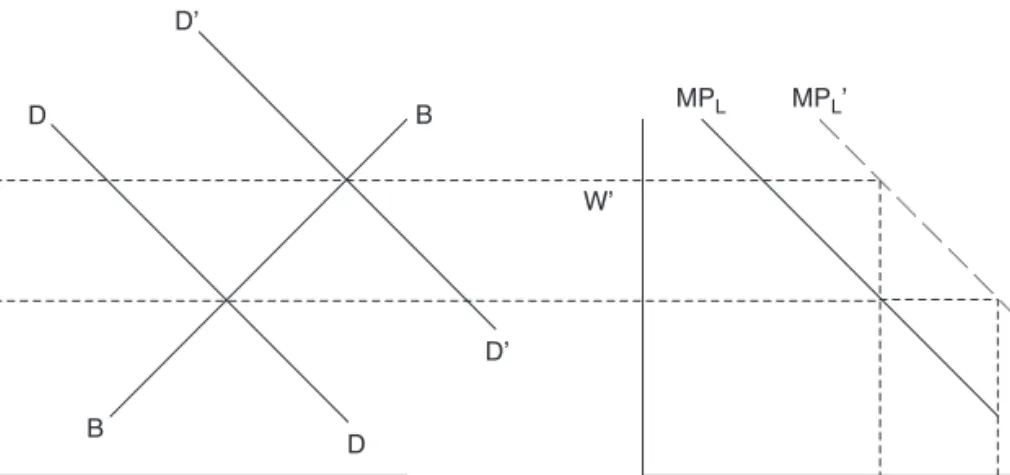
The Malthusian model relies on two main assumptions:first, that population growth responded positively to per capita incomes. As wages or per capita income fell, fertility declined (the“preventive check”) and death rates increased (the“positive check”), as indicated by the upward sloping fertility schedule BB, and the downward sloping mortality schedule DD, inFigure 1.1. The second assumption is that income per capita was negatively related to population size due to diminishing returns to labor, illustrated by the downward sloping marginal product of labor curve, MPL, whose position reflects inter alia the level of technology in the economy. A widely cited example illustrating the trade-off between incomes and population size is the Black Death. As European populations fell by approximately one-third to one-half of their pre-crisis levels, wages everywhere surged. Living standards in fourteenth-century England, conventionally measured, reached a high not seen again until the nineteenth century.
Together, the two assumptions underlying the Malthusian model imply that whatever advances in incomes occur will inevitably be frittered away through more babies. InFigure 1.1, birth and death schedules intersect at a wage W*. The technology schedule in the right-hand panel then translates this into a feasible population size P*. If a temporary technological shock moves the MPLcurve to the right, to MPL’, and thus drives the wage up to W’, death rates fall and population starts to grow. Eventually, because of declining marginal returns, this will force wages down to their previous level (at population level P**). As H. G. Wells put it, mankind“spent the great gifts of science as rapidly as it got them in a mere insensate multiplication of the common life” (Wells, 2005).5
B D
D’
P*
W*
W’ W’
MPL
P**
MPL’ D’
D B
Figure 1.1 The Malthusian model
5Galor and Weil (2000) assume that the response of fertility to incomes is delayed. Hence a one-period acceleration in technological change can generate higher incomes in the subsequent period, and a sequence of positive shocks can lead to sustained growth. While this solves the problem in a technical sense, it is unlikely to explain why fertility responses did not erode real wage gains over hundreds of years.
Clark (2007a) even goes as far as to argue that the average English person in 1800 was no better off than their ancestors on the African plains millennia before.
Higher death rates (depicted by a rightward shift of the mortality schedule from DD to D’D’) imply higher per capita living standards. Unhygienic con- ditions and a deterioration in the microbial environment, for example, will boost incomes as they reduce the number of surviving children. Lower fertility rates can achieve the same effect. Welfare is not necessarily any higher, but the incomes of those who live will be. Europeans in the early modern period also reduced population pressure by ensuring that a high proportion of women never gave birth at all. The rest postponed marriage, further reducing fertility rates. This pattern is unique to Europe, and only occurred west of a line from St. Petersburg to Trieste (Hajnal,1965). Other parts of the world, such as China, used infanticide for the same purpose, but with less effectiveness.
There are two variants of the Malthusian model. The model in its strongest form has its roots in the classic“iron law of wages.” Without shifting mortality and fertility schedules, it predicts stagnant real wages. Without technological change or other supply shocks, population size will stagnate. The weaker version emphasizes equilibrating mechanisms, not outcomes. The positive and preven- tive checks identified by Malthus influence demographic growth. Only if these responses are sufficiently large, and only without further perturbations to the system, does the weak version lead in the limit to a return to a subsistence wage.
It is clear that the strong version – with stagnant wages at the subsistence level– can claim little empirical support. Stock variables like population size are invariably slow-moving. Shifts in mortality schedules (possibly as a result of urbanization) could produce new equilibria, but our chances of observing them will depend on the relative magnitudes of short-term and enduring shifts. For England, the real-wage data computed by Clark (2005, p. 1311) replace the traditional wage series computed by Phelps-Brown and Hopkins. They are based on a broad array of commodities and a comprehensive set of nominal wages. Both the Clark and the Phelps-Brown series show the same, surprising sharp decline in wages in Tudor England between 1495 and 1575. This decline is puzzling, since it was accompanied by a stable and then rising population, as well as by unusually long life expectancy. Recent calculations by Allen (2001) and others show that, in the long term, wages in Europe followed divergent trajectories. Northwestern Europe saw marked rises in wages, often at the same time as population increased. This would contradict the strong version if both north and south were subject to Malthusian forces.6Furthermore, some of the
6Real wages may not reflect changes in welfare, because some of the wage premia available in towns only compensated for higher mortality risk. We are also not sure how much payments in kind varied over time, and if higher payments in cash compensated for declining payments in wheat, etc.
debate regarding the outcome of Malthusian processes conflates real wages with real per capita GDP or income. This is problematic because participation rates and hours worked may have changed, leading to considerable changes in incomes per capita and per family even at more or less constant wages. Indeed, rising participation rates could, all other things being equal, lead to real wages and real income per capita moving in opposite directions. The rise of cottage industries in the countryside after 1650, the famed “proto-industrialization”
phenomenon, would do exactly that. There is also reasonable evidence to believe that labor input was rising in the century before the Industrial Revolution (De Vries,1994,2008; Voth,1998,2001a,2001b).
Confronting the model’s predictions in its weaker form – with an emphasis on equilibrating mechanisms– is less demanding. We can observe flow vari- ables such as births and deaths at high frequencies, and relate them to food prices and real wages. Over the short run, movements in population before 1750 seem to offer some limited support for a Malthusian response.7Mortality and nuptiality can adjust even over the short run. High-frequency events such as famines, wars, and epidemics had much smaller long-term effects than has often been assumed: a sharp decline in population was normally followed by higher wages. Within a few years, unusually high birth and low death rates would compensate for the initial decline in population (Watkins and Menken, 1985; Watkins and van de Walle,1985). Lee’s original work on the Wrigley–
Schofield population data showed nuptiality responding (weakly, and with a lag that stretches credulity) to wages, but life expectancy to be largely independent of the wage.
In testing both the weak and the strong version of the Malthusian model, endogeneity is a major challenge. Wages influence population size and vice versa (Lee and Anderson, 2002). One potential way forward is to use an exogenous source of identification. Recent work by Kelly (2005) suggests that weather is a useful instrument for wages– the part of real wage variation that is driven by it is not the result of a feedback from population. Estimated in this way, there is strong evidence that Malthusian restrictions bound in England before 1650, with marriage rates reacting strongly (and positively) and death rates strongly (and negatively) to wage changes. Kelly’s findings suggest that passing real-wagefluctuations had a larger effect on nuptiality than on mortal- ity. This implies that, in the short run, the preventive check was stronger than the positive one, but both were significant.
Vector autoregressions offer an alternative method. Nicolini (2007) and Crafts and Mills (2009) use them to model the dynamic feedback
7See e.g. Galor (2005, pp. 183–84) for some graphs that indicate that in pre-industrial Britain population and real wages moved roughly in opposite directions, and that crude birth rates and crude death rates were negatively correlated.
between fertility, mortality, and the real wage in England. In this way, they examine the strength of the preventive and the positive checks. Both papers find much stronger evidence in favor of Malthusian checks and balances for the period up to the middle of the seventeenth century than for later decades.
The fertility channel is particularly potent, while the mortality channel appears weaker. After 1650, the fertility channel declines in strength. Nicolini (2007) concludes that“perhaps the world before Malthus was not so Malthusian.” As is the case with all negative results, it is not always clear if it is lack of power in the statistical procedures used, a shortage of identifying variation in the data, or the true absence of a causal link that is responsible. Overall, the IV-procedure used by Kelly appears more promising as a way to pin down causality and the strength of interactions.
Some progress has thus been made in terms of analyzing short-term responses. However, the precise contribution of demographic factors to diver- gent per capita incomes in early modern Europe remains largely unclear.
Golden-age Holland had exceptionally high wages compared with the rest of Europe, and a stagnant population. It is not clear what particular feature of fertility behavior or of death schedules (if any) accounts for this beyond the high levels of urbanization. The Dutch example suggests that, while Malthusian adjustment mechanisms may have operated in the short run, many interesting shifts were caused by other factors. Since the late Middle Ages, there were throughout Europe regions and towns in which incomes exceeded subsistence levels, traditionally defined, without a concomitant rise in population size.
Some unified growth models (Galor, 2005; Jones, 2001) predict (modestly) rising per capita incomes before the Industrial Revolution. This is on the whole confirmed: living standards drifted up, albeit slowly, in some parts of Europe in the centuries before 1800. The reason proposed – a delayed population response to technological advances– is not altogether persuasive: total fertility rates for females in many pre-modern populations (and especially European ones) were substantially below their biological maximum. Birth rates rebounded vigorously after each famine. This suggests that they could respond to rising living standards. One important question, then, is why Europeans curtailed their fertility, and why they did so in a peculiar way that involved delayed marriages for some women, and a life of celibacy for others. What social institutions underpinned the“European marriage pattern”? One inter- esting hypothesis links the emergence of fertility restrictions to the high price of labor after the Black Death (van Zanden and de Moor, 2010), which made female workers more valuable. This would have made it beneficial to keep them in the workforce as long as possible, and to delay motherhood. But why did this mechanism work in the Netherlands and not, say, in Italy, China, or India? This question is particularly relevant, since all these areas suffered plague outbreaks.
One way of linking the persistence of high wages with specific European features involves interactions between cities and death schedules. European cities were veritable death traps, with far higher mortality rates than the countryside. In contrast, in China and Japan urban and rural mortality rates were broadly similar (Woods,2003). Different cultural practices, such as the regular removal of excrement from Far Eastern cities for use as fertilizer in the countryside, may have played an important role. Not only were European cities far more unhealthy places to live in under normal conditions (due to conges- tion and poor sanitation), but they were especially sensitive to contagious epidemics and military disasters such as sieges and plunder. Hence the DD curve in the graph, which is a composite of rural and urban demographic behavior, could slope upwards over some part of the w-D space because of a composition effect. There could then be multiple equilibria: societies could move from one state, where population was large, wages were low, cities small, and aggregate death rates low, to another, where wages were higher, cities larger, death rates higher, and the population smaller. A major shock, such as the Black Death, could push the economy from one equilibrium to another.8
Cities mattered for reasons other than excess mortality. They were the loci of much international trade, and of private-order institutions that supported the operation of markets in goods, capital, and labor. They were also centers of inventive activity. Urban activities produced a higher likelihood of inventing new techniques with a large economic impact: technology itself could have improved as a result of urbanization (Clark and Hamilton,2006; Voigtländer and Voth, 2006). City growth may therefore have gone hand in hand with a slow, gradual outward shift of the technology schedule, making higher wages compatible with bigger populations. What this means is that, at any level of population, income would be higher with a larger urban sector, which would go some distance to explain the Dutch“anomaly.” This means that far from being simply an indicator of productivity, urbanization itself could become a driving force increasing out- put per head. In this case, Malthusian forces could still dominate short-run changes, but the key explanandum would no longer follow from its basic tenets.
At some point, in the majority of European countries, population growth accelerated in an important way. Often, a rise in fertility and/or a decline in mortality signalled the end of the previous regime. Eventually, fertility rates followed the downward trend of mortality – completing the “demographic transition.”9The latest revisions of the Wrigley–Schofield English population estimates (Wrigley et al., 1997) show that fertility increases dominated as a cause of more rapid growth; mortality played a role, but it was responsible for
8Such a model is developed in Voigtländer and Voth (2008).
9A good summary is Chesnais (1992). The concept goes back to the work of Warren Thompson in the 1920s.
only about one-third of the acceleration.10 It seems that by 1750 the old demographic regime was breaking down. The work of Patrick Galloway (1988) shows that in the middle of the eighteenth century the short-term behavior of British vital rates was no longer responsive to changes in prices.
While some of the population explosion in Europe after 1800 derived for a while from higher fertility, declining mortality eventually became more impor- tant. Fertility followed the downward trend, in many cases with a delay measured in decades (Lee,2003; Coale and Watkins,1986). Most of this fertility decline was concentrated in a few decades, starting in 1870 and accelerating after 1890. In some countries, such as the United Kingdom, Germany, Sweden, the Netherlands, Finland, and Belgium, there were sustained and sometimes marked increases in fertility before decline set in. For example, the average number of children per woman rose from 4.5 to 5.5 in the Netherlands between 1850 and 1880. By 1900, it had returned to its earlier level. In most European countries the first significant reductions in fertility occurred after the 1880s, long after indus- trial change had started to take hold on the continent. Some countries saw large reductions in infant mortality before fertility started to decline (Sweden, Belgium, Denmark); in others, both series show a concurrent downward movement (France, Germany, Netherlands) (Chesnais,1992).
Finding an economic reason for fertility decline has not been easy, and there is currently no consensus on the principal contributing factors (Alter, 1992).
Variations both across Europe and over time present challenges of interpreta- tion. The biggest comparative project on the fertility transition, the Princeton European Fertility Project (EFP), concluded that there was no clear link between socioeconomic factors and fertility change. Instead, ethnic, religious, linguistic, and cultural factors appeared to be dominant (Coale and Watkins, 1986). Woods (2000) reached a similar conclusion for Britain, attributing the Victorian decline in fertility to changing ideology, primarily “the desire or willingness to limit family size from the 1860s on” (p. 150), and suggests, more provocatively, that “the very question ‘how many children should we have’ was new to most Victorians” (p. 169). The leading explanation for fertility change is the“diffusion model,” where knowledge about prophylactic techni- ques spread along linguistic lines. The principal reason why scholars have accepted thefindings of the EFP is the remarkable similarity in the timing of the transition, and its spread along linguistic lines.11
10Wrigley (1983) showed that without mortality decline, eighteenth-century growth would have accelerated by 1.25 percent; without fertility change, growth would have improved by 0.5 percent. This implies that over 70 percent of the acceleration was driven by changes in fertility. Wrigley et al. (1997) qualify these conclusions to some extent,finding a faster decline in mortality, but the relative rankings are unlikely to change significantly.
11As Cleland and Wilson (1987) argue,“the simultaneity and speed of the European transition makes it highly doubtful that any economic force could be found which was powerful enough to offer a reasonable explanation.”
Studies that go beyond the broad aggregates and look at regional data sometimes reach different conclusions. For example, in Bavaria the opportu- nity cost of women’s time, religion, and political affiliations appear to have played a big role (Brown and Guinnane, 2002). Furthermore, the statistical basis for some of the EFP’s conclusions may be less robust than had previously been assumed.12 The simultaneity of the drop in reproduction rates across Europe in the decades before 1914 makes it unlikely that economic factors can account for the fertility decline all by themselves. Exogenous, non-economic factors probably dominated in the great decline of European fertility. This need not present a challenge to all growth models. Yet for the more ambitious class of structural models in the unified growth tradition, the apparent incapacity of economic factors to have a clear bearing on fertility outcomes represents a challenge.
In many models of long-term growth, the fertility transition plays a crucial role, and the timing of fertility decline is central to many theories explaining the transition to self-sustaining growth. The decline is normally modelled as a response to changing economic incentives. Leading interpretations by Becker and Barro (1988) and Lucas (2002) emphasize the quantity–quality trade-off facing parents in a context of faster technological change and higher returns to human capital. The standard arguments are that (i) skill premia surged, often because of technological change; and (ii) parents limited fertility as a response to this change in the trade-off between child quantity and quality. This is not unproblematic. Returns to human capital, conventionally measured, probably did not increase significantly before 1870. Models that link population dynam- ics to technological progress itself, such as Galor and Weil (2000), run into timing problems in the case of Britain, because demographic growth acceler- ated there in the mid-eighteenth century, before any serious impact of techno- logical change on output per capita can be discerned. Furthermore, since the economic benefits of formal education were probably minor for working-class employment, any model of parental fertility choice based on quality–quantity trade-offs faces problems, explaining at best the demographic behavior of a minority group.
Definitive evidence for a quantity–quality trade-off is lacking. What is more plausible is to argue that the net costs of child quantity increased in the second half of the nineteenth century. An alternative interpretation thus emphasizes the importance of government intervention through compulsory schooling laws and child labor regulations. Doepke (2004) argues that the latter were
12A much larger research project on German fertility decline is now under way (Sheilagh Ogilvie, Timothy Guinnane, and Richard Smith, with Markus Küpker and Janine Maegraith, Economy, Gender, and Social Capital in the German Demographic Transition, available at www.hpss.geog.cam.ac.uk/research/projects/germandemography/2005), using that country’s extraordinarily rich data sources.
crucial, and further argues that other government policies (such as education subsidies) could not have had a similar influence. If the importance of govern- ment intervention is confirmed, examining the economic and other factors behind the adoption of child labor laws or educational reforms becomes crucial (Doepke and Zilibotti,2005). Galor and Moav (2006) emphasize the Balfour Act, which introduced compulsory schooling. In their view, support for the reform by capital owners, who needed more skilled labor, was critical.13
Yet we do not know with certainty that government intervention was crucial in moving children out of the factories and into the classrooms. For the United States, state schooling laws may only have had a small influence on child labor (Moehling, 1999). At the same time, data problems bias any estimate of such an effect towards zero. In the United Kingdom, Nardinelli (1980) and Kirby (1999) argue that child labor laws came in at the same time as technological changes made the employ- ment of children less useful. There is therefore considerable tension between the views of theorists, who emphasize either rapid, skill-using technological change or effective government intervention, and the assessment of economic historians, who largely reject the former andfind limited evidence of the latter.
Some data constraints will be hard to overcome. We have little information on what determined completed fertility rates, educational investment, age at marriage, and the like in the industrializing cities throughout Europe. There are no cohort-specific studies of fertility behavior at the micro level that would unambiguously identify the impact of discontinuous changes in schooling laws and the like. Wrigley and Schofield’s famous Population History of England is based on family reconstitutions that focus on rural parishes, and their data end in 1837. Everywhere in Europe, family reconstitutions are harder to construct for the nineteenth century than for earlier periods because mobility increased.
Future research should aim to improve our understanding of fertility behavior, and of the relevant costs of child-rearing. More detailed demographic analysis of the fertility choices of the working class – combined with information on rates of school attendance, the economics of apprenticeships and the like prior to and after the introduction of compulsory schooling laws– could do much to further our understanding of the demographic transition.
Institutions, good and bad
A good part of the modern debate about growth centers on the relative impor- tance of institutions versus human capital (Acemoglu and Johnson,2005; Rodrik,
13The failure of skill premia to rise (which we shall describe in more detail below) could then be explained by this supply shock.