國 立 交 通 大 學
環境工程研究所
碩 士 論 文
藉由溫相式厭氧消化 (TPAD) 系統將農牧廢棄物轉化製造生質肥料
Biofertilizer production from agriculture and livestock wastes by
temperature-phased anaerobic digestion (TPAD)
研究生:莊維倫
指導教授:林志高 博士
陳文興 博士
藉由溫相式厭氧消化 (TPAD) 系統將農牧廢棄物轉化製造生質肥料
Biofertilizer production from agriculture and livestock wastes by
temperature-phased anaerobic digestion (TPAD)
研究生:莊維倫 Student:Wei-Lun Chuang
指導教授:林志高 博士 Advisors:Dr. Jih-Gaw Lin
陳文興 博士 Dr. Wen-Hsing Chen
國 立 交 通 大 學
環 境 工 程 研 究 所
碩 士 論 文
A Thesis
Submitted to Institute of Environmental Engineering
College of Engineering
National Chiao Tung University
in Partial Fulfillment of the Requirements
for the Degree of Master of Science
in
Environmental Engineering
August 2012
Hsinchu, Taiwan, Republic of China
藉由溫相式厭氧消化 (TPAD) 系統將農牧廢棄物轉化製造生質肥料
學生:莊維倫 指導教授:林志高 博士
陳文興 博士
國立交通大學環境工程研究所
摘要
摘要
摘要
摘要
本研究結合溫相式厭氧消化(TPAD)及厭氧共消化之概念來處理農牧廢棄物 (豬糞和稻稈),並探討 TPAD 系統之效能、厭氧生物產能和製備生物肥料等目的。 豬糞和稻稈在臺灣為主要的農牧廢棄物,且污染量和強度相對於其他農牧廢棄物 高。一般而言,單一廢棄物經厭氧消化處理常有反應槽效能不佳或是微生物抑制 問題產生,導致厭氧處理在應用上受限;消化二種或二種以上不同來源之廢棄 物,有效提高厭氧效能並減少操作問題產生。 TPAD 系統是由前段高溫反應槽及後段中溫反應槽所組成,藉由高溫段提升 整體系統之處理效能如揮發性固體物(VS)去除、產生大量生物沼氣及致病菌消 滅,而中溫階段則負責洗鍊高溫出流,提升 TPAD 出流水品質及強化整體系統之 穩定性。由於本研究在實驗設備上的問題導致 TPAD 系統在整個馴養期間受到相 當大的影響,本研究之最大揮發性固體物濃度控制在 20 g VS/L,為避免阻塞問 題發生。 擬穩態階段之數據顯示二個 PM 及 RS 比例(PM:RS=80:20 和 90:10)皆可達然而消化後污泥中有機磷略微增加。從重金屬結果得知,本實驗之二比例在銅和 鋅二金屬濃度遠高於其他金屬,且超出臺灣對液態肥料之標準,此外鉻和鎳也有 超出規範的可能,這表示豬糞和稻稈比例在本實驗中仍未達到最佳比例。
Biofertilizer production from agriculture and livestock wastes by
temperature-phased anaerobic digestion (TPAD)
Student:Wei-Lun Chuang Advisors:Dr. Jih-Gaw Lin
Dr. Wen-Hsing Chen
Institute of Environmental Engineering
National Chiao Tung University
Abstract
This study combined with temperature-phased anaerobic digestion (TPAD) and the concept of anaerobic co-digestion to treat agriculture and live stock wastes (pig manure and rice straw) and investigated the performances of TPAD system, anaerobic bioenergy production as well as biofertilizer production. Pig manure (PM) and rice straw (RS) are the main this type waste in Taiwan and the amount and strength compared to other agro-wastes are much high. In general, single source waste treated with anaerobic digestion often has poor reactor performances or microbial inhibition problems and results in a limitation of anaerobic treatment; co-digestion with two or more different sources wastes can effectively improve anaerobic performances and reduce operational problems.
TPAD system, which includes the first thermophilic stage and the second mesophilic stage reactors, takes the thermophilic stage to improve the system
as pathogens elimination; while the mesophilic stage is responsible for polishing thermophilc effluent and strengthening the stability of whole system. Because the problem of laboratory equipments in this study caused a considerable impact in overall accumulation periods, the maximum VS concentration was 20 g VS/L in this research to avoid occurring obstruction problem.
The data of pseudo-steady-state conditions showed that two ratios of PM and RS (PM:RS=80:20 and 90:10) could meet the Class A biosolids for the specifications of the VS removal and pathogens reduction. Organic nitrogen in the substrate was converted to ammonium, however organic phosphorus in the effluent sludge slightly increased after digesting. From the result of heavy metals, the concentrations of copper and zinc were much higher than other metals and exceeded Taiwanese standards for liquid fertilizers, moreover the concentrations of chromium and nickel were also likely to exceed the standards, indicating both the ratios of PM and RS in this study didn’t yet reach the optimum ratio.
Keywords: Temperature-phased anaerobic digestion (TPAD), Anaerobic co-digestion, Pig manure, Rice straw, Biofertilizer
Contents
摘要……….I Abstract..………..III Contents……….V List of tables………..……….VII List of figures………VIII Chapter 1 Introduction………...1 1.1 Background………..1 1.2 Objective………..3Chapter 2 Literature review………4
2.1 Anaerobic processes: multi-step metabolism processes………...4
2.1.1 Microorganisms and metabolism………..5
2.1.1.1 Fermentative bacteria, H2-producing acetogenic bacteria, and homoacetogens…...………....6
2.1.1.2 Methanogens………12
2.1.2 Factors and problems during operation: focusing on nutrients and sludge foaming……….…..………22
2.1.3 General inhibitors of swine manure anaerobic digestion………24
2.1.3.1 Ammonia………..24
2.1.3.2 Sulfide and sulfate-reducing bacteria (SRB)………27
2.1.3.3 Salts………..30
2.1.3.4 Heavy metals………30
2.2 The evolution from traditional AD to high-rate AD………...31
2.2.1 The development and application of TPAD………32
2.2.2 Start-up and operation of TPAD………...…………...39
2.2.3 Performance of volatile solids removal……….…………..40
2.2.4 Performance of production and component of biogas………….…………42
2.2.5 Performance of pathogens removal……….…………45
2.3 Co-digestion and sustainable utilization of livestock waste………...49
2.3.1 Anaerobic co-digestion: case studies with different substrates…………...50
2.3.2 The concept and development of Biogas plants………..52
Chapter 3 Materials and methods……….54
3.1 Experimental design, start-up of TPAD, and reactor operation.………54
3.2 Experimental runs and assessment of performances………..59
3.4.1 Operation periods………...…….65
3.4.2 Pseudo steady-state conditions……….………...66 Chapter 4 Results and discussion……….70 4.1 The daily performance of pH and biogas production during operation periods ………....70
4.2 The daily performance of alkalinity and VFAs concentrations during operation periods………..………....76
4.3 Description of operation problems and improvements………...79
4.4 Biogas yield and composition during pseudo steady-state (PSS I and II) ………80
4.5 VS removal during pseudo steady-state (PSS I and II)……...………...82
4.6 pH, alkalinity and VFAs concentration during pseudo steady-state (PSS I and II)………..………...83
4.7 Nutrients (N, P and K) during pseudo steady-state (PSS I and II)……….85
4.8 Pathogens reduction during pseudo steady-state (PSS I and II)………….…....88
4.9 Heavy metals during pseudo steady-state (PSS I and II)……..……….89 Chapter 5 Conclusions and suggestions………...91 References………93
List of tables
Tab. 2-1 Classification of methanogenic bacteria………14 Tab. 2-2 Profiles of thermophilic methanogens………...18 Tab. 2-3 Functions of macro- and micro-nutrients in anaerobic digestion…………..23 Tab. 2-4 Historical development of anaerobic biotechnology………….. …...….…..33 Tab. 2-5 Comparisons of VS removal and reactor operation between NT-TPAD and AT-TPAD……….38 Tab. 2-6 Five typical types of common pathogens in manure and agriculture wastes ………47 Tab. 3-1 Characteristics analyses of pig manure, rice straw and inoculum sludge…..63 Tab. 4-1 The biogas characteristics during PSS I and II………..81 Tab. 4-2 pH, alkalinity and VFAs/Alkalinity ratios of thermophilic and mesophilic stage during PSS I and II……….………....….84 Tab. 4-3 The concentration and composition of VFAs during PSS I and II………….84 Tab. 4-4 Levels of nutrients during PSS I…………..………..86 Tab. 4-5 Levels of nutrients during PSS II………..….87 Tab. 4-6 Heavy metals concentrations of TPAD effluent during PSS I and II……….90
List of figures
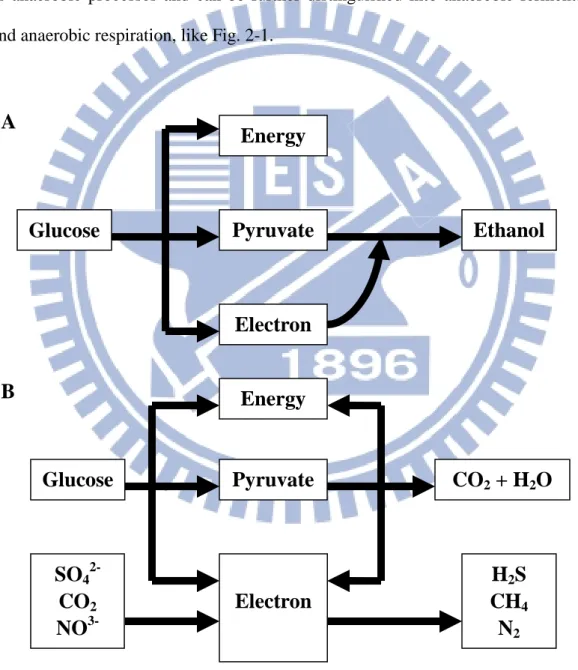
Fig. 2-1 (A) Anaerobic fermentation and (B) anaerobic respiration of
glucose…….……….………...…...4
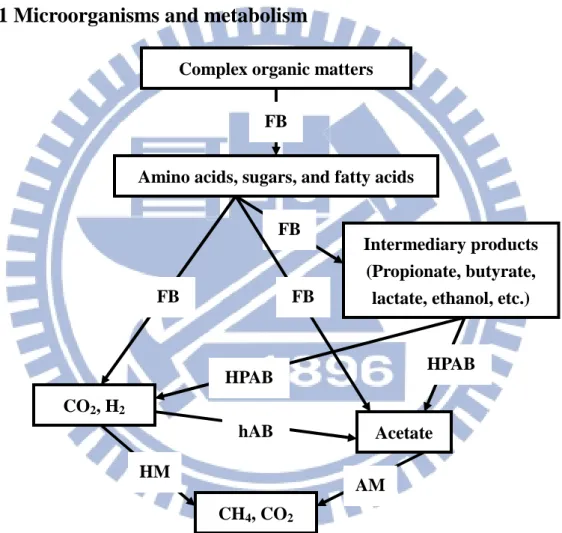
Fig. 2-2 The conversion pathways and microorganisms in anaerobic digestion………5
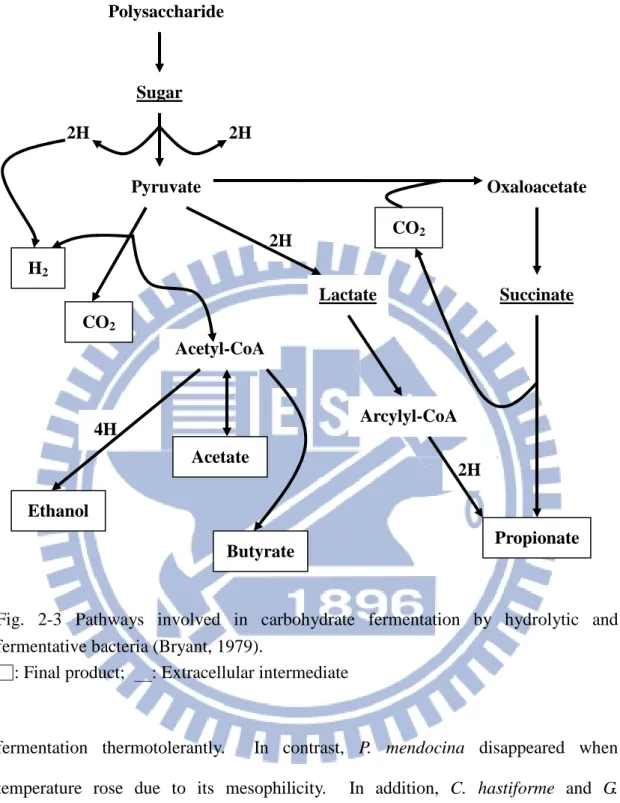
Fig. 2-3 Pathways involved in carbohydrate fermentation by hydrolytic and fermentative bacteria………8
Fig. 2-4 (A) Scanning electron microscope image of a granule from an upflow anaerobic sludge bed reactor (UASB) (B) Transmission electron microscope image of an ultrathin section of a granule from an UASB-reactor………..………....….……..10
Fig. 2-5 The syntrophic relationship between SRB and other anaerobic microorganisms…...………..……....……….….29
Fig. 2-6 Schematic diagram of temperature-phased anaerobic digestion (TPAD) system…...………35
Fig. 2-7 Source distribution of co-digestion wastes in literatures………50
Fig. 2-8 Sustainability of anaerobic co-digestion……….……53
Fig. 3-1 Experimental flowchart………...……….…..56
Fig. 3-2 The photo of TPAD system ………57
Fig. 4-1 The daily performance of pH and biogas production of (A) thermophilic and (B) mesophilic reactors………71
Fig. 4-2 The daily performance of alkalinity and VFAs concentration of (A) thermophilic and (B) mesophilic reactors……...………... …..78
Fig. 4-3 The VS removal of the thermophilic reactor and the entire system during PSS I and II…..…..………..………..82
Chapter 1 Introduction
1.1 Background
People attach gradually importance to environment, water and energy issues with the increase in population. The energy requirement mainly relies on the use of fossil fuels nowadays, resulting in a large number of greenhouse gas emissions. Global warming and global climate change have become urgent crises, and significant amount of pollutants produced by human activities is also the main reason contributing to water pollution and shortage. A lot of agriculture and animal livestock wastes have been also the main reason causing environmental health and water pollution, and pig manure is the main problem of livestock wastes in Taiwan. Taiwanese pig farms usually use a three-stage treatment for piggery wastewater, which includes solid-liquid separation by screening method, anaerobic treatment and aerobic treatment (Tsai and Lin, 2009), and the solid part of swine manure is treated by using composting or landfill disposal. Rice straw, for example, is also main agriculture waste in Taiwan, usually treated with open burning or used as a compost material. Composting is the common method to treat high solid organic wastes, but still has some risks like incomplete elimination of pathogens (Nicholson et al., 2005), incomplete maturity or ammonia emission resulting in nitrogen loss as well as greenhouse gas emission. However another method, which has been developed more than a century and has a considerable potential to treat high solid wastes is the anaerobic biotechnology.
Anaerobic biotechnology is quite important in environmental engineering not only on the batter processing performance than aerobic biotechnology but on the
known by many people, there are also many novel anaerobic biotechnologies such as anaerobic fermentation to producing organic acids and anaerobic hydrogen production have been noticed in recent years (Chu et al., 2008; Khanal, 2008), however these biotechnologies still have some key issues to be solved. The application of conventional anaerobic digestion, for example, is unable to spread than aerobic treatment as the accumulation of methanogens is difficult and time-consuming. However, high-rate AD began to flourish since 1950 and caused AD could be applied to the high concentration of wastewater or organic wastes processing. Biogas production has improved significantly due to a high strength of wastes, therefore AD shifts from being just one part of the processing unit to becoming a biogas plant to produce bioenergy.
Temperature-phased anaerobic digestion (TPAD), which is composed of thermophilic and mesophilic two reactors is one of high-rate AD. In addition, waste or wastewater treated by thermophilic stage could effectively achieve pathogens eradication and obviously improve the availability of effluent to make as a biofertilizer or a soil conditioner. The concept of co-digestion is an emphasis on AD field in recent years, through two or more different sources wastes adjusted to appropriate concentration can significantly enhance the performances of AD process and overcome the inhibition problems occurring in anaerobic microbial metabolism. Therefore, this study uses TPAD technique combining with the concept of co-digestion to treat pig manure (PM) and rice straw (RS) and to produce by-products like biogas and biofertilizer, and investigates the appropriate ratio of PM and RS to get the best fertilizer quality.
1.2 Objective
The objective of this study is using temperature-phased anaerobic digestion (TPAD) to treat rice straw (RS) and pig manure (PM) and evaluate the feasibility which takes TPAD effluent as a biofertilizer. We focused on the operation of microorganisms in TPAD system as well as reactors performances such as VS removal, biogas production and reduction of pathogens. Besides, the ratios of PM and RS, which were according to individual VS concentrations were also concerned in order to carry out the optimal TPAD operation condition, the optimal nutrient ratios of fertilizers as well as reducing the harmful ingredients like heavy metals.
Chapter 2 Literature review
2.1 Anaerobic processes: multi-step metabolism processes
When organic matters are decomposed by microorganisms at a condition without dissolved oxygen or its precursors (e.g. H2O2), these biological processes are known
as anaerobic processes and can be further distinguished into anaerobic fermentation and anaerobic respiration, like Fig. 2-1.
Fig. 2-1 (A) Anaerobic fermentation and (B) anaerobic respiration of glucose (Khanal, 2008).
SO
42-CO
2NO
3-Glucose
Energy
Pyruvate
Electron
CO
2+ H
2O
H
2S
CH
4N
2Glucose
Energy
Pyruvate
Electron
Ethanol
B
A
Anaerobic fermentation means organic matter is catabolized in an absence of external electron acceptors by strict or facultative anaerobes via internally balanced oxidation-reduction reactions, on the other hand, anaerobic respiration, also called anaerobic digestion (AD), requires external electron acceptors for the disposal of electrons released during degradation of organic matter (Khanal, 2008).
2.1.1 Microorganisms and metabolism
Fig. 2-2 The conversion pathways and microorganisms in anaerobic digestion (McCarty, 1964a; Bryant, 1979; 賀延齡, 1998; Demirel and Scherer, 2008; Khanal, 2008).
FB Fermentative bacteria; HPAB Hydrogen-producing acetogenic bacteria; hAB Homoacetogenic bacteria; AM Acetotrophic methanogens;
HM Hydrogenotrophic methanogens
Complex organic matters
Amino acids, sugars, and fatty acids
CO2, H2
Intermediary products (Propionate, butyrate,
lactate, ethanol, etc.)
Acetate CH4, CO2 FB FB FB FB hAB HPAB AM HM HPAB
decomposing complex organic matters to simple small molecules, like amino acids, sugars and fatty acids, and then these simple molecules are further broken and become intermediary products, like propionate, butyrate, lactate and ethanol etc., via hydrolytic and fermentative bacteria. The second step is cleavage of these intermediary products to generate acetate or hydrogen and carbon dioxide through hydrogen-producing acetogenic bacteria, there have some special bacteria, which are known as homoacetogenic bacteria can transform hydrogen and carbon dioxide into acetate thus may compete with hydrogenotrophic methanogens. And the final step in anaerobic processes is the biomethanation which indicates both acetotrophic methanogens and hydrogenotrophic methanogens convert acetate, H2 and CO2 into
CH4.
2.1.1.1 Fermentative bacteria, H2-producing acetogenic bacteria, and
Homoacetogens
We have known the first step in anaerobic processes is hydrolysis and fermentation to produce intermediary products which are utilized by methanogens. So extracellular enzymes produced from hydrolytic and fermentative bacteria in this stage play an important role, and extracellular enzymes whether they can effectively decompose complex organic matters depend on the size of contact area between bacteria and substrates. In addition to enzymes, temperature, retention time, composition and particle size of organic matters, pH, ammonium concentration and hydrolyzate concentration (e.g. volatile fatty acids, VFAs) are parameters that can also affect hydrolysis rates significantly (賀延齡, 1998). Bacteria in this stage most belong to the family of streptococcaceae and enterobacteriaceae, such as Bacteroides,
Clostridium, Butyrivibrio, Eubacterium, Bifidobacterium and Lactobacillus.
them are facultative anaerobic organism which can bear existing low concentration of dissolved oxygen.
Fig. 2-3 is the pathways of carbohydrate fermentation, in this scheme polysaccharide is first degraded to sugar, and then sugar fermentation occurs mainly via the Embden-Meyerhof-Parnas pathway (EMP pathway) and transforms into pyruvate. Different final products generating from metabolism of pyruvate are dependent on different metabolic pathways, one way is pyruvate catalysis to yield acetate, butyrate, ethanol, CO2 and H2, and the other way is pyruvate catalysis via
lactate or succinate metabolic pathways to generate propionate (Bryant, 1979). Hydrogen concentration is a key role in these processes because it makes a significant impact on acetate production even at very low H2 level in the reactor. According to
literatures, the propionate oxidation to acetate becomes thermodynamically favorable only at H2 partial pressures below 10-4 atm, and for butyrate and ethanol oxidation
below 10-3 and 1 atm, respectively (Khanal, 2008).
There have some researches about hydrolytic and fermentative phenomena in mesophilic or thermophilic AD. Liu et al. (2009) verified co-digestion of garbage and manure had a positive effect in thermophilic (53℃) AD performances even at the percentage of garbage in the mixed wastes was low (2-3%). Besides, bacterial species in the phylum Firmicutes were dominant bacteria responsible for the digestion of these wastes. Kim et al. (2010) investigated influence of high temperature (51℃) on bacterial community using mesophilic sludge inoculum. Denaturing gradient gel electrophoresis (DGGE) profiles shows the monitored bacterial community consisted of Pseudomonas mendocina, Bacillus halodurans, Clostridium hastiforme,
Gracilibacter thermotolerans, and Thermomonas haemolytica. The function of B. halodurans, G. thermotolerans, and T. haemolytica are reported to carbohydrate
Fig. 2-3 Pathways involved in carbohydrate fermentation by hydrolytic and fermentative bacteria (Bryant, 1979).
□: Final product; _: Extracellular intermediate
fermentation thermotolerantly. In contrast, P. mendocina disappeared when temperature rose due to its mesophilicity. In addition, C. hastiforme and G.
thermotolerans originating in mesophilic sludge but were also detected in the thermal
acidogenesis. Above-mentioned bacteria, B. halodurans, C. hastiforme, and G.
thermotolerans belong to Firmicutes, P. mendocina and T. haemolytica belong to γ-Proteobacteria.
The microbial community dynamics of a three stages mesophilc AD process,
Polysaccharide Sugar Pyruvate 2H 2H H2 CO2 Acetyl-CoA Acetate Ethanol Butyrate 4H Propionate CO2 Oxaloacetate Lactate Succinate Arcylyl-CoA 2H 2H
which co-digestion with organic fraction of municipal solid waste (OFMSW) and fruit and vegetable waste was investigated by Supaphol et al. (2011). They found bacterial community was mainly constituted by Firmicutes, Actinobacteria, β-, γ-, and
ε- Actinobacteria. These bacteria are responsible for producing VFAs, some of them
also have functions such as denitrification, H2S oxidation, or Fe reduction.
Martín-González et al. (2011) studied the microbial community monitoring from a sewage treatment plant, which is a thermophilic (55℃) co-digestion of OFMSW and lipid-rich wastes and they found the composition of microbial community were major by Firmicutes, Bacteroidetes, Synergistes, and Thermotogae.
H2-producing acetogenic bacteria are responsible for converting intermediary
products into acetate, H2 and CO2 which are precursors for methanation. But from
the following formulas (Eq. 2.1-2.4), we can see the Gibb’s free energy changes of anaerobic oxidation of propionate, butyrate, benzoate, and ethanol are positive, in other words, this indicates anaerobes must consume energy to make reactions go to produce acetate. Fig. 2-4 is the photos about the anaerobic granule and the syntrophic relationship between H2-producing acetogenic bacteria and methanogens.
Propionate → acetate
CH3CH2COO- + 3H2O → CH3COO- + H+ + HCO3- + 3H2
∆G° = +++76.1 kJ/reaction (Eq. 2.1) + Butyrate → acetate CH3CH2CH2COO- + 2H2O → 2CH3COO- + H+ + 2H2 ∆G° = +++48.1 kJ/reaction (Eq. 2.2) + Benzoate → acetate C7H5CO2- + 7H2O → 3CH3COO- + 3H+ + HCO3- + 3H2
Ethanol → acetate
CH3CH2OH + H2O → CH3COO- + H+ + 2H2
∆G° = +++9.6 kJ/reaction (Eq. 2.4) +
(A) (B)
Fig. 2-4 (A) Scanning electron microscope image of a granule from an upflow anaerobic sludge bed reactor (UASB) (B) Transmission electron microscope image of an ultrathin section of a granule from an UASB-reactor (The images were provided by Grotenhuis, de Bok et al., 2004)
Temperature has a significant influence on thermodynamics because high temperature can reduce the amounts of free energy which are the demands for oxidizing propionate, butyrate, and ethanol. The following formulas (Eq. 2.5-2.10) are about oxidation of propionate in anaerobic processes. Apart from temperature, if methanogens rapidly scavenge H2 or acetate producing from oxidation of
intermediates and keep the level of H2 partial pressure extremely low, this
phenomenon is commonly known as “interspecies hydrogen transfer.” Interspecies formate transfer may be also important in this symbiotic system since the diffusion distance of formate is than of hydrogen in water (賀延齡, 1998; de Bok et al., 2004).
CH3CH2COO- + 3H2O → CH3COO- + HCO3- + H+ + 3H2
CH3CH2COO- + 2HCO3- → CH3COO- + H+ + 3HCOO-
∆G° = +++72.2 kJ/mol (25℃+ ℃℃℃); ∆G° = ++++59.7 kJ/mol (55℃℃℃) (Eq. 2.6) ℃
H2+ 0.25HCO3- + 0.25H+ → 0.25CH4 + 0.75H2O
∆G° = ---33.9 kJ/mol (25℃- ℃℃℃); ∆G° = ----30.6 kJ/mol (55℃℃℃) (Eq. 2.7) ℃
HCOO- + 0.25H2O+ 0.25H+ → 0.25CH4 + 0.75HCO3-
∆G° = ---32.6 kJ/mol (25℃- ℃℃℃); ∆G° = ----29.7 kJ/mol (55℃℃℃) (Eq. 2.8) ℃
CH3COO- + H2O+ 0.25H+ → CH4 + HCO3-
∆G° = ---31.0 kJ/mol (25℃- ℃℃℃); ∆G° = ----34.7 kJ/mol (55℃℃℃) (Eq. 2.9) ℃
CH3CH2COO- + H2O → 1.75CH4+ 1.75HCO3- + 0.25H+
∆G° = ---56.4 kJ/mol (25℃- ℃℃℃); ∆G° = ----65.0 kJ/mol (55℃℃℃) (Eq. 2.10) ℃
de Bok et al. (2004) summarized five conclusions concerning with interspecies electron transfer in propionate degradation. First, propionate oxidation requires obligate syntrophic consortia of acetogenic and H2 and bicarbonate reducing
methanogens. Second, the amount of energy released from the complete oxidation of propionate (under methanation conditions) is 1 ATP (about 60 kJ/mol), which has to be shared for three different organisms. Third, the majority of propionate-oxidizing bacteria oxidize propionate via the methyl-malonyl-CoA pathway yielding acetate, CO2, H2 or formate. But another pathway may occur,
which is condensed to a six-carbon intermediate, and then this intermediate is cleaved to butyrate and acetate. Fourth, H2 is an important interspecies electron transfer, but
formate may be even more significant. Finally, aggregated biomass has a high conversion rates due to the small interbacterial distances.
Homoacetogens can utilize H2 and CO2, which are intermediary products
aceticum and Acetobacterium Woodii are the two mesophilic homoacetogenic bacteria
isolated from sewage sludge. Homoacetogens may have a competitive relationship with hydrogenotrophic methanogens due to hydrogen which can be as an electron donor not only for homoacetogenic bacteria but also for hydrogenotrophic methanogens (Khanal, 2008). The following formulas (Eq. 2.11-2.12) can tell us this competition. However, more researches are needed to understand the interaction of these microorganisms in anaerobic processes.
4H2 + HCO3- + H+ → CH4 + 3H2O
∆G° = ---135.6 kJ/reaction (Eq. 2.11) -
4H2 + 2HCO3- + H+ → CH3COO- + 4H2O
∆G° = ---104.6 kJ/reaction (Eq. 2.12) -
2.1.1.2 Methanogens
We all know anaerobic processes are accomplished by consortia, which relate to hydrolytic and fermentative bacteria, acetogens and methanogens. Methanogens play a central role in the whole anaerobic processes, and there have three reasons: first, methanogens belong to the Archaea, and their physiologies and structures are distinct from bacteria. Archaea are unlike true bacteria due to presence of membrane lipids, absence of basic cellular characteristics (e.g., peptidoglycan), and distinctive ribosomal RNA (Rittmann and McCarty, 2001; Khanal, 2008). Second, compared with other anaerobes, methanogens grow slowly. If existence of a large amount of inhibitors in anaerobic processes, it will harm methanogens and reduce the processing performance of AD. And third, various modes of operation will affect the community composition of methanogens, for example, hydrogenotrophic methanogens are dominant in thermophilic AD, but the major methanogens in the
mesophilic AD are acetotrophic methanogens. In addition, unsuitable retention time will resulting in methanogens too late to grow due to washing out. Although both hydrogenotrophic and acetotrophic methanogens are responsible for producing methane, there are still many differences between them.
Methanogens that are responsible for producing methane are usually classified acetotrophic and hydrogenotrophic methanogens according to their biomethanation precursors. Moreover, the hydrogenotrophic conversion contributes up to 28% of the methane production, on the other hand, the acetotrophic conversion is responsible for surplus 72% of the methane production (McCarty, 1964a; Khanal, 2008). Tab. 2-1 is a classification of methanogens, we can find three classes methanogens including methanobacteria, methanococci and methanomicrobia, respectively. H2
and CO2, acetate and formate are important substrates for methanogenic bacteria to
produce methane. Formate concentration is low than other substrates due to it is rapidly produced and consumed. All species, especially hydrogenotrophic methanogens, can use H2 as an elector acceptor to reduce CO2 to methane, these
bacteria can synthesize methane by formate as well as H2 and CO2. But H2 and CO2
aren’t only approach to accomplish biomethanation, acetate cleaves methane and bicarbonate is common reaction in AD. Although methanogens using acetate as the substrate are few, they still play a key role in anaerobic reactor since major biomethanation occurs via this way. Methanosaricina species are known to use acetate as the substrate, they often exist in a reactor which has high acetate concentration (Bryant, 1979; Demirel and Scherer, 2008; Khanal, 2008).
In regard to hydrogenotrophic methanogens, these bacteria utilize not only H2 as
elector donors reducing CO2, buy also formate to produce methane, besides, these
Tab. 2-1 Classification of methanogenic bacteria (adapt from Demirel and Scherer, 2008)
Class I. Methanobacteria (substrate: H2/CO2, carbon source: formate)
Order I. Methanobacteriales Family I. Methanobacteriaceae Genus I. Methanobacterium Genus II. Methanobrevibacter Genus III. Methanosphaera Genus IV. Methanothermobacter Family II. Methanothermaceae Genus I. Methanothermus
Class II. Methanococci (substrate: H2/CO2, carbon source: formate)
Order I. Methanococcales Family I. Methanococcaceae Genus I. Methanococcus
Genus II. Methanothermococcus Family II. Methanocaldococcaceae Genus I. Methanocaldococcus Genus II. Methanotorris
Class III. Methanomicrobia (substrate: H2/CO2, carbon source: formate)
Order I. Methanomirobiales Family I. Methanomicrobiaceae Genus I. Methanomicrobium Genus II. Methanoculleus Genus III. Methanofollis Genus IV. Methanogenium Genus V. Methanolacinia Genus VI. Methanoplanus Family II. Methanocorpusculaceae Genus I. Methanocorpusculum
Family III. Methanospirillaceae (known to be hydrogenotrophic) Genus I. Methanospirillum
Order II. Methanosarcinales (known to be acetate- and methylotrophic) Family I. Methanosarcinaceae
Genus I. Methanosarcina Genus II. Methanococcoides
Tab. 2-1 Continued
Genus III. Methanofollis Genus IV. Methanogenium Genus V. Methanolacinia Genus VI. Methanoplanus Family II. Methanocorpusculaceae Genus I. Methanocorpusculum
Family III. Methanospirillaceae (known to be hydrogenotrophic) Genus I. Methanospirillum
Order II. Methanosarcinales (known to be acetate- and methylotrophic) Family I. Methanosarcinaceae
Genus I. Methanosarcina Genus II. Methanococcoides Genus III. Methanohalobium Genus IV. Methanohalophilus Genus V. Methanolobus
Genus VI. Methanomethylovorans Genus VII. Methanimicrococcus Genus VIII. Methanosalsum Family II. Methanosaetaceae Genus I. Methanosaeta
compounds that contain methyl groups, mono-, di-, and trimethylamine, and dimethyl sulfide in terms of literatures (賀延齡, 1998; Khanal, 2008).
Different operation of AD can obviously change the community that is a composition of methanogens as well as acetogenic bacteria. Thermophilic condition or operating at short retention time can favor rod like or coccoid hydrogenotrophic methanogens. In addition, Methanosaeta spp. are the dominant aceticlastic methanogen at low acetate concentration, but they decrease fast when the acetate concentration increases. Contrarily, high acetate concentration is accompanied an increase in Methanosarcina spp. (Demirel and Scherer, 2008).
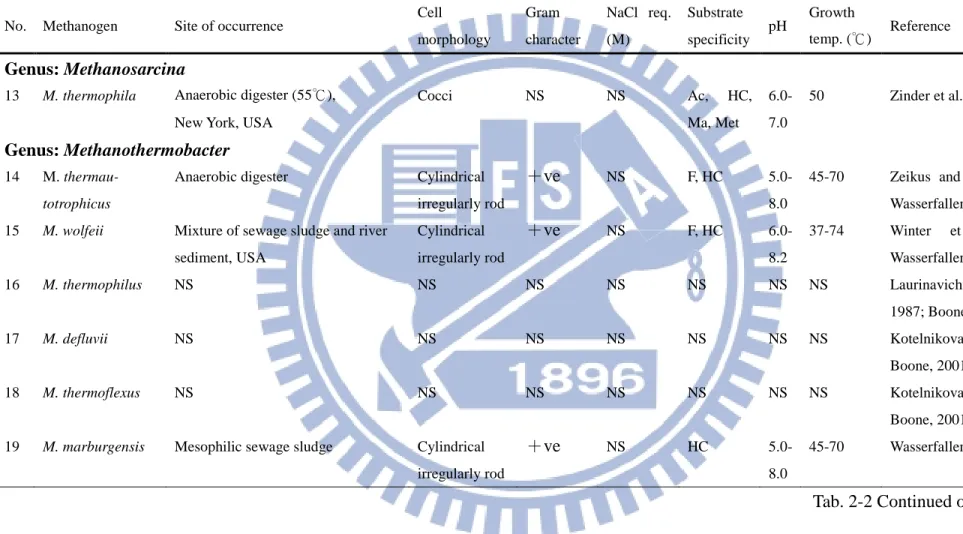
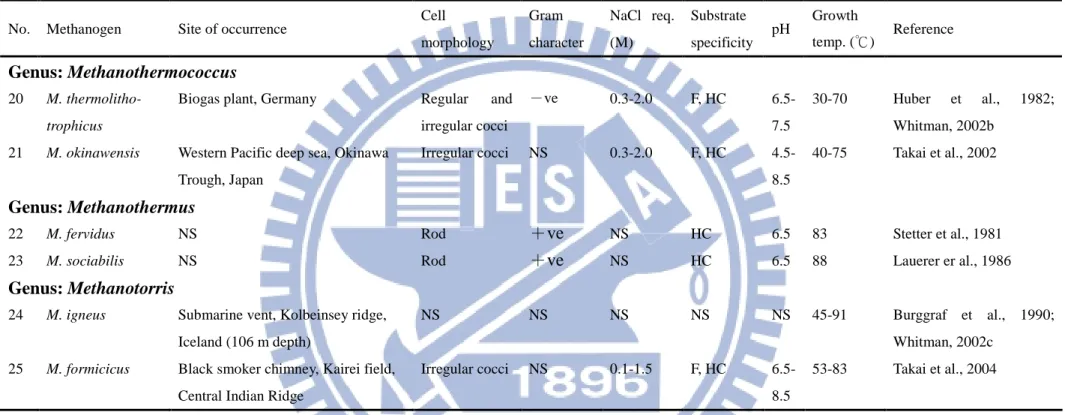
recently due to their resistance to extreme environment and potentialities on Environmental Engineering. Tab. 2-2 is Suryawanshi et al. (2010) listed new species thermophilic methanogens found in recent years from many previous studies, these archaea were found in wildly varying habitats.
Operation modes certainly change the both community of fermentative anaerobes and methanogens. Liu et al. (2002) examined the start-up of two acidogenic reactors under mesophilic (37℃) and thermophilic (55℃) conditions carried out with methanogenic granular sludge as an inoculum and dairy wastewater as feed. From the DGGE results, due to pH drop to 5.5, the domains Bacteria and
Archaea populations showed significant shifts after 13 days operation accompanied
with an increase in VFAs production, a decrease in methane formation, and rapid sludge disintegration. Methanosaeta were abundant at the interior of the seed sludge and many other biogranules, but the dominant population changed from
Methanosaeta to Methanomicrobiales, Methanobacteriales and Methanococcales
when reactors were operated at a high VFAs concentration and a low pH condition, besides, the microbial community change was more significant and rapid in the thermophilic reactor. Although obvious community changes took place at the first 13 days for both reactors, a longer period up to 71 days was required to make the microbial community more stable.
The methanogens population change in the study of Liu et al. (2009) was found
Methanoculleus (hydrogenotrophic) and Methanosarcina (acetotrophic) were
responsible for methane generation in thermophilic upflow anaerobic filter reactor. Sasaki et al. (2011) carried out their experiment with thermophilic (55℃) AD using artificial garbage slurry as feed. In addition, they also took a tracer experiment using
13
C-labeled acetate and found approximately 80% of the acetate was decomposed via a non-aceticlastic oxidative pathway (Eq. 2.14), whereas the remainder was converted
to methane via an aceticlastic pathway (Eq. 2.13). The Archaea 16S rRNA analyses demonstrated the hydrogenotrophic methanogens Methanoculleus spp. accounted for >90% of detected methanogens, and the acetotrophic methanogens Methanosarcina spp. were minor.
Aceticlastic cleavage
CH3COO- + H2O → CH4 + HCO3- (Eq. 2.13)
Non-aceticlastic cleavage
CH3COO- + 4H2O → HCO3- + HCO3- + 4H2 + H+
HCO3- or (HCO3-) + 4H2 + H+ → CH4 or (CH4) + 3H2O (Eq. 2.14)
From their thermophilic (55℃) co-digestion of OFMSW and lipid-rich wastes, Martín-González et al. (2011) found Methanobacterium, Methanoculleus and
Methanosarcina were detected. Methanobacterium and Methanoculleu belong to
hydrogenotrophic methanogens, however Methanosarcina belongs to acetotrophic methanogens. No another acetotrophic methanogen, Methanosaeta, were detected in their result indicating Methanosaeta were unfavorable in thermophilic condition.
Tab. 2-2 Profiles of thermophilic methanogens (adapted from Suryawanshi et al., 2010)
No. Methanogen Site of occurrence Cell
morphology Gram character NaCl req. (M) Substrate specificity pH Growth temp. (℃) Reference Genus: Methanobacterium 1 M. thermaggregance
Mud from cattle pasture, Germany Rod -ve NS HC
6.5-9.0
40-75 Blotevogel and Fischer,
1985 Genus: Methanocaldococcus
2 M. jannaschii Submarine hydrothermal vent, East
Pacific Rise, (2600 m depth)
Irregular cocci NS 1.3-1.7 HC 5.2-7.0 50-85 Jones et al., 1983; Whitman, 2002a
3 M. infernus Deep sea hydrothermal vent
chimney, Mid-Atlantic Ridge
(3000 m depth)
Cocci NS 6.5 HC
5.2-7.0
55-91 Jeanthon et al., 1998;
Whitman, 2002a
4 M. fervens Deep sea hydrothermal vent core,
Guaymas Basin, California
Regular and irregular cocci NS 0.1-1.2 HC 5.5-7.6 48-92 Jeanthon et al., 1999; Whitman, 2002a
5 M. vulcanius East Pacific Rise (2600 m depth) Cocci NS 1.5-14 HC
5.2-7.0
49-89 Jeanthon et al., 1999;
Whitman, 2002a
6 M. indicus Central Indian Ridge (2420 m depth) Cocci NS 0.75 HC
5.5-6.7
50-86 L’Haridon et al., 2003
Tab. 2-2 Continued 2
No. Methanogen Site of occurrence Cell
morphology Gram character NaCl req. (M) Substrate specificity pH Growth temp. (℃) Reference Genus: Methanoculleus
7 M. thermophilus Sediment, Crystal River, Nuclear
power plant, Florida
Irregular cocci -ve 0.35-1.25 F, HC 6.1-7.8
55-65 Rivard and Smith, 1982;
Maestrojuan et al., 1990;
Spring et al., 2005
8 M. receptaculi Shengli oil field, China Cocci NS 0.2 F, HC
7.5-7.8
50-55 Cheng et al., 2008
Genus: Methanolinea
9 M. tarda Municipal sewage sludge Rod NS NS F, HC
6.7-8.0
35-55 Imachi et al., 2008
Genus: Methanomethylovorans
10 M. thermophila UASB bioreactor, paper-mill
wastewater, The Netherlands
Irregular cocci -ve 0.1-0.3 Ma, Met 5.0-7.5
42-58 Jiang et al., 2005
Genus: Methanopyrus
11 M. kandleri Hydrothermal Rod heated deep sea
sediment, California
Rod +ve 0.05-1.0 HC
5.5-7.0
84-110 Kurr et al., 1991
Genus: Methanosaeta
12 M. thermophila Thermal lake mud, Japan Sheathed rod -ve NS Ac
6.5-7.0
55-60 Patel and Sprott, 1990;
Kamagata et al., 1992
Tab. 2-2 Continued 3
No. Methanogen Site of occurrence Cell
morphology Gram character NaCl req. (M) Substrate specificity pH Growth temp. (℃) Reference Genus: Methanosarcina
13 M. thermophila Anaerobic digester (55℃),
New York, USA
Cocci NS NS Ac, HC, Ma, Met 6.0-7.0 50 Zinder et al., 1985 Genus: Methanothermobacter 14 M. thermau- totrophicus
Anaerobic digester Cylindrical
irregularly rod
+ve NS F, HC
5.0-8.0
45-70 Zeikus and Wolfe, 1972;
Wasserfallen et al., 2000
15 M. wolfeii Mixture of sewage sludge and river
sediment, USA Cylindrical irregularly rod +ve NS F, HC 6.0-8.2 37-74 Winter et al., 1985; Wasserfallen et al., 2000
16 M. thermophilus NS NS NS NS NS NS NS Laurinavichus et al.,
1987; Boone, 2001
17 M. defluvii NS NS NS NS NS NS NS Kotelnikova et al., 1993;
Boone, 2001
18 M. thermoflexus NS NS NS NS NS NS NS Kotelnikova et al., 1993;
Boone, 2001
19 M. marburgensis Mesophilic sewage sludge Cylindrical
irregularly rod
+ve NS HC
5.0-8.0
45-70 Wasserfallen et al., 2000
Tab. 2-2 Continued 4
No. Methanogen Site of occurrence Cell
morphology Gram character NaCl req. (M) Substrate specificity pH Growth temp. (℃) Reference Genus: Methanothermococcus 20 M. thermolitho- trophicus
Biogas plant, Germany Regular and
irregular cocci
-ve 0.3-2.0 F, HC
6.5-7.5
30-70 Huber et al., 1982;
Whitman, 2002b
21 M. okinawensis Western Pacific deep sea, Okinawa
Trough, Japan
Irregular cocci NS 0.3-2.0 F, HC
4.5-8.5
40-75 Takai et al., 2002
Genus: Methanothermus
22 M. fervidus NS Rod +ve NS HC 6.5 83 Stetter et al., 1981
23 M. sociabilis NS Rod +ve NS HC 6.5 88 Lauerer er al., 1986
Genus: Methanotorris
24 M. igneus Submarine vent, Kolbeinsey ridge,
Iceland (106 m depth)
NS NS NS NS NS 45-91 Burggraf et al., 1990;
Whitman, 2002c
25 M. formicicus Black smoker chimney, Kairei field,
Central Indian Ridge
Irregular cocci NS 0.1-1.5 F, HC
6.5-8.5
53-83 Takai et al., 2004
2.1.2 Factors and problems during operation: focusing on nutrients
and sludge foaming
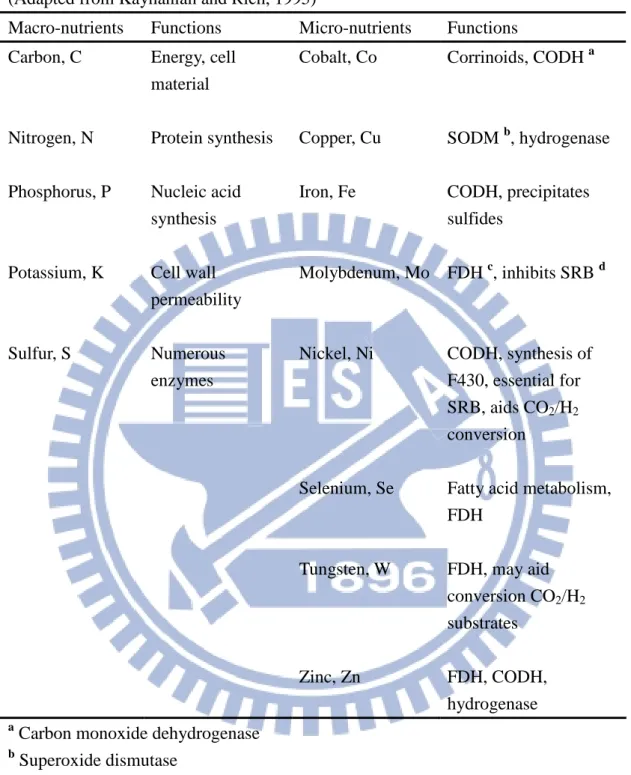
Nutrient balance is quite important in biotreatment, it has a significant influence on reactor operation if insufficient or improper ratios between macro- and micro-nutrients. Carbon, nitrogen, phosphorus, and potassium are common macro- nutrients, and demands of nutrients vary with different operation conditions. According to Khanal (2008), the theoretical minimum requirements that anaerobic system can be used are COD/N/P ratios of 350:7:1 for highly loaded (0.8-1.2 kg COD/kg VSS/d) and 1000:7:1 for lightly loaded (<0.5 kg COD/kg VSS/d). Many studies have also pointed out that some micro-nutrients like cobalt, copper, iron, molybdenum, nickel, selenium, tungsten, and zinc have considerable functions to anaerobic processes which associate with synthesis of enzymes, fatty acids metabolism, and conversion of CO2/H2 (McCarty, 1964b; Kayhanian and Rich, 1995;
賀 延 齡 , 1998; Khanal, 2008). Certainly, previous experiments have further
confirmed nutrients play a key role not only to methanogens but also to fermentative acidogenic bacteria (Kayhanian and Rich, 1995; Kim et al., 2003; Zitomer et al., 2008). Table 2-3 briefs some specific functions about macro- and micro-nutrients in anaerobic process.
Sludge foaming is a common problem not only in aerobic biotreatment but also in anaerobic biotreatment, and it will deteriorate the performances of treatment processes as well as increased the cost of operation. Ganidi et al. (2009) thought some reasons for causing AD foaming included surface active agents, filamentous microorganisms, temperature, organic overloading, type and frequency of mixing, and digester shape. The surfactants include oil, grease, volatile fatty acids, detergents, proteins and particulate matter. In these surfactants, proteins have a large influence to cause foaming because they are less biodegradable than lipids and fibers. In
Tab. 2-3 Functions of macro- and micro-nutrients in anaerobic digestion (Adapted from Kayhanian and Rich, 1995)
Macro-nutrients Functions Micro-nutrients Functions Carbon, C Energy, cell
material
Cobalt, Co Corrinoids, CODH a
Nitrogen, N Protein synthesis Copper, Cu SODM b, hydrogenase Phosphorus, P Nucleic acid
synthesis
Iron, Fe CODH, precipitates sulfides
Potassium, K Cell wall permeability
Molybdenum, Mo FDH c, inhibits SRB d
Sulfur, S Numerous enzymes
Nickel, Ni CODH, synthesis of F430, essential for SRB, aids CO2/H2
conversion
Selenium, Se Fatty acid metabolism, FDH
Tungsten, W FDH, may aid conversion CO2/H2
substrates Zinc, Zn FDH, CODH,
hydrogenase
a
Carbon monoxide dehydrogenase
b
Superoxide dismutase
c
Formate dehydrogenase
d
Sulfate reducing bacteria
general, sludge foaming caused by surfactants has two major factors that are interactions between compounds and between the compounds and solids in sludge
broken down to simpler compounds during AD and are utilized by bacteria and therefore their impact on the foaming potential is unclear (Ganidi et al., 2009).
Gordonia spp. and Microthrix parvicella are considered that major causing
foaming bacteria. These microorganisms are present in AD process via surplus activated sludge, they can exist in the liquid phase but also bound to the flocs. Filamentous microorganisms grow at the air/liquid interface of anaerobic reactors and produce biosurfactants, therefore, leading to lower surface tension of sludge and enhancing foaming possibility. Compared with mesophilic AD, thermophilic AD has more resistant to foam generation, this could be confirmed by the study of Han et al. (1997), which reported the extent of foaming was more moderate in TPAD system than in single-stage mesophilic anaerobic reactor. This suggested that high temperatures result in a lower surface tension and viscosity of sludge and hence increasing foam drainage (Ganidi et al., 2009).
2.1.3 General inhibitors of swine manure anaerobic digestion
In AD process, microbial inhibition may happen when the feed containing toxicants or, on the other hand, some specific by-products produced via metabolic processes. The common toxicants during anaerobic processes are ammonia, sulfides, salts, heavy metals and organics. Inhibition condition of the specific toxicant has significant differences in literature results due to inocula, waste composition, and experimental methods and conditions (Chen et al., 2008; Khanal, 2008).
2.1.3.1 Ammonia
In addition to feedstock containing ammonium, another nitrogenous source existing in anaerobic process is through degradation from proteins and urea of organic wastes, and ammonia inhibition will occur if its concentration exceeds the threshold
of microorganisms. From earlier studies we can find the toxic mechanisms of ammonia include a pH change of intracellular, increasing the maintenance energy requirement, and obstruction of a specific enzyme reaction (Chen et al., 2008). Ammonium (NH4+) and free ammonia (FA, NH3) are the two major parts of inorganic
ammonia nitrogen in aqueous solution, and their distribution is greatly affected by temperature and pH value expressed such as Eq. 2-15 and Eq. 2-16, which were according to Emerson et al. (1975); Østergaard (1985); and Koster (1986) (Hansen et al., 1997; Vandenburgh and Ellis, 2002).
NH3 = TNH3 / [1+10(pKa-pH)] (Eq. 2.15)
pKa = 0.09018 + (2729.92/T) (Eq. 2.16)
Where
NH3 = free ammonia concentration (mg/L as N);
TNH3 = total ammonia concentration (mg/L as N);
Ka = equilibrium ionization constant; and T = temperature (K).
Without a doubt, FA is regarded as the main reason causing inhibition since it may diffuse passively into the cell, causing proton imbalance, and/or potassium deficiency (Gallert et al., 1998; Chen et al., 2008). Methanogens have a poorer tolerance to ammonia inhibition than other anaerobic microorganisms, but this toxicity is reversible because the bacteria activity can be resumed immediately after high concentration of ammonia is diluted ( 賀 延 齡 , 1998; Chen et al., 2008). Sensitivity results of ammonia was contradictory in previous studies, most
hydrogenotrophic methanogens on the basis of methane production and growth rate, however, a small portion of researches indicated aceticlastic methanogens had a relatively high resistance to high total ammonia nitrogen (TAN) level as compared to hydrogenotrophic methanogens (Chen et al., 2008). After arranging many literatures, Chen et al. (2008) thought there are several significant factors on ammonia inhibition, which were concentration, pH value, temperature, presence of other ions, and acclimation.
Angelidaki and Ahring (1993) investigated the influence of ammonia inhibition to thermophilic AD of cattle manure. They found inhibition occurred when the total ammonia concentration over 4 g N/L, but the reactor appeared steady-state after six months operation through TAN concentration of the reactor at 6 g N/L. From the results of specific methanogenic activity, it suggested the affect of ammonia toxicity to aceticlastic methanogens was deeper than hydrogenotrophic methanogens. Other reports confirmed that high temperature range strongly deteriorated the reactor performances due to presence of more unionized ammonia at high temperature, and reduction of temperature below 55℃ resulted in an increase of biogas yield and better process stability (Angelidaki and Ahring, 1994; Hansen et al., 1998).
Gallert and Winter (1997) evaluated mesophilic and thermophilic AD of household wastes and focused on effect of ammonia on glucose degradation and methane production. In their inhibition results indicated the thermophilic bacteria tolerated at least twice as much of FA than the mesophilic bacteria, in addition, the thermophilic was able to degrade more proteins. Another study from the same researchers, which investigated the effect of ammonia on protein degradation by mesophilic and thermophilic AD was again confirmed their view on ammonia toleration of thermophilic bacteria. Mesophilic AD revealed a higher rate of deamination than thermophilic AD when peptone concentrations from 5 to 20 g/L. If
0.5-6.5 g ammonia/L was added to the mesophilic AD, peptone degradation, chemical oxygen demand, as well as biogas production were inhibited, besides, no hydrogen was formed. Contrary to mesophilic AD, thermophilic AD was most active if existing approximately 1 g ammonia/L, and hydrogen was found in addition to methane (Gallert and Winter, 1998).
Sung and Liu (2003) found an improved methanogenic activity at lower TAN concentrations (<1.5 g/L), however higher TAN concentrations (>4.0 g/L) caused an obvious inhibition of methanogens. Although acclimation to high TAN levels had a poor methanogens activity, it still increased the tolerance of methanogens to ammonia and pH variations. A long-term study that investigated the interaction of temperature and ammonia in mesophilic anaerobic sequential batch reactors (ASBRs) for treating swine waste was implemented by Garcia and Amgenent (2009). Their results showed when the TAN were increased to approximately 4 g N/L, a 45% lower methane yield was observed at 25℃, and increasing the operating temperature from 25℃ to 35℃ improved the reactor performances. Furthermore, the acclimation ammonium concentration could exceed 5.2 g N/L for mesophilic anaerobic treatment of swine waste.
2.1.3.2 Sulfide and sulfate-reducing bacteria (SRB)
In addition to the industrial wastewater, swine wastewater is another common sulfur-containing waste due to existing large number of proteins. Sulfate-reducing bacteria (SRB), which can convert sulfur-containing wastes into sulfides in the anaerobic process have an abundant community not only in Archaea but also in Bacteria, they can be divided into four groups according to their types, physiological and biochemical characteristics, and 16 rDNA sequences: mesophilic Gram-negative
archaea, respectively (任南琪等, 2009).
SRB have two ways of inhibition in methanogenic process, these ways are Primary inhibition and secondary inhibition. Primary inhibition is the competition between SRB and methanogens because they use the same organic and inorganic substrates, on the other hand, secondary inhibition is attributed to the toxicity of sulfides produced via SRB metabolism. Different sulfides have varied toxic strength according to the molecular types is: H2S > total sulfide > sulfite > thiosulfite > sulfate
(Chen et al., 2008; Khanal, 2008; 任南琪等, 2009). Hydrogen sulfide has the highest toxicity because it can diffuse into the cell membrane, and it may have three toxicity mechanisms if H2S penetrates into the cytoplasm. First, H2S can change the
protein structure by forming sulfide and disulfide cross-links between polypeptide chains. Second, it interferes with the various coenzyme sulfide linkages. And third, it also disturbs the assimilatory metabolism of sulfur (Chen et al., 2008). H2S is
strongly affected by the pH, H2S concentration increases when pH<7, while pH
ranging between 7 and 8, the concentration decreases obviously (McCarty, 1964c, d;
賀延齡, 1998). Certainly, corrosion and odor are also the problems concerning with
hydrogen sulfide.
Researches confirmed both SRB and methanogens are utilization of acetate and hydrogen, thus this phenomenon would influence on the recovery of methane and the normal anaerobic process. Thermodynamics, kinetics, COD/SO42- ratio, substrate
types, pH, temperature, and adaption time are the crucial factors that can affect the competition between SRB and methanogens substantially (Khanal, 2008). A study about influence of ammonia and sulfate concentration on thermophilic AD was investigated (Siles et al., 2010). They found in terms of biogas, the threshold C/N and C/SO42- ratios were 4.40 and 1.60, respectively, which correspond to 620 mg
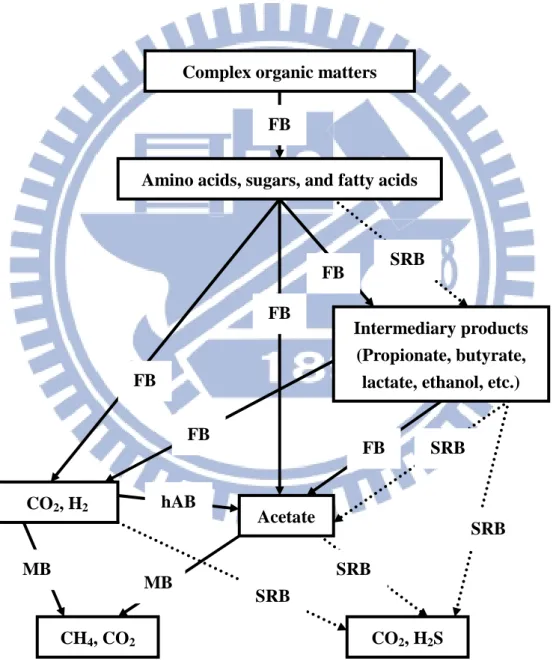
Fig. 2-5 is the relationship and substrate utilization between SRB and other anaerobic microorganisms. From the review paper of Chen et al. (2008), we can see four competitive relationships in the anaerobic process: competition between SRB and hydrolytic and fermentative bacteria; competition between SRB and acetogens; competition between SRB and hydrogenotrophic methanogens; competition between SRB and aceticlastic methanogens.
Fig. 2-5 The syntrophic relationship between SRB and other anaerobic microorganisms (Adapted from 任南琪等, 2009)
FB Fermentative bacteria; SRB Sulfate-reducing bacteria;
Complex organic matters
Amino acids, sugars, and fatty acids
CO2, H2
Intermediary products (Propionate, butyrate,
lactate, ethanol, etc.)
Acetate CH4, CO2 CO2, H2S FB FB FB SRB FB FB SRB hAB SRB FB SRB SRB MB MB
2.1.3.3 Salts
Salts are important factors for growth of microorganisms. But when the concentration is higher than bacteria can’t tolerate, and salts inhibition resulting from the dehydration of bacterial cells occurs due to osmotic pressure. Although salts are composed of cations and anions, the toxicity of salts was found to be predominantly determined by the cation (Chen et al., 2008). McCarty (1964c, d) found It occurred moderate inhibition when concentrations of Na+, K+, Ca2+ and Mg2+ are at 3500-5500, 2500-4500, 2500-4500 and 1000-1500 mg/L, respectively. 賀延齡 (1998) was on the basis of reports found the methanogenic activity reduced 50% at pH=7 and 35℃ when the individual salt concentration was Na+=7600, K+=6100, Ca2+=4700 and Mg2+=1930 mg/L, respectively. We can see the toxicity of divalent cations seems larger than monovalent cations. Chen et al. (2003) investigated the sodium inhibition of thermophilic methanogens. They found the specific methanogenic activity for aceticlastic methanogens acclimated to 0, 4.1, and 7.1 g Na+/L ranged from 250 to 270 mg CH4/g VSS/d, but the activity value was significantly decreased
acclimated to 12.0 g Na+/L, apparently, adaption to higher concentration of sodium could increase the tolerance of methanogens. Besides, in their chronic toxic result, the COD removal and methane production didn’t appear significant deterioration when methanogens were acclimated to 12.0 g Na+/L.
2.1.3.4 Heavy metals
High concentration of heavy metals also causes the inhibition to bacteria, and the ion-type is more toxic than. The toxic effect of heavy metals is attributed to disruption of enzyme function and structure by binding of the metals with thiol and other groups on protein molecules or by replacing naturally occurring in enzyme prosthetic groups (Chen et al., 2008). But if sufficient for sulfides in anaerobic
process, the heavy metals toxicity will reduce substantially due to forming non-solubility sulfide metal precipitates. Generally, 1.0 mg/L sulfides can be combined with 2.0 mg/L heavy metals to precipitate (McCarty, 1964c, d; Khanal, 2008).
2.2 The evolution from traditional AD to high-rate AD
The history of AD has been more than one century but the product of AD, methane, was found earlier by an Italian Volta in 1776, who knew this flammable gas would be generated via anaerobic decomposition of organic matter. The first full-scale applied anaerobic process was installed at France in 1860s. This facility was called “Muuras Automatic Scavenger” and it’s used to treat domestic wastewater, although its function was just like a septic tank. AD technique had a large advance should in the early 1900s because of a two-stage system known as Travis tank and Imhoff tank appeared, moreover, Imhoff tank was a modified type from former. A detached solids digestion made anaerobic treatment effectively to prevent the effluent from hydrolysis reactor and therefore the sludge would stay in the reactor from weeks to months until it became more stable.
Due to Imhoff tank was more economical on cost of sludge treatment, this facility was significant introduced, and from then on, AD technique would be shifted from treating wastewaters to treating solids. But AD technique didn’t become the main method of reducing pollution; contrarily, it faced with a limited situation before 1950 as people didn’t understand what happen in the AD process. Stander was the first man who realized the importance of solids retention time (SRT) for AD process in 1950. This concept promoted the development of high-rate anaerobic treatments
made AD to apply in industrial wastewaters as well as biogas recovery. Short HRT could be achieved when SRT was still kept at long time and allowed the system operating at high organic loading rate without microorganisms’ washout.
Many types of high-rate AD had been developed after in 1950, for instance, anaerobic contact process (ACP), anaerobic filter (AF), anaerobic membrane bioreactor (AnMBR), and upflow anaerobic sludge blanket reactor (UASB). AF and UASB processes established the immobilization of microorganisms and improved the mixing between sludges and wastewaters, follow-up reactors like anaerobic fluidized bed (AFB) and expanded granular sludge bed (EGSB) were the modified types basing on these characteristics. Other significant findings or inventions included that Speece recognized the importance of trace elements for methanogens in 1983; Dague and Pidaparti developed the anaerobic sequential batch reactor (ASBR) to treat swine manure in 1992. Tab. 2-4 is the evolution and main findings of the AD process. (賀
延齡, 1998; McCarty, 2001; Khanal, 2008).
2.2.1 The development and application of TPAD
Due to USEPA formulated 40 CFR PART 503 regulations in early 1990s, the standard of biosolids as biofertilizers for cops has been stricter than the past. According to regulations, performances and operations of AD must reduce not only volatile solids (VS) but also pathogens, thus the digestate meets the Class A biosolids that VS removal should be more than 38%, fecal coliform should be less than 1000 MPN/g TS or Salmonella should be less than 3 MPN/4 g TS.
Many AD studies focus on this purpose to achieve reuse of digestion sludges, TPAD is also one of them and it was proposed by Dague and his co-workers at Iowa State University in 1993. The concept of TPAD was born from PhD thesis of Harris, who compared the performances of thermophilic (56℃ and mesophilic (35℃) )
Tab. 2-4 Historical development of anaerobic biotechnology (Khanal, 2008)
Anaerobic technologies Investigator(s) and place Developments in chronological order Discovery of
methane
A. Volta, Italy Recognized that anaerobic decomposition of organic matters produce methane (1776) Mouras Automatic
Scavenger
M. L. Mouras, France Patented in 1881; the system had been installed in the 1860s
Anaerobic filter Massachusetts
Experimental Station, USA
Began operation in the 1880s
A hybrid system-a digester and an anaerobic filter W. D. Scott Moncrieff, England Constructed around 1890 or 1891
Septic tank D. Cameron, Exeter, England
A. L. Talbot, USA
Designed in 1885 with provision for recovery of biogas for heating and lighting
Designed in 1894 (Urbana); 1897 (Champaign)
Waste disposal tank Leper colony, Matunga, Bombay, India
Digestion tank with gas collection system (1897)
Travis tank W. O. Travis, Development of a two-stage system for a separate solid digestion (1904)
Imhoff tank K. Imhoff, Germany Modified the Travis tank (1905) Sludge heating
system
Essen-Rellinghausen Plant, Germany
Development of first separate sludge digestion system (1927)
Sludge heating system
Essen-Rellinghausen Plant, Germany
Development of first separate sludge digestion system (1927)
Digester seeding and pH control
Fair and More Realized the importance of seeding and pH control (1930)
High-rate anaerobic digestion
Morgan and Torpey Developed digester mixing system (1950)
Clarigester
(high-rate anaerobic processes)
G. J. Stander, South Africa
Realized the importance of SRT (1950)
Anaerobic contact process (ACP)
G. J. Schroepfer, USA Developed ACP similar to aerobic-activated sludge process (1955)
Anaerobic filter (AF) J. C. Young and P. L. McCarty , USA
Reexamined AF for the treatment of soluble wastewater (1969)
Tab. 2-4 Continued 2
Anaerobic technologies Investigator(s) and place Developments in chronological order Upflow anaerobic
sludge blanket reactor (UASB)
G. Lettinga, The Netherlands
Based on his first observation of granular sludge in Clarigester in South Afica (1979)
Expanded-bed reactor M. S. Switzenbaum and W. J. Jewell, USA
Developed fixed-film expanded-bed reactor (1980)
Anaerobic baffled reactor
P. L. McCarty, USA Retention of biomass within the baffles (1981)
Trace elements for methanogens
R. Speece, USA Reported the importance of trace elements for methanogens activity (1983)
Anaerobicsequencing batch reactor (ASBR)
R. Dague and S. R. Pidaparti, USA
Developed ASBR for the treatment of swine manure (1992)
anaerobic biofilters to treat synthesis substrates and then Kiser and Dague reported a first study which combined thermophilic and mesophilic biofilters, the system COD removal could attain to 93% at 16 g COD/L/d and HRT=24 hr. This result achieved additional 48% COD removal than the mesophilic biofilter in Harris’ study, even though both reactors operated at the similar loading rate. Following the Kaiser’s research, the temperature-phased method integrated with ASBR technique that had been investigated by Dague and his co-workers many years and gained well performances at either high or low waste concentrations; subsequently, TPAD studies were major in producing Class A biosolids by Sung and his group (Welper et al., 1997; Han et al., 1997; Sung and Santha, 2003; Santha et al., 2006).
As Fig. 2-6 shown in, TPAD is one of two-stage AD systems combining thermophilic AD and mesophilic AD, taking thermophilic-phased advantages like high solids removal, more biogas production and effective pathogens elimination as well as mesophilic-phased advantages improving system’s stabilities, reducing odorous problems and polishing digestates in one system offsets the drawbacks appeared when thermophilic or mesophilic reactors are operated individually.
Fig. 2-6 Schematic diagram of temperature-phased anaerobic digestion (TPAD) system
TPAD has significant capacities in sludge digestion; in addition, it provides a safe sanitation once pathogens are eliminated. Current researches about TPAD have been growing obviously, and mostly investigate to treat sewage sludge. According to master's thesis of Li (2004), there have been more than 15 full-scale facilities applied in wastewater treatment plants (WWTP). Sewage sludge, particularly waste activated sludge (WAS) which is residual through the aerobic biological treatment is very difficult further degraded and needs extra adjustments before it enters the next step which is usually traditional single mesophilic AD, thus the cost for treating sludge increases apparently. However many studies confirm TPAD has a lot benefits in digesting sewage sludge even there isn’t any adjustments in the sludge. WWTP sludge digestion isn’t the only one benefited by TPAD, its performances of treating others containing high solid strength like food processing industry wastes, agriculture