行政院國家科學委員會專題研究計畫 成果報告
目標導向特質對衝突結果、目標設定與績效影響之團隊與
個人層次研究(第 3 年)
研究成果報告(完整版)
計 畫 類 別 : 個別型 計 畫 編 號 : NSC 96-2416-H-004-050-SS3 執 行 期 間 : 98 年 08 月 01 日至 99 年 07 月 31 日 執 行 單 位 : 國立政治大學企業管理學系 計 畫 主 持 人 : 黃家齊 計畫參與人員: 學士級-專任助理人員:張致勝 報 告 附 件 : 出席國際會議研究心得報告及發表論文 處 理 方 式 : 本計畫涉及專利或其他智慧財產權,1 年後可公開查詢中 華 民 國 99 年 09 月 23 日
The relationship between conflict and team performance in Taiwan: the
moderating effect of goal orientation
Jia-Chi Huang
*Department of Business Administration, National Chengchi University, Taipei, Taiwan (ROC)
Abstract
This study is set in Taiwan, a Chinese cultural context. It investigates how team conflict,
as task and relationship conflict, relates to team performance. The study also considers the
moderating effect of goal orientation on the relationship of task conflict and relationship
conflict with team performance. The sample consists of 443 employees in 92 work teams.
Results show relationship conflict has a significant and negative relationship, while task
conflict has no significant relationship with team performance. The results also show that
team goal orientation moderates the relationship between conflict and team performance. For
teams with high learning orientation, task conflict positively relates to team performance,
whereas for teams with low learning orientation, task conflict will lower team performance.
In teams with high performance orientation, task conflict negatively relates to team
performance, whereas for low performance orientation teams, task conflict will facilitate
team performance. When team performance orientation is high this also increases the
detrimental effect of relationship conflict on team performance.
Key words: cultural context; goal orientation; negative feedback; relationship conflict; task
conflict; team composition
*
Introduction
Organizations use teams to respond quickly to environmental changes and to respond to
customer needs. Each team member brings different skills, knowledge, and experiences. To
be effective each team member should cooperate and share information. However different
values and ways of thinking mean conflict is unavoidable when team members are
interacting.
Conflict is a long standing focus of organizational and team research (Jehn and Mannix
2001; Pondy 1967). Although conflict has traditionally been considered disruptive,
researchers have argued conflict has considerable potential to contribute to team and
organizational effectiveness (De Dreu and Van de Vliert 1997). Several researchers
investigate the effect of conflict by differentiating task conflict and relationship conflict
(Amason and Schweiger 1994; Guetzkow and Gyr 1954; Jehn 1995; Priem and Price 1991).
Researchers also propose that the negative responses such as anxiety, affiliation, and hatred
resulting from relationship conflict lower the working efficiency of team members and reduce
team performance. On the other hand, task conflict helps members to express different ideas,
clarify concepts, unify goals, and accept decisions, enhancing team performance (Amason
1996; Jehn 1995). Although both conflict theory and empirical studies support the positive
effects of task conflict, research has also found that task conflict may negatively influence
team performance (De Dreu and Weingart 2003).
The value of conflict and theories that analyze conflict, as described in extant literature,
cannot be assumed to apply to a collectivist culture like Taiwan (Hofstede 1993; Tjosvold
Poon and Yu 2005). Chinese people are considered group oriented where relationships are
highly valued (Chan 1963; Triandis, McCuster and Hui 1990). Traditionally, collectivists
have been considered to value harmony and smoothing over of conflict (Morris et al. 1998;
Ting-Toomey 1988). This traditional view means that teams in the Chinese cultural sphere
However, researchers also argue that, although Chinese may emphasize harmony to
avoid conflict, harmony seeking behavior may also be driven by trust, relationship building,
and sincerity (Chen 2001; Leung, Koch and Lu 2002). With this motive, Chinese people
discuss conflicts openly to strengthen their relationships, and thus may be able to discuss
conflict productively (Tjosvold et al. 2005).
Although there existed different perspectives about conflict in Western and Chinese
culture, the effects of intrateam conflict on team performance are still not clear in both
societies. These divergent views about the effects of conflict indicate that context plays a
role. One of the most important contexts is the personality composition of team members.
Team member personality has been shown to be an important factor in team process and
performance (Barrick, Stewart, Neubert and Mount 1998; Barry and Stewart 1997; Bell 2007;
Halfhill, Sundstorm, Lahner, Calderone and Nielson 2005; Kichuk and Wiesner 1997;
Neuman, Wagner and Christiansen 1999; Neuman and Wright 1999). Because the personality
of team members may influence how they interpret and respond to conflict, they should play
a role in how conflict relates to team performance. After reviewing the conflict research, it
appears that no research has explored whether the composition of team members’
personalities will affect the relationship between conflict and team performance. This study
proposes that the goal orientation of team members will moderate the relationship between
conflict and team performance. To date, little empirical work has examined team members’
goal orientation composition (Porter 2005 is an exception). The exploration of team goal
orientation will contribute to both the conflict and team composition literatures.
Goal orientation is a disposition which refers to the personal goal preferences in
achievement situations (Dweck and Leggett 1988). Goal orientation can be classified into
learning orientation and performance orientation (Dweck 1986; Dweck and Leggett 1988).
Individual team members’ goal orientations lead to particular attitudes and concepts about
members with a high learning orientation view different perspectives and criticisms as helpful
information. This enables them to develop effective interactions with other members, thus
escalating positive effects of task conflict and also attenuating the negative effects of
relationship conflict. Conversely, team members with high performance orientation will
enhance the negative effect of task and relationship conflict. In other words, task conflict and
relationship conflict exert different influences on team performance, due to the differing goal
orientation composition of team members. The current study also argues that the moderating
effect of goal orientation on the relationship between conflict and team performance will be
strengthened in teams in a Chinese cultural context.
The current study investigates how task conflict and relationship conflict relate to team
performance, and how goal orientation moderates the relationship between conflict and team
performance in a Chinese cultural setting in Taiwan. This study contributes to both conflict
theory and team composition literatures in two ways. First, it sheds light on the moderating
effect of team goal orientation. Second, this study tests the fit of Western conflict theory to a
Chinese cultural context.
Conflict and team performance
Conflict can be distinguished into task conflict and relationship conflict (Jehn 1995).
Task conflict refers to differences of opinions, ideas and viewpoints among group members
about the content of the tasks. Relationship conflict points to interpersonal incompatibilities
among group members, which typically includes tension, animosity, and annoyance among
members within a group.
Relationship conflict results in interpersonal opposition and encourages team members
to switch the focus from the task to their interpersonal relationships. Once relationship
conflict exists in a team, time will be consumed by interpersonal matters, instead of task
decision quality and performance (Amason 1996; Jehn 1995, 1997). Given the foregoing, this
paper proposes that relationship conflict negatively relates to team performance.
Task conflict means team members have opposing viewpoints, ideas, and thoughts about
a task (Jehn 1995). Conflict over task issues is common. This process leads to setting clear
task goals and steps through the exchange and clarification of ideas (Putnam 1994).
Constructive criticism and suggestions of alternative approaches also lead to improvements in
decision quality (Jehn 1997). On the other hand, researchers argue task disagreement in a
team may lead to inefficiencies in reaching an agreement. A lack of consensus interferes with
the team’s ability to find integrative solutions, reducing team performance (Lovelace, Shapiro
and Weingart 2001).
The negative outcomes of task conflict are more serious in a Chinese as opposed to a
Western cultural setting. Chinese culture values harmony as a genuine concern for a sense of
intimacy, trust, compatibility and mutually beneficial behaviors (Chen and Tjosvold 2002).
Leung (1996, 1997) argues that one motive for harmony in Chinese cultural settings is
instrumental in nature, to avoid actions that might strain a relationship and lead to its
disintegration. Based on this reasoning, task conflict’s positive influence in bringing about
multiple viewpoints may be counterbalanced by its negative effect on harmony in Chinese
cultural settings.
On the basis of past theorizing and evidence, this paper proposes a negative linkage
between relationship conflict and team performance. The possible positive outcomes of task
conflict will be impeded due to its negative effects on interpersonal harmony in Chinese
cultural settings. Therefore, this study does not predict a significant positive relationship
between task conflict and team performance. On the basis of the previous discussion:
Hypothesis 1: There is a negative relationship between relationship conflict and team performance.
The moderating effect of goal orientation
Goal orientation theory has its origins in the educational psychology and child
development literature. It conceptualized the broader goals pursued by individuals as a
personality dimension and proposed that individuals have different goal preferences in
achievement situations (Dweck 1986; Dweck and Leggett 1988). Goal orientation comprises
learning and performance orientations (Dweck 1986). The former refers to individuals
seeking to develop competence by acquiring new skills and mastering new situations. The
latter leads individuals seeking to demonstrate and validate the adequacy of one’s
competence by obtaining favorable judgments and avoiding negative judgments about one’s
competence.
Dweck and Leggett (1988) found individuals hold implicit theories about their degree of
control over personal attributes such as intellectual ability. Individuals with a learning
orientation tend to hold an incremental theory about their ability. They view ability as a
malleable attribute that can be developed through effort and experience. By contrast,
individuals with a performance orientation tend to hold an entity theory about their ability.
They view ability as a fixed and uncontrollable personal attribute.
The implicit theories held by individuals influence the interpretation of feedback,
especially negative feedback. A learning orientation involves a tendency to view feedback as
diagnostic information about how to develop task mastery. A high performance orientation
results in cognitive-processing patterns that evoke sensitivity to information about failures
(Farr, Hofmann and Ringenbach 1993; Gong, Huang and Farh 2009). Team members with
learning or performance orientations perceive different ego costs. An individual’s ego cost
relates to the amount of suffering from hearing negative feedback (Ashford 1989). For
individuals with a performance orientation, feedback is a judgment about their fixed ability
their ego because it conflicts with their goal of ability validation (Janssen and Prins 2007;
Park, Schmidt, Scheu and DeShon 2007).
In contrast, learning-oriented individuals perceive ability as transformable. They do not
consider negative feedback as a denial of their ability but as a means of improvement. The
result is a lower ego cost compared to performance oriented individuals.
During task conflict other team member’s disagreement or criticism is potentially be
viewed as negative feedback about individual’s opinion (Huang, in press). Because of the
different attitudes toward negative feedback hold by learning orientation and performance
orientation team members, they will respond differently toward task conflict. Team members
with a high learning orientation will view different perspectives and criticism (negative
feedback) from other members during task conflict as helpful diagnostic information. They
hold a positive attitude toward task conflict and this facilitates constructive discussion. Thus
task conflict will facilitate team performance in teams with high learning orientation.
Conversely, team members with a high performance orientation find negative feedback
during task conflict contradicts their goal of ability validation. Thus team members with high
performance orientation tend to view different opinions as a denial of their abilities.
Therefore they hold a negative attitude toward task conflict. Consequently, the negative effect
of task conflict will increase in teams with high performance orientation.
Competitiveness motivation is also of relevance. This refers to the desire to win in
competitive and interpersonal situations (Helmreich and Spence 1978). The relationship
between goal orientation and competitiveness motivation is another reason why goal
orientation affects the outcomes of task conflict. A performance orientation relies on
comparison with others as a judge of performance and ability. That is, individual proves
ability by demonstrating superiority to others (Nicholls 1984). So performance orientation
should positively relate with competitiveness (VandeWalle 1997). Performance-oriented
opportunities for emotional and angry arguments. Negative outcomes result. By contrast,
those with a learning orientation use self-referenced internal standards to assess their
performance and ability (Nicholls 1984). Comparison with others is not significant.
Consequently, learning orientation has a weak relationship with competitiveness
(VandeWalle 1997). Task conflict leads learning-oriented team members to engage in
constructive discussion.
Culture may influence the effect of team member goal orientation on the relationship
between task conflict and team performance. Schwartz (1994) proposed a theory of value
structure at the society level. One important value dimension in Schwartz’s structure is
embeddedness. In societies valuing embeddedness, individuals are strongly connected to a
larger collective, and meaning in life is primarily determined by social relationships. There is
a strong emphasis on working hard to maintain the order and prestige of the group. By
contrast, in autonomous contexts, individuals are expected to find the meaning of their own
personal uniqueness and are encouraged to express their own personal preferences. People
are free to pursue their own intellectual or experiential endeavors without strong interference
or disapproval from others.
Taiwan is at the embeddedness end (Schwartz 2006). We can predict that in embedded
contexts, individuals are expected to show contributions to the group and avoid failure as the
poor performance of one individual will reflect negatively on the group (Dekker and Fischer
2008; Tao and Hong 2000). Individuals are subjected to social pressure and need to be
concerned about other people’s opinions of themselves.
As discussed earlier, team members with a high learning orientation will view different
perspectives and negative feedback from other members during task conflict as diagnostic
information. In an embedded context, high learning orientation team members will be more
eager to have open discussions with team members. Therefore they can improve the team
are stimulated by opposing ideas and open-mindedly explore them. Thus the positive result of
task conflict will be facilitated. Recent research also finds that the direct, open discussion of
conflicts leads to better performance in Chinese cultures (Tjosvold, Hui and Sun 2004). By
contrast, team members with high performance orientation view different opinions and
negative feedback during task conflict as a denial of their abilities. Under social pressure to
perform well and avoid failure, high performance-oriented team members do not want the
negative feedback to reveal their incompetence to other team members. The humiliation and
shame resulting from others’ criticisms hurts their social face (Earley 1997). Thus, they will
tend to reject the different perspectives under task conflict. Task conflict will diminish team
performance in teams with high performance orientation.
On the basis of previous reasons, this study suggests team members’ goal orientations
moderate the relationship between task conflict and team performance, especially in Chinese
cultural settings. When there is high team learning orientation then task conflict facilitates
team performance, and task conflict will be negatively related to team performance when
team learning orientation is low. When there is high team performance orientation then task
conflict impedes team performance, and task conflict will be positively related to team
performance when team performance orientation is low. This reasoning suggests the
following hypotheses:
Hypothesis 2a: Team learning orientation will moderate the relationship between task conflict and team performance. Task conflict will be positively related to team
performance when team learning orientation is high, and will be negatively
related to team performance when team learning orientation is low.
Hypothesis 2b: Team performance orientation will moderate the relationship between task conflict and team performance. Task conflict will be negatively related to
positively related to team performance when team performance orientation is
low.
Janssen and Van Yperen (2004) found that subordinates’ learning orientation is
positively related to the quality of leader-member exchange, and subordinates’ performance
orientation is negatively related to the quality of leader-member exchange. Learning-oriented
employees frequently seek social exchanges with their leaders in order to discuss and learn
how to better deal with emerging problems and opportunities when performing their jobs.
Employees with performance orientations may prefer to restrict their interactions with their
supervisors to the necessary economic exchange behaviors required and mandated by their
formal employment contract. Thus, leader-member exchanges are likely to be formal,
impersonal and characterized by economic exchange behaviors and social-emotional distance
(Graen and Uhl-Bien 1995; Howell and Hall-Merenda 1999).
Since team members are another valuable source of learning, individuals with high
learning orientations may also seek to develop high quality interactions with other members.
Even under high levels of relationship conflict, learning-oriented team members will try to
improve the exchange relationship so they can benefit from learning from one another. In the
relationship-oriented Chinese cultural context, the exchange relationship improvement makes
team members less distracted by interpersonal concerns about the relationship. Team
members focus more on the problem at hand. Thus a high team learning orientation
diminishes the detrimental effects of relationship conflict.
High performance orientation members maintain their social-emotional distance from
other team members. When relationship conflict is high, performance-oriented team members
are not stimulated to try to improve the quality of their interactions with others. Moreover,
the high competitiveness of performance-oriented individuals will intensify the negative
members discuss relational conflicts, they may become highly emotional, worried that they
might not be respected and valued (Tjoavold, Law and Sun 2006). This worry contradicts the
social face and goal of ability validation of high performance-oriented team members,
therefore strengthening their negative emotional response to relational conflict. With their
cognitive capacities stretched by emotional coping, they are rigid in their thinking and tend to
assume that the conflict is fixed-sum. Thus high team performance orientation increases the
detrimental effect of relationship conflict on team performance.
On this basis, the present study suggests the following hypotheses:
Hypothesis 3a: Team learning orientation will moderate the relationship between relationship conflict and team performance. The negative relationship between
relationship conflict and team performance weakens when team learning
orientation is high.
Hypothesis 3b: Team performance orientation will moderate the relationship between relationship conflict and team performance. The negative relationship
between relationship conflict and team performance strengthens when team
performance orientation is high
Method
Participants and procedures
Participants consisted of 110 non-production line work teams from four IT companies in
Taiwan. Human resource managers from the four IT companies were contacted and asked for
their collaboration with the study. The human resource managers identified teams in their
company and informed the team supervisors about the survey. Then paper based surveys
were sent to team supervisors, who were asked to complete the survey themselves as well as
lack of trust in Chinese culture may affect the responses from team members, a written
statement assured subjects of the voluntary nature of the survey and the confidentiality of
their individual responses. Completed materials were mailed directly to researcher. This
design was intended to reduce team members’ concerns about exposure of their responses to
supervisors.
The final sample consisted of at least two thirds of the employees in each work team and
their supervisors. In all 110 survey sets were distributed to 625 employees. In total 99 sets
were returned from 472 employees. Seven sets were excluded because the response rate was
under two thirds of the team members. Thus, 92 teams representing 443 employees were
included in the data analysis.
Each team had an average of 5.96 (SD = 2.37) members. In terms of team function
32.6% were responsible for research and development (R&D), 19.6% for sales and
marketing, and 19.6% were project teams. The remaining 28.2% were responsible for other
functions. The average age of the participants was 32.19 (SD = 7.48), 51.2% of whom were
male and 40.9% married. The majority (68.9%) held a bachelors degree. The remaining held
a masters degree or above (16.3%) or a high school degree or lower (14.9%). These
demographic distributions of final sample are similar to the distribution of non-production
line employees of the four companies: average age of 35.27 (SD = 8.01), 56.48% male, and
43.51% married. The majority (69.41%) held a bachelors degree. The remaining held a
masters degree or above (15.38%) or a high school degree or lower (15.21%).
Measures
This section describes the choice and implementation of measures.
Task conflict and relationship conflict. Jehn’s (1995) four-item scale was used to measure the perceived in-team task conflict and relationship conflict. Respondents rated the
Cronbach’s α for task and relationship conflict was .85 and .90, respectively.
In the analysis, team members’ ratings of task conflict and relationship conflict were
aggregated to the team level. In this study three approaches were used to justify aggregating
these variables to the team level. The interrater agreement r*wg was calculated using the
procedure of Lindell, Brandt and Whitney (1999). Means values of .85 and .89 (for task
conflict and relationship conflict, respectively) were well above the acceptable value of .70
(George 1990). The ICC(1) and ICC(2) values (Bliese, 2000) were also calculated: task
conflict, .17 and .45, and relationship conflict, .16 and .42. These results were also
comparable to the median and recommended ICC values reported in the literature (Schneider,
White and Paul 1998). Thus, the aggregation of these variables was justified.
Goal orientation. Van Yperen and Janssen’s (2002) scale measured goal orientation as learning orientation and performance orientation with 11 and 8 items respectively.
Respondents used a 7-point Likert scale that ranged from 1 (Strongly disagree) to 7 (Strongly
agree). Cronbach’s α for learning orientation and performance orientation was .90 and .93, respectively. Team learning orientation and team performance orientation were both
measured by averaging team member’s scores for the respective orientations.
Team performance. Hackman’s (1990) 5 item scale measured team performance. The team supervisor completed the scale so as to avoid the potential for common method variance
The Cronbach’s α of the scale items was .89.
Control variables. The number of team members is an important influence on team process and performance (Brewer and Kramer 1986). The present study controlled for team
size. Tenure with the team also influences team members’ socialization and interaction (Jehn,
Northcraft and Neale 1999; Pelled, Eisenhardt and Xin 1999). Hence, team longevity, the
average tenure of team members with the team (Katz 1982; Pelled et al. 1999), was another
control variable.
discriminant validity of the task conflict, relationship conflict, learning orientation and
performance orientation items. The CFA with maximum likelihood estimations produced a
chi squared of 808.42 (p < 0.01, df = 344) or 2.35 per degree of freedom. This was less than
the 3 as suggested by Carmines and McIver (1981). The CFI, NNFI, and IFI were .93, .91
and .93, respectively. RMSEA was .07. All these indices indicated an acceptable goodness of
fit (Hu and Bentler 1999) to the measurement model.
Convergent validity was examined further by calculating the average variance extracted
(AVE) of the constructs. The results indicated the AVE of each variable was between .56
and .72. These exceeded .50 and this demonstrated acceptable convergent validity (Fornel
and Larcker 1981).
Discriminant validity was assessed by determining the confidence interval (under 95%)
around the correlation for each pair of factors. Since the confidence interval did not include
1.0 then discriminant validity was demonstrated(Anderson and Gerbing 1988).
Except for control variables, the item responses for each measure were averaged to
calculate the variable score.
Results
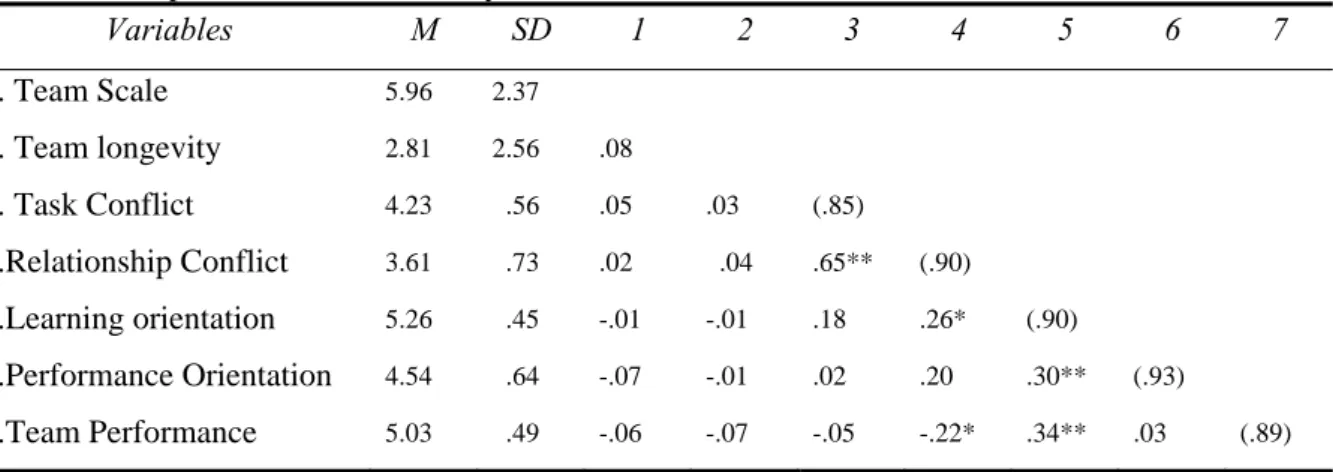
Table 1 presents descriptive statistics and the zero-order correlation among the study
variables. Task conflict is unrelated to team performance (r = -.05, n.s.). Relationship conflict
and team performance have a negatively significant relationship (r = -.22, p< .05). There is a
high correlation coefficient between task conflict and relationship conflict (r = .65, p< .01).
This indicates that task conflict often accompanies relationship conflict in Chinese culture.
Insert Table 1 about here
The hypotheses were tested using hierarchical regression analysis (Table 2). The control
task conflict, relationship conflict, team learning orientation and team performance
orientation were entered as independent variables. In the third step, the interaction terms of
goal orientation and task conflict and relationship conflict were entered. This was done to test
the moderating effect of team goal orientation. The mean-centered variables were used for the
main and interaction terms in the regression analysis to reduce multicollinearity (Aiken and
West 1991).
Insert Table 2 about here
As shown in Model 2, task conflict is not significantly associated with team
performance (β = .15, n.s.). Moreover, there is a negative significant relationship between
relationship conflict and team performance (β = -.42, p < .05). This supports Hypothesis 1.
Model 3 shows the moderating effect of goal orientation. First, the interaction between
task conflict and team learning orientation is significantly positive (β = .32, p < .05). This
result support Hypothesis 2a. The interaction between task conflict and team performance
orientation is significantly negative (β = - .48, p < .01) and this supports Hypothesis 2b.
Second, the interaction between relationship conflict and team learning orientation is not
significant ( β = .07, n.s.). The interaction between relationship conflict and team
performance orientation is significantly negative (β= - .25, p < .05). These results support
Hypothesis 3b but not Hypothesis 3a.
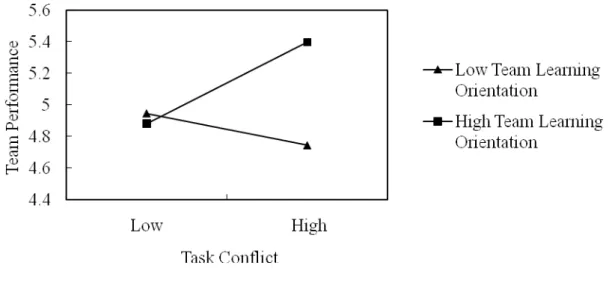
Figure 1 demonstrates the moderating effect of team learning orientation on the
relationship between task conflict and team performance. For teams with a high learning
orientation, task conflict positively relates to team performance, whereas for teams with low
learning orientation, task conflict will reduce team performance. This supports hypothesis 2a.
Figure 2 demonstrates the moderating effect of team performance orientation on
performance orientation, task conflict negatively relates to team performance, whereas for
low performance orientation teams, task conflict positively relates to team performance. This
result supports Hypothesis 2b.
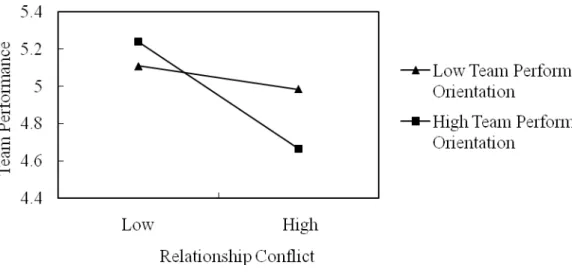
Figure 3 demonstrates the moderating effect of team performance orientation on
relationship between relationship conflict and team performance. Higher levels of team
performance orientation strengthen the negative relationship between relationship conflict
and team performance. This confirms Hypothesis 3b.
Insert Figure 1 about here
Insert Figure 2 about here
Insert Figure 3 about here
Discussion
The study explores the relationship between intrateam conflict and team performance
and the moderating effect of team goal orientation on the relationship between conflict and
team performance in Taiwan, a Chinese cultural setting.
This study shows a negative association between relationship conflict and team
performance. Other studies have also found this (Amason 1996; Jehn 1995, 1997).
Relationship conflict limits how much information the team processes. When relationship
conflict occurs, team members spend time and energy on interpersonal issues rather than
discussing tasks and making decisions (Simons and Peterson 2000). In contrast to
relationship conflict, task conflict is not significantly associated with team performance.
Teams that experience task conflict make better decisions than those that do not because they
basis of interpersonal interaction is harmony (Leung 1996, 1997). The quality of team
member interaction deteriorates as debates over task issues threaten group harmony. Task
conflict acts to both the benefit and detriment of team performance.
Although harmony is the core principle of interpersonal interaction, the current study
finds that conflict still can result in effective team work in a Chinese cultural context. Leung
et al. (2002) argued that harmony as conflict avoidance is not a main feature of classical
Confucianism but a characteristic of the secular version that is associated with cultural
collectivism. The classical Confucian view suggests, however, that a harmonious relationship
should not be pursued for self-gain or at expense of the more important values of
benevolence and righteousness. Under this philosophy, individuals can perform conflict
behavior like constructive confrontation, respectful communication, and compatible and
mutually beneficial behavior. Recent research also shows that open discussion leads to better
problem solving and more positive outcomes in Chinese cultural settings (Tjosvold, Nibler
and Wan 2001). The findings of this study confirm such research. Conflict can result in
positive team performance under certain conditions.
This study shows team goal orientation is an important moderator in the relationship
between conflict and team performance in Chinese culture. For teams with a high learning
orientation, task conflict positively relates to team performance, but for low learning
orientation teams, task orientation results in low team performance. On the other hand, in
teams with a low performance orientation, task conflict positively relates to team
performance, but in high performance oriented teams task conflict reduces team performance.
Chinese people are relationship-oriented and the social face concerns play an important
role in interpersonal interaction. Previous study has demonstrated that affirmation of social
face promotes open-minded exchange and direct discussion in Chinese cultural contexts
(Tjosvold et al. 2004). Team members with a high learning orientation subscribe to an
(Dweck and Leggett 1988). Criticism from task conflict provides information for self
improvement, but does not question their ability (VandeWalle 2003). High learning-oriented
team members feel no harm to their social face when they confront disagreement or criticism.
Under this situation, team members are prone to open-minded discussion, so they can obtain
the benefits from intrateam task conflict. Thus task conflict facilitates the performance of
teams with a high learning orientation.
By contrast, team members with a high performance orientation hold to an entity theory
about themselves. They believe in fixed abilities and are highly competitive (Dweck and
Leggett 1988; VandeWalle 1997). During task conflict individuals perceive disagreement and
criticism as having a high ego cost. Individuals conclude that others evaluate their ability as
low (Farr et al. 1993; Bobco and Colella 1994). The motive of social face affirmation is not
satisfied under this kind of perception. The social norm to perform well and avoid failure in
groups in Chinese culture further gives high performance-oriented team members the hope
that retrieve their social face during task conflict, because they do not want the negative
feedback to reveal their incompetence to other members. Thus in task conflicts the
overwhelming desire of performance-oriented team members to win leads to irrational
opposition. Team members cannot deal with task conflict with a positive attitude. Hence,
task conflict tends to result in negative outcomes in high performance-oriented teams.
These findings show that even though harmony is a dominant principle in interpersonal
interactions, Chinese team members may still obtain benefits from task conflict. The key
factor appears to be an appropriate composition of team members. By including more team
members with high learning orientation and low performance orientation, team members
confront task conflict open-mindedly and discuss issues cooperatively. The possibility of
disharmony during task conflict can be minimized.
The current study also finds that in high performance-oriented teams relationship
significant effect on relationship between relationship conflict and team performance.
Relationship between team members is pivotal for team work in a Chinese cultural setting
(Tjosvold et al. 2005). High performance orientated members also tend to maintain their
social-emotional distance from other team members. When there is relationship conflict
performance-oriented team members will not try to improve the quality of interaction.
Moreover, since performance-oriented individuals are highly competitive, this worsens an
already negative outcome even further.
The non-significant moderating effect of team learning orientation does not support
hypothesis. One reason could be that although learning-oriented team members will try to
improve the exchange relationship to benefit from learning from each other under
relationship conflict, the inherently poor relationship resulting from relationship conflict
makes open-minded discussion difficult. This finding demonstrates that intimate relationships
are a key component of team work in Chinese culture. If severe affective dissension exists
among team members, even open-minded learning-oriented team members find it hard to
avoid becoming involved.
Practice implications
This study provides practical insight for structuring teams and stimulating their
performance in a Chinese cultural setting. First, relationship conflict negatively relates to
team performance. Relationship conflict arouses member anger and anxiety and results in
mutual distrust. Since the locus of the conflict is not the task, completion of the work is
obstructed. Relationship conflict may have a more detrimental effect on team performance in
the relationship-oriented Chinese cultural context. Hence, team managers should attempt to
reduce the frequency and the intensity of relationship conflict.
Second, team members’ goal orientations have a significant influence on team
relationship between task conflict and performance in teams with a high learning orientation
or a low performance orientation. Innovative, complex, or uncertain tasks may require teams
to create multiple ideas to arrive at a deep understanding and high quality decisions. In these
circumstances team supervisors may need to use goal orientation disposition as a criterion for
selecting team members. Teams with a high learning or low performance orientation can take
advantage of task conflict.
Finally, this study considers goal orientation as an individual disposition. However,
some researchers propose various interventions to trigger goal orientation states, goal
orientation mindsets, and behavioral manifestations (Chen and Mathieu 2008; Kozlowski and
Bell 2006). Managers can frame their team members’ tasks and discussion towards learning
rather than performance goals. In collectivistic cultures, people tend to be other–referenced,
concerned about the evaluations of others. In this context, it is imperative for managers to
guide team members in perceiving different opinion or criticism as valuable diagnostic
information instead of a denial of their abilities. Thus team members will be able to openly
share divergent opinions and take advantage of task conflict.
Limitations and future directions for research
There are a number of limitations to this study. First, a cross-sectional design is
employed. This design element limits the ability to make causal assertions about the links
between conflict type and team performance. Reverse causality is possible; team performance
may affect conflict among team members. This study does not examine the reciprocal nature
of these processes. Future research may use a temporally lagged design and collect
independent and dependent variables at different times. This offers the opportunity to explain
the lines of causality. A better way would be to design a field experiment to establish
causality.
not be accurate, although recent research suggests that self-reported data are not as limited as
commonly expected (Balzer and Sulky 1992; Spector 1994).
Third, some studied variables emerged from the same survey instrument and so common
method variance is a potential problem. However, employees completed measures of conflict
and goal orientation, while their supervisors completed the measures of team performance.
Using different information sources for the independent and dependent measures should
reduce the possibility of common method variance.
Fourth, the current study tested the hypothesis using work teams. It is not clear if the
results are generalizable to other types of teams. Future research could replicate the current
study in the context of different types of teams, such as top management teams.
Fifth, the current study collected empirical data from Taiwan, a Chinese culture setting.
Although the theory being explored in this study may apply to Western societies, the cultural
characteristics of the sample limit the generalizability of research findings. Future research
may investigate the theory in Western cultural context to test the generalizability of findings
of this study.
Finally, there is disagreement regarding the dimensionality of performance orientation.
VandeWalle (1997) argued that performance orientation should be distinguished into two
dimensions: prove goal orientation and avoid goal orientation. Prove goal orientation refers to
the desire to prove one’s competence and to gain favorable judgments. Avoid goal orientation
refers to the desire to avoid the disproving of one’s competence and to avoid negative
judgments about it. These two different performance orientations may lead to different
cognitions and responses toward conflict. The results of conflict would thus vary as a
consequence. In Chinese culture, people tend to be other–referenced, concerned about the
evaluations of others. To prove individual competence and to avoid disproval of individual
competence are both important in Chinese culture. How these two motivations work during
different moderating effects of prove and avoid goal orientation, along with investigation of
how prove and avoid goal orientation affect the conflict management approaches individuals
take in a Chinese cultural context, would be interesting.
Conclusions
The study shows the impact of team composition on the outcomes of task conflict in a
Chinese cultural context. Conflict among Chinese team members do not necessary producing
a negative effect on team performance, as traditionally conceived. An appropriate
composition of team members’ goal orientations enables teams to take advantage of task
conflict to reach their full potential. Further research can deepen our understanding of how
team composition interacts with conflict.
Acknowledgements
The author would like to thank editor and the anonymous reviewer for their helpful comments on the earlier draft of this paper. Financial support of this research from National Science Council (NSC 96-2416-H-004-050-SS3) is highly acknowledged.
Table 1. Descriptive statistics, reliability coefficients, and correlation coefficients Variables M SD 1 2 3 4 5 6 7 1. Team Scale 5.96 2.37 2. Team longevity 2.81 2.56 .08 3. Task Conflict 4.23 .56 .05 .03 (.85) 4.Relationship Conflict 3.61 .73 .02 .04 .65** (.90) 5.Learning orientation 5.26 .45 -.01 -.01 .18 .26* (.90) 6.Performance Orientation 4.54 .64 -.07 -.01 .02 .20 .30** (.93) 7.Team Performance 5.03 .49 -.06 -.07 -.05 -.22* .34** .03 (.89)
Note. N=92. Cronbach’s alphas are reported in parentheses on the diagonal.
*p < .05 **p < .01
Table 2. Results of regression analyses for team performance
Variable Model 1 Model 2 Model 3
Control variables Team Scale -.05 -.05 .01 Team longevity -.06 -.05 -.05 Conflict type Task conflict (TC) .15 .17 Relationship conflict (RC) -.42** -.36**
Team goal orientation
Learning orientation (LO) .43** .30**
Performance orientation (PO) -.02 .13
Conflict × team goal orientation
TC × LO .32* TC × PO -.48** RC × LO .07 RC × PO -.25* R2 .01 .23 .33 F .32 4.24** 4.01** ΔR2 .22 .10 F 6.16** 3.05*
Note. N=92. Standardized regression coefficients are reported.
Figure 1. Interaction effect of task conflict and team learning orientation on team performance
Figure 2. Interaction effect of task conflict and team performance orientation on team performance
Figure 3. Interaction effect of relationship conflict and team performance orientation on team performance
References
Aiken, L., and West, S. (1991), Multiple Regression: Testing and Interpreting Interactions,
Newbury Park, CA: Sage.
Amason, A.C. (1996), ‘Distinguishing the Effects of Functional and Dysfunctional Conflict
on Strategic Decision Making: Resolving a Paradox for Top Management Teams,’
Academy of Management Journal, 39, 123-148.
Amason, A.C., and Schweiger, D.M. (1994), ‘Resolving the Paradox of Conflict, Strategic
Decision Making and Organizational Performance,’ International Journal of Conflict
Management, 5, 239-253.
Anderson, J.C., and Gerbing, D.W. (1988), ‘Structural Equation Modeling in Practice: A
Review and Recommended Two-step Approach,’ Psychological Bulletin, 103, 411-423.
Ashford, S.J. (1989), ‘Self-assessments in Organizations,’ in Research in organizational
behavior (Vol. 11), eds. L. L. Cummings and B. Staw, Greenwich, CT: JAI Press, pp. 133-174.
Balzer, W.K., and Sulky, L.M. (1992), ‘Halo and Performance Appraisal Research: A Critical
Examination,’ Journal of Applied Psychology, 77, 975-985.
Barrick, M.R., Stewart, G.L., Neubert, M.J., and Mount, M.K. (1998), ‘Relating Member
Ability and Personality to Work-team Processes and Team Effectiveness,’ Journal of
Applied Psychology, 83, 377-391.
Barry, B., and Stewart, G.L. (1997), ‘Composition, Process, and Performance in
Self-managed Groups: The Role of Personality,’ Journal of Applied Psychology, 82, 62-78.
Bell, S.T. (2007), ‘Deep-level Composition Variables as Predictors of Team Performance: A
Meta-analysis,’ Journal of Applied Psychology, 92, 595-615.
Bliese, P.D. (2000), ‘Within-group Agreement, Non-independence, and Reliability:
Implications for Data Aggregation and Analysis,’ in Multilevel Theory, Research, and
and S. W. J. Kozlowski, San Francisco: Jossey-Bass, pp. 349-381.
Bobco, P., and Colella, A. (1994), ‘Employee Reactions to Performance Standards: A Review
and Research Propositions,’ Personnel Psychology, 47, 1-29.
Brewer, M.B., and Kramer, R.M. (1986), ‘Choice Behavior in Social Dilemma: Effects of
Social Identity, Group Size and Decision Framing,’ Journal of Personality and Social
Psychology, 50, 543-549.
Carmines, E.G., and McIver, J.P. (1981), ‘Analyzing Models with Unobserved Variables:
Analysis of Covariance Structures,’ in Social Measurement: Current Issues, eds. G. W.
Bohrnstedt and E. F. Borgatta, Beverly Hills, CA: Sage Publications, pp. 65-115.
Chan, W.T. (1963), A Source Book in Chinese Philosophy, Princeton, NJ: Princeton
University Press.
Chen, G.M. (2001), ‘Towards Transcultural Understanding: A Harmony Theory of Chinese
Communication,’ in Transculture: Interdisciplinary Perspectives on Cross-Cultural
Relations, eds. V. H. Milhouse, M. K. Asante and P. O. Nwosu, Thousand Oaks, CA: Sage, pp. 55-70.
Chen, C., and Mathieu, J.E. (2008), ‘Goal Orientation Dispositions and Performance
Trajectories: The Roles of Supplementary and Complementary Situational Inducements,’
Organizational Behavior and Human Decision Processes, 106, 21-38.
Chen, G., and Tjosvold, D. (2002), ‘Conflict Management and Team Effectiveness in China:
The Mediating Role of Justice,’ Asia Pacific Journal of Management,19, 557-572.
De Dreu, C.K.W., and Van de Vliert, E. (1997), Using Conflict in Organizations, Beverly
Hills, CA: Sage.
De Dreu, C.K.W., and Weingart, L.R. (2003), ‘A Contingency Theory of Task Conflict and
Performance in Groups and Organizational Teams,’ in International Handbooks of
Organizational Teamwork and Cooperative Working, eds. M. A. West, D. Tjosvold and K. Smith, Chichester, United Kingdom: Wiley, pp. 151-166.
Dekker, S., and Fischer, R. (2008), ‘Cultural Differences in Academic Motivation Goals: A
Meta-analysis across 13 Societies,’ Journal of Educational Research, 102, 99-110.
Dweck, C.S. (1986), ‘Motivational Processes Affecting Learning,’ American Psychologist,
41, 1040-1048.
Dweck, C.S., and Leggett, E.L. (1988), ‘A Social-cognitive Approach to Motivation and
Personality,’ Psychological Review, 95, 256-273.
Earley, P.C. (1997), ‘Doing an About-face: Social Motivation and Cross-cultural Currents,’
in New Perspectives on International Industrial/Organizational Psychology, eds. P. C.
Earley and M. Erez, San Francisco, CA: Jossey-Bass, pp. 243-275.
Evan, W. (1965), ‘Conflict and Performance in R&D Organizations,’ Industrial Management
Review, 7, 37-46.
Fornel, C., and Larcker, D. (1981), ‘Evaluating Structural Equation Models with
Unobservable Variables and Measurement Error,’ Journal of Marketing Research, 18,
39-50.
Farr, J.L., Hofmann, D.A., and Ringenbach, K.L. (1993), ’Goal Orientation and Action
Control Theory: Implications for Industrial and Organizational Psychology,’ International
Review of Industrial and Organizational Psychology, 8, 191-232.
George, J.M. (1990), ‘Personality, Affect and Behavior in Group,’ Journal of Applied
Psychology, 75, 107-116.
Gong, Y., Huang, J.C. and Farh, J.L. (2009), ‘Employee Learning Orientation,
Transformational Leadership, and Employee Creativity: The Mediating Role of Employee
Creative Self-efficacy,’ Academy of Management Journal, 52, 765-78.
Graen, G.B., and Uhl-Bien, M. (1995), ‘Relationship-based Approach to Leadership:
Development of Leader-member Exchange (LMX) Theory of Leadership over 25 Years:
Applying a Multi-level Multi-domain Perspective,’ Leadership Quarterly, 6, 219-247.
Human Relations, 7, 367-382.
Hackman, J.R. (1990), Groups That Work and Those That Don’t, San Francisco, CA:
Jossey-Bass.
Halfhill, T., Sundstorm, E., Lahner, J., Calderone, W., and Nielson, T. M. (2005), ‘Group
Personality Composition and Group Effectiveness: An Integrative Review of Empirical
Research,’ Small Group Research, 36, 83-105.
Helmreich, R. L., and Spence, J. T. (1978), ‘The Work and Family Orientation
Questionnaire: An Objective Instrument to Assess Components of Achievement
Motivation and Attitudes toward Family and Career,’ JSAS Catalog of Selected
Documents in Psychology, 8, 35.
Hofstede, G. (1993), ‘Cultural Constraints in Management Theories,’ Academy of
Management Executive, 7, 81-94.
Howell, J. M., and Hall-Merenda, K. E. (1999), ‘The Ties That Bind: The Impact of
Leader-member Exchange, Transformational and Transactional Leadership, and Distance on
Predicting Follower Performance,’ Journal of Applied Psychology, 84, 680-694.
Hu, L., and Bentler, P. M. (1999), ‘Cutoff Criteria for Fit Indexes in Covariance Structure
Analysis: Conventional Criteria versus New Alternatives,’ Structural Equation Modeling,
6, 1-55.
Huang, J. C. (in press), ‘Unbundling Task Conflict and Relationship Conflict: The
Moderating Role of Team Goal Orientation and Conflict Management,’ International
Journal of Conflict Management.
Janssen, O., and Prins, J. (2007), ‘Goal Orientations and the Seeking of Different Types of
Feedback Information,’ Journal of Occupational and Organizational Psychology, 80,
235-249.
Janssen, O., and Van Yperen, N. W. (2004), ‘Employees’ Goal Orientations, the Quality of
Academy of Management Journal, 47, 368-384.
Jehn K. A. (1995), ‘A Multimethod Examination of Detriments of Intragroup Conflict,’
Administrative Science Quarterly, 40, 256-282.
Jehn, K. A. (1997), ‘A Qualitative Analysis of Conflict Types and Dimensions in
Organizational Group,’ Administrative Science Quarterly, 42, 530-557.
Jehn, K. A., Northcraft, G., and Neale, M. (1999), ‘Why Differences Make a Difference: A
Field Study of Diversity, Conflict, and Performance in Workgroups,’ Administrative
Science Quarterly, 44, 741-763.
Jehn, K. A., and Mannix, E. A. (2001), ‘The Dynamic Nature of Conflict: A Longitudinal
Study of Intragroup Conflict and Group Performance,’ Administrative Science Quarterly,
44, 238-251.
Katz, R. (1982), ‘The Effects of Group Longevity on Project Communication and
Performance,’ Administrative Science Quarterly, 27, 81-104.
Kichuk, S. L., and Wiesner, W. H. (1997), ‘The Big Five Personality Factors and Team
Performance: Implications for Selecting Successful Product Design Teams,’ Journal of
Engineering and Technology Management, 14, 195-221.
Kozlowski, S. W. J., and Bell, B. S. (2006), ‘Disentangling Achievement Orientation and
Goal Setting: Effects on Self-regulatory Processes,’ Journal of Applied Psychology, 91,
900-916.
Leung, K. (1996), ‘The Role of Harmony in Conflict Avoidance,’ paper presented in the
Korean Psychological Association 50th anniversary conference, Seoul, Korea.
Leung, K. (1997), ‘Negotiation and Reward Allocations across Cultures,’ in New
perspectives on international industrial/organizational psychology, eds. P.C. Earley and M. Erez, San Francisco, CA: Jossey-Bass, pp. 640-675.
Leung, K., Koch, P. T., and Lu, L. (2002), ‘A Dualistic Model of Harmony and Its
201-220.
Lindell, M. K., Brandt, C. J., and Whitney, D. J. (1999), ‘A Revised Index of Agreement for
Multi-item Ratings of a Single Target,’ Applied Psychological Measurement, 23, 127-135.
Lovelace, K., Shapiro, D. L., and Weingart, L. R. (2001), ‘Maximizing Cross-functional New
Product Teams’ Innovativeness and Constraint Adherence: A Conflict Communications
Perspective,’ Academy of Management Journal, 44, 779-793.
Morris, M. W., Williams, K. Y., Leung, K., Larrick, R., Mendoza, M. T., Bhatnagar, D., Li,
J., Kondo, M., Luo, J. L., and Hu, J. C. (1998), ‘Conflict Management Style: Accounting
for Cross-national Differences,’ Journal of International Business Studies, 29, 729-748.
Neuman, G. A., Wagner, S. H., and Christiansen, N. D. (1999), ‘The Relationship between
Work-team Personality Composition and the Job Performance of Teams,’ Group &
Organization Management, 24, 28-45.
Neuman, G. A., and Wright, J. (1999), ‘Team Effectiveness: Beyond Skills and Cognitive
Ability. Journal of Applied Psychology, 84, 376-389.
Nicholls, J. G. (1984), ‘Achievement Motivation: Conceptions of Ability, Subjective
Experience, Task Choice, and Performance,’ Psychological Review, 91, 328-346.
Park, G., Schmidt, A. M., Scheu, C., and DeShon, R. P. (2007), ‚A Process Model of Goal
Orientation and Feedback Seeking,’ Human Performance, 20, 119-145.
Pelled, L. H., Eisenhardt, K. M., and Xin, K. R. (1999), ‘Exploring the Black Box: An
Analysis of Work Group Diversity, Conflict, and Performance,’ Administrative Science
Quarterly, 44, 1-28.
Pondy, L. R., (1967), ‘Organizational Conflict: Concepts and Models,’ Administrative
Science Quarterly, 12, 296-320.
Porter, C. O. L. H. (2005), ‘Goal Orientation: Effects on Backing up Behavior, Performance,
Efficacy, and Commitment in Teams,’ Journal of Applied Psychology, 90, 811-818.
Inquiry, Devil’s Advocacy, and Consensus Techniques of Strategic Decision Making,’
Group and Organization Studies, 16, 206-225.
Putnam, L. (1994), ‘Productive Conflict: Negotiation as Implicit Coordination,’ International
Journal of Conflict Management, 5, 285-299.
Schneider, B., White, S. S., and Paul, M. C. (1998), ‘Linking Service Climate and Customer
Perceptions of Service Quality: Test of a Causal Model. Journal of Applied Psychology,
83, 150-163.
Schwartz, S. H. (1994), ‘Beyond Individualism/Collectivism: New Cultural Dimensions of
Values,’ in Individualism and Collectivism: Theory, Methods and Applications, eds. U.
Kim, H. C. Triandis, C. Kagitcibasi, S. C. Choi and G. Yoon, Thousand Oaks, CA: Sage,
pp. 85-122.
Schwartz, S. H. (2006), ‘A Theory of Cultural Value Orientations: Explications and
Applications,’ Comparative Sociology, 5, 136-182.
Simons, T., and Peterson, R. (2000), Task Conflict and Relationship Conflict in Top
Management Teams: The Pivotal Role of Intragroup Trust,’ Journal of Applied
Psychology, 85, 102-111.
Spector, P. E. (1994), ‘Using Self-report Questionnaires in OB Research: A Comment on the
Use of a Controversial Method,’ Journal of Organizational Behavior, 15, 385-392.
Tao, V., and Hong, Y. Y. (2000), ‘A Meaning System Approach to Chinese Students’
Achievement Goals,’ Journal of Psychology in Chinese Societies, 1, 13-38.
Ting-Toomey, S. (1988), ‘A Face Negotiation Theory,’ in Theory and Intercultural
Communication, eds. Y. Y. Kim and W. B. Gudykunst, Thousand Oaks, CA: Sage, pp. 47-92.
Tjosvold, D., Hui, C., and Sun, H. (2004), ‘Can Chinese Discuss Conflicts Openly? Field and
Experimental Studies of Face Dynamics in China,’ Group Decision and Negotiation, 13,
Tjoavold, D., Law, K. S., and Sun, H. (2006), ‘Effectiveness of Chinese Teams: The Role of
Conflict Types and Conflict Management Approaches,’ Management and Organization
Review, 2, 231-252.
Tjosvold, D., Nibler, R., and Wan, P. (2001), ‘Motivation for Conflict among Chinese
University Students: Effects of Others’ Expertise and One’s Own Confidence on Engaging
in Conflict. Journal of Social Psychology, 141, 353-365.
Tjosvold, D., Poon, M., and Yu, Z. Y. (2005), ‘Team Effectiveness in China: Cooperative
Conflict for Relationship Building,’ Human Relations, 58, 341-367.
Triandis, H. C., McCuster, C., and Hui, C. H. (1990), ‘Multimethod Probes of Individualism
and Collectivism,’ Journal of Personality and Social Psychology, 59, 1006-1020.
VandeWalle, D. (1997), ‘Development and Validation of a Work Domain Goal Orientation
Instrument,’ Educational and Psychological Measurement, 8, 995-1015.
VandeWalle, D. (2003), ‘A Goal Orientation Model of Feedback-seeking Behavior,’ Human
Resource Management Review, 13, 581-604.
Van Yperen, N. W., and Janssen, O. (2002), ‘Fatigued and Dissatisfied or Fatigued but
Satisfied? Goal Orientations and Responses to High Job Demands,’ Academy of
出席「6th International Strategic Management Conference」報告
報告人:黃家齊 一、參加會議經過 會議於 2010 年 7 月 8 日至 10 日於俄羅斯聖彼得堡舉辦,區分 38 個場次進行 各項主題的研討。於 7 月 8 日晚間抵達聖彼得堡並入宿旅館,7 月 9 日及 7 月 10 日 即赴研討會參與各論文發表場次,並與與會學者進行交流。其 中 參 與 之 “Strategic Management in SMEs" 場 次 中 , 其 中 一 篇 發 表 論 文"Female directors and SMEs: An empirical analysis",探討董事會女性成員的出 現、比例及多樣性等與組織績效的關聯性,以及組織特性與董事會女性成員組成的 關聯性議題,雖然理論基礎較為缺乏,但卻是相當有趣的研究議題。再如"Business Ethics"場次中,"Adverse selection and moral hazard in outside equity project
financing: Evidence from the U. S. motion picture industry"一文,以代理理論觀點,
探討美國電影產業中,影響 state financing 的因素,以及 co-financing 對影片品質與 獲利的影響,同樣也是相當有趣的研究議題,也引起與會者相當熱烈的討論。 研討會期間個人亦尋求與來自世界各國的學者交流、討論,個人亦感覺受益匪 淺,對未來的學術研究工作實有相當的啟發。同時亦藉參與此次研討會之便,與國 外合作學者進行了一些研究想法的溝通,因此亦構思了新的研究主題。 二、與會心得及建議 參加國際會議可以把個人的研究心得與各國的學者專家交流,擴大思考角度, 對於研究品質的提昇確實很有幫助。雖然國內也有不少嚴謹的論文研討會,但在國
際學術會議上發表論文,將更能促使學者更認真、嚴謹地從事研究工作,因為國際 會議可能參加者較多且論文品質較高之外,畢竟也還牽涉到一個國家學術水準的問 題。由於我國政府與學校都在鼓勵教師加強研究工作,國內學者的研究水準已具國 際水準。參加此研討會後讓個人接觸到許多新的觀念與方法,對未來的研究方向亦 有所啟發。 三、攜回資料 (一) 大會議程 1 冊。 (二) 其它會議資料。
96 年度專題研究計畫研究成果彙整表
計畫主持人:黃家齊 計畫編號:96-2416-H-004-050-SS3 計畫名稱:目標導向特質對衝突結果、目標設定與績效影響之團隊與個人層次研究 量化 成果項目 實際已達成 數(被接受 或已發表) 預期總達成 數(含實際已 達成數) 本計畫實 際貢獻百 分比 單位 備 註 ( 質 化 說 明:如 數 個 計 畫 共 同 成 果、成 果 列 為 該 期 刊 之 封 面 故 事 ... 等) 期刊論文 2 2 100% 研究報告/技術報告 0 0 100% 研討會論文 0 0 100% 篇 論文著作 專書 0 0 100% 申請中件數 0 0 100% 專利 已獲得件數 0 0 100% 件 件數 0 0 100% 件 技術移轉 權利金 0 0 100% 千元 碩士生 0 0 100% 博士生 0 0 100% 博士後研究員 0 0 100% 國內 參與計畫人力 (本國籍) 專任助理 0 0 100% 人次 期刊論文 0 0 100% 研究報告/技術報告 0 0 100% 研討會論文 0 0 100% 篇 論文著作 專書 0 0 100% 章/本 申請中件數 0 0 100% 專利 已獲得件數 0 0 100% 件 件數 0 0 100% 件 技術移轉 權利金 0 0 100% 千元 碩士生 0 0 100% 博士生 0 0 100% 博士後研究員 0 0 100% 國外 參與計畫人力 (外國籍) 專任助理 0 0 100% 人次其他成果