Solutions for development challenges
INTERNATIONAL UNION FOR CONSERVATION OF NATURE
Insights from protected and conserved areas
Edited by Marie Fischborn and Trevor Sandwith
ABOUT IUCN
IUCN is a membership Union uniquely composed of both government and civil society organisations.
It provides public, private and non-governmental organisations with the knowledge and tools that enable human progress, economic development and nature conservation to take place together.
Created in 1948, IUCN is now the world’s largest and most diverse environmental network, harnessing the knowledge, resources and reach of more than 1,400 Member organisations and some 18,000 ex- perts. It is a leading pr ovider of conservation data, assessments and analysis. Its br oad membership enables IUCN to fill the role of incubator and trusted repository of best practices, tools and international standards.
IUCN provides a neutral space in which diverse stakeholders including governments, NGOs, scientists, businesses, local communities, indigenous peoples organisations and others can work together to forge and implement solutions to environmental challenges and achieve sustainable development.
Working with many partners and supporters, IUCN implements a large and diverse portfolio of conser- vation projects worldwide. Combining the latest science with the traditional knowledge of local commu- nities, these projects work to reverse habitat loss, restore ecosystems and improve people’s well-being.
www.iucn.org
https://twitter.com/IUCN/
Solutions for development challenges
Insights from protected and conserved areas
Edited by Marie Fischborn and Trevor Sandwith
The designation of geographical entities in this book, and the presentation of the material, do not imply the expression of any opinion whatsoever on the part of IUCN or other participating organisations concerning the legal status of any country, territory, or area, or of its authorities, or concerning the delimitation of its frontiers or boundaries.
The views expressed in this publication do not necessarily reflect those of IUCN or other participating organisations.
IUCN is pleased to acknowledge the support of its Framework Partners who provide core funding:
Ministry of Foreign Affairs of Denmark; Ministry for Foreign Affairs of Finland; Government of France and the French Development Agency (AFD); the Ministry of Environment, Republic of Korea; the Norwegian Agency for Development Cooperation (Norad); the Swedish International Development Cooperation Agency (Sida); the Swiss Agency for Development and Cooperation (SDC) and the United States Department of State.
This publication has been made possible in part by funding from the Federal Ministry for the Environment, Nature Conservation and Nuclear Safety of the Federal Republic of Germany. It has been produced under the projects "Blue Solutions" and "PANORAMA – Solutions for a Healthy Planet support project".
Published by: IUCN, Gland, Switzerland
Produced by: IUCN Global Protected and Conserved Areas Programme
Copyright: © 2021 IUCN, International Union for Conservation of Nature and Natural Resources
Reproduction of this publication for educational or other non-commercial purposes is authorised without prior written permission from the copyright holder provided the source is fully acknowledged.
Reproduction of this publication for resale or other commercial purposes is prohibited without prior written permission of the copyright holder.
Recommended Fischborn, M., and Sandwith, T. (eds.) (2021). Solutions for development challenges:
citation: Insights from protected and conserved areas. Gland, Switzerland: IUCN.
ISBN: 978-2-8317-2149-1 (PDF) 978-2-8317-2150-7 (print)
DOI: https://doi.org/10.2305/IUCN.CH.2021.15.en
Photo cover: Yaigojé Apaporis Indigenous Reserve and Natural National Park Gaia Amazonas.
© Juan Gabriel Soler
Layout by: José Carlos Cámara, infoycomunicación Printed by: Polygravia Arts Graphiques SA
The text of this book is printed on Nautilus Classic blanc non couché FSC 250 gm2 SQS-COC-100335.
This paper is made from wood fibre from well-managed forests certified in accordance with the rules of the Forest Stewardship Council (FSC).
Table of contents
List of figures, boxes and tables IV Preface VII Executive summary VIII Acknowledgments XI Main contributors XII
1: Introduction 1
Protected and conserved areas as natural solutions 1
Nature and the Sustainable Development Goals 5
Why focus on success in nature conservation? 7
About PANORAMA 9
About this publication 13
2: Methodology 14
3 18
Section A: Sustainable Development Goal 1 (No Poverty) 18
Section B: Sustainable Development Goal 2 (Zero Hunger) 24
Section C: Sustainable Development Goal 3 (Good Health and Well-Being) 30
Section D: Sustainable Development Goal 5 (Gender Equality) 38
Section E: Sustainable Development Goal 6 (Clean Water and Sanitation) 48
Section F: Sustainable Development Goal 8 (Decent Work and Economic Growth) 54
Section G: Sustainable Development Goal 13 (Climate Action) 62
Section H: Sustainable Development Goal 17 (Partnerships for the Goals) 74
4: Overarching trends across the solutions portfolio 82
5: Discussion of results, conclusions and recommendations 94
References 107
List of figures, boxes and tables
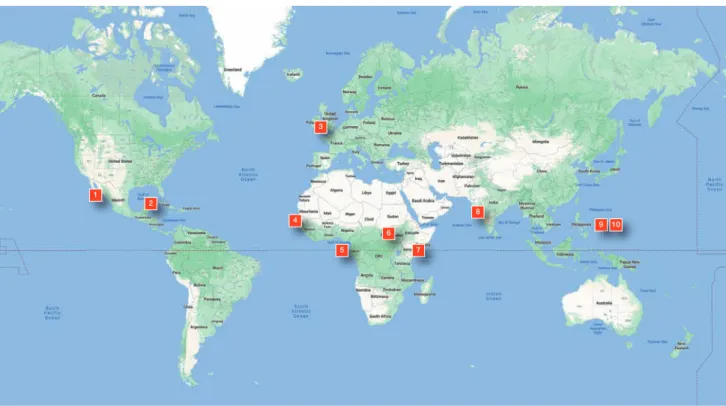
Figure 1. Number of solutions contributing to each of the SDGs IX Figure 2. The SDG “wedding cake” 5 Figure 3. Illustration of the PANORAMA approach and incentives for solution providers and seekers 11 Figure 4. SDGs identified to be most relevant 15 Figure 5. Geographic distribution of solutions in the SDG 1 (No Poverty) cluster 19 Figure 6. Word cloud of the stated impacts of solutions in the SDG 1 (No Poverty) cluster 20 Figure 7. Co-benefits for other SDGs (number of solutions in the SDG 1 – No Poverty – cluster that deliver benefits in relation to each of the other SDGs) 21 Figure 8. Geographic distribution of solutions in the SDG 2 (Zero Hunger) cluster 25 Figure 9. Co-benefits for other SDGs (number of solutions in the SDG 2 – Zero Hunger – cluster that deliver benefits in relation to each of the other SDGs) 26 Figure 10. Geographic distribution of solutions in the SDG 2 (Zero Hunger) cluster 31 Figure 11. Co-benefits for other SDGs (number of solutions in the SDG 3 – Good Health
and Well-Being – cluster that deliver benefits in relation to each of the other SDGs) 32 Figure 12. Geographic distribution of solutions in the SDG 5 (Gender Equality) cluster 39 Figure 13. Geographic distribution of solutions in the SDG 6 (Clean Water and Sanitation) cluster 49 Figure 14. Co-benefits for other SDGs (number of solutions in the SDG 6 – Clean Water and
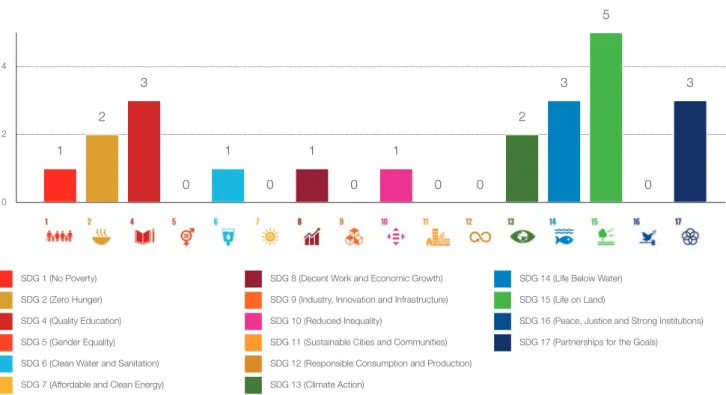
Sanitation – cluster that deliver benefits in relation to each of the other SDGs) 50 Figure 15. Geographic distribution of solutions in the SDG 8 (Decent Work
and Economic Growth) cluster 55 Figure 16. Word cloud of the stated impacts of solutions in the SDG 8
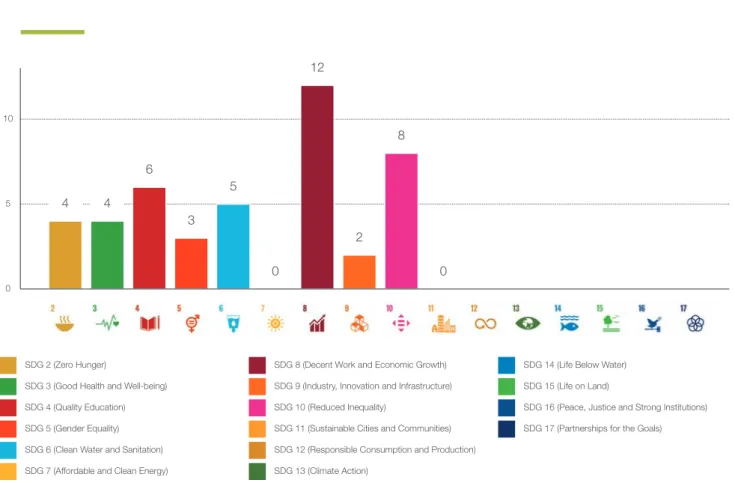
(Decent Work and Economic Growth) cluster 57 Figure 17. Co-benefits for other SDGs (number of solutions in the SDG 8 – Decent Work and Economic Growth – cluster that deliver benefits in relation to each of the other SDGs) 57 Figure 18. Geographic distribution of solutions in the SDG 13
(Decent Work and Economic Growth) cluster 64 Figure 19. Ecosystems covered by solutions in the SDG 13 (Climate Action) cluster 67 Figure 20. Climate-related challenges addressed by the solutions in the SDG 13
(Climate Action) cluster 67 Figure 21. Non-climate-related challenges addressed by the solutions in the SDG 13
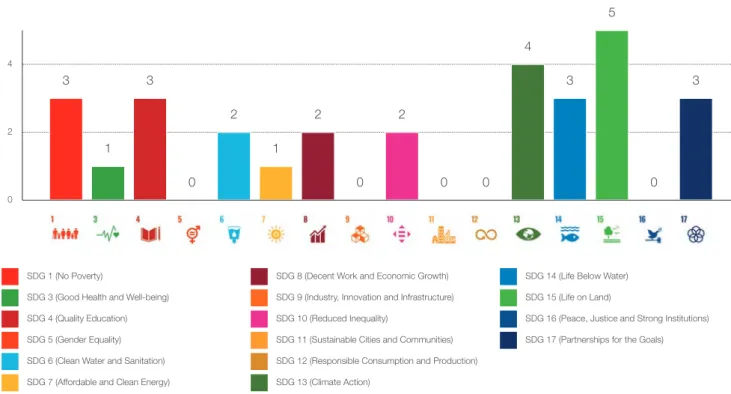
(Climate Action) cluster 68 Figure 22. Word cloud of the stated impacts of solutions in the SDG 13 (Climate Action) cluster 69 Figure 23. Co-benefits for other SDGs (number of solutions in the SDG 13 – Climate Action – cluster that deliver benefits in relation to each of the other SDGs) 70 Figure 24. Geographic distribution of solutions in the SDG 17 (Partnerships for the Goals) cluster 75 Figure 25. Occurrence of building block categories within solutions of the SDG 17
(Partnerships for the Goals) cluster 77
Figure 26. Word cloud of the stated impacts of solutions in the SDG 17
(Partnerships for the Goals) cluster 78
Figure 27. Co-benefits for other SDGs (number of solutions in the SDG 17 – Partnerships for the Goals – a cluster that deliver benefits in relation to each of the other SDGs) 78
Figure 28. Number of solutions per region 83
Figure 29. Number of solutions per region 83
Figure 30. Number of solutions relating to marine/coastal and/or terrestrial protected areas 83
Figure 31. Number of mentions across the solutions for each challenge category 84
Figure 32. Number of solutions per ecosystem category 85
Figure 33. Number of building blocks per building block category across all solutions 85
Figure 34. Number of solutions per ‘scale of implementation’ category 85
Figure 35. Word cloud of most frequently mentioned terms in the impacts descriptions for all solutions 86
Figure 36. Word cloud of most frequently mentioned terms in the beneficiaries descriptions for all solutions 86
Figure 37. Number of solutions contributing to each of the SDGs 87
Figure 38. Distribution of terrestrial solutions across regions 88
Figure 39. Distribution of terrestrial solutions across regions 88
Figure 40. Challenges addressed by the terrestrial solutions 89
Figure 41. Ecosystems covered by the terrestrial solutions 90
Figure 42. Building block categories within the terrestrial solutions 90
Figure 43. SDGs addressed by the terrestrial solutions 91
Figure 44. Regions covered by the marine and coastal solutions 92
Figure 45. Regions covered by the marine and coastal solutions 92
Figure 46. Building block categories within the marine and coastal solutions 92
Figure 47. Contributions of the marine and coastal solutions to the SDGs 93
BOXES Box 1. What is PANORAMA? 10
Box 2. Related initiatives 12
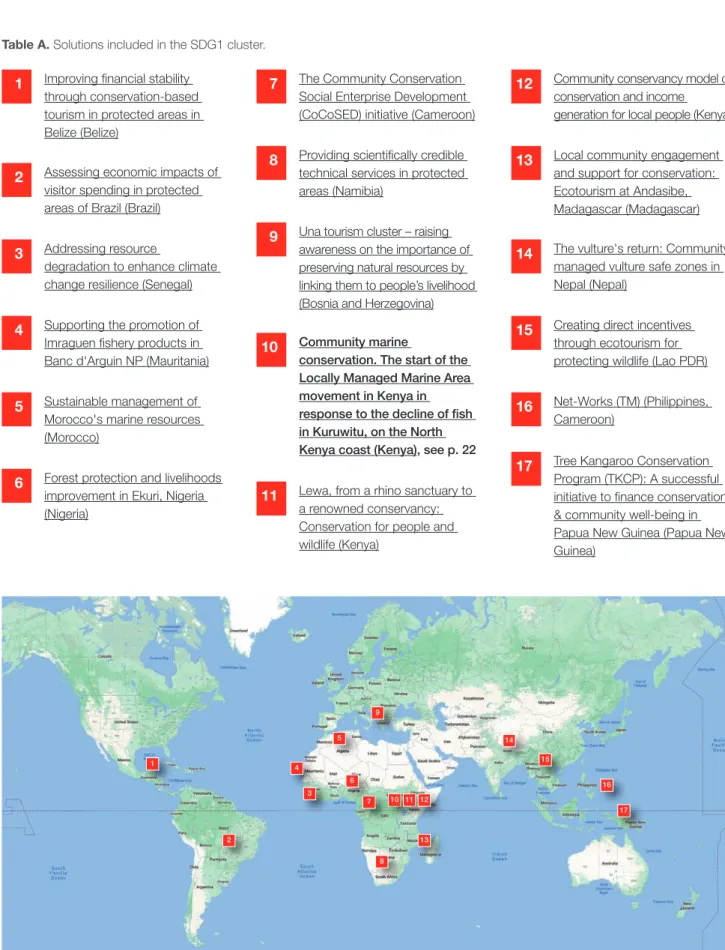
TABLES Table A. Solutions included in the SDG1 cluster 19
Table B. Solutions included in the SDG2 cluster 25
Table C. Solutions included in the SDG3 cluster 31
Table D. Solutions included in the SDG5 cluster 40
Table E. Solutions included in the SDG6 cluster 49
Table F. Solutions included in the SDG8 cluster 55 Table G. Solutions included in the SDG13 cluster 63/66 Table H. Solutions included in the SDG17 cluster 75/76
Preface
Protected and conserved areas are established, governed or managed to maintain their significant values for society. While always having outcomes that include the persistence of ecosystems, species and genes both locally and in the wider landscape and seascape, they also have a diversity of ecosystem functions that are valuable for human livelihoods, health and well-being. In many cases, the rationale for their existence is precisely because they are so valuable to people. The world faces many challenges, not the least of which is the ongoing catastrophic loss of biodiversity and its associated life-support systems. The destruction and degradation of nature also occasions the disruption of water supplies, food security, climate stability, security in the face of natural disasters, and undermines human health and well-being. Protected and conserved areas when effectively governed and managed can avert these negative consequences, and provide evidence and lessons for ecosystem management across the production landscape and seascape. Conservation managers and stewards of nature face direct threats and challenges to the integrity and persistence of the areas for which they are responsible. Among the arguments for addressing threats and investing in
conservation practice are the wider social and economic values of these areas.
Using the framework of the Sustainable Development Goals, the many direct and indirect contributions of protected and conserved areas can be assessed systematically. But it is also important to understand how effective governance and management of protected and conserved areas enable their intrinsic and productive value to be maintained. PANORAMA – Solutions for a Healthy Planet offers a rigorous means to deconstruct and summarize specific cases where conservation practice is patently successful, and to better understand what factors influence and are associated with success. In this volume, a suite of case studies has been examined to derive common principles for understanding the extent to which protected and conserved areas can contribute more broadly to sustainable development among a range of sectors, and how the specific nature of dedicated governance and management enables this. It is hoped that these insights will inspire the collation and examination of new examples of solutions, and a more strategic approach to investing in and enabling protected and conserved areas to fulfil their potential.
Marie Fischborn and Trevor Sandwith
Executive summary
Alongside their contribution to biodiversity conservation, protected and conserved areas (hereafter: protected areas) are increasingly
recognised as important sources of a wide range of benefits, or ecosystem services, that humans gain from intact, natural ecosystems. Well-governed and well-managed protected areas are among the most effective tools for maintaining ecosystems – such as forests, natural grasslands, coastal areas and freshwater wetlands – and their associated ecosystem services.
The Sustainable Development Goals (SDGs), adopted by the United Nations in 2015, will be the driving force behind global efforts for sustainable development and conservation over the next decade.
Analysis by the IUCN World Commission on Protected Areas found that 34 of the 169 targets of the seventeen SDGs link back to ecosystem services supplied at least in part by protected areas.
This report explores how protected areas contribute to achieving the SDGs. It does this by analysing case studies from PANORAMA –
Solutions for a Healthy Planet, an initiative of IUCN and several partners that aims to provide knowledge and facilitate exchange and learning on successful approaches in conservation and sustainable
development, and to support the broader application of proven solutions.
HOW THE STUDY WAS CARRIED OUT
PANORAMA includes what is currently the world’s most extensive case-study portfolio of successful approaches – solutions – that illustrate the role of protected areas in delivering both biodiversity conservation and human development outcomes.
Each solution is described in a standardised format,
including information about the context it arose from, the process of its operation, and its impacts.
In total, 106 protected areas solutions were reviewed for this report. They were clustered according to the SDG to which each contributed the most, aside from SDG 14 (Life Below Water) and SDG 15 (Life on Land), since all protected areas contribute to one or both of these SDGs, considering their primary objective of nature conservation.
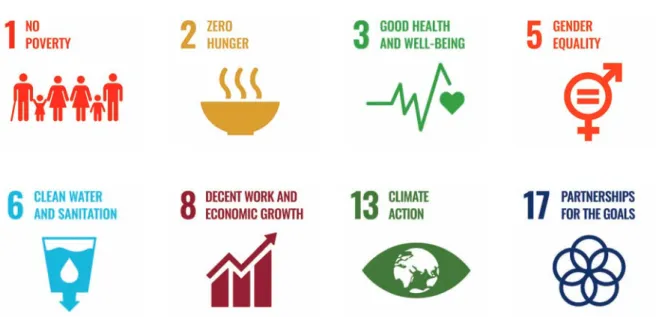
The solutions reviewed for this study were clustered under the following SDGs:
SDG 1 (No Poverty) SDG 2 (Zero Hunger)
SDG 3 (Good Health and Well-Being) SDG 5 (Gender Equality)
SDG 6 (Clean Water and Sanitation)
SDG 8 (Decent Work and Economic Growth) SDG 13 (Climate Action)
SDG 17 (Partnerships for the Goals)
KEY FINDINGS
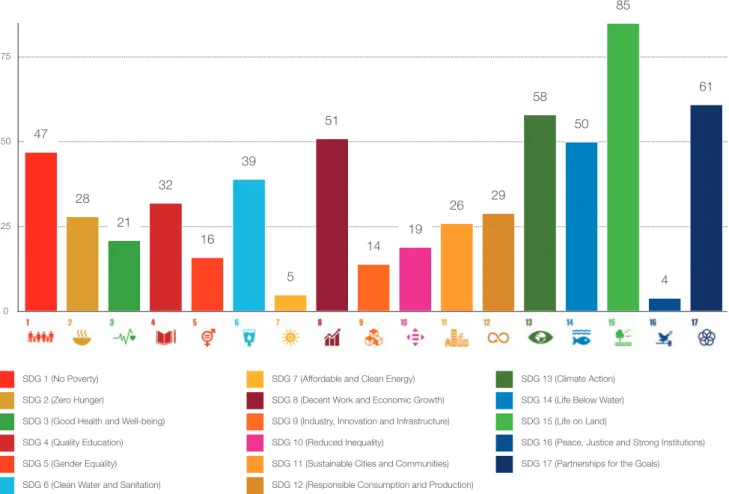
This study confirms that protected areas are already contributing to all of the SDGs (Figure 1).
Unsurprisingly, SDG 15 (Life on Land), SDG 14 (Life below Water) and SDG 13 (Climate Action) are among the goals to which the solutions reviewed contribute most frequently. Still, contributions to SDG 17 (Partnerships for the Goals), SDG 8 (Decent Work and Economic Growth) and SDG1 (Poverty
Alleviation) also feature prominently, underlining the fact that protected areas are important in social and economic dimensions.
The finding that protected areas contribute
positively to the achievement of all SDGs strengthens the relevance of protected areas and provides
governments with clear evidence to support their reporting on the SDGs. It also provides additional arguments for further expansion of protected areas in national and global conservation and development strategies.
Mangroves and wetlands, including swamps, marshes and peatland, are the ecosystems most frequently covered by the solutions. This is not surprising, as they are threatened in many parts of the world and also supply multiple ecosystem services. Nevertheless, the emphasis on relatively few ecosystem types is a concern, in that many critical conservation issues may not be receiving the
attention they deserve. A key focus of PANORAMA is identifying the ‘building blocks’, such as key success factors, of each solution. This study found that the most commonly described building blocks of
protected area solutions fell into three categories:
alliance and partnership development; closely followed by education, training and other capacity development activities; and, thirdly, communication, outreach and awareness building.
An overarching observation on the process is that many of the 106 solutions illustrate that success was achieved through careful engagement of a broad group of people over more extended periods, allowing for flexibility throughout all stages of implementation.
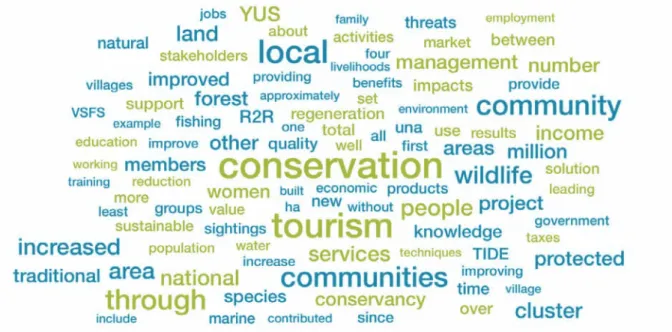
A theme that emerges throughout this summary of PANORAMA solutions is that getting conservation right means first getting the contextual governance, social and economic issues right. Textual review of the impact descriptions of the solutions found that community/communities is by far the most
Figure 1. Number of solutions contributing to each of the SDGs (NB: a solution generally contributes to multiple SDGs). Compiled by the report editors
47
28 21
32
16 39
5 51
14 19
26 29
58 50
85
4 61
SDG 1 (No Poverty) SDG 7 (Affordable and Clean Energy) SDG 13 (Climate Action)
SDG 2 (Zero Hunger) SDG 8 (Decent Work and Economic Growth) SDG 14 (Life Below Water)
SDG 3 (Good Health and Well-being) SDG 9 (Industry, Innovation and Infrastructure) SDG 15 (Life on Land)
SDG 4 (Quality Education) SDG 10 (Reduced Inequality) SDG 16 (Peace, Justice and Strong Institutions)
SDG 5 (Gender Equality) SDG 11 (Sustainable Cities and Communities) SDG 17 (Partnerships for the Goals) SDG 6 (Clean Water and Sanitation) SDG 12 (Responsible Consumption and Production)
0 25 50 75
Executive summary
commonly appearing term. This points to the importance of working closely with local
communities to find mutually satisfactory options for management of protected areas if there is a reasonable chance of success, such as a “solution”
outcome. The emphasis on local communities is not simply a way of addressing any concerns they have about a protected area – it is shifting to sharing responsibility with communities as actively engaged stakeholders in the process, as well as being beneficiaries of the outcomes of solutions. Future efforts could focus on closer examination of such inclusive cooperation models.
Arakwal elder and ranger at Tallow Creek – Arakwal National Park, Australia. © David Young.
Acknowledgements
We would like to thank everyone who contributed to this report, in particular all PANORAMA solution providers for sharing their experiences and knowledge, as well as the experts who acted as chapter co-authors. Thanks to the Graduate Institute of International and Development Studies and Kaleigh Carlson, Rhiana Fullan, Céline Kahn and Aditya Pant, for the excellent collaboration through the
“Capstone” project that laid the foundation for this publication. Many thanks also to Mirjam de Koning and Nick Salafsky for their thorough and extremely helpful peer review. We thank Eoghan O’Sullivan and Patricia Teixidor for their excellent work on editing the publication, as well as José Carlos Cámara for the graphic design. A special thanks to our colleague Cécile Fattebert for major support in managing the publication process.
Finally, we would like to acknowledge the generous support of IUCN’s framework donors, funders and partners who enable our programmatic work to continue, as well as the support of Germany through the Federal Ministries for Development Cooperation, and for Environment for their committed support to projects that have enabled the identification and compilation of case studies used for this report.
Main contributors
CHAPTER 1
Nigel Dudley 1, Sandeep Sengupta 2
CHAPTER 3
Section 3B: Dr. Jonathan Davies 3, James Hardcastle 4, Ludovic Larbodière 5
Section 3C: Jo Hopkins 6, Christopher Lemieux 7, Rob Wolters 8 Section 3D: A. Emmett Boyer 9
Section 3E: Ian Harrison and Harmony Patricio 10 Section 3F: Dr. Sue Snyman 11
Section 3G: Mathias Bertram, Leonard Lemke, Luise Richter 12, Sandeep Sengupta, Risa Smith 13
CHAPTER 4 Cécile Fattebert 14
CHAPTER 5 Nigel Dudley
OTHER CONTRIBUTORS
Collaboration on conceptualisation, literature review, data review Kaleigh Carlson, Rhiana Fullan, Céline Kahn, Aditya Pant 15
Peer review
Mirjam de Koning 16, Nick Salafsky 17
Data, graphs, references, proofreading Cécile Fattebert, Zhanna Levitina 18
Substantive editing Eoghan O’Sullivan 19
Copy editing and proofreading Patricia Teixidor 20
Graphic design and layout José Carlos Cámara 21
01Co-chair, IUCN WCPA Specialist Group on Natural Solutions
02Global Coordinator, IUCN Climate Change Portfolio
03Global Coordinator, Drylands, IUCN Global Ecosystem Management Programme
04Deputy Director, IUCN Global Protected and Conserved Areas Programme
05Senior Expert for Agriculture and Environment, IUCN Global Ecosystem Management Programme
06Manager National and International Engagement, Parks Victoria / Chair, IUCN WCPA Health and Well-being Specialist Group
07Associate Professor & John McMurry Research Chair in Environmental Geography / Director, Canadian Council on Ecological Areas, Wilfrid Laurier University
08Executive, Nature For Health Foundation
09Independent Consultant, for IUCN Global Programme on Governance and Rights
10Co-chairs, IUCN WCPA Freshwater Specialist Group
11Research Director, School of Wildlife Conservation, African Leadership University
12All: Advisors, Deutsche Gesellschaft für Internationale Zusammenarbeit GmbH (GIZ)
13Co-chair, IUCN WCPA Climate Change Specialist Group
14Programme Officer, Solutions, IUCN Global Protected and Conserved Areas Programme
15All: Students, Graduate Institute of International and Development Studies, Geneva
16Executive Director, Prespa Ohrid Nature Trust
17Director, Foundations of Success
18Student, University of Cambridge
19That Comms Guy
20Motuproprio Editions – motuproprioeditions.com
21infoycomunicación
1: Introduction
PROTECTED AND CONSERVED AREAS AS NATURAL SOLUTIONS
On an increasingly crowded, stressed planet, where the growing demand for resources by a burgeoning population outstrips the ability to provide them, there is a need to achieve efficiency and equity in the way they are allocated to deal with the many challenges facing humanity. The same need exists with regard to nature conservation and the governance and
management of protected and conserved areas.
Protected areas, such as national parks and nature reserves, as well as areas conserved by indigenous peoples and local communities, are usually
established to protect wild nature and associated cultural and spiritual values. However, the nature they safeguard also has other values and benefits, some of which are still scarcely recognised. A significant component of these is a range of ecosystem services.
Ecosystem services are the benefits that humans gain from the natural environment and properly- functioning ecosystems. They can be classified in different ways, with a common typology
distinguishing supporting, provisioning, regulating and cultural services (de Groot et al., 2002).
Supporting services include photosynthesis, primary production, nutrient recycling and habitat provision, and are the fundamental building blocks of a living planet. Provisioning services include services to people: food, water supplies, raw materials and medicines. Regulating services are those that ensure stability and help human communities resist sudden calamities. They include protection against climate- related disasters, regulation of the world’s climate and contributions to food and water security. Cultural services relate to a complex array of cultural, spiritual
and aesthetic benefits, both tangible and intangible that humans derive from nature (MEA, 2005).
Protected and conserved areas (hereafter called protected areas unless the context demands more specificity) are increasingly recognised as important sources of a wide range of ecosystem services, together with their contribution to biodiversity conservation, with biodiversity itself being a critically important ecosystem service (Stolton & Dudley, 2010). Known about by protected area managers and researchers for years, these ecosystem service values are attracting increasing levels of interest.
Among the first landmark publications to make a case for solutions derived from protected areas and nature more generally were the World Bank’s book Convenient solutions to an inconvenient truth:
ecosystem-based approaches to climate change (2009) and Natural Solutions: Protected areas helping people cope with climate change, published by IUCN’s World Commission on Protected Areas (IUCN-WCPA), The Nature Conservancy (TNC), United Nations Development Programme (UNDP), Wildlife Conservation Society (WCS), World Bank and WWF in 2010.
An outcome of the IUCN World Parks Congress 2014, The Promise of Sydney – presented under the theme “Parks, people, planet: inspiring solutions”
– emphasised the role of protected and conserved areas in supporting human life and fighting climate change, among other services. Since then, the PANORAMA initiative has promoted a solutions- orientated message, achieving increasing resonance in several sectors. In 2015, the 18 countries of Latin America and the Caribbean issued a declaration at the UN Climate Change Conference in Paris, noting that “Protected areas are a powerful strategy for
1: Introduction
be damaged or degraded in the absence of properly funded management.
Some protected areas also provide important sources of food. Marine protected areas (MPAs) have a critical role in supporting local fisheries. Without safe places for fish to spawn and for young fish to develop, fish stocks can quickly be depleted. Fish in MPAs tend to be both healthier and larger, which means they are more productive. Furthermore, research indicates a spillover effect beyond the borders of an MPA, so that setting aside one area of the ocean can result in a greater supply of fish overall (Roberts & Hawkins, 2000). Many terrestrial
protected areas provide managed supplies of minor but important food sources for local people, including honey, mushrooms and herbs. Protected landscapes that incorporate traditional farming or grazing areas can be critical for local food security and the survival of culture. Protected areas also support species critical for pollination. They often maintain important stocks of crop wild relatives, sources of genetic material for crop breeding that are becoming particularly important in the face of rapid environmental change (Maxted & Kell, 2009).
A third group of ecosystem services relate to human health and well-being. Most of the world’s people still rely primarily on medicines collected from the wild. As natural ecosystems retreat or become degraded, herbal medicines are increasingly sourced under management agreements with protected areas.
Pharmaceutical companies also depend heavily on genetic material collected from the wild. A few have paid substantial sums to protected areas for
exploration rights through access and benefit-sharing arrangements of genetic resources. More generally, the Healthy Parks Healthy People movement is encouraging the use of nature reserves and national parks for physical exercise and mental relaxation.
This helps to combat global crises in non-
communicable diseases, including diabetes, cancers, pulmonary and cardiac disorders, as well as obesity and mental health problems (Parks Victoria, 2015).
Evidence shows that the likelihood of people reporting good health or enhanced well-being is significantly greater if they spend at least two hours climate change adaptation and mitigation and a great
opportunity for a climate-resilient and sustainable development.” In 2016, the Convention on Biological Diversity (CBD) supported the publication of
“Mainstreaming of protected areas and other effective area-based conservation measures across sectors to contribute, inter alia, to the Sustainable Development Goals and as natural solutions to combat climate change.” (CBD, 2016) Ecosystem services are moving into the mainstream and protected areas are being recognised as critical tools for their delivery, as part of a wider narrative on nature-based solutions to address societal challenges (Cohen-Shacham et al., 2016).
Many ecosystem services provide direct benefits to society and individual well-being. For example, many forest and freshwater protected areas are sources of pure drinking water for downstream communities. A smaller number, including tropical mountain
rainforests, Andean paramos and other specialised vegetation types, also increase net water flow. A third of the world’s hundred largest cities draw a
substantial proportion of their drinking water from protected areas (Dudley & Stolton, 2003), and nearly two thirds of the global population live downstream of protected areas as potential users of freshwater supplied by these areas (Harrison et al., 2016). Some municipal water suppliers recognise these benefits and work closely with protected areas agencies, for example in Bogotá, Melbourne and New York.
However, many others remain largely unaware of their reliance on protected areas, which may consequently
Protected and conserved areas (hereafter called protected areas unless the context demands more specificity) are increasingly
recognised as important sources of a wide range of ecosystem
services, together with their
contribution to biodiversity
conservation.
measures (OECMs) defined by the Convention on Biological Diversity (CDB, 2018), complement protected areas in that they result in outcomes for biodiversity, notwithstanding their establishment for other reasons. They represent a very specific form of
“conserved area” given this recognition by the CBD.
Both protected and conserved areas (including OECMs) depend on effective and equitable governance and management 1, themselves contributing to a just society and accountable institutions, to maintain the flows and equitable sharing of benefits. While there can be tension between the objectives of nature conservation and the supply of ecosystem services, such as fuelwood gathering and collection of non-timber forest products, the ecosystem services that are most significant on a global scale – including carbon, water and disaster risk reduction – are generally compatible with protected area objectives and can be an integral function of OECMs. At a local level, provided they are sustainable within the production capacity of the ecosystem, traditional uses can enhance community support for protected areas and contribute to livelihoods (Stolton & Dudley, 2010). The solution case studies considered for this publication include examples that have been developed both in
protected areas, as well as on sites that might qualify as OECMs.
Many research findings demonstrate that well- managed protected areas offer some of the most effective tools for maintaining ecosystems, such as forests, natural grasslands, coastal areas and freshwater wetlands, which are among the richest sources of ecosystem services. Indeed, in areas of substantial land-use change, or where there has per week in nature, as compared to having no
contact with nature (White et al., 2019), while nature reserves are also safe places to exercise.
As the world’s climate becomes more unstable, the number and intensity of some extreme climate and weather events continues to increase (IPCC, 2018), leading to a corresponding increase of what we still often inaccurately refer to as “natural disasters”, such as flooding, tidal surge, fires and landslides. Healthy natural ecosystems often provide effective disaster- risk reduction: forests and floodplains slow floodwaters and allow space for them to spill over without damaging lives or property; trees on steep slopes buffer against avalanches and landslides;
coastal reefs and mangroves reduce the impact of typhoons, storm surges and sea-level rise; and dryland vegetation slows desertification and controls dust storms (Murti & Buyck, 2014).
Finally, but perhaps most importantly, most natural ecosystems are effective at sequestering and storing carbon. Conversely, ecosystem loss or degradation can release much of this carbon into the atmosphere, thus increasing the rate and severity of climate change. Peatlands, forests, grasslands, seagrass beds, kelp and marine plankton are all vitally important for carbon capture, and protected areas are among the most effective ways of keeping carbon locked up in vegetation and soils (Dinerstein et al., 2019). The belated recognition that protected areas should be eligible for REDD+ funding and other voluntary carbon markets is evidence that these values are increasingly recognised (Dudley et al., 2010b).
Why protected areas?
Any healthy natural or semi-natural ecosystem offers these benefits, but protected areas come with particular advantages. Although the definition of a protected area stresses the primacy of nature conservation, they also have an acknowledged role in supplying ecosystem services as long as this does not directly undermine conservation; the IUCN definition of a protected area recognises “associated ecosystem services and cultural values.” (Dudley, 2008). Other effective area-based conservation
01Protected area management is about what is done in pursuit of given objectives, i.e. the means and actions to achieve such objectives. Governance is about who decides what the objectives are, what to do to pursue them, and with what means (how those decisions are taken; who holds power, authority and responsibility; who is – or should be – held accountable) (Borrini-Feyerabend et al., 2013).
1: Introduction
been serious degradation of terrestrial and aquatic ecosystems, these areas may now represent some of the only remaining examples of natural ecosystems (Stolton et al., 2015). Their role is, therefore, irreplaceable.
Nearly all countries in the world have established protected area policies and a protected area network, managed in a diversity of ways and with varying degrees of effectiveness (UNEP-WCMC et al., 2018). Most protected areas also have trained managers and staff, working to implement
management plans as required by national legislation and international agreements, along with other forms of capacity, such as infrastructure, vehicles and boats, and other technology. Field rangers ensure that rules are enforced, including to address threats and other serious problems such as the poaching of high-value species. Even well-established and otherwise effective national parks, such as Kruger National Park in South Africa, are losing significant numbers of animals to poaching (Ferreira et al., 2015). While critically serious from a conservation perspective, paradoxically this often has relatively little direct impact on many of the most important ecosystem services, such as carbon storage, water security and disaster-risk reduction, which rely predominantly on retention of healthy vegetation.
These are, however, threatened by other factors such as invasive alien species, fire risk and erosion, caused ultimately by human use of the environment.
Techniques for assessing the effectiveness of protected area management are well advanced and, even though they are not yet widely applied (UNEP-
WCMC et al., 2020), can provide a framework for determining whether ecosystem services are being exploited sustainably. Some modifications to existing protected area management effectiveness systems may be needed to achieve this, but the basic structures are in place.
Protected areas are also important because they have agreed systems for establishing and codifying land tenure agreements, including delineated boundaries, thus creating clear and permanent areas for management of ecosystem services (Stolton et al., 2015). Flexible management systems allow for a variety of management approaches that are appropriate for different conditions, ranging from strict protection of virtually intact ecosystems to much more flexible arrangements suitable for long- settled cultural landscapes. They embrace a variety of tenure systems and governance models, with an increasing number under the control of indigenous peoples, other local communities, or private entities, or with governance shared among different
authorities. Involving people who produce or benefit from ecosystem services directly in decision-making for management is an important way to ensure that these services are properly reflected in management plans (Borrini-Feyerabend et al., 2013). This includes not only local communities, but those responsible for the broader governance of natural resource sectors.
The last few decades have seen increasing
cooperation between protected area managers and municipal water and hydro energy companies, and there has been an upsurge of REDD+ and other schemes for carbon retention and restoration within national protected area systems (Dudley & Stolton, 2003; Brandon & Wells, 2009).
Social costs and benefits
Protected areas do not come without costs. They are a societal choice to use land and other natural resources, which could be used for other things, for conservation, sometimes with direct impact on the human populations that have traditionally lived in the area. In the past, there were many instances of people being denied access to natural resources that they had traditionally relied upon and in extreme
Well-managed protected areas offer some of the most effective tools for maintaining ecosystems, such as forests, natural grasslands, coastal areas and freshwater
wetlands, which are among the
richest sources of ecosystem
services.
cases also being forcibly relocated, often with little by way of compensation. Although there are policies in place to prevent such things happening today, abuses still occasionally surface. Ensuring that protected areas are established and managed in ways that do not disadvantage local communities is a priority, and this includes how ecosystem services from protected areas are utilised (Dudley et al., 2016). Putting emphasis on the management of ecosystem services that benefit people can help to secure public support, particularly local support, for protected area management. Furthermore, this offers a mechanism whereby indigenous peoples and local communities applying traditional
knowledge and self-governance can be engaged in the wider objectives of ensuring conservation of biodiversity and benefit flows.
NATURE AND THE SUSTAINABLE DEVELOPMENT GOALS
Nature and natural ecosystems are now a critical part of the development debate, coming in from the
margins over the last couple of years, spurred on by high-profile reports detailing the dire state of the planet’s ecosystems. Nature featured heavily for the first time at the 2019 World Economic Forum, and the biodiversity crisis was highlighted by a major report from the Intergovernmental Science-Policy Platform on Biodiversity and Ecosystem Services (IPBES, 2019), which had unprecedented coverage around the world. Mounting scientific evidence and growing social movements seem to be shifting the debate on climate change and its impacts on nature.
The 2030 Agenda for Sustainable Development and its associated Sustainable Development Goals (SDGs), agreed in 2015, will be the driving force behind global work on sustainable development and conservation over the next decade (United Nations, 2015). The hierarchy of the SDGs, illustrated by the “wedding cake” model first developed by the Stockholm Resilience Centre (Figure 2), acknowledges the biosphere as the foundation of societal and economic welfare, with
Figure 2. The SDG “wedding cake”. (Illustration: Azote for Stockholm Resilience Centre, Stockholm University).
1: Introduction
SDGs 14 (Life Below Water), 15 (Life on Land), 6 (Clean Water and Sanitation) and 13 (Climate Action) providing the basis for the achievement of all other SDGs.
Protected areas are both part of the SDGs and the means to achieve them. While SDGs 14 and 15, relating to terrestrial and marine conservation, are closely supported by the development, governance and management protected area systems, analysis by the IUCN World Commission on Protected Areas found that 34 of the sub-targets of the various SDGs link back to ecosystem services supplied at least in part by protected areas (Dudley et al., 2017). The SDGs are important, aspirational goals, but the consensus is that current progress towards their achievement is still far too slow. The 2019 Sustainable Development Report from the United Nations (Sachs et al., 2019) concluded that while some countries are moving forward slowly with SDG-focused policies, they are not implementing the major changes necessary to achieve the goals by 2030.
While the SDGs are the umbrella, many other bodies, including the United Nations agencies and international conventions, have targets closely linked to or embedded within them. SDGs 14 and 15 are based on the corresponding Aichi Biodiversity Targets of the Convention on Biological Diversity, set from 2011-2020, with the understanding that these SDGs will need to take into account the revised targets of the CBD for the subsequent period. The CBD has also long recognised the wider values of protected areas, outlined in decisions of the
Conference of the Parties. A reference to ecosystem services appears in Aichi Biodiversity Target 14,
which states: “By 2020, ecosystems that provide essential services, including services related to water, and contribute to health, livelihoods and well-being, are restored and safeguarded, taking into account the needs of women, indigenous and local communities, and the poor and vulnerable.” The target, however, is very general, hard to measure, and has received comparatively little attention. As debates about the post-2020 targets intensify, agreeing an ambitious, measurable and achievable target related to the delivery of ecosystem services is seen as a priority, with protected areas as an
important vehicle for success. Such a target needs to be rooted in existing local solutions. If approached in the correct way, ecosystem services can be an ideal vehicle for building accord between protected areas and local communities, but good, inclusive
governance is essential. If managed in a top-down fashion, with local people seeing few of the benefits, ecosystem services can simply be a cause of discontent.
In relation to climate change, SDG 13 calls for taking urgent action to combat climate change and its impacts, while also recognising that the United Nations Framework Convention on Climate Change (UNFCCC) is the primary intergovernmental forum for negotiating the global response to climate change. The Paris Agreement that was adopted under the UNFCCC in 2015 explicitly notes the importance of ensuring the integrity of all
ecosystems and the protection of biodiversity, when taking action to address climate change. It also calls on countries to appropriately conserve and enhance all sinks and reservoirs of greenhouse gases, including ecosystems, recognising their valuable role, both in limiting global warming to below two degrees Celsius and in building socio-economic resilience (UNFCCC, 2015).
Similarly, the UN Convention to Combat
Desertification (UNCCD) supports SDG 15 (Life on Land). In 2017, the UNCCD published its first Global Land Outlook – a study of the state of land
throughout the world – which identified alarming rates of degradation (UNCCD, 2017). Its associated Land Degradation Neutrality (LDN) target – for all
Analysis by the IUCN World
Commission on Protected Areas
found that 34 of the sub-targets of
the various SDGs link back to
ecosystem services supplied at
least in part by protected areas.
countries to reduce net land degradation to zero by 2030 – is directly reflected in the SDGs.
All three of the Rio Conventions – signed in Brazil in 1992 – are deliberately and directly supportive of the SDGs. The UN has adopted the SDG framework as applicable to all multilateral environmental
agreements – e.g. the Convention on Wetlands of International Importance (Ramsar) – the Convention on Migratory Species, and many more. The world’s nations have already agreed on much of what they need to do to achieve sustainability. Debates in the CBD towards the formulation of the post-2020 Global Biodiversity Framework will set a new ambition that comprehensively supports the attainment of the SDGs. The real challenge is in implementation. So far, the optimism shown in global debates and agreements has been woefully
mismatched with achievements on the ground; the CBD concluded in 2020 that not a single Aichi target had been achieved (CBD, 2020).
While governments clearly need to take a positive lead and noting that some are currently leading in the wrong direction, success must also be built from the ground up, the result of hundreds of thousands of individual projects, actions and commitments around the world. One positive development in the
implementation of the many conventions and programmes of work is a constant reference to practice: to the scientific and technical capacity to achieve successful implementation and impacts, and to document and share these. In this publication, we present case studies of how protected and
conserved areas are contributing positively towards achievement of the SDGs.
WHY FOCUS ON SUCCESS IN NATURE CONSERVATION?
There are good reasons for ringing alarm bells about the state of the natural world. The situation is indeed of great concern.
The first IPBES Global Assessment Report on Biodiversity and Ecosystem Services highlighted a number of worrying global trends, including the fact that multiple human drivers have significantly altered 75% of the land surface of the globe, with the great
majority of ecosystem and biodiversity indicators showing rapid decline. These declines mean that most international societal and environmental goals, such as those embodied in the Aichi Biodiversity Targets and the 2030 Agenda for Sustainable Development, will not be achieved based on current trajectories (IPBES, 2019). Indeed, the latest Global Biodiversity Outlook report from the UN (Secretariat of the Convention on Biological Diversity, 2020) shows that none of the twenty Aichi targets agreed in 2010 have been achieved, and only six have been partially achieved. Scientists have announced that the sixth mass extinction event in Earth’s history is underway – the first one caused by human beings (Carrington, 2017).
As a logical consequence, conservation
organisations – IUCN included – have long pointed out the gravity of the situation, using mostly alarmist, negative messaging to highlight the urgency of addressing it. Coupled with this, many commentators have pointed out that current conservation practices, including the establishment and management of protected areas, are not proving effective in
stemming biodiversity loss, and even suggesting that protected area systems are outdated and redundant (Norton-Griffiths, 1995). Measuring global
conservation impact is not simple, since biodiversity is not easily quantified, resources for measuring it are scarce, and conservation activities are so diverse that their cumulative impact cannot be summed up easily (Rodrigues, 2006). At the same time, there is
extensive evidence that conservation works, and that protected areas can contribute towards halting the decline of threatened species and habitat loss (e.g.
Geldmann et al., 2013; Andam et al., 2008; Gaston
Many funding investments in
nature conservation and protected
areas have emphasised the need to
learn lessons from practice and to
share these more broadly as a
means to scale up impact.
1: Introduction
et al., 2008). Charismatic species that have bounced back from the brink of extinction include the snow leopard, the Arabian oryx, the giant panda and the Steller sea lion. The “alarm bells” are now typically balanced with “success story” messaging in press releases on new updates to the IUCN Red List of Threatened Species. New initiatives, such as the IUCN Green List of Protected and Conserved Areas, take a solution-oriented approach by recognising and encouraging best practices, relying on a set of quality criteria and indicators that address the complexity of successful approaches by reflecting a number of “key ingredients” for achieving success.
There is also a clear rationale for optimism, without downplaying the challenges or diluting the message around the urgency to act. Some problems facing the natural world, such as climate change, are extremely complex and will require time and potentially wide-ranging societal shifts to be addressed. There are, however, many successes at smaller scales – sharing these will inspire replication and upscaling, leading to tangible impact while buying time for tackling the most complex problems (Balmford & Knowlton, 2017). Many funding investments in nature conservation and protected areas have emphasised the need to learn lessons from practice and to share these more broadly as a means to scale up impact. It has become
increasingly clear that knowledge transfer and adoption are not automatic processes, and that there is a need to better understand how lessons are learned, understood, communicated and adopted if the value of such investments is to be fully realised.
One area of great opportunity involves applying
some of the latest thinking in behavioural science to the conservation sector. Traditional conservation approaches rely heavily on rules and regulation, information sharing or awareness-raising and material incentives, such as financial awards and penalties, as ways of driving change. Yet emerging research in the fields of evolutionary biology, social psychology, behavioural economics, cultural anthropology, neuroscience and more have indicated that decision- making is far more complex and often actually relies on less conscious influences when driving action.
Emotions can be more powerful than reason. The need to be accepted by a peer group and achieving affirmation of one’s social identity matter. Moreover, the context in which people make a decision can have a profound impact on outcomes.
The academic literature supports these new insights and their application to the conservation sector.
For example, studies have found that positive messaging on environmental issues is more effective in stimulating behaviour change (Van de Velde et al., 2010), whereas messages that harness negative emotions like guilt and fear can backfire, leading to disengagement and “eco-anxiety.” Positive emotions such as pride, curiosity, compassion, and a sense of agency encourage change without inviting
defensiveness (Rare and The Behavioural Insights Team, 2019).
Hope, in particular, is a key ingredient of change.
Martin Luther King famously said, “I have a dream”, rather than “I have a nightmare”. An increasing number of environmental initiatives and movements recognise this. One initiative being developed by IUCN and many partners is PANORAMA – Solutions for a Healthy Planet, that aims to harness a better understanding of learning, behaviour change and action that will help to leverage greater impact. The main purpose of the present publication is to demonstrate this. While the development of PANORAMA is a work in progress, this is one of the first attempts to capture lessons derived so far on the methods and results and better understand how to develop the methodology further. A description of the current form of PANORAMA is a necessary
foundation for this purpose.
While the development of
PANORAMA is a work in progress,
this is one of the first attempts to
capture lessons derived so far on
the methods and results and better
understand how to develop the
methodology further.
PANORAMA – Solutions for a Healthy Planet promotes solutions that demonstrate how well- protected biodiversity and well-managed ecosystems help address societal challenges, thereby achieving development benefits. It is a global multi-actor partnership initiative, which identifies and promotes applied, replicable ‘solutions’ and enables their wider application by offering peer-to-peer exchange opportunities across topics, geographies and sectors.
PANORAMA serves a range of audiences, including:
ñ Conservation practitioners, planners and managers, who learn from peers facing similar challenges to inform their day-to-day work.
ñ Policy makers, donors and programme
developers, who can understand current trends and good practice, inform the design of new initiatives and achieve visibility and validation for their investments.
ñ Advocates, who use solutions to provide real- life, positive alternatives to support their positions.
ñ Businesses and investors, who use
PANORAMA to inform responsible investment and CSR strategies.
ñ Academic researchers, for whom PANORAMA offers a database of curated and peer-reviewed case studies, with field-tested insights into determinants of success in conservation and development.
ñ Journalists and communicators, who use PANORAMA as a source of inspiring success stories.
The PANORAMA approach and format For PANORAMA, a solution is a tool, method, process or approach that works and can inspire action. It can be a project, certain aspects of a project, or a longer-term initiative. Solutions have yielded positive impacts on nature conservation and sustainable human development in an integrated manner, and elements of the solution have the potential for being applied in other geographic or sectoral contexts, and/or at a larger scale.
PANORAMA uses a standardised modular case study format that identifies replicable key success factors when documenting solution case studies.
Apart from this ‘full solution’ format, users also have the option to contribute a ‘snapshot solution’ using an abbreviated version of the template, which does not contain a description of the building blocks, nor some of the other sections that the full template contains.
Each full solution description includes information about the context in which the solution was developed, its environmental and socio-economic impacts, and between two and six ‘building blocks’
that describe the elements of the solutions, what has been learned and what were the enabling factors. All PANORAMA solutions adhere to defined quality standards and are peer-reviewed by subject matter experts before publication (see Chapter 2 for further details).
PANORAMA uniquely combines online and offline learning and sharing through exchange events, training, webinars, publications, contests, communication products, and its state-of-the-art online platform. Practitioners from a wide range of national and international NGOs, technical and
About PANORAMA
1: Introduction
PANORAMA:
ñ Contributes to global policy goals by channelling support into locally led solutions, thus facilitating their replication, but also by providing summaries of key insights from solutions, including through this publication.
ñ Enables learning from successful practice, leading to long-term improvement in conservation and sustainable development. This results in better decision-making about planning and implementation of project interventions and policies.
ñ Creates impact at the practical and at the political level by disseminating ideas across sectors and disciplines, so that more people may adopt better practices.
ñ Includes one of the world’s leading online platforms dedicated to curating and showcasing proven solutions that work for nature and people across different sectors. Visits to the web platform doubled in 2019 and the number of returning visitors increased by 50% from 2018 to 2019.
ñ Takes a partnership-driven approach, bringing together leading development and environmental organisations – currently including IUCN, GIZ, GRID-Arendal, UN Environment Programme, Rare, World Bank Group, UNDP, ICCROM, IFOAM-Organics International and ICOMOS, with substantial investments mainly from the German Ministry for the Environment, Nature Conservation and Nuclear Safety – in a powerful alliance.
Box 1 What is PANORAMA?
Exploring solutions in PANORAMA. © Marie Fischborn.
multilateral agencies, government institutions and academia are involved in PANORAMA and are invited to contribute solutions at any time. The PANORAMA partners aim to provide an inclusive platform for knowledge provision, exchange and networking that will serve a real need and amplify the opportunities for knowledge transfer and uptake.
Solution providers gain visibility and recognition for their work and their institutions while being guided through a process of structured self-reflection, unpacking what made their work successful in a relatively light format. They become part of a
community of PANORAMA users and contributors, including workshop, training and webinar
participants, web platform visitors and case study reviewers, giving others access to their innovative work, and promoting exchange and review among a wider community of practice (Figure 3).
To help users find the most relevant solutions for their situation, PANORAMA groups its solutions by key topics relevant to improving conservation in today’s world, tagged by thematic, geographic and technical identifiers. Each thematic community is coordinated by one or multiple PANORAMA partners, Figure 3. Illustration of the PANORAMA approach and incentives for solution providers and seekers. (© Unit Graphics, 2018).
1: Introduction
who identify, curate and promote solutions relating to that topic. Its technical architecture, based on a relational database, allows not only a search facility but also a means to associate and understand the relationships between solutions, their different building blocks and implementation contexts.
PANORAMA grows continuously and increases its relevance as new organisations join and set up new
thematic communities, increasing the opportunity for cross-sectoral and intersectoral learning and engagement.
PANORAMA is one of several like-minded initiatives, platforms and organisations that aim to identify and promote good practice in conservation and sustainable development, spreading a sense of hope, shining a light on existing successes and inspiring their replication in the design of new initiatives. These like-minded efforts include:
ñ The Equator Initiative brings together the United Nations, governments, civil society, businesses and grassroots organisations to recognise and advance local, sustainable development solutions for people, nature and resilient communities.
ñ Solution Search, an innovative contest created by Rare, that is designed to surface, spotlight and disseminate what is already working, such that practitioners around the world can expand their impact as they replicate proven success. The contest recently refined its focus to identifying proven solutions that leverage behavioural science to target conservation and development challenges.
ñ The Conservation Measures Partnership (CMP) unites conservation organisations seeking better ways to design, manage, and measure the impacts of their conservation actions. CMP members work together on impact assessment and accountability issues, such as its ‘Threats and Actions Classification’ and the ‘Conservation Actions & Measures Library’. CMP strives to promote innovation in monitoring and evaluation, serving as a catalyst within the conservation community.
ñ Conservation Evidence is a free, authoritative information resource designed to support decisions about how to maintain and restore global biodiversity. It summarises evidence from the scientific literature about the effects of conservation interventions, such as methods of habitat or species management.
ñ The IUCN Green List of Protected and Conserved Areas is the first global standard of best practice for area-based conservation. It is a programme of certification for protected and
conserved areas – national parks, natural World Heritage sites, community conserved areas, nature reserves and so on – that are effectively managed, fairly governed and achieve biodiversity and social outcomes.
ñ The Earth Optimism movement that celebrates a change in focus from problem to solution, from a sense of loss to one of hope, in the dialogue about conservation and sustainability. It provides a space for sharing stories of conservation success, particularly on social media and through events during Earth Day.
Box 2 Related initiatives
ABOUT THIS PUBLICATION
At the time of the systematic review that underlies this publication, PANORAMA’s Protected Areas thematic community contained 309 solution case studies from at least 80 countries and a great diversity of “solution provider” individuals and institutions. These case studies had been solicited and curated over the previous five years, adding up to a large portfolio of documented, structured success stories on how nature, if well protected, can provide a range of societal benefits. At the date of publication, 423 solutions are relevant to protected areas.
Studying these solutions can provide valuable insights on common success factors and lessons learned, that is the processes leading to successful outcomes. It can show trends, in terms of the context in which a solution plays out, and the socio- economic impact it creates, in addition to its ecological impact. The PANORAMA solutions database is thus an ideal resource for understanding the broader societal benefits that protected areas can have. For this publication, PANORAMA solutions were synthesised according to these three groups of parameters: processes, context and impact.
The intended audience for this effort is the wider development community, including international organisations and non-governmental organisations (NGOs) advocating for nature conservation as an essential part of the development imperative, as well as governments, site managers and custodians in charge of, or supporting, protected and conserved area management.
In Chapter 3, the publication will consider the most important SDGs to which nature contributes. Each section is dedicated to presenting and discussing the results of the synthesis of PANORAMA solutions relating to one SDG. The insights derived from summary of the solutions will be placed into the context of the current state of knowledge on protected areas and how they address the respective development issue.
The primary management objective of protected areas is always the long-term conservation of nature (Dudley et al., 2013). Likewise, conserved areas, including other effective area-based conservation measures (OECMs), will achieve long-term
conservation of biodiversity (CBD, 2018). SDGs 14 (Life Below Water) and 15 (Life on Land) are concerned with the protection, restoration and sustainable use of marine and terrestrial ecosystems.
Consequently, all of the protected areas solution case studies included in this publication contribute to either, or both, of these SDGs. Our focus has, therefore, not been on SDGs 14 and 15, although there are many solutions in PANORAMA that address the factors of success for achieving biodiversity conservation. The main purpose of this publication is to address the human development benefits of protected areas, beyond, and supported by, their biodiversity conservation outcomes. The focus is hence on those SDGs where protected areas are playing a significant role, and where lessons for scaling up and expanding evidence for enhanced implementation is most needed.
Fisherman in Nusa Penida MPA, Bali, Indonesia.
© Marie Fischborn
2: Methodology
This publication is based on the synthesis of solution case studies published on the PANORAMA web platform under the Protected Areas thematic community.
DEFINING THE RELEVANT SOCIETAL BENEFIT CLUSTERS
The first step was to understand and define which societal benefits, and in consequence which SDGs, are of particular interest in the context of this publication, based on insights from the literature.
The SDGs identified to be most relevant were: SDG 1 (No Poverty), SDG 2 (Zero Hunger), SDG 3 (Good Health and Well-Being), SDG 5 (Gender Equality), SDG 6 (Clean Water and Sanitation), SDG 8 (Decent Work and Economic Growth), SDG 11 (Sustainable Cities and Communities), SDG 13 (Climate Action), and SDG 17 (Partnerships for the Goals). It is important to note that this work is not a comprehensive overview of all of the linkages between protected areas and the SDGs; rather it is a detailed description of specific societal benefit clusters of particular relevance to protected areas.
CREATING A SHORTLIST OF SOLUTIONS In a second step, the solutions most relevant to the topic of this publication were identified. Several of the PANORAMA protected area solutions focus primarily, or even solely, on activities and outcomes for biodiversity conservation – such as protection of endangered species – without strong consideration of the impacts on, and benefits for, humans. Such cases were excluded from the shortlist.
To come up with an initial longlist of solutions most relevant to the chosen SDGs, and thus potentially for inclusion in that particular cluster, either one of the
existing thematic filters on the PANORAMA web platform and/or a free text search was used. The decision on whether to select a filter or a free-text search was based on the nature of the benefit for a given cluster and the suitability of the existing filters on the platform.
The solutions on this longlist were then examined in more detail to decide on their suitability for inclusion in one or several of the SDG clusters. Each solution was given a priority rating on a scale of 1–3, with 1 being the highest priority. To avoid bias, each solution was reviewed by a minimum of two reviewers. In cases where the first and second reviewers disagreed, a third, and potentially fourth reviewer added their judgment.
From the ratings and reviews, a tentative shortlist was defined. For solutions that appeared in more than one SDG cluster, a decision was taken on the most relevant SDG for that particular solution, such as the cluster in which it should be included. The decision to include each solution in only one cluster was taken considering that all solutions contribute more or less centrally to most of the SDGs.
Consequently, we assumed that including a solution in all clusters to which it is, even marginally, relevant, would dilute the results of the synthesis for each cluster. However, all other SDGs to which a solution contributes as well were identified for each solution, and these “SDG co-benefits” formed part of the description of “impact” parameters within each cluster.
In the decision-making about inclusion of solutions in the shortlist and assignment to a specific SDG cluster, we considered the full scope and specific intention of each SDG, as evidenced by its targets.
The “summary” and “impacts” sections of each