國立臺中教育大學語文教育學系
博士論文
指導教授:蘇伊文 博士
Female in Change: An Analysis of Female
Protagonists in Newbery Books in the
1930s, 1960s and 1990s
研究生: 林宜芳 撰
ACKNOWLEDGEMENTS
First of all, I would like to express my deepest gratitude to Professor I-wen Su, my adviser. She has been very generous in reading and commenting on my drafts. She spent a lot of time on instructing me of the process of conducting a research and guided me through the difficulties and downturns during the period of my writing. With critical inputs and immense support, she helped me to construct the whole body of this study. Her clear thinking and articulate instructions have inspired and guided me to a broader world of knowledge. Without her encouragement and patience, I could not have finished this dissertation.
I would also like to thank my committee for their guidance and kind support during my studies. Professor Tzu-chang Chang, chair of my committee and an expert in the field of Children’s Literature, especially YA Literature, was so kind to give me advices and support during the time when I was working on this dissertation. Professor Shui-mu Chang gave me the guidance on formats and structure of the whole research and his humorous manner kept the committee relaxed. Professor Shiao-chen Chiang, with her keen observation in feminism, advised me with the strict manner a good researcher should keep in mind when conducting a research. Professor Shiang-jiun Chang was so knowledgeable and concerned on Taiwan’s education, she gave me a lot of guidance on pedagogical perspectives. They were so kind to read my dissertation and gave me helpful comments.
The process of writing a dissertation is tough, for both the writer and people around me. I am particularly grateful to my mother, who gave me her full support both physically and mentally. She is one of my greatest blessings. Her endless love encouraged me to face the obstacles and to go through some of the difficult moments. I also like to thank all my friends and family who helped me through those anxious days. Hwai-hui, Ken-fang, Li-ling, Yi-shang, Ming-yi, Yi-ching, Wen-hsung, Chi-hung, and Zhen-fei, they have continued on encouraging and pushing me.
Last, but not least, to my dear husband, Yu-chen, thanks for soothing panic nerves and comforting me during the hard days as well as the sleepless nights. His consideration and understanding accompanied me through all the difficulties.
摘 要
本研究以 30、60、90 年代紐伯瑞得獎作品為研究對象,探討不同年代的得 獎作品中,女性主角的形塑及其特色。本研究主要以內容分析法,分析三個不同 年代中 27 本以女性為主角的得獎作品。藉由分析作品之顯性內涵與隱性內涵, 發現得獎作品中女性主角的相同與相異之處,並歸納出各個年代的特色。同時, 藉由探討歷史脈絡與文本之間的關係,試圖找出由 30 年代到 90 年代,美國主流 社會的價值觀及其對青少女的期許的趨勢與變化。本研究主要發現如下: 一、 不同年代的作者無可避免的受到所處年代及其當時社會的影響並將之 呈現於作品之中。30 年代美國正值經濟恐慌,在衰退與災難頻仍的年代 中,人們亟需面對生存的課題。本年代得獎作品以女性作者佔絕大多 數,其比例高達 82.3%。但在如此高的比例下,作品中以女性為主角者 僅佔 29.0%。可見當時的女性作家偏好以男性為故事主角,得獎作品中 之女性主角描繪亦偏向傳統之女性角色。女主角均善解人意且表現照顧 他人的天性與傾向。描繪方式反映出 30 年代之特性與女性在當時的地 位,女性在就業市場上並無太多機會,社會對女性的主要期待亦著重於 相夫教子。總體而言,她們依賴性重,尚未發展自我意識及自覺。 二、 1960 年代美國進入蓬勃發展的年代。此時期弱勢族群紛紛尋求自我權 益,各種運動風起雲湧,女性運動亦於此時興起,要求與男性享有同等 之權益。然而本年代之得獎作品中,並未見此一趨勢。男性作家之數量 有所增長,但女性作家仍佔多數,其所佔比例為 52.8%。與 30 年代相 仿,女性作家的絕對多數並未反映於其書中的主角性別上,本年代得獎 作品中以女性為主角者僅佔 19.4%。此時期之女性角色自我認同仍以尋 求社會認同為主。比照當時社會走上街頭、要求兩性平權的女性運動, 得獎作品中的女性主角仍被描繪成在父權體系下尋求認同的小女子。三、 隨著蘇聯瓦解,冷戰結束,90 年代的美國人遂成世界唯一強國。此時期 中,美國吸引大量移民並進入多元化的年代。由得獎作品之作者性別觀 之,女性作者仍佔 61.1%的多數。但與 30 及 60 年代不同的是,此時期 的女性作者偏好以女性為其書中的主角,得獎作品中以女性為主角者佔 44.4%。此外,多元文化亦展現在故事背景設定及主角族裔呈現上。此 時期女性主角來自不同文化、族群、以及經濟背景,對主角性格之描繪 亦走向多元化。作品中女性主角之自我認同亦趨向多元,主要在體認自 身之價值而非迎合社會標準。 關鍵字:紐伯瑞、兒童文學、性別、自我認同、女性主角
Abstract
The purpose of this study was to examine Newbery award winning books featuring female protagonists in the 1930s, 1960s and 1990s in terms of gender presentation. Areas concerning female portrayal, process of self-identification, and social support received by the female main characters were included.
This study used content analysis to analyze the ways female protagonists are portrayed in 27 Newbery books in the 1930s, 1960s and 1990s. Similarities and differences between female main characters in the same decades were examined to find a common trait or criteria for the shaping of a female role model. Comparisons between three different decades were conducted to see the changes of gender identity from the 1930s to the 1990s. By examining these books in their historical context as well as in their relation to each other, the researcher proposed to analyze the ways in which authors addressed the issue of gender in Newbery books as well as to document the progression in children’s literature dealing with gender relations that these books represented.
The findings of this study include:
1. Writers of different decades are inevitably influenced by the time and place they lived in and expressed the influences in their work. The Great Depression in the 1930s featured this decade with economic downturns and people in this decade faced an important issue of survival. The overwhelming numbers of female writers of award winning books do not reflect in creations of main characters. While 82.3% of the awarded writers are females, only 29.0% of awarded books featured female protagonists. Female protagonists in this decade are described as comforting, selfless and nurturing. They are guided mainly by successful and reasonable male adults. Such descriptions reflect historical background of this period for in the 1930s, women did not have many chances in the job market, they were supposed to be engaged in family issues such as supporting their husbands and taking care of children. Generally speaking, they relied on males and did not develop self identity and self awareness.
2. The 1960s were marked by prosperity and changes. In this decade, minorities, including women, began to speak for their own rights. Social standards setting by patriarchy were challenged and females yarned for more freedom and rights equal to males. What happened in the society did not extend to the selections and creations of Newbery award winning
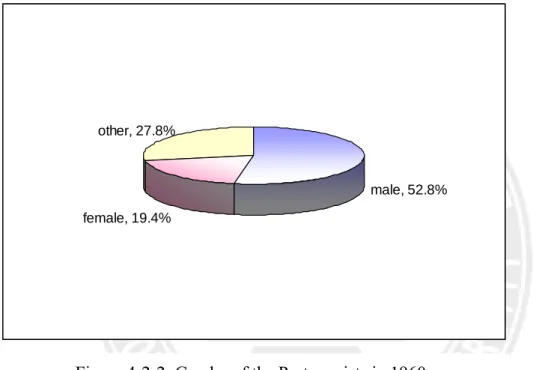
books. Percentages of male writers increased a lot comparing to the thirties, but females still outnumbered males in writing award winning books. The total percentage of female writers for awarded books is 52.8%. But again, like what found in the thirties, books featured female protagonists occupied only 19.4%. Female protagonists are described as completing self-identification by adopting social standards. In real life, women went on streets for equal rights and challenged the society. But for the Newbery award books, female protagonists still identified themselves with the rules setting by the society of patriarchy.
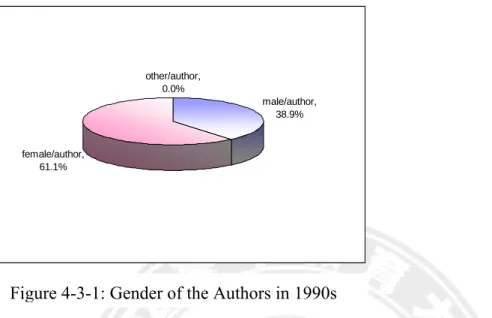
3. The United States became the most powerful nation of the world in the nineties both in economic and military conditions. It attracted a lot of immigrants with various ethnic backgrounds and the nation was entering an age of multiculturalism. For Newbery award winning books, percentage of female writers is 61.1%. This also reflects in the selection of main characters. Percentage of books featured female protagonists is 44.4%. Unlike what found in the thirties and sixties, female writers in this decade tend to depict girls as the main characters in their stories. Female protagonists in this decade are described as coming from various ethnic backgrounds with different economic conditions and diversified characteristics. Moreover, those books stress on females recognizing their own values instead of coping with the social standard.
Keywords:
Newbery Medal, Children’s Literature, gender, self-identity, female protagonists
TABLE OF CONTENTS
Chapter 1: Introduction ... 1
1.1 Statement of the Problem ... 2
1.2 Purpose of the Study ... 4
1.3 Research Questions ... 5
1.4 Limitations ... 5
1.5 Definition of Terms... 6
1.6 Significance of the Study ... 7
Chapter 2: Literature Review ... 10
2.1 Newbery Medal ... 10
2.2 Gender Representation in Children’s Literature ... 13
2.2.1 Gender Stereotypes in Children’s Literature ... 13
2.2.2 Female Archetypes in Children’s Literature ... 18
2.3 Gender Issues in Award-Winning Adolescent Novels ... 24
2.3.1 Gender Bias in Newbery Medal and Honor Books ... 24
2.3.2 Heroine in Newbery Medal Books ... 31
2.3.3 Domestic Research ... 35
2.4 Children’s Psychology ... 38
2.4.1 Development for Adolescents ... 38
2.4.2 Gender Identity and Self-esteem of Adolescent Girls ... 48
2.5 Feminism: Constitution of Female Self-identification ... 52
2.6 Summary ... 57
3.1 Rationale for using Content Analysis ... 60
3.2 Selection of the Population Researched ... 64
3.3 Procedures Used for the Study ... 66
3.4 Analysis Tools ... 69
3.4.1 Coding Categories ... 69
3.4.2 Reliability and Validity ... 72
Chapter 4: Data Analysis ... 75
4.1 Analysis of Female Protagonists in the 1930s ... 75
4.1.1 General Depiction of Awaqrded Books in the 1930s ... 76
4.1.2 The Mian Character: Self-esteem/ Self-identity ... 79
4.1.3 Main Supporter or Adviser ... 87
4.1.4 Major Companion ... 91
4.1.5 Summary ... 95
4.2 Analysis of Female Protagonists in the 1960s ... 96
4.2.1 General Depiction of Awaqrded Books in the 1960s ... 96
4.2.2 The Mian Character: Self-esteem/ Self-identity ... 99
4.2.3 Main Supporter or Adviser ... 109
4.2.4 Major Companion ... 113
4.2.5 Summary ... 118
4.3 Analysis of Female Protagonists in the 1990s ... 119
4.3.1 General Depiction of Awaqrded Books in the 1990s ... 120
4.3.2 The Mian Character: Self-esteem/ Self-identity ... 123
4.3.3 Main Supporter or Adviser ... 134
4.3.4 Major Companion ... 139
Chapter 5: Analysis of Findings ... 146
5.1 Analysis of Selected Books in the 1930s, 1960s and 1990s ... 146
5.2 From Innocent to Mature: Ways of Becoming a Woman ... 152
5.3 Images of Advisers ... 158
5.4 Images of Major Companions ... 164
5.5 Summary ... 169
Chapter 6: Conclusions ... 172
6.1 Conclusions ... 172 6.2 Suggestions ... 178References ... 183
Appendices ... 197
A: Total Popultation Used in this Dissertation ... 198
B: Books Featured Female Protagonists in Total Population ... 203
C: Books Selected for this Dissertation ... 205
D: Summaries for Books Selected ... 206
E: Abbreviations of Books Selected for this Dissertation ... 217
F: Coding Categories ... 218
List of Tables
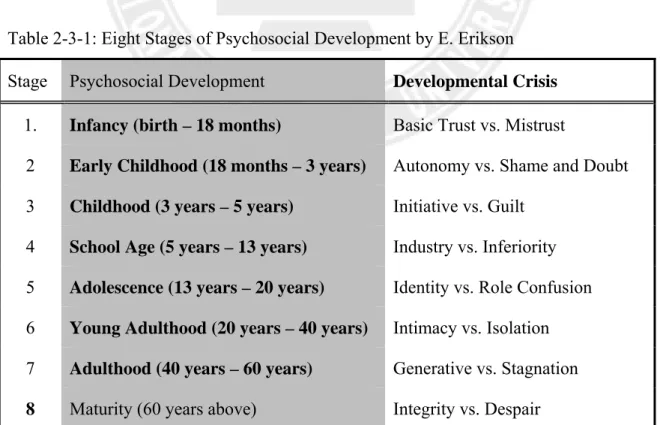
Table 2-3-1: Eight Stages of Psychosocial Development by Erikson ... 39
Table 3-4-1: Resources for Categories in Manifest Content ... 69
Table 3-4-2: Resources for Categories in Latent Content ... 71
Table 4-1-1: Gender of the Authors in 1930s ... 76
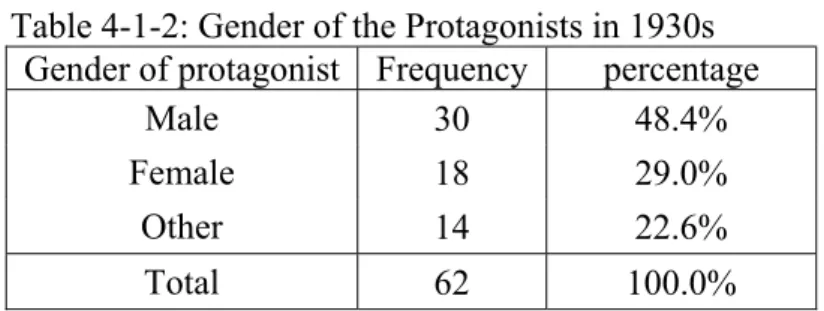
Table 4-1-2: Gender of the Protagonists in 1930s ... 77
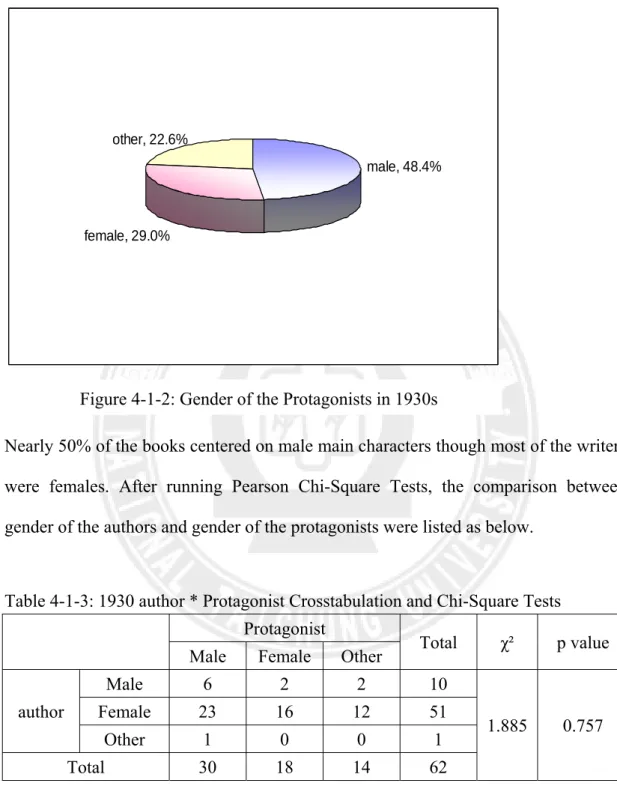
Table 4-1-3: 1930s author * Protagonist Crosstabulation and Chi-Square Tests ... 78
Table 4-2-1: Gender of the Authors in 1960s ... 97
Table 4-2-2: Gender of the Protagonists in 1960s ... 98
Table 4-2-3: 1960s author * Protagonist Crosstabulation and Chi-Square Tests ... 98
Table 4-3-1: Gender of the Authors in 1990s ... 120
Table 4-3-2: Gender of the Protagonists in 1990s ... 121
Table 4-3-3: 1990s author * Protagonist Crosstabulation and Chi-Square Tests ... 122
Table 5-1-1: Year * gender of Authors Crosstabulation and Chi-Square Tests ... 146
Table 5-1-2: Year * gender of Protagonists Crosstabulation and Chi-Square Tests . 148 Table 5-1-3: genderAU * Protagonists Crosstabulation and Chi-Square Tests ... 150
Table 5-2-1: Crosstabulation of Awarded Year & Place ... 152
Table 5-2-2: Immigration and Foreign Born, 1951-2000 ... 153
Table 5-2-3: Crosstabulation of Awarded Year & MP3 ... 155
Table 5-3-1: Crosstabulation of Awarded Year & MA2 ... 159
Table 5-3-2: Crosstabulation of Awarded Year & MA4 ... 160
Table 5-3-3: Crosstabulation between Awarded Year & LA1 ... 162
Table 5-3-4: Crosstabulation between Gender & LA1 ... 163
Table 5-3-5: Crosstabulation of Awarded Year & LA2 ... 163
Table 5-4-1: Crosstabulation of Awarded Year & MC2 ... 165
Table 5-4-2: Crosstabulation of Awarded Year & MC4 ... 166
Table 5-4-3: Crosstabulation of Awarded Year & MC5 ... 166
List of Figures
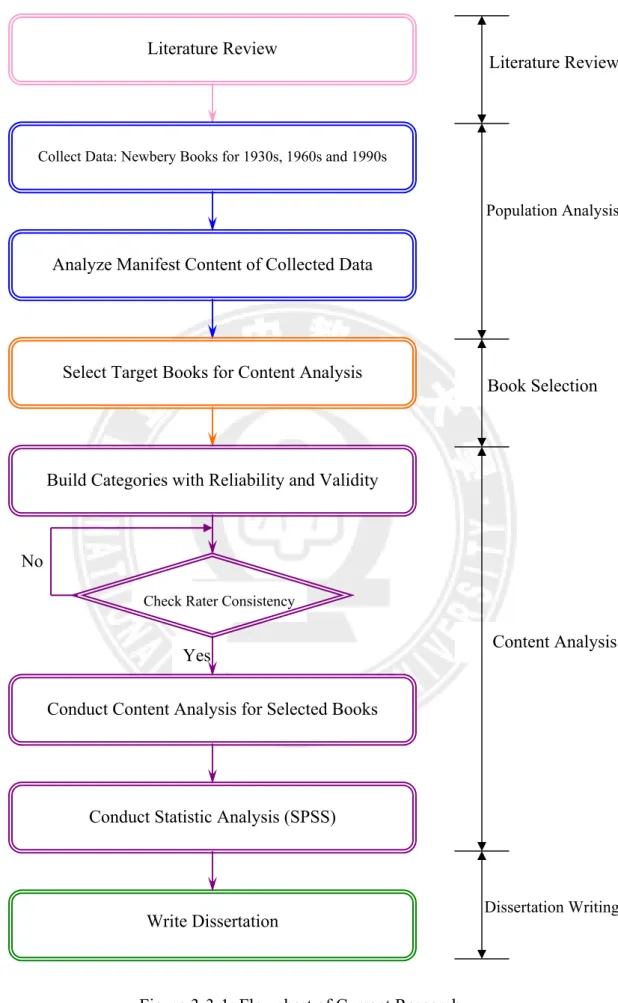
Figure 3-3-1: Flowchart of Current Research ... 68
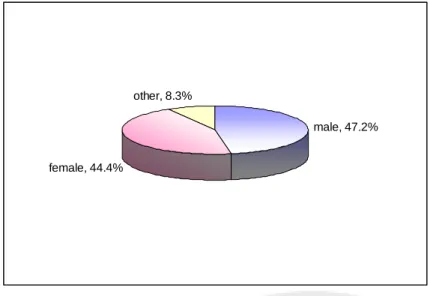
Figure 4-1-1: Gender of the Authors in 1930s ... 77
Figure 4-1-2: Gender of the Protagonists in 1930s ... 78
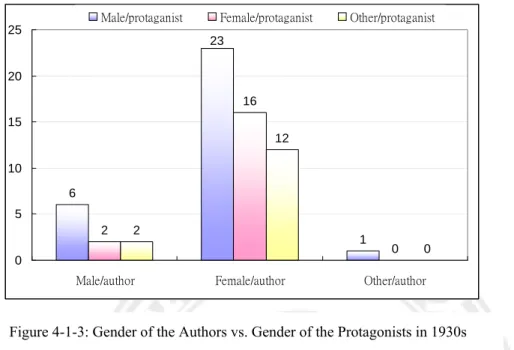
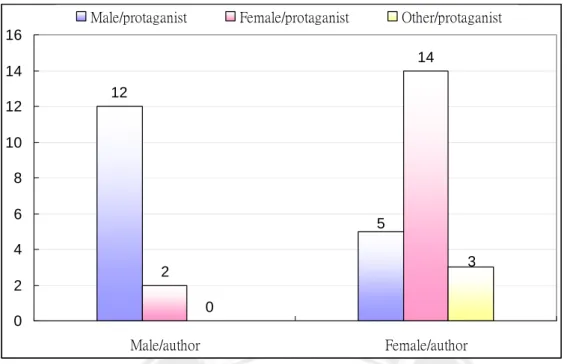
Figure 4-1-3: Gender of the Authors vs. Gender of the Protagonists in 1930s ... 79
Figure 4-2-1: Gender of the Authors in 1960s ... 97
Figure 4-2-2: Gender of the Protagonists in 1960s ... 98
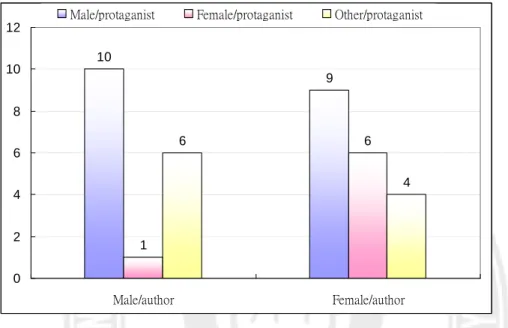
Figure 4-2-3: Gender of the Authors vs. Gender of the Protagonists in 1930s ... 99
Figure 4-3-1: Gender of the Authors in 1990s ... 121
Figure 4-3-2: Gender of the Protagonists in 1990s ... 122
Figure 4-3-3: Gender of the Authors vs. Gender of the Protagonists in 1930s ... 123
Figure 5-1-1: Gender of the Authors (Decade Distribution) ... 147
Figure 5-1-2: Gender of the Protagonists (Decade Distribution) ... 149
Figure 5-1-3: Gender of the Authors vs. Gender of the Protagonists ... 151
Figure 5-2-1: Decade Distribution of Place Setting ... 153
Figure 5-2-2: Decade Distribution of Family Condition -- Parents ... 155
Figure 5-3-1: Gender Distribution of Main Advisers ... 160
Chapter 1: Introduction
Ideology in Children’s Literature
Michael Foucault, the famous postmodernists, had argued that history, culture, and our institutions were created knowledge. Foucault believed that our lives, our attitudes, and our beliefs were all shaped by social institutions and ideological discourses (Soter, 1999). In other words, all texts were products of the time in which they were written and of a history within a particular social, cultural, and ideological context. For Foucault, culture was created by those who with power and was an expression of political warfare (Rosenau, 1992).
Under Foucault’s formulation, writing and reading a book is an exercise of power as well.This was especially true for books read by children and young adults. For decades, young readers read books written by adults, published by adults and bought to them by adults. Also, adult teachers advised or assigned these books for young people to read. The process of books being chosen and presented to their readers was a demonstration of power. As a result, children’s literature could be viewed as a genre which was strongly controlled by adults but enforced to the young generation.
Many critics, even writers for children’s literature, had pointed out that literary works had influential effect on the shaping of values of our society (Fox, 1993b; Cook, 1982; Sutherland, 1997; Lowe, 2004). Children’s literature had been termed “cultural wars” (Hunter & Meredyth, 2000) since it involved in the transmission of values from one generation to the next. Cook (1982) also indicated that children’s literature was packaged with the dominant cultural meanings effectively because it was, after all, adults who “generally write, edit, publish, criticize and buy the children’s books as well as give out the awards” (p. 154). And since we were all products of our time, our
heredity and our environment, we all had “convictions about what children should know, or not know, and perhaps at what age” (Sutherland, 1997, p.34). Thus children’s literature could be treated as a genre that reflects contemporary society’s idea of “what children should read, and what opinions about that idea change with time and place” (Sutherland, 1997, p.35). The relationship between book contents and readers displayed by the Newbery award winners provided a good example of transmitting social values from one generation to the other controlled by the powerful adults.
As culture consisted of fundamental beliefs and values, it was clear that American culture spread its concerns over the content of what children learn. Once the content of a book was used to be taken for granted, new sensitivities had arisen that highlight the consideration of new values and beliefs (Schwerdt, 2006, p.25).
1.1 Statement of the Problem
One of the most critical parts of the learning experiences of young adult was gender development. In everyday life, the actions of parents, teachers, and siblings often influenced their perceptions of gender roles (Sarvis, 2004). Besides, as stated earlier, literary work also played an important role as the primary source for the presentation of social values to children. For years, researchers had shown their interests on trends regarding gender-based stereotypes presented in children’s literature. The result of their study revealed that females were often outnumbered by males as protagonists (Jett-Simpson & Masland, 1993), were frequently represented in an inferior manner (Fox, 1993a; Jett-Simpson & Masland, 1993; Rudman, 1995), and were often portrayed solely or predominantly in domestic roles (Mendelson, 1997).
For example, Newbery award books, with their outstanding reputations on American children’s literature and highly availability on readability, were no doubt
one of the most influential materials in transmitting cultural traditions to the young generation.
Powell, Gillespie, Swearingen, and Clements (1998), after reviewing the Newbery winners from 1922-1997, pointed out that the stereotypical messages contained within the books may have some effect on the development of the reader. If the books described females in stereotypical roles, then it was reasonable to suggest that the young female and male readers reading these books are internalizing the images and messages of the texts, at least on some level.In other words, we could say that children’s reading materials were a widely available cultural resource that children may draw on to make sense of gender(Jackson & Gee, 2005, p.115). If the images were internalized or validated, it could be another aspect of the socialization process and could possibly led to decline in academic achievement and self-esteem for females (Groce, 2001). The researcher decided to do a gender analysis of female protagonists in Newbery Medal books in the 1930s, 1960s, and 1990s.
What, When and Who
The Newbery books were chosen because of the highly recognition of this award among teachers, parents and librarians. While its popularity and high quality provided a good sample for reviewing social values selected and recommended by powerful adults to their youths, the long history of this award offered rich sources for content analysis.
Chosen from numerous books published every year in the children’s books market, Newbery books were examples of the best literary work by authors with significant contribution to children’s literature in the United States of America. Also, these books were treated as accessible trendsetters in the field of children’s literature. Therefore, Newbery books undoubtedly offered rich plotlines and well-developed
characters which would facilitate the researcher’s understanding and study of gender identification.
After deciding what body of literature would be read (Newbery Medal books) and who would be analyzed (the female protagonist), the researcher had to determine the time period for this dissertation. The whole body of Newbery award winning books contained nearly ninety books spreading over nearly one century. Such a large amount of books prevented the researcher from a close study and detailed analysis for each individual book. It was important to find a reasonable numbers for content analysis and a right time to begin the study. Reviewing the list of the award recipients helped the researcher to make a right decision for the body of analysis.
Appendix A showed the order by the year awarded since it revealed the social value of each particular year. It was also the standard list used for this research. From the list of Appendix A, it was found that although the Newbery was first awarded in 1922, the first decade of this award recognized only male authors. The first Medal winning book featured a female protagonist appeared 11 years after the first award was given. In 1934, Cornelia Meigs’ Invincible Louisa became the first Newbery Medal winner centered with a female main character. Therefore, 1930s was chosen to start the research for this was a time that female character first came to the center of the story and gained the attention of the election committee of the Newbery award. And since the period of thirty years was generally accepted as a generation, this study was designed to analyze female protagonists in the 1930s, 1960s and 1990s.
1.2 Purpose of the Study
The primary purpose of this study was to analyze the ways female protagonists were portrayed in Newbery books in the 1930s, 1960s and 1990s. Similarities and differences between female main characters in the same decades were examined to
find a common trait or criteria for the shaping of a female role model. Comparisons between three different decades were conducted to see the changes of gender identity from the 1930s to the 1990s.
By examining these books in their historical context as well as in their relation to each other, the researcher proposed to analyze the ways in which authors addressed the issue of gender in Newbery award winning books as well as to document the progression in children’s literature dealing with gender relations that these books represented.
1.3 Research Questions
The research questions were listed as follows:
1. How many Newbery books in the 1930s featured female protagonists? 2. What were the characteristics of female protagonists in the 1930s?
3. Did the representations of female protagonists in the 1930s reflect social reality/ standard of this decade?
4. How many Newbery books in the 1960s featured female protagonists? 5. What were the characteristics of female protagonists in the 1960s?
6. Did the representations of female protagonists in the 1960s reflect social reality/ standard of this decade?
7. How many Newbery books in the 1990s featured female protagonists? 8. What were the characteristics of female protagonists in the 1990s?
9. Did the representations of female protagonists in the 1990s reflect social reality/ standard of this decade?
10. What were the similarities and differences of female representations in the 1930s, 1960s, and 1990s?
1.4 Limitations
The limitation of this study was as follows:
1. This study would examine only the Newbery Medal books in the 1930s, 1960s and 1990s featured female protagonists.
2. This dissertation was limited to female protagonists because it could build on and extended existing studies from the last several years that focused on girls and women in children’s literature. This study could be complemented by a similar gender study of male protagonists in the Newbery books.
3. Since this study was centered on female protagonists, the results might not be applied to any stereotypical behaviors that discriminate against males, members of different ethnic or religious groups.
4. Due to the above factors, the results would not be generalized to all of children’s literature or even to all of Newbery award winning books.
1.5 Definition of Terms
The following section contained definitions for terms used in this study.
Adolescence: The period of rapid growth between childhood and adulthood, including psychosocial as well as physical growth. Erik H. Erikson (1963, 1969) has put life cycle into eight stages. The fifth stage is named the stage of puberty and adolescence. During this stage, the major task of an individual is to establish a good initial relationship to the world as to achieve a final identity. The danger of this stage is role confusion.
Adolescent literature: Also called young adult literature or juvenile literature. The term young adult (YA) literature is used by many librarian, educators, and book publishers for books portraying adolescents as protagonists. For this dissertation,
adolescent literature, young adult literature, and juvenile literature are used for literary work created for and read by readers in the adolescent period.
Archetype: This can be an image, pattern, or symbol that is part of the collective unconscious. The innocent image of a protagonist starting on a journey is an archetype especially common in adolescent literature. Others include generational conflicts in which young people struggle to gain their independence from the adults (Donelson & Nilsen, 2005).
Newbery Medal: In name of John Newbery, who was a bookseller of children’s books, this award started from 1922 and is a literary award given by the Association for Library Service to Children (ALSC), a division of the American Library Association (ALA). This award is given annually on January to the author of the most distinguished contribution to children’s literature in the United States. Book selected becomes best-seller of the year and teachers add the book into their lesson plans.
Protagonist: The main character in a story who is the one reader identify with (Donelson & Nilsen, 2005). Lukens (2007) defines the protagonist as the “central character in the conflict” (p.357).
Self-esteem: The aspect of self-concept that involves judgments about one’s own worth and the feelings associated with those judgments (Berk, 1999).
Stereotype: This is a term literally used for a printing process in which an image is created again and again (Donelson & Nilsen, 2005). It also refers to character possessing with expected traits of a group instead of being an individual (Lukens, 2007).
This study was significant for it provided an investigation into the topic of gender portrayal and could promote discussion of female representation in children’s and young adult’s literature in the following ways.
First, this study covered three decades (the thirties, sixties and nineties) of the body of Newbery literature, thus it provided a look of the changes female was portrayed and standards of female role models accepted and recommended by adults. In other words, it showed a change of social values.
Secondly, it provided a close reading of the female protagonists from different perspectives such as psychosocial development and feminist approach. While most research concerning female representation centered on number counting, this study provided a deeper and analytical approach to explain ways these protagonists were depicted and dig out meanings hiding behind the surface.
Also, it promoted an investigation between the historical and social background of writers and the presentation of the stories. The relationship between the author and book should be reconsidered from a historical and social perspective to provide more intensive understanding of the literary work. Perhaps by reviewing the selected Newbery award winning books during these three decades, it could be found how deeply authors and members of the committee were influenced by the society they were in.
If the Newbery Medal books featured female main characters over these three decades did portray characters without gender discrimination, and showed strong models of behavior for adolescents, then these books could be recommended to classroom teachers, librarians, and parents to help young adult building their gender identities. If they did contain stereotypical characters and sexist language, then it was suggested that further research could be done to investigate effects of the selected books on the young population.
American culture had considerable and long influence upon Taiwan and American adolescent novels also provided tremendous inspiration to adolescent novels in Taiwan. The researcher expected that by doing a research on the different decades (the 30s, 60s, and 90s) of American female awareness and initiation in American adolescent novel, this research could stimulate writers of adolescent novels in Taiwan with new sight and ideas. Besides, it could also give examples and inspirations for our society which claimed to have an equality of both genders. Moreover, the researcher believed that the results from this study would help to establish the dialogue about writing literature for adolescents which features independent characters with gender equality. Facing a rapid changing society like we are in today, it is important for teachers and parents to offer positive role models to the young generation so that they can be equipped with knowledge and courage to encounter obstacles and conflicts in their life journeys.
Chapter 2: Literature Review
This chapter reviewed literature related to the current research. There were six parts contained in this chapter. Part one provided a brief introduction of the Newbery Medal. Part two reviewed gender representation in children’s literature, part three narrowed the topic down to gender issues in award-winning adolescent novels. Part four presented psychological approaches used for adolescent identity construction, mainly by Erik H. Erikson, while part five reviewed the theories provided by feminist scholars stating the gender specialty of females. The final part contained a summary of the literature review.
2.1 Newbery Medal
History of the Newbery Medal
Newbery Medal was named after John Newbery, a bookseller of the eighteenth-century Britain. John Newbery was born in 1713, in Waltham St. Lawrence, Berkshire, England. Since the family had little money for education, he was largely self-taught. He moved to Reading, England in 1730 and worked on a provincial newspaper owned by William Carnan (Hegel, 2000). Later on, when Carnan died in 1737, Newbery inherited a part of the estate and later, married Carnan’s widow. He then ran a bookstore to earn a living and published A Little
Pretty Pocket-Book in 1744. The book was consisted of fables, jingles and games,
and was primarily for children to read for fun instead of as a method of learning. The price per book was six pence. John Newbery had designed and produced a total of about thirty books for children. He believed that books were a means of influencing children to be good and he always made sure his books had a moral in them, so parents would buy them. In Tom Telescope, he said books should represent to children
“their Duties and future Interests in a Manner that shall seem rather intended to amuse than instruct” (Hegel, 2000, xii).
How Newbery Medal was Constucted
The history of the Newbery medal started in 1921 during the American Library Associations’ annual convention in Swampscott, Massachusetts. On June 22, 1921, Frederic G. Melcher proposed an annual award to recognize the contribution made to the field of children’s literature in his presentation. He also suggested that the award would be named for John Newbery, a pioneer in publishing children’s literature, and would be selected by the American Library Association (ALA). Besides, Mr. Melcher also offered to pay for all expenses related to the award.
Melcher’s official proposal was soon accepted by the children’s librarians and approved by the ALA Executive Board in 1922. The purpose of the Newbery Medal was stated as follows:
¾ To encourage original creative work in the field of books for children. ¾ To emphasize to the public that contributions to the literature for children
deserve similar recognition to poetry, plays, or novels.
¾ To give those librarians, who make it their life work to serve children’s reading interests, an opportunity to encourage good writing in this field. (ALA website, About the Newbery Medal)
Award Selection Process and Criteria
Zena Sutherland (1997), editor of the Bulletin of the Center for Children’s
Books from 1958 to 1985, had indicated that in selecting books for the award, the
committee members should shared “the same sense of obligation to choose wisely,” hoped “the children who read the award books would enjoy them,” and “were familiar
with children’s needs and their reading interests” (p. 34). The first election was conducted in March 1922, the delegates cast 212 votes during the first election of the Newbery Medal. The Story of Mankind received 163 votes and was declared the winner (Groce, 2001).
Originally, the Newbery Award was selected primarily by popular vote, but within a few years a committee was established. Some of the members were elected and some were appointed, but all members must be member of the ALA’s Association for Library Service to Children (ALSC). The committee must be certain the books considered for the Newbery should be “noted for significant achievement,” and the work must be original (Hegel, 2000, x). In determining what constitutes distinguished writing, the committee has to consider for the following item: 1. theme, 2. presentation, 3. plot, 4. characters, 5. setting, and 6. style.
Influence of the Newbery Award
The Newbery Award winning books are announced annually in January. Once it is announced, parents, teachers and librarians view it as a guide to add to the reading lists of children. The Newbery Medal is often considered to be the most prestigious prize bestowed upon an author in adolescent literature. These books created significant amount of selling in the United States of America. E. L. Konigsburg, the 1968 and 1997 Newbery Medal winner, and also the only author for receiving both the Newbery Medal and Honor Book award in the same year (1968), had stated clearly about the sales amount of Newbery Award books. In the article titled “Better than the Nobel Prize: The Newbery Sells Book” (Konigsburg, 1995), she pointed out that “the Newbery – not the National Book Award, not (even) the Nobel Prize – has been the only book award that gives birth to that darling daughter of
all the marketing departments of all the businesses in all the world, a predictable increase in sales.” (p. 27)
Avi, author of Crispin and the 2003 Medal winner, gave a deeper description about the impact that winning a Newbery would have on the reputation of the author. He stated in his Newbery Medal Acceptance: “For most of us who write novels for young people, to win a Newbery is manifestly the summit of achievement. Its brightness seems to illuminate all of one’s work” (Avi, 2003, p. 408). Avi was not exaggerating. Once a book was selected, it was forever immortalized among a distinguished and limited list known. Newbery winners went on to become some of the most talked-about children’s books of the year and consequently, the best-sellers.
A large amount of sales means that many children are encouraged to read Newbery Award winners, either by their parents, teachers or the librarians. As a result, these books “inevitably play an important role in transmitting cultural values and socializing children” (Lowe, 2004, p. 5). Lukens (2007) had pointed out that, “Literature show human motives for what they are, inviting the reader to identify with or to react to a fictional character” (p. 5). Thus it is obviously that Newbery Medal, not only transmitting values and judges of the society it depicted, also imposed the images what they expected the young adults to become in the very near future.
2.2 Gender Representation in Children’s Literature
Gender representation in children’s literature had gained a lot of attention from the researchers. Most of the research could be divided into two different issues: gender stereotypes and the archetypes of female representation.
Gender stereotype refers to “treating the character with preconceived notions based on gender role perceptions” (Groce, 2001, p. 9). It simplified and generalized specific gender role and blocked the young readers from establishing a healthy and correct gender role model. The following section showed related research of children’s literature about this issue.
Jett-Simpson & Masland (1993) conducted a survey on the language arts classroom to examine what children's own stories reveal about the attributes they assign to females. They asked elementary school boys and girls to orally complete an unfinished story about a girl wanting to play baseball. Different ways of story completion was discussed and they found that a large number of children’s books contained gender bias in the content, language and illustrations. This bias was displayed through the way a gender is represented and the gender of the main character is depicted. To avoid such an inequity in classroom, they proposed that teachers could help move their students toward a more gender-fair classroom environment by using instructional settings already in place.
Fox (1993a) also reviewed children’s literature and found that girls were often portrayed as inactive rather than active. She argued that the way the author created the characters showed unconsciously the way he/she took account of gender issue. She also suggested that both genders should be presented in literature as real as they are in life. Sexism in literature could be so insidious that it quietly conditioned boys and girls to accept the way they “see and read the world” (p. 88), thus reinforcing gender images.
Temple (1993) observed a gender issue in a college-level children’s literature course. He found that boys, in children’s literature, tended to be depicted as roles such as fighters, adventurers and rescuers. On the other hand, girls were shaped in passive roles such as caretakers, mothers, princesses in need of rescuing, and characters who
support the male figures. He suggested that it was the educators’ duty to teach children to challenge what they read, hear and see.
Peterson & Lach (1990) examined gender stereotyping in children’s books and the representation of males and females over a twenty-year time frame. They reviewed a random sample of 136 books selected from the booklist in The Horn Book for the years 1967, 1977, and 1987.
They found that girls were often portrayed to be remained docile in a domestic setting in 1967, and the 1977 sample showed the strongest imbalance of occurrences for females in all categories. In the 1987 sample, girls were much more likely to engage in an adventure and to appear as the main character in a folktale, fantasy, or adventure story. In spite of growing numbers of female characters, the result showed that males still dominated the landscape of children’s literature. Males were described as active, independent and generally competent. Many books were full of stereotypical language and examples that were biased against females. Peterson & Lach (1990) concluded that while the prevalence of stereotypes had decreased somewhat, the decreases in quantity and in kind had not been statistically meaningful. The biased literature could hinder a child’s developmental potential and might taint their cognitive development in a way that would present the child with an inaccurate social view.
In another study featuring literature, Benjamin & Irwin-DeVitis (1998) conducted a survey of the participants in a summer literature discussion group with adolescent girls in grades six to eight. The discussions focused on literature with young adult female protagonists. To assess feelings about the respondents’ favorite literary character, they sent one thousand questionnaires to male and female students in Louisiana and New York schools.
As the researchers stated, they “asked students in grades six, seven, and eight to identify their favorite fictional characters and then give reasons for their choices.” (p.65). The survey results were then compared with responses generated by the girls at the summer discussion group. On the topic of devaluing girls’ intelligence, the girls in the discussion group revealed to think other girls were consciously restricting their abilities in the classroom in order to win favor from their male classmates. The survey responses noted favorite male characters because of their bravery, independence, and strength.
A boy said he admired Maniac Magee (Spinelli, 1991) for his “great personality and characteristics” as well as being “brave, strong, fast, and even caring” (p.65) and another boy praised Robbie in Triple Play (Montgomery, 1991) for he had acquired the position of the “baseball teams favorite all-star player” (p.65).On the other hand, the favorite female characters for both males and females were selected because of their self-sacrificing behavior and physical attractiveness.
A sixth-grade girl wrote that she admired Carter in R. L. Stine’s The Cheater (1991) because she “would do anything to keep her father happy, even cheat on a math test” (p.66). Another girl admired Dawn, one of the female characters in The
Baby-sitters Club series, stated that because “she is pretty, nice, and very sweet. She
has beautiful hair and is very skinny” (p.66). As for boys, the responses showed a distressing aspect that they are incapable of identifying positive traits they admired in female characters. One boy responded “I never admired a female character” while another stated “They [female characters] are all pretty much the same” (p.66).
As for fairy tales, Mendelson (1997) explored the roles allocated to women in the famous collection of Grimm’s Fairy Tales. Being recognized as classical literature, Grimm’s fairy tales were exposed to many children in their early years and its’ influence was still considerable due to the continued circulation and study of this
genre. Mendelson reviewed all of the two hundred tales for instances of collaboration between characters and found that in about fifty tales, or 25% of the tales, collaboration was a “significant feature of the tale’s narrative makeup.” (p.111). The collaborative tales indicated that “characters can do more if they work together than they can when they act alone.” (p.111).He stated that, although collaboration figures appeared in many of the more than 200 tales, the benefits of collective action were not extended to women. In other words, the overwhelming majority of the collaborative efforts featured no female characters. To be more specifically, only three of the two hundred tales featured women working together.Mendelsonadded that instances hint of collaboration were merely “evil women’s groups” (p.115) whose primary purpose was to victimize other characters, usually other women, as opposed to collaborating for a worthy cause.This study suggested that inGrimm’s Fairy Tales, females did not
work together in groups to solve specific conflicts.
Singh (1998) argued that children's books play a significant part in transmitting a society's culture to children. This research began by discussing how the genders were portrayed in children's literature, and then addressed the question of why gender-representation in children's literature was significant. It also discussed what teachers should keep in mind while selecting children's books, and how teachers can use children's literature to promote gender equity.
Tsao (2008) also dedicated in the cultural and social perspective of children’s literature. This study discussed the role of printed books in providing children with awareness of different gender roles and relationships between genders. The researcher reviewed the studies which focused in children's awareness of different gender roles in recent decades. Children’s picture books play a significant role in providing related information to kids. Since males were habitually described as active and domineering, females rarely revealed their identities and very frequently were represented as meek
and mild. This discriminatory portrayal in many children’s books ran the risk of leading children toward a misrepresented and misguided realization of their world. To help children construct their view of human diversity, appropriate children’s literature should be used carefully at the right timing.
In summary, researchers had found that gender bias existed in the content, language, and illustrations of numerous children’s books (Jett-Simpson & Masland, 1993), and these books frequently portrayed girls as obedient and inactive (Fox, 1993a). Girls were represented as sweet, naive, conforming, and dependent, while boys were typically described as strong, adventurous, independent, and capable (Jett-Simpson & Masland, 1993). Males were presented as rescuers while females were portrayed as people waiting for rescue (Temple, 1993). Gender differences in literature might be more equitable between male and female than in previous times (Peterson & Lach, 1990), but males and females still recognized different characteristics when selecting their favorite protagonists (Benjamin & Irwin-DeVitis, 1998), and that a sample of traditional literature was almost devoid of constructive collaboration between females (Mendelson, 1997). Gender stereotypical roles were constraining to both genders and pressure them to behave in ways that are gender appropriate rather than ways best suited to their personality (Singh, 1998; Tsao, 2008). As a result, it was concluded that these studies showed that girls were portrayed less often than boys in children’s book, and both genders were frequently presented in stereotypes.
2.2.2 Female Archetypes in Children’s Literature
Archetype was part of the collective unconscious displayed by an image, pattern or symbol (Donelson & Nilsen, 2005). In adolescent literature, the young heroine was often portrayed as an Innocent or Orphan to start on a journey.
Donelson and Nilsen (2005) discussed the literary aspects of young adult books in Literature for Today’s Youth. They evaluated different genres, presented ways of promoting young adult books, and gave recommendations for reading. In the chapter titled “Life Models: Of Heroes and Hopes,” the authors examined the need for heroes and concluded that no matter what our ages were, we all needed some people to admire and look upon to. In discussing about the Journey which completes the hero’s achievement, the authors described it as the “adventure/accomplishment romance” (p.101). Two notable examples were given: Cinderella reuniting with the prince, and Dorothy finding her way back to Kansas were all successful illustrations of this archetype. The romantic quest consisted of three stages: a separation, a test of courage, and a reunion with the loved ones (pp.145-47). They stressed that these stories were popular with young adults because they related romantic symbols with youthfulness and hope.
Mack (1997) argued that female heroes could take the traditional heroic Journey (separated from his known world, was initiated into a new consciousness, then, returned to his community) just like the traditional mythic hero had done. By focusing on several young adult novels, many of them Newbery books such as Dicey's
Song, A Wrinkle in Time, and The Hero and the Crown, Mack discussed the
characterization of each of the heroic female protagonists. Mack stated that this study was aimed to review the stories written within the last 30 years for or read by adolescent girls, or both, which could encourage the readers to progress developmentally, portray the archetype of the hero adequately and have a magnetic pull on the readers’ psychic lives which relates to the process of characterization so that the new female heroes in literature could be used by adolescent girls as role models. She concluded that if the reader is able to identify with the hero, a kind of
objective personality would be established and helped the young female adult to face their own life journey.
Noel (1987) conducted a quantitative study and analyzed the nature of male and female heroes as role models for adolescents. She examined the ways in which modern fantasy literature promote the individuation of young adults into adults in today’s society. The researcher compiled a list of 107 heroic fantasy novels for adolescents written by fifty authors, published between the years 1965 and 1985.
Noel compared the stories to four hero patterns and found that rites of passage elements do appear in modern fantasy novels. The research showed that the number of female heroes had increased since 1965, and that “Although the number of female heroes never equaled the number of male heroes, there was a sharp increase in the number of stories featuring female protagonists in the 1980s which may signal a growing awareness on the part of authors of the need for female role models” (p. 266). The author thus concluded that the growing influence of women in modern American society was positively correlated with the number of female heroes in fantasy novels. The researcher also found that author’s gender had no effect upon the choice of hero, nor did it have any effect upon the rites of passage experienced by that hero on the journey to adulthood.
Bristow (1992) analyzed Virginia Hamilton’s use of myth in four of her novels written for children and young adults. Four books were analyzed: Zeely (1967), The
Time-Ago Tales of Jahdu (1969), Time Ago Lost: More Tales of Jahdu (1973), and
The Magical Adventures of Pretty Pearl (1983). This study demonstrated that
Hamilton is heir to the classic traditions in myth as shown from the following archetypes unconsciously emerge in Hamilton’s writing: the great mother, the trickster, the child archetype and her use of traditional mythologems as the circle, the snake, the tree, the forest, etc. The researcher concluded that through the strong,
active feminine characters such as Zeely, Geeder, Mana Luka, Pretty Pearl, and Mother Pearl, Hamilton offered an antidote to the sexism seen in many classic fairy tales (p. 273).
Rytting (1996) subjected her research on fantasy and heroes of Robin McKinley. Three novels were discussed: Beauty: A Retelling of the Story of Beauty and the Beast,
The Outlaws of Sherwood, and The Hero and the Crown. Each of the stories retells an
already existing legend features a female who embarks on the romantic quest. Each of the three main characters completes an archetypal, hero journey consisting of departure, initiation, and return. By subverting legendary material while using archetypal patterns, Rytting pointed out that McKinley undermines the need for special physical attributes and underlines the importance of moral choices. The heroines were not endowed with superhuman abilities, but they were honorable, active in making often difficult decisions, and concerned about others. They also demonstrated that female heroes were capable of conscious choice and of going on the same sorts of journeys as male heroes. Also, by pointing out the heroes' lack of unrealistic legendary attributes makes them believable as well as archetypally resonant, these stories lessened the distance between hero and audience and suggested that everyone has the potential to be a hero.
Barnhouse (2003) discussed the female archetype as Healer and Nurturer in Robin Hood tales. As she explored the legend’s long history to help understand why the story lend itself to such a wide variety of retellings, Barnhouse brought to light the feminine power of healing and how these characters come-of-age when they accept the archetypal role.
Dressel & Molson (1996) argued that Andre Norton's Octagon Magic is neither a conventional girls' book, nor a witch tale, nor a time fantasy but rather a unique coming-of-age story best understood within the context of theorists such as Carol
Gilligan, Mary Belenk, and Jean Baker Miller. They noted the presence of the Sage in this book when they point out the character of Miss Ashemeade who by “mentoring Lorrie safely through important steps in the passage to adulthood, knows that Lorrie, if she chooses someday to practice octagon magic, will do so to support and extend the web of connectedness” (p.217).
Roberts (2002) analyzed three female characters in Newbery books: Polynesia the parrot in The Voyages of Dr. Doolittle, Charlotte the spider in Charlotte’s Web, and Amanda Beale in Maniac Magee. The researcher used Jungian theory of the archetypes of mother and feminist theory that analyzed gender bias based on stereotypes to present the archetypal patterns of the Mother as Rescuer. Each character, Roberts argued, acted as a maternal figure to the male protagonist. Polynesia performed as the duality of Mother: she provided transportation, entertained Dr. Doolittle, and stayed awake all night to guide their ship safely in its route (p.49). At the end of the story, she even captured the role of fairy godmother. Charlotte the spider was the Nurturer for Wilbur. She rescued the pig from certain death by spinning words into her web. She also aided Wilbur in his Journey by giving him confidence, showing him motherly affection, and disciplining him when he acted out. Amanda Beale was an androgynous Mom. Not only did she protect Maniac Magee from bullies, she also taught him the ways of survival in their neighborhood.
Ricks (2003) pointed out that after being neglected for a long time, children’s literature had been changed and girls began to appear in gripping heroic roles. She conducted a study of an archetypal analysis of the entire population of female characters in the Newbery Medal and Honor books from 1967-2003. The results of the study revealed that female protagonists tend to be Innocents, Orphans, and Seekers. While the young heroin took the similar journey, secondary characters enjoyed more variety in archetypal assignments. Younger female characters were
Friends, Caregivers, Innocents, Orphans, and Seekers. Both young and mature characters could be found in the archetypes of Warrior and Fool. Finally, older female characters tended to be Rulers, Destroyers, Magicians, and Sages. The genre of the book had little effect on the archetypal portrayal of the characters except for the Magician, which only appeared in fantasy novels.She also concluded that archetypes were universal and were experienced by everyone regardless of time period, race, religion, or sex.
McCabe (2005) explored the fairy tale archetype “Beauty and the Beast” as a degenerate form of the myth “Eros and Psyche.” He argued that the heroic quest cycle was missing in this story about young women for it was a traditional element in archetypal stories about young men. That omission was part of an ideology that was meant to influence perceptions about the proper role for young women in society. Popular stories, like fairy tales and romances, reflected the material conditions of the communities in which they were told and were conservative; but as these conditions changed, so did the stories. Since women had won greater equality in the last century, McCabe concluded that new stories reflecting the material conditions of equality had begun to appear.
In summary, we could find that Journey archetype was a popular topic of
research, and critics of children’s literature note the influence this archetype had for the readers as well as for the characters of the books (Mack, 1997; Noel, 1987). Joseph Campbell had described the idea of monomyth into three stages: Seperation, Initiation and Return, which had later on been widely used in discussing the adolescent novels for boys (Ricks, 2003). But in recent years, with the emerging of female heroes appearing in adolescent literature, researchers supported the idea that females could take the traditional male journey which would resonate with the audience (Mack, 1997; Rytting, 1996). Researchers also indicated the need of heroic
role for adolescents to gain role model and to establish their own identity (Donelson & Nilsen, 2005; Noel, 1987). Female archetypes found in this genre include Healer and Nurturer presented in Robin Hood tales (Barnhouse, 2003) as well as in contemporary award-winning novels (Mack, 1997). Females were also presented in very different archetypes from great mother to snake (Bristow, 1992), and the omission of the Beauty’s journey implied a neglect of female roles (McCabe, 2005). In the award-winning books, there was a diversity of female archetypes especially for secondary characters (Ricks, 2003). Female was also wise enough to perform the role of Sage in some literary work (Dressel & Molson, 1996) and they owned the power of healing when being old (Barnhouse, 2003).
It was then concluded that although typical archetypes of female characters do exist in many adolescent novels, with the conditions of real world changed, more and more literary works for adolescents begin to feature with a female hero and make the archetypes richer.
2.3 Gender Issues in Award-Winning Adolescent Novels
Award winning books in children’s literature carried values selected and transmitted by main streams in the society to younger generation. Therefore, it was important to review gender issues represented in award winning books. The following sections reviewed related literature concerning with gender bias in Newbery medal and honor books and the heroine in Newbery Medal winners.
2.3.1 Gender Bias in Newbery Medal and Honor Books
Award winning children’s literature was often widely published and accepted partly due to the recognition from the award. But did the award imply that the book
was free of bias? The following section presented research on evaluating gender bias for award-winning books.
Phelps (1985) examined Newbery award-winning books in the first and last decade before the research, specifically 1922-31 and 1976-85. Content analysis was used to analyze the books for the changes that are reflected in the content of the books in terms of sex role identification of the protagonist, diverse ethnic oriented content, problems of the main character and the social values of family life, importance of education, initiative and loyalty.Phelps concluded that the first and last decade of the award were diverse in regards to the sex role identification of the protagonist, ethnic group representation and problems of the main character.The female was represented sparsely in the first decade but portrayed more often in the last decade. As for male characters, traditional male (brave and adventurous) was stereotyped in the first decade while being more diverse in the last decade.There were various ethnic groups represented in the first decade but mostly White Americans in the last decade. The problems of the protagonists in the first decade were of man or animal vs. nature; man or animal vs. animal. In the last decade the problems of the protagonists were man vs. man or man vs. self.
Kinman and Henderson (1985) reviewed Newbery medal award books from 1977-1984 for portrayals of females. They had reviewed previous studies analyzing Newbery books and had discovered that previous researchers had discovered gender-biased storylines and illustrations in their review. In this research, they were seeking a reversal of the sexist trend in writing and publishing because “children must see lifestyles like their own in the literature they read, since this is one way that they validate their own lifestyles” (p.885). Their analysis found that the time period sampled was less stereotypical when compared to earlier studies. A previous study done in 1971 reviewed the previous forty-nine Newbery winners form 1922-1971 and
determined that males outnumbered females as protagonists in a 3:1 ratio. Kinman and Henderson, after reviewing the Newbery books from 1977-1984, discovered an increasing of female protagonists in that sample by a 3:2 ratio. Their research showed that Newbery Medal books had reflected the changing norms of society during the past two decades. Specifically in the increased number of books with women as main characters, positive images of females, and situations similar to those encountered in everyday life.
Roberts (1987) conducted another study using the Newbery Medal and Honor books. She examined how male and female protagonists overcame their conflicts based on a locus of control framework. The sample included 120 male and female protagonists from Newbery books starting from 1922 to 1986. The overall results revealed that females exhibited more instances of internal locus of control (i.e. attempting to reorganize thoughts in order to perceive conflict as less daunting or even dissolved) while male main characters exhibited more instances of external locus of control (i.e. the rescuer role in solving the conflict). Roberts explained this was why male protagonists overwhelmingly being assigned the role of the rescuer in numerous categories. She went further to explain that in these books, the females often resolved a conflict by simply ceasing to perceive the conflict as a problem. The males commonly aided the female protagonists when solving the conflict, on the contrary, the females rarely helped the male protagonists solve a conflict. This suggested that females were incapable of conflict resolution without male intervention, which further implied a stereotypical slant within the sampled books. Also, this study revealed that in the last 15 years, a new trend may be seen as the quantities of male and female protagonists in fictional Newbery Medal and Honor books approached an equal number.
Powell, Gillespie, Swearingen, and Clements (1998) reviewed the history of gender roles of Newbery medal books from 1922-1997. They examined both male and female roles in Newbery winners because they felt that sex role identities could be transferred to readers from authors. They stated that “If young males rarely experience another male displaying emotion, or young females rarely encounter a female overcoming fears, they may believe that these behaviors are not a part of who they are or can become” (p.42). Characters in all books were reviewed to see if they were portrayed as traditional or progressive. For males, being independent, assertive, self-reliant, and emotionally stable meant being traditional while female should be dependent, passive, nurturing, and physically weak. Males were progressive if they were presented as caretaker of children, involved in domestic duties at home, and unafraid of showing emotion, and females would be categorized as being so by working outside the home, especially in male-dominated occupations, possessing strong, brave or independent characteristics, and being actively involved in the story. The results of the study were revealed by each decade (1923-1929, 1930-1939, 1940- 1949, etc.). As each decade was analyzed, they found a gradual and uneven separation from the more biased award winning books of the 1920-1940 time period. The authors described the last seventeen years of the study (1980-1997) as improved in terms of female portrayal of characters. The authors noted that more strong and courageous female characters have been introduced in the sample during this time period.
Kimmel (1990) conducted a survey of the Newbery Medal books from 1970 to 1990. All books were examined of sexual and racial stereotyping of role models. Kimmel employed the method of content analysis to survey these books from the following perspectives: the numbers of characters of each sex and ethnic groups, the types of occupations depicted in the storyline, the descriptions of different ethnic groups, and the behavior and capabilities presented for each type of character. The
findings revealed that these books were highly stereotyped in both sexual and racial presentations. Kimmel finally suggested that people who write, publish, and select children's literature must monitor those materials closely in order to encourage the elimination of such stereotyping in the future.
Agee (1993) reviewed the processes of gender-role socialization between mothers and daughters in two Newbery Award books: Caddie Woodlawn by Ryrie Brink and Jacob Have I Loved by Katherine Paterson. She found that although the novels were written by women, the female protagonists were forced to leave their adventurous and exciting childhood and enter a more traditional role akin to their mothers as they made the transition into adolescence. Though both main characters appeared to be active and boy-like at their early ages, as they began to reach adolescence, their mothers started to shift the thinking of the daughters toward a more culturally accepted traditional view.
Moorcroft (1992) focused the study on the portrayal of girls/women characters in Newbery Medal award winning books from 1950 to 1990. In this study, the following questions were reviewed: 1) how are girls/women portrayed in Newbery Medal award winning books since 1950? 2) how has the portrayal of girls/women changed during this time? And 3) are the current guidelines set out by the Ontario Ministry of Education document Circular 14 adequate in terms of detecting gender bias? The Circular 14 document is the guideline being used currently in the States to determine whether books are considered to be biased. The result showed that bias was often subtle yet pervasive, and this finding held true even in recent Newbery Award winners. Unlike researchers who contend that gender bias had diminished in recent years, Moorcoft claimed that no such trend was found.
Iwamoto (1996) reviewed 168 books of award-winning children’s literature from 1983 through 1995. Books selected in this dissertation included 58 Randolph
Caldecott Medal winners (1938-1995), 58 John Newbery winner (1938-1995), and 52 Pacific Northwest Library Association Young Readers Choice Award winners (1940-1995). After examining the portrayal of ethnicity, gender, ages, character roles and themes in these books, she concluded that stereotypes had been evident in all the time periods examined. An overrepresentation of males was apparent and the roles in award-winning books did not correspond to the demographic characteristics of American population in reality.
Hearn (1997) discussed the male figure carved on back of Newbery Medal and questioned whether this image was sexist and should be changed. The Medal, designed by Rene Paul Chabellan, was intended to present the image of a great writer who is the “genius giving of its bet to the child,” (p.39) and this image was displayed as a male figure. Though it seemed that female writers were more advantageous in the Newbery competition than male writers after the 1930s, no one even noticed about the illustration on the medal saying about gender. She called for an attention to reconsider the look of the field’s highest honor.
Lautenbach (2004) reviewed seventeen representative Newbery award-winning books to see what features leadership in adolescent novel. Fictional stories with adolescent protagonists in realistic situations were chosen. Content analysis was used to quantify and analyze the leadership themes; a code book was used to organize data. Occurrence of each sub-category was ranked for prevalence within each book. The findings showed that females were less likely to be portrayed as leaders because of their physical characteristics and males were less likely than females to value followers' personal growth. Lautenbach concluded that adolescent leaders in Newbery was emotionally connected and relied on peers and role models when developing the qualities of leadership.
The above literature review showed that gender bias appeared not only at the identification of the author but thoroughly at the very beginning when the Medal was designed (Hearn, 1997). It was also revealed that there was a gradual shift from a great disparity in gender representation in the early years of the award to a more recent equitable periodin Newbery books (Kinman & Henderson, 1985; Phelps, 1985; Roberts, 1987). Female characters, from earlier portrayals that featured predictable and dependent women, had been evolved in recent years to more creative and courageous in solving their own problems. However, even award winners could not be free from containing biased messages and some research showed that male were still over-represented in award-winning books (Iwamoto, 1996; Moorcroft, 1992).
Other studies had gone beyond number counting of male versus female characters to analyze deeper issues regarding gender portrayal in the Newbery books. Some discovered that females were more likely to require male assistance to solve the conflict, while their male counterparts were more apt to solve problems without the assistance of others (Lautenbach, 2004; Roberts, 1987). Sometimes the independent and adventurous female characters were enforced by their mothers into more traditional social roles at the conclusion of their childhood (Agee, 1993). But some insisted that female main characters from the past few decades were portrayed as more independent, courageous, and intelligent than earlier heroines in this population (Powell, Gillespie, Swearingen, & Clements, 1998).
In short, most research in Newbery books showed a change of gender role in character portrayals. The change was not displayed only from the numbers of male vs. female characters, but also represented from the way writers illustrated each gender. Gender bias did exist in early Newbery winning books but it was not so obvious in recent years. Female characters tended to be more independent and intelligent then before.