行政院國家科學委員會專題研究計畫 成果報告
社會達爾文知覺、階級焦慮、人群信任、與文化傾向對消費
者消費道德認知的影響
計畫類別: 個別型計畫 計畫編號: NSC94-2416-H-004-022- 執行期間: 94 年 08 月 01 日至 95 年 07 月 31 日 執行單位: 國立政治大學國際貿易學系 計畫主持人: 邱志聖 報告類型: 精簡報告 處理方式: 本計畫可公開查詢中 華 民 國 95 年 11 月 1 日
The Impact of Social Darwinism Perception, Status Anxiety, Perceived Trust of People, and Cultural Orientation on Consumer Ethical Beliefs
This study intends to explore the effects of political, social and cultural values on consumers’ ethical beliefs regarding questionable consumption behaviors. The variables examined include status anxiety, social Darwinism perception, perceived trust of people, and cultural orientation. Based on a field survey in Taiwan, the results showed that consumers with low ethical beliefs have higher perception of social Darwinism and status anxiety than consumers possess neutral and high ethical beliefs. The result also showed that the neutral ethics group had higher trust on people than the low ethics groups. Finally, the high ethics group expressed significantly higher perception of vertical collectivism than those consumers of the low and neutral ethics group.
Key Words: Consumer Ethical Beliefs, Social Darwinism, perception, Status Anxiety, Perceived
Trust, Cultural Orientation
Introduction
The goal of marketing is to resolve the problems of exchanges. Ethics is integrally involves with all aspects of the exchange relationship between dyads. Early research in ethics focused on the issues as they related to business or marketing situations while few examined ethics related consumer situations (Hunt and Vitell, 1986; Murphy and Laczniak, 1981). The situation has changes since the early ’90s, when Vitell et al. (1991) and Muncy and Vitell (1992) propose the concept and scale of a consumer’s ethical beliefs. As the increasing of diversity and complexity of the product and service offerings emerged, as well as the awareness of consumerism, issues of consumption ethics are becoming more and more important. A better understanding of consumers’ ethical beliefs will be a great advantage for sellers to solve the exchange problems involving ethical issues (Fullerton et al., 1996; Vitell, 2003).
proposes that an individual’s personal characteristics, along with industrial, organizational and professional environment, affect how an ethical situation is perceived. Theories in consumer ethical beliefs also have postulated that individual ethical decision-making differs based on the personal characteristics of the decision maker (Ferrell and Gresham, 1985; Hunt and Vitell, 1986, 1993; Rallapalli et al., 1994). In fact, personality and environmental factors may affect each other interactively. Personality characteristics are affected by the economics, politics, societal and cultural environment, which in turn affect the various environments. The present study goes beyond previous research and introduces some new variables regarding the political, economic and social value of consumers to discover new relationships between these variables and consumers’ ethical judgments.
In the past 30 years, many economic, political and social changes have occurred in the Asian Pacific – especially in Taiwan. Taiwan has experienced a rapid economic growth in the post-World War II era. Over the last 30 years, the Taiwanese economy has evolved through three stages: from underdeveloped, to developing, to being a leading producer of high technology goods (Chiou, 2002). Taiwanese society has also experienced advancing democratic progress with general elections of their highest political leaders. These sudden changes in economic, political and social environment make the society very suitable for exploring how macro-environmental values, such as political, social and cultural, affect consumers’ ethical beliefs.
In Vitell’s (2003) review of consumer ethics research, he proposed that although consumer ethics research has produced fruitful results in the past 10 years, more research should be done on how environmental and personal factors influence ethical judgment in different cultures. This study can serve to enrich this research stream. In sum, this study intends to explore the effects of
political, social and cultural values on consumers’ ethical beliefs regarding questionable consumption behaviors. The variables examined include status anxiety, social Darwinism perception, perceived trust of people, and cultural orientation.
The article is organized as follows: in the next section, we will provide the conceptual framework and the research hypotheses. This section is followed by a description of our methodology and the results of the hypothesis testing. Finally, we conclude with a discussion of results and marketing implications.
Research Variables Consumers’ ethical beliefs
Ethical theories can be categorized into two fundamental types – teleological and deontological (Beauchamp and Bowie, 1979; Murphy and Laczniak, 1981). Teleological theories hold that the moral worth of actions or practices is determined solely by the consequences of the actions or practices (Beauchamp and Bowie, 1979). They focus on the consequences of those actions and behaviors (Hunt and Vitell, 1986), and concern with the amount of good or bad embodied in the consequences of the behavior or action (Vitell et al., 1993). On the other hand, deontological theories maintain that the concept of duty is independent of the concept of good, and that right actions are thus not determined by the outcome (Beauchamp and Bowie, 1979). These perspectives focus on the specific actions or behaviors of an individual (Hunt and Vitell, 1986) and concern with the inherent righteousness of a behavior or action (Vitell et al., 1993).
This dichotomy is similar to Forsyth’s (1980) relativism versus idealism classification of personal moral philosophy. According to Forsyth, people with the relativism concept reject the possibility of formulating or relying on universal moral rules when drawing conclusions about
moral questions. On the other hand, people with the idealism concept generally believe that desirable consequences can, with the “right” action, always be obtained.
Muncy and Vitell (1992) and Vitell and Muncy (1992) developed a consumer ethical belief scale to examine consumers’ ethical beliefs regarding certain questionable consumption behaviors. Consumers could be categorized according to their attitudes toward these questionable behaviors. Since these measures of consumers’ ethical beliefs focus on the actions and consequences of those behaviors, respondents who believed in the relativism concept are more likely to agree with the questionable consumption behaviors, whereas consumers who believed in the idealism concept are more likely to use higher ethical standards in judging the questionable consumption behaviors. According to Vitell and Paolillo (2003), idealism is positively related to consumer ethical beliefs and relativism is negatively related to consumer’s ethical beliefs. Similarly, several studies also found that consumers who are less idealistic and more relativistic tend to be more accepting of questionable consumer practices (Kenhove et al., 2001; Rawwas et al., 1994).
Political, Social, and Cultural Value Perceptions
Personal factors are important variables that influence consumers’ ethical beliefs (Vitell, 2003). Previous research has addressed the effects of several aspects of demographic and personal characteristics on consumers’ ethical beliefs. These include age (Erffmeyer et al., 1999; Strutton et al., 1997), income (Fullerton et al., 1996), gender and education (Swaidan et al., 2003), personality (Rallapalli et al., 1994), religiosity (Vitell and Paolillo, 2003), an individual’s moral philosophy (Vitell et al., 1991), political preference, and need for closure (Kenhove et al., 2001). In addition to the above variables, political, social, and cultural value factors also influence personal characteristics. The rapid economic and political development of the global
market has dramatically changed consumers’ perceptions of political, social, and cultural values (Barro, 2000; Soros, 2002; Stiglitz, 2002). The effects of these perceptual changes on a person’s social behaviors are attracting strong research interest in many social science disciplines (Douglas and Craig, 1997; Hudson, 2000; Kelley and Evans, 1995). In this study, we seek to extend the research stream by introducing the effects of political, social, and cultural values on consumers’ ethical beliefs.
For the political perception variable, we intend to explore the social Darwinism perception. Social Darwinists believe that a social class system exists everywhere (Spencer, 1874). Individuals in pursuit of higher social class may replace cooperation and interpersonal trust with competition, and they will try to win the competition through any means (Hudson, 2000). Therefore, it is possible high perceptions of social Darwinism may induce a consumer to accept more questionable ethical behaviors.
For the social perception variable, we plan to examine the status of anxiety and perceived trust in people. People will feel especially anxious about their social class when there is a great possibility of moving downward or upward in the relevant society (Grusky and Hauser, 1984). High social class anxiety may encourage consumers to look for ways to improve, or at least sustain, their current status. In addition, according to the attribution theory (Kelley and Evans, 1995; Kluegel and Smith, 1986), when more and more people experience a downward mobility of social class, they tend to blame external factors, and have less trust in other people. Therefore, it is proposed that both social anxiety and perceived trust in people will affect a consumer’s attitude toward questionable consumption behaviors.
Finally, for the cultural perception variables, we aim to investigate the effects of consumers’ cultural value perceptions on questionable consumption behaviors. Although
previous studies discussed cultural influences on consumers’ ethical beliefs across countries (Singhapakdi et al., 1994; Rawwas et al., 1994; Rawwas, 2001), there is still little research which examines the relationship between consumers’ perceived cultural values and their ethical beliefs. This study intends to examine the relationship between consumers’ perception of cultural values and their ethical beliefs within a society.
In addition to the direct relationship between political, social, and cultural value variables and consumer ethical beliefs, it is acknowledged that the four variables may have complex and intrinsic interaction effects on consumers’ ethical beliefs. However, since this study is the first to explore the relationship between the proposed four variables and consumers’ ethical beliefs, and because the major goal of this study is to identify whether consumers with different sets of ethical beliefs will have different perceptions about the four research variables, the interaction among the four variables will not be examined in the current study. The complex and intrinsic interaction effects should be examined in future, when the theoretical foundation of the proposed relationship is more solidly built.
Hypotheses Social Darwinism and Social Status Anxiety
The essence of Charles Darwin’s theory ([1859] 1972) is natural selection, survival of the fittest and the struggle for existence. Herbert Spencer (1874) is the pioneer in bringing the concept and applications to the social change theory and terming theories as social Darwinism. The ideas of social Darwinism reinforce conservative, laissez-faire individualism. Social Darwinist considers social change to be because of external environment and natural selection (Hudson, 2000). When the gaps between social classes broaden, people will be eager to seeking
benefits and social status, and have the concept of emphasizing self-capability and the law of the jungle. Social Darwinism emphasizes that people will try to do anything to survival and that outcomes are more important than principles.
When consumers possess the concept of social Darwinism, they will tend to believe that the natural selection process in a society is justified. If a person wants to survive in a society, s/he has to do whatever s/he can to sustain the natural selection process. Therefore, those who possess the concept of social Darwinism will tend to use the concept of relativism in viewing the questionable consumer practices. They will focus on the consequences of behaviors instead of the deontological meaning of the behaviors. That is, the higher the perception of social Darwinism a consumer possesses, the more likely s/he will tolerate the questionable consumption actions.
H1: The higher the perception of social Darwinism a consumer possesses, the more likely s/he will tolerate questionable consumption actions
Karl Marx ([1867] 1967) divided people into two groups – the bourgeoisie and the proletariat. The proletariat was exploited by the big commercial organizations, and capitalists grasped most of the surplus value of labor. Since the gap of wealth is huge, the conflicts between the two groups became very severe. If consumers view themselves as sufferers of capitalism, they normally have high anxiety in social status. One way to fight back is to take advantage of questionable consumption behaviors since the sellers are part of the bourgeoisie class. Therefore, when the consumers have negative attitudes toward business, they will tend to be more likely to tolerate the questionable actions (Vitell and Muncy, 1992; Kwong et al., 2003) and use more teleological concepts of consumer ethics. What they care more about is the outcome of what they did and the benefits that accompany a specific behavior (Ferrell and Gresham, 1985).
In addition, research in sociology has shown that people attribute success to themselves when the mobility is upward, whereas they blame failure on external factors when the social status moves downward (Kelley and Evans, 1995; Kluegel and Smith, 1986). Those who move downward tend to have higher social status anxiety (Hunt, 1999). When consumers attribute outcomes to external environments, they tend to self-examine much less and not obey social rules. They care more about gains than about questionable consumption behaviors. Therefore, it is proposed that consumers with high social status anxiety will tend to have lower consumer ethical beliefs regarding questionable consumption behaviors; they are more tolerant of questionable consumer activities.
H2: The higher the perception of social status anxiety a consumer possesses, the more likely s/he will tolerate questionable consumption actions
Trust
Trust has been defined as the perceived credibility and benevolence of a target of trust (Doney and Cannon, 1997; Larzelere and Huston, 1980). Perceived credibility focuses on the expectancy that the other’s word or written statement can be relied on. Benevolence is the extent of which one partner is genuinely interested in the other partner’s welfare. If a consumer has high perceived credibility and benevolence of other people, they will try not to hurt them and use a higher standard of moral philosophy in their consumption behaviors. Therefore, consumers with high perceived trust of other people normally will have high ethical standard on questionable consumption behavior. On the other hand, consumers with low perceived trust of other people normally will have lower consumer’s ethical beliefs and violate the questionable norms if they have to. Such an opportunistic attitude and behavior also reinforces that they do not trust other people. Thus:
H3: The higher the perception of trust of other people a consumer possesses, the less likely s/he will tolerate questionable consumption actions
Individualism/ collectivism
Culture, in essence, is a collective mental programming as defined by Hofstede (1980, 1983). This mental programming is shared by the members within a nation, region or group, but not by members of other nation, regions or groups. Different cultures have different socialization processes for their generations (Triandis, 1994a). Different socialization processes may cause people living in different cultural contexts to have dramatic differences in cognition, emotion and/or social behavior (Douglas and Dubois, 1977; Markus and Kitayama, 1991). However, it may be too broad to claim that people living in one type of culture will definitely possess dramatically different characteristics from those in other cultures (Triandis, 1994a). A macro-approach can only suggest a modal distribution of characteristics or patterns within each culture. That is, researchers can only claim that most people in a certain culture possess certain characteristics, while most people in another culture possess different characteristics. This does not mean, however, that there is little variance regarding specific characteristics among the people within each culture. Some people in a certain culture may possess particular characteristics that are shared by most of the people in other cultures instead of pervasively within their own culture. For example, some people in an individualistic society may need to conform to group pressures as much as those in a collectivistic society. Therefore, in order to explain fully the behavior variances, researchers need to take individual characteristics into account.
Early research about culture tended to treat individualism and collectivism as pure dichotomies when they analyze at cultural level (Triandis, 1994a); but at the individual level, Triandis and Gelfand (1998) suggest that individualism and collectivism represent separate
dimensions. Both individualism and collectivism can exist within the same culture, a member of a collectivistic culture may have individualistic beliefs, and a person may possess both individualistic and collectivistic tendencies (Triandis, 1989, 1994b; Sinha and Tripathi, 1994).
Although the utility of individualism and collectivism is indisputable, Triandis (1995) argued that individualism and collectivism are multi-dimensional constructs. He proposed that both individualism and collectivism may be further modified as either horizontal (emphasizing equality) or vertical (emphasizing hierarchy). Horizontal patterns assume that one self is more or less like every other self. On the other hand, vertical patterns consist of hierarchies, so thus one
self is different from other selves. The way in which these relative emphases combine with
individualism and collectivism produce four distinct patterns: horizontal collectivism (HC), vertical collectivism (VC), horizontal individualism (HI) and vertical individualism (VI). For this study, the patterns of VC and VI are specifically relevant.
People with VC orientation submit to the norms of their in-groups and are willing to self-sacrifice for their in-groups. They tend to see themselves as dutiful and emphasize the integrity of the in-group (Chiou, 2001; Gouveia et al., 2003). They are willing to sacrifice their personal goals for the sake of in-group goals, and support competitions between their in-groups and out-groups. They are more likely to go to their familiar retailers or service providers in their communities than people who possess different cultural orientation. These retailers and service providers in the community are frequently considered as part of their in-groups. Therefore, they will tend to have higher ethics on the consumption behaviors in these outlets. Therefore, it is proposed that consumers with VC orientation will tend to have less tolerance on questionable consumption behaviors.
H4: The higher the vertical collectivism tendency a consumer possesses, the less likely s/he will tolerate questionable consumption actions
People with VI orientation are especially concerned with comparing with others. They believe that competition is the law of nature and desire to win in competitions. They also tend to have high propensity to take risk, autonomy and aggression, and they do this in individual competitions with others (Triandis and Gelfand, 1998). In addition, they tend to aspire for achievement and success (Gouveia et al., 2003). Therefore, they are more likely to possess the relativism perception of consumption behaviors and have a higher acceptance of questionable consumption behaviors. Therefore, it is proposed that consumers with VI orientation will tend to have lower ethics on questionable consumption behaviors. Thus:
H5: The higher the vertical individualism tendency a consumer possesses, the more likely s/he will tolerate questionable consumption actions
Methodology Study Objects and Respondents
A field survey was conducted on a sample of undergraduate students in the greater Taipei area of Taiwan. To minimize the potential bias as students might have unique perspectives from other consumers, we tried to have a wider range of demographic segments in the sample. In order to make sure the respondents include different social and economic backgrounds, 10 national and private universities were selected for this study. Because of the liberalization of higher education in Taiwan, more than 70 percent of high school graduates continue their college education. There are 158 universities in total and 57 of them are in the greater Taipei area. The diversity of the universities in the greater Taipei area is very high. They normally can attract students from different areas of the country and all walks of life.
samples since the students represent an important segment of consumers for many marketers (Rallapalli et al., 1994; Muncy and Eastman, 1998), and student samples enable researchers to control a source of variation, avoid the moderating factors, such as age, education levels (Waller and Polonsky, 1999).
Interviewers were employed to ensure the quality of the questionnaire. They were asked to survey every nth student they met in the central location of the campus. In total, 400 questionnaires were completed successfully. The response rate was about 35 percent. Our sampling method was successfully in soliciting respondents with varied personal and family background. Respondents varied in gender (female, 57%; male, 43%), age (≤19 years of age, 39%; 20-22 years of age, 55%; ≥23 years of age, 6%), father education (≤ junior high school diploma, 21%; senior high school, 25%; some college, 19%; university and above, 34%), and family income (≤ NTD 500,000, 15%; 500,001 – 1,000,000, 37%; 1,000,001 – 1,500,000, 28%; ≥ 1,500,001, 20%). The respondents were also asked to rate their social classes on a 1 to 7 scale (1 stands for labor class, 4 stands for middle class, and 7 stands for upper class). The results showed that respondents came from different social backgrounds (rating 1, 3%; rating 2, 11 %; rating 3, 24; rating 4, 46%; rating 5, 14%; rating 6, 2%).
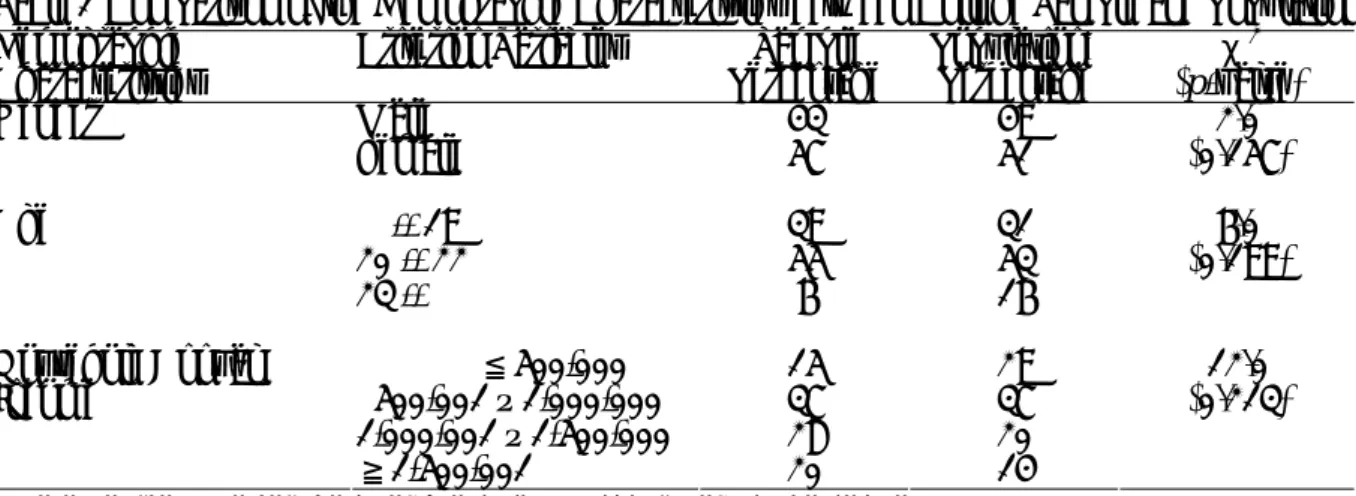
The representativeness of the sample was examined by comparing the sample’s basic demographics with those of the population of college students in Taiwan. The results showed that the demographical characteristics of our respondents were similar to those of the college student population in Taiwan regarding gender, age, and household annual income (See Table 1).
---Table 1 about here---
Finally, to see whether our student respondents came from families with an annual household income similar to that of the general public, we compared the household income of
our respondents with that of the general public. The results showed that although the population’s top 20% income group has a higher income than our respondents, the other quintile of the population’s household income is very similar to that of our respondents. Government data for 2003 shows that the average household income for the lowest 20% of family earners was NTD 358,916; those in the 21% to 40% bracket earned NTD 664,930; those in the 41% to 60% bracket earned 908,717; those in the 61% to 80% bracket earned NTD 1,237,701, and the top 20% of families earned NTD 2,153,862. The above comparisons provide some evidence that our respondents share many aspects of the college student population and the general public.
Measurement
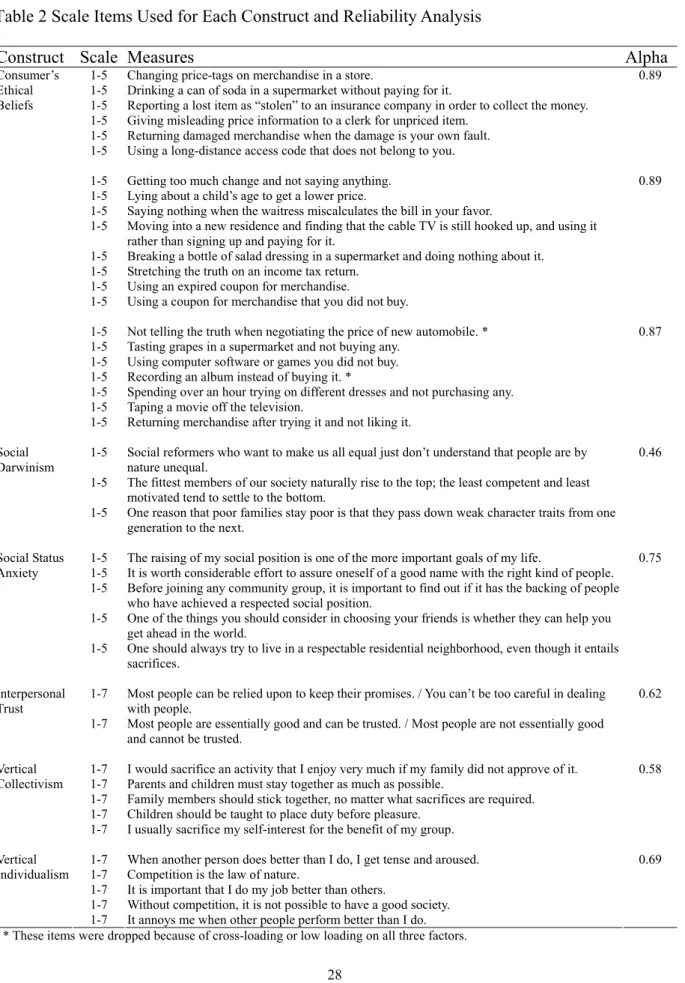
The questionnaire consisted of seven sections: consumer’s ethical beliefs, social status anxiety, interpersonal trust, social Darwinism, vertical collectivism, vertical individualism and respondent backgrounds. The sections are shown in Table 2. The double translation method was applied to make sure the translation was adequate because all measures were originally developed in English.
Consumer ethical beliefs were measured by the scale developed by Muncy and Vitell (1992), which includes four dimensions of consumer’s ethical beliefs: (1) actively benefiting from illegal activities, (2) passively benefiting from illegal activities, (3) actively benefiting from questionable actions and (4) no harm/no foul. The scale has been empirically tested in several situations, contexts and cultures. The respondents were asked to choose their “beliefs” based on a five-point scale ranging from “deeply believe that action is right” to “deeply believe that action is wrong.”
Social status anxiety and social Darwinism were measured by a five-point scale respectively as well, with respondents asked to rate from “strongly agree” to “strongly disagree.”
These two scales were taken from the Cross-national Variations in Distributive Justice Perception (CVDJP) project. The CVDJP instrument had been translated into 12 languages and administered approximately in 20 countries, including Jamaica, United States, New Zealand, Israel, Sweden, South Africa and Taiwan (Powell, 2005). The reliability and validity of the scale is well established. Some results of the project had been published in the special issue of Journal of cross-cultural psychology in 2005.
The interpersonal trust scale was taken from the CVDJP project, too. There were two items to measure the construct. The respondents were asked to answer the seven-point scale with a range from “7,” representing a point of view held by some people, to “1,” representing an opposing point of view.
Hofstede (1980) identified individualism- collectivism constructs where the cultural was the unit of analysis. Triandis and his colleagues developed related scales for measuring cultural tendency at the individual level. Two constructs, vertical collectivism and vertical individualism, from Triandis and Gelfand (1998) and Singelis et al. (1995) were measured by a seven-point scale. The respondents were asked to rate their agree levels ranging from “strongly agree” to “strongly disagree.”
---Table 2 about here---
Procedures for Statistical Analyses
In order to test the proposed research hypotheses, several statistical analyses were applied to the data. First, principal component analysis with varimax rotation was applied to extract consumers’ ethical beliefs dimensions. Although the consumer ethical belief scale is well established in the Western literature, exploratory factor analyses, instead of confirmatory factor analyses, were applied in this study, because this study is among the first to apply the scale in a
Chinese culture. Consumers in different cultural settings may have different conceptual perceptions toward a scale (Craig and Douglas, 2000). It is better to be more conservative in applying a scale which was developed in a different cultural environment. The results of the exploratory factor analysis for this study can be the basis for scale validation of consumer ethical belief measures in other Eastern societies for future studies.
Second, the dimensions of the exploratory factor analysis were then served as the input for cluster analysis. Cluster analysis classifies respondents so that they are very similar to each other in the cluster with respect to some predetermined criterion. The focus of cluster analysis is to compare the respondents based on the criterion variables, not on the estimation of the criterion variable itself (Punj and Stewart, 1983). The method is a strong tradition in psychological classification based on personality and other attitude traits (Hair et al., 1998). It is also called fit as gestalts in management literature (Venkatraman, 1989). Instead of gestalts, if the system was decomposed into a set of bivariate contingencies, it is plausible that internal inconsistencies among multiple pair-wise contingencies would exist (Venkatraman, 1989). For example, a person may possesses diverse aspects of attitudes toward an object; sometimes it is very difficult to examine the relationship between a limited attitude trait and other variables, without considering the whole set of attitude traits as a gestalt.
We believe the concept of consumer ethical belief is multi-dimensional. Some of the dimensions may even pose internal inconsistencies. We group individuals based on their ethical beliefs, such that each entity is similar to the others in the same cluster with respect to different aspects of ethical beliefs. We can then have a clear overall image about these clusters, and not lose in the specific characteristics of the pair-wise observations. In this fashion, the researcher has a more concise, comprehensible description of the observations, with minimal loss of
information (Hair et al., 1998).
We followed the procedure of the cluster analysis suggested by Punj and Stewart (1983) in conducting the cluster analysis. In their recommendations, Ward’s cluster analysis was first applied to obtain initial centroids. Based on the initial centroids, we calculated the standard deviation of the distance from the group mean of each respondent. Since cluster analysis is sensitive to outliers, the observations with a distance greater than three standard deviations from their group means were discarded from further analysis (Punj and Stewart, 1983; Hair et al., 1998), and 13 cases were excluded from our study at this stage. The remaining observations were then clustered with the k-mean method, using the cluster centroids obtained from the Ward method as the initial seed points. The final procedure of the cluster analyses was to use ANOVA analyses to ascertain the differences of consumption ethical beliefs among the clusters.
Finally, ANOVA analyses were applied to test whether respondents belong to different groups of consumption ethical beliefs possesses different levels of social Darwinism, social status anxiety, trust of other people, VC tendency, and VI tendency. These tests were used to test the research hypotheses directly.
Results Factor Analysis Results
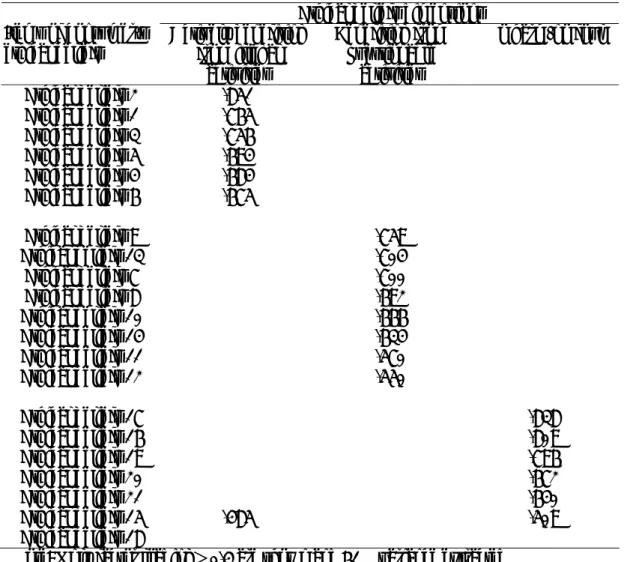
The results of principal component analysis showed that there were three factors with eigenvalue exceeding one (61% variance extracted). The analysis of the latent root criterion also showed that three factors should be chosen. Therefore, the three factors were orthogonally rotated by the Varimax method to achieve a simpler and more meaningful factor solution. The results are shown in Table 3. The dimensions of the consumer ethics scale in our study are a little
different from Muncy and Vitell (1992). There are four dimensions of consumers’ ethical beliefs in Muncy and Vitell’s research: (1) actively benefiting from illegal activities, (2) passively benefiting at the expense of others, (3) actively benefiting from questionable action and (4) no harm/no foul.
The first six items of the original scales have loadings higher than .5 on the first factor. The items of these dimensions were almost the same as Muncy and Vitell (1992), except the sixth item in our study. Based on the loaded items, we named the first factor as “actively benefiting from illegal activities,” since the loaded items express the attitude of taking serious ethical actions to obtain benefits. Eight items of the scales loaded higher than .5 on the second factor. This factor includes passively benefiting from illegal activities and actively benefiting from questionable actions, based on Muncy and Vitell’s classification. Therefore we named the second factor as “benefiting from questionable activities.” Finally, items 15, 16, 17, 19, 20 and 21 of Muncy and Vitell’s (1992) scale had loading higher than .5 on the third factor. However, item 15 also had a high cross-loading value (.485) on factor one and item 18 had loading lower than .4 in all three factors. Therefore, items 15 and 18 were dropped in the consequent analysis. The third factor was termed “no harm/no foul.”
---Table 3 about here---
Cluster Analysis Results
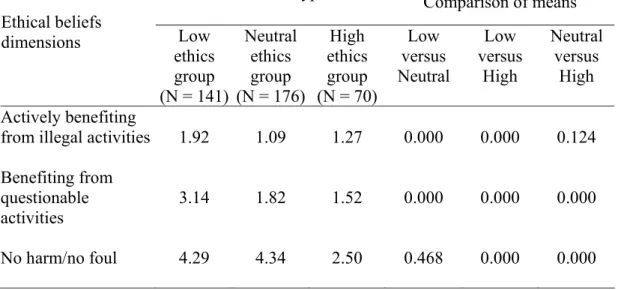
The final cluster analysis results are shown in Table 4. Three clusters were selected because (1) from the agglomeration coefficient change analysis, we found that the largest relative increase in the coefficient is when the cluster number changes from four to three; (2) from the ANOVA analysis, we found that group one was a low ethics orientation group, group two was a neutral ethics orientation group and group three was a high ethics orientation group; and (3) this
kind of classification would be more meaningful and relevant for further analysis of this study if three groups can be used to examine whether there is a curvilinear relationship between the attitude variables and ethics beliefs.
The results of significant tests on the three ethical beliefs showed that all between-group Scheffe tests were significant except “no harm/no foul” between group one and group two (p = .468) and “actively benefiting from illegal activities” between neutral and high ethics group (p = .124). Group one was significantly more acceptable on “actively benefiting from illegal activities” and “benefiting from questionable activities” than groups two and three. Group two was significantly more tolerate on “benefiting from questionable activities” than group three (Table 4). Therefore, group one, two and three were termed as low ethics group (N=141), neutral ethics group (N= 176), and high ethics group (N=70) respectively.
---Table 4 about here---
To see whether there was any difference in demographic characteristics among the three groups, ANOVAs were applied to test on the demographic data. The results showed that there was no significant difference among the three ethics groups regarding age and social status (See Table 5). A Chi-Square test on the distribution of family income among the three groups also showed that there was no significant difference among the three ethics groups (χ2 = 24.816, p = .306).However, the results did show that there were significantly more males in the low ethics group than in the neutral ethics group. To understand whether gender posed a different perception on political, social, and cultural values, T-tests were applied on each of these variables. The results show that gender did not have a significant influence on respondents’ perceptions toward Social Darwinism (t = .803, p = .423), social status anxiety (t = 1.589, p = .113), interpersonal trust (t = .856, p = .393), vertical collectivism (t = .501, p = .616), and vertical
individualism (t = .500, p = .618). These analyses demonstrated the three-cluster solution successfully classified the respondents based on the ethical beliefs they possessed. Demographic variables did not cause significant effect on the classification process and on the research variables when analyzing the data using the three-cluster results.
ANOVA Analysis
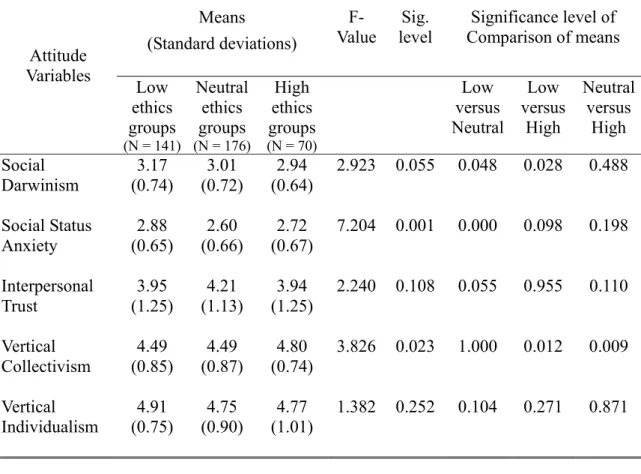
The five hypotheses were tested by ANOVA analyses, and the results are summarized in Table 5.
The Relationship between Ethics Groups and Social Darwinism. An ANOVA on the
perception of social Darwinism yielded main effects for the three ethics groups (F = 2.923, p = .055). Consumers of the three ethics groups tended to have a different perception of social Darwinism. We applied Scheffe tests to make sure there were significant differences between the groups. The results showed that the low ethics group had a higher perception of social Darwinism than the neutral and high ethics groups (p’s = .048 and .028). Neutral and high ethics groups did not differ in their perceptions of social Darwinism (p = .488). Therefore, the low ethical beliefs consumers tended to have higher perceptions of social Darwinism than the neutral and high ethics groups. Therefore, H1 was partially supported (Table 5).
---Table 5 about here---
The Relationship between Ethics Groups and the Social Status Anxiety. An ANOVA on the
social status anxiety yielded main effects for the three ethics groups (F = 7.204, p = .001). Significant differences existed among the three ethics groups. Scheffe tests showed that the low ethics group differed from the other two groups (p’s = .000 and .098), people with low consumer ethical beliefs tended to have higher social status anxiety comparing with neutral and high ethics groups. However, neutral and high ethics groups did not have a significant difference in this
criterion (p = .198). Therefore, the low ethics group had the highest status anxiety among the three ethics groups. Therefore, H2 was partially supported.
The Relationship between Ethics Groups and the Interpersonal Trust. An overall ANOVA
on the interpersonal trust yielded marginally significant main effects for the three ethics groups (F = 2.240, p = .108). Between-group Sheffe tests indicated significant differences between the low ethics group and the neutral ethics group (p = .055), but no differences between the low and high ethics groups or the neutral and high ethics groups (p’s = .955 and .110). This demonstrated that the neutral ethics group had the highest trust of people among the three ethics groups. We will discuss the results more in the discussion section. Therefore, H3 was not supported.
The Relationship Between Ethics Groups on the Vertical Collectivism. As expected, an
ANOVA on the vertical collectivism yielded main effects for the three ethics groups (F = 3.826,
p = .023). The significant p-value demonstrated that consumers with different ethical beliefs
possess different collectivist orientations. The results of Sheffe tests showed that consumers of the high ethics group expressed a significantly higher perception of vertical collectivism than those consumers of the low and neutral ethics groups (p’s = .012 and .009). On the other hand, the low ethics group and the neutral ethics group had the similar tendency toward vertical collectivism (p = 1). Therefore, H4 was partially supported.
The Relationship Between Ethics Groups and the Vertical Individualism. An ANOVA on
vertical individualism did not yield main effects among the three ethics groups (F = 1.382, p = .252). The results of Scheffe tests also showed no significant differences between the low and neutral, the low and high or the neutral and high ethics groups (p’s = .104, .271 and .871). These results showed that all the consumers had the same tendency in vertical individualism. The lower ethics groups did not tend to possess higher vertical individualistic orientation. Therefore, H5
was not supported.
Discussion and Implications
Past research in consumer ethics focuses on the comparison of consumers’ ethical beliefs among consumers with different personality. This study enriches the research stream by examining several new variables regarding the political, social, and cultural values of consumers to discover new relationships between these variables and consumers’ ethical judgments. The results of this research showed that consumers with low ethical beliefs have higher perceptions of social Darwinism than consumers who possess neutral and high ethical beliefs. The results also showed that people with low consumer ethical beliefs tended to have higher social status anxiety compared with neutral and high ethics groups. These demonstrate that when consumers possess the concept of social Darwinism and have higher status anxiety, they are more likely to do whatever they can to actively and passively benefit from the questionable consumption behavior. Therefore, social welfare programs aiming to ease the tension between social classes may not only improve the welfare of disadvantaged classes, but also enhance their ethical beliefs on consumption behaviors. Marketers should take proactive action in participating in these kinds of programs.
The results also supported the relationship between cultural orientation and consumers’ ethical beliefs. Consumers of high ethics groups expressed significantly higher perceptions of vertical collectivism than those consumers of low and neutral ethics groups. This explains that consumers possessing vertical collectivism orientations are more likely to treat the sellers as part of their in-groups and, therefore, are more likely to restrain from questionable consumption behaviors (whether actively or passively). In order to improve the consumer ethics in consumption, marketers should try to install programs to promote the sense of community among
their consumers. When consumers use the vertical collectivism view in consumption, the ethics in consumption will be improved.
Finally, the results show that neutral ethics groups had higher trust of people than low ethics groups. This result is consistent with the hypothesis, meaning if a consumer has high perceived credibility and benevolence of other people, they will try not to hurt them and use a higher standard of moral philosophies in consumption behaviors. However, contradictory to the original hypotheses, the results showed that there is no difference between the high ethics group and the neutral ethics group. These results may be caused by the high ethics standard employed by the high ethics group. As shown in Table 4, consumers in the high ethics group do not even agree with no harm/no foul behaviors. If a person uses this high standard in examining exchange relationships, they will gradually loss faith in other people. This may reduce their trust of other people.
There are several limitations for this study. The first limitation is the cross-sectional design employed. To provide a stronger inference, the model developed and tested here could benefit from being tested in a longitudinal design. Second, this study was conducted on college students. Although the population of college students in Taiwan is not limited to a small advantaged group of the population, consumers at the lower end of the social classes are normally underrepresented in the college student body. Despite the fact that we have tried to broaden our sources of student samples, some of the perspectives of these students may differ from the general public’s perspectives with regard to the consumers’ ethical beliefs. Sutherland (1955) pointed out that unethical behaviors could be learned through social interaction. Therefore, age may have an effect on ethical beliefs. Strutton et al. (1997) found that the generation gap did exist in ethical behavior; consumers tend to become more ethical as they grow older (Vitell et al., 1991; Rawwas
and Singhapakdi, 1998; Erffmeyer et al., 1999; Vitell and Paolillo, 2003). Research also showed a significant relationship between education and consumer ethics (Vitell et al., 2001); people with a higher level of education will be less tolerant toward questionable actions (Swaidan et al., 2003). Future research may be extended to include a more diversified population.
Third, some interactions may exist between the attitude variables. For example, consumers tend to have higher social status anxiety and maybe also more agree of the concept of social Darwinism; and those with higher social economic status may also have a greater tendency toward individualism. Therefore, future studies may investigate the interaction relationship among these variables.
Fourth, the model was empirically tested in a Taiwanese sample. Although our study examined consumers’ ethical beliefs in a single country, which allowed for some control over extraneous factors, the strength and relative importance of the proposed constructs in this study may differ by culture. Taiwan is an emerging industrialized country. Its race is unitary; most people are Buddhists and Taoists, and a middle-of-the-road policy is the principle adopted by many people. Past research has found that economics, religion, national identity and cultural environment are important factors that influence ethical decisions (Al-Khatib et al., 1997; Bartels, 1967; Rawwas, 2001; Rawwas et al., 1994; Singhapakdi et al., 1999). Therefore, our findings may have limited generalizability to other societies. Future research should examine the role national culture plays in consumers’ ethical beliefs. Expanding the samples to include students or other samples from other cultures might provide more validation for the proposed relationships. Therefore, more empirical tests of the proposed relationships in other societies are needed.
Finally, the cronbach alpha values for the vertical collectivism and social Darwinism are below .6. Although these two scales have been tested in several societies, further studies are
needed to ascertain the reliabilities of these constructs. Since there are only four and three items in each construct, more items may be needed to encompass the broad nature of these constructs.
Reference
Al-Khatib, J.A., S.J. Vitell, and M.Y.A. Rawwas: 1997, ‘Consumer Ethics: A Cross-cultural Investigation’, European Journal of Marketing 31(11/12), 750-767.
Barro, R.J.: 2000, ‘Inequality and Growth in a Panel of Countries’, Journal of Economic Growth 5(1), 5-32.
Bartels, R.: 1967, ‘A Model for Ethics in Marketing’, Journal of Marketing 31(1), 20-26.
Beauchamp, T.L. and N.E. Bowie: 1979, Ethical Theory and Business (Prentice Hall, Englewood Cliffs, NJ).
Chiou, Jyh-shen: 2001, ‘Horizontal and Vertical Individualism and Collectivism among College Students in the United States, Taiwan, and Argentina’, Journal of Social Psychology 141(5), 667-678.
Chiou, Jyh-shen: 2002, ‘The Effectiveness of Different Advertising Message Appeals in the Eastern Emerging Society: Using Taiwanese TV Commercials as An Example’, International
Journal of Advertising 21 (2), 217-236.
Craig, C.S. and S.P. Douglas: 2000, International Marketing Research, 2nd Eds. (John Wiley &
Sons, Chichester).
Darwin, C.: (1859) 1972, The Origin of Species by Means of Natural Selection or the
Preservation of Favored Races in the Struggle for Life (D. Appeletion, NY).
Doney, P.M. and J.P. Cannon: 1997, ‘An Examination of the Nature of Trust in Buyer-Seller Relationships’, Journal of Marketing 61(2), 35-51.
Douglas, S.P. and B. Dubios: 1977, ‘Looking at the Cultural Environment of International Marketing Opportunities’, Columbia Journal of World Business 12(4), 102-108.
Douglas, S.P. and C.S. Craig: 1997, ‘The Changing Dynamic of Consumer Behavior, Implications for Cross-cultural Research’, International Journal of Research in Marketing 14(4), 379-395.
Erffmeyer, R.C., B.D. Keillor, and D.T. LeClair: 1999, ‘An Empirical Investigation of Japanese Consumer Ethics’, Journal of Business Ethics 18(1), 35-50.
Ferrell, O.C. and L.G. Gresham: 1985, ‘A Contingency Framework for Understanding Ethical Decision Making in Marketing’, Journal of Marketing 49(3), 87-96.
Forsyth, D.R.: 1980, ‘A Taxonomy of Ethical Ideologies’, Journal of Personality and Social
Psychology 39(1), 175-184.
Fullerton, S., K.B. Kerch, and H.R. Dodge: 1996, ‘Consumer Ethics: An Assessment of Individual Behavior in the Market Place’, Journal of Business Ethics 15(7), 805-814.
Gouveia, V.V., M. Clemente, and P. Espinosa: 2003, ‘The Horizontal and Vertical Attributes of Individualism and Collectivism in a Spanish Population’, The Journal of Social Psychology 143(1), 43-63.
Grusky, D.B. and R.M. Hauser: 1984, ‘Comparative Social Mobility Revisited: Models of Convergence and Divergence in 16 Countries’, American Sociological Review 49(1), 19-38. Hair, J.F. Jr., R.E. Anderson, R.L. Tatham, and W.C. Black: 1998, Multivariate Data Analysis,
Hofstede, G.: 1980, Culture’s Consequences: International Differences in Work-related Values (Sage, Beverly Hills, CA).
Hofstede, G.: 1983, ‘Dimensions of National Culture in Fifty Countries and Three Regions’, in J.B. Deregowski, S. Dziurawiec and R.C. Annios (eds.), Explications in Cross-Cultural
Psychology (Saets and Zeitlinger, Lisse, Netherlands), pp. 335-355.
Hudson, C.G.: 2000, ‘From Social Darwinism to Self-Organization: Implications for Social Change Theory’, Social Service Review 74(4), 533-559.
Hunt, A.: 1999, ‘Anxiety and Social Explanation: Some Anxieties about Anxiety’, Journal of
Social History 32(3), 509-528.
Hunt, S.D. and S.J. Vitell: 1986, ‘A General Theory of Marketing Ethics’, Journal of
Macromarketing 6(1), 5-16.
Hunt, S.D. and S.J. Vitell: 1993, ‘The General Theory of Marketing Ethics: A Retrospective and Revision’, in N.C. Smith and J.A. Quelch (eds.), Ethics in Marketing (Irwin Inc., Homewood, IL), pp. 775-784.
Kelley, J. and M.D. Evans: 1995, ‘Class and Class Conflict in Six Western Nations’, American
Sociological Review 60(2), 157-178.
Kenhove, P.V., I. Vermeir, and S. Verniers: 2001, ‘An Empirical Investigation of the Relationships Between Ethical Beliefs, Ethical Ideology, Political Preference and Need for Closure’, Journal of Business Ethics 32(4), 347-361.
Kluegel, J.R. and E.R. Smith: 1986, Beliefs about Inequality (Aldine de Gruyter, NY).
Kwong, K.K., O.H. Yau, J.S.Y. Lee, L.Y.M. Sin, and A.C.B. Tse: 2003, ‘The Effects of Attitudinal and Demographic Factors on Intention to Buy Pirated CDs: The Case of Chinese Consumers’, Journal of Business Ethics 47(3), 223-235.
Larzelere, R.E. and T.L. Huston: 1980, ‘The Dyadic Trust Scale: Toward Understanding Interpersonal Trust in Close Relationships’, Journal of Marriage and the Family 42(3), 595-604.
Markus, H.R. and S. Kitayama: 1991, ‘Culture and the Self: Implications for Cognition, Emotion, and Motivation’, Psychological Review 98, 224-253.
Marx, K.: (1867) 1967, Capital (International Publishers, NY).
Muncy, J.A. and S.J. Vitell: 1992, ‘Consumer Ethics: An Investigation of the Ethical Beliefs of the Final Consumers’, Journal of Business Research 24(6), 297-311.
Muncy, J.A. and J.K. Eastman: 1998, ‘Materialism and Consumer Ethics: An Exploratory Study’,
Journal of Business Ethics 17(2), 137-145.
Murphy, P. and G.R. Laczniak: 1981, ‘Marketing Ethics: A Review with Implications for Managers, Educators and Researchers’, in B.M. Enis and K.J. Roering (eds.), Review of
Marketing 1981 (American Marketing Association, Chicago), pp. 251-266.
Powell, L.A.: 2005, ‘Justice Judgments as Complex Psychocultural Constructions: An Equity-Based Heuristic for Mapping Two- and Three-Dimensional Fairness Representations in Perceptual Space’, Journal of Cross-Cultural Psychology 36(1), 48-73.
Punj, G. and D.W. Stewart: 1983, ‘Cluster Analysis in Marketing Research: Review and Suggestions for Application’, Journal of Marketing Research 20(2), 134-148.
Rallapalli, K.C., S.J. Vitell, F.A. Wiebe, and J.H. Barnes: 1994, ‘Consumer Ethical Beliefs and Personality Traits: An Exploratory Analysis’, Journal of Business Ethics 13(7), 487-495. Rawwas, M.Y.A., S.J. Vitell, and J.A. Al-Khatib: 1994, ‘Consumer Ethics: The Possible Effects
of Terrorism and Civil Unrest on the Ethical Values of Consumers’, Journal of Business
Rawwas, M.Y.A. and A. Singhapakdi: 1998, ‘Do Consumers’ Ethical Beliefs Vary with Age? A Substantiation of Kohlberg’s Typology in Marketing’, Journal of Marketing Theory and
Practice 6(2), 26-38.
Rawwas, M.Y.A.: 2001, ‘Culture, Personality and Morality: A Typology of International Consumers’ Ethical Beliefs’, International Marketing Review 18(2), 188-211.
Singelis, T.M., H.C. Triandis, D. Bhawuk, and M.J. Gelfand: 1995, ‘Horizontal and Vertical Individualism and Collectivism: A Theoretical and Measurement Refinement’,
Cross-Cultural Research 29(3), 240-275.
Singhapakdi, A., S.J. Vitell, and O. Leelakulthanit: 1994, ‘A Cross-cultural Study of Moral Philosophies, Ethical Perceptions and Judgements’, International Marketing Review 11(6), 65-78.
Singhapakdi, A., M.Y.A. Rawwas, J.K. Marta, and M.I. Ahmed: 1999, ‘A Cross-cultural Study of Consumer Perceptions about Marketing Ethics’, Journal of Consumer Marketing 16(3), 257-272.
Sinha, D. and R.C. Tripathi: 1994, ‘Individualism in a Collectivistic Culture: A Case of Coexistence of Opposites’, in U. Kim, H.C. Triandis, Ç. Kâğitçibaşi, S.C. Choi, and G. Yoon (eds.), Individualism and Collectivism: Theory, Method, and Applications (Sage, Thousand Oaks, CA), pp. 123-136.
Soros, G.: 2002, On Globalization (Public Affairs, NY). Spencer, H.: 1874, The Study of Sociology (D. Appelton, NY). Stiglitz, J.E.: 2002, Globalization and Its Discontents (Norton, NY).
Strutton, D., L.E. Pelton, and O.C. Ferrell: 1997, ‘Ethical Behavior in Retail Settings: Is There a Generation Gap?’ Journal of Business Ethics 16(1), 87-105.
Sutherland, E.H.: 1955, Principles of Criminology (Lippincourt, Philadelphia, PA).
Swaidan, Z., S.J. Vitell, and M.Y.A. Rawwas: 2003, ‘Consumer Ethics: Determinants of Ethical Beliefs of African Americans’, Journal of Business Ethics 46(2), 175-186.
Triandis, H.C.: 1989, ‘The Self and Social Behavior in Differing Cultural Contexts’,
Psychological Review 96 (3), 506-520.
Triandis, H.C.: 1994a, Culture and Social Behavior (McGraw-Hill, NY).
Triandis, H.C.: 1994b, ‘Theoretical and Methodological Approaches to the Study of Collectivism and Individualism’, in U. Kim, H.C. Triandis, Ç. Kâğitçibaşi, S.C. Choi, and G. Yoon (eds.),
Individualism and Collectivism: Theory, Method, and Applications, (Sage, Thousand Oaks,
CA), pp. 41-51.
Triandis, H.C.: 1995, Individualism and Collectivism (Westview Press, Boulder, CO).
Triandis, H.C. and M.J. Gelfand: 1998, ‘Converging Measurement of Horizontal and Vertical Individualism and Collectivism’, Journal of Personality and Social Psychology 74(1), 118-128.
Venkatraman, N.: 1989, ‘The Concept of Fit in Strategy Research: Toward Verbal and Statistical Correspondence’, Academy of Management Review 14(3), 423-444.
Vitell, S.J., J.R. Lumpkin, and M.Y.A. Rawwas: 1991, ‘Consumer Ethics: An Investigation of the Ethical Beliefs of Elderly Consumers’, Journal of Business Ethics 10(5), 365-375.
Vitell, S.J. and J.A. Muncy: 1992, ‘Consumer Ethics: An Empirical Investigation of Factors Influencing Ethical Judgments of the Final Consumers’, Journal of Business Ethics 11(8), 585-597.
Vitell, S.J., S.L. Nwachukwu, and J.H. Barnes: 1993, ‘The Effects of Culture on Ethical Decision-Making: An Application of Hofstede’s Typology’, Journal of Business Ethics
12(10), 753-760.
Vitell, S.J., A. Singhapakdi, and J. Thomas: 2001, ‘Consumer Ethics: An Application and Empirical Testing of the Hunt-Vitell Theory of Ethics’, Journal of Consumer Marketing 18(2), 153-178.
Vitell, S.J.: 2003, ‘Consumer Ethics Research: Review, Synthesis and Suggestions for the Future’, Journal of Business Ethics 43(1/2), 33-47.
Vitell, S.J. and J.G.P. Paolillo: 2003, ‘Consumer Ethics: The Role of Religiosity’, Journal of
Business Ethics 46(2), 151-162.
Waller, D. and M.J. Polonsky: 1999, ‘Attitudes Towards Political Advertising: Some Cross-cultural Implications’, Journal of International Consumer Marketing 12(2), 79-98.
Table 1 Comparison of the Demographic Characteristics between College Sample and Population Demographic
Characteristics Criterion Variables Percentage Sample Population* Percentage χ
2 (p-value) Male 43 49 Female 57 51 Gender 2.0 (0.157) -- 19 39 31 20 -- 22 55 53 23 -- 6 16 Age 6.0 (0.199) ≦500,000 15 29 500,001 – 1,000,000 37 37 1,000,001 – 1,500,000 28 20 Household Annual Income ≧1,500,001 20 14 12.0 (0.213) *Data sources: Department of Statistics, Ministry of Education, R.O.C., 2003
Table 2 Scale Items Used for Each Construct and Reliability Analysis
Construct Scale Measures Alpha
1-5 Changing price-tags on merchandise in a store.
1-5 Drinking a can of soda in a supermarket without paying for it.
1-5 Reporting a lost item as “stolen” to an insurance company in order to collect the money. 1-5 Giving misleading price information to a clerk for unpriced item.
1-5 Returning damaged merchandise when the damage is your own fault. 1-5 Using a long-distance access code that does not belong to you.
0.89
1-5 Getting too much change and not saying anything. 1-5 Lying about a child’s age to get a lower price.
1-5 Saying nothing when the waitress miscalculates the bill in your favor.
1-5 Moving into a new residence and finding that the cable TV is still hooked up, and using it rather than signing up and paying for it.
1-5 Breaking a bottle of salad dressing in a supermarket and doing nothing about it. 1-5 Stretching the truth on an income tax return.
1-5 Using an expired coupon for merchandise.
1-5 Using a coupon for merchandise that you did not buy.
0.89
1-5 Not telling the truth when negotiating the price of new automobile. * 1-5 Tasting grapes in a supermarket and not buying any.
1-5 Using computer software or games you did not buy. 1-5 Recording an album instead of buying it. *
1-5 Spending over an hour trying on different dresses and not purchasing any. 1-5 Taping a movie off the television.
1-5 Returning merchandise after trying it and not liking it. Consumer’s
Ethical Beliefs
0.87
1-5 Social reformers who want to make us all equal just don’t understand that people are by nature unequal.
1-5 The fittest members of our society naturally rise to the top; the least competent and least motivated tend to settle to the bottom.
1-5 One reason that poor families stay poor is that they pass down weak character traits from one generation to the next.
Social
Darwinism 0.46
1-5 The raising of my social position is one of the more important goals of my life.
1-5 It is worth considerable effort to assure oneself of a good name with the right kind of people. 1-5 Before joining any community group, it is important to find out if it has the backing of people
who have achieved a respected social position.
1-5 One of the things you should consider in choosing your friends is whether they can help you get ahead in the world.
1-5 One should always try to live in a respectable residential neighborhood, even though it entails sacrifices.
Social Status
Anxiety 0.75
1-7 Most people can be relied upon to keep their promises. / You can’t be too careful in dealing with people.
1-7 Most people are essentially good and can be trusted. / Most people are not essentially good and cannot be trusted.
Interpersonal
Trust 0.62
1-7 I would sacrifice an activity that I enjoy very much if my family did not approve of it. 1-7 Parents and children must stay together as much as possible.
1-7 Family members should stick together, no matter what sacrifices are required. 1-7 Children should be taught to place duty before pleasure.
1-7 I usually sacrifice my self-interest for the benefit of my group. Vertical
Collectivism 0.58
1-7 When another person does better than I do, I get tense and aroused. 1-7 Competition is the law of nature.
1-7 It is important that I do my job better than others.
1-7 Without competition, it is not possible to have a good society. Vertical
Individualism
1-7 It annoys me when other people perform better than I do.
0.69
Table 3 Factors and Factor loadings of Consumer’s Ethical Beliefs Ethical beliefs dimensions Items of consumer’s
ethical beliefs Actively benefiting from illegal activities Benefiting from questionable activities No harm/no foul Ethical beliefs 2 .851 Ethical beliefs 1 .765 Ethical beliefs 3 .756 Ethical beliefs 5 .694 Ethical beliefs 4 .684 Ethical beliefs 6 .675 Ethical beliefs 9 .759 Ethical beliefs 13 .704 Ethical beliefs 7 .700 Ethical beliefs 8 .692 Ethical beliefs 10 .666 Ethical beliefs 14 .634 Ethical beliefs 11 .570 Ethical beliefs 12 .550 Ethical beliefs 17 .838 Ethical beliefs 16 .809 Ethical beliefs 19 .796 Ethical beliefs 20 .672 Ethical beliefs 21 .640 Ethical beliefs 15 .485 .509 Ethical beliefs 18
Table 4 Results of Cluster Analysis and Scheffe Test
Consumer’s types Comparison of means Significance level of Ethical beliefs dimensions Low ethics group (N = 141) Neutral ethics group (N = 176) High ethics group (N = 70) Low versus Neutral Low versus High Neutral versus High Actively benefiting
from illegal activities 1.92 1.09 1.27 0.000 0.000 0.124
Benefiting from questionable activities
3.14 1.82 1.52 0.000 0.000 0.000
Table 5 ANOVA Analysis among Low, Neutral and High ethics groups Means (Standard deviations) F- Value Sig. level Significance level of Comparison of means Attitude Variables Low ethics groups (N = 141) Neutral ethics groups (N = 176) High ethics groups (N = 70) Low versus Neutral Low versus High Neutral versus High 3.17 3.01 2.94 2.923 0.055 0.048 0.028 0.488 Social Darwinism (0.74) (0.72) (0.64) 2.88 2.60 2.72 7.204 0.001 0.000 0.098 0.198 Social Status Anxiety (0.65) (0.66) (0.67) 3.95 4.21 3.94 2.240 0.108 0.055 0.955 0.110 Interpersonal Trust (1.25) (1.13) (1.25) 4.49 4.49 4.80 3.826 0.023 1.000 0.012 0.009 Vertical Collectivism (0.85) (0.87) (0.74) 4.91 4.75 4.77 1.382 0.252 0.104 0.271 0.871 Vertical Individualism (0.75) (0.90) (1.01) Demographic Characteristics Gender 1.51 (0.50) 1.37 (0.48) 1.36 (0.48) 4.031 0.019 0.034 0.103 0.992 Age 20.09 (1.96) 20.03 (1.91) 19.90 (1.36) 0.257 0.774 0.961 0.774 0.876 Social Classes 3.65 (1.10) 3.58 (0.97) 3.59 (0.97) 0.221 0.802 0.808 0.927 0.993