‧
國
立
政 治 大
學
‧
N
a
tio
na
l C
h engchi U
ni
ve
rs
it
y
國立政治大學國際傳播英語碩士學位學程
International Master’s Program in
International Communication Studies
College of Communication
National Chengchi University
碩士論文
Master’s Thesis
機能性飲料之行銷研究:以白蘭氏盈而賞美容飲品為例
A Marketing Strategy on Functional Drinking: An Example
of Brand’s InnerShine Beauty Drinks
Student: Chiu, Jo-Hsun 丘若尋
Advisor: Professor Chu, Fong-Kang 祝鳳岡教授
中華民國 101 年 6 月
June 2012
‧
國
立
政 治 大
學
‧
N
a
tio
na
l C
h engchi U
ni
ve
rs
it
y
論文題目
A Marketing Strategy on Functional Drinking: An Example
of Brand’s InnerShine Beauty Drinks
研究生: 丘若尋 Student: Chiu, To-Hsun
指導教授: 祝鳳岡 Advisor: Chu, Fong-Kang
國立政治大學
國際傳播英語碩士學位學程
碩士論文
A Thesis
Submitted to International Master’s Program in
International Communication Studies
National Chengchi University
In partial fulfillment of the Requirement
For the degree of Master of Arts
中華民國 101 年 6 月
Month June Year 2012
‧
國
立
政 治 大
學
‧
N
a
tio
na
l C
h engchi U
ni
ve
rs
it
y
ACKNOWLEDGEMENT
This dissertation would not have been possible without the guidance and the help of several individuals who in one way or another contributed and extended their valuable assistance in the preparation and completion of this study.
First and foremost, my utmost gratitude to Prof. Feng-Kang Chu, whose sincerity and encouragement I will never forget. Prof. Chu has been my inspiration as I hurdle all the obstacles in the completion this research work. Dr. Ming-Te Liu, for his unselfish and unfailing support as my dissertation examiner; Dr. Aihwa Chang, for her patience and steadfast encouragement to complete this study; Dr. Yih-Yuh Lee, for the insights he has shared.
I would also like to express my thankfulness to my friends as follows: Yawen Chen, for her assistance on solving the problems on data analysis; Elizabeth Su, for her heart-felt words; Will Ho, for his help on the information collection; Meng-Ting Chang, for her encouragement and pep talk; Shechen Wang and Ellen Lee, for their generosity of sharing the topic-relevant information with me. Besides, I want to thank my boyfriend Shih-Chun Lin, for his support and suggestions on my research.
Last but not the least, my family and the one above all of us, the omnipresent God, for answering my prayers for giving me the strength to plod on despite my constitution wanting to give up and throw in the towel, thank you so much Dear Lord.
‧
國
立
政 治 大
學
‧
N
a
tio
na
l C
h engchi U
ni
ve
rs
it
y
ABSTRACT
Suffering from the heavy pressure from daily lives and work, a lot of contemporary people hold the idea to consume health foods as a way for keeping healthy. More and more people concern about their own health and would like to achieve this by having a healthy lifestyle or consuming health foods. Almanac of food
consumption survey in Taiwan from FIRDI (Food Industry Research and
Development Institute) shows that about 58.2% people had consumed functional food more than three times a month in 2010. Functional drink, as a format of oral-intake nutrients for dietary supplements, gradually becomes popular due to its convenience. Among those products, drinks with beauty claims have been particularly favored in the recent years and becomes a noticeable phenomenon. A case study on Brand’s InnerShine beauty drink, which achieves high market share in the past few years is conducted for the study.
For a clearer exploration of how marketing strategy works on beauty drinks with consumer-orientated perspective, I chose to study on variables including brand image, perceived value, customer satisfaction, and customer loyalty. Both quantitative and qualitative methods are utilized for probing the scenario. Samples are collected from 465 valid online questionnaires and 5 interviewees of in-depth interviews.
The conclusions according to the analysis from the study results are as follows: The theoretical and practical meaning of “brand image,” “perceived values,” “customer satisfaction,” and “customer loyalty” for Brand’s management are examined. Consumers’ perceived value can be increased by reinforcing the brand image. To reinforce customer satisfaction, their perceived value should be firstly enhanced. In addition, customer loyalty can be increased via reinforcing the brand image. The study also found that differences are revealed by consumers with different demographical profiles on “brand image,” “perceived values,” “customer satisfaction,” and “customer loyalty.” Suggestions for marketing strategies on Brand’s InnerShine beauty drinks are elaborated.
Keywords: beauty drinks, brand image, perceived value, customer satisfaction, customer loyalty
‧
國
立
政 治 大
學
‧
N
a
tio
na
l C
h engchi U
ni
ve
rs
it
y
TABLE OF CONTENTS
Acknowledgement Abstract Chapter I Introduction ... 1 1.1 Research Backgrounds... 11.2 Research Rationale & Significance of Study ... 3
1.3 Research Objectives ... 5
1.4 Thesis Structure ... 5
1.5 Research Process ... 7
Chapter II Literature Review ... 8
2.1 Health Foods ... 8
2.1.1 Definition of Health Foods ... 8
2.1.2 Regulations: Comparison of Taiwan and Other Countries... 10
2.1.3 Functional Drinks and Oral Beauty Products ... 12
2.2 Brand Image ... 14
2.2.1 Definition of Brand Image ... 14
2.2.2 Construct of Brand Image ... 17
2.3 Perceived Value ... 19
2.3.1 Definition of Perceived Value ... 19
2.3.2 Models of Perceived Value ... 21
2.3.3 Construct of Perceived Value ... 24
2.4 Customer Satisfaction ... 27
2.4.1 Definition of Customer Satisfaction ... 27
2.4.2 Construct of Customer Satisfaction ... 30
2.5 Customer Loyalty ... 32
2.5.1 Definition of Customer Loyalty ... 32
‧
國
立
政 治 大
學
‧
N
a
tio
na
l C
h engchi U
ni
ve
rs
it
y
Chapter III Methodology ... 36
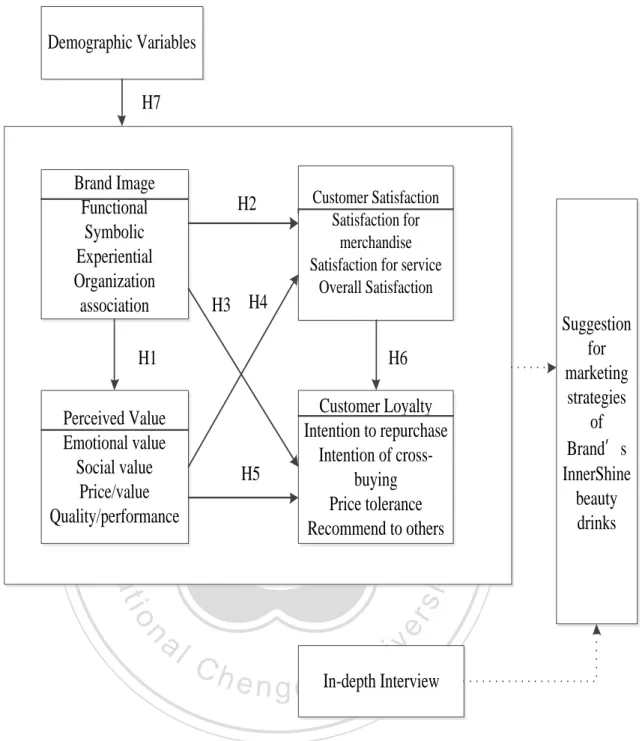
3.1 Research Framework ... 36
3.2 Hypotheses ... 38
3.3 Definition and Measurement of Variables ... 43
3.3.1 Questionnaire Design ... 43
3.3.2 Research Variables ... 43
3.4 Sampling ... 47
3.4.1 Questionnaire Survey ... 47
3.4.2 In-depth Interview ... 48
3.5 Data Collection and Analysis Methods ... 48
3.5.1 Questionnaire Survey ... 48
3.5.2 In-depth Interview ... 51
Chapter IV Data Analysis ... 52
4.1 Sample Structure ... 52
4.2 Descriptive Analysis ... 57
4.3 Factor Analysis and Reliability Test ... 62
4.4 Pearson Product-Moment Correlation Analysis ... 75
4.5 Regression Analysis ... 82
4.6 Analysis of Variance ... 97
4.7 Hypotheses Testing ... 107
4.8 Qualitative Analysis of Results ... 110
Chapter V Conclusions and Recommendations... 112
5.1 Conclusions ... 112
5.2 Recommendations ... 120
5.3 Limitations and Future Development ... 123
References ... 125
‧
國
立
政 治 大
學
‧
N
a
tio
na
l C
h engchi U
ni
ve
rs
it
y
Appendix 2 Questionnaire (English Version) ... 141
‧
國
立
政 治 大
學
‧
N
a
tio
na
l C
h engchi U
ni
ve
rs
it
y
LIST OF FIGURES & TABLES
Figure 1 Research Process ... 7
Figure 2.1 Classification of health-care foods and health foods ... 9
Figure 2.2 Category of health-care foods and others ... 9
Figure 2.3 The Formation of Perceived Value Model ... 21
Figure 2.4 ... 23
Figure 2.5 ... 25
Figure 3.1.1 Research Framework ... 37
Figure 4.7.1 Modified Research Framework ... 110
Table 2-1 Regulation, Legal Term, and Act in R.O.C, Japan, EU, and U.S.A. ... 11
Table 4-1-1 Descriptive Analysis of Demographics ... 54
Table 4-1-2 Descriptive Analysis of Consumers’ Using Experiences ... 56
Table 4-2-1 Frequency Distribution of Question Items in Brand Image ... 57
Table 4-2-2 Frequency Distribution of Question Items in Perceived Value ... 58
Table 4-2-3 Frequency Distribution of Question Items in Customer Satisfaction ... 59
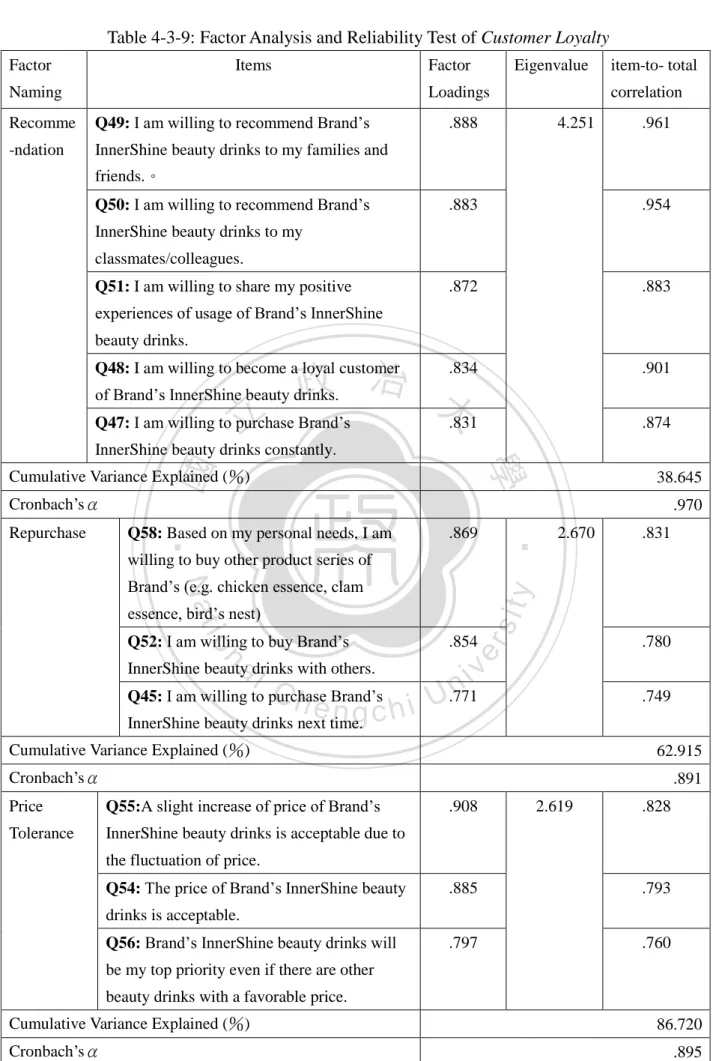
Table 4-2-4 Frequency Distribution of Question Items in Customer Loyalty ... 60
Table 4-3-1 Results of KMO and Bartlett’s Test for Constructs ... 63
Table 4-3-2 Varimax-Rotated Principle Components of Brand Image ... 64
Table 4-3-3 Varimax-Rotated Principle Components of Perceived Value ... 65
Table 4-3-4 Varimax-Rotated Principle Components of Customer Satisfaction ... 66
Table 4-3-5 Varimax-Rotated Principle Components of Customer Loyalty ... 66
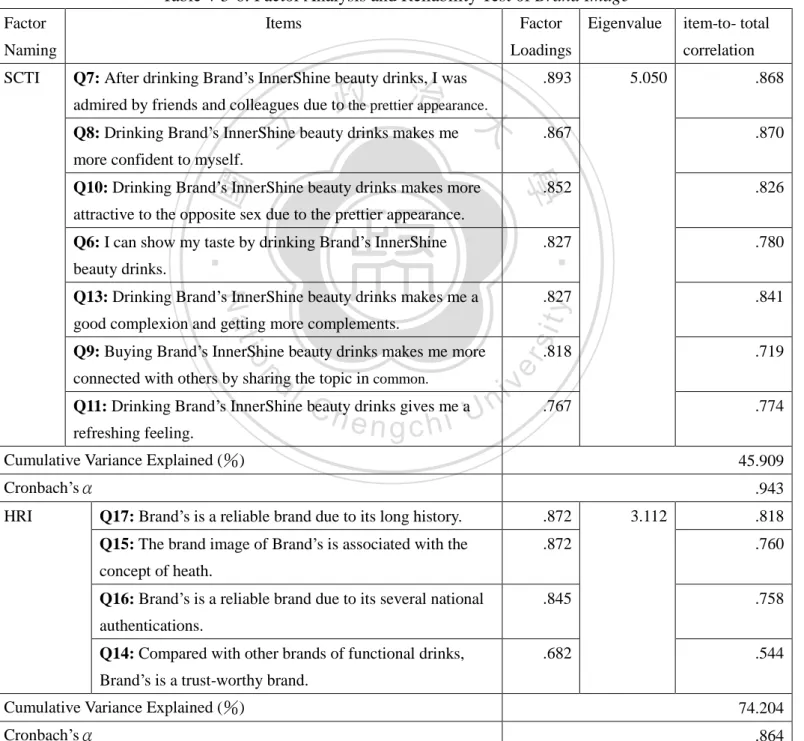
Table 4-3-6 Factor Analysis and Reliability Test of Brand Image ... 68
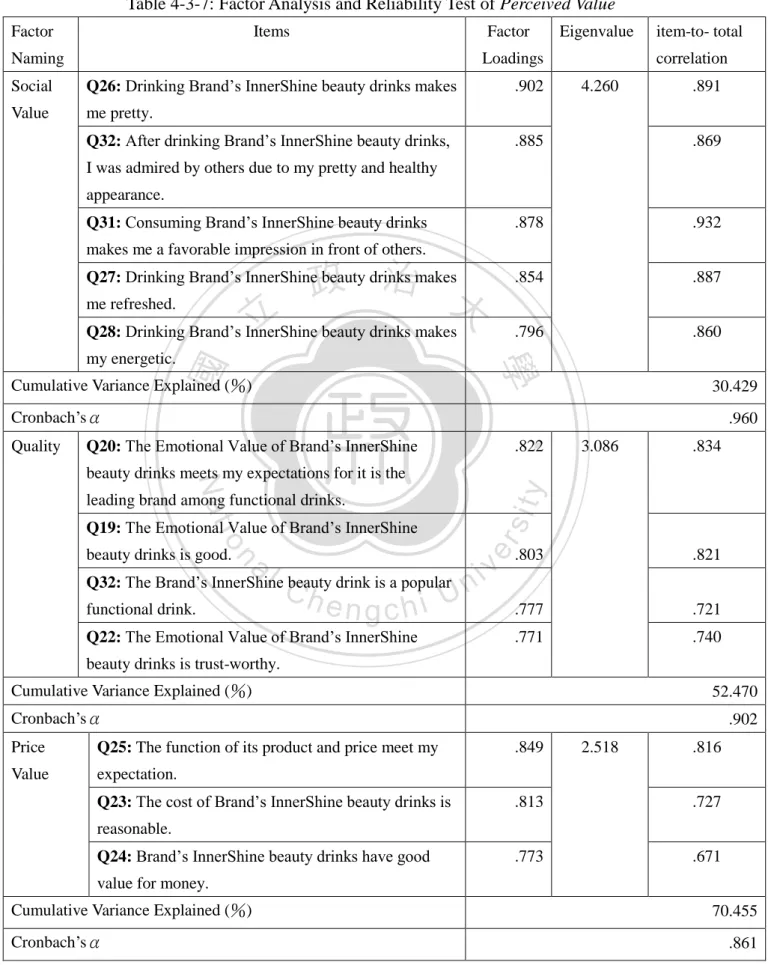
Table 4-3-7 Factor Analysis and Reliability Test of Perceived Value ... 70
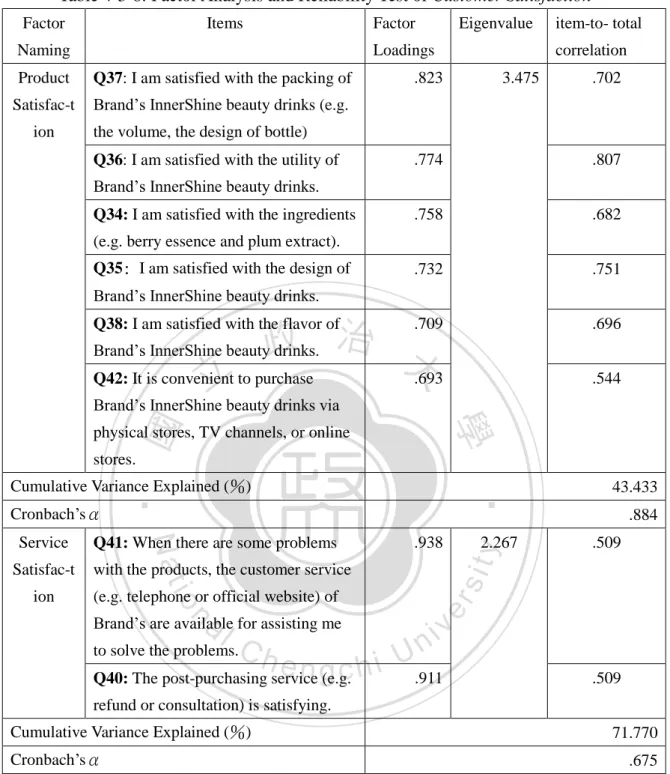
Table 4-3-8 Factor Analysis and Reliability Test of Customer Satisfaction ... 71
‧
國
立
政 治 大
學
‧
N
a
tio
na
l C
h engchi U
ni
ve
rs
it
y
Table 4-4-1 ... 76 Table 4-4-2 ... 77 Table 4-4-3 ... 78 Table 4-4-4 ... 79 Table 4-4-5 ... 80 Table 4-4-6 ... 81 Table 4-4-7 ... 82 Table 4-5-1 ... 85 Table 4-5-2 ... 86 Table 4-5-3 ... 88 Table 4-5-4 ... 89 Table 4-5-5 ... 90 Table 4-5-6 ... 91 Table 4-5-7 ... 93 Table 4-5-8 ... 94 Table 4-5-9 ... 97 Table 4-6-1 ... 99 Table 4-6-2 ... 100 Table 4-6-3 ... 100 Table 4-6-4 ... 101 Table 4-6-5 ... 102 Table 4-6-6 ... 103 Table 4-6-7 ... 104 Table 4-6-8 ... 104 Table 4-6-9 ... 105 Table 4-6-10 ... 105 Table 4-6-11 ... 106‧
國
立
政 治 大
學
‧
N
a
tio
na
l C
h engchi U
ni
ve
rs
it
y
Table 4-6-12 ... 107Table 4-7-1 Main Hypotheses and the Results ... 108
Table 4-7-2 Hypotheses of Demographics and the Results ... 109
‧
國
立
政 治 大
學
‧
N
a
tio
na
l C
h engchi U
ni
ve
rs
it
y
1 Chapter 1 Introduction 1.1 Research BackgroundOwing to the wide-spreading medical knowledge and the change of lifestyles, the need for health foods grows rapidly. In terms of the report of Global Industry Analysts (2010), the sales volume of global market for health foods was about $18.55 billion dollars, which brought an upsurge than in the previous year by 5.6%, and hopefully it would reach $19.85 billion dollars in 2011.The fact of burgeoning market on health food purchase also reflects in Taiwan recently. According to the IMS (integrated market survey) conducted by Global Information, Inc., the market size of health foods reached 84 billion NT dollars in 2010. Almanac of food consumption survey in Taiwan from FIRDI (Food Industry Research and Development Institute) shows that about 58.2% people had consumed functional food more than three times a month in 2010.
In addition, the phenomenon is not only trendy among the elders or women, which are presumed to concern about health more than other groups, but also a hot issue among youngsters and males as well. This shows the idea to consume health foods as a way for keeping healthy prevails gradually. More and more people concern about their own health and would like to achieve this by having a healthy lifestyle or consuming health foods (Wu et. al., 2011).
The nature of health foods, however, does not function as ordinary food which satisfies hunger and offers nutrients, but intend to enhance physical well-being or prevent disease. For its specialty of usage and the personal relevance to human body, health foods are also narrowly denominated and expressly stipulated by Health Food
Control Act, announced in 1999, as foods with health care effects, having been labeled
‧
國
立
政 治 大
學
‧
N
a
tio
na
l C
h engchi U
ni
ve
rs
it
y
2been scientifically proven to be capable of improving people’s health, and decreasing the harms and risks of diseases. If being classified by product categories, health foods can be generally sorted into functional foods and dietary supplements (CGPRDI, 2010). The former includes processed foods or foods fortified with health-promoting additives, such as energy drinks or probiotic cultured milk. The latter is a preparation intended to supplement the diet and provide nutrients, usually produced in capsule or pastille form, such as multi-vitamins and blue-green algae pastille. With the development of biotech industry and the utility of herbal medicine additive, consumers are given more choices of health food products in Taiwan. To satisfy different individual needs, health food products such as functional drinks becomes one of the popular oral supplements due to the convenience for the intake and quick efficacy for improving physical conditions. With the obsession of “beauty from within,” products of functional food that enhance skin, nails, and hair from the inside out become another exciting market (Sloan, 2007c). The global market, which constitutes of beauty foods, beverages and oral beauty supplements, reaches totaled $5.9 billion in 2008 and $6.3 billion in 2009, and upsurges to $6.8 billion in 2010, according to Datamonitor, a market research company that conducts survey on skin care market. In the respect, functional foods and drinks, particularly the product items with beauty claims, are believed as a flourishing market that is worth marketing research.
On the other hand, due to the various channels of manufacturers (including direct sale, TV shopping channels, radio stations, mail order, on-the-counter manufacturers, and hospitals), consumers are given a great deal of choices when purchasing the health food products. Yeung and Morris (2001) noted that manufacturers of food industry can enhance the mutual benefit between consumers and themselves via different channel types, and further increase consumers’ perceived values. This shows the difference of channel types and the availability of health foods does impact on the values and
‧
國
立
政 治 大
學
‧
N
a
tio
na
l C
h engchi U
ni
ve
rs
it
y
3purchase intention among consumers.
1.2 Research Rationale & Significance of Study
With the thriving global market of health foods, to further explore the factors to consumers’ purchase intention could be necessary and beneficial for both academic research and marketing practitioners. Previous studies have shown that higher level of customer satisfaction enhances the re-purchase intention and even leads to the profit gaining directly (Jones & Sasser, 1995; Mittel & Kamakura, 2001; Reichheld & Teal, 1996). The key to business success, in the respect, would depend on how to meet customers’ needs, how much customers’ satisfaction can be achieved, and further increases their loyalty.
Given the sheer size of the market and the aplenty options of health food products, what strategies consumers utilize in their decision-making will be the focus in the research. Moreover, it is intriguing to see the role which brand image plays in health food products, especially the functional drinking purchase. In the light of the previous findings, some questions regarding brand image should be further addressed. For instance, facing with different health claims of functional drinks, how consumers select the most suitable product with information provided by the company and whether or not their decisions are influenced by the brand image or their personal experiences can be examined.
To clarify the mechanism behind consumers’ decision making on functional drinking purchase, on the other hand, I would like to investigate the factors to consumers’ overall evaluation. Therefore, the concept of “perceived value,” which represents consumers’ perceptions of what is received and what is given, and further leads to their overall assessment to products (Zeithaml, 1988), should be examined in
‧
國
立
政 治 大
學
‧
N
a
tio
na
l C
h engchi U
ni
ve
rs
it
y
4this regard. Other studies showed that customer perceived values are the foundations of all the marketing activities (Soong, 2009). Higher customer perceived value is the main motivation for the re-purchase (Holbrook & Morris, 1994). Whether the perceived values among consumers for health food has an influence on their satisfaction and loyalty will be the interest in the research.
To disclose consumers’ purchase strategies of health food products, I decide to implement a case study of Brand’s, which is one of the most well-known health food manufacturers and has more than 170 years history in the world. In Taiwan, Brand’s also provides diverse products with very high sales volume. According to Economic
Daily News in December, 2011, the market share of its Essence of Chicken reached
70% and Bird’s Nest beverage was 55%, both of which were the best-selling products among other competitors. Brand’s functional drinks such as Berry Essence also accounted for more than half market share. Except for the impressive performance of its sales, Brand’s even gained a good reputation and guarantee for its product quality by getting the national authentication [note1]. Based on the above reasons, Brand’s
appears as a good case for analyzing the interrelationship among product knowledge, perceived values, customer satisfaction, and loyalty of health food purchase.
According to the survey conducted by InsightXplorer in 2011, more than 60% of citizens in Taiwan had consumed functional drinks; there are over 30% of them had consumed berry-flavored functional drinks. To shed some light on both academia and practice field, the research aims at not only providing advice regarding management strategies for Brand’s InnerShine beauty drinks, but also picturing the panorama for the marketing on functional drinks.
‧
國
立
政 治 大
學
‧
N
a
tio
na
l C
h engchi U
ni
ve
rs
it
y
5 1.3 Research Objectives:The main objective of research consists in the study of purchase behavior, satisfaction, and loyalty of customers' of Brand's, and to further examine the interrelationship among "brand image," "perceived values," "customer satisfaction," and "customer loyalty" four variables. Based on the above research backgrounds and motives, I propose the five following research objectives:
1. To explore the theoretical and practical meaning of “brand image,” “perceived values,” “customer satisfaction,” and “customer loyalty” for Brand’s management. 2. To investigate whether “brand image,” “perceived values,” “customer satisfaction,”
and “customer loyalty” are significantly associated with one another.
3. To investigate whether “customer satisfaction” and “customer loyalty” are significantly associated with each other.
4. To examine how perceptions and consumption behaviors are revealed by consumers with different demographical profiles on “brand image,” “perceived values,” “customer satisfaction,” and “customer loyalty.”
5. To make suggestions for Brand’s and sharpen its marketing strategy by gathering results from quantitative analysis and qualitative in-depth interviews.
1.4 Thesis Structure
The thesis comprises five chapters. The first chapter is introduction, which states the backgrounds, motives, objectives, thesis structures, and process of the research. Literature review, purported in Chapter 2, is the retrospection of related studies regarding the concepts of brand image, perceived values, customer satisfaction, and customer loyalty. Chapter 3 is the methodology, grounded on the literature review of the former chapter, conceptulizes a theoretical model for the above four variables, and
‧
國
立
政 治 大
學
‧
N
a
tio
na
l C
h engchi U
ni
ve
rs
it
y
6further proposes the research hypotheses, operational definitions of the constructs of each variable, question items of the constructs. Data collection, tools and methods of data analysis is explained in details in the chapter as well. The process and results of data analysis is exhibited in Chapter 4, which displays the results of data collection, the examination of the validity and reliability of each scale and each hypothesis in the research. Discussion and conclusion are displayed in Chapter 5, which generalizes the results of quantitative online survey and qualitative in-depth interviews, and finally points out the limitation of the study and makes suggestions for the future research. Research process in the study is shown in Figure 1.
‧
國
立
政 治 大
學
‧
N
a
tio
na
l C
h engchi U
ni
ve
rs
it
y
7 1.5 Research ProcessClarification of research motives and objectives
Literature review of relative contribution
Establishment of research structure & hypotheses
Design of questionnaire
Distribution of questionnaire
Collection of data
Analysis of data
Discussion & suggestion
‧
國
立
政 治 大
學
‧
N
a
tio
na
l C
h engchi U
ni
ve
rs
it
y
8Chapter 2 Literature Review
2.1 Health Foods
2.1.1 Definition of Health Foods
No unanimity exists within the denotation of “health foods,” so ambiguity emerges as well when we confront with terms such as “health-care foods,” “functional foods,” “dietary supplements,” “nutrient foods,” and even “nutraceuticals.” One of commonly accepted definitions of health foods is “the food which is absorbed by oral intake and proved to be with health care effects” (Huang, 2004). Therefore, the terms of foods with health care effects or special nutrients are diverse in many countries, but they all refer to the following three features: (1) to provide specific nutrients (2) to moderate biological function and with health benefits (3) only suitable for selective use by certain groups (Chen, 2007).
Even if consumers realize more about the above features on health foods, still, they might be baffled when differentiating the terms between “health-care foods” and “health foods.” According to the ITIS project conducted by FIRDI in 2010, health-care foods, which include functional compositions but lack of health claims, contain a broader sense by than health foods (see Figure 2.1). By contrast, health foods products with health claims can only be legalized after being proved the effects by Department of Health, Executive Yuan. Likewise, the report from CGPRDI (2010) indicates that “health-care foods,” an umbrella term encompassing “specific nutrient foods,” “functional foods,” “dietary supplements,” and “health foods,” implies a more generalized concept (see Figure 2.2). For the main product series of Brand’s, as the case in the study, are all authenticated as “health foods”[note 2] by Department of
‧
國
立
政 治 大
學
‧
N
a
tio
na
l C
h engchi U
ni
ve
rs
it
y
9 Health-care foods Health FoodsSource: Modification from ITIS (2010)
Figure 2.1: Classification of health-care foods and health foods
Functional foods
Specific nutrient foods Health foods
Health-care foods Dietary supplements
Source: China Grain Products Research & Development Institute (2010) Figure 2.2: Category of health-care foods and others
Include function compositions Don’t have efficacy claims The products are over 3000 items
Proved by efficacy Accord with HFCA
The authentication products are 184 items (2010/10/31)
‧
國
立
政 治 大
學
‧
N
a
tio
na
l C
h engchi U
ni
ve
rs
it
y
102.1.2 Regulations: Comparison of Taiwan and Other Countries
Since health foods are broadly defined with many terms, they are also under different regulations in different countries. In Taiwan, Health Food Control Act, announced in 1999, has specifically denominated the term “health food” as food with health care effects. Unlike functional food or dietary supplements, authenticated health foods are supposed to guarantee the effects for reducing the occurrence of disease with scientific evidence.
The definition of health food in Japan was modified by FOSHU act (Food for Specific Health Use, FOSHU) in 1991, which refers to foods containing ingredient with functions for health and officially approved to claim its physiological effects to human body. In short, FOSHU are the foods with the additional value of physiological adjustment function.
In the U.S., with the statement from DSHEA in 1994(Dietary Supplement Health and Education Act, DSHEA), a dietary supplement can be viewed as a product contained a "dietary ingredient" intended to supplement the diet, categorized as “food” instead of “drug” by The Food and Drug Administration (FDA). Thus, dietary supplements are not permitted to label its product as a cure/treatment for a specific disease, but they are allowed to promote structure/function claims (e.g. "glucosamine helps support healthy joints").
Regarding the regulation and denomination of health foods, Food Supplement Directive announced by The European Union in 2002 specifically requires that supplements should be demonstrated to be safe in dosage and purity. Though countries in the bloc of EU takes different stands on the health claims of food supplements; however, product labels of food supplements in most countries can be classified as functional foods and foods for particular nutritional uses, and drug claims are inhibited as well. To make comparisons of health foods regulations in the world, Table 2-1
‧
國
立
政 治 大
學
‧
N
a
tio
na
l C
h engchi U
ni
ve
rs
it
y
11summaries the definitions and acts in the above regions.
Table 2-1: Regulation, Legal Term, and Act in R.O.C, Japan, EU, and U.S.A.
Region Year Legal Term Definition Act R.O.C 1999 Health Foods “Health Foods” shall denote
foods with health care effects, having been labeled or advertised with such effects. Health Foods Control Act, HFCA Announcement of February, 3, 1999. Japan 1991 Food for
Specific Health Use, FSHU
In order to reach the specific health-care purpose, and the special use foods absorbed in the daily meal.
Nutrition Improve Act, NIA European Union 2005 Food Supplement Supplements demonstrated to be safe, both in dosages and in purity. Food
supplements cannot be labeled with drug claims but can bear health claims and nutrition claims The Food Supplement Directive U.S.A. 1994 Dietary Supplement
A product that is intended to supplement the diet and contains any of the following dietary ingredients: vitamin, mineral, herb (or other botanical), amino acid, concentrate, metabolite. Dietary Supplement Health and Educational Act, DSHEA
‧
國
立
政 治 大
學
‧
N
a
tio
na
l C
h engchi U
ni
ve
rs
it
y
122.1.3 Functional Drinks and Oral Beauty Products
To disentangle with the terminology, functional foods or drinks can be conceived as the practice of fortifying foods or drinks with added ingredients with health effects on the consumer (Stanton et al., 2001). The major concerns for consumers to purchase functional food products encompass information on the label, price, convenience, perceived quality characteristics and brand name (Krystallis, Maglaras, and Mamalis, 2008). Past research studied on the characteristics of functional food products and contended that most of them are predominantly female, well educated, high earners, aged 35 to 55 years, and actively interested in health (Childs, 1997). In fact, these categories may not well portray the consumers in the rapidly growing market. Nowadays many young adults (aged 24 to 35 years) become more interested in functional foods or drinks that enhance their physical condition and energy levels (Krystallis, Maglaras, and Mamalis, 2008). In Taiwan, with the busy lifestyles and the change of dietary habits (e.g. eating out becomes more and more common), consumers quest for food with high quality, added value, and convenience. Functional fluids made as soft drinks are therefore a burgeoning market aware by some studies (Tallon, 2007). To meet the various demands from the consumers who grow more and more fastidious, manufacturers make great efforts on innovation of the utility of functional drinks. It is even intriguing to find that a noticeable phenomenon for functional drinks with “beauty claims,” which purport the ingredients or preparation with the improvement of the appearance on skin or enhancement of physical condition. A possible interpretation for the trend can be that a youthful and attractive appearance influences people’s self-confidence, social relationships, and even career success (Reis et al, 1982), according to Kelton Group Survey for the Restylane Report of Age Impressions conducted in June 2006. “Oral beauty products” (OBPs), products designed to reduce the impact of skin aging, are therefore produced and favored recently. A survey
‧
國
立
政 治 大
學
‧
N
a
tio
na
l C
h engchi U
ni
ve
rs
it
y
13conducted in June, 2011, by InsightXplorer, a market research company has shown that Taiwanese consumers’ concerns for purchase beauty drinks are price, nutrients, flavors, efficacy of beauty, and brand awareness. Inspiring by the above phenomena, the study aims at a better scrutiny for cognitive and social factors which influence consumers’ purchase for beauty drinks. Different approaches are explored in the following sessions of literature review.
Note 1: Cerebos Pacific Limited Taiwan branch had gained the authentication of UKAS-ISO9001 and ISO14001 by Taiwan Accreditation Foundation in 2009.
‧
國
立
政 治 大
學
‧
N
a
tio
na
l C
h engchi U
ni
ve
rs
it
y
14 2.2 Brand Image2.2.1 Definition of Brand Image
The importance of branding is evidenced in many studies. To build up a successful brand leads to business success for it differentiates from the competition, establishes reputation, and evokes the relevance with target customers (Aaker, 1996; Keller, 2003). A brand is considered as a company intangible which generates additional value for firms (Calderon, Cervera, and Molla, 1997). Due to its financial contribution, a brand is also viewed as an intangible asset for business (Feldwick, 1996).
A brand can be conceived by the definition from the American Marketing Association (1960) as “A name, term, sign, symbol, or design, or a combination of them which is intended to identify the goods or services of one seller or a group of sellers and to differentiate them from those of competitors.” Concerning from the viewpoint of relationship building, McKenna (1991) suggested that a successful brand keeps a good relationship between customers and company.
Despite of the profits which brands can produce for business, a brand can also provide benefits for consumers. Ambler (1997) posited that brands are valuable for consumers in three aspects: (1). Economic benefits: consumers gain benefits from brands for facilitating competitions, ensuring the value of transaction, lowering the purchase risk, maintaining standard quality of products/services, and offering more product choices. (2). Functional benefits: brands benefit consumers by providing product assortment of added value. The differentiation of products satisfies different needs for consumers. Brands also ensure the quality and reliability for consumers, improving the efficiency of their decision making. (3). Psychological benefits: brands simplify consumers’ information processing and offer a solution for their problems. In
‧
國
立
政 治 大
學
‧
N
a
tio
na
l C
h engchi U
ni
ve
rs
it
y
15addition, brands provide social benefits by allowing consumers to identify and gain more self-esteem and by various social groups. Richardson, Dick & Jain (1994) also argued that brand image is usually utilized by consumers as an extrinsic cue for evaluation of product quality. Consumers infer or maintain the perceived quality of the product by brand image.
As discussion above, Farquhar (1989) offered a great annotation for brands. He argued that a brand provides tangible and intangible value, beyond its functional value, which makes a product or service more recognizable and attractive. Also, a brand represents a sense of trust between customer and company, which makes it resilient against competitors’ promotional pressures and offers profits in a long term.
Martin and Brown (1990) noted that brand image refers to the consumers’ concept generated from their beliefs on the brand. Kapferer (1992) stated that consumers build up a brand image in minds after perceiving, summarizing, and interpreting the message received from the brand. Bhat and Reddy (1998) offered an explanation from the cognitive perspective that brand image can be viewed as an informative clue facilitating consumers’ decision making by using the clue to decide the importance of each attribute within a product category and selecting the optimal brand from other competing ones.
In the similar respect, Aaker (1991) defined brand image as a set of associations of a brand, organized with a meaningful way, containing the underlying value and exhibiting consumers’ perceptions and expectations of a brand. Peter and Olson (1994) purported that brand image encompasses consumer knowledge and beliefs, embedded in memory as associations, about brand attributes and the effects of brand use. Agreeing with the “brand image as associations” perspective, Keller (1993) found out once consumers possess a strong, favorable, and unique brand associations held in their memory, they are more likely to form a positive overall brand attitude in mind which
‧
國
立
政 治 大
學
‧
N
a
tio
na
l C
h engchi U
ni
ve
rs
it
y
16further influences their decision making.
Romaniuk and Sharp (2003) proposed a composite definition for brand image, denoted as consumers’ brand perceptions derive from purchase experiences, marketing communications and word of mouth. Brand image can be conceived as descriptive information, benefits, evaluations of specific aspects of the brand, and consumption situations. In their interpretation, any information related to the brand name is likely to be linked, stored in memory, and finally integrated in a part of brand image by consumers.
Dobni and Zinkhan (1990) considered that brand image differs within different consumers’ interpretations since it is a perceptive concept. They recapitulated from the previous research with the conceptualization of brand image as follows:
(1). Brand image is the brand concept held by the consumer.
(2). Brand image is formed through consumer interpretation as subjective and perceptual phenomenon, whether reasoned or emotional.
(3). Brand image is not inherent in the technical, physical, or functional aspect of the product. Instead, it is influenced and molded by marketing activities, by contextual factors, and by the perceivers’ own characteristics.
(4).The formation of brand image is relatively more influenced by the perception of reality than the reality itself.
Different from the cognitive and consumer-oriented perspective, Park, Millberg, and Lawson (1991) emphasized the abstractive meaning of a brand which is unique and originated from a special configuration of product features. The abstract meanings of a brand, as their explanation, are deliberately created by a firm’s effort at the arrangements.
Biel (1992) postulated that brand image is a set of attributes and associations triggered by the brand name. Brand image consists of image of maker (corporate),
‧
國
立
政 治 大
學
‧
N
a
tio
na
l C
h engchi U
ni
ve
rs
it
y
17image of user, and image of product; the above three aspect can be further classified into two components: functional attributes and soft attributes. Functional attributes denote the consumers’ perceptions for the tangible features of a brand, such as price and convenience of usage. Soft attributes refer to the intangible and affective features such as feelings of excitement, happiness, and innovativeness.
The study agrees the definitions given by most studies that the brand image derives from the associations. Specifically, brand image in the study is defined as all the perceptive associations of customers who had been purchased Brand’s InnerShine beauty drinks. Those perceptive associations encompass the functions, attributes, benefits which customers relate to Brand’s.
2.2.2 Construct of Brand Image
Park, Jaworski, and Maclnnis (1986) suggested that brand concept image (BCM) is driven by consumer needs, which can be categorized as functional needs, symbolic needs, and experiential needs respectively. Hence, BCM can be measured by the above three aspects. A brand with functional concept is able to solve the externally generated problems for consumers. The functional aspect stresses on its functional efficacy and the ability for problem solving. The products such as cooking utensil can be included in the assortment for it is designed for satisfying consumers’ functional needs.
Symbolic concept of a brand concerns to fulfill consumers’ internally generated needs
for self-enhancement, role position, group membership, or ego-identification. Luxury goods and boutiques are considered as association of high status. A brand with
experiential concept can satisfy consumers’ internally generated needs for the pursuit
of excitement and variety. Tourism products in the sense can better fulfill the experiential needs.
Aaker (1996) proposed a measure across product class and posited that brand image can be measured by association or differentiation two aspects, based on four
‧
國
立
政 治 大
學
‧
N
a
tio
na
l C
h engchi U
ni
ve
rs
it
y
18indicators as follows: value, brand personality, organizational associations and differentiation.
(1). Value: it reveals a brand-as-product perspective and examines whether a brand provides functional benefits (e.g. products of the brand offers good transactional value).
(2). Brand personality: it displays a brand-as-person perspective and investigates the emotional and self-expressive benefits of a brand, and also reflects user imagery.
(3). Organizational associations: it conveys a brand-as-organization perspective and examines whether some abstract characteristics (e.g. being innovative, striving for high-quality) of the brand is admired or trusted by customers.
(4). Differentiation: it tests the extent for the products or services offered by the brand being different from other competitors.
Concerning brand image is directly related to product attribute, some studies focus the measurement on products and contended that physical attributes along with functional, emotional, and self-expressive benefits offered by a brand should be taken into account (Gwinner and Eaton, 1999; Davis, 2002). Summarizing from the previous studies, Martinez, Polo, and de Chernatony (2008) purported an integrated scale developed from Aaker’s (1996) and the product-oriented measurement as general brand image (GBI) and product brand image (PBI) scales.
For a better understanding whether multifarious consumption needs are satisfied by the brand, the study will adopt the scale developed by Park, Jaworski, and Maclnnis (1986) to measure brand image of Brand’s InnerShine beauty drinks through functional, symbolic, and experiential brand concept image three indicators. Besides, Aaker’s (1996) “organization association” measure will also be used to test the overall brand image perceived by the Brand’s InnerShine beauty drinks customers.
‧
國
立
政 治 大
學
‧
N
a
tio
na
l C
h engchi U
ni
ve
rs
it
y
19 2.3 Perceived Value2.3.1 Definition of Perceived Value
Perceived value of consumers as a prevailing issue in marketing research has been discussed in both empirical studies and theory-driven papers. Previous findings noted that delivering superior customer value is the key for a company to gain sustainable competitive advantage (Ravald & Gronroos, 1996) and long-term success (Woodruff, 1997). In micro perspective, customer-perceived value has been found as the primary indicator to the purchase intention (Chang & Wildt, 1994).
The concept of perceived value is well captured in the research from Zeithaml (1988): “Value is the consumer’s overall assessment of the utility of a product based on perception of what is received and what is given.” From the perspective of economics, perceived value can be viewed as the perceived worth in monetary units of the set of economic, technical, service, and social benefits received by a customer in exchange for the price paid for a product, taking into consideration the available suppliers’ offerings and prices (Anderson et al., 1993). Urbany and Beardon (1989) demonstrated that perceived value is the buyers’ net gain (or trade-off ) from acquiring the product or service. Many studies also reach an understanding with the above viewpoint (Day, 1990; Monroe, 1990; Dodds et al., 1991). Overall, definitions of perceived value in most studies are interpreted as an idea of trade-off between benefits and sacrifices among consumers’ perception toward the product/service they purchased (Kainth & Verma, 2011).
In light of the trade-off perspective, the definition given by Kotler (2003, p.60) explains the relationship between customers’ perception of benefits and costs: perceived value is the difference between the prospective customer’s evaluation of all the benefits and all the costs of an offering and the perceived alternatives. He purports that “total customer value,” resulting from a given market offering, is the combination
‧
國
立
政 治 大
學
‧
N
a
tio
na
l C
h engchi U
ni
ve
rs
it
y
20of monetary value (including economical and functional) and psychological benefits. Monetary, time, energy, and psychic costs can be classified as “total customer cost,” incurring in pre-purchase phase (evaluation), using phase, and post-purchase phase (disposing). To further create consumers’ perceived value, Slater and Narver (2000) argued that customer value is generated when the benefits which customers expect to receive from a product/service exceed the offering’s costs in the long run.
Emphasized on the post-consumption experience, Zeithaml (1988) also clearly identified the four facets of perceived value: (1) value is low price; (2) value is whatever one wants in a product; (3) value is the quality that the consumer receives for the price paid; (4) value is what the consumer gets for what he or she gives. Besides, Zeithaml argued what distinct the concept of “value” from “quality” consists in the higher level of abstraction of “value,” which is also more individual-oriented. Schiffman and Kanuk (2004) also suggested decision-making of consumers is based on their subjective perception of (product) attributes and not on objective truth. In the vein, perceived value is prone to conceived as a subjective attitude based on customers’ consumption experience. Different from Zeithaml’s viewpoint, Gale (1994) considered perceived value is the market perceived quality adjusted for the relative price of the products. He also accentuated the relativity of the nature of perceived value, which is based on customers’ opinions of the products/services as compared to other suppliers of the similar products/services.
Instead of being an inflexible estimation among customers, perceived value is found as a process by which an individual selects, organizes and interpret stimuli into meaningful and coherent picture of the world (Schiffman & Kanuk, 2000). In this respect, perceived value can be explicated as the result of customers’ overall assessment, which stems from their cognition, during the purchase process. With the dynamic nature, perceived value is also situational, depending on the goals of
‧
國
立
政 治 大
學
‧
N
a
tio
na
l C
h engchi U
ni
ve
rs
it
y
21 customers (Woodruff, 1997).With some reviews of previous research, consumer perceived value is defined as the total outcome, based on consumers’ comparison of their perceived costs and benefits.
2.3.2 Models of Perceived Value
The model proposed by Monroe and Krishnan (1985) pioneered in examination of the relationship between perceived value and willingness to buy (see Figure 2.3). It suggests that price is the indicator of perceived quality and sacrifice. Perceived value is further caused by the outcome of the evaluation between perceived quality and sacrifice. If the extent of perceived quality received by consumers is higher than the sacrifice they made, it may result in favorable perceptions for consumers upon the products/services, which positively influences their willingness to buy in a sequence.
Price Perceived Quality Sacrifice Perceived Value Willingness to Buy
Source: Monroe and Krishnan (1985)
‧
國
立
政 治 大
學
‧
N
a
tio
na
l C
h engchi U
ni
ve
rs
it
y
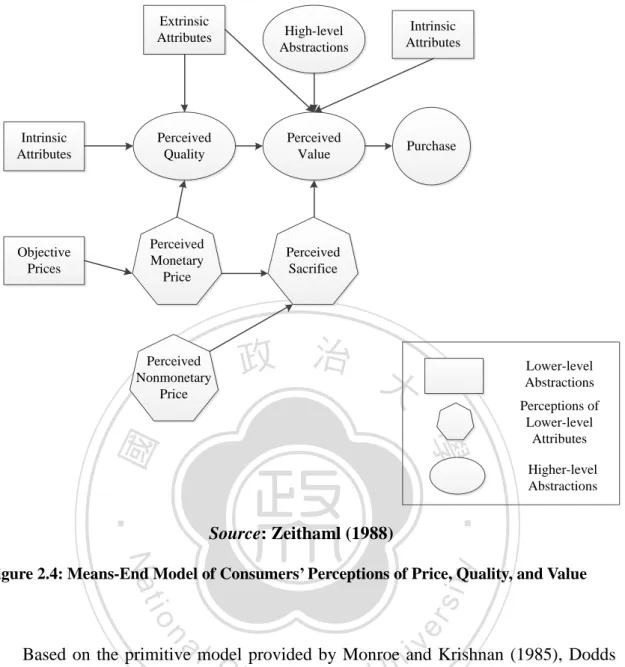
22Zeithaml (1988) explicated the relationship among perceived quality, perceived value, and willingness to buy in the means-end model (see Figure 2.4). He argued the consumers’ cognition during the purchase process can be classified into three levels of abstractions.
(1). Lower-level attributes: contain extrinsic and intrinsic attributes. The former refers to the features which belong to products, such as price, brand, and advertising quality. The latter denotes the attributes related to the essence of the product, such as appearance, color, and taste.
(2). Perceptions of lower-level attributes: include perceived monetary price, perceived nonmonetary price, and perceived sacrifice. Perceived monetary price can be understood as customers’ perception on product price, of which the form is generated from the objective price. Thus, the PMP is different among customers that may perceive the same product as an “expensive” or “inexpensive” one. Perceived nonmonetary price implies the cost (e.g. time for buying and searching information, psychological cost of cognition) that customers pay for the product/service. Perceived sacrifice is composed of PMP and PNP.
(3). Higher-level attributes: comprise perceived quality, perceived value, high-level abstractions, and purchase behavior. Perceived quality stems from customers’ overall assessment to product/service, based on the extrinsic attributes, intrinsic attributes, and perceived monetary value. Perceived value, derived from extrinsic and intrinsic value, high-level abstractions, perceived quality, and perceived sacrifice, consists of total benefits customers received from the product/service. The outcome of perceived value further influences consumers’ purchase behavior.
‧
國
立
政 治 大
學
‧
N
a
tio
na
l C
h engchi U
ni
ve
rs
it
y
23 ExtrinsicAttributes AttributesIntrinsic
Intrinsic Attributes Objective Prices Perceived Quality Perceived Value Purchase High-level Abstractions Perceived Monetary Price Perceived Sacrifice Perceived Nonmonetary Price Lower-level Abstractions Perceptions of Lower-level Attributes Higher-level Abstractions Source: Zeithaml (1988)
Figure 2.4: Means-End Model of Consumers’ Perceptions of Price, Quality, and Value
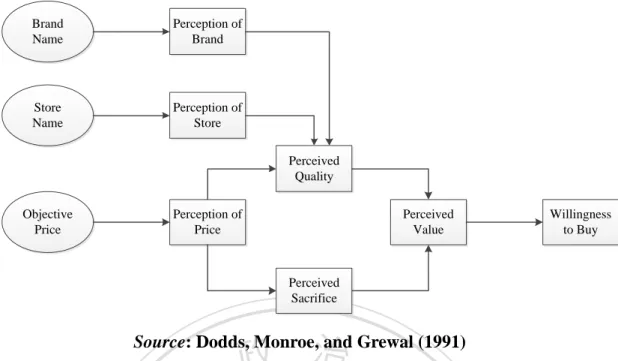
Based on the primitive model provided by Monroe and Krishnan (1985), Dodds and Monroe (1991) considered consumers perceived differently with the external cues such as price, brand name, and store name, so they decided to examine the influence of the above three cues on perceived quality, perceived value, and willingness to buy. Their findings as displayed in the extended model (see Figure 2.5) indicate that price, favorable brand and store information positively influence perceptions’ of quality and value, and subjects’ willingness to buy.
‧
國
立
政 治 大
學
‧
N
a
tio
na
l C
h engchi U
ni
ve
rs
it
y
24 Perception of Brand Perception of Store Perception of Price Perceived Quality Perceived Sacrifice Perceived Value Willingness to Buy Brand Name Store Name Objective PriceSource: Dodds, Monroe, and Grewal (1991)
Figure 2.5: Integrated Model of Perceived Value to Include Price, Brand Name, and
Store Name for the Product Assessment.
2.3.3 Construct of Perceived Value
Research on the issue of perceived values is rich, but scholars hold diverse opinions on the measurement of constructs of perceived values. Most studies can be classified into uni-dimensional approaches and multi-dimensional approaches.
In uni-dimensional approach, perceived value is basically conceived with a utilitarian perspective, which highlights the customers’ assessment by economic (e.g. price) and cognitive reasons and accordingly emphasizes the measurement of perceived benefits and costs (Sanchez et al., 2007). Perceived values related models developed earlier by Monroe and Krishnan (1985) and Zeithaml (1988) conveyed the perspective. Being measured as a single overall value construct is also common in marketing research. For instance, the concept of “perceived acquisition value,” which denotes the buyer’s net gain (or trade-off) from acquiring the product or services, and “perceived transaction value,” which is the consumers’ perceptions of psychological satisfaction, proposed by Grewal et al., (1998) notes the price perceptions for the
‧
國
立
政 治 大
學
‧
N
a
tio
na
l C
h engchi U
ni
ve
rs
it
y
25measurement of perceived value and reflects a value-for-money conceptualization (Sweeney and Soutar, 2001). However, some critics argued it is too simplistic to consider value as a trade-off between quality and price (Bolton & Drew, 1991). Moreover, the existing value constructs are too narrow and lack of validity with the uni-dimensional approach (Woodruff and Gardial 1996). In addition, Sanchez et al. (2007) points out that the problem of the uni-dimensional approach consists in its failure to take the intangible, intrinsic, and emotional factors into account.
Different from uni-dimensional perspective, some studies appeal to multi-dimensional approach to pursue a more sophisticated contemplation. Babin et al. (1991) studied on consumers’ personal shopping value and suggested the emotional worth (hedonic value) and perceptions among goal-oriented consumers (utilitarian value) should be taken into account as perceived value construct. Parasuraman and Grewal (2000) divided perceived value as “acquisition value”, “transaction value,” “in-use value,” and “redemption value” four constructs, which reflects perceived values, as its dynamic nature, changes during pre-purchase, in-use, and post-purchase process. Sheth, Newman and Gross (1991) purported that consumers’ decision-making can be influenced by five constructs: functional value, social value, emotional value, epistemic value, and conditional value.
Kantamneni and Coulson (1996) conducted a survey for the potential consumers with integrated twenty-seven indicators of value from previous studies and developed a scale as “core value,” “personal value,” “sensory value,” and “commercial value” four constructs.
To refine the measurements from the previous research, Sweeney and Soutar (2001) separated price and quality dimension in the value construct and accordingly developed a new scale named as “PERVAL” to better capture consumers’ perceived value by the following four constructs:
‧
國
立
政 治 大
學
‧
N
a
tio
na
l C
h engchi U
ni
ve
rs
it
y
26(1). Emotional value: refers to the utility derived from the feelings or affective states that a product generates.
(2). Social value: denotes the utility derived from the product’s ability to enhance social self-concept.
(3). Price / Value: notes the utility derived from the product due to the reduction of its perceived short term and longer term costs.
(4). Quality/ Performance: means the utility derived from the perceived quality and expected performance of the product.
Concerning the nature of beauty drinks as supplement for keeping fit and beauty maintenance and the purpose for the case study of Brand’s InnerShine products series, the research will apply PERVAL scale developed by Sweeney and Soutar (2001) for conceptualizing the constructs of consumer perceived value. While the scale was originally applied to study the perceived value for durable products (e.g. clothing, furniture, cars…etc.), it has been found in the past studies to analyze edible products such as wine and functional foods (Gill at el., 2007; Shen, 2006).
‧
國
立
政 治 大
學
‧
N
a
tio
na
l C
h engchi U
ni
ve
rs
it
y
27 2.4 Customer Satisfaction (CS)2.4.1 Definition of Customer Satisfaction
Theodore Levitt (1960) brought the thought to of building up a customer-oriented business to the industry. He claimed the view that an industry is customer-satisfying process, not a goods-producing process, is vital for all businessmen to understand. Cardozo (1965) proposed the concept of “customer satisfaction” to the marketing research and found the enhancement of customer satisfaction results in repeat purchases, acceptance of other products in the same product line, and even favorable word-of-mouth. Customer satisfaction, bearing a preeminent role in consumer research, has always been elaborated with definitions and driven empirical studies in research.
The concept of customer satisfaction is often conceived as the result of a comparison between customers’ expectation and the actual performance of the product/service. Howard and Sheth (1969) purported that a buyer feels satisfied when the actual outcome of the purchase is judged to be better than or equal to the expected. Miller (1976) introduced a classification for different levels of comparison: expected, deserved, ideal, and minimum tolerable performance in consumers’ expectation. The former three levels are more likely to cause satisfaction. Churchill and Surprenant (1982) particularly emphasized the idea of rewards and costs, perceived by the customer from the purchase and use. They contended satisfaction is generated from the comparison between the two. In the same vein, Day (1984) noted that customer satisfaction is the result of consumers’ comparison, and further pointed out the significance of pre and post purchase experience, where consumer’s response to the evaluation of the perceived discrepancy exists. Lovelock and Wirtz (2004) postulated that once the received service exceeds the desired level in customers’ anticipation, it will both please and surprise customers.
‧
國
立
政 治 大
學
‧
N
a
tio
na
l C
h engchi U
ni
ve
rs
it
y
28Aside from the perspective on the basis of cognitive evaluation, some scholars suggested the s affective aspect of customer satisfaction. Westbrook (1980) proposed a Delight-Terrible scale to measure product/service satisfaction based on customer’s subjective feelings. Woodruff, Cadotte, and Jenkins (1983) argued that the prior product/brand experience may influence consumers’ perception on product/brand performance, and further affect their satisfaction, caused by positive/negative emotional arousal. To achieve valid measurement, Engel, Blackwell, and Miniard (1995) concurred that both customers’ objective product evaluation and their affective response should be measured. They also considered that satisfaction results in the positive disconfirmation, denoted as the incongruity between customer’s anticipation and the product performance, occurring when performance is better than expected. Oliver (1997) stated that customer delight is the reaction when receiving a service or product that not only satisfactory, but offers unexpected value or unanticipated satisfaction. Kotler (2003) agreed that satisfaction stems from the match between expectation and product perceived performance, and he particularly purported that high satisfaction or delight creates an emotional bond with the brand or company, not just a rational preference.
Exploring with other approaches, some studies suggest customer satisfaction as a concept of customers’ holistic evaluation. Woodside, Frey, and Daly (1989) contended that customer satisfaction is the overall judgments of the specific service event. Cronin and Taylor (1992) agreed on the overall perspective that satisfaction is customers’ assessment of a company’s business processes. Bitner and Hubbert (1994) remarked that consumer’s overall satisfaction is generated from all encounters and experiences with the particular service supplier. In the respect, overall satisfaction can be conceived as a relatively stable average, which is similar to an overall attitude (Jones and Suh, 2000).
‧
國
立
政 治 大
學
‧
N
a
tio
na
l C
h engchi U
ni
ve
rs
it
y
29Opposite to the overall point of view, some research argued that consumers’ satisfaction with a discrete service encounter is transaction-specific. Satisfaction in study conducted by Oliver (1981) can therefore be understood as consumers’ evaluation of the surprise/excitement inherent in a product acquisition and/or consumption experience along with the specific shopping surroundings. Woodruff, Cadotte, and Jenkins (1983) noted that satisfaction derives from consumers' reaction of the received product in a particular use situation. Hernon, Nitecki, and Altman (1999) also proposed the nature of satisfaction focuses on a personal and emotional reaction to the service. In addition, compared with service quality, it is a transaction specific, relatively short-term measure.
Except for the previous major standpoints, recent studies switch the attention to the enhancement of service quality. Since service failure is inevitable, service recovery, for example, is viewed as a cornerstone of a customer satisfaction strategy. Spreng, Harrell, and Mackoy (1995) found that the recovery effort by a firm can take away the negative consequences of the service failure and keep the long-term overall satisfaction, which leads to a positive cycle, consisting of repurchase intentions and word of mouth. Smith, Bolton, and Wagner (1999) had shown in their empirical study that the good fit between service failure and the recovery effort is able to compensate customers’ frustration and still maintain their satisfaction toward the service supplier.
Based on the previous research, the study defines customer satisfaction as the positive emotional response and perceived evaluation of the product and service performance on Brand's InnerShine beauty drinks. If both customers' perceived evaluation and emotional response are favorable, their will feel satisfied.
‧
國
立
政 治 大
學
‧
N
a
tio
na
l C
h engchi U
ni
ve
rs
it
y
30 2.4.2 Construct of Customer SatisfactionStudies on developing the measurement of customer satisfaction are plentiful with multifarious approaches. There is no consensus on the best evaluation of the measurement. Some research views construct of CS as a form of attitude, which can be measured as a general concept. Day (1977) considered satisfaction is consumers’ overall evaluative perception influenced by the pre-purchase expectation, in-use process, and post-purchase experience. Fornell (1992) proposed customer satisfaction barometer which encompasses customers’ expectation, reaction to service failure, and price factor and thus contended that satisfaction can be conceived as an overall evaluation generated from customers’ purchase experience.
Competing theoretical approach suggests the weighting and accumulation by consumers’ level of satisfaction on each product attributes is more appropriate for measuring CS. Singh (1991) suggested satisfaction as a multi-dimensional construct that consists of different components by virtue of the different research goals.
Some other research devoted to expectancy-disconfirmation approach, which suggests customers’ prior expectation as their criterion to assess the actual product performance, and thus should be measured along with satisfaction. Churchill and Surprenant (1982) purported that satisfaction construct should be measured by four elements including expectation, performance, disconfirmation, and satisfaction. However, some critics concerned that expectations measurement could result in contamination effect—customers’ expectations will be biased by the experience after purchase (Gronroos, 1990). Empirical studies have also shown that performance-only measurement of CS appeared as the most reliable and valid, compared with the combination of predictive expectations and perceived performance (Yüksel and Rimmington, 1998). The approach is usually adopted in recent studies as well. Crosby and Stephens (1987) considered satisfaction can be assessed by the performance of
‧
國
立
政 治 大
學
‧
N
a
tio
na
l C
h engchi U
ni
ve
rs
it
y
31service encounter and the company, so they proposed the following three indicators: satisfaction with contact person, satisfaction with core service, and satisfaction with institution. Zeithaml and Bitner (1996) based on their previous research of service quality and established a model which suggests service quality, product quality, price/value as indicators for measuring customer satisfaction. Moreover, contextual factors such as situational factors, individual behavior and differences, and socio-cultural circumstances are taken into account, too. To refine the different measurements, mixture of overall evaluation and multiple construct perspective emerges in some studies afterwards. Voss, Parasuraman, and Grewal (1998) attempted to combine performance perceptions, price perceptions, and overall satisfaction into a scale.
Different theories on literature as displayed above apply different measures and scales in studies. Scales used mostly contains simple satisfaction scale, mixed scale, expectation scale, attitude scale, and affect scale. Hausknecht (1990) compared over thirty measures and categorized them into two dimensions: (1) cognitive, affective, conative concepts measured, and (2) verbal, graphic scale structure. Aiello and Rosenberg (1976) found some upward skewing for a mixed scale so it achieves the highest average satisfaction degrees, which casts a doubt on the overestimation of the actual customer satisfaction. However, mixed scale is still mostly adopted in research on CS for its shortcoming can be modified by statistic method (Chen, 2011).
To evaluate customer satisfaction from various aspects, the study adopts measure developed by Barbakus, Bienstock, and Scotter (2004) for indicating customers’ overall satisfaction and satisfaction for merchandise and service.