國立交通大學
教育研究所
博士論文
台灣大學生使用電腦輔助英文協同寫作的
線上準備度、感受與互動之研究
Online Learning Readiness, Perceptions, and Interactions
of Taiwanese College Students in
Computer-Supported Collaborative English Writing
研究生:黃芸茵
指導教授:周 倩 博士
摘要
近年來在工作與教學的場域中,日益需要電腦輔助協同合作,尤其是以英語 為 媒 介 的 線 上 溝 通 技 巧 更 顯 迫 切 。 透 過 線 上 工 具 輔 助 英 語 協 同 寫 作 教 學 (Computer-supported Collaborative Writing, CSCW),可提供學習者較真實的情境, 有助於提升其相關線上學習與溝通的技巧。本研究旨在探討英語學習者在線上工 具(同步聊天室與小組維基)輔助協同寫作環境中的線上學習準備度、電腦輔助 協同寫作的感受,與其互動過程,藉以了解線上協同寫作過程中的交互影響因素, 並希望藉此提供未來教學訓練的相關建議。
本研究首先調查學習者在電腦輔助協同寫作教學前的線上學習準備度 (Online Learning Readiness, OLR),包括電腦網路自我效能、自我導向學習、學習 者控制、學習動機、線上溝通自我效能五大面向;並調查學習者於使用同步與非 同步線上工具進行協同寫作後,對於相關教學設計、線上輔助工具,與溝通協同 三方面的感受。在電腦輔助協同寫作教學期間,學習者個人與小組協同英文寫作 表現則透過其期中考、期末考、英文寫作作業,與線上協同寫作(Wiki-based)記 錄的成績進行分析。本研究針對學生線上準備度、感受,與寫作成績等各面向進 行相關統計分析,並收集學習者線上同步的溝通互動之質性紀錄進行編碼,針對 學 習 者 的 參 與 類 型 、 學 習 活 動 ( 認 知 、 情 意 、 後 設 認 知 ) 與 建 立 共 識 (consensus-building)的過程進行內容分析。 透過學習者調查問卷資料之統計分析,與同步線上工具輔助協同寫作過程的 內容分析,本研究歸納出主要結果包括:(1) 協同寫作表現不僅是單純的個人學 習表現總合;(2) 學習者偏好使用同步聊天室進行協同寫作初期的溝通協調,但 認為使用小組維基協同寫作可產生較高的成就感;(3) 電腦網路自我效能、學習 動機、與線上溝通自我效能和 CSCW 整體感受有正面顯著相關;(4) 電腦網路自 我效能尤其與學習者對 CSCW 的科技輔助面向相關,而學習動機和線上溝通自 我效能則與溝通協同面向相關;(5) 自我導向學習雖然與 CSCW 整體感受較無關 連,卻與小組協同寫作呈正相關;(6)在電腦輔助英語協同寫作中,主動積極的 參與似乎比學習者的個別英語能力更形重要;(7) 在擬定寫作題目與大綱的線上 討論中發現成員間有較多社交與認知活動,在小組寫作修改的討論中則有較多後 設認知活動,以及(8) 線上同步討論時,學習者傾向採用快速達成共識的策略。
根據分析結果,本研究對未來電腦輔助協同寫作的教學設計者與教師提出以 下建議:(1) CSCW 教學前先對學習者的電腦網路自我效能、學習動機、與線上 溝通自我效能進行評量,並提供相應之準備訓練,以達到最佳學習效果;如能輔 以學習者線上準備度狀況進行分組,使不同型態風格的學習者可以在學習過程中 互相支援;(2) 結合不同線上工具之特性,可輔助不同階段之協同寫作過程:同 步線上工具可輔助學習者間的溝通協調並提高學習興趣;非同步線上工具則適合 協同寫作後期的改寫與編輯;(3) 對於傾向避免衝突的台灣學習者,教師介入指 導時,應適時彈性變化以促進學習者的主動參與、各種學習活動,與統合取向 (integration-oriented)的建立共識過程。 總而言之,電腦輔助協同協作可以提供學習者較真實的線上英語溝通環境, 並幫助建立學習者的線上溝通與合作技巧。本研究結果希望可提升台灣高等教育 的英語教學場域中對學習者的線上學習準備度、相關感受、是否積極參與,與建 立共識過程的重視,並提高電腦輔助協同寫作教學的成效。
ABSTRACT
Communication among people largely takes place in digital formats, and the ability to efficiently communicate with others through electronic media is imperative. In globalized electronic contexts, there is often a demand for collaboration with adequate English literacy that across national borders. The present study investigates the five dimensions (computer/Internet self-efficacy, self-directed learning, learner control, motivation for learning, online communication self-efficacy) of learners’ online learning readiness (OLR), perceptions of computer-supported collaborative writing (CSCW), and explores the critical computer-supported collaboration process learners engaged in. The interrelationships between OLR dimensions, perceptions, and individual/collaborative writing in different conditions are analyzed and discussed. Participation, learning activities (cognitive, affective, and metacognitive), and consensus-building in synchronous chat are interpreted with the teacher-researcher’s perspectives.
The major findings of this study include: (1) Group performance is not found correlated with individual effort or ability of group members, and other factors seem to be involved; (2) Synchronous chat is found preferable for interaction and negotiation, and asynchronous wiki is perceived to generate a higher sense of satisfaction; therefore, different features of online tools could be applied in different stages of collaborative writing; (3) Computer/Internet self-efficacy, motivation for learning, and online communication self-efficacy positively influence CSCW perceptions; (4) Computer/Internet self-efficacy is associated particularly with learners’ perceptions regarding technical support, while motivation for learning and online communication self-efficacy are significantly correlated with those of communication and collaboration aspects; (5) Self-directed learning is not associated with positive perceptions, but it is associated with better wiki collaborative writing; (6) Active participation seems more crucial than English proficiency for successful synchronous collaboration; (7) More cognitive and social activities are found in discussions on topics and outlines; more metacognitive messages are found in the last discussions about revisions; thus, learning activities seem vary in synchronous discussion of different tasks according to the nature of the shared goals; (8) A tendency of quick consensus-building is found in all synchronous online discussion.
Based on these findings, pedagogical implications regarding learners’ prerequisites, interactions in online collaboration, and their actual writing performances proposed in this study include: (1) Need assessments, according training and grouping on students’ literacy of online tools and Internet use, along with their motivation and their online communication self-efficacy, (2) Combination of various online tools utilizing different technical features; and (3) Flexible teacher intervention to promote all types of learning activities and integration-oriented consensus-building, particularly for Taiwanese learners with stronger conformity and collective attitudes.
The findings reveal further understanding of the complex nature of CSCW, especially in this case of college English education in Taiwan. The pedagogical implications, for both instructional designers and writing instructors, suggest further steps toward recognizing the connection between learners’ readiness, perceptions, individual/collaborative writing, and interactions involved in computer-supported collaborative writing. It is hoped that writing instructors will gain a better understanding of how to prepare learner for online collaboration, and help those who need more guidance and scaffolding through the progress.
謝誌
在 2012 年末日前完成了博士班學業的我心中充滿感恩。我滿心感謝在這路 上所有幫助鼓勵我的家人朋友與老師同學;沒有你們,我的這段學習旅程不會如 此收穫滿滿。你們數不清的溫暖話語陪伴、互相打氣,以及長遠深厚的親情與友 誼讓我的這段日子更加豐富,充滿意義,而且多采多姿。 首先,我要感謝我的指導老師周倩教授。我在博士班期間的學習成長首要歸 功於周老師長期以來不遺餘力的耐心指導;老師不僅引領我進入學術研究的領域, 訓練我辯證思考的能力,培養我獨立研究的知能,更鼓勵我把握機會拓展國際觀, 積極面對未來的種種挑戰。老師在不僅在學業上給予我紮實訓練,在生活上也付 出無比關心;我在老師身上學到不只嚴謹的治學態度,更學到擁有一顆溫暖的心。 在此向周老師獻上最深的謝意與敬意,您是我永遠的學習典範。謝謝您。 另外一位看著我懵懂成長的老師是陳昭秀教授。昭秀老師總是耐心修改我寫 得亂七八糟的作業,給予許多詳細建議;昭秀老師也總是微笑鼓勵並適時導引我 在課堂中提出的各種門外漢問題,讓我得以繼續厚臉皮地繼續發問。未來的研究 與生活中,我都會繼續保持這樣越挫越勇的精神。謝謝你,昭秀老師,上你的課 是我博士班生涯中又有趣又收穫滿滿的美好回憶。 謝謝黃國禎教授、劉顯親教授、葉修文教授與孫于智教授擔任我的論文口試 委員,給予許多寶貴的建議,獲益良多。此外,彭心儀老師在早期論文形成階段 提供無數詳細建議,對於論文初期架構與編修有莫大幫助。 謝謝一起學習的博士班同學敏玲、歡鵲、志銘、瑞蓮、茵嵐、慧娟、韋廷、 璿安、元鴻,這條路上的甘苦我們過去和未來都一起走。謝謝一起奮戰期末的宬 風、羿介、晨宏和聖育,結伴吃喝的情誼永難忘。謝謝教育所的眾姐妹君琳、雅 怡和佩萱和我一起分享生活歡樂點滴,平衡了我埋首書中的苦悶。 最後,我要謝謝我何其幸運擁有的家人,你們無私無盡的愛,讓我有勇氣面 對壓力與挑戰。我很感謝我的父親,他的人生經驗與智慧風範讓我終生受用;我 也很感謝我的母親,她傳達的樂觀開朗與積極態度是我一生中最寶貴的資產。謝 謝大姊芸妮總是在我需要時鼎力相助、指點迷津,謝謝大妹芸可在新竹的陪伴與 支持,以及小妹芸纖的鼓勵與種種精闢見解。最後的最後,我要謝謝長久以來互 相扶持理解並一起努力的思宇。有你們在,未來怎樣大風大浪都不怕。心中的謝 意與感恩難以言語,謹以這本論文與你們分享我的喜悅。TABLE OF CONTENTS
Page
CHAPTER 1 Introduction ………..………... 1
Statement of purposes……..………...………... 2
Research foci………..…..………... 3
Significance of the study ……..………... 3
CHAPTER 2 Literature Review………...………... 5
Collaborative learning ……..………... 5
Social-constructivist view of learning ……..………. 5
Collaborative writing in L2 education ……..………..……... 7
Technology-enhanced collaboration……..………... 7
Computer-supported collaborative writing (CSCW)……….. 9
CSCCW in second language (L2) ……..………..……….. 11
Issues of computer supported collaborative writing ………...…….. 12
Writing process: Phases and models……..………...………... 13
Learners’ online learning readiness (OLR)……….……… 15
Technical support……..………...……….. 15
Instructional design……..………...………... 17
Learners’ interactions……..………...……….. 18
CHAPTER 3: Research Methods……….……… 21
Demographics of participants……… 22
Instructional procedures……..………...……... 22
Data sources and collection……..………...……... 28
Surveys……..………...……….. 28
Writing tasks and tests……..………...………. 29
Computer logs ……..………...…………. 32
Data analysis……..………...…………... 34
CHAPTER 4: Results and discussion (1)………. 39
Learners’ OLR and correlations between dimensions…….……….……. 39
CSCW perceptions supported by (a)synchronous tools………...…….. 43
Individual and collaborative writing ……..………...……… 46
Interrelationships between OLR, CSCW perceptions and writing …………... 52
CHAPTER 5: Results and discussion (2) ……… 59
Participations……..………...…………. 59
Learning activities……..………...……… 66
Consensus-building ……..………...………... 79
Strengths and limitations of synchronous chat to support CSCW………. 94
CHAPTER 6: Conclusion………...………. 97
Major findings……..………... 97
Pedagogical implications…..………. 98
Limitations and future directions ……..……… 100
REFERENCES………... 102
APPENDIX I: Online Learning Readiness Scale (OLRS)………... 111
APPENDIX II: Questionnaire on CSCW perceptions………... 112
APPENDIX III. Course Syllabus………. 113
APPENDIX IV. Online discussion instruction for students (1) ……….. 116
APPENDIX V. Online discussion instruction for students (2)………. 117
APPENDIX VI. Grading rubric for individual assignment and tests………... 118
APPENDIX VII. Individual wiki revision criteria………... 119
APPENDIX VIII. Final wiki writing evaluation criteria ………... 120
APPENDIX IX. Assessment rubric for synchronous online discussion………….. 121
LIST OF TABLES
Page Table 3.1. Demographic characteristics of participants………... 22 Table 3.2. Individual wiki contribution criteria……….. 31 Table 3.3. Collaborative wiki writing criteria………. 32 Table 3.4. Assessment rubric for synchronous online discussion (excerpted)…….. 33 Table 3.5. Coding scheme of learning activities in online discussion ……… 36 Table 3.6. Categories of argumentative knowledge construction……… 37 Table 4.1. Online learning readiness of the participants……….. 40 Table 4.2. Intercorrelations for Dimensions of Online Learning Readiness………. 43 Table 4.3. Differences between mean scores of perceptions of online
collaboration………... 44
Table 4.4. Intercorrelations for different types of writing performance………. 50 Table 4.5. Pearson correlations between perceptions of instructional design &
OLR dimensions………. 53
Table 4.6. Pearson correlations between perceptions of technical support & OLR
dimensions ……….. 54
Table 4.7. Correlations between perceptions of communication/collaboration &
OLR dimensions………. 55
Table 4.8. Pearson correlations between writing-related scores and OLR
dimensions………... 57
Table 5.1. Message counts of each activity code in topic discussions……… 68 Table 5.2. Message counts of each activity code in outline discussions………. 70 Table 5.3. Message counts of each activity code in revision discussions…………... 72
LIST OF FIGURES
Page
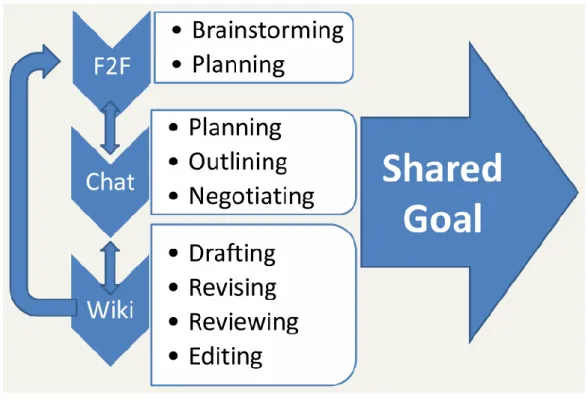
Figure 3.1. CSCW instructional procedures ………. 23
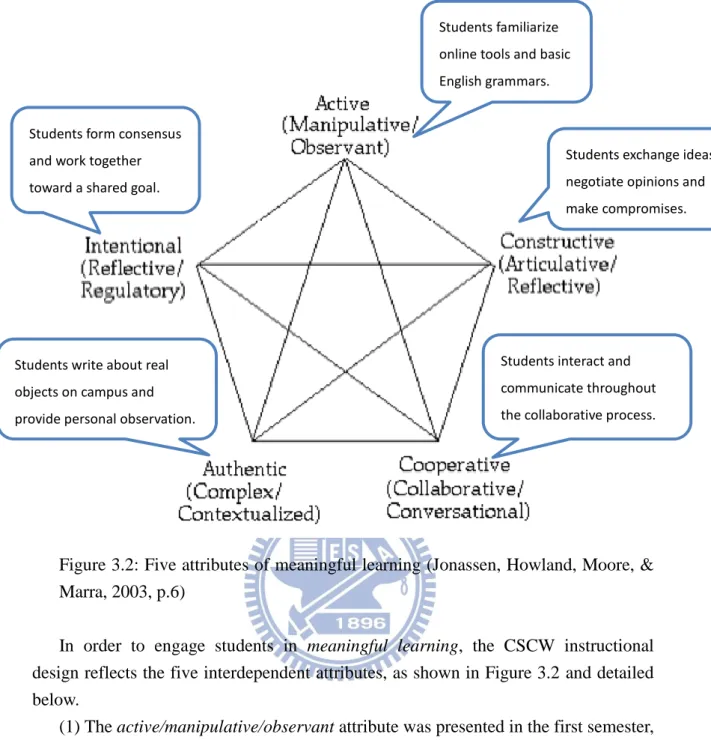
Figure 3.2. Five attributes of meaningful learning……….. 25
Figure 3.3. Screen shots of group online discussion……… 26
Figure 3.4. Screen shots of students’ wiki writing……… 27
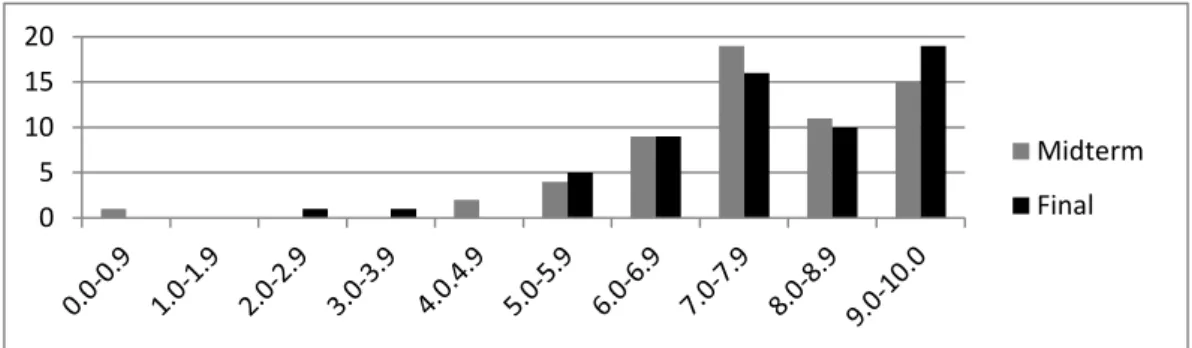
Figure 4.1. Distribution of participants’ overall mid-term and final exam scores. ………... 47
Figure 4.2. Distribution of participants’ mid-term and final writing test scores… 48 Figure 4.3. Frequency of writing assignment scores………... 48
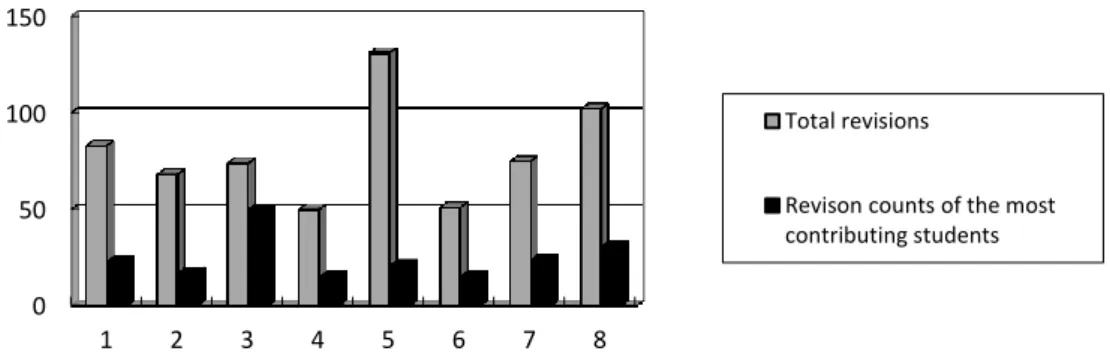
Figure 4.4. Revision counts of the whole groups and the most contributing student in the group. ………. 49
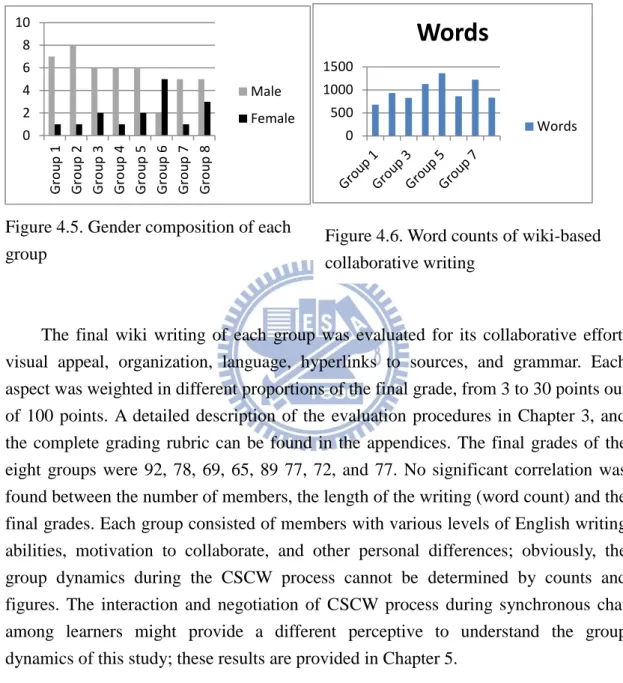
Figure 4.5. Gender composition of each group……… 51
Figure 4.6. Word counts of wiki-base collaborative writing ………. 51
Figure 5.1. Individual participation scores of online discussion ………. 60
Figure 5.2. Matrix of synchronous online participation types………... 61
Figure 5.3. Count of learning activities in topic discussion ……….. 74
Figure 5.4. Count of learning activities in outline discussion ……….. 74
Figure 5.5. Count of learning activities in revision discussion ……… 74
Figure 5.6. Percentage of learning activities of topic discussion………. 78
Figure 5.7. Percentage of learning activities of outline discussion……….. 78
CHAPTER 1
Introduction
“The co-construction of linguistic knowledge in dialogue is language learning in progress.”
(Swain & Lapkin, 1998, p.321)
With the widespread emergence of communication technologies, the demand for reading and writing in electronic contexts has increased (Warschauer, 1999). In the present era, communication among people largely takes place in digital forms, and the ability to efficiently communicate with others through electronic media is imperative. In globalized electronic contexts, there is a demand for both for adequate English literacy and for skills in electronic collaboration that spans national borders.
Workers, researchers, and students alike are often required to work together for a common goal, and the Internet is providing the mechanism for such collaboration. The trend toward computer-supported collaboration, fueled by the demand from various professions, is evolving as advancing technology results in increasing speed and realm. English language, as the well-established medium of international communication, is being used in most computer-supported cross-national collaboration and communication. In response to this increasing demand, this study aims to explore computer-supported collaborative writing (CSCW) in an L2 setting, which involves an even more complex scenario of group dynamics (e.g., the cultural aspects of foreign language) and individual factors (e.g., English writing ability, self-efficacy, familiarity of online tools).
While technology holds many advantages and potential, its emerging role in second language (L2) writing instruction is still being explored (Hartley, 2010; Kern, 2006). It remains unclear how L2 writing instructors can effectively facilitate collaborative writing through online tools, such as wikis. Although modern technology can provide technical support for many types of interaction among language learners, several foundational questions remain unanswered, particularly the possible factors influencing effective online collaboration, in both synchronous and asynchronous formats. When it comes to various contextual attributors, both the features of the online tools and the characteristics of the learners must be considered.
Learner characteristics include, but are not limited to, computer literacy and knowledge, communication skills, and their previous perception of online collaborative experiences. In addition, during the collaborative process, the interactions among learners and the roles they play may well explain the effectiveness of their negotiation, communication and collaboration. Moreover, the extent to which these factors contribute to an effective online collaborative writing process and the eventual completed work also needs to be explored.
While collaborative writing has been widely adopted in both professional and academic contexts, it is not often supported by technology in educational settings. The role and potential of online tools for collaborative writing in L2 context remain unclear, as does language learners’ readiness for learning L2 collaborative writing using online tools. In order to prepare students to be better equipped with such communicative abilities, language “teachers should bring computers into the center of their own pedagogical practice” (Pennington, 2003, p. 287).
1. Statement of the purposes
The primary purpose of this study emerged from the teacher-researcher’s immediate concerns of her practical teaching in the context of Taiwanese higher education, and it is to investigate the effectiveness of using collaborative computer tools, such as synchronous chat rooms and asynchronous wikis, in L2 writing instruction, and to identify the factors which influence learners’ interactions and collaboration when using such online tools. This study aims to present language education researchers and writing instructors with best practices in relation to CSCW and to provide a clearer view of the role that online support plays in understanding how learners collaborate in L2 settings. Practical pedagogical suggestions and implementation will be discussed, including (1) how to prepare learners for this type of online collaboration, (2) how and when to provide guidance and scaffolding, and (3) how to plan the CSCW implementation. It is hoped that CSCW can be more widely incorporated into general education in college so that Taiwanese students can benefit from the findings of this study. Last, this study aims to shed light on further research in computer-supported collaboration and L2 writing alike.
In the following Chapter 2, relevant literature is reviewed to provide a theoretical framework and instructional design for this study. Chapter 3 describes the research methods in detail, including the data collecting process and the plan for data analysis. Chapter 4 presents quantitative results regarding learners’ online learning readiness
(OLR), CSCW perceptions and individual/collaborative writing performance. The survey data are statistically analyzed to reflect the interrelationship between learners’ readiness and differences in their perceptions regarding CSCW. Chapter 5 presents an analysis of the qualitative chat log, with particular attention on learners’ participation, learning activities, and the consensus-building process. The chat logs of online discussions are coded and interpreted with the teacher-researcher’s perspectives. In Chapter 6, relevant pedagogical recommendations for future CSCW instruction and studies are proposed.
2. Research foci
The present study investigates the five dimensions of learners’ online learning readiness (OLR), perceptions of computer-supported collaborative writing (CSCW), and explores the critical collaboration process learners engaged in. The five dimensions of OLR include (1) computer/Internet self-efficacy, (2) self-directed learning, (3) learner control, (4) motivation for learning, and (5) online communication self-efficacy). Collected data covers the following aspects:
1. OLR and the interrelationships of each sub-dimension
2. Perceptions of CSCW supported by (a)synchronous tools
3. Individual and collaborative writing performance
4. Interrelationships of OLR and CSCW perceptions
5. Interrelationship of OLR and individual/collaborative writing
6. Participation in synchronous chat
7. Learning activities in synchronous chat
8. Consensus-building in synchronous chat
3. Significance of the study
As an emerging pedagogical method for learners of all ages, instruction in collaborative writing does not always fulfill its theoretical promises, such as active learning (Speck, 2002), reflective thinking (Bruffee, 1993), and motivation (Kowal & Swain, 1994). Collaborative writing is not a new concept in educational settings, but very few studies have applied it to L2 contexts, nor accumulated enough evidence for
effective use of online tools. Practical issues include how much to support students’ collaborative writing, and when such support is most appropriate. In addition, it is important to determine how to provide sufficient scaffolding and guidance without disrupting the process of their active learning.
Storch (2011), a pioneering researcher of collaborative writing in L2, clearly pointed out that collaborative writing research in L2 is important and deserves much more attention because of its potential benefits for L2 learners. A few recent studies examined wiki-supported L2 writing instruction and reported positive findings (e.g., Lund, 2008; Pellet, 2012). In addition, Huang and Chen (2010) recognized the educational potentials of wikis and proposed an instructional model of collaborative writing in L2 for the higher education context in Taiwan, such as equalization of participation for students with various abilities, and access of shared space for multiple users to allow for collective writing.
Collaborative writing using wiki has been reported to mediate students’ collective activity (Blin & Appel, 2012) and is associated with the development of learner autonomy (Kessler, 2009). However, there is not yet sufficient empirical evidence to draw conclusions about the actual benefits, pedagogical strategies, or learners’ readiness for the use of wikis in L2 writing classes. Storch (2011) concludes that wikis are theoretically suitable for collaborative writing instruction, but seeks more wiki-based empirical evidence. The present study thus seeks to contribute to the growing understanding of how wikis and other online tools support interaction in CSCW and to what extent other contextual factors influence and shape L2 collaborative writing using these tools.
CHAPTER 2
Literature review
1. Collaborative learning
As an umbrella term, “collaborative learning” implies instructional approaches or environments in which learners jointly construct knowledge and produce intellectual works (Smith & McGregor, 1992). The unique and significant features of collaborative writing, particularly in second languages (L2), as well as related issues, are reviewed to form the theoretical framework and instructional design of the present study. This section first introduces the social cognitive base of computer-supported collaborative learning (CSCL), then moves from online collaboration in general to its application to L2 writing instruction specifically. Second, the review highlights the influences of learners’ perceptions of instructional design, technical support, and social interaction in the contexts of computer-supported collaborative writing (CSCW).
The social-constructivist view of learning
The sociocultural perspective of collaborative writing originated from the Russian scholar Lev Vygotsky (1978) and helps to justify the crucial role of social context and interaction in learning. In recent years, the concept of collaboration has drawn significant attention in the field of education, and the social nature of learning has been re-evaluated and re-examined for the networked learning climate. The idea of collaborative learning can be traced back to Vygotsky’s sociocultural perspectives on learning. According to Vygotsky’s pedagogical theory (1978), learners who receive scaffolding from teachers or more able peers can assist learners in their “zone of proximal development” (ZPD) to achieve more than if they worked alone. Types of instructional scaffolding include questioning, modeling, feedback, explanations or suggestions. His ideas have inspired researchers to consider not only the effects on individual writing but also on the social interaction that occurs throughout the writing process. Social interaction that occurs within the ZPD can help beginning writers to achieve better performance than with work that is done in isolation. From this sociocultural perspective, learning can only be effective within a larger motivational and interactive context, and that learning occurs largely through interactions among students (Stahl, et al., 2006). The benefits of scaffolding from peers constitute the basis of collaborative learning, in which learners work together, as they communicate
and negotiate with each other toward a common goal, usually to create an end product.
Second language learners bring their original culture and traditions to the classroom and shape the learning practice in unique ways. It is important to recognize what L2 learners already know, including the professional knowledge of the new language and their attitude toward and philosophy of the learning process. For instance, it is important to know if the learners are ready for frequent interaction with the instructor and negotiation with peers, as well as whether they are equipped with effective skills to express themselves. A similar concept can be found in Bakhtin’s theory. Bakhtin’s term “voice” refers to the “speaking consciousness,” and for a writer, the voice is the point of view, a certain idea or a particular value he/she holds during writing. For Bakhtin, each piece of writing includes the writer’s past interaction with the thoughts of others and anticipated future interactions (Cazden, 1993). Amhag and Jakobsson (2009), adopting Bakhtin’s ideas, examined the dialogic interaction among learners and described how learners use dialogue as a tool for collaboration. Based on Bakhtin’s view that written texts are dialogic and mediate activity, Wells (1996, 1999) also argued that individual learning is mediated by social discourse in dialogic learning.
When considering the ZPD concept, assistance and support from the teacher or a more capable peer in the writing process could be viewed as a scaffold for beginning writers. Compared to traditional written feedback and marking from teachers, peer feedback has proved to be effective in L2 writing as well (Jacobs, Curtis, Braine, & Huang, 1998; Yang, Badger, & Yu, 2006; Zhu, 2001). Learners help each other by identifying unseen mistakes and providing different perspectives. The extended and dynamic view suggests that ZPD could exist in a group just as it does in an individual. The scaffolding from peers helps learning (Cohen, 1994; Webb, Troper, & Fall, 1995) and reflects the concept of collaborative learning, in which learners work together, engaged in a shared task, communicating and negotiating toward a common goal, usually to produce or create a product (e.g., co-writing).
While cooperative learning is similar to collaborative learning, there is a distinct contrast. Cooperative learners generally “split the work, solve sub-tasks individually and then assemble the partial results into the final output (p.8),” while collaborative learners assume a high degree of responsibility for the collective work as a whole, rather than simply adopt the individual part assigned by the teacher. In collaborative learning, each participant stays engaged with a shared task, and they work “together”
throughout the whole learning process (Dillenbourg, 1996). This significant difference has also been identified in L2 writing instruction (Arnold, Ducate, & Kost, 2012). In collaboration, learning still occurs cognitively in individuals but is enhanced by more frequent interaction with peers and deeper engagement with the task (Cohen, 1994). In addition, the scaffolding among peers benefits both those who provide it and those who receive it (Webb, Troper, & Fall, 1995). Fortunately, the beneficial interaction for learning can be increased and promoted by the facilitation and support of computer tools (Pifarre, 2007), and the concept of collaboration has been incorporated into writing instruction in both first and second languages.
Collaborative writing in L2 education
Writing, as a profound process that helps to organize, reflect and refine ideas, has been integrated into the curriculum across disciplines; collaborative writing offers greater chances to practice reading and writing skills, to stimulate reflection, to share knowledge, and to think critically (Scardamalia & Bereiter, 2003). According to Speck (2002), collaborative writing can be a useful pedagogical tool that not only promotes active learning in higher education, but subsequently prepares students for the workplace. In addition to promoting ownership of the written product (Storch, 2005), collaborative writing encourages reflective thinking and awareness of audience (Bruffee, 1993) and motivation (Kowal & Swain, 1994). However, facilitating collaborative writing in class is typically time-consuming and is particularly challenging to implement when classroom hours are limited.
2. Technology-enhanced collaboration
In the 1990s, the advance of technology brought about computer-supported collaborative learning (CSCL) as a significant branch of learning science (Stahl, Koschmann, & Suthers, 2006), and the potential of networked tools for collaboration has since been rigorously studied. Koschmann (2002) defines CSCL as “a field centrally concerned with meaning and practices of meaning-making in the context of joint activity and the ways in which these practices are mediated through designed artifacts” (p.18). Computers, including word processors, networked tools and online resources, have universally revolutionized the way people read and write. Warschauer (1996) suggested that technologies provide language learners with an enhanced sense of communication, empowerment, and learning, thus making learners feel less isolated and afraid to communicate, while making them more independent and responsible for their own learning. Computers and the Internet can foster knowledge-building communities, like the pioneering Knowledge Forum project
(Scardamalia, 2004), which supports the social co-construction of knowledge through collaborative communication. Knowledge Forum was basically facilitated by networked text-based communication, that is, computer-supported collaborative writing (CSCW). In the following sections, relevant literature of CSCL in general and CSCW specifically will be presented.
According to the Cambridge Handbook of Learning Science (2006), three early CSCL projects were all involved with literacy (reading and/or writing) improvement: (1) the ENFI project at Gallaudet University; (2) the CSILE project at the University of Toronto; and (3) the Fifth Dimension project at the University of California San Diego. EFNI and CSILE were particularly designed to develop skills for engaged and meaningful writing, for either joint text production, or textual communication. The pioneering ENFI (initially for English Natural Form Instruction, and later became
Electronic Networks for Interaction) project at Gallaudet University demonstrated that
literacy education can help facilitate logical thinking and written language skills, while providing a scaffold for learners in a social, meaningful and authentic environment (Bruce & Rubin, 1993). The connected local network helps the writing become (1) a social act, rather than a solitary task; (2) a process, rather than a product;, and (3) a collaborative effort among students and the teacher (Batson, 1998). The technology used in the ENFI project might seem out of date by today’s standard, but it provided sufficient support for textual communication, meaning-making and collaborative writing (Gruber, Peyton, & Bruce, 1995). more than software, ENFI was a concept that could be used to change the social dynamic of the writing classroom (Day, 1995). The application of networked tools helped learners to meaningfully participate in the discourse community and improve their writing. These early CSCW examples proved that fancy multimedia platforms are not necessary; appropriate facilitation though common networked text-based tools can achieve satisfying learning outcomes.
As a well-established pedagogical approach, CSCL has been widely used across many disciplines, from engineering, science, and math to literacy and language arts. However, collaborative writing instruction is not always successful, and is influenced by a variety of factors, such as how the working groups are determined (homogeneous or heterogeneous, randomly-assigned or self-determined), group size, teacher’s direct instruction, pedagogical strategies, task design, assessment, and socio-cultural influences (Huang & Chen, 2009), as well as students’ individual characteristics (e.g., individual motivation, knowledge of online tools, online communication skills). Students have raised concerns about fairness (Chisholm, 1990) and inaccurate peer editing (Nelson & Murphy, 1993). Furthermore, learners’ preparation (e.g., word
processing skills) and motivation for online learning can greatly affect the process and quality of their collaborative writing (Littlewood, 1996; Saade, He, & Kira, 2007), as can their perceptions of the collaborative environment (Kessler, 2009).
Computer-supported collaborative writing (CSCW)
Second language learning requires comprehensive consideration of many issues, including individual motivation, metacognitive strategies, and knowledge transfer across languages. A chapter in the Handbook of Educational Psychology discusses nine broad aspects of the role of technology in education, and suggests group work activities that will emphasize this role and provide an opportunity for further investigation to better understand its effects on second language literacy and its social context (Padilla, 2006). CSCW in second language acquisition is an interdisciplinary idea, based in research emerging mainly from applied linguistic and educational technology, rooted in CSCL and computer-assisted language learning (CALL) approaches.
Concordancer and other corpus-based computer applications play a huge part in the relatively short history of CALL. The ability of computers to process large amounts of linguistic data opens up the flourishing development of this data-driven approach, while easy access to personal computers makes it possible to bring this tool into the classroom. Interest continues to grow, because it is beneficial for developing autonomy for individual learners, particularly for those learners with higher levels of proficiency (O'Sullivan & Chambers, 2006; Sun, 2007; Yeh, Liou, & Li, 2007).
On the other hand, the focus of language learning has transferred from merely personal development to a more communicative purpose. Languages, as a medium of communication, are supposed to be taught and used in context, with real people and real tasks. The sociocultural approach in L2 education has gained attention with an increasing number of studies concerning group dynamic (Jones, Garralda, Li, & Lock, 2006), peer interaction (Gijlers, Saab, Van Joolingen, De Jong, & Van Hout-Wolters, 2009; Peterson, 2009), and communication styles (Cho, Gay, Davidson, & Ingraffea, 2007). Networked tools are now being applied in language classrooms in more collaborative and dynamic ways. Weblogs and discussion forums are no longer for one-way assignment submission only, but are now also used as space for observation, reflection, peer feedback, and assessment. These applications are combined with new pedagogical methods to achieve more collaborative facilitation and more learner interaction.
Applied linguists have applied pedagogical practices in response to the social and collaborative nature of learning. Nowadays, various media and technologies, from the tapes and radio in the old times to audio mp3 files and podcasts, are being used widely in L2 education. Many computer tools have been applied for writing instruction, from word processors, e-mails, corpora, concordancer, to both synchronous and asynchronous online tools (Hyland, 2003). Networked computers as learning tools have been found to empower L2 learners by enhancing autonomous control, providing more equal participation, and developing independent and critical learning skills (Warschauer, 1996).
Recent CSCW studies applying technology for L2 writing instruction have demonstrated practical experiences in college composition classes and writing programs (e.g., Lackey, 2007; Zemliansky, 2008). Lackey (2007) suggested the process of establishing wiki pages could improve not only writing skills but also visual rhetoric skills, which are becoming increasingly useful. The idea of shifting from individual assignments to collaborative work is not easy to achieve and understand, but in James Madison University (JMU)’s first-year writing courses, some of the students are doing just fine. More cases of college-level collaborative writing instruction (Farabaugh, 2007; Hemmi, Bayne, & Land, 2009) showed positive responses from students and teachers. For instance, Kessler et al. (2012) recently documented a web-based collaborative writing project that used Google Docs and suggested that the online collaboration improved the accuracy of students’ writing; furthermore, students were encouraged to focus on meaning rather than form.
Theoretically, collaborative writing provides language learners with more opportunities for negotiation of meaning, along with other potential benefits. In spite of the encouraging findings regarding CSCW, unsuccessful implementation and unexpected troubles still occur from time to time. Specific skills are needed in order for learners to effectively collaborate with peers, such as learners’ autonomy, online communication skills, and online learning readiness (OLR) (Hung, Chou, Chen, & Own, 2010). Littlewood’s (1996) framework of autonomy suggests that foreign language learners’ knowledge and skills affect their ability to learn, while also indirectly influencing their willingness to become better communicators. The quality of CSCW instruction is also an important factor, particularly whether it is designed with the intended learners in mind.
Learning to write in a second language has both similarities and differences to learning to write in a first language. Research on each of these points of comparison can add to the body of research on writing instruction. For example, writing in a second language shares at least some features with writing in one’s first language (i.e. planning, organizing strategies, and revision. Yet, collaborative writing involves a shared authorship among a group (more than two people), which is a distinctly different feature when compared to previous L2 writing instruction. It is suggested that relatively instant feedback (from both peers and instructor) and the online collaborative tools that grant this access to others’ writing could promote more successful collaborative writing (Storch, 2005). The majority of relevant literature to date focuses on peer feedback or pair writing (no more than two people).
Computer-supported collaborative writing in L2 setting
As a pedagogical strategy, collaborative writing can be an effective realization of Swain’s (2000) notion of collaborative dialogue in language development, by which learners solve linguistic problems and build knowledge about language together. In terms of L2 education specifically, learners can receive mutual scaffolding and feedback through collaborative writing tasks, and work together to generate a collective product through communication and negotiation in each phase of the writing process (e.g., brainstorming, outlining, revising, and editing). Moreover, a high frequency of negotiation during text revision could improve the language accurancy of the modified output (Suzuki, 2008). Furthermore, Storch (2011) argues that a collaborative approach can increase learners’ awareness of language use (their own and that of peers), and allow learners to integrate the linguistic resources of the group, in order to develop more accurate written products.
Language educators have also noticed the social and collaborative nature of learning, and have applied pedagogical theories to practice accordingly. Many synchronous and asynchronous tools for online collaboration have been developed (Hyland, 2003; Murphy, Rodriguez-Manzanares & Barbour, 2011) and could potentially realize the collective and socio-cultural perspective of language learning (Lund, 2008). For instance, instant chat and net conferencing provide the opportunity for immediate feedback and frequent interaction, while blogs and wikis combine text-based and asynchronous features for reflective thinking and detailed revision. Such tools can be suitable and beneficial for L2 writers.
Computer-supported environments have been found to improve L2 students’ writing skills, particularly in the use of more complex structures, more fluent conversational writing, and self-expression in greater quantities (Beauvois, 1998; Warschauer, 1996). Studies have shown that word processing software can dramatically affect the writing process, including aspects of planning, drafting, and revising. Pennington (2003) claimed that the planning—writing—revising process is easier to understand and use within computer contexts, which may be “especially valuable for L2 writers” (p. 291). When using word processing with L2 writing students, it is easier for them to learn about revision, to make more and better meaning-level changes, and to participate in more peer feedback.
Among the few studies done on L2 collaborative writing, Storch (2005) examined the quality of collaborative writing and found higher accuracy in the text produced, a result confirmed by later studies (Elola & Oskoz, 2010; Kessler, Bikowski & Boggs, 2012; Storch & Wigglesworth, 2007). These positive findings suggest that collaborative writing activities might provide L2 learners with more opportunities to develop “collaborative dialogue” (Swain, 2000), which leads in return to better learning performance and outcomes. Positive findings regarding wiki-based L2 collaborative writing has been reported in other studies as well (Arnold, Ducate, & Kost, 2012; Huang & Chen, 2010; Kessler, 2009; Pellet, 2012), yet many CSCW instruction projects were not as effective as expected (Judd, Kennedy, & Cropper, 2010). The reasons for the negative findings are not fully understood, and further research is necessary.
3. Issues of computer-supported collaborative writing (CSCW)
The complexities of the dynamic context of online collaborative writing process for L2 learners cannot be covered in brief; therefore, the present study focuses specifically on learners’ online learning readiness (OLR) and their perceptions of CSCW, as well as the contextual factors (e.g., task design, technical support, and communication with peers) that may influence CSCW in L2 writing. In addition to learners’ readiness, many other dimensions should be considered when it comes to the effectiveness of L2 writing instruction, including individual motivation, metacognitive strategies, knowledge transfer across languages, and the learners’ socio-cultural backgrounds. In addition, pedagogical issues, such as the design and selection of content, instructional approaches, and the capability and application of online tools, are also important to investigate.
Some scholars have investigated group work activities and the role of technology for understanding L2 literacy and its social context (e.g. Padilla, 2006). Generally, research on collaborative writing has focused on learners’ language and the socio-cognitive processes of their interactions (Storch, 2005); very little attention, meanwhile, has been given to the collaborative process itself or to learners’ perceptions of it (Kessler et al., 2012, Storch, 2005). The possible factors influencing learners’ online collaborative writing process are wide-ranging, such as group size, knowledge of other participants, clarity of task, and ownership of task (Tolmie & Boyle, 2000). Another area of research is how learners perceive (1) the features, usability and adoptability of online tools, (2) the instructional design, learning activities and selection of text, and (3) the communication and collaboration involved with CSCW tasks. Learners’ perceptions of these three categories are presented as the technical, instructional and social aspects of CSCW.
Writing process: Phases and models
While writing as a process is influenced by various social, cultural and individual factors, there may be some aspects and stages that can be generalized. For example, composition researchers have developed writing models to understand the complexity of this mental process and hope to provide pedagogical implications for writing instructors. However, when these writing process models (e.g., Flower & Hayes, 1981; Hayes, 1996; Marlene Scardamalia & Bereiter, 1986; Zimmerman & Risemberg, 1997) were developed, the special situation of second language learners was not considered. Among the various models, two of them might provide some ideas that can be applied to second language writing instruction: Flower and Hayes’ cognitive model and
Scardamalia and Bereiter’s knowledge telling/transforming models.
The well-known Flower and Hayes’ process model (1981) suggests the pre-writing (brainstorming, planning), writing, and post/re-writing (reviewing, proofreading, editing) stages are recursive and even simultaneous. The writer can jump back and forth among all these activities. While this model is mainly about the cognitive aspects of individual writing process, it has received criticism because it does not consider social factors. Flower (1994) later revised the model to one of “discourse construction,” which considers the language and social context together, as well as the purpose and goal of the writing—for both the writer and the reader—and activated knowledge and awareness. Both versions of the model were developed for L1; the potential differences between L1 and L2 writing, such as linguistic proficiencies, sense of audience and writer, and writing process, were not considered.
Scardamalia and Bereiter (1986) offered models of knowledge-telling and knowledge-transforming models, which focus on novice and expert writing processes, respectively. Contrasting beginners and skilled writers, these two models present different metacognitive strategies, knowledge of genre and text structure, different levels of goal-setting and planning, and mental/behavioral revision. Less-skilled writers tend to have less discourse schema, less goal formulation, and less mental revision, and these characteristics might be identified in L2 writers as well. Interventions such as teaching discourse elements, coaching, dictation, ending sentence task, and providing structure, can serve as scaffolding and may help L2 novice writers learn to move toward more expert performance in their writing skills and strategies.
The recursive feature of the writing process proposed by Flower and Hayes is universal in all writing, both in L1 and L2, even though the model does not specifically address the differences between L1 and L2 writing. While Scardamalia and Bereiter’s knowledge telling and knowledge transforming models were developed for L1 writing, the knowledge telling (novice) model could also represent the cognitive processes of L2 writers with regard to limited linguistic and genre knowledge. These models integrate the problem-solving concept and provide a practical theoretical base for teaching L2 writing. By comparing these two models, clear differences between novice and expert writers can be used to understand similarities and differences between L2 and L1 writers.
Writing models cannot describe every subtle aspect of the individual writing process, let alone the more complex dynamics involved in group writing. However, the proposed writing phases and models—or process approaches-- could be used as pedagogical frameworks in writing instruction. For L2 learners in particular, the advantages of teaching writing online have been recognized, including a voice for the shy, easy access to resources, higher motivation, active learning, real writing in the virtual word, and continuous online communication (Pellet, 2012; Stine, 2004). While the merits of teaching writing online are recognized, L2 writing could benefit even more from the collaborative nature of networked tools. Web 2.0 tools are reported to support the guidance and meaning-making negotiation among L2 student writers (Blin & Appel, 2012; Huang & Chen, 2010). Various possible applications of the web 2.0 technologies have been reported (e.g., Goodwin-Jones, 2003; Huang & Chen, 2010; Lund, 2008), and preliminary findings confirm the learning/teaching potential of these tools (Chang & Schallert, 2005; Wang, et al., 2005).
Learners’ readiness
When applying CSCL to knowledge management, both the cognitive and social processes of learners should be taken into account. User attributes that influence CSCL vary, and online learning readiness (OLR) is regarded as one of the most crucial factors in successful online learning (Hung, Chou, Chen, & Own, 2010). Online learning readiness is a broad concept, similar to Shetzer and Warschauer’s (1999) notion of electronic literacies, and includes preferences of delivery, confidence in using online tools, and autonomous learning (Warner, Christie, & Choy, 1998). These aspects of students’ individual qualities can significantly determine the success of online learning. Thus, self-directed study and autonomous learning have begun to receive greater recognition in language education (Godwin-Jones, 2011).
Because of the crucial role of students’ readiness in successful online learning, instruments have been developed to measure this multi-faceted concept (e.g., McVay, 2001; Hung, Chou, Chen, & Own, 2010), such as motivation for learning, learner control, computer self-efficacy, and online communication self-efficacy. While OLR has been generally recognized as an important predictor of successful online learning, such learning is typically more self-paced and individual. As a result, it has not yet been confirmed whether the same constructs that predict successful online learning in general will also affect online collaboration among learners in the same way. It is worth investigating the interrelationships between each readiness dimension and students’ perceptions, to better understand how educators can help and prepare students for collaboration in digital contexts.
Technical support: Synchronous and asynchronous
Storch (2011) suggested that using wikis may be the new direction for facilitating online collaborative writing in the L2 classroom. Indeed, wikis allow users to easily edit text-based content online. Like the mechanism used on Wikipedia, online collaboration enables revisions among distributed learners. As a feature of asynchronous online tools, the delayed nature of wikis allow learners more time to reflect and produce more in-depth intellectual responses. Successful cases of wiki-supported writing instruction have shown a wide range of positive perspectives from students and teachers (Farabaugh, 2007; Hemmi et al., 2009; Kittle & Hicks, 2006; Lackey, 2007; Zemliansky, 2008), and the application of wikis appears suitable for higher education contexts (Huang & Chen, 2011).
No longer limited to computer engineers, online content on wikis can be easily edited by anyone with an account. Due to the loose structure of wiki sites, users can freely link online resources in and out of wikis in multiple ways. Wikis allow direct access without the limits of time and place, which is the key element in collaborative learning (Hodgson, 2006; Wilkoff, 2007). Being web-based, wikis also provide users with a sense of authorship and audience for their textual production. Huang and Chen (2010) proposed a Wiki Collaborative Writing (WCW) model for collaborative L2 writing instruction, utilizing the collaborative nature of wikis to equalize participation of less able students and to increase peer feedback. Kessler (2009) reported an association between learner autonomy and wiki collaboration, and positive findings on wiki-based writing instruction have increased in recent years (e.g., Arnold, Ducate, & Kost, 2012; Pellet, 2012). Collaboration through wiki writing has been reported to mediate students’ collective activity (Blin & Appel, 2012) and is associated with the development of learner autonomy (Kessler, 2009). However, there is not yet sufficient empirical evidence to draw conclusion about the actual benefits, particular in L2 contexts, as pointed out in a recent review (Storch, 2011).
On the other hand, synchronous online tools (e.g., chat rooms) can facilitate simultaneous communication and allow learners to get real-time feedback from each other. Because this type of feedback is more similar to face-to-face interaction and is preferred for second language acquisition, synchronous chat is more effective when well-structured. Synchronous chat can foster social presence and lead to a greater sense of community, which is beneficial for a comfortable and successful learning environment (McInnerney & Roberts, 2004). In addition, the powerful social nature of wikis for collaborative writing can be enhanced through the support of synchronous text application (Elola & Oskoz, 2010; Oskoz & Elola, 2010).
As these findings suggest, synchronous communication seems to better support motivation, as well as the social and personal aspects of writing, while asynchronous communication is more tailored to the development of cognitive aspects and reflection (Hrastinski, 2007, 2008). Different tools may affect students’ perceptions and preferences for online collaboration; yet many other factors are also involved in the learning context, such as pedagogical approach, teaching style, and task design. Sotillo (2000) investigated the discourse features of both synchronous and asynchronous online tools in the ESL setting and concluded that asynchronous and synchronous online communication have “different discourse features which may be exploited for different pedagogical purposes” (p.82). For instance, collaborative web tools can help realize the collective and socio-cultural perspective of language
learning (Lund, 2008). Even when acknowledging the benefits of online tools, it is also important to recognize how learners perceive the tools. If a learner’s “cognitive-affective response” (understanding and attitude) toward electronic tools is positive, high-quality writing may ultimately be produced (Pennington, 1999).
Instructional design
While the intrinsically collaborative nature of wikis theoretically suits learners’ needs, and chat rooms enable instant feedback, they do not always generate promising interaction and cognitive development among learners. Pennington (2003) claimed that “networking student writers electronically does not guarantee better writing” (p.299); accordingly, collaborative tasks must be carefully planned and executed with consideration of learners’ schema and cognitive load. The pedagogical design of appropriate learning tasks should reflect the nature of the tools and aim for its optimal potential. As discussed earlier, synchronous and asynchronous can facilitate different types of interaction among learners for various pedagogical purposes (Sotillo, 2000); in a similar vein, student motivation can by increased by choosing appropriate online tools and learning tasks based on specific learning objectives for collaborative writing. The resulting sense of achievement would be the key to successful online collaborative writing tasks.
When considering the factors that influence the effectiveness of collaborative writing in L2, the majority of past research focused on task types (e.g., Storch & Wigglesworth, 2007) and proficiency grouping. Other factors must be considered. For example, carefully designed tasks and instructions, including a common goal for the group, are necessary to ensure interaction and cognitive development. Some learners’ prefer extra time to process information; some excel in visual approaches of learning rather than text-based communication. To fit different styles and types of learners, carefully-designed, yet flexible, collaborative writing tasks are the cornerstone of successful CSCW.
Other than individual and cognitive characteristics, CSCW instruction should be based on social and cultural aspects of the learning community and provide an authentic goal and audience for learners and situates them in real contexts (Drisccoll, 2007). Relevant consideration also includes the degree of teacher intervention in the writing process, as well as the strategies used to facilitate online discussion and provide feedback. Teaching methods for collaborative learning significantly contributed to self-efficacy (Fencl & Scheel, 2005), a personal characteristic that influences achievement behaviors, persistence and effort (Schunk, 1995; Schunk &
Pajares, 2002). Reflecting the ideas of social cognitive theory (Bandura, 1986), the three presence components (cognitive, social, and teaching) of the web-based
Community of Inquiry model (Garrison & Vaughan, 2008) support the design of
online interaction-based learning, in which the teaching presence, also known as the instructional aspect, is essential.
Learners’ interactions: Participation, learning activities, and consensus-building
Compared to cognitive aspects, social and affective factors influencing CSCL were less investigated and discussed (Jones & Issroff, 2005); however, engagement in online activities is greatly influenced by socio-cultural factors (Hickey, 2003). The contextual factors of computer-supported instructional environment might determine the quality of computer-mediated communication (CMC) and the effectiveness of CSCL (Tolmie & Boyle, 2000). Furthermore, learners’ perceptions of their online learning are related to their perceptions of the quality and quantity of learning (Piccirano, 2002; Stepp-Greany, 2002); students expressed preferences for computer-supported talk when collaborating with others (Jonassen & Kwon, 2001). Jonassen and Kwon (2001) compared participants’ perceptions of the problem-solving process in both face-to-face and computer-mediated settings; they found that participants experienced more personal reflection, critical thinking and better decisions, even if they needed to put out more effort to communicate with others in their groups. In particular, students’ perceptions of social presence are associated with performance on written assignments (Picciano, 2002).
The community of inquiry model (Garrison & Vaughan, 2008) also points out the other indispensable element of online learning: social presence. Yet, the social aspects of learning in digital contexts seemed to be ignored in many cases (Kreijns, Kirschner, and Joshems, 2003). Taking social interaction for granted and restricting it for cognitive processes are the two common pitfalls of CSCL; effective interaction does not happen automatically, and the problem usually lies in the social level, rather than in the technical level. The social interaction among learners plays an important part in the learning process, echoing the principles of constructivist philosophy, which facilitate collaboration, while constructing both personal and collective knowledge (Jonassen, Davidson, Collins, Campbell, & Haag, 1995).
Among various issues regarding the social and cognitive aspects of online learning, learners’ participation, learning activity, and consensus-building process are of significant importance. The social aspect can be supported by both synchronous and asynchronous computer-supported communication, which can provide different
patterns of interaction for various pedagogical purposes and facilitate negotiation in group learning.
In computer-supported environments, interaction generally refers to explicitly or implicitly responding to the messages of others, while participation involves multiple posts or posted messages of a certain length (Schrire, 2006). Learners’ online participation can be basically categorized as active and passive (Veldhuis-Diermanse, 2002; Pifarre, 2007). The importance of active participation in online learning has been emphasized for decades (e.g., Hiltz, 1986), yet it has not been fully explored in computer-supported collaborative contexts. Schrire (2006) proposed a model for analyzing online communication from perspectives of interaction, cognition, and discourse, incorporating a qualitative approach to examine in-depth communication and collaboration among learners in the higher education context. It is suggested that computer-supported collaborative learning (CSCL) research incorporate qualitative and quantitative analysis for understanding the group learning processes (Schrire, 2006).
Cognitive, affective, and metacognitive learning activities affect learning in different ways and play significant roles in both individual and group learning (Veldhuis-Diermanse, 2003, Laat &Lally, 2003, Pifarre, 2007). In general, cognitive activities include applying external information and experiences, linking or repeating internal information, and debating ideas; metacognitive activities include planning, monitoring (e.g., keeping track of the discussion), and rephrasing and expanding ideas; and affective activities include asking for general feedback (e.g., is this a good idea, or what do you think?), chatting, and social talk. Understanding learners’ attitudes toward these learning activities in a computer-supported collaborative writing process could be a key to effectively support and guide their learning.
One of the important issues of CSCL research is how learners construct knowledge in online synchronous discussions. Weinberger and Fischer (2006) proposed a framework for analyzing argumentative knowledge construction in CSCL environments. Suggested categories for learners’ reactions to each other’s ideas include: (1) quick consensus-building, (2) integration-oriented consensus-building, and (3) conflict-oriented consensus-building. The first type, quick consensus-building, is when students try to reach consensus without fully exploring or understanding the actions or ideas of their peers (Chan, 2001). The second type, integration-oriented consensus-building, refers to the way that “learners build on the reasoning of their partners, work with each other’s ideas and are willing to adjust their own ideas based
on the sound arguments of their fellow students” (Gijlers, Saab, Van Joolingen, De Jong, Von Hout-Wolters, 2008, p.254). In conflict-oriented consensus-building, students may not be able to accept others’ ideas, resulting in further exploration of other’s points or a request for more specific explanation. Each type of consensus-building can occur in any stage of the collaborative learning process, but it is unclear which type is the best strategy for group learning. Different types of consensus-building activities are suggested to achieve a variety of positive effects on learning (Weinberger & Fischer, 2006).
Written language cannot be separated from its purpose, function and other contexts. In order to fully understand communication and information exchange in a computer-assisted setting, a social-cultural perspective could provide a lens to help address various fundamental questions in L2 writing instruction and learning. With concepts and framework proposed by Vygotsky, Bakhtin, and many other sociocultural theorists, the online interaction and learning process could be understood and analyzed through a more comprehensive lens.
Second-language writers usually write with rich context and logic originating from their own cultures and from their awareness of the first and second languages. How they view language and how they identify themselves with the language are sociocultural contexts that play a large role in the learning process. The review of relevant literature demonstrates the emerging trend of CSCW, and findings of previous studies can also provide a solid and fertile ground for the further development of this research field. Of the reviewed studies, more than two-thirds embrace a more qualitative-oriented approach to understand the ecology of the collaboration among learners. Quite a few ethnographic studies (Edasawa & Kabata, 2007) and case studies (Kobayashi & Rinnert, 2008; Peterson, 2009) appeared. A case-study method was used to study computer-mediated communication (Godwin, Thorpe, & Richardson, 2008). A longitudinal study (Ducate & Lomicka, 2008) combined weblog record, student reports, focus group interview and questionnaire, in order to obtain a whole picture of the context. Data collection of studies regarding computer-mediated communication and computer-assisted language learning has been diverse, multiple and mixed. In order to embrace the rich contexts involved in the learning process, this study applies a mix-methods and classroom-based approach, which is detailed in the following chapter.