國立交通大學
英語教學研究所碩士論文
A Master Thesis
Presented to
Institute of TESOL,
National Chiao Tung University
In Partial Fulfillment of the Requirements
for the Degree of
Master of Arts
溝通策略訓練對英語口語語意表達之影響
To Teach or not to Teach: The Effects of Communication Strategies
Training on EFL University Students’ Meaning Negotiation
研究生:梁郁麗
Graduate: Yuliya Liatambur
指導教授:楊芳盈 博士
Advisor: Dr. Fang-Ying Yang
中華民國 一百零三年七月
July, 2014
i
ABSTRACT
Learning a language is a difficult and long process and being able to use language for communication requires constant practice. No matter what learners’ language proficiency is, it is impossible to avoid communication problems due to gaps in linguistic or lexical knowledge. The use of communication strategies (CSs) is one way to cope with these problems. For example, a learner might substitute an unknown language item for one existing in his or her repertoire, or describe its properties in order to explain the meaning to the interlocutor as closely as possible. Until now research investigating the use of CSs has yielded controversial results on whether it is necessary to teach various CSs to learners or not. The current study aims to investigate the effects of CS training in order to add empirical evidence to this controversy, answering 4 research questions: 1) Does training influence the frequency of CS use in total and by strategy type? 2) How many CS episodes are transferred to LREs before and after the training in total and by strategy type? 3) How do different types of tasks (i.e., highly controlled closed-ended tasks, less controlled closed-ended tasks, and minimum controlled closed-ended tasks) influence the frequency of CS use and transfer to language related episodes (LREs)? 4) What are learners’ opinions about CS training and its effectiveness?
Thirty-two local and international EFL students from two prestigious universities in Taiwan participated in this experiment. They were 17 male and 15 female students with intermediate and high level of English language proficiency. The participants were divided into a control and an experimental group according to their availability and preference. The control group did not receive any treatment, while the experimental group attended a four-week course of CS training, specifically designed for the study. The main aim of the course was to increase the students CS
ii
use, with particular attention paid to the CSs requiring high level of verbal engagement. The secondary aim of the course was to increase students’ CS to LRE transfer. The course consisted of four training sessions with one session per week lasting for 90 minutes. In the course of training, the participants learned about six types of CSs (asking for repetition, mime, approximation, appeal for help, circumlocution and comprehension check) through video analysis, explicit instruction, awareness raising discussions and CS practice. A pretest and a posttest with three types of tasks (map task, spot the difference, and assemble the story) were conducted in order to investigate the effectiveness of the treatment. The participants’ use of CSs and CS to LRE transfer was compared across two groups at two tests. The results of the current study suggest that the CS related training had a positive influence on the frequency of learners’ CS use. It appears that the approximation and asking for repetition CSs were particularly influenced by the training. The findings also suggest that the training course did not have a positive influence on the CS to LRE transfer, since participants were not encouraged to focus on language and improve their English level through collaboration. The results also suggest that task type can influence the students CS use and CS to LRE transfer. Finally, the course effectiveness survey demonstrated that the learners viewed the course as effective and interesting. It is hoped that the results of this study will help teachers and educators to understand whether it is necessary to teach CSs, and will introduce a framework for effective teaching of CSs and provide pedagogical ideas to EFL teachers.
iii
ACKNOWLEDGMENTS
Completing a thesis is a tedious and difficult process. As my study at graduate school is approaching the finish line, I would like to express my heartfelt gratitude to those who have showed their generosity to me on the way.
First and foremost, I want to thank my advisor, professor Fang-Ying Yang, who sacrificed her private time reading and revising my drafts, gave me priceless advices, comments and suggestions. Although my research abilities and writing skills are subject to improvement, her advisory have made me a better researcher and a writer. Without her guidance, I would never be even close to graduating from the master program.
Next, I express my gratitude for those who participated in my experiment and assisted me in data collecting procedures. I thank the participants for spending their precious time on the pretest and the posttest, attending my course and meeting me for interviews.
Of course I would like to thank my parents who have supported me right from the beginning and till the end. Every time I talked to them on Skype, they gave me strength to go on. They always believed in me and supported me. I thanks them for having high hopes and never losing their faith in me. Because of their love, care and support I now stand where I am.
Last but not least, I would like to express my gratitude to professor Shu-Min Lin and professor Johanna E. Katchen, who kindly agreed to be my committee members. I appreciate their time, support and help toward making my paper better.
iv
TABLE OF CONTENTS
ABSTRACT i
ACKNOWLEDGMENTS iii
TABLE OF CONTENTS iv
List of Tables vii
List of Figures viii
CHAPTER ONE INTRODUCTION 1
Overview 1
Purpose of the Study 2
CHAPTER TWO LITERATURE REVIEW 4
Strategic Competence 4
Communication Strategies 6
Definition of Communication Strategies 6
Theoretical Perspectives on Communication Strategies 6
Psycholinguistic Perspective 7
Interactional Perspective 11
Types of Communication Strategies 13
Effects of CS Use: Language Related Episodes 17
Teachability of Communication Strategies 20
Conservative View on CS Teaching 21
v
Factors Contributing to the Existence of the CS Teachability Controversy 27
Filling the Gaps in Previous Research 28
CHAPTER THREE METHOD 30
Research Design 30 Participants 31 Procedure 33 Pilot Study 33 Pre-experimental Procedures 34 Pretest 34 Training 36
Training Course Content 37
Stages of Training Sessions and Activities 40
Training Course Materials 42
Posttest 42
Post-experimental Interviews 42
Data Analysis 43
CHAPTER FOUR RESULTS 45
Research question 1: Does training influence the frequency of the use of CSs in total and by strategy type? 45
Research question 2: How many CS episodes are transferred to LREs before and after the training in total and by strategy type? 49
vi
Research question 3: How do different types of tasks influence the frequency of CS use and
transfer to LREs before and after the training? 54
Research question 4: What are learners’ opinions about the CS training and its effectiveness? 58
Summary of the Results 64
CHAPTER FIVE DISCUSSION AND CONCLUSION 66
Discussion of the Findings 66
Pedagogical Implications 76
Limitations and Suggestions for Further Research 78
Conclusion 79
REFERENCES 81
APPENDICES 87
Appendix A: Consent to Participate in Research 87
Appendix B: Personal Information Questionnaire 89
Appendix C: Map Task 90
Appendix D: Spot-the-difference Task 92
Appendix E: Assemble a Story 93
Appendix F: Course Effectiveness Survey 96
Appendix G: Course Materials: Dialogues 97
Appendix H: Course Materials: Handouts 100
vii
LIST OF TABLES
Table 1. Types of CSs, Definitions and Examples 15
Table 2. Demographic Information of the Participants 32
Table 3. Content and Aims of the Training Course 38
Table 4. Procedures of the Training Sessions’ Stages 41
Table 5. Number, Mean and Standard Deviation of CSs for All Three Tasks in the Control and Experimental Groups at the Pretest and the Posttest 46
Table 6. Number, Mean and Standard Deviation of Six Types of CS Episodes in the Control and Experimental Groups at the Pretest and the Posttest 48
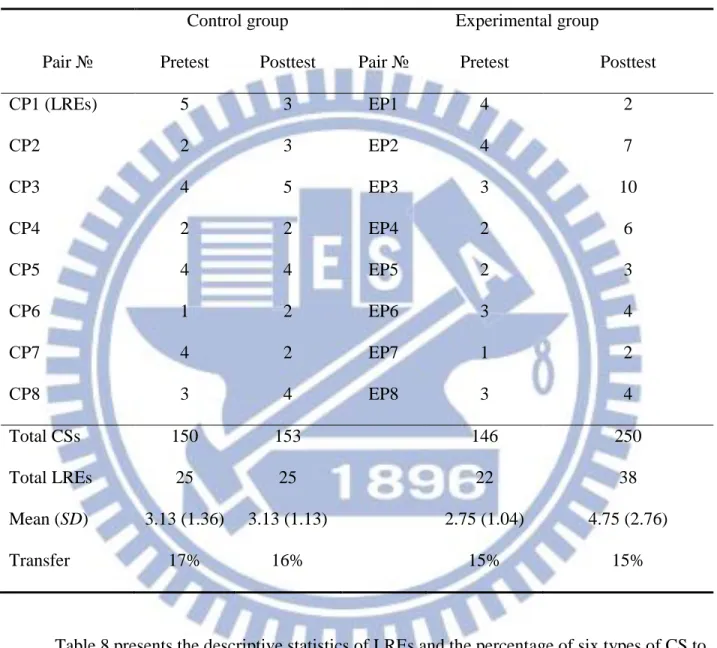
Table 7. Number, Mean, Standard Deviation of Overall LREs, and Percentage of CS to LRE transfer in the Control and Experimental Groups at the Pretest and the Posttest 51
Table 8. Number, Mean, Standard Deviation of LREs, and Percentage of Six Types of CS to LRE transfer in the Control and Experimental Groups at the Pretest and the Posttest 52
Table 9. Number, Mean and Standard Deviation of CS Episodes in Map, Spot the Difference and Assemble the Story Tasks in the Control and Experimental Groups at the Pretest and the Posttest 55
Table 10. Number, Mean, Standard Deviation of LREs, and Percentage of CS to LRE transfer in Map, Spot the Difference and Assemble the Story Tasks in the Control and Experimental Groups at the Pretest and the Posttest 57
Table 11. The Mean and Standard Deviation of the Score Given by the Participants on the Course Effectiveness Survey 59
viii
LIST OF FIGURES
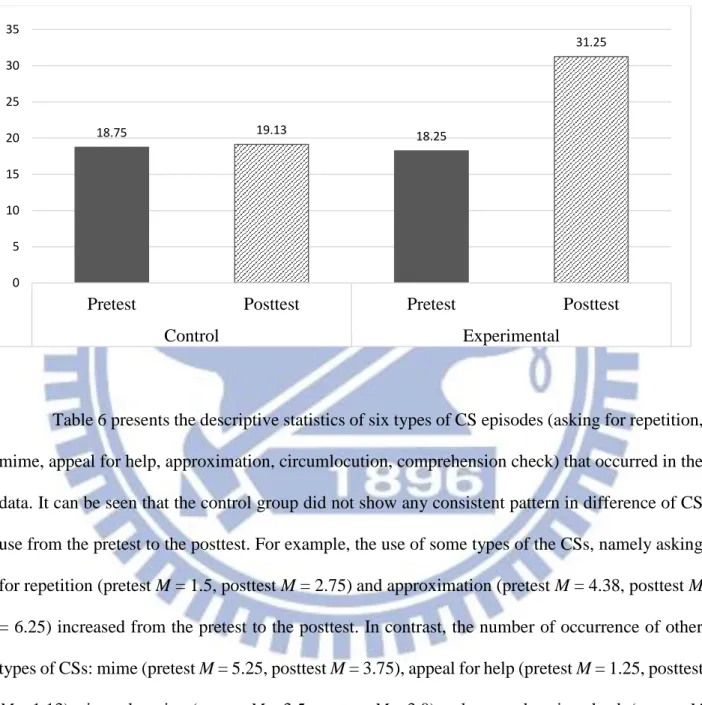
Figure 1. Model of the Processing Components Involved in Speech Production 8 Figure 2. Mean of Overall CS Episodes in the Control and Experimental Groups at the Pretest and the Posttest 47 Figure 3. Mean of CS Episodes in Map, Spot the Difference and Assemble the Story Tasks in the Control and Experimental Groups at the Pretest and the Posttest 56
1
CHAPTER ONE INTRODUCTION
Overview
It is a well-known fact that learning a language is not easy, and English is not an exception. English language learners from all over the world struggle with acquiring its grammar, reading, writing, listening and speaking skills. Nowadays, speaking skills are often focused the most on in English as a Foreign Language (EFL) classrooms, since one of the primary functions of a language is exchanging ideas and information and negotiating the meaning, in short – communication. However, reaching mutual understanding in communication often becomes a great challenge for EFL learners. Thus, in order to use language successfully for communication purposes, it is important to practice constantly and devote much time for learning; in other words, it is important to be a good learner. “The good language learner has a strong drive to communicate, or to learn from communication. He is willing to do many things to get his message across” (Rubin, 1975, p.46). This can be achieved through the use of learner’s communicative competence, which includes various communication strategies (CSs). For example, a learner can use synonyms to substitute for unknown language items, or describe an unknown concept by the use of gestures, or simply ask an interlocutor for help.
Since the 1970s, CSs have played a pivotal role in a vast body of research. Early research on CSs attempted to define this notion, provide a systematic analysis of CSs, and categorize CSs into various types (e.g., Tarone, Fraunfelder, & Selinker, 1976; Gálvan & Campbell, 1979; Tarone, 1977; Bialystok, 1990). When more or less certain definitions of CSs and CS categories were established, many researchers focused on investigating the factors which influence the use of CSs, such as speakers’ native language (e.g., Palmberg, 1979), proficiency level (e.g., Jourdain, 2000),
2
personality and learning style (e.g., Littemore, 2001), an attitude towards an accent (e.g., Lindemann, 2002), and task type (e.g., Poulisse & Schills ,1989; Ghout-Khenoune, 2012). Unill now the use of CSs remains a controversial field of study, and one of the biggest controversies is the necessity to teach CSs to learners of English. Some studies suggest that teaching CSs is not needed (e.g., Stern, 1987; Bialystok, 1990; Kellerman, 1991), others imply that teaching CSs is beneficial for language learners (e.g., Paribakht, 1986; Dörnyei, 1995; Faucette, 2001). However, not many researchers have gone further than simply discussing this matter and they have no attempted to prove their theories by experimentation. Thus, the current study attempts to apply an experimentally based evidence to the teachability of CSs.
Purpose of the Study
The current study aims to investigate the effects of CS teaching on the learners’ use of CSs to negotiate the meaning as well as discover the attitude of the learners to the CS related training.
Given the research purposes, four research questions are proposed:
1) Does training influence the frequency of the use of CSs in total and by strategy type? 2) How many CS episodes are transferred to LREs before and after the training in total and
by strategy type?
3) How do different types of tasks (i.e., highly controlled closed-ended tasks, less controlled closed-ended tasks, and minimum controlled closed-ended tasks) influence the frequency of CS use and transfer to LREs?
4) What are learners’ opinions about the CS training and its effectiveness?
It is hoped that answering these questions will contribute to the existing questions on teaching CSs, and will tip the scale to one side of the argument on teaching CSs. In addition, the finding of this study might provide evidence as to the benefits of CS teaching. It is also hoped that the current
3
study will lead to a framework for effective teaching of CSs and provide pedagogical ideas to EFL teachers.
4
CHAPTER TWO LITERATURE REVIEW
The current chapter reviews previous research in the area of CSs and CS teaching. First, the notion of strategic competence is introduced, since CS research takes its roots in studying strategic competence. Second, the chapter discusses the notion of CS, providing its definitions, reviewing its theoretical perspectives and categorizing CSs into various types. Then the notion of LRE is presented to the readers’ attention. The following sections of the chapter address the controversy of CS teachability by discussing reasons against and for CS teaching as well as presenting factors contributing to the controversy. The final section describes how the current study is different from the previous ones and what it adds into the CS research area.
Strategic Competence
Some learners can communicate effectively even with a very limited language proficiency. At the beginning stages of language learning they have to accommodate their insufficient language knowledge in order to successfully transmit the intended message to an interlocutor by using their strategic competence. Strategic competence is best known through widely accepted theory of Canale and Swain (1980), where it is referred to as a component of a broader notion of communicative competence along with grammatical and sociolinguistic competence. However, strategic competence is often paid less attention to by educators than the other two components of communicative competence. According to the study conducted by Faucette in 2001, who examined 40 textbooks and teachers’ resource books, 23 of them did not include any practice addressing the development of strategic competence at all, while the remaining 17 only offered few effective activities on CSs.
5
Strategic competence has been defined as “verbal and non-verbal communication strategies that may be called into action to compensate for breakdowns in communication due to performance variables or to insufficient competence” (Canale & Swain, 1980, p.30). Thus, strategic competence is the ability of learners to transfer the meaning effectively to their communication partners when they encounter difficulties in the process of conveying the message. Since the problem in communication may appear in first (L1) and second (L2) languages, strategic competence is relevant for both of them. Therefore, when native and non-native speakers of a language encounter the same problem, they tend to handle it in a similar manner (Bongaerts & Poulisse, 1989). However, communication breakdowns tend to appear more often in a foreign language, rather than in L1. Therefore, developing strategic competence should be crucial for EFL learners. Moreover, lack of strategic competence can turn even a grammatically competent students with wide range of vocabulary into incapable speakers. In contrast, some learners can communicate effectively with a limited range of vocabulary, completely relying on their strategic competence.
As a result, some researchers believe that strategic competence has to be paid attention to by teachers, especially in EFL classrooms, where limited language input makes it impossible to reach high abilities in communication in a short period of time. For example, O’Malley (1987) supports the idea to develop students’ strategic competence and suggests that “Future research should be directed to refining the strategy training approaches, identifying effects associated with individual strategies, and determining procedures for strengthening the impact of the strategies on student outcomes” (p.143).
6
Communication Strategies Definition of Communication Strategies
Discussions of strategic competence inevitably mention the notion of CSs. Many researchers have argued about the proper definition of CS as well as their range and categorization. Until now there is no single universally accepted definition of CS.
In 1976, CS was defined by Tarone, Fraunfelder, and Selinker as “a systematic attempt by the learner to express or decode meaning in the target language (TL), in situation when the appropriate systematic TL rules have not been formed” (p.5). Later, Váradi (1980) proposed another definition of CS, i.e., “a conscious attempt to communicate the learner’s thought when the interlanguage structures are inadequate to convey that thought” (p.195), which was agreed on by Corder (1981), who defined CS as “a systematic technique employed by a speaker to express his or her meaning when faced with some difficulty” (p. 03). However, Tarone (1981) claimed that previous definitions do not perfectly characterize CSs, since CSs are not necessarily ‘systematic’ and ‘conscious’. Therefore, she attempted to define the CS through understanding of its purpose, i.e., “to compensate for some deficiency in the linguistic system, and focus on exploring alternate ways of using what one does know for the transmission of a message without necessarily considering situational appropriateness” (p.287). Thus, her definition of the CS is “an attempt to bridge the gap between the linguistic knowledge of the second-language learner and the linguistic knowledge of the target language interlocutor in real communication situations” (p.288).
Theoretical Perspectives on Communication Strategies
One of the reasons why researchers still fail to agree on one definition of CS might be that they view CSs from two different theoretical perspectives: the psycholinguistic and the interactional.
7
Psycholinguistic perspective. The psycholinguistic view on CSs takes its roots in analyzing
the cognitive processes involved in speech production of individuals based on the Levelt’s (1993) model. The model distinguishes five processing components involved in the speech act (the conceptualizer, the formulator, the articulator, the acoustic-phonetic processor and the parser) along with three knowledge stores (the lexicon, the syllabary, and the discourse models, situational and encyclopedic knowledge store). Thus, according to Levelt’s model, in order to produce speech, people first conceptualize the intended message, then encode it, and finally proceed to articulating it; in order to perceive speech, the received message is first analyzed by acoustic-phonetic processor, then it is decoded by the parser, and finally interpreted. However, these processes do not necessarily occur in a linear mode; on the contrary, they are more likely to work in the parallel manner. For example, as soon as one element of speech has been conceptualized by a speaker, it proceeds to the stage of being encoded by the formulator, no matter if the rest of the speech elements have been conceptualized or not. Therefore, a speaker may attempt to articulate the message before fully conceptualizing or encoding all its elements. Figure 1 describes the model of the processing components involved in speech production.
8
Figure 1
Model of the Processing Components Involved in Speech Production
Source: Levelt (1993, p.2 & 1995, p.14) as cited in Dörnyei & Kormos (1998, p.352)
Based on the processing components and the knowledge sources described in the model, researchers identified four areas of problems which can be encountered by a speaker: resource
9
deficit, processing time pressure, perceived deficiency in one’s own language output, and perceived deficiency in interlocutor’s performance (Dörnyei & Kormos, 1998). The resource deficit problem, which can occur in the conceptualizing and encoding stages, will force speakers to use CSs directed to bridge the gap in their lexical, grammatical or phonological knowledge. For example, in order to overcome the lexical knowledge gap, a speaker may attempt to describe or define an unknown language item (circumlocution CS). While attempting to cope with grammatical or phonological gap, one of the possible ways may be to reduce or simplify the intended message in order to avoid being misinterpreted (reduction CS). The second problematic area, processing time pressure, is especially relevant for L2 speakers, since the L2 speech production processing requires more time than the same processing in L1. Processing time pressure may cause the speakers to attempt to win more time for conceptualizing and encoding stages of speech production by using various time-gaining CSs. Perceived deficiency of one’s own output, occurring in the monitoring and articulating stages of the speech production, are associated with self-correction CSs. In addition, a speaker may check the interlocutor’s comprehension in order to establish whether a self-repair is necessary. Finally, the perceived deficiency of interlocutor’s performance problem, occurring in speech perception processing, may cause a speaker to address the interlocutor in order to solve his/her own comprehension problems.
The psycholinguistic perspective on CSs goes further than simply relating the use of CSs to problems occurring during the speech production. Since it views CSs as a phenomenon related to cognitive processes of individuals, psycholinguistic perspective attributes the differences in choice of CSs by individuals to their cognitive styles: holistic and analytic. Riding et al. (1993) defines holistic cognitive style as an ability to see the ‘whole picture’ of a situation. Thus, the individuals with holistic cognitive style are more likely to use CSs which involve comparison of the global properties of a missing item and a known item. On the other hand, analytic cognitive
10
style is characterized by the ability to break a situation into smaller parts and make use of details. Therefore, individuals with analytic cognitive style may prefer CSs which require description of the appearance or specific functions of an unknown language item.
Littlemore (2001) in her study on the dependence between learner’s cognitive style and the CS choice attempted to empirically support this theory. In her study 82 participants from Belgium firstly completed Riding’s (1991) computer-based Cognitive Style Analysis test in order to determine their cognitive style. In the analytic part of the test, the participants were asked to find simple shape embedded in a complex one. In the cognitive part of the test, the participants were instructed to establish whether two complex shapes are same or different. According to the results of the test, the participants’ were later divided into three groups: holistic, neutral and analytic. Next, the participants were asked to complete the task, where they had to record their description of several objects. They had to bear in mind that the described object should later be correctly interpreted and identified by English-speaking listeners. The CSs used by the participants in holistic and analytic groups were compared in order to test the hypothesis that the choice of CSs by a speaker is related to his/her cognitive style. The CSs based on comparison of an unknown item to another object were considered as holistic conceptual strategies. The CSs based on the description of an unknown item were categorized as analytic conceptual strategies. The results of the study indicated the participants with holistic cognitive styles used more holistic CSs than the participants from analytic group. One example of the CSs used by the participant with the holistic cognitive style is: “It reminds me of a shark”, while talking about a swordfish (p.253). In this examples the speaker used an approximation CS, i.e., he or she used an alternative term to express the meaning of the unknown item as closely as possible. On the other hand, the analytic CSs were used more often by individuals with analytic cognitive style than by the individuals from holistic group. Some of the examples of the CSs used by the participants with analytic cognitive style are: “It’s got big
11
teeth and it’s very fat and erm it’s grey”, while talking about a walrus; and “It has no eyes, no wings, no legs, anything, it’s only a body, usually black or brown”, while describing a slug (p.253). These are the examples of the circumlocution CS, i.e., the speakers described the objects instead of using the language items. Therefore, the hypothesis about the relation of the CS choice to the cognitive style of an individual was supported by the study. Thus, if the choice of CSs is, indeed, dependent on the cognitive style of individual, CSs can be related to the cognitive processes of speech production as implied by the psycholinguistic perspective.
Therefore, from the point of view of psycholinguistic scholars, who focus on the cognitive processes of a learner encountering a linguistic difficulty, CSs are merely internal plans of individuals (e. g., Bialystok, 1990; Kellerman & Bialystok, 1997; Poulisse, 1993). As a result, psycholinguistic researchers view self-problem solving devices as CSs. Usually these devices do not involve much interaction with an interlocutor and result in a one-way conversation. Shortly, psycholinguistic perspective on CSs focuses on the range of problem-solving activities open to an individual (Kitajima, 1997).
Interactional Perspective. The interactional perspective on the CSs begins from Váradi’s
(1973) implication that in order to investigate the effect of CSs empirically it is necessary to analyze a learner’s interaction with a native speaker. Therefore, in this view CSs are elements of discourse between a learner and a native speaker. Later, Tarone (1980) extended this view to interaction between two speakers, no matter whether one of them is a native speaker or not. Thus, she defines CSs as “a mutual attempt of two interlocutors to agree on a meaning in situations where requisite meaning structures do not seem to be shared” (p.420). Tarone’s view is now widely accepted as interactional perspective on CSs. According to this perspective, the purpose to use CSs is meaning negotiation between two interlocutors rather than solving a production or comprehension problem of a single speaker. This view further suggests that the variable influencing the choice of CSs is
12
not necessarily a cognitive style of a learner, as suggested by psycholinguistic perspective, but the collaborative patterns between two individuals, which can be influenced by a variety of factors such as their character traits, attitudes to each other, and communication style. Furthermore, these factors can also influence the comprehension of CSs by interlocutors.
For example, the study by Lindemann (2002) investigated the relationship between native speakers’ negative attitude toward a nonnative speaker and their comprehension of the nonnative speaker’s speech. In this study the attitude of 12 native speakers towards the accent and culture of their Korean partners was assessed by a questionnaire. Later, the participants were asked to complete a map task with their partners, where the Korean learners of English were instructed to explain the route traced on their maps to the native speakers. The native speakers were instructed to draw this route on their maps according to the explanation of their partners. Because of the nature of the task, Korean learners of English used a wide range of CSs which were supposed to help them to convey the meaning to their partners. The nonnative speakers, also tended to use CSs in order to achieve mutual understanding with their partners. The patterns of interactions during the task completion were compared between pairs of participants which included native speakers with and without negative attitude toward their partners. The results indicated that the negative attitude of native speakers led them to have a less collaborative type of interaction than native speakers without a negative attitude, since they did not feel responsibility for the outcome of the task. As a result, they tended to use more CSs that reduced the meaning of the misunderstood language items or neglected to mention about any miscomprehension (avoidance CSs). For example, a native speaker, who was tracing the route on his map according to his partner’s explanation, did not mention that one of the landmarks (factory) was missing on his version of the map, which resulted in an incorrect route tracing:
13
Korean speaker: Okay, once you reach the factory, go.. go to the right side straight? Then there is a castle.
Native speaker: Alright… yip.. I’m in the castle (p.427).
Therefore, the study suggests that the manner of interaction, which can be influenced by attitudes of participants, is related to the choice of CSs by the speakers. This leads to a conclusion that CSs, indeed, can be viewed as discourse elements between two speakers, as interactional perspective suggests.
Therefore, from the point of view of interactional perspective (e.g., Corder, 1978; Tarone, 1997) a CS user tries to negotiate the meaning with an interlocutor by actively participating in the interaction and attempting to involve the interlocutor in communication process, in other words using various help-seeking strategies. Thus, in the interactional perspective CSs are more likely to result in a series of meaning exchanges between two people, rather than a one-way interaction. Shortly, interactional perspective on CS focuses on the interaction between interlocutors and negotiation of meaning (Rost & Ross, 1991).
Types of Communication Strategies
Combining both psycholinguistic and interactional perspectives on CSs, it is possible to divide CSs into two broad categories – self-solving CSs and help-seeking CSs, where the former refer to individual attempts to solve an existing problem, and the latter refer to an attempt to negotiate the meaning with an interlocutor. Apparent from these two types, CSs has often been categorized into avoidance, or reduction strategies, achievement, or compensatory strategies, and stalling, or time-gaining strategies.
Avoidance strategies “reflect learners’ negative behavior as they try to avoid solving communication difficulties” (Nakatani, 2005, p.81). Thus they “involve either an alteration, a reduction, or complete abandonment of the intended meaning” (Dörnyei, 1995, p.57). Obviously,
14
this type of strategies does not lead to successful meaning transmission, but can be used by learners in order to slip some unimportant messages for ease of communication. Avoidance strategies include such CSs as message abandonment, topic avoidance, semantic avoidance and message reduction and L1 related strategies. These strategies are often used by low-proficiency learners, since they do not have sufficient language competence to communicate effectively. In contrast, achievement strategies “present learners’ active behavior in repairing and maintaining interaction” (Nakatani, 2005, p.81). Therefore, they offer alternative plans for the speakers to carry out their original communicative goal by manipulating available language, thus compensating somehow for their linguistic deficiencies” (Dörnyei, 1995, p.57). Achievement strategies include such CSs as circumlocution, approximation, use of all-purpose words, word-coinage, use of nonlinguistic means, appeal for help, clarification requests and others. These strategies are often used by more advanced language learners, who have sufficient resources to convey the meaning to an interlocutor. Stalling, or time-gaining strategies functionally differ from the other two types, since they do not serve the purpose to compensate for a gap in interlanguage, but are used to “gain time and to keep the communication channel open at a time of difficulty” (Dörnyei, 1995, p.57). Stalling strategies include the use of fillers and hesitation devices. The types of CSs and their definitions are summarized in Table 1.
15
Table 1
Types of CSs, Definitions and Examples
Type Definition
Avoidance or Reduction CSs
1. Message abandonment A speaker stops talking about a concept before reaching the communicative goal.
2. Topic avoidance A speaker avoids topic areas or concepts which pose language difficulty.
3. Semantic avoidance A speaker says something different from what was originally intended.
4. Message reduction A speaker reduces the original message, reporting the same idea but with less precision in detail.
L1 related strategies
1. Borrowing A speaker uses an L1 item or structure modified in accordance with features of the target language. 2. Code switching A speaker uses an L1 item or structure with no
modification at all. Achievement or Compensatory CSs
Paraphrase
1. Circumlocution A speaker describes an object or action instead of using the appropriate target language item.
2. Approximation A speaker uses an alternative term which expresses the meaning of the target lexical item as closely as possible.
16
3. Word coinage A speaker creates a new word following the target language rules of derivation and composition. 4. Use of all-purpose
words
A speaker extends a general, empty lexical item to contexts where specific words are lacking.
Nonlinguistic strategies
1. Mime A speaker uses a gesture or any other paralinguistic form.
2. Sound imitation A speaker substitutes the target words by the sound associated with it.
Help-seeking CSs
1. Appeal for help A speaker turns to the conversation partner for help. 2. Asking for repetition A speaker asks partner to repeat preceding utterance. 3. Confirmation checks A speaker asks partner for confirmation.
4. Comprehension check A speaker checks comprehension with the partner. 5. Clarification request A speaker asks partner for clarification of preceding
utterance. Maintenance CSs
6. Providing active response A speaker provides positive comments or uses other conversational gambits.
7. Shadowing A speaker presents exact, partial or expanded repetition of the interlocutor’s preceding utterance.
Stalling or time-gaining CSs
1. Use of fillers A speaker uses filling words to fill pauses and to gain time. Sources: Dörnyei (1995), Fernández Dobao (2007), Nakatani (2005).
17
The existence of different types of CSs leads to a question about how these strategies are being chosen by language speakers. In addition to the factors mentioned before (cognitive styles and collaborative patterns) researchers investigating how speakers choose the CSs established two views on this matter: proficiency position and context position. According to proficiency position learners’ language proficiency is the key predictor of CS choice (Bialystok & Frohlich, 1980). Thus, beginning learners, who might not have enough linguistic knowledge to modify their message, might prefer to use reduction strategies rather than achievement strategies. This view is supported by Nakatani (2005), who claims that ‘avoiding solving communication difficulties’ is a typical behavior of low proficiency learners. Therefore, it is expected that advanced learners will be more eager to reach the communication goal by using achievement strategies. However, not all researchers agree with this view; for example Labarca & Khanji (1986) claim that high-proficiency learners, who possess more diverse lexical repertoire, are assumed to have less need for the linguistic ‘escape hatch’ that compensatory strategies, provide. Therefore, it is possible to conclude that the proficiency level itself cannot predict the learners’ choice of CSs. In contrast to proficiency position, researchers who support context position, view strategy choice by speakers as a ‘function of task type, text type, and setting” (Rost & Ross, 1991, p.264). Therefore, depending on the goal and nature of the task, and also settings in which task is completed, language learners can make different CS choices. Obviously, such complex decision as choosing an appropriate CS cannot depend on only one factor; therefore, both proficiency and context position may be true to some extent. Moreover, they cannot exclude a possibility of existence of other factors influencing the choice of CSs.
Effect of CS Use: Language Related Episodes
As it was previously mentioned, CSs are aimed to help learners to overcome the linguistic difficulties, which can occur in the course of interaction, in order to reach the communicative goal.
18
Therefore, the use of a CS which leads to effective meaning negotiation can be considered successful. However, CS use can also lead to adjusting the speakers’ interlanguage and learning new aspects of language, since a CS episode can transform to language related episode (LRE) when interlocutors negotiate the meaning and attempt to reach communicative goal together, i.e., participate in the collaborative dialogue.
According to Swain (2000) collaborative dialogue, i.e., “the interaction of a group of students which leads to collaborative solving of a problem”, can result in language learning (p.97). Collaborative dialogue can be triggered by a CS episode if it involves collaboration between two interlocutors. However, the interlocutors may choose to focus on the meaning negotiation only, since it should be enough for reaching the communicative goal, or they can also attempt to establish the appropriate lexical or linguistic form. In the latter case CS episode is transformed into an LRE, which is defined by Swain and Lapkin (1998) as a collaborative problem-solving activity involving interlocutors to search for a new lexical item, or establish the meaning of an unknown item together. Further on, LREs were categorized into two types: successfully and unsuccessfully resolved by Fernández Dobao (2012). She considered the LRE as successfully resolved if the interlocutors involved in it could successfully find the correct lacking form. Thus, this type of LRE is more likely to lead to further language learning. Following is an example of a successfully resolved LRE:
Sara: the child is touching his… the place behind the mouse, heh, heh. Olga: chin?
Sara: his chin, sí (‘yes’), yes (p.239).
On the other hand, learners who failed to identify the missing language item, or agreed on the incorrect form were claimed to resolve the LRE unsuccessfully, which can lead to misinterpreting the message and establishing wrong idea about the missing target item. Following
19
in an example of unsuccessfully resolved LRE, where two learners agreed on the incorrect form of the unknown language item:
Ana: in the jacket, he has… some kind of… Emily: an emblem? A letter?
Ana: like a button… in a side, I don’t know how to explain it Emily: oh! okay okay… so he has a, … a buttonhole (p.241).
Taking a closer look at Fernández Dobao’s study, it can be further seen that there are factors which influence the nature of collaborative dialogue and the frequency of occurrence of LREs. The study investigated the influence of the presence of a native speaker in a collaborative dialogue, and the learners’ proficiency level on the frequency and the nature of LREs. Twenty four learners and 8 native speakers of English participated in the experiment. They were paired into the four dyads of intermediate language learners, four dyads of advanced language learners, four dyads of intermediate language learners and native speakers, and four dyads of advanced language learners and native speakers. Then, they were asked to complete a spot-the-difference communicative task. Later the transfer of CS episodes into the LREs was compared across the dyads. The results indicated that lexical problems occurred more often in the learner-learner interaction, but these problems were more likely to trigger the collaborative dialogue and cause the CS episode to evolve into LREs in a learner-native speaker interaction. Thus, it was suggested that the presence of a native speaker has a positive influence on the frequency of successfully resolved LREs and the nature of collaborative dialogue. The findings also suggested that the interaction between intermediate language learners triggers more LREs than the interaction between advanced learners. Furthermore, it was suggested that LREs were more likely to occur in a pair of learners with different proficiency levels, where one learner is more competent than the other. Another important suggestions made by Fernández Dobao is that LREs are more likely to be successfully resolved in
20
a more collaborative interaction type rather than in the one where learners behave more independently.
These suggestions made by Fernández Dobao can also be seen in earlier research. First, the influence of the differences of proficiency level on the students’ language development was thoroughly investigated by Vygotsky (1980) and resulted in a zone of proximal development (ZPD) theory. According to Vygotsky, a student can gradually develop an ability which has not matured by communicating with a more competent peer. Thus, native language speakers and learners with higher proficiency level can assist low achievers with filling the gaps in their interlanguage. Second, Storch (2004) mentioned that different goals set by language learners can have different outcomes in their conversation styles. The researcher explained that different goals and motives can lead to different patterns of collaborative behaviors between the participants.
Other studies investigating LREs found out that the different task types can lead to different number of LREs occurring in the conversation. The study by Storch (1998) indicated that learners’ attention to form varied quantitatively across task types. Later, in 2001 Storch found that the students tended to focus on form more in the cloze and text reconstruction tasks than the text composition task. In addition, a task difficulty can also influence the LREs occurrence. According to Kim (2009) high-proficiency language learners tend to engage in more LREs in more complex tasks, while learner with lower proficiency levels tend to engage in more LREs in tasks with lower complexity levels.
Teachability of Communication Strategies
Since use of CSs can lead to further language learning, then it might be beneficial for language learners to be instructed on the use of CSs. However, until now there is a great controversy on whether it is necessary to teach CSs. Yule and Tarone (1997) described two types of researchers, who view the teachability of CS differently: ‘cons’ and ‘pros’. ‘Cons’, or ‘conservative’ view often
21
compares the learner’s performance in L2 and L1, finding many similarities, which leads researchers, supporting this view, to stand against the teaching of CSs, because of the strategic transfer between learners’ L1 and L2. In contrast, ‘pros’ , in other words ‘proponents’, support the idea of teaching CS based on the research compering performance of L2 speakers and native speakers, which have many differences.
Conservative View on CS Teaching
The researchers who hold the view against teaching CSs often argue that CSs can be acquired through experience of using a language. Since CSs are already present in learner’s L1, they will gradually transfer into his or her L2 with more meaningful practice. Therefore, CSs are more likely to be acquired through real-life communication situations, rather than meaningless classroom practices (Stern, 1987). This argument might be true few decades ago, when audio-lingual method was still firmly held in many EFL classrooms, paying more attention to the grammar drills and pronunciation rather than meaningful activities. However, nowadays with the gaining popularity of communicative language teaching, which brings meaningful practices and authentic materials to classrooms, CSs can be acquired in classroom activities not worse than in real-life communication. Moreover, EFL students do not have many opportunities to use language outside the classroom, thus, classroom practices become one of the few, if not the only one, chances for CS acquisition. Therefore, Stern’s point of view might be considered as irrelevant for EFL context.
Another argument against teaching CSs comes from viewing CSs as underlying psychological processes, where CSs are means of coping with one of four types of problems occurring in speech production and perception mechanism. Thus, focusing on surface structures of CSs will not necessarily lead to enhancing strategy use or learner’s ability to communicate. Moreover, limited language proficiency may not allow learners’ to use CSs, since their linguistic repertoire might not be sufficient for coping with linguistic difficulties. On the other hand,
22
enhancing students’ overall proficiency will provide learners with more opportunities to bridge the gap in their interlanguage. This argument is strongly supported by some researchers. For example, Bialystok (1990) claims that, “The more language the learners know, the more possibilities exist for the system to be flexible and to adjust itself to meet the demands of the learner. What one must teach students of a language is not strategy, but language” (p.147). Furthermore, “There is no justification for providing training of compensatory strategies in the classroom… Teach the learners more language and let the strategies look for themselves” (Kellerman, 1991, p.158). This argument is, certainly, difficult to argue with, since teaching more language is the primary goal of each EFL classroom. Furthermore, the higher language proficiency is reached by the learner, the less is his or her need to use CSs, since the gaps in communication are less likely to occur. On the other hand, gaining high proficiency takes more than one week, or even one year. Learning a language is a long and difficult process, thus, students with lower language proficiency might benefit from knowledge of appropriate use of CSs while they are on their way to reach higher proficiency.
Proponent View on CS Teaching
The team of researchers, who support the teaching of CSs, grows bigger with occurring of more empirical evidence. One of the first proponents of teaching CSs, Paribakht (1986) argued that possessing a certain amount of linguistic competence does not necessarily mean the ability to use this knowledge. Indeed, it is common to observe how a learner with great vocabulary size and good knowledge of grammar seems helpless in real face-to-face communication. The training of strategic competence may enhance the ability of learners to use their existing language knowledge, thus, resulting in further learning. Therefore, introducing the strategic component “would not only establish the fundamental syntactic structures and lexical items needed for the learner’s negotiation of meaning, but will also start the learner on some communicative skills to be used in extended
23
communicative situations” (pp.59-60). The researcher further suggests that frequent strategy training tasks “will make the corresponding linguistic materials more easily accessible to the learners, and they can benefit from this in real communication situations inside and outside the classroom. Such practice may also promote learner’s flexibility and enable them to integrate all their knowledge sources and use alternative means in transmitting their intended meanings” (p.60). In addition, Paribakht investigated the knowledge required to use a CS in order to support his view on CS teaching. He argued that “Providing L2 learners with the core notions and typical syntactic structures derived from the surface realization of CS may help them to overcome lexical gaps that call for the use of these strategies in communication situations” (pp.53-54). Next, “Providing learners with the lexical items needed to express notions such as physical properties should enable them to perform communicative act of defining a concept” (p.56). Paribakht also argued that providing metalinguistic training can encourage learners to cope with their lexical difficulties. Finally, the researcher viewed teaching of sentence patterns as a good tool to enable learners “to express the information utilized in the related strategies” (p.59).
Some researchers believe that training on achievement CSs may provide learners with the opportunity to use even limited existing knowledge to successfully transfer the meaning, thus, making speakers believe in their abilities to keep up the flow of conversation and reducing learners’ anxiety to be misunderstood and fail communicative goal. This effect of CS training is highly valuable, since it is important for learners to feel confidence and not give up on intended goal of communication. Larsen-Freeman and Long (1991) suggest the following:
A NNS’s ability to keep a conversation going is a very valuable skill because by maintaining the conversation, the NNS can presumably benefit from receiving additional modified input. Indeed conversational maintenance is a major objective for language learners who regularly invoke communication strategies (p.126).
24
Furthermore, some researchers do not support the conservative argument about the unnecessary CS teaching because of strategic transfer between L1 and L2. Since every language learning experience is unique as well as the personality of every learner, it is difficult to predict learners’ behavior in L2. Thus, even the strongest strategic base in L1 will not necessarily transfer to L2. Some learners may need teacher’s facilitation in order to effectively use CSs. According to Faucette (2001):
Even if learners already have communication strategies in L1 or target language, they may not use them often enough, appropriately, efficiently, and spontaneously in L2. Thus there is a need for training to bring learner’s attention to these strategies and help them become more aware of repertoire of strategies available to them, including those they may already make use of in the L1. Instruction could also help learners develop and automatize more effective strategies to fit in the appropriate situation (pp.5-6).
One of the first quantitative studies which directly addressed the issue of CS teachability was conducted by Dörnyei in 1995. The researcher investigated the effects of specific CS training on the frequency of the use of this CS, quality of the CS in actual language use and students’ speech rate. He also examined the students’ attitudes toward strategy training usefulness and the influence of students’ initial proficiency level on the success of strategy training. In Dörnyei’s study, 109 students were divided into experimental and control groups. The experimental group received a 6 weeks strategy training, which focused on avoidance CSs, circumlocution and use of fillers. The students in this group were trained to go off the point, evade answers and steer the conversation in given direction when practicing the avoidance CSs. When taught circumlocution CS, the students compared definitions of different dictionaries and analyzed their structures. Finally, the participants were trained on use of fillers by collecting and classifying the fillers, inserting them into dialogue, lengthening dialogue turns, and matching fillers with emotions and moods. The control groups, on
25
the other hand, either did not receive any treatment at all, or received conversational training, but with no formal strategy instruction. The comparison of the students’ scores on the pretest and posttest, which included TOEIC and oral test, consisting of topic description, cartoon description and definition formulation, showed promising results. The treatment group improved the quality of definitions and speech rate, and increased the use of circumlocution and fillers. According to Dörnyei, these improvements of participants after strategy training are the consequence of direct approach with focus of metacognitive instruction. This empirical evidence undoubtedly supports the proponents’ point of view on CS teaching. However, this study only focused on CSs for solving learners’ own performance problems, which do not require interaction between the learners. Thus, the study excluded the types of cooperative negotiation behaviors, which can lead to further learning through transfer of CS episodes into the LREs. Moreover, the study did not describe the training course on CSs in details, thus, not letting the teachers incorporate it in their classrooms. Therefore, although the study presents empirical evidence in favor of CS teaching, it suggests few pedagogical implementations.
Ten years later, Nakatani (2005) attempted to fill the gap in Dörnyei’s research by investigating the influence of awareness-raising training on oral-communication strategy use. He examined how explicit instruction on CSs affects students’ overall speaking proficiency, their discourse behavior and their perception of the strategy training course. Sixty-two female students from private college in Japan participated in the study. They were divided into treatment and control group. The former received the 12-week Cs training with focus on achievement and reduction strategies, which included both self-solving and interactional CSs. The training consisted of review of previously learned strategy, presentation of a new CSs, rehearsal of a role play involving the use of target CSs, performance of the role play and evaluation stages. The latter group received communicative task based instruction with no specific strategic focus. Based on the
26
comparison of the results on pretest and posttest, which included a role play based on imaginary situation and retrospective verbal protocol, it was found that students in treatment group significantly improved their overall speaking proficiency. The results also suggest the increase in use of some strategies for negotiation in order to solve communication difficulties. Thus, Nakatani suggests that explicit strategy training is beneficial for enhancing the use of CSs and develop the target language interaction of EFL learners. However, this study can also be further improved by including detailed description of the CS training course.
Dörnyei (1995) and Nakatani (2005) were among first empirical studies investigating the effects of CS related training on the speakers CS use and overall English skills. Later, several other studies contributed to this research area with further empirical evidence. Naughton (2006) investigated the effects of so called Cooperative Organization of Strategies for Oral Interaction (COSOI) program, specifically designed for the study, on the 45 Spanish students’ use of clarification request, self- and other-repair, and appeal for help. The program included explicit strategy teaching, which focused on form and function, and a strategy practice. The study revealed that COSOI program was largely successful in encouraging the students to engage in more CSs. Next, Maleki (2007) compared the effects of language teaching with two different textbook (one with and one without specific CS activities) on 60 Iranian students’ language use. The results of the written and oral tests, which were taken by the students after a four month teaching period, suggested that CSs are pedagogically effective. The students, who were taught with the textbooks incorporating CS training used CSs more effectively and intensively. Finally, a recent study by Teng (2012), investigated an effect of CS training on variety of achievement and reduction strategies. After a 15 week CS training, which included explicit instruction, awareness-raising discussions and role-play practices, the results of oral test suggested that Taiwanese EFL college students tended to use significantly more CSs after receiving a CS related instruction.
27
Factors Contributing to the Existence of CS Teachability Controversy
The existence of strongly opposing views on CS teachability naturally lead to the question of which factors contribute to such controversy. In his review of this matter, Dörnyei (1995) proposes three factors leading to CS teachability controversy: indirect evidence, variation within CSs and the notion of teaching.
Dörnyei argues that there is little research investigating systematic strategy training, and the research which does concern with CS training present ‘indirect’ or ‘inconclusive’ evidence either against, or in favor of CS teachability. Furthermore, he suggests that these studies do not present generalizable results, since they are too narrow in scope in terms of strategy selection, or number of participants.
Furthermore, the studies devoted to investigating the controversy of CS teaching often vary in the strategies chosen as a focus. Thus, the studies which focus on training of avoidance strategies are likely to present evidence against CS training, since the nature of avoidance strategies does not suggest learners’ positive behavior for this type of CSs encourages learners to avoid coping with existing communication difficulties. This naturally leads to failing to reach communicative goal by interlocutors. In contrast, the studies focusing on for example circumlocution CS are likely to favor the strategy-related training, since the use of circumlocution strategy presumes the production of longer utterances, which may lead to a more successful meaning negotiation.
Finally, Dörnyei argues that the notion of teaching itself is too broad and can be interpreted in various ways. For example, some researchers may view teaching as raising learners’ awareness about the nature and communicative potential of CSs. Some may refer to teaching as providing L2 models through demonstration, or teaching CSs directly by presenting the students with certain linguistic devices for CS use. Some investigators may think of teaching as highlightening cross cultural differences in the use of CSs. Others may simply view teaching as providing practice
28
opportunities. Therefore, the combination of some interpretations of notion of teaching may lead to positive and promising results of CS training, while others may lead researchers to argue against implementation of CS training.
Filling the Gaps in Previous Research
The controversy on CS teachability has not been resolved up to this day. To my best knowledge, there is still only limited evidence either against, or in favor of the CS teachability issue. Therefore, more conclusive empirical evidence is required in order to make a further step into the direction of resolving this argument. The existing empirical studies have research gaps that need to be filled for making generalizable conclusions. The studies reviewed in this chapter focus on several CSs, but fail to take into consideration various CS types, and include detailed description of the training course. For example, the study by Dörnyei (1995) only focused on self-solving strategies, ignoring the interactional nature of some strategies, and failed to provide detailed description of the incorporated CS training course. In addition, the investigation by Nakatani (2005), which included both self-solving and interactional strategies, did not describe the CS training course in details, thereby, making it impossible to replicate the study in different settings. In addition, very few studies, if any, focusing on CS training took into consideration the notion of LRE and investigated how the teaching of CSs influences on the transforming of CS episodes into the LREs. Furthermore, few CS studies incorporated various types of tasks in their research design, making it impossible to understand how different types of tasks influence the use of CSs. Finally, the existing theoretical articles, which review the notion of CS and argue about different CS taxonomies, have not viewed the different types of CSs in terms of the verbal engagement, which the use of particular CS requires. For example, it is obvious that CS such as mime requires minimum language use, while the circumlocution CS can involve learners in a very active verbal communication.
29
Therefore, the current study aims to provide evidence examining the effect of CS teaching by focusing on both self-solving and help-seeking types of CSs, though ignoring avoidance strategies, since this type of CSs obviously does not lead to better meaning negotiation. In fact, it is doubtful whether avoidance strategies can be considered as CSs at all, since they do not help speakers to reach communicative goals and solve interlanguage gaps. Next, the current study takes a closer look on the evolution of CS episodes into LREs, since this process may lead to further language learning in addition to simple meaning negotiation. Furthermore, the study incorporates three different types of task in order to address the issue of the task type influence on CS use. Finally, the study viewed the CSs in terms of the required verbal engagement of each CS use, since it is important to promote learners language use, thus, paying more attention to strategy types which lead to higher verbal engagement may benefit learners’ speaking proficiency.
30
CHAPTER THREE METHOD
Research Design
The current study employed a quasi-experimental design. The control group did not receive any treatment, while the experimental group received a course of CS training. The training course designed for the study aimed to increase the students’ use of CSs which require higher level of verbal engagement. The participants in both groups took a pretest in order to measure the initial comparability of their use of CSs. The posttest was designed for measuring the effects of the treatment. The results of pretest and posttest were compared across two groups. By incorporating this design, the current experiment aimed to explore the effect of the CS related training on the participants’ use of CSs to negotiate the meaning. More precisely, the study attempted to answer four research questions:
1) Does training influence the frequency of the use of CSs in total and by strategy type? 2) How many CS episodes are transferred to LREs before and after the training in total and
by strategy type?
3) How do different types of tasks (i.e., highly controlled closed-ended task, less controlled closed-ended task, and minimum controlled closed-ended task) influence the frequency of CS use and transfer to LREs after the training?
31
Participants
The current study recruited 32 undergraduate and graduate students, who were receiving their Bachelor or Master’s degree in two prestigious universities in Taiwan, to participate in the experiment. The participants included 20 Taiwanese students, and 12 international students. All the participants spoke a language different from English as their L1. The international participants were eight students from Ukraine, who speak Ukrainian and Russian languages as their L1; one student from Belarus, who speaks Russian as her L1; two students from Nicaragua and one from Guatemala, whose native language is Spanish. The ages of the students varied from 19 to 40 years old, with the mean age of 23.6 years old. They had a similar English proficiency level, i.e. high-intermediate or advanced, according to English proficiency tests such as TOEFL, TOEIC, or participants’ self-report. Furthermore, none of the participants was engaged in English speaking related courses during the experiment to ensure the reliability of the results. The personal information of the participants, including their gender, age, educational background, years of English language learning, proficiency level, living in English speaking environment etc. was collected by a questionnaire (see appendix A) and partially presented in table 2.
32
Table 2
Demographic Information of the Participants
Information/ Group Control group Experimental
Total Number 16 16 Nationality (n) Taiwan (10) Ukraine (4) Belarus (1) Nicaragua (1) Taiwan (10) Ukraine (4) Guatemala (1) Nicaragua (1)
Gender (n) Male (7) Female (9) Male (10) Female (6)
Native language (n) Mandarin Chinese (10) Ukrainian & Russian (4) Russian (1)
Spanish (1)
Mandarin Chinese (10) Ukrainian & Russian (4) Spanish (2) Self- reported proficiency level (n) Average (4) Good (9) Excellent (3) Average ( 13) Good (1) Excellent (3)
The participants were assigned to a control and an experimental group according to their availability and preference. Each group consisted of 16 students. The control group did not receive any treatment, and only participated in the pretest and the posttest of the study. The experimental group engaged in a course of CS training, specifically designed for the current study.
33
Procedure
The design of the current study included a pilot study, pre-experimental procedures, pretest, training course, posttest, and post-experimental interviews.
Pilot Study
A pilot study was conducted one month before the investigation in order to see whether the materials prepared for the pretest and the posttest were suitable for the purpose of the current study, in other words, whether they elicited sufficient number of CSs. In addition, the pilot study was expected to help the researcher to estimate the approximate percentage of data needed for transcription during the experimentation.
An additional pair of international students, who did not take part in further investigation, participated in the pilot study. They were asked to complete three tasks (map, spot the difference and assemble the story) designed for the pretest and the posttest. After the task completion, they were asked whether the difficulty of the tasks was reasonable, and whether they needed a break between the tasks. The results of the pilot study demonstrated that the tasks were completed in different time spans: the map task required the most time for completion (around 20 minutes), followed by the spot the difference task (around 15 minutes) and the assemble the story task (around 7 minutes). Since the assemble the story task was completed in 6 minutes and 43 seconds, while the first and the last 30 seconds of the conversation were devoted to organizational aspects, only 5 minutes from the middle of the task seemed to be representative for the analysis of the CS use. In addition, it was decided that 5 minutes from the middle of each task would be transcribed for data analysis, since the design of the study called for comparison of CS use in three tasks. The total of 35 CS episodes was elicited from 15 minutes of data collected in all three tasks. This number lead to an assumption that 16 pairs of participants would engage in around 500 CS episodes, which is satisfactory for quantitative and statistical analysis. Thus, the 5 minutes time