行政院國家科學委員會補助專題研究計畫
□期中進度報告
■期末報告
「水政治」─中國西南地區的水域開發與環境治理(3/3)
計畫類別:□個別型計畫 ■整合型計畫
計畫編號:NSC 100-2420-H-004-011-MY3
執行期間:100 年 01 月 01 日至 102 年 12 月 31 日
執行機構及系所:國立政治大學國家發展研究中心
計畫主持人:王振寰
共同主持人:郭承天
計畫參與人員:黃書緯、王琳粢
本計畫除繳交成果報告外,另含下列出國報告,共 2 份:
■移地研究心得報告
□出席國際學術會議心得報告
□國際合作研究計畫國外研究報告
處理方式:除列管計畫及下列情形者外,得立即公開查詢
□涉及專利或其他智慧財產權,□一年□二年後可公開查詢
附件一目錄
中文摘要
本研究試圖以「統合式協力治理」(corporatist collaborative governance)的理論與制 度研究框架,來處理中國水庫與環境治理議題,並且選擇了中國的小水電建設、 南水北調工程,以及雲南的水庫移民作為研究個案。在小水電建設中,我們發現 雲南地方政府為了回應「農村供電脫貧」等政治目的,會開始與私人資本聯盟興 建小水電;即使這些計畫往往是無利可圖的。透過這些合作,地方政府一方面完 成中央政府交辦的政治任務,另方面也促進地方經濟發展。在南水北調的個案 中,我們發現快速的都市化與工業化已經造成地方政府之間的水資源爭奪,而中 央政府則試圖以南水北調這個大型建設一次性地解決地方水資源衝突。與 1980 年代後改革開放過程中地方發展主義不同的是,中央政府在南水北調工程的興建 過程中,不但安撫的地方政府之間的衝突,並且建立起一套鑲嵌在政治制度中的 水資源交易機制,一方面作為供水區的經濟補償,另方面解決環境治理所需的經 費問題。最後,在雲南水庫移民的研究中,我們發現「幹部管理體制」是中央政 府過去確保上情下達與政策執行的治理模式,而地方幹部在這模式下過去都是以 量化的經濟指標作為其治理地方發展時的唯一考量。但是,隨著庫區移民辦法的 完善與社會導向,我們發現地方幹部的指標也慢慢從硬體建設轉向軟體建設,例 如農村重建與永續發展。 關鍵字:水政治、治理、統合、雲南、北京
英文摘要
This project intends to investigate the phenomenon of water politics. We look into suitable cases of the dam construction, for example the small hydropower plants, the south-to-north water transfer project, and the resettlement communities of the dams in Yunnan in order to deeply understand the state-social relations based on our Corporatist Collaborative Governance Model. In the case of small hydropower plants (SHPS) in Yunnan, we find out that the local governments in Yunnan have responded to the political demands (rural electrification and poverty alleviation) by allying with private capital to build more SHPs to fulfill the political mission while at the same time granting other benefits to the privately-owned firms to compensate for the profit-losing SHP projects. Through this collaboration, local state bureaucrats simultaneously fulfill the central state’s political mission and local economic development demand. In the case of the south-to-north water transfer project
(SNWTP), we show that the rapid urbanization and industrialization in the north, plus the already water scarcity condition, has created severe water wars among local states. The realization of SNWTP was the central state’s project to ease the tension generated from water shortage and from multi-scalar water wars. However, in contrast to the command and control mode of water governance in the past, this time the central state has built the governance based on a collaborative type that involved both central and local states, as well as the collaborations among local states. Finally, in the case of the resettlement communities of the dams in Yunnan, we notice that the introduction of more socially oriented policies has had direct and indirect impacts on local policy implementation and the role of the local state. Regarding the more immediate impacts, the Chinese Communist Party through the cadre management system ensures that central level decisions are passed through the government bureaucracy, and implemented by relevant government. Local level cadres are evaluated according to their performance in office causing local governments to mainly implement those policies that have quantifiable, mostly economic, targets. With the introduction of more socially oriented policies, performance evaluation is slowly shifting from a focus on hard policy targets towards soft policy goals including rural reconstruction and sustainable development.
目錄
一, 前言……… 5
二, The Paradox of Small Hydropower: Local Government and Environmental Governance in China……… 6 三, State Rescaling and Water Governance: The South–to-North Water Transfer
Project in China……… 38 四, Coordinating Resettlement Communities - How Has The Local State Responded
To The Transformation Of Central State Policy In Yunnan?... ... 65 五, 結論……… ……… ….98
一、 前言 本計畫的研究主旨是:中國為了減少碳排放,積極開發水力資源來替代比例 過大的煤炭發電,以供應沿海地區的電力需求。西南地區(本計畫以雲南為 例)豐富的水利資源特別是「瀾滄江-湄公河流域」(Lancang-Mekong)豐富的 水力資源,更是成為中國政府和地方政府積極建立水庫發電的集中地。本計 畫主要探討中國西南區域之「水庫政治」所帶來的發電、經濟發展和環境治 理的相關問題、以及少數民族遷移和社會公義等的議題。 本研究是整合型計 畫「中國環境治理:統合協力治理觀點」的子計畫之一,主要以「統合協力 治理」理論架構,來探討「水政治」(water politics)衍生的相關「國家與社會 關係」議題。 至今為止,本計畫以該理論架構,完成三篇英文論文。第一篇「The Paradox of Small Hydropower: Local Government and Environmental Governance in China」,以地方政府層次,討論小水電開發造成環境治理的問題。該文已經 投給「Journal of Development Studies」,很快會有結果。第二篇是全球層次的 南水北調,討論中央政府如何處理中國北方缺水南方水多的問題。該文「State Rescaling and Water Governance: The South–to-North Water Transfer Project in China」將出現在我將編輯的整合性計畫的研究成果之英文書「Environmental
Governance in China」(暫訂)之中的一章。第三篇論文是社區層次,討論中
央 和 地 方 如 何 共 同 處 理 少 數 民 族 的 水 庫 移 民 問 題 , 論 文 「Coordinating Resettlement Communities - How Has The Local State Responded To The Transformation Of Central State Policy In Yunnan?」將出現在Issues and Studies 的一個特刊中。 整體而言,這三篇論文符合原來之研究架構,但也有新的發現,那就是中國 的中央和地方政府在當今愈來愈重視環境治理,對於地方官員之考核,也愈 來愈重視環境治理,導致了地方官員在行政上逐漸調整行政作法。不過我們 也發現,地方官員傾向採取結合符合中央環境要求,而又能帶來經濟發展的 妥協式措施。以下是這三篇論文,分別都與博士後和博士生合寫完成。
二:
The Paradox of Small Hydropower: Local Government and
Environmental Governance in China
Jenn-Hwan Wang National Chengchi University
Sheng-Wen Tseng
Yu Da University of Science and Technology Huan Zheng
Party School of the Central Committee of C.P.C.
Jenn-Hwan Wang, Graduate Institute of Development Studies, National Chengchi University, Taipei city, Taiwan, R.O.C. Add: No. 64, Sec.2, ZhiNan Rd., Wenshan District, Taipei City 11605, Taiwan, R.O.C. Email: [email protected].
Sheng-Wen Tseng, Department of Leisure Management, Yu Da University of Science and Technology, Miaoli county, Taiwan, R.O.C. Add: No. 168, Hsueh-fu Rd., Tan-wen Village, Chao-chiao Township, Miao-li County 36143, Taiwan, R.O.C. [email protected].
Huan Zheng, Center for World Party Politics, Party School of the Central Committee of C.P.C., Beijing city, P.R.C. Add: No. 100, Dayou village, Haidian district, Beijing city 100091, P.R.C. Email: [email protected].
Correspondence concerning this article should be addressed to Jenn-Hwan Wang, Graduate Institute of Development Studies, National Chengchi University, No.64, Sec.2, ZhiNan Rd., Wenshan District, Taipei City 11605, Taiwan, R.O.C. Contact: email: [email protected]; Tel: +886-2-2938-7525; Fax: +886-2-2938-7526.
I. Introduction
Small hydropower plants (SHPs) in China refer to those hydropower stations whose installed capacity is no more than 50MW (Zhou, Zhang, & Liu, 2009).1 Due to
their characteristics such as their being small in size, flexible in so far as investment and construction are concerned, SHPs are regarded by the United Nations
Development Program (UNDP) as promoting clean energy that can largely improve rural people’s electricity demand;2 thus UNDP has channeled many financial
resources into promoting this type of energy everywhere in the developing countries. Similarly, the Chinese state has also used it as a tool for rural electrification and poverty alleviation (Chen, 2009), especially in recent years when rural poverty has become more pronounced. In addition, the SHP is also regarded by the Chinese central state as a clean energy that can partially replace large dams3 and coal
generating power. It is because China has become the largest greenhouse gas (GHG) emission country in the world that the global pressure against China to reduce its GHG emissions has radically increased (Yu, 2008; Chen, 2009). The Chinese central state has thus been eagerly looking for alternative energy resources that have the potential to reduce GHG emissions, including encouraging the building of a large number of SHPs (Bing, 2008).
Building SHPs has thus been regarded by central and local government officials as a political mission in the past decade. Thousands of new SHP stations have been established in remote rural and mountain areas and the electricity that they have generated has doubled the installed capacity in less than one decade since 2000 (see Table 1). Nonetheless, the huge demand for SHPs has created serious environmental damage due to the competition among firms to ‘demarcate the river territories’
(paoma quanshui) in order to build the power stations. The intensive construction of SHPs cuts a river into pieces where fish are not able to survive in the dry segments of the river. Moreover, the SHPs have dried up some parts of the river and have
seriously damaged the natural environment, including the deterioration of biodiversity along the river basin (Zhou, 2010: 166). The SHPs have indeed become the killer of the environment. One of the major newspapers focusing on the energy issue in China,
China’s Energy Daily (zhongguo nengyuan bao) even uses the title ‘Damn the
Hydropower’ (waner de xiao shui dian) to describe the environmental damage that SHPs have created. Even more surprisingly, many of these SHPs have neither been able to gain profits from selling the electricity, nor have they been able to sell the electricity to the adjacent rural areas, in spite of the policy being originally designed to alleviate rural poverty. Now, many privately-owned SHPs have suffered deficits or have been acquired by big SOEs in recent years (Cao, 2008; Zhou, 2010).
Most existing studies on China’s development of hydropower have focused on big dams and their environmental and socio-political impacts (Mosert, 2000; Liebman, 2005; Magee, 2006; Onishi, 2007; Hensengerth, 2009; McNally, Magee, & Wolf, 2009), and few have concentrated on issues related to SHPs. There are even many studies, which have either focused on the technological feasibility issue (Paish, 2002) or on the development tendency (Huang & Yan, 2009; Zhou et al., 2009), but of which very few have addressed the issues related to how the local state officials respond to the demands for social and environmental protection from the central state, while simultaneously promoting the building of SHPs even when they know that SHPs are suffering financial losses. Why, then, do privately-owned firms still intend to build SHPs when they have not been able to make a profit from this business? This paper maintains that the competition among local governments is the main
cause of the environmental failure in regard to the SHP. However, in a way that is different from the existing fragmented authoritarian thesis (Liberthal and Oksenberg 1988; Mertha, 2008/2009), the local state corporatist (Oi, 1992/1995; Walder, 1995; Lin, 1995) and cadre personnel management approaches (Edin, 2003; Chan, 2004), this paper takes the most recent political developments in China into account and argues that local government leaders under these new circumstances tend to conform to national environmental directives by bundling the national priorities with local economic interests and compensating businesses for their financial losses with other means such as bank financing or real estate projects. Following Kostka and Hobbs’ recent study (2012), this paper finds that, in the 2000s, the Chinese central state has placed much more emphasis on improvements in environmental and rural
development, which has thus placed new political pressures on local officials beyond economic development. Local political leaders thus eagerly find new approaches that can combine assigned political missions with local economic development. In our case, we find that local officials tend to implement environmental and rural
development projects in such a way that they collaborate with private firms to fulfill their political mission while simultaneously compensating them with other more favorable and profitable projects. As a result, there has been an environmental disaster as different levels of local officials have allowed private firms to develop different segments of water power without adequate coordination. Together, these actors have brought about the tragedy of the commons and have severely damaged the
environment.
This paper will use Yunnan Province as an exemplary area to investigate the institutional factors that have been inherited in the paradox of developing SHPs. Yunnan Province is located in the southwest of China and borders Myanmar, Laos and
Vietnam. The province has more than 600 rivers, has 24 per cent of the country’s hydropower potential, and already provides more than 10 per cent of China’s
hydropower. There are many large dams already being built along the Yangtze (Jinsha) and Lancang Rivers (Mertha, 2008). In addition to that, a large number of SHP
stations have already been built which are fully supported by lower levels of local government. Indeed, many of the existing SHP stations in Yunnan are run by private businessmen from other provinces, such as Sichuan and Zhejiang.
The data used in this study have been collected as a result of field trips conducted by the authors in two prefectural cities in Yunnan Province and Beijing City in China in August 2011, July 2012 and August 2013, respectively. A total of more than 20 informants were interviewed face to face. Each interview was conducted by the authors, and was completed within one or two hours. Our informants were mainly high-ranking executive officials of central and local governments, the owners of SHP stations, engineers of power grid companies, executives of chambers of commerce, industrial researchers, directors of NGOs, and university professors in China.
II. Local Government’s Role in Social and Environmental Governance
SHPs are mainly built in rural and remote mountain areas, which need to be approved officially and monitored by lower levels of local government. The local governments’ behavior thus largely determines how and the way in which an SHP is constructed. Currently, most existing studies on local government in China have been focused on China’s fragmented authoritarian state structure, its economic activism or on the cadre personnel management system which determines local officials’ methods of promotion; very few have paid attention to the issues related to how local officials respond to environmental sustainability and the rural social development demands of
upper level governments (except for more recent studies by Tilt, 2009; Heberer and Senz, 2011; Kostka and Hobbs, 2012).
The economic activism of the Chinese local government has been well
documented by many scholars (Oi, 1992/1995; Walder, 1995; Lin, 1995). The actions taken by local governments in relation to economic development have been reflected by the concerted manner in which economic growth is pursued in the market reform era; each level of the state bureaucracy has its own goals, and those at the lower levels are subject to the directives of the higher levels. This economic activism is certainly one of the essential elements that underpin China’s rapid economic growth (Shirk, 1993; Qian & Weingast, 1996). As Oi (1995) describes, China’s local development is distinguished by its reliance on existing bureaucratic networks: ‘somewhat akin to a
large multi-level corporation, the county can be seen as being at the top of a corporate hierarchy as the corporate headquarters. Each successive level of government is fiscally independent and is thus expected to maximize its economic performance’ (Oi, 1995: 1138).
The local state corporatism thesis has found that local governments in the
economic reform era had a very strong incentive to develop local economies, in which many local cadres were pioneers in leading the local economies to develop and move away from decadence (Oi, 1995). This phenomenon has been particularly noticeable in urban development where city officials have worked closely with real estate
developers to greatly transform the city landscape; however, this urban transformation has been based on grabbing the land from peasants which has in turn given rise to enormous human tragedies and social unrest in recent decades (Guo, 2001; Zhu, 2004; Hsing, 2010).
problems have resulted due to the unruly development of the past few decades. The central state in the new decade has thus introduced many new social and
environmental policies in order to alleviate the deteriorating conditions. For example, Hu Jintao’s ‘concept of scientific development’ which he spoke on at the Communist Party of China (CPC)’s Eleventh Party Congress in 2006 laid special emphasis on the principles of a ‘humanistic center’ (yi ren wei ben), ‘active coordination’ and
‘ecological protection’ in the government’s work, in a departure from the former ‘development is hard fact’ approach. How have the local cadres responded to the new social and political demands from above as the central state has transformed its policy priority? The existing local state activism literature cannot adequately answer the question.
Why have local officials been so economically motivated to develop the local economy? This is the question that the cadre personnel management approach wants to answer (Edin, 2003; Chan, 2004; Heberer and Senz, 2011). This perspective argues that the local officials’ strong motivation in developing the economy has been deeply rooted in the personnel evaluation system of the CCP, with its strong emphasis on the local officials’ performance in promoting economic development. Therefore, although local officials have many tasks to perform simultaneously, they tend to pick economic development as their priority because this is related to their promotion. As Edin (2003: 39) observes, there are three types of performance targets: soft targets (yiban zhibiao), hard targets (ying zhibiao) and priority targets with veto power (yipiao fojue). While veto power implies that if local officials fail to attain these targets (mainly family planning and social order), this will cancel out all other work performances, hard targets tend to be economic in nature and the completion of hard targets is important both for receiving bonuses and for political rewards. According to Edin, local officials
tend to keep a careful eye on political targets, while concentrating their efforts on achieving hard targets (for state-owned enterprises, see Chan, 2004).
In the new millennium, the Chinese central state has met enormous challenges from society, especially from social protests that have arisen due to land grabbing in the urban areas, the failure to resolve the ‘Three Rural Issues’ (sannong wenti) 4 in the
rural areas, and widespread environmental pollution (O’Brien & Li, 2006; Hsing, 2010; Chen, 2012). How, then, has the central state’s concern over the decrease in social tension become a priority target to which local cadres have to respond? This is an issue that has rarely been discussed before in this thematic approach (with the exception of Heberer and Senz, 2011).
Finally, the ‘fragmented authoritarianism’ thesis asserts that Chinese authority was authoritarian and fragmented, i.e., ‘the structure of authority requires that any major project or policy initiative gains the active cooperation of many bureaucratic units that are themselves nested in distinct chains of authority’ (Lieberthal and Oksenberg, 1988: 22). Therefore, the decision-making process in China has to go through long lasting bargaining and consensus building among various agencies and spatial regions. The decision-making process thus was protracted, disjointed, and incremental. More recently, Mertha’s (2008/2009) study on major dam projects and construction in China has found that the Chinese State has now become much more tolerant towards the rising civil protests and more adaptive to these protests by changing its policy. The fragmented authoritarianism thesis has correctly pointed out the bargaining and protracting processes in decision making which gave local
governments incentives to flexibly interpret national policies. However, scholars who follow this theme on the one hand tend to focus on decision making at the level of the central state, while on the other hand they have paid less attention to the recent
developments in which the central government has been determined to improve the deteriorating social and environmental situation on which this paper intends to focus.
Given the above shortcomings, some recent studies have found that local governments in China have responded to the central state’s demands regarding environmental issues by changing their behavior. For example, Heberer and Senz (2011) have found in their field study that environmental protection, which tended to be a kind of ‘soft target’ before, has currently become a ‘hard’ target that has been treated as a mandatory requirement for lower level government officials to
accomplish in their evaluation list. Similarly, Kostka and Hobbs (2012) also found that, in order to implement the central state’s demands to reduce carbon emissions, local governments develop an ‘interest bundling’ approach that on the one hand requires that the firms reduce the production of coal and on the other hand give the collaborated firms the privileged benefits of other items, such as bank loans. As they argue, ‘officials often opt to “kill two (or more) birds with one stone” by choosing implementation pathways that balance local priorities with national targets’ (Kostka and Hobbs, 2012: 766).
Our study on the development of SHPs at the local level, as will be shown later, has similar ‘bundled interest’ features in which local state bureaucrats have been responding to the political demands from above by binding private firms to engage in the SHP business with other local state-controlled and profitable projects, such as real estate, as financial compensation. In addition, we will also argue that, because local governments at different levels and in different places tend to develop their own SHPs without having a comprehensive institution to regulate river-shed development, this finally results in the state-designed, good-will SHP projects becoming destroyers of the environment.
III. Small Hydropower in China
The Chinese central state has implemented a series of policies to promote SHP in rural areas since the early 1950s. The first major campaign for rural electrification through SHPs was launched during the Great Leap Forward (1958-1960). During this period, rural areas were encouraged to build SHPs to initiate decentralized energy systems and to promote rural electrification (Yeh & Lewis, 2004: 442). This policy had been swung back and forth before the economic reform in 1978. In the 1980s, because of rapid economic growth in the Eastern Coastal Provinces, the whole country met a serious electricity shortage. Therefore, a series of policies were introduced to encourage investment in the energy sector, including the SHP ‘self construction, self-management, and self-use’ policy. By 1988, there were 63,000 SHPs installed in China, which addressed the electricity demands of one-third of China’s rural counties and 40 per cent of its county-owned industries (Yeh & Lewis, 2004: 443). There had also been some notable successes in rural electrification and the achievements in this regard were quite unique in the world. In the 1990s, owing to the severe power shortages, the Chinese state began to allow foreign and
privately-owned companies to invest in the electricity sector in order to meet the rapid increase in electricity demand (Liu, 2006), including SHP. In 2002, there was a
market reform in the electricity sector, through which the energy sector was marketized and partly privatized (Yeh & Lewis, 2004: Mertha, 2008).
From the initial stage of its economic reform, the Chinese central state usually selected a few areas or provinces in order to experiment with specific policies and thereby encourage those areas to generate innovative strategies and create internal competition among these areas (Shirk, 1993). The provincial governments in turn also
used similar methods that they would apply to a few selected cities and counties so as to encourage the experiments and realize the assigned political goals. In encouraging the development of SHPs, the central state in 2003 selected five provinces, namely, Shanxi, Sichuan, Yunnan, Guizhou, and Guangxi, and 26 cities/counties to promote SHPs so as to expand its electrification policy, alleviate rural poverty and also protect the environment, or the so-called ‘electricity for forest woods’ (yi dian dai cai).5 In
2006, the experiment was expanded to much larger areas throughout the country. The assignment directly imposed from above immediately became one of the evaluation indicators for the cadres’ annual performance review. Therefore, the city/country governments have had to regard the construction of SHPs as one of the major political goals to be accomplished.
Due to the central and provincial governments’ promotion, a large number of lower level governments allied with small privately-owned hydropower companies to develop SHPs along small branches of the rivers. Indeed, the number of SHPs
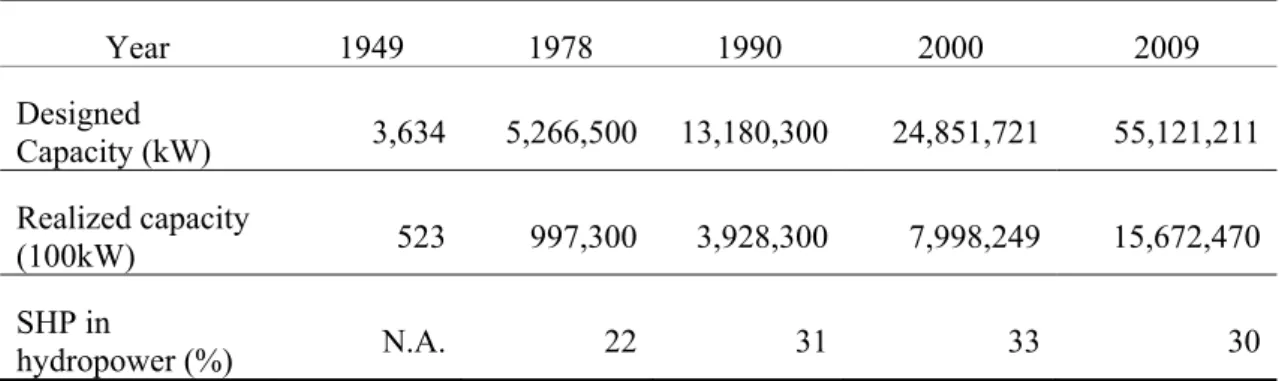
increased rapidly after the turn of the century. Over half of the 2,800 counties had SHPs (about 45,000) in 2009, with the installation capacity of SHPs having increased four times as of 1990 (see Table 1). SHPs consistently accounted for around 30 per cent of all hydropower in the electricity industry, supplied electricity for over 300 million residents in rural areas, and covered up to 99 per cent of rural areas as compared to merely 40 per cent in the initial stage of the economic reform (China Water Statistical Yearbook, 2010).
Table 1 here
In the past, each SHP built its own grid, referred to as the rural or agricultural grid, that supplied electricity in the nearby rural areas. In the early 1980s, the state’s policy was to decentralize power supply besides the nation-wide power grid.
Accordingly, there were 790 county grids that linked rural agricultural grids, which were also integrated into 42 regional grids that were supplementary to the national grids (Liu, 2006; Zhou, 2010). These SHPs and agricultural grids, which were controlled and managed by provincial governments and lower levels of local
government, supplied the rural areas’ demand for electricity and contributed greatly to the development of rural industrialization during the 1980s and early 1990s. In the process, however, the state invested very little in maintaining the existing power grids, especially those in remote rural areas.
This integration of the power stations with the grid policy was abandoned in the 2002 electricity reform. In a nutshell, there are three major elements in the market reform of the electricity sector that have largely determined the patterns of
hydropower development. The first element was the principle of separating enterprise from governmental functions (zhengqi fenli) so as to let power generating state-owned enterprises (SOEs) run like businesses that basically follow the market principle. Thus, in the process of the reform, many power-generating SOEs were separated from the Ministry of Electricity to become independent companies. Second, the state separated the grid from the power generating sector and established a regionally competitive market in the latter sector;6 the state invested even more in the construction of the
national grid system in order to support the policy of inter-regional electricity exchange such as ‘sending electricity from the west to the east’ (xi dian dong song). Third, all the power had to be connected with the national and regional grids, and the prices of electricity were determined by the market competition mechanism. However, there were still some SHPs, which were mainly located in remote areas, that had independent agricultural grids and had not yet been linked to regional or national grids (Liu, 2006; Zhou, 2010). The principles of ‘the division of operator and grid;
price competition for connecting with the grid’ and ‘forced connection’ in the electricity reform have largely determined the fate of the SHPs since 2002.
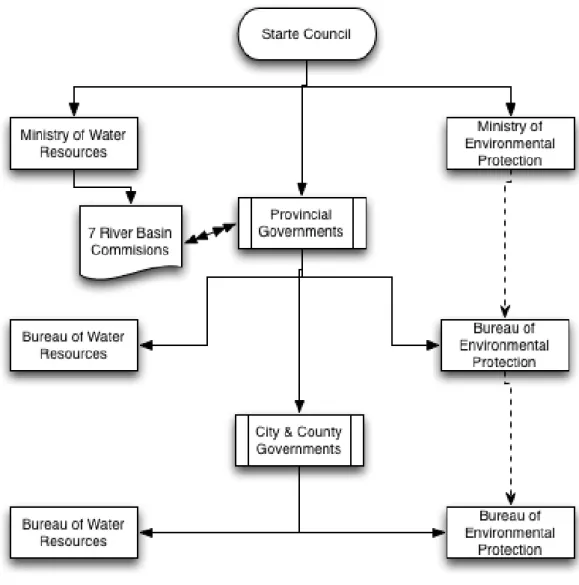
Along with this market reform, the governance structure of the new electricity regime has been changed to the following system since 2003. While the Ministry of Water Resources is responsible for the development of SHPs, the administrative work of investing in hydropower stations was allocated to different levels of local
governments (Liu, 2006; Zhou, 2010). In addition, the national power grid companies have also been expanding their market territories; they not only have gradually acquired the existing regional grid, by building high voltage transmission networks across provinces, but have also had the institutional capability to determine whether or not to buy the electricity that the power operators have generated. They have enjoyed the monopoly position in the market in which the small privately-owned SHPs have had no other choice but to be in a subordinate position.
IV. The Role of the Local Government
Local governments in this paper mainly refer to local authorities at the county or city levels. Because China is an authoritarian state where the CCP is the only party that controls the state power, the state thus simultaneously refers to the party and the state authority. As has been discussed above, the CCP uses its cadre personnel management system to monitor its members’ behavior and thus ensures that the party’s decisions are able to go through different levels of governmental
administration (Edin, 2003; Chan, 2004). On the other hand, the upper level of the state bureaucracy also has the power to evaluate the performance of state officials at lower levels and to recruit potential talent. Thus state officials tend to follow the orders from the party or from the upper levels of the administration in order to
maintain their good record based on an annual evaluation, and especially on the hard target of economic growth that is good for their promotion. As the Chinese central state has begun to regard social harmony, rural reconstruction and ecological
protection as being as important as economic development, it has become a challenge for local government officials to reconcile those new social and environmental
requests from above with economic performance at the local level.
Indeed, Tilt (2009: 144) finds that the concept of sustainability has been interpreted differently at different levels of the government’s environmental agency. At the township or village level, the concept of sustainability tends to be regarded by the environmental agency as promoting social and economic development, rather than as an abstract concept as the central state bureaucrats hold, so as to provide local jobs and to increase income and taxes in contrast to idealized environmental protection. This is because, at the lower level of government, environmental agencies have been very weak, have not had an independent budget, and have been directly governed by the township or city mayors or party secretaries, thereby having little independent authority.
These findings are also reflected in our field study in Yunnan. From 2006 on, because of the ‘Eleventh Five-Year Plan’, ‘the New Rural Reconstruction Under Socialism’ (shehui zhuyi xin nongcun jianshe) Plan and ‘sustainable development’ have been implemented, and have involved funneling more resources into
infrastructure construction in rural areas, including enhancing rural electrification, rural irrigation systems, rural agricultural grids, telecommunications, clean water, and so on. In the years that have followed the launching of the Plan, the state-level
departments’ yearly Document Number One (yihao wenjian) have all been focused on the issues of Rural Reconstruction. This indicates that the central state has treated
rural reconstruction as one of its priority targets so as to meet the stringent issues arising from economically decaying rural areas. These actions have alerted local officials that the rural poverty problem has become an urgent issue that they have to carefully tackle.
Although Yunnan Province has an abundance of water resources, the distribution is very uneven and is mainly concentrated in the northwestern part. The central and southeastern parts always suffer from drought due to the weather conditions. In addition, because of its plateau landscape, those people who live in the mountainous areas of the province suffer the most from water shortages. Furthermore, the Karst topography of the East mountain plateau has serious impacts on the water supply for both agriculture and households.8 Situations from the above areas have become much
more severe in the past few years as the dry weather conditions have become more regular due to the global climate change. Therefore, besides the Central State’s New Rural Reconstruction Plan, the provincial government of Yunnan also has its own policy on rural water preservation and on the construction or maintenance of
irrigation systems. These policies include the maintenance of existing small dams and water channels, as well as the construction of new dams to preserve the water in the rainy season (roughly from June to October) for the remaining dry season. In order to mobilize the resources, Yunnan Province encourages private firms to construct water channels and to build SHPs simultaneously. The electricity market reform in 2002 has been especially beneficial to those local governments that have had no financial resources to repair and maintain the existing hydropower stations.
As the concept of scientific development has become the core political ideology and guiding principle of the central state since 2006, the city or county officials have clearly acknowledged, according to the logic of the Chinese bureaucracy, that
sustainable development (or ecological civilization) has become one of the best strategies for procuring financial resources and gaining the attention of the higher echelons of the party and administration. Thus, by promoting SHP, a local
government can not only express its loyalty to the central state’s policy, but can also illustrate its determination to protect the environment (forests). Indeed, in T city’s official documents,7 all strategies that are relevant to SHP are dubbed as ecological
protection, sustainable development, green industries, and so on. The local governments’ promotion of SHP thus not only has political
ramifications, but it also has very real financial benefits. Because the promotion of SHPs has become the central state’s policy, a large quantity of financial resources have been budgeted for their construction in consecutive years. Similarly, the
provincial governments have also allocated a corresponding amount to the same item. In order to receive financial support from both the central and provincial governments, the city and county governments have used every possible approach to apply for abundant financial resources from the upper level of government. As our case shows, T city obtained financial support amounting to over RMB $542 million for water resources and SHP categories during the first three quarters of the year 2011, which accounted for almost one fifth of the whole city’s annual budget.9 It is thus
very clear that promoting SHP and maintaining water resources are a major economic benefit to the local government.
Furthermore, in order to ensure the implementation of the promotion of SHP, the upper level of government also uses the annual performance evaluation system as a tool to maneuver the lower level officials. In the Yunnan case, the Water Resource Department of the provincial government used the ‘electricity for forest woods’ policy as the main political goal to evaluate the performance of lower level city or county
officials. The lower level officials have to sign the annual responsibility contract with the upper levels so as to assure them of their target goals. The common practice is: after the annual evaluation has been done, the provincial government would announce the rankings publically. This puts great political pressure on local officials and
generates severe competition among them.
Although promoting SHP is the government’s political goal, the application and installation of an SHP is the company’s own work. The building of an SHP starts from a private company’s application to develop a power station along a river. The
company has to prepare all the necessary documents and applies to the bureau of water resources at the local level. The review and approval are conducted by the Development and Reform Commission at both the local level and provincial level. The capability of the SHP will determine what level of local government has the final say. For example, the city level can only approve the capability up to 25 thousand KW; above this level up to 50 thousand KW has to be approved at the provincial level. In addition, all SHPs have to be connected to the regional or national grids. The price of the electricity which an SHP generates is determined by each province’s or local government’s Bureau of Commodity Prices and also has to be approved by the local government’s finance department.
For local officials, those smaller-scale irrigation systems and SHPs can be better managed by private companies, because they neither have the financial resources nor the manpower to manage them. However, in order to realize the mission of rural reconstruction, local officials on the one hand have established good relationships with local businessmen, but on the other hand want to keep their power in realizing their political missions. Alternatively, as an official described:
back the market forces a little bit and the government has to become more involved; now the government has the power to let the market run its course. (Interview data EO1102-0804)10
In order to attract private investment to this SHP sector, some local governments have also offered financial incentives, for example, local tax rebates for five years, to the investors.11 Moreover, local officials have been actively involving public/private
collaboration networks in facilitating the projects. For example, in our field trip in Yunnan, we found that many of the SHPs were built by businessmen from Zhejiang, Fujian, or Sichuan. Those businessmen who came from the same province would attend the Provincial Business Association, such as the Sichuan Business Association in Yunnan, to make friends, collect information and build up social networks.
Although these associations are so-called autonomous civil organizations, the secretaries of the associations tend to have a CCP party background which provides better channels to communicate with local governments, and they serve as the liaison between the local governments and business associations.
The business association we visited most of the time has a social gathering function, but it is also a place for business networking. When there is a development project, the association becomes the place to find interested partners. The secretary of the association will then be the person to communicate and bargain with local
officials about the project and other related bureaucratic procedures, including the tax rate; sometimes, these businessmen will participate in real estate projects, in which local officials may share to certain degrees.
In the SHP sector, we found in our field trips that the companies would use every possible means to get closer to local officials who were in charge of water and
For example, the SHP companies tend to invite retired officials to be the companies’ consultants in order to establish closer network relations with the incumbent officials, and to know more clearly the obvious and under-the-table rules. The construction of
Guanxi is the basic rule of the companies’ operations in local society. Through the
above channels, therefore, local officials tend to have closer networks with local business people.
For local officials, encouraging private firms to engage in the construction of SHPs thus has many benefits. First, it fulfills the demands of rural reconstruction from above, both for rural irrigation and electrification purposes. Of course, formally, the local government would require that an SHP make irrigation its priority rather than the generation of electricity. However, the reality has always been the opposite, with the private firms’ interest having been to earn money and not to focus on public goods. Second, it is supposed to have a good effect on the environment, because
electrification largely reduces the rural peasants’ dependence on the forest for energy that would lead to de-forestification. Thus, as one official said:
Because of our policy of attracting private capital to investment (zhaoshang
yinzi), our main rivers have been fully developed by SHPs. […] All in all,
SHPs have created very good effects. (Interview data EO1101-0804) 12
V. The SHP Companies
In the initial stages of the electricity market reform, privately-owned SHPs indeed earned a lot of profits in developing hydropower, the return being estimated to reach as much as 20 per cent in the late 1990s and early 2000s (Cao, 2008: 92). This was due to the fact that the government at that time was not so serious about the environmental impact, neither did it have to follow formal procedures when making
an application to construct an SHP. As long as the applicant found the water resource, the firm could then draw up the construction plan and received approval in a very short period of time. However, after 2006, the central state announced a new measure referred to as the ‘Notification Regarding the Orderly Development of Small
Hydropower Plants to Protect the Ecological Environment’. From then on, all the necessary procedures were set up in the application, including an environmental impact assessment. From then on, the state began to check those ‘Four No-s’
regarding the SHPs– no registration, no construction plan, no acceptance certification, and no suitable management – and as a consequence forced most of them to close down. Subsequently, a serious problem began to emerge, particularly in relation to the plants’ profit margins. As a result, the average annual profit rate of an SHP is
currently about 8-10 per cent (Interview data EO1101-0804).13
One of the reasons for the shrinking profit margins of the SHPs was the forced connection policy of the SHPs to the national grid. In the case of Yunnan province, it is the South Power Grid that has the dominant position in the market (which decides whether or not a SHP can be connected to the national grid), whereas the SHP has to comply with it in order to survive in the market. Although the state requires national grid companies to purchase electricity generated by the SHPs, the real situation is that these grid companies are reluctant to fulfill the obligation. One of the main reasons why the national grid does not like to buy the electric power generated by the SHP is its unstable nature. One of our interviewees referred to it as garbage electricity.14 In
the rainy season, SHPs can generate more power in a similar way to the big dams; nonetheless, the electricity provided by the latter is already sufficient for the grid to supply the market demand. As a result, the electricity that a SHP has generated has to be sold at a much lower price or be given up. On the other hand, in the dry season, the
flow of the river is not abundant enough to be used for power generation, and therefore the SHP is not able to supply electric power to the grid. In addition, the quality of the electricity is low and the operation cannot be optimized. Therefore, the grid company lacks interest in the SHPs and even adopts certain measures to prevent them from being connected to the grid (Zhou, et al., 2009: 1079). In general, the grid company is very supportive of building big dams along major rivers in Yunnan.15
As a result of the forced connection policy, according to a report (Cao, 2008: 43-44), there were as many as 12 provinces in which the cost of power generation was higher than what could be recouped by selling the electricity to the grid company, which thus led to the companies in these areas recording a deficit. For example, in Guizhou province, the grid company paid the SHPs only $0.15 RMB per KW/hour, and sometimes this rate was even lowered to $0.12 RMB per KW/hour. By contrast, the grid sold the electricity to rural enterprises at $0.318 RMB per KW/hour, and thus the grid company earned a large amount of profit from this transaction. As one
hydropower developer pointed out: ‘Hydropower has seven advantages, including the raw material (no need to worry about the sources), the market, the transportation, the quality, the inventory and the state’s support. However, these seven advantages are less important than one disadvantage; that is, it is a highly monopolized industry that in practice is manipulated by the state by a lower price. Whether or not the price should be raised is not what we can say’ (Guan, 2012). In fact, our field trip in Yunnan confirmed this observation, for the developers are now complaining that the lowering of the purchase price by the grid company may cause them to suffer a deficit. Some firms are even expecting to use the CDM mechanism to compensate for their currently very low profit margins.16
merged and acquired by the powerful grid companies and have become their affiliates. As a result, the local rural electricity companies have totally lost their initial function of benefiting poor rural areas, as the low-efficiency and high cost state-owned power generating companies now run the whole of the power generation market in China, or in Yunnan in particular.
Why are so many private companies still interested in investing in this SHP sector, given the fact that many have suffered from heavy financial losses? We found based on our field trips that local governments would compensate those companies by means of other administrative methods, such as real estate development projects whose profits are much larger than those from the SHPs in order to maintain the alliance. According to our interviews, the owners of the SHPs usually had more than just one station each. Thus, while the profit margins of the SHPs have been shrinking over the years, they still continue to invest in more stations due to the fact that, on the one hand, there is still some amount of shrunken profits and the stations can run for a long period of time and, on the other hand, they help the local officials fulfill the political missions assigned to them by the upper levels of government, which will later lead to other returns from the local officials.17 As one of our interviewees said:
The SHP project has been one of the most important items that the local government has had to implement according to the national evaluation criteria. Local officials require you to accomplish the already bidded for project within a specific time duration, and they can help you to shorten the administrative procedures to a week as compared to the normal two months….Whenever you help local officials to accomplish political assignments, even though those items’ profit-margins are very thin, local officials will compensate you in return on other construction items …We evaluate our project not based on a single item,
but rather in a holistic manner. (Interview data EW1102-0806)18
This statement clearly shows the close alliance between local officials and private capital, and the interest bundling approach through which private capital may suffer from short-term financial loss in return for much larger and long-term benefits. This may explain the paradox of the deficit-investment phenomenon in the small
hydropower sector.
The close alliance between local officials and the privately-owned SHPs has given rise to a phenomenon referred to as ‘demarcating the river territories’ (paoma
quanshui), indicating that the rivers have been cut into pieces by different parties for
building large and smaller dams as well as hydropower stations. The phenomenon has generated widespread criticisms and reports from the media, and has finally received responses from the state in reformulating the application procedures for SHPs by adding the environmental assessment item as we mentioned above. 19
Ironically, most of the environmental non-governmental organizations (NGOs) have paid less attention to this environmental disaster, and have instead devoted much of their limited resources to watching big dam construction, such as the 13 cascade dams along the Nu River (Mertha, 2008; also interview data ENG1101-0802).20 It is
also because big dams create a much larger scale of environmental impact than the SHPs, and therefore NGOs have devoted much energy to big environmental events compared to the smaller scale SHPs. However, NGOs were indeed aware of these impacts of SHPs on the environment in Yunnan Province and provided in-depth reports to the media. One renowned environmentalist lamented:
The main problem with SHPs now is their blind development which results in not only electricity not being able to be sold, but also a shortage of clean drinking water because all the river water is used for generating electricity.
(Interview data ENG1101-0802)21
VI. Conclusion
This paper asks: how the Chinese local state officials respond to the demands for social and environmental protection from the central state, while simultaneously promoting economic development? This paper has shown that the local governments in Yunnan have responded to the political demands (rural electrification and poverty alleviation) by allying with private capital to build more SHPs to fulfill the political mission while at the same time granting other benefits to the privately-owned firms to compensate for the profit-losing SHP projects. This finding conforms to the findings of recent studies on the behavior of local governments in China that find that a new cadre evaluation system has emerged (Heberer & Senz, 2011) and that there are ‘bundled interests’ between local government officials and privately-owned firms on environmental issues (Kostka & Hobbs, 2012). We argue that, although the Chinese central state has begun to impose new social and environmental missions on local governments, the local governments have tended to interpret the political mission in a way that can be integrated with local economic development and to collaborate closely with private interests. Through this collaboration, local state bureaucrats simultaneously fulfill the central state’s political mission and local economic development demand. Specifically, we show that due to the market reform of the electricity industry in 2002, which has resulted in the major electric power-related SOEs pursuing profit maximization, SHPs’ profit margins have been radically squeezed. Nonetheless, the shrinking of profits has only further enhanced the local government officials’ alliances with the SHPs by allowing these SHPs to develop other profitable projects, in order to fulfill the political mission. The result of this
collaboration has been that the hydropower stations in the upper, middle and lower streams of the rivers may belong to different companies that have conflicts of interest in terms of utilizing the rivers for generating electric power (Zhou, 2010: 163).
Although we have found that the building of a large number of SHPs in rural areas has brought about an environmental disaster, we still regard the Chinese
government’s promotion of SHPs as being a positive part of its climate change policy and rural poverty alleviation. What the Chinese state has not yet recognized or finds difficult to deal with is the fact that its marketization of the electricity industry has merely resulted in its policy goals in relation to SHP being doomed to failure. As a policy tool to support rural development and poverty alleviation, the state needs to subsidize the SHPs and to enable them to receive an adequate level of profit in order not to be undermined by the SOEs.
Furthermore, on the administration side, China also has to have a more coherent bureaucracy to coordinate the development of hydropower. At the present time, the application and approval of SHPs belongs to the local development and reform commission. Although the Bureau of Environmental Protection is responsible for reviewing the environmental impact, the final decision is always based on economic interests. This creates a less coherent view of the environmental impact. China needs to have more coherent bureaucratic procedures to review the applications of SHPs and to pay more attention to the functions that SHPs can perform to rescue the rural economy from bankruptcy and save the environment.
Notes
1. There are four grades below the 50MW installed capacity of small hydropower: 0.5–5MW, 5–10MW,10–25MW, and 25–50MW (Zhou et al., 2009).
hydropower plants which it regards as a clean energy; so does the Chinese state. As regards its mission in China and the Asia-Pacific Region, please see http://www.hrcshp.org/en/about.html. 3. Building large dams in the world and in China now creates colossal disputes not only within
domestic politics but also in the international arena, especially when the river is transnational, for example the Lancang River flows into Myanmar, Cambodia, Thailand, and Vietnam. Building large dams may cut the water flow of the rivers and trigger international disputes (Mosert, 2000; Liebman, 2005; Onishi, 2007; Hensengerth, 2009).
4. The ‘Three Rural Issues’ (sannong wenti) refers to three issues highly relating to rural development in mainland China. Specifically, these issues are rural areas, agriculture, and peasants.
5. This means that by building more SHPs, rural peasants would have electricity for cooking and other domestic energy utilities. This would then reduce the peasants’ incentive to cut wood from the forests.
6. The new companies include two power grid operators, namely, the State Power Grid (covering mainly the northern, northeastern, northwestern, eastern, and central China areas) and China South Power Grid (covering the Yunnan, Guizhou, Guangxi and Guangdong areas; and five state-owned electricity operators such as Huaneng, Datang, Guodian, Huadian, and the Electricity Investment Corporation. Accordingly, the existing regional and rural agricultural grids have been incorporated into the two newly-established national grid systems.
7. T city is the anonymous name we use for the city in which we did our field study in Yunnan. 8. Please see Larson, C. (2010, January 18) for the impact of Karst landscape on water supply. 9. Interview data EO1102-0804, data obtained from local informant in T city during our field study. 10. Interview data EO1102-0804, an officer from the City’s Development and Reform Commission,
Kunming City, 04 August 2011.
11. The value-added tax was 17 per cent in one of the cities that the authors had visited in Yunnan. Of this 17 per cent, 75 per cent went to the central state and the remaining 25 per cent was local tax. The local government would return this 25 per cent to the investor over a five-year period.
12. Interview data EO1101-0804, with an officer from the Agricultural Bureau, Kunming City, 04 August 2011.
August 2011.
14. Interview data EE1101-0711, with engineers of South Grid Corp., 11 July 2011.
15. Interview data EE1101-0711, data based on interview with engineers of South Grid Corp., 11 July 2011.; also interview data EOE01-0710, data based on an interview with engineers from the Bureau of Water Resources, T City, Yunnan, 10 July 2011.
16. Interview data EW1202-0708, owner of a small hydropower plant, 8 July 2012, in T City, Yunnan. In addition, CDM (the Clean Development Mechanism) is a type of flexibility mechanism that provides trading schemes for emissions reduction projects that generate Certified Emission Reduction (CERS) units. The CDM allows industrialized countries to buy CERS and to invest in emission reductions where it is cheapest globally. Of course, China is one of the largest countries to benefit from the CDM mechanism.
17. Interview data EW1201-0707, owner of a small hydropower station, 7 July 2012, T City, Yunnan. The returns may consist of different types, and one of them may be a real estate development project which has much larger monetary profits.
18. Interview data EW1102-0806, owner of a small hydropower station, 6 August 2011, T City, Yunnan.
19. There are a lot of reports on the environmental impacts of SHPs. These documents are also one of the main sources of this research.
20. Interview data ENG1101-0802, with a local environmentalist of green NGO, Kunming City, 02 August 2011.
21. Interview data ENG1101-0802, with a local environmentalist of green NGO, Kunming City, 02 August 2011.
References
Bing, F.-S. (ed.) (2008). Zhongguo kezaisheng nengyuan fazhan zhanlüe yanjiu
congshu: shuinengjuan. [The development strategy of China’s renewable energy:
Cao, L. (2008). Zhongguo xiaoshuidian tourongzi zhengce sikao. [The thinking of finance policy for China’s small hydropower] Beijing: China Water & Power Press. [in Chinese]
Chan, H. S. (2004). Cadre Personnel Management in China: The nomenklatura system, 1990–1998. The China Quarterly, 179, 703-734.
Chen, G. (2009). Politics of China’s environmental protection. Hackensack, N.J.: World Scientific.
Chen, X. (2012). Social protest and contentious authoritarianism in China. New York: Cambridge University Press.
Duckett, J. (2001). Bureaucrats in business, Chinese-style: The lessons of market reform and state entrepreneurialism in the People’s Republic of China. World
Development, 29(1), 23-37.
Edin, M. (2003). State capacity and local agent control in China: CCP cadre management from a township perspective. The China Quarterly 173, 35-52.
Guan, X. (2012, June 18). Guizhou minying xiaoshuidian zhangqi kuisun zao shengsijie. [The privately-owned small hydropower plants suffer from long-term deficits and vital moments in Guozhou] Chinese Business Times. Retrieved from http://finance.sina.com.cn/roll/20120618/022012335567 [in Chinese]
Guo, X. (2001). Land expropriation and rural conflicts in China. The China Quarterly, 166, 422-439.
Heberer, T., & Senz, A. (2011). Streamlining local behavior through communication, incentives and control: A case study of local environmental policies in China.
Hensengerth, O. (2009). Transboundary river cooperation and the regional public good: The case of the Mekong river. Contemporary Southeast Asia: A Journal of
International & Strategic Affairs, 31(2), 326-349.
Hsing, Y. (2010). The great urban transformation: Politics and property in China. New York: Oxford University Press.
Huang, H., & Yan, Z. (2009). Present situation and future prospect of hydropower in China. Renewable and Sustainable Energy Reviews, 13, 1652-1656.
Kostka, G., & Hobbs, W. (2012). Local energy efficiency policy implementation in China: Bridging the gap between national priorities and local interests. The
China Quarterly, 211, 765-785.
Larson, C. (2010, January 18). Hidden waters, dragons in the deep: The freshwater crisis in China’s Karst regions. Circle of Blue/Wilson Center Reporting.
Retrieved from
http://www.circleofblue.org/waternews/hidden-waters-dragons-in-the-deep/
Lieberthal, K., & Oksenberg, M. (1988). Policy Making in China: Leaders, Structures,
and Processes. Princeton, NJ: Princeton University Press.
Liebman, A. (2005). Trickle-down hegemony? China’s ‘Peaceful Rise’ and dam building on the Mekong. Contemporary Southeast Asia: A Journal of
International & Strategic Affairs, 27(2), 281-304.
Lin, N. (1995). Local market socialism: Local corporatism in action in rural China.
Theory and Society, 24(3), 301-354.
Liu, J. (2006). China electric power industry policy and industry development, Beijing: China Electric Power Press. [in Chinese]
Magee, D. (2006). Powershed politics: Yunnan hydropower under great western development. The China Quarterly, 185, 23-41.
McNally, A., Magee, D., & Wolf, A. (2009). Hydropower and sustainability: Resilience and vulnerability in China’s powersheds. Journal of Environmental
Management, 90, 286-293.
Mertha, A. C. (2008). China’s water warriors: Citizen action and policy change. Ithaca, NY: Cornell University Press.
Mertha, A. C. (2009). ‘Fragmented authoritarianism 2.0’: Political pluralization in the Chinese policy process. The China Quarterly, Vol. 200 (2009), pp. 995-1012.
Mosert, E. (2000). Dams on transboundary rivers. World Commission on Dams Thematic Review V.3. Cape Town: World Commission on Dams.
O’Brien, K., & Li, L. (2006). Rightful resistance in rural China. Cambridge: Cambridge University Press.
Oi, J. C. (1992). Fiscal reform and the economic foundations of local state corporatism in China. World Politics, 45(1), 99-126.
Oi, J. C. (1995). The role of the local state in China’s transitional economy. The
China Quarterly, 144, 1132-49.
Onishi, K. (2007). Interstate negotiation mechanisms for cooperation in the Mekong river basin. Water International, 32(4), 524-537.
Paish, O. (2002). Small hydro power: Technology and current status. Renewable and
Sustainable Energy Reviews, 6(6), 537-556.
Qian, Y, & Weingast, B. R. (1996). China’s transition to markets: Market-preserving federalism, Chinese style. Journal of Policy Reform, 1(2), 149-185.
Shirk, S. (1993). The political logic of economic reform in China. Berkeley, CA: University of California Press.
Tilt, B. (2009). The struggle for sustainability in rural China: Environmental values
and civil society. NY: Columbia University Press.
Walder, A. (1995). Local governments as industrial firms: An organizational analysis of China’s transitional economy. American Journal of Sociology, 101(2), 263-301.
Yeh, E. T., & Lewis, J. I. (2004). State power and the logic of reform in China’s electricity sector. Pacific Affairs, 77(3), 437-465.
Yu, H. (2008). Global warming and China’s environmental diplomacy. New York, NY: Nova Science Publishing.
Zhongguo nengyuan bao [China’s Energy Daily] (2012). Waner’ de xiao shui dian? [Damn the hydropower] Xinhua net. Retrieved from
http://big5.xinhuanet.com/gate/big5/news.xinhuanet.com/energy/2011-08/25/c_1 21909346.htm [in Chinese]
Zhongguo shuili nianjian bianzuan weiyuanhui [The editorial committee of China Water Statistical Yearbook] (2010). China Water Statistical Yearbook 2010. Beijing: China Water & Power Press. [in Chinese]
Zhou, J. (2010). Zouxiang ge minzu gongtong fanrong- Minzu diqu daxing shuidian
ziyuan kaifa yanjiu. [Toward the common prosperity of every race: A study on
the development of large hydropower resources in ethnic areas] Beijing: China Water & Power Press. [in Chinese]
Zhu, J. (2004). Local developmental state and order in China’s urban development during transition. International Journal of Urban and Regional Research, 28(2), 424-447.
Tables
Table 1. Development of SHP in China
Year 1949 1978 1990 2000 2009 Designed Capacity (kW) 3,634 5,266,500 13,180,300 24,851,721 55,121,211 Realized capacity (100kW) 523 997,300 3,928,300 7,998,249 15,672,470 SHP in hydropower (%) N.A. 22 31 33 30
三:
State Rescaling and Water Governance:
The South–to-North Water Transfer Project in China
Jenn-Hwan Wang1
Shuwei Huang2
1 Chair Professor, Director of Center for China Studies, National Chengchi University 2 Post-doctoral Researcher, Center for China Studies, National Chengchi University
Abstract
This paper uses the South-North Water Transfer Project to discuss the transformation of water governance by the Chinese state and its related scalar politics. China’ water
management system has transformed from command and control mode in the 1950s to a chaotic local competition stage in the post-Maoist reform era when local states were assigned the responsibility for promoting economic development. This paper intends to analyze how the Chinese state re-constructs cross-boundary and cross-regional governance system on water management through the building of the Water Transfer Project. We will also use Beijing city as an example to show how the new governance system has been made via the project.
1. Introduction
Governing water is one of the most important administrative works for the state, ancient or contemporary. Taming water in ancient worlds was regarded by empires as a sacred work for its utilization of water and prevention of flood in order to survive from natural disasters and build agricultural civilization. By doing these hydraulic works, as Wittfogel (1957) argued, ancient empires developed sophisticated
bureaucracies to rule the society which he called hydraulic despotic regime. Similar to ancient regimes that had to use state power to regulate water, states in contemporary world also have to develop related technologies to fully utilize water in order feed the increasing demand due to rapid industrialization and urbanization. Indeed, governing water has become a similar ‘sacred’ work for the contemporary state as its counterpart in ancient world (Worster, 1985; Reisner, 1993; Wehr, 2004; Swyngedouw, 2007).
China’s management of water resources has evolved from the control and
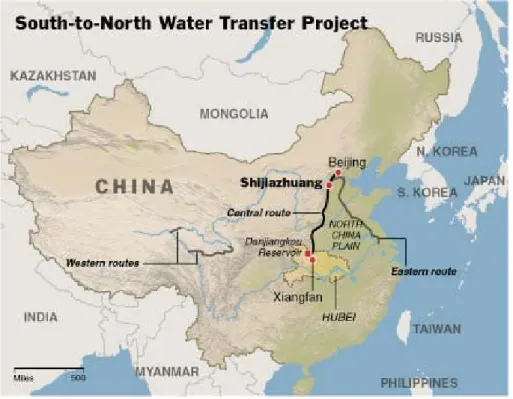
command mode in its initial stage of the Maoist era in which the construction of dams and irrigation system was one of the major parts of the state formation process. As China began its market reform since 1978, local states have competed fiercely on water resources due to their dynamic economic growth that even led some parts of the Yellow River to dry up many times in the late 1990s. Water wars which occurred often among local states were salient political sceneries in China during that period. A call for cross-boundary and national level of water governance had been emergent. This paper will deal with the state’s role in water management, using the case of grant South-North Water Transfer Project (SNWTP) to illustrate the rescaling process.
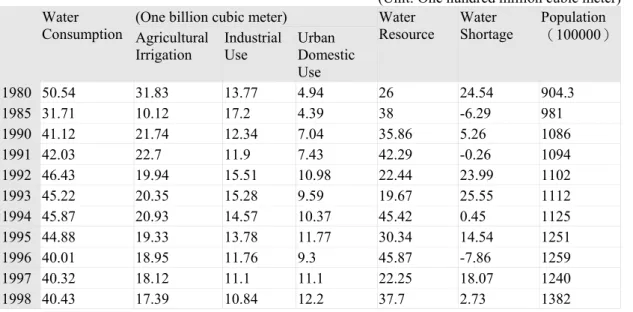
Indeed, China has experienced very rapid economic development since it opened its door to the world, with per capita gross domestic product increasing from less than US$ 100 in 1978 to over US$ 4000 in 2010 (National Bureau of Statistics, 2012) — an 8 percent annual rate of growth over the three decades. One consequence of this growth, together with its rapid industrialization in the coastal areas, is that Chinese living standards have improved substantially. Accompanying with this achievement, however, is a significant increase of the country’s total volume of water consumption. Between 1980 and 2010, total water use increased from 443.7 billion cubic meters to 602.2 billion cubic meters, with the increase of water demand coming mostly from urban and industrial sources (Ministry of Water Resources, 2011). This increase of water consumption has led to significant water supply problems in China.