
人民行動黨在2011年新加坡大選的形象修復個案研究 - 政大學術集成
134
0
0
全文
(2) Public Relations Case Study Analysis: A Crisis in 2011 Singapore general election. Abstract This study attempts to look at the image restoration efforts of the People’s Action Party (PAP) during the period leading up to the 2011 Singapore General Election (GE). The PAP has constantly emerged victorious in every Singapore’s GE, however 2011’s fierce fight from the opposition and the numerous unhappy voices from the sea of Singaporeans has made it clear that their once well loved image was surely damaged. According to literature, when an image is damaged, there is a need to them repair this image. The dynamic framework of. 政 治 大. Benoit’s Image Restoration Theory will thus be used to examine the actions of the PAP in. 立. dealing with the attacks and criticism before the election date.. ‧ 國. 學. This study content analyzed a five-month period newspaper coverage of the 2011 GE from two major Singapore newspapers, The Straits Times and Channelnewsasia. Results showed. ‧. the PAP, due to the nature of their err, chose a more accommodative strategy when dealing with. y. Nat. sit. the public. On the other hand, due to Singapore’s unique political culture, the results on the use. n. al. er. io. of “mortification” and “defeasibility” has also provided additional input into the current political. i n U. literature, i.e. these strategies depend on the political culture.. Ch. engchi. v. The study concluded that the use image restoration strategies by the PAP though more accommodative in nature did change towards the campaign timeline. Also the political landscape and culture of Singapore made defensive strategies more affective than Benoit would have suggested. Thus the PAP though still securing the lowest vote count in its election history, still manage to save its image and secure a win in the 2011 GE. Keywords: Benoit, Image Restoration Theory, Case Study, Crisis management, Singapore, Singapore General Election. 2.
(3) Public Relations Case Study Analysis: A Crisis in 2011 Singapore general election. 摘要 本研究以內容分析法,引用 Benoit 的形象修復理論,探討人民行動黨在 2011 年新 加坡大選中,面對移民政策、生活成本與住房等三大議題的形象修復策略。 研究結果顯示,因危機事件性質偏向「可預防事件群」,因此人民行動黨使用了大 量較順應型的形象修復策略,例如尋求支撐與修正行動。另外,本研究也發現,因新加坡 政治環境的獨特性,導致「後悔道歉」和「無力控制」這兩種策略的同時使用,此一現象 與Benoit之主張有截然不同的結果。. 治 政 本研究的結論是, 新加坡獨特的政治環境以及文化,導致Benoit所建議應該少用的一些 大 立. 策略,在這次的大選中反而有了正面的效果。所以,雖然人民行動黨在這次的大選中得到. ‧ 國. 學. 最低一次的得票率,但他們還是順利地在2011年的大選中修復了自己的受損形象。. ‧. n. al. er. io. sit. y. Nat. 關鍵字: Benoit、形象修復策略、危機管理、案例分析 、新加坡、新加坡大選. Ch. engchi. 3. i n U. v.
(4) Public Relations Case Study Analysis: A Crisis in 2011 Singapore general election. ACKNOWLEDGMENT I would like to extend a heartfelt gratitude to my family and all the teachers and friends whom I have met while studying abroad in Taiwan. Not only have you given me the courage to face every challenge that have crossed my path but also you all have pushed me to be the better person I am today. Thank you Daddy and Mummy, for because you love me and supported my decisions, I was able to study abroad in Taiwan. Thank you for giving in to my willfulness and for never. 治 政 大 that came my way. I am over Skype, I was able to successfully get through all the hurdles 立. giving up on me despite all the mistakes I have made. Also, because of all the encouragement. blessed to be able to be called your daughter. Thank you once again Daddy and Mummy!. ‧ 國. 學. Thank you also to all the Professors whom have thought me, especially Professor I-Huei. ‧. Cheng, whom have, in my first and second semester gave me a solid crisis communications. sit. y. Nat. foundation and whom with much patience guided me through my first year in my Master’s program.. io. al. er. Thank you also to my supervising Professor Katherine Chen, whom has guided me, pushed, and. v. n. molded me into what I am today. Without her, this thesis would not have been possible and without. Ch. engchi. her I would not have knew what I was capable of.. i n U. Lastly, thank you to all the friends whom I have made along the way. I would like to especially thank Li Wen Lin and Kao Chia Chun from the Department of Advertising, for they were not only my friend, but also my family. Without them, I would not have been able to fit into this foreign environment and without them my graduate school memories would not have been filled with so much joy. Thank you so much both of you, for you both made my stay in Taiwan fun and memorable. I love you guys!. 4.
(5) Public Relations Case Study Analysis: A Crisis in 2011 Singapore general election. Table of Contents List of Tables and Figures....................................................................................................................6 Chapter 1: Introduction .......................................................................................................................8 1.1 Research Objectives and Research problem ................................................................................. 8 1.2 Background General Elections ..................................................................................................... 11 Nomination Day ................................................................................................................................. 11 Campaigning ..................................................................................................................................... 12 1.3 PAP election history from 1968 to 2006 ....................................................................................... 13 1.4 2011 Singapore General Elections ................................................................................................ 18 PAP’s crisis – unhappiness of Singaporeans towards the PAP........................................................... 18. 治 政 2.1 Crisis management ......................................................................................................................... 24 大 立 Defining Crisis Type ........................................................................................................................... 26. Chapter 2: Literature and Research Question .......................................................................... 24. ‧ 國. 學. 2.2 Communication during a political campaign .............................................................................. 28 Stages in an election campaign ........................................................................................................... 28 Political party image ........................................................................................................................... 30. ‧. 2.3 William L. Benoit Image Restoration Theory ............................................................................. 31. y. Nat. Denial ................................................................................................................................................. 35. sit. Evading Responsibility ...................................................................................................................... 36. er. io. Reducing offensiveness ...................................................................................................................... 37 Corrective Action ............................................................................................................................... 41. n. al. Ch. i n U. v. Mortification ...................................................................................................................................... 42. engchi. 2.4 Field of research in Benoit’s Image Restoration Theory ............................................................ 43 2.5 Crisis type and image restoration strategy .................................................................................. 46 2.6 Research Question formulation .................................................................................................... 51. Chapter 3: Methodology .................................................................................................................... 52 3.1 Sampling ......................................................................................................................................... 52 3.2 Data Collection ............................................................................................................................... 54 3.3 Operationalization ......................................................................................................................... 54 3.4 Coders reliability and validity ...................................................................................................... 57. Chapter 4: Results ............................................................................................................................... 60 4.1 Descriptive Statistics ...................................................................................................................... 60 4.2 Answering the research Question ................................................................................................. 65 5.
(6) Public Relations Case Study Analysis: A Crisis in 2011 Singapore general election. RQ: 1 What response strategy were used by the PAP during the period leading up to the GE? ........ 65 RQ: 2 What was the most commonly used strategy? ......................................................................... 66 RQ: 3.1 Did the PAP choose a more accommodative strategy in dealing with the issues? ................ 66 RQ: 3.2 What strategy/ies was/were used in regards to the immigration policy? .............................. 67 RQ: 3.3 What strategy/ies was/were used in regards to the high cost of living? ................................ 71 RQ: 3.4 What strategy/ies was/were used in regards to the issue of housing ..................................... 75 RQ: 4 Did the campaign timeline affect the choice of strategy used? ............................................... 78. Chapter 5: Discussion ........................................................................................................................ 85 5.1 Discussion ........................................................................................................................................ 85 Looking at Benoit’s Image Restoration Theory as a whole. .............................................................. 96 Future Implications for the PAP ........................................................................................................ 96. 政 治 大 5.2 Conclusion .................................................................................................................................... 101 立 5.3 Future studies ............................................................................................................................... 101. Contribution to the current political field of Public Relations ........................................................... 98. ‧ 國. 學. 5.4 Limit of studies ............................................................................................................................. 101 References ........................................................................................................................................... 103. ‧. Appendixes .......................................................................................................................................... 110 Appendix A: Codebook ................................................................................................................... 111. sit. y. Nat. Appendix B: Code sheet .................................................................................................................. 127. io. n. al. er. Appendix C: Intercoder reliability test scores .................................................................................. 120. Ch. engchi. 6. i n U. v.
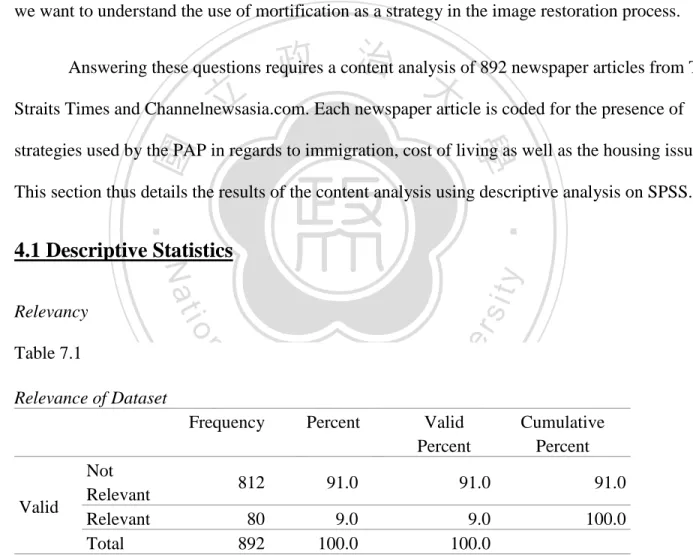
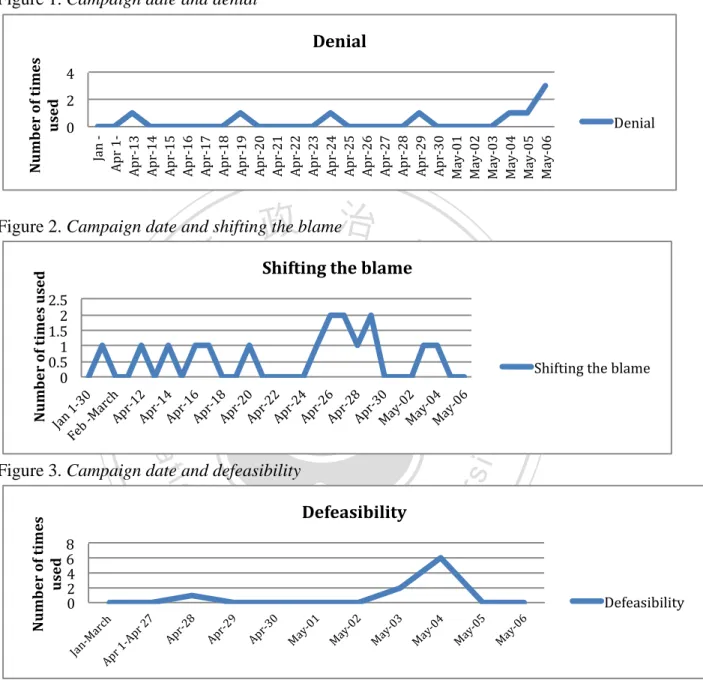
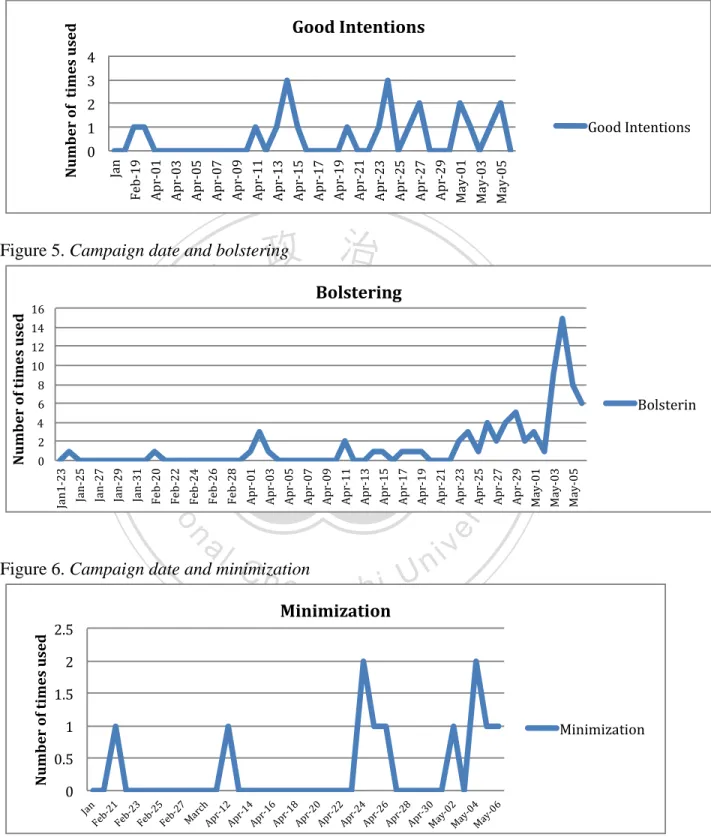
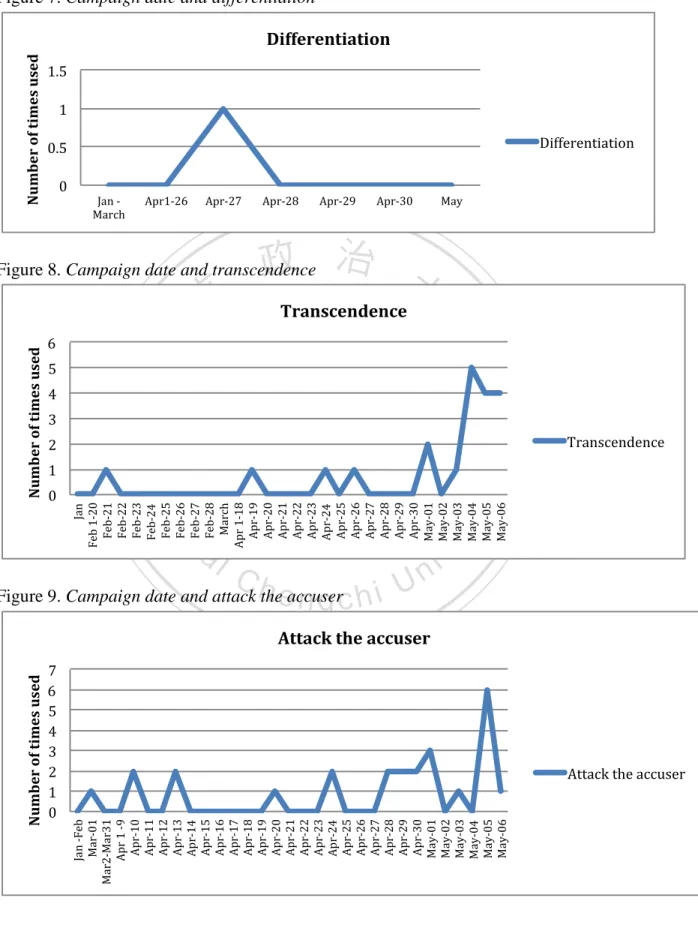
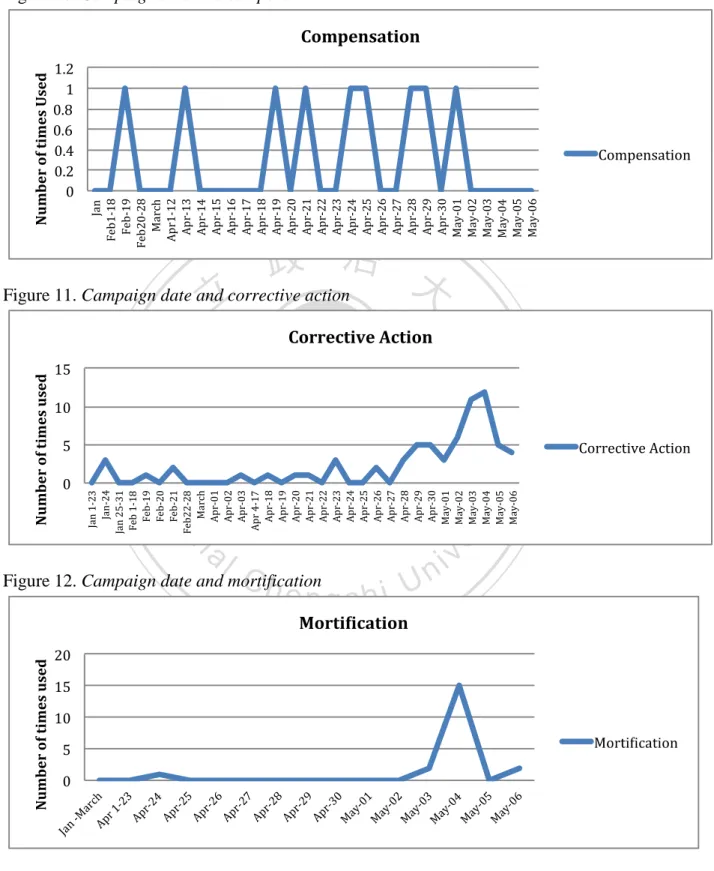
(7) Public Relations Case Study Analysis: A Crisis in 2011 Singapore general election. List of Tables and Figures Table 1 PAP election results from 1959-2011.........................................................................................15 Table 2.1 Percentage growth of Singapore residents from 2005-2011 ........................................20 Table 2.2 Consumer price index changes of Singapore from 2001-2011 .....................................22 Table 3.1 Crisis types and level of crisis responsibility .......................................................................26 Table 4 Image restoration strategies ..........................................................................................................32 Table 5.1 Crisis response classification for situational crisis communication theory .............47 Table 5.2 Master list of reputational repair strategies .........................................................................48 Table 5.3 Crisis response recommendations for situational crisis communication theory ..48. 政 治 大 Table 6 Theoretical and operational 立 definition of the variables in this content analysis ......55. Table 5.4 Crisis communication strategy selection summary ...........................................................49. ‧ 國. 學. Table 7.1 Relevance of dataset....................................................................................................................... 60 Table 7.2 News outlet (overall) ..................................................................................................................... 61 Table 7.3 News outlet (valid dataset) .........................................................................................................61. ‧. Table 7.4 Topic .....................................................................................................................................................61. y. Nat. Table 7.5Treatment of story ...........................................................................................................................62. sit. Table 7.6 Issues being addressed .................................................................................................................63. al. er. io. Table 7.7 Others...................................................................................................................................................63. n. Table 8.1 Issues and types of strategies used ..........................................................................................65. Ch. i n U. v. Figure 1. Campaign date and denial.............................................................................................................79. engchi. Figure 2. Campaign date and shifting the blame.....................................................................................79 Figure 3. Campaign date and defeasibility ................................................................................................79 Figure 4. Campaign date and good intentions .........................................................................................80 Figure 5. Campaign date and bolstering ....................................................................................................80 Figure 6. Campaign date and minimization ..............................................................................................80 Figure 7. Campaign date and differentiation ............................................................................................81 Figure 8. Campaign date and transcendence ...........................................................................................81 Figure 9. Campaign date and attack the accuser.....................................................................................81 Figure 10. Campaign date and compensation ..........................................................................................82 Figure 11. Campaign date and corrective action ....................................................................................82 7.
(8) Public Relations Case Study Analysis: A Crisis in 2011 Singapore general election. Figure 12. Campaign date and mortification ............................................................................................82. Chapter 1: Introduction 1.1 Research Objectives and Research Problem Ever since the British government granted Singapore full internal control during our colonized days in 1959, PAP has been the dominant party since then (Lee, 2008). Till today, it has not once lost a single GE (Singh, & Wheatly, 1989; Tan, 2009; Chen, 2011). This unique nature of Singapore has made many people question Singapore’s government system. Chan. 政 治 大 its stringent one-party rule by the 立People’s Action Party (PAP) and suppression of the media and (2011) says “The parliamentary republic of Singapore has been under international scrutiny for. ‧ 國. 學. minority parties that oppose its control of the government” (p. 28). However Chan (2011) acknowledges that this system has indeed helped Singapore progressed from a malaria filled. ‧. island to a financial hub. Some authors were not as kind, claiming that, “…to sustain the illusion. sit. y. Nat. of liberal democratic political contest within parliamentary politics, some opposition parties were. er. io. permitted to exist. They were continuously harassed to keep them fractious and weak”. al. n. iv n C h PAP (2009) wrote that it was LKY who led the e ntogeliminate c h i U“political opposition, banning. (Tremawan, 1996, p. 155). Other authors attributed this phenomenon to LKY. Oakley and Brown. critical publications and molding a city into a discipline, functional society built along Confucius ideals, which value the maintenance of hierarchy and social order above all things” (p. 26). They further quoted LKY in 1988 as saying “Even from my sickbed, even if you are going to lower me into the grave and I feel that something is wrong, I’ll get up”(p. 28). Therefore it is not hard to see how the outside world views Singapore’s politics. Yet on the other hand, other researchers argue that Singapore being an Asian state holds a different stand on democracy as compared to the west. Asians unlike the west are not individuals 8.
(9) Public Relations Case Study Analysis: A Crisis in 2011 Singapore general election. but rather a culture that has its roots in family, thus “balancing their interest with those of the communities to which they belong to” (Brems, 2011, p. 42). Murkherjee (2010) argues that a western model of democracy does not work for Asians because of Asia’s strong cultural roots. It is common to see Asian politicians using these cultural roots i.e., respect for authority, acceptance of hierarchy, social order etc. which are that of balancing the interest of the community, during their governance. Lee Kuan Yew as quoted in 1992 during a speech entitled “ Democracy, Human Rights and the Realities” in Tokyo, said that “With few exceptions, democracy has not brought good government to new developing countries…What Asians value. 治 政 may not necessarily be what Americans or Europeans value. 大 Westerners value the freedoms and 立 liberties of the individual. As an Asian of Chinese cultural background, my values are for a. ‧ 國. 學. government which is honest, effective and efficient.” Thus looking at Singapore’s democracy. ‧. using the Asian value approach then greatly differs from if we were to take the western approach.. sit. y. Nat. So did the 2011 GE marked the dwindling Asian value approach to democracy or where. er. io. there underlying unhappiness with the PAP that led to their one time low election results? The. al. iv n C 2011) as they grow increasingly frustrated h ewithnthe h i U Furthermore, online media has g cgovernment. n. young and educated Singaporeans appear to be prepared to vote for the opposition (Sentinel,. provided a platform for Singaporeans to voice out their unhappiness with PAP’s policies. The 2011 GE, showed that the once dominant party, PAP, is no longer as untouchable as they were in the early years. This proved so with the results of the 2011’s GE with the PAP winning 60.14% (Results, 2011) of the votes, the lowest in all their election history. This issue was not unexpected. Chan (2011) wrote that LKY did express concerns about the younger generation. He knew that if the PAP did not handle them well, they would risk being over taken by a “well-organized opposition party” (p.28). So why then did they still secure the 9.
(10) Public Relations Case Study Analysis: A Crisis in 2011 Singapore general election. lowest votes throughout their election history? This is the first election where the opposition has been able to field candidates in all 84 constituencies and where the PAP will not be returning to power without any contest (Sentinel, 2011). As the ruling party of Singapore since the British granted us full internal governance, it is therefore very important for the PAP to continue their legacy. With their 2011’s GE voting results rate hitting a onetime low in the history of Singapore, it is therefore important to analyze what happened. By analyzing their image restoration actions during the campaign in regards to the unpopular policies that affected the once credible and good governance image of the PAP, we can properly analyze the good and the bad of their 2011’s campaigning strategies.. 立. 政 治 大. ‧ 國. 學. Therefore this thesis will examine the actions of the PAP leading up to the 7th May 2011 GE By analyzing the GE related news article from the 1st of January 2011, which is the start of. ‧. the GE reporting. The thesis will make use of Benoit’s Image Restoration theory as a framework. sit. y. Nat. in uncovering the strategies used by the PAP while facing the election crisis caused by their. er. io. unpopular policies. In particular, this thesis will examine specific restoration strategies. al. iv n C U provide a background of the crisis May 2011 GE. h The e nthesis h i first g c will n. implemented by the PAP in order to repair its tarnish image and regain the confidence and votes of the public during the 7th. at hand, followed by a review of Benoit’s Image Restoration theory. This will then be continued with a detailed description of the methodology used for this research and research findings. Finally, this thesis will discuss the findings with the hope of identifying the potential strength and weaknesses of the strategies used by the PAP. 10.
(11) Public Relations Case Study Analysis: A Crisis in 2011 Singapore general election. 1.2 Background of Singapore General Elections Singapore’s General Elections (GE) happens once every five years since the year 1948 when Singapore was still a British Colonial State. It was then known as the Legislative Council General Elections and was the first election that was held in Singapore. This election was not compulsory. It was only in 1959 when the British granted Singapore full internal selfgovernment did voting become compulsory. Nomination day happened on 25 April with the voting day set at 30May. During the 1959 elections that the People’s Action Party (PAP), which. 政 治 大. consisted of Chinese, Malay, Indian and Eurasians, won by a landslide, winning 43 out of the 51. 立. available seats in parliament, securing 53.5% of the votes casted. This was also when Lee Kuan. ‧ 國. 學. Yew stepped into parliament and became Singapore’s Prime Minister (Lee, 2008). After their split from Malaysia in August 7th 1965 (Singh, & Wheatly, 1989), Singapore has then since been. ‧. ruled continuously by the PAP with them occupying every parliament seat from 1965 all the way. Nat. sit. n. al. er. io. Nomination Day. y. to 1981 (Singh, & Wheatly, 1989; Tan, 2009), and till now (Chen, 2011).. Ch. i n U. v. According to the official GE website, “candidates have to present their nomination papers,. engchi. statutory declarations and certificate personally at the nomination centre, with their proposers, seconders and at least four assentors”(General Election 2011 - GE guide, 2011, para 1). If no one contest this nomination, the current nominated will ascend to office, however if there is a contesting nomination in the same electoral division, polls will be taken on an assigned polling day. The Returning Officer will issue the notice of contested elections giving: . The date of the poll (not less than 9 days nor more than 8 weeks after publication of notice); 11.
(12) Public Relations Case Study Analysis: A Crisis in 2011 Singapore general election. . The names of candidates, their symbols, proposers and seconders; and. . The names and locations of all polling stations (para 4).. There are currently 27 Group Representation Constituencies (GRC) in Singapore. Each GRCs are made up of three to six candidates of which one must be a minority. These candidates. . Nee Soon. . Hougang. . Radin Mas. . Sembawang. . Tampines. . Tanjong Pagar. . East Coast. . Bukit Panjang. . Whampoa. . Pasir Ris-Punggol. Holland-Bukit Timah. . Chua Chu Kang. . Punggol East. . Jurong. . Hong Kah North. . Ang Mo Kio. . Pioneer. . Joo Chiat. . Aljunied. . West Coast. . Marine Parade. . Bishan-Toa Payoh. . Yuhua. . Mountbatten. ‧. . Sengkang West. . Moulmein-Kallang. y. should be from the same political group. The GRCs are:. Potong Pasir. sit. io. n. al. . er. Nat. Campaigning. . 學. ‧ 國. 立. 政 治 大. Ch. engchi. i n U. v. Campaigning can only start after nomination day closes till a day before the polling day, which is known as the cooling off day. The scope of the campaign can include “house-to-house visits, distribution of pamphlets, putting up posters and banners, campaigning on perambulating vehicles, advertising on the Internet and holding election rallies and meetings” (http://www.ge.sg/guide/, para 8). The television stations will also give each political party airtime. However, the airtime permitted is based on the number of candidates running per party. Furthermore there is a strict rule against campaigning on the cooling of day, giving voters 24. 12.
(13) Public Relations Case Study Analysis: A Crisis in 2011 Singapore general election. hours to reflect and decide “rationally on issues raised during the election before going to the polls “ (para 10).. 1.3 PAP election history from 1968 to 2006 Ever since independence from British colonial rule and the split from Malaysia, the PAP has fought and won every single general election. The 1968 GE held on 13th April had only one opposition party and 5 independent candidates contesting 7 out of the 58 constituencies. The PAP won all the seats that year. The 1972 GE on the 2nd of September saw an increase in. 治 政 opposition parties. 57 out of 65 constituencies were contested大 but the PAP emerged victorious 立 winning all 65 seats. Similarly in the 1976 GE, despite being contested by the same opponents, ‧ 國. 學. PAP won all seats. The 1980 election on the 23rd of December saw the entrance of the Singapore. ‧. Democratic Party (SDP), however despite debates of the opposition over rights of the minority and care for the poor, the PAP still won all seats that year (GE 1968 – Singapore General. y. Nat. io. sit. Elections – Resource guide at National Library, Singapore, 2012; GE 1972 – Singapore General. n. al. er. Elections – Resource guide at National Library, Singapore, 2012; GE 1976 – Singapore General. Ch. i n U. v. Elections – Resource guide at National Library, Singapore, 2012; GE 1980 – Singapore General. engchi. Elections – Resource guide at National Library, Singapore, 2012). End of one party rule The 22nd December 1984 marked the end of the one-party rule. Two constituencies, Potong Pasir and Anson were lost to SDP and Workers party (WP) respectively. The following GE on in 1988 saw the introduction of GRCs. PAP retained all GRCs but Potong Pasir, which voted SDP’s Chiam See Tong into parliament (GE 1984 – Singapore General Elections – Resource guide at National Library, Singapore, 2012). 1991’s GE marked the first election after Lee Kuan Yew 13.
(14) Public Relations Case Study Analysis: A Crisis in 2011 Singapore general election. stepped down as Prime Minister and PAP’s secretary-general. It was the first time Prime Minister Goh Chok Tong led the PAP in a GE. This GE was a snap election (just three years after the 1988 GE) called on by Goh to start a fresh mandate after the stepping down of LKY (Singapore Parliamentary General Election 1991, 2012). The results of the GE showed the biggest lost of the PAP at the period with them losing four seats, three to SDP (Bukit Gombak, Nee Soon Central, Potong Pasir) and one to WP (Hougang) (GE 1991 – Singapore General Elections – Resource guide at National Library, Singapore, 2012). Upturn of GE results. 立. 政 治 大. The 1997 and 2001 GE showed an upturn of results for the PAP. In the 1997 GE, PAP. ‧ 國. 學. won back two out of the four constituencies that they have lost i.e., Bukit Gombak and Nee Soon (GE 1997 – Singapore General Elections – Resource guide at National Library, Singapore,. ‧. 2012). This might be due to the internal strife between SDP’s party members, disqualification of. y. Nat. sit. NSP’s rights to contest as well as what was at stake to voters than i.e., HDB (Singapore’s. n. al. er. io. government housing) upgrading, that aided the PAP’s upturn during the 1997 election. i n U. v. (Singapore Parliamentary General Election 1997, 2012). The 1997 GE was also marked as a. Ch. engchi. dirty chapter in Singapore’s GE history as according to Chunha (2000), this election consisted of many personal attacks both from the opposition and the PAP. In 2001, PAP faced a tough challenge as Singapore was hit by the economic crisis. However they managed to secure a high number of votes, with their promise of upgrading and revitalizing of the economy helped them retaining the constituencies they won in 1997 and increase their number of supporters, giving them the third highest voting percentage in history (Singapore Parliamentary General Election 2001, 2012).. 14.
(15) Public Relations Case Study Analysis: A Crisis in 2011 Singapore general election. Reverse of fortunes of the opposition According to Singapore Parliamentary General Election 2006 (2012), the 2006 GE held on the 6th of May mark the second time a new Prime minister was leading the PAP in the GE since the handover of the position of Prime Minister from Goh to Lee Hsien Loong in 2004. The 2006 elections was also the start of the “internet election” as according to Gomez and Han (2010), this is the year with a significant presence of political bloggers. Also there was a hot debate over the issue of “vote against upgrading” where constituencies not under the PAP were. 政 治 大 stronger more prepared than they 立were previously, giving the PAP a good fight, as seen from no “punished” with no government funding (Chua, 2006). The opposition this year was also. ‧ 國. 學. political party forfeiting their deposits (According to Candidates' Handbook for Parliamentary Election (2011), candidates will lose their deposit if the do not get more than one eight of the. ‧. total number of votes in the constituency they are running in). The wants of opposition in the. sit. y. Nat. cabinet by the voters were clear (Chua, 2006). Table 2 will give an overall glance of the support. er. io. of the PAP from 1959 to 2011 (General Election 2011 – GE history, 2011). Table 1 shows a. al. iv n C U is a major concern for politicians another more than 6% drop to 60.14 in the h e2011 h i drop n gGE.cThis n. sharp decline of PAP’s popularity since 2006, dropping from 75% in 2001 to 66.6% followed by. as GE’s are not a one-time event. Table 1 PAP election results from 1959-2011 Year. Seats Won. Vote percentage. Opposition. 1959*. 43 seats out of 51. 53.5%. -. 1963 **. 37 seats out of 51. 46.6%. 15. 1.. United People’s Party (UPP). 2.. Barisan Sociolis (BS).
(16) Public Relations Case Study Analysis: A Crisis in 2011 Singapore general election. 1968***. 1972. All 58 seats. 84.43%. All 65 seats. 69.2%. 1.. Worker’s Party (WP). 2.. 5 independent candidate. 1.. Barisan Sosialis (BS). 2.. People's Front (PF). 3.. Pertubohan Kebangsaan Melayu Singapura (PKMS). 1976. All 69 seats. 72.4%. 4.. United National Front (UNF). 5.. Workers' Party (WP). 1.. Barisan Sosialis (BS). 2.. Pertubohan Kebangsaan Melayu Singapura (PKMS). All 75 seats. 77.7%. Singapore Justice Party (SJP). 4.. United Front (UF). 5.. United People's Party (UPF). 6.. Workers' Party (WP). 1.. Barisan Sosialis (BS). 2.. Pertubohan Kebangsaan. ‧. Melayu Singapura (PKMS). Singapore Democratic Party (SDP). n. al. 5.. 77 out of 79 seats. United Front (UF). er. io. sit. 4.. Singapore Justice Party (SJP). y. 3.. Nat. 1984. 3.. 學. 1980. ‧ 國. 立. 政 治 大. Ch. e64.8% ngchi U. v6. i n 7.. United People's Party (UPF) Workers' Party (WP). 1.. Angkatan Islam (AI). 2.. Barisan Sosialis (BS). 3.. Justice Party Singapore (JPS). 4.. Singapore Democratic Party (SDP). 5.. National Solidarity Party (NSP). 6.. Pertubohan Kebangsaan Melayu Singapura (PKMS). 1988. 80 out of 81 seats. 63.2%. 16. 7.. United People's Party (UPF). 8.. Workers' Party (WP). 1.. Angkatan Islam (AI). 2.. Barisan Sosialis (BS).
(17) Public Relations Case Study Analysis: A Crisis in 2011 Singapore general election. 3.. Justice Party Singapore (JPS). 4.. Singapore Democratic Party (SDP). 5.. National Solidarity Party (NSP). 6.. Pertubohan Kebangsaan Melayu Singapura (PKMS). 77 out of seats of 81. Workers' Party (WP). 1.. Justice Party Singapore (JPS). 2.. National Solidarity Party (NSP). 3.. People's Action Party (PAP) Pertubohan Kebangsaan Melayu Singapura (PKMS). 4.. Singapore Democratic Party (SDP). 81 out of 83 seats. 65%. 5.. Workers' Party (WP). 1.. Democratic Progressive Party (DPP). 3.. ‧. 2.. Nat. National Solidarity Party (NSP) Singapore Democratic Party. y. (SDP). sit. io. al. n. 2001. 8.. 學. 1997. 政 治 大. ‧ 國. 立. 61%. United People's Party (UPF). 82 out of 84 seats. 75%. Ch. engchi U. 4.. Singapore People's Party (SPP). 5.. Workers' Party (WP). er. 1991. 7.. v1. i n. Democratic Progressive Party (DPP). 2.. People's Action Party (PAP). 3.. Singapore Democratic Alliance (SDA). 4.. Singapore Democratic Party (SDP). 2006. 82 out of 84 seats. 66.6%. 5.. Workers' Party (WP). 1.. Singapore Democratic Alliance (SDA). 2.. Singapore Democratic Party (SDP). 3.. 17. Workers' Party (WP).
(18) Public Relations Case Study Analysis: A Crisis in 2011 Singapore general election. 2011. 81 out of 87 seats. 60.14%. 1.. Workers' Party (WP). 2.. National Solidarity Party (NSP). 3.. Reform Party (RP). 4.. Singapore Democratic Alliance (SDA). 5.. Singapore Democratic Party (SDP). 6.. Singapore People's Party (SPP). 政 治 大. * Denotes Britain granting Singapore full self governance **Denotes Independence from Britain and merger with Malaysia *** Singapore split from Malaysia in 1965, making 1968’s election the first GE for parliament. 立. 1.4 2011 Singapore General Elections. ‧ 國. 學. 7th May 2011 is the latest GE that happened in Singapore recently. It is said by critiques. ‧. to be the fiercest fight for PAP since Singapore’s independence (Lim & Sim, 2011). 2011’s GE. sit. y. Nat. showed the opposition contesting areas that were previously not contested before (i.e. strong. er. io. PAP areas like Marine Parade which is under ex Prime Minister Goh Chok Tong). Furthermore,. al. v. n. opposition candidates are also of high caliber with “top corporate lawyers and several former. i n C h e n gthec opposition. high-ranking civil servants” (para 3) representing hi U PAP’s crisis – unhappiness of Singaporeans towards the PAP. What made this GE particularly difficult for the PAP was the raising unhappiness of the Singaporeans towards the PAP’s policies and governing. There was a raising concern with the property prices of Singapore, the high cost of living as well as the in flood of foreign workers into the country. Political risk consultants also pointed that these issues i.e., cost of living issues, housing prices and the competition posed by foreigners in the job market, will be prominently featured during the 2011 campaign (Chua, 2011), showing the significance it played in the 2011 18.
(19) Public Relations Case Study Analysis: A Crisis in 2011 Singapore general election. GE. The Straits Times also reported that these issues were the top concerns amongst Singaporeans (Lim, 2011). Similarly, the opposition also targeted strongly at these specific issues when attacking the PAP during the campaign period. These issues were also what weighed on voters minds when they cast their votes (Toh & Lim, 2011). Furthermore according to Benoit (2007) “policy is a more determinant of a voters vote to a candidate than character” (p. 224), therefore candidates usually target policies during a political campaign. Thus, the growing unhappiness and frustrations of Singaporeans towards the PAP’s inept policies towards tackling. 治 政 the people, “stable governance” (Ngerng, 2013, pp.20) of the大 PAP, and with people getting more 立 these issues made the 2011 GE a potential crisis in the making. It damaged the, in the minds of. “disgruntled”, it “can be reflected in the drop in vote share in the alternating decade” (pp.22). An. ‧ 國. 學. article from theonelinecitizen.com, shows the unhappiness of Singaporeans with the PAP with. ‧. articles like “The anger of displacement” (Choo, 2010), where harsh phrases like “But our country is changing so quickly that we now feel overwhelmed and displaced, angry, in a country. y. Nat. io. sit. which is becoming harder and harder to recognize” (pp. 19), “It is hard to believe the PAP. n. al. er. doesn’t know why Singaporeans are angry, but what does our anger mean to them? “ (pp. 20). Ch. i n U. v. and “Singapore is increasingly losing our physical and emotional space for love, and soon the. engchi. only thing we will be able to call ours will be our Anger” (pp. 21). It is thus not difficult to see the image crisis that the PAP faces during the 2011 GE. Immigration policy Singapore’s foreign immigration policy has made employment and entry into Singapore relatively easy. According to the Ministry of Manpower, before the changes made to the dependent privileges of work pass holders on 1st September 2012, foreigners need only to earn a monthly income of 2000 Singapore dollars to qualify for a S Pass i.e., a pass for mid skilled 19.
(20) Public Relations Case Study Analysis: A Crisis in 2011 Singapore general election. foreign workers (S Pass - before you apply, 2012). If their income was above 2800 Singapore dollars, they were allowed to bring their spouse, children, parents and parent-in-laws as well. There were also Long term visitor pass and Dependent’s pass that allowed a foreigner’s common-law spouse, handicapped children, step children and parents to enter Singapore (Long term visitor pass – Before you apply, 2012; Dependent’s pass – Before you apply, 2012). This ease of entering and staying in Singapore has according to Lim and Sim (2011), made 36.6 percent of the 5.1 million population in Singapore made up of foreign workers. This is a 16.6. 治 政 大 and Taiwan has a foreign foreign population of 12.36% in the year 2010 (“Table 40”, 2010), 立 percent increase from the 4 million people 10 years ago. The United States of America has a. population of 2% in the year 2011 (“Foreign Residents”, 2012; “Household Statistics Data”,. ‧ 國. 學. 2011). Therefore with over one quarter of the population being foreigners in such a small country,. ‧. competition for housing and jobs, over-crowding of public transportation as well as the losing of national identity has left many Singaporeans disgruntled. Thus the lose immigration laws. y. Nat. er. io. sit. currently in place, that allows foreigners to easily work in Singapore, were one of the main issues raised. Table 1.1 shows the percentage raise in foreigners versus Singaporeans from the year. n. al. Ch. i n U. v. 2005 to 2011 (Yearbook of Statistics Singapore, 2012). From table 2.1 we can see the growth. engchi. rate of Singaporean citizens are relatively small at less than 1,excluding years 2008 and 2009, whereas foreign immigrants continue to grow steadily throughout the years with the highest peaked at 19.0 in 2008. Table 2.1 Percentage growth of Singapore residents from 2005-2011 Year. Singaporeans. Singapore PR. 20. Non-residents.
(21) Public Relations Case Study Analysis: A Crisis in 2011 Singapore general election. 2005. 0.8. 8.6. 5.9. 2006. 0.9. 8.1. 9.7. 2007. 0.8. 7.5. 14.9. 2008. 1.0. 6.5. 19.0. 2009. 1.1. 11.5. 4.8. 2010. 0.9. 2011. 0.8. 立. 政 治 大 1.5. 4.1. -1.7. 6.9. ‧ 國. 學. *Non-resident population comprises foreigners who were working, studying or living in Singapore but not granted permanent residence, excluding tourists and short-term visitors.. ‧ er. io. sit. y. Nat. Cost of living –. al. The M shaped society theory by Kenichi Ohmae, which describes the society fracturing. n. iv n C into extremely rich and extremely poor, h was becoming a prominent e n g c h i U sight in Singapore’s society. Despite being one of Asia’s wealthiest nations, the median household income only rose 3.1%. despite a GDP increase of 14.5 percent in 2010. “Singapore's bottom 10 percent of households with at least one working member had an average monthly income of S$1,400 last year, versus S$23,684 for households in the top 10 percent, according to the Department of Statistics” (Lim & Sim. 2011, para, 16). To further add to the burden of the poor, Singapore has a current inflation rate of 5.4% as of May 2012 (Koh, 2012), being one of the highest in Asia (Raghuvanshi, 2012). Table 2.2 shows the systematic rise in the consumer price index of. 21.
(22) Public Relations Case Study Analysis: A Crisis in 2011 Singapore general election. Singapore from 2001 to 2011, with housing and transportation having the biggest increase over the years with a jump of 8.5 points and 13.5 points respectively. The price index has been on a sharp increase after their PAP won the previous 2006 election (Yearbook of Statistics Singapore, 2012). Table 2.2 Consumer price index changes of Singapore from 2001-2011 2001. 2006. 2007. 2008. 2009. 2010. 2011. All Items. 88.4. 91.3. 93.2. 99.4. 100. 102.8. 108.2. Food. 83.5. 88.1. 90.7. 97.7. 100.0. 101.3. 104.4. 95.6. 97.0. 97.6. 99.0. 99.9. 100.4. 100.5. 85.8. 86.4. 86.7. 98.3. 100.0. 102.0. 110.5. 100.7. 96.7. 99.1. 103.2. 100.0. 110.3. 123.5. 99.8. 98.8. 99.5. 99.7. 97.7. 96.2. 84.3. 94.8. 96.0. 99.2. 100.0. 102.7. 105.7. 78.9. 89.2. 92.9. 98.0. 100.0. 101.9. 104.3. a l88.5 Ch. 93.8. 96.8. 100.0. 101.1. 102.5. n Recreation and others. engchi. y. 99.9. sit. io. Healthcare. Nat. Education and stationary. ‧. Communication. ‧ 國. Transport. 學. Housing. er. 立. Clothing and footwear. 政 治 大. iv 100.3 n U. Housing With the high inflation rate and the forming of an M society, many young Singaporeans are finding it harder and harder to buy public housing as compared to their parent’s generation. This frustration is also taken out on the loose foreign immigration laws set by the PAP. The undersupplied housing caused by the possibility of the influx of foreigners is also a reason why housing prices has increased dramatically. The home ownership percentage of Singaporeans thus 22.
(23) Public Relations Case Study Analysis: A Crisis in 2011 Singapore general election. dipped from 92% in 2000 to 87.2% in 2010 (Key indicators of resident household, 2010). The public was demanding answers as to why the Singapore government did not “anticipated the surge in demand for Housing Board (HDB) flats that has led to the record-high resale flat prices seen today” (Cheam, 2011, para. 1). Also, some have criticized the government from profiting from public housing even though it should be for the public good. The opposition party made use of this and demanded the PAP to reveal the price breakdown of building a flat (Kor, 2011). Despite still winning the election, the low vote count showed evidently the decline in. 政 治 大 looking at the crisis caused by the 立issues mention above and how the PAP tried to restore it’s popularity of the PAP with it’s public. Therefore, for the purpose of this thesis, we will be. ‧ 國. 學. image and get back the votes during the 2011 GE. This political event would mean that we would be narrowing our scope of crisis to that of the above-mentioned issues. That means, the. ‧. accusation of the PAP to be over welcoming of foreigners, the high cost of living as well as the. n. al. er. io. sit. y. Nat. unaffordable and insufficient housing.. Ch. engchi. 23. i n U. v.
(24) Public Relations Crisis Management Case Study Analysis: 2011 Singapore general elections. Chapter 2: Literature and Research Question 2.1 Crisis Management Before one looks at crisis management, we must first understand what crisis is. Ulmer, Sellnow and Seeger (2007) defines crisis based on three characteristics, i.e. surprise, threat and short response time. They argue that one does not usually anticipate when a crisis might occur (e.g. Natural disasters). Also, each crisis also threatens and affect not only the organization itself,. 政 治 大. but also other stakeholders such as the public, the media etc. This echo’s King (2002), which. 立. states that crisis not only affects the internal organization (i.e. employees) but also the external. ‧ 國. 學. organization (i.e. stakeholders). Lastly, the surprise and threatening nature of a crisis means that they must be dealt with as quickly as possible, therefore creating a short response time.. ‧. er. io. sit. Nat. came up with the following working definition of a crisis.. y. Therefore, based on these characteristics of a crisis, Ulmer, Sellnow and Seeger (2007). “An organizational crisis is a specific, unexpected, and nonroutine event or series of events that. al. n. iv n C create high levels of uncertainty and threaten or are perceived h e n g c h i U to threaten an organization’s high priority goals.” (pg 7). Crisis can also be separated into different types. Coombs classifies crisis into clusters based on attribution. Crisis is classified by Coombs (2007) into 3 different types of clusters, i.e victim, accidental and preventable. Ulmer, Sellnow and Seeger (2007) on the other hand defines crisis based on intentionality. They classified their crisis into intentional and unintentional crisis. Luecke (2004) classified crises into five different categories based on their causes, i.e. natural. 24.
(25) Public Relations Crisis Management Case Study Analysis: 2011 Singapore general elections. disasters, health and environment disasters, technological breakdown, economic and market forces and rouge employees. Crisis is usually unavoidable and is getting prevalent in today’s society. It may occur in any organization whether if it is a nonprofit organization or even a church (King, 2002), thus showing an organization susceptibility to crisis. Furthermore with the reliance of technology and the growth of interdependency between organizations, the exposure of an organization to risk has greatly increased from that of 20 or 30 years ago (Ulmer, Sellnow and Seeger, 2007). Besides,. 政 治 大. these crises usually reveal the organizations weakness because most of them seldom prepare for. 立. them (Christensen, Fimreite and Laegreid, 2011). Furthermore, the public usually actively seeks. ‧ 國. 學. for information in these times, relying on media or third party sources to “satisfy the human. ‧. desire for closure” (p. 262). Therefore crisis management has become an important part aspect of an organizations planning, giving growth to the abundance of crisis management literature. In. y. Nat. io. sit. today’s global society, it is an essential part of the organization planning process and affective. er. crisis management will allow organizations to better cope with the characteristics of each crisis.. al. n. iv n C As crisis situations” puts a lothof pressure on the U e n g c h i organizations to respond with accurate,. complete information as possible” (Wilcox & Cameron, 2009, p. 262), how the organization. manages this crisis will determine if it remains “an incident or whether it becomes a full-blown crisis” (p. 262). The abundance of crisis management theories out there has tried to formulate strategies for organizations not to prevent a crisis but rather to emerge victorious from the crisis. Many urge organizations to put the public first, take responsibility, be honest, designate a single spokesperson, set up a central information centre and to know the needs of the media 25.
(26) Public Relations Crisis Management Case Study Analysis: 2011 Singapore general elections. (Guth & Marsh, 2000; Lattimore, 2004; Ulmer, Sellnow & Seeger, 2007; Seltzer, 2008; Wilcox and Cameron, 2009; Litwin, 2009). Coombs (1998) also came up with the Situational Crisis Communication Theory (SCCT), which has its roots in rhetoric and attribution theory. He argues that people search for causes of events and will attribute responsibility to it. Also, the rhetorical approach suggests that crisis response strategies should be based on understanding of the crisis situation. Therefore, different response strategies should be exerted in different crisis situation, thus the saying “it depends”.. 政 治 大. Classifying PAP’s crisis into crisis types. 立. ‧ 國. 學. There are so many ways that researchers classify crisis. For the purpose of this research we will use Coombs clustering of crisis base on attribution. In his research, Coombs (2009). ‧. classify crisis base on attribution theory where the theory states that people search for the cause. sit. y. Nat. especially when it is a negative event. Using research, he “has identified three crisis clusters. io. er. based upon attributions of crisis responsibility by crisis type” (Coombs, 2007, p. 167). Table 3.1. al. will illustrate Coombs three different crisis type base on attribution as well as the amount of. n. iv n C responsibility the public attributes tohit (Coombs, 2007, U e n g c h i p. 168). Table 3.1 Crisis Types and Level of Crisis Responsibility Victim Crises: Minimal Crisis Responsibility Natural disasters: acts of nature such as tornadoes or earthquakes.. Rumors: false and damaging information being circulated about your organization. Workplace violence: attack by former or current employee on current employees on-site. Product Tampering/Malevolence: external agent causes damage to the organization. Accident Crises: Low Crisis Responsibility Challenges: stakeholder claims that the organization is operating in an inappropriate manner. Technical error accidents: equipment or technology failure that cause an industrial accident. Technical error product harm: equipment or technology failure that cause a product to be defective or. 26.
(27) Public Relations Crisis Management Case Study Analysis: 2011 Singapore general elections. potentially harmful. Preventable Crises: Strong Crisis Responsibility Human-error accidents: industrial accident caused by human error. Human-error product harm: product is defective or potentially harmful because of human error. Organizational misdeed with no injuries: Stakeholders are deceived without injury Organizational misdeed management misconduct: Laws or regulations are violated by management. Organizational misdeed with injuries: Stakeholders are placed at risk by management and injuries occur.. Base on Coombs clustering of crisis type, we can then classify the three issues mentioned. 政 治 大. above that cause such unhappiness with the PAP into the preventable crisis where there is a. 立. strong crisis responsibility attributed to it. Firstly because the immigration policy, housing prices. ‧ 國. 學. and inflation was not the result of anything in neither the victim of accident clusters. The policies were set and implemented by the PAP thus being solely responsible for the outcome. In this case,. ‧. these policies (the product) were human-error product harm which because the policies were. Nat. sit. y. defective it has caused potentially “harmful” results to Singaporean citizens. We can also classify. n. al. er. io. this crisis into organizational misdeed as based on Coombs definition, organization misdeed is. i n U. v. when management takes action knowing it will harm stakeholders. He gave the example of when. Ch. engchi. an organization favour short-term economic gain over social values. This holds true for the PAP policies as many have criticise them for trading of income distribution for economic growth, resulting in a growing poor working class (Tan, 2012; Tan 2012).. 27.
(28) Public Relations Crisis Management Case Study Analysis: 2011 Singapore general elections. 2.2 Communication during political campaigns One must recognize that it is impossible for each voting individual to get to know the candidates in-depth and face-to-face. Therefore how the political candidates communicate and portray themselves is the only way in which voters can learn about the candidate and get information that will eventually influence their vote (Benoit, 2008). These are done through preelection campaigns, held by politicians before elections. These campaign messages sent out during these events are important in shaping the minds of each voter. Benoit argues that “political. 政 治 大. campaign messages can address policy” where “candidates can boast their own successes or. 立. deride their opponents’ failures, enabling retrospective assessments for policy” (p. 28). Voters get. ‧ 國. 學. to learn about each candidate’s position and become better informed in their final voting. Thus, it is not possible to understand political campaigns without the understanding of the mass media.. ‧. As Benoit states “virtually all voters learn about presidential candidates from the media rather. y. Nat. er. io. sit. than personal contact” (p. 31). Stages in a political campaign. al. n. iv n C h e n(2000), According to Trent and Friedenberg i Uare four stages in a political campaign. g c hthere. The first stage is surfacing where strategies used by candidates is used to capture the attention of the public. Public gatherings, public polls to determine potential issues of concern in the coming election are also part of this stage. Candidates come to know what issues are the voters concerned about. This stage also let voters know about a candidates’ personal style, goal, potential programs or initial stand on issues. The second stage of the campaign is known as the primaries where within the political party itself, candidates are chosen. This is the stage also when candidates make promises about what they will do if elected and when voters can see how candidates carry 28.
(29) Public Relations Crisis Management Case Study Analysis: 2011 Singapore general elections. themselves thus reevaluating or determining their opinions about them. The third stage known as the nomination stage is not applicable to this GE as nomination stage are usually done during a presidential election. Lastly, the fourth stage known as the general election where speeches, parades, debates, political advertising etc. comes into place. The media will pay more attention to the campaign during this stage and information of the GE is widely available, even from talking to a friend. This is the stage where candidates start to tackle the issues concerning the voters. The different stages in a political campaign affects the strategies used by candidates.. 政 治 大. Brady, Johnson and Sides (2006) as the election date draws nearer, there are greater campaign. 立. effort by the candidates. There is more media coverage, more interest of people to campaigns,. ‧ 國. 學. more political discussions and more information about a candidate. The media is particularly a. ‧. strong indicator of the nearing date of an election, as it will start increasing its report on the campaigns as well as focus on issues that will affect voting decision as mentioned early. The. y. Nat. io. sit. nearing of the election would thus affect a candidate or party’s campaign message. Damore (2002). n. al. er. found that the tone of a campaign changes as election date approaches. At the beginning of the. Ch. i n U. v. campaign, to establish themselves with the voters, candidates usually use positive message. engchi. strategy. However towards the middle and end of the campaign when it is hard to alter a voter’s perception, there is a shift of a candidate’s attention to the weaknesses of the opposition so as to undermine them. Also, Damore (2005) found that incumbents would wait for their opposition to discuss issues pertaining to the election before they themselves comment and take a stand on the issues.. 29.
(30) Public Relations Crisis Management Case Study Analysis: 2011 Singapore general elections. Political party image Just like how politician’s campaign messages are disseminated through media, so do political scandals and attack on issues by unhappy citizens and other political parties. As mentioned earlier that voters only know a political candidate through communication by the media or by others, a scandal or an accusation will greatly hurt the image of a candidate and influence the choice of a voter. As a voter has no way of clarifying directly with the candidate itself, they can only rely on these pieces of information. Also, because credibility affects the. 政 治 大. persuasiveness of a candidate, the damage done by these scandals and accusations will greatly. 立. affect the candidate’s image, lowering the persuasiveness and trustworthiness of the candidate. ‧ 國. 學. (Benoit, 2008). Therefore it is also common to see candidates’ attacking each other’s character. ‧. during an election campaign as politics is partisan by nature (Benoit, 1997). For example, George W. Bush was accused of drink driving during his election campaign. Thus, just like organizations. y. Nat. al. er. io. image and get back on the good graces of voters.. sit. that are susceptible to crisis, so are politicians. Therefore there is a need for them to restore their. n. iv n C So what exactly is this image? (2006), she defines political party image hAccording i U e n g ctohLin. as “the mental pictures that voters hold that are not associated with either group loyalties or party policies” (p. 28). The image one holds on a party is shaped by formative political experience, mass media, and activities of the political party as well as the politician him/herself. An analysis on Great Britain also found that political image is an important factor in electoral choice. This image is not permanent and changes overtime as the campaign progress (Stewart & Clark, 1992). This is supported by Lin’s (2006) research on Taiwan’s politics that a political image changes with political agenda and environment. When voters’ perception of the politician is negative, voting intention declines, vice versa (Balmas & Sheafer, 2010). Therefore, political party image 30.
(31) Public Relations Crisis Management Case Study Analysis: 2011 Singapore general elections. is particularly important to a political party as this mental picture held by voters determines their vote. This is relevant to what Benoit (2007) found in his research that voters who are not issue aware tend to use mental shortcuts (heuristics) to determine their voting decision. The inference based on party reputation and current states of affairs are some of these short cuts. In the case of PAP where their governance and policies have cause unhappiness amongst Singaporeans, it is not difficult to see why this negative image needs to be restored. This negative image might act as a mental short cut when voters are casting their votes on Election Day.. 立. 政 治 大. 2.3 William L. Benoit: Theory of Image Restoration. ‧ 國. 學. Benoit addresses the question of what an organization can do when accused of suspected of wrongdoing. According to Benoit, he defines image as the perception or a person (group of. ‧. organization) held by others (Benoit and Brinson, 1999). An organization needs to know how to. y. Nat. sit. respond to the crisis in order to built a sensible relationship with their public. Benoit argues that. n. al. er. io. human beings are constantly trying to repair their reputations after “alleged or suspected wrong. i n U. v. doing (Benoit, 1995, p.1). This is inevitable due to the constant attack on our reputations be it due. Ch. engchi. to mistakes or inability to produce what one promises. These attacks according to Benoit are “serious matters” as “our image or reputation is extremely vital to us” (pg 2). A good face or image is essential in allowing others to have a favorable perception of ourselves well on the other hand a bad image might “interfere with our interactions with others” (pg 2). When our image is threatened, there is a need in all human beings to want to offer explanations, defend ourselves, justify, rationalize, apologize or provide an excuse for our behavior (Benoit 1995). Furthermore, the public draws conclusions about an organization based on the image that they portray. They. 31.
(32) Public Relations Crisis Management Case Study Analysis: 2011 Singapore general elections. use their limited perspective and fragments of the whole situation to judge the organization’s image (Sayerhaft & Atkins, 1989). In his theory of Image Restoration, Benoit assumes that “communication is best conceptualizes as a goal-directed activity” and that “maintaining a positive reputation is one of the central goals or communication” (pg 63). However maintaining a positive reputation is not the only or necessary goal of communication, it is one of the central goals of communication. Also, an image is only at risk if the organization is believed by stakeholders to be responsible for. 政 治 大. the offensive act that has occurred. The two key elements here are that the act was undesirable. 立. and that the public believed that the organization was responsible for the action. That is, even if. ‧ 國. 學. the organization was not responsible for the damages, if stakeholders and the public believed they. ‧. were, image damage has been done (Benoit 1995).. sit. io. al. n. Table 4. Image Restoration Strategies Strategies. er. table 4:. y. Nat. Thus to save one’s face, Benoit (1995) has come up with the following strategies listed in. Ch. engchi. i n U. Definition. v. Examples. Denial Simple Denial. Shifting the Blame. The accused “denies that the offensive acts. Health Minister Khaw Boon Wan has. indeed occur or denies that he or she. rebutted rumours that he only paid S$8. performed it” (Benoit, 1995, p. 75).. for his heart bypass surgery last year.. The accused shifts the ill feelings the. Ms Tin said she found out it was one of. public have towards another person as well. her administrators, Ms Denise He, who. as proving to the public that he/she indeed. had mistakenly made the post.. did not commit the offensive act (Benoit,. 32.
(33) Public Relations Crisis Management Case Study Analysis: 2011 Singapore general elections. 1995). Evasion of Responsibility Provocation. The accused suggest that “the act in. LKY and Lee Hsien Loong sued Chee. question was performed in response to. Soon Juan into bankruptcy due to his. another wrongful act which. smear campaign on them.. understandably provoked the offensive act in question” (p. 76) “The actor attempts to suggest that lack of Defeasibility. information, volition, or ability means that. The government did not know that there. he or she should not be held fully. will be a sudden surge of demand for. responsible for the act” (Benoit, 1995, p.. HDB flats.. 立. 政 治 大. The accused states that the act happened. Ms He commented on facebook without. because of unforeseeable circumstances. realizing that it is that of Ms Tin.. ‧. (Benoit & Mchale, 1999) The accused justify the offensive act by. The workfare scheme was implemented. Nat. y. “motives and intentions” (Benoit, 1995, p.. to keep workers employed.. sit. Good Intentions. 學. Accident. ‧ 國. 76).. Bolstering. al. n. of Event. io. Reducing Offensiveness. er. 76).. Ch. engchi. i n U. v. To increase the public’s positive feeling. Prime Minister Lee says that the reason. for the accused by relating positive. why Singaporeans live comfortably. attributes or calling upon his/her past. today is because of the government’s. actions (Benoit, 1995; Benoit & Mchale,. schemes.. 1999).. Minimization. The accused reduces “the amount of. Prime Minister Lee in regards to the. negative affect associated with the. lack of HDB, says that flat buyers can. offensive act” (Benoit, 1995 p. 77).. buy off the open market from owners who want to sell their HDB flats.. Differentiation. The accused distinguishes the offensive act. 33. Prime Minister Lee denies having a one.
(34) Public Relations Crisis Management Case Study Analysis: 2011 Singapore general elections. from other similar but more abhorrent. party rule, evident by how open the. acts” (Benoit & Mchale, 1999, p. 268). electoral set-up is to contests from other parties.. Transcendence The accused places “the wrongful act in a. Lee Kuan Yew urges voters to look at. broad, positive context to help improve the. fundamentals instead of the chaos. offender's image” (p. 268). brought about by the election.. The accused attacks the accuser’s. PAP questions Wijeysingha's political. credibility so as to diminish the damage. agenda in light of video.. Attack the Accuser. 政 治 大. done by the attack (Benoit, 1995).. 立. The accused reimburses the victim of the. The implementation of the workfare. offense so as to “offset the negative. special bonus to sooth the pain of the. feelings arising from the wrongful act”. raising cost of living.. (Benoit, 1995, pg. 78).. ‧. caused by the offensive act or/and take. the results and learn from their mistakes. action to prevent the offensive act from. so as to put right what is wrong.. er. io. sit. y. Statements that the PAP will analyze. Nat. The accused either rectifies the problem. happening again (Benoit, 1995; Benoit & Mchale, 1999).. al. iv n C The accused admits offensive behavior and Apology of Prime minister Lee Hsien he gchi U apologizes and seeksn forgiveness from the Loong at a lunch time rally n. Mortification. 學. Corrective Action. ‧ 國. Compensation. public ((Benoit, 1995; Benoit & Mchale, 1999).. These strategies are similar to crisis apologia where Hearit (2006) listed five similar distinct prototypical apologia such as denial, counterattack, differentiation, apology and legal. Similar to Benoit, Hearit (2006) suggest that the choice of the communicative strategy used is usually determined by the degree of guilt and responsibility of the user. 34.
(35) Public Relations Crisis Management Case Study Analysis: 2011 Singapore general elections. Here, we will define and look into detail each of Benoit’s different strategies.. Denial Simple Denial The use of denial as an image restoration strategy is to “simply deny the undesirable action” (pg 75). That is, the accused may deny that the offensive act did indeed occur or deny. 政 治 大 undesirable or offensive (Benoit & Brison, 1996). If denial is accepted, image is saved. Benoit 立. that he or she was involved or part of it (Benoit, 1995). Also, he/she may deny that the act was. ‧ 國. 學. suggest that one may reinforce this denial by supplementing it “with explanations of apparent damaging facts or lack of supporting evidence” (pg 75). Such an example is that of an alibi that is. ‧. commonly used in criminal trials. Benoit (1999) in his case study of Queen Elizabeth’s image. sit. y. Nat. repair discourse showed how Queen Elizabeth denied the accusation of being uncompassionate. io. er. by breaking tradition and speaking to the public. Her speech also consisted of elements that. al. suggested to the audience that she was in a grieving process and that she loved Diana as much as. n. iv n C the public. The speech was a denial on towards the public claiming her to be h ehernpart gchi U. uncompassionate. Similarly, Dow Corning’s issuing of documents that stated that their silicon implants do not in fact cause breast cancer is also another example of denial (Brinson & Benoit, 1996). Shifting the blame Yet, when one denies responsibility, a need for attribution will make others wonder who indeed was responsible. Thus, Benoit suggest that a stronger form of simple denial would be that of shifting the blame. It allows the accused to shift the ill feelings the public have towards 35.
(36) Public Relations Crisis Management Case Study Analysis: 2011 Singapore general elections. another person as well as proving to the public that he/she indeed did not commit the offensive act. In the case of the Exxon oil spill, Benoit (1995) looked at how Exxon shifted the blame by immediately firing the drunken boat captain, thus allowing the public to identify the captain as the culprit instead of the Exxon Company. Texaco and President George Bush also shifted the blame by emphasizing that the actions happened because of a certain few people and not the company or country as a whole, thus shifting the blame from the whole to that selected few people (Brison and Benoit, 1999; Shepard, 2009). Evading Responsibility. 立. 政 治 大. When the accused is unable to use denial as a strategy he/she may try to evade. ‧ 國. 學. responsibility or “reduce their apparent responsibility for it” (Benoit, 1995, p. 76). There are four. sit. y. Nat. Provocation. ‧. variants to this strategy.. n. al. er. io. Firstly, provocation argues that because another party provoked the accused, he/she is. i n U. v. forced to respond to it. This is similar to the act of self-defense killing, where a person kills. Ch. engchi. another because he/she was threatened. Defeasibility. Secondly, defeasibility implore that the lack of control caused the accused to perform the offensive act (Benoit & Mchale, 1999). The accused “attempts to suggest that the lack of information, violation, or ability means that he or she should not be fully held responsible for the act” (Benoit, 1995 p. 76). This strategy can be seen used by President George Bush when he. 36.
(37) Public Relations Crisis Management Case Study Analysis: 2011 Singapore general elections. alleged that he knew nothing of the Abu Ghraid torture case thus he shouldn't be held responsible (Shepard, 2009). Accidents Thirdly, accidents suggest that the offensive act happened due to “unforeseeable circumstances” (Benoit & Mchale, 1999, p.268). The innate nature of humans tends to only hold people responsible for things that they are able to control. Thus the use of accident as a strategy. 政 治 大. plays on this nature. The accused attempts to provide information that will reduce his. 立. responsibility (Benoit, 1995).. ‧ 國. 學. Good Intentions. ‧. Lastly, good intentions as a strategy suggest that the offensive action done was done with good intentions. The offensive action is not denied, but rather justified base on its “motives and. y. Nat. io. sit. intentions” (Benoit, 1995, p. 76). Benoit argues that similarly to a white lie, the accused is. n. al. er. usually not blamed as much as those whose intention was to do bad. Reducing offensiveness. Ch. engchi. i n U. v. The accused may attempt to reduce the severity of the offensive act by this third strategy of the Theory of Image Restoration. This strategy includes six variants. Bolstering Firstly, the use of bolstering is to increase the public’s positive feeling for the accused by relating positive attributes or calling upon his/her past actions. For example, Hugh Grant appeared on television showing his boyish charm, frankness, sincerity that not only showed people his honesty but also brought people back to the times before his sexual encounter 37.
(38) Public Relations Crisis Management Case Study Analysis: 2011 Singapore general elections. happened, thus bolstering his image (Benoit, 1997). The action of bolstering might help make up for some of the negative feelings felt by the public (Benoit, 1995; Benoit & Mchale, 1999). It is also an identification strategy that seeks to reinforce previous relationships with the public (Hearit, 2006). However, even though the accused can use bolstering to boost their image, it is not guaranteed that it will be successful. American ex President Bill Clinton use of bolstering was not as effective due to its link with the request for more funds (Benoit, 1997). Minimization. 政 治 大 The use of minimization is an attempt to reduce “the amount of negative affect associated 立. ‧ 國. 學. with the offensive act” (Benoit, 1995, p. 77). Benoit suggest that if the accused can convince the public that the offensive act is not as bad as it seems, it will reduce the negative feelings. ‧. associated with it. Exxon used this strategy during their 1989 oil spill when they tried to. sit. y. Nat. minimize the oil spill had on the environment. They focused on the good news (i.e. record. io. er. salmon catch in Alaska) and downplay on the number of birds and otters who died because of the spill. However this strategy proved to be useless for Exxon as the Media’s coverage of the spill. al. n. iv n C was contradicting to that of what Exxon Benoit noted that this could probably have h ereported. ngchi U. gone south for Exxon if the public decided that Exxon was trying to understate the damage. Dow Corning’s also attempted to minimize the damage caused by internal memos claiming that the silicon implants were cancerous by arguing that the documents were not completely truthful in their description (Brinson & Benoit, 1996). Differentiation Differentiation is when the accused “attempts to distinguish the act performed from other similar but less desirable actions” (Brinson & Benoit, 1996, p. 77). This might help make the 38.
數據
+3
相關文件
國立政治大學應用數學系 林景隆 教授 國立成功大學數學系 許元春召集人.
2011 年,美國民眾 發起「占領華爾街 運動」,抗議「富
protocol Morbidity and Mortality Event 條件,同日 2011 年 6 月 3 日即通知 sponsor 並等候病人進入試驗案開 放性治療的核准。2011 年 6 月 3 日先採集了 End of Treatment
2011年按落成用途之公共及私人工程數目與價值 NÚMERO E VALOR DOS PROJECTOS DE CONSTRUÇÃO PÚBLICA E PRIVADA, POR FINALIDADE EM 2011 NUMBER AND VALUE OF PUBLIC CONSTRUCTION
7 HPM 原是 International Study Group on the Relations between History and Pedagogy of Mathematics 這
監察委員葉大華於 12 日公布申請立案調查國中借課問題。葉大華表示,教育部於 2010 年組 成「教學正常化防治小組」,並於
監察委員葉大華於 12 日公布申請立案調查國中借課問題。葉大華表示,教育部於 2010 年組 成「教學正常化防治小組」,並於
Intel-臺大創新研究中心(Intel-NTU Connected Context Computing Center)成立於2011 年。這是英特爾實驗室( Intel Labs)與世界頂尖大學進行的「英特爾合作研究機構(Intel
