AcAdemiA
SinicA
2012
2
Academia Sinica
(Photo by Dai-Lan Tang, Scientific American)
Academia Sinica was founded on June 9, 1928. Over the years, it has expanded from its initial 5 research institutes to encompass 24 research institutes and 7 research centers, which are organized into three divisions: Mathematics and Physical Sciences, Life Sciences and Humanities and Social Sciences.
As the foremost academic research institution in Taiwan, Academia Sinica has the mission to promote cutting-edge research in the humanities and sciences, cultivate academic talent and issue policy advisories to the government. In the past years, Academia Sinica has made tremendous efforts to formulate new approaches to academic research, assess research organization and reform, strengthen academic cooperation between domestic and overseas research institutions and universities as well as undertake a range of projects to foster academic excellence.
Academia Sinica’s steadfast commitment to continually enhancing its research caliber in the humanities and sciences is clearly shown by the significant increase in articles published by its researchers in top-notch international scholarly journals, particularly in recent years. Based on the number of journal articles published as well as citation count and impact, Academia Sinica has emerged as one of the most distinguished research institutions in the greater China region. In 2011, its number of papers listed in the SCI, SSCI and A & HCI has reached an average of 2.6 per researcher. Furthermore, according to the ESI Essential Sciences Indicators, Academia Sinica has an average of 11.08 citations per paper in the last 11 years, which exceeds the world-wide average of 10.68, National Taiwan University’s 8.83, National Singapore University’s 11.03, Seoul National University’s 9.77 and Peking University’s 8.78.
Academia Sinica is firmly dedicated to raising standards of higher education among domestic universities and rendering them more internationally competitive. In order to nurture young talent, Academia Sinica has cooperated with numerous research universities in Taiwan to launch a series of inter-disciplinary Ph.D. programs in cutting-edge research fields, culminating in the establishment of the Taiwan International Graduate Program (TIGP) in 2002. Academia Sinica’s relentless efforts in this respect have proven successful: Many Ph.D. dissertations by TIGP students have been published in leading international journals. The majority of TIGP graduates are recruited for employment at internationally-renowned research institutes or offered positions at domestic high-tech companies, thus making significant contributions to the advancement of our society.
Academia Sinica has also launched 6 Ph.D. programs in cooperation with domestic universities to foster innovative, inter-disciplinary research in the sciences. In addition, Academia Sinica has worked actively to establish cooperative ties with leading domestic and overseas universities and research institutions. As of now, 322 such partnerships exist.
Academia Sinica is keenly aware that the true goal of specialized, well-grounded academic research is to resolve the urgent problems that confront our society today. For this purpose, in addition to translating important discoveries into commercial sectors, various committees have been established to draft policy advisories to the government for reference. Several policy advisories have been issued in recent years, including “Energy Strategies in Response to Global Warming”, “Analysis of Academic Competitiveness of Academia Sinica and Prospective Planning for Scientific and Technological Developments in Taiwan”, “Recommendations for Health Care Policies”, “Recommendations for Population Policies”, “Coping Strategies for Emerging Infectious Diseases”, “Recommendations for Laws for Differentiating Professors and Researchers from Civil Servants”, “Environmental Change and Land Use Planning Proposals”, and “Foresight Taiwan: Funding Research for Economic Gains”.
Sustainable development is clearly one of the most pressing challenges facing mankind in the 21st century. Academia
Sinica is actively partaking in the quest to develop new approaches and technologies to tackle a range of issues related to this field. Academia Sinica is working wholeheartedly to promote research in sustainability science and the topics explored are closely related to the range of themes currently being addressed by the International Council for Science (ICSU) led by former Academia Sinica President Yuan-Tseh Lee. Our researchers are exploring sustainable development issues from the perspective of the earth sciences, green energy, agricultural technology, natural disaster prevention and relief measures, infectious disease epidemiology, health care for the elderly, sustainable development policy-planning and decision-making and international comparative studies.
In order to assist economic transition and facilitate the growth of the biotechnology industry in Taiwan, the government has launched a Diamond Action Plan for Biotech Takeoff. In accordance with these developments, Academia Sinica is working in cooperation with some other research institutes to develop the National Biotechnology Research Park in Nankang. The park will be built using environmentally sustainable construction and will feature a biotechnology platform focusing on research and development that will be closely linked to the basic scientific research conducted at Academia Sinica.
Looking to the future, Academia Sinica will continue to improve the domestic academic research environment and structure, establish standards of academic integrity, forge closer ties with universities and research institutions around the world as well as promote basic scientific research to develop innovative applications of new technologies for the benefit of humanity. In the upcoming years, our dedicated researchers will continue to explore the frontiers of knowledge through pioneering research in the humanities and sciences, making a lasting impact on society in Taiwan and throughout the world.
AcAdemiA SinicA
4
Contents
Division of Humanities and Social Sciences
Institute of History and Philology
Institute of Ethnology
Institute of Modern History
Institute of Economics
Institute of European and American Studies
Institute of Sociology
Institute of Chinese Literature and Philosophy
Institute of Taiwan History
Institute of Linguistics
Institutum lurisprudentiae
Institute of Political Science
Research Center for Humanities and Social Sciences
Libraries
Central Office of Administration
Secretariat Office
Public Affairs Office
General Affairs Office
Academic Affairs Office
Computing Center
Scientific Instrument Center
Personnel Office
Ethics Office
Accounting Office
International Affairs Office
IRDR-International Centre of Excellence (IRDR-ICoE)
46
47
48
49
50
50
51
51
51
52
53
23
24
25
26
27
28
29
30
31
32
33
34
35
36
37
38
39
40
41
42
43
A Message from the President
History and Mission
Past Presidents
Organization
Institutes (Preparatory Offices) and Research Centers
Research Fellows and Research Specialists
Institutes (Preparatory Offices),
Research Centers and Libraries
Division of Mathematics and Physical Sciences
Institute of Mathematics
Institute of Physics
Institute of Chemistry
Institute of Earth Sciences
Institute of Information Science
Institute of Statistical Science
Institute of Atomic and Molecular Sciences
Institute of Astronomy and Astrophysics
Research Center for Applied Sciences
Research Center for Environmental Changes
Research Center for Information Technology Innovation
Division of Life Sciences
Institute of Plant and Microbial Biology
Institute of Cellular and Organismic Biology
Institute of Biological Chemistry
Institute of Biomedical Sciences
Institute of Molecular Biology
Genomics Research Center
Biodiversity Research Center
Agricultural Biotechnology Research Center
6
6
7
9
9
12
13
14
15
16
17
18
19
20
21
22
2
44
10
National Science and Technology Programs, Research in
Sustainability Science, Graduate Programs at Academia Sinica
Development Program of Industrialization for Agricultural Biotechnology
National Research Program for Biopharmaceuticals
National Nanotechnology Bridge Program
Taiwan e-Learning and Digital Archives Program
Research in Sustainability Science
Graduate Programs at Academia Sinica
Memorial Halls and Museums
Hu Shih Memorial Hall
Chien Shih-liang Memorial Hall
Wu Ta-You Memorial Hall
Biodiversity Research Museum
Museum of the Institute of History and Philology
Museum of the Institute of Ethnology
Lingnan Fine Arts Museum
Fu Ssu-nien Memorial Room
Significant Research Achievements
2011 Significant Research Achievements
Campus of Academia Sinica
56
57
58
59
60
62
66
67
68
69
70
71
72
73
76
54
64
108
74
6
Yuan-Pei Tsai
(April 1928–March 1940)
Chia-Hua Chu
(Sept. 1940–Oct. 1957)
Shih Hu
(April 1958–Feb. 1962)
Shih-Chieh Wang
(May 1962–April 1970)
History and Mission
Academia Sinica, the foremost academic research institution in the Republic of China, was founded in 1928 to promote and undertake scholarly research in the humanities and sciences. After the government moved to Taiwan in 1949, Academia Sinica was re-established on its current premises in Taipei. The growth of Academia Sinica during this transitional period was initially slow due to political instability and meager budgets.
Thanks to the strenuous efforts of the past presidents, Academia Sinica surmounted many difficulties to attain its present success. It is now a modern research institution with a worldwide reputation and a proud tradition. Under the leadership of current President Chi-Huey Wong, Academia Sinica is making further progress in improving research facilities and output. Many of the twenty-four research institutes and seven research centers are now headed by world-renowned scholars and staffed by highly trained, motivated and creative young investigators. Major strides have also been made toward raising the standards of academic research and Academia Sinica is presently positioning itself to move its research activities to the international level. Aside from placing greater emphasis on opening up new areas of intellectual endeavor, Academia Sinica is also taking a leading role in launching new initiatives in applied research to meet a broad spectrum of societal needs in Taiwan.
In order to fulfill these goals, Academia Sinica has adopted various measures to promote the integration of research activities in the three divisions of mathematics and physical sciences, life sciences and humanities and social sciences; to improve the planning, implementation and evaluation of long-term projects in order to enhance the impact of the research activities; to harness basic research results for applications and technology transfer; to engage the entire academic and research community in Taiwan in a modern and forward-looking collective academic vision; to cultivate an intellectual environment that is conducive to the nurturing of young scholars and the recognition of outstanding scholarship in Taiwan; and to promote international cooperation and scholarly exchanges that will accelerate the overall development of academic research in Academia Sinica and the Republic of China.
Past Presidents
Organization
The current president of Academia Sinica is Dr. Chi-Huey Wong and the vice presidents are Dr. Shie-Ming Peng, Dr. Chien-Jen Chen and Dr. Fan-Sen Wang.
Convocation of Academicians
The Convocation of Academicians, consisting of all the academicians of Academia Sinica with the president serving as chairman, is held biennially to elect new academicians and honorary academicians with outstanding academic achievements.
As of April 2012, there are 252 academicians (89 reside in Taiwan, 151 abroad and 12 in mainland China) and 12 honorary academicians. Academicians are grouped into three divisions according to their area of expertise: Mathematics and Physical Sciences (107), Life Sciences (84) and Humanities and Social Sciences (61).
The title of academician of Academia Sinica is a position held for life and without remuneration. The duties of the academicians are as follows:
1. To elect academicians and honorary academicians. 2. To elect members to the Council of Academia Sinica. 3. To formulate policies on academic research.
4. To plan and carry out research at the government's request.
Shih-liang Chien
(May 1970–Sept. 1983)
Ta-You Wu
(Oct. 1983–Jan. 1994)
Yuan-Tseh Lee
(Jan. 1994–Oct. 2006)
Chi-Huey Wong
(Oct. 2006–Present)
Academic Advisory Committees for the Institutes (Preparatory Offices)
and Research Centers Institutes (Preparatory Offices)
and Research Centers President Vice Presidents Central Academic Advisory Committee Convocation of Academicians Council of Academia Sinica General Assembly Central Office of Administration AcAdemiA SinicA
2012
8
Council of Academia Sinica
The Council of Academia Sinica is a decision-making body of 65 members, consisting of 31 ex-officio members (the president, vice presidents and directors of the institutes) and 34 members elected for three-year terms, as of April 2012. Among the members, 21 members are from the Division of Mathematics and Physical Sciences, 20 members from the Division of Life Sciences and 24 members from the Division of Humanities and Social Sciences. The council’s functions are as follows:
1. To establish and review research policies.
2. To evaluate proposals concerning changes to the institutes and research projects. 3. To promote domestic and international academic cooperation.
4. To make plans for academic development when requested by the government.
5. To elect the candidates for the presidency of Academia Sinica when the presidency is vacated. 6. To formulate rules as authorized by the by-laws of Academia Sinica.
Central Academic Advisory Committee
The Central Academic Advisory Committee was established on August 1, 1991. It is composed of the chairpersons of the advisory committees of the individual institutes and six to nine distinguished scholars nominated by the president of Academia Sinica.
Dr. Chien-Jen Chen, vice president of Academia Sinica, serves as the chairperson of the committee. The other two vice presidents, Dr. Fan-Sen Wang and Dr. Shie-Ming Peng, serve as its vice chairpersons.
Dr. Te-Chang Lee of the Institute of Biomedical Sciences currently serves as the executive secretary of the committee and is assisted by three vice executive secretaries – Dr. Huan-Cheng Chang of the Institute of Atomic and Molecular Sciences, Dr. Sue Lin-Chao of the Institute of Molecular Biology and Dr. Carl K. Y. Shaw of the Research Center for Humanities and Social Sciences.
The committee fulfills its mission by:
1. Gathering the latest research information relevant to the academic development of Academia Sinica.
2. Undertaking in-depth reviews of the research programs of individual institutes so as to promote the advancement of research at Academia Sinica.
3. Establishing standards of academic review procedures and assisting individual institutes with the recruitment, promotion and re-appointment of research fellows.
4. Promoting international academic cooperation and exchange.
5. Planning and implementing academic assignments as instructed by the president of Academia Sinica.
Institutes (Preparatory Offices) and Research Centers
Currently, there are twenty-four institutes and seven research centers in Academia Sinica organized into three divisions: Division of Mathematics and Physical Sciences, Division of Life Sciences and Division of Humanities and Social Sciences. Academia Sinica's annual budget is about NT$11 billion.
Research Fellows and Research Specialists
As of May 2012, there are 1013 research fellows and research specialists in Academia Sinica, including 88 distinguished research fellows, 331 research fellows, 250 associate research fellows, 170 assistant research fellows, 71 research assistants, 8 assistants, 20 research specialists, 23 associate research specialists, 50 assistant research specialists and 2 research technicians.
Photo by Tsung-Hsien Chen
Division of Mathematics and Physical Sciences
1. Institute of Mathematics 2. Institute of Physics 3. Institute of Chemistry 4. Institute of Earth Sciences 5. Institute of Information Science 6. Institute of Statistical Science
7. Institute of Atomic and Molecular Sciences 8. Institute of Astronomy and Astrophysics 9. Research Center for Applied Sciences 10. Research Center for Environmental Changes 11. Research Center for Information
Technology Innovation
Division of Life Sciences
1. Institute of Plant and Microbial Biology 2. Institute of Cellular and Organismic Biology 3. Institute of Biological Chemistry
4. Institute of Biomedical Sciences 5. Institute of Molecular Biology
6. Agricultural Biotechnology Research Center 7. Genomics Research Center
8. Biodiversity Research Center
Division of Humanities and Social Sciences
1. Institute of History and Philology 2. Institute of Ethnology
3. Institute of Modern History 4. Institute of Economics
5. Institute of European and American Studies 6. Institute of Sociology
7. Institute of Chinese Literature and Philosophy 8. Institute of Taiwan History
9. Institute of Linguistics 10. Institutum Iurisprudentiae 11. Institute of Political Science 12. Research Center for Humanities and
Social Sciences
Photo by Tsung-Hsien Chen
AcAdemiA SinicA
Institutes (Preparatory Offices),
Research Centers,
Division of Mathematics and Physical Sciences
Foreword
12
The Institute of Mathematics was founded in 1947, though initial planning for its operation in China had already begun in 1941. It was eventually relocated to Taiwan in 1949. Despite the difficulties faced during its initial years, it managed to train talented young scholars and was the focal point of research for several areas of mathematics in Taiwan. The institute began its major expansion in the late ’70s and early ’80s as resources and funding increased. It currently has twenty-six research staff in a diverse range of fields including: Applied Mathematics and analysis, geometry and mathematical physics, combinatorial mathematics and applications, probability theory and applications and number theory and algebra.
In recent years, the institute has actively promoted the coordination of mathematical research while also nurturing the next generation of mathematicians in Taiwan. These efforts include the provision of a number of postdoctoral and research assistant positions, six-week summer research projects for undergraduate students and offering a core curriculum for graduate study. In addition, the institute has invested its resources into sponsoring international conferences and hosting academic exchanges.
Research Projects
The Institute of Mathematics has 26 research staff specializing in the most important areas of mathematics. Recent research projects cover the following areas:
Applied Mathematics and Analysis: Non-linear partial differential equations, kinetic
theory, geometric analysis, dynamical systems
Geometry and Mathematical physics: Complex geometry, knot theory, integrable systems Combinatorial Mathematics and Applications: Graph theory, combinatorial model theory,
finite group theory and applications
Computing Mathematics
Probability Theory and Applications: Stochastic analysis, financial mathematics
Number Theory and Algebra: Arithmetic geometry, diophantine problem, commutative
algebra, representation theory
Significant Research Achievements
Important research results from the past two years include:1. Quantitative Analysis of the Boltzmann Equation
For the Boltzmann equation of kinetic theory, exact quantitative studies were conducted of the boundary layers. Of particular interest is the analysis of the rich bifurcation phenomena for the transonic condensation/bifurcation.
2. Heisenberg geometry and spherical CR manifolds
a. We deduced an ODE of p-area along the characteristic curves on a C1 surface in the Heisenberg group and used it to study the behavior of the singular set.
b. We proved the uniformability of spherical CR manifolds for either dimension≧7 or dimension=5 with an integrability condition on the Green’s function.
3. Connections between symmetry and super-symmetry
We proved that the general linear Lie algebras and the general linear Lie superalgebras share certain common important representation-theoretical invariants, called Kazhdan-Lusztig polynomials. Subsequently related results for infinite-dimensional Lie superalgebras were established.
Institute of Mathematics
886-2-2368-5999 886-2-2368-9771 http://www.math.sinica.edu.tw
↑2011 Cheng-Jung Hsu Lectures
↑ Celebration of Mathematical Sciences, in Commemoration of the Centennial of the Birth of Shiing-Shen Chern
↑ International Conference on Discrete Mathematics and Its Applications
Academia Sinica
Foreword
Research Projects
1. Theoretical and experimental nuclear physics 2. LHC (Large Hadron Collider) experiment at CERN 3. HEP World-wide LHC Computing Grid
4. CDF experiment in Fermi Lab 5. Neutrino and Dark Matter Physics 6. AMS experiment in the space shuttle 7. Particle phenomenology in B physics 8. Astro-particle physics and cosmology
9. Development of state-of-the-art research tools for nanoscience
10. Study on transport and thermoelectric properties in nanostructured materials
11. Manipulation and control of single atoms and single molecules 12. Study on biomolecular interactions using micro/nanofluidic devices 13. Theoretical modeling and simulations of nano-systems
14. Hydrodynamics and atmospheric physics
15. Physics of granular gas, granular flow and granular chain 16. Statistical and computational physics approach to complex systems 17. Biology-inspired physics
18. Macroporous 3D ordered structures for tissue engineering scaffolds 19. Single molecule studies of highly confined biological macromolecules 20. Dynamics of biological macromolecules and complex fluids Long Term Research Areas
1. Nanoscience 2. Complex systems 3. Medium and high energy physics
The Institute of Physics was founded in Shanghai in 1928 and reestablished in Taipei in 1962. Our mission is to conduct research at the forefront of physical science. Apart from local research projects, we also actively promote international exchange and collaborations. The physics building was named Ta-You Hall in 2000 to commemorate its first director, Dr. Ta-You Wu. At present, the Institute of Physics has 46 principle investigators, with research activities covering three major areas: nanoscience, complex systems and medium and high energy physics.
Institute of Physics
886-2-2788-0058 886-2-2783-4187 http://www.phys.sinica.edu.tw
Significant Research Achievements
In the past two years, the Institute of Physics has made important breakthroughs in several areas including:
1. Measurement of neutrino-electron scattering and electroweak parameters and new limit on low-mass dark matter searches at Kuo-Sheng Neutrino Laboratory.
2. Explained the density perturbation in the inflationary universe. 3. Resolved the B-CP puzzles in QCD factorization.
4. Using quantum field theory to explain the jet phenomena at the LHC. 5. Studied the mechanism of nonperturbative interactions between photon and
quarks at few GeV.
6. The only Asia Tier-1 Centre in WLCG—ASGC is participating in the WLCG to build the biggest production Grid system in the world.
7. Developed the method of fabricating a single-atom tip and its application as an electron beam source.
8. Fabricated a CNT-based balance capable of resolving the mass of a Ag atom.
9. Developed a High Throughput Label-free Platform for Statistical Bio-molecular Sensing.
10. Observed that the work function of the thin film can be precisely measured with high order Gundlach oscillation in scanning tunneling spectroscopy. 11. Development of high speed high resolution phase contrast X-ray
microscopy and microradiology—achieved a world record resolution of 30nm with 8 keV photon.
12. Development of state-of-the-art nanoelectronic and nanofluidic devices— achieved sub-10nm features in size and channel height, respectively. 13. Studied novel physical properties of heavy fermion nanoparticles. 14. Discovered new iron-based oxypnictide superconductors.
15. Evaluated and improved the performance of Au NRs-based photothermal therapy.
16. Fabricated nanoparticles, nanosphere lithography and inert gas condensation.
17. Development of the guiding algorithm for 3D x-ray diffraction microscopy of nanostructures—achieved a world record resolution of 17nm.
18. Development of the technique and setup for thermodynamic measurements for single nanowires.
19. Demonstrated for the first time the “field-effect thermoelectricity” in a bilayer graphene device.
20. Developed ‘Spin Caloritronics’ to demonstrate the profound effect of a substrate on the spin-dependent thermal transport.
21. Understood the mechanism of the stretching of DNA by the viscoelastic properties of the flow field.
22. Used replicators in a fine-grained environment to establish a theory of polymorphism.
23. By means of particle-based simulations, we obtained the phase diagram that separates the occurrence of marching, rotating and swamping state of flocking.
24. Chondrocytes were successfully cultured in the 3D ordered foam for more than a month.
↑ Jet event in a collider
↑ TEXONO Collaboration completed measurements of neutrino-electron scattering cross-section and electroweak parameters with CsI(Tl) crystal scintillator at the Kuo-Sheng Reactor Neutrino Laboratory.
↑ Demonstration o f f i e l d - e f f e c t thermoelectricity in a dual-gated bilayer graphene device.
Division of Mathematics and Physical Sciences
Foreword
14
The Institute of Chemistry was established in 1928 in Shanghai, China. During the next two decades, despite difficulties encountered due to World War II, the institute managed to grow and contribute to chemistry research in China. In 1957, the Institute was reestablished in Nankang, Taiwan. The institute has expanded and evolved into a modern research center over the past 50 years. In the past decade, research efforts have focused on materials chemistry, chemical biology and catalysis. Presently, the institute occupies 8000 m2 and has 28 research laboratories and a total work force of 300 including
research assistants, technicians and graduate students from various universities.
3. Innovative development of self-assembled arrays of single-walled metal–organic nanotubes.
4. Development of a new method to calculate singlet and triplet excitation energy transfer coupling.
5. Facile nitrite reduction reaction using a new N -confused porphyrin iron complex.
6. Bimetallic nickel aluminum mediated para -selective alkenylation of pyridine: direct observation of intermediates prior to C-H bond activation.
7. Tuning the regioselectivity and stereoselectivity in C-H activation of n -octanes by cytochrome P450 BM-3 with fluorine substituents.
8. Amino-linked heterocyclic carbene palladium, gold and silver complexes as anticancer agents triggering apoptotic cell death. 9. The RNA exit channel on RNA polymerase II was located by
FRET analysis.
10. The aggregation properties of TDP-43 in ALS and the impact of its peptides on the TDP-43 proteinopathy were explored. 11. Zernike phase plate cryo-electron microscopy was used to
facilitate single particle analysis of unstained asymmetric protein complexes.
12. Development of a personalized tissue membrane proteomics for the identification of biomarker candidates for colorectal cancer.
Research Projects
The Institute of Chemistry strives to play a major role in cutting-edge research in the 21st century. The current research
areas cover important topics in chemistry with particular emphasis on materials chemistry and nanoscience/technology, synthetic chemistry and catalysis, and chemical biology. More specific topics include: solar cells, organic light-emitting diodes, organic field-effect transistors, surface chemistry, self-assembly, molecular electronics and machines, sustainable science, heterogeneous and homogeneous catalysis, green chemistry, drug discovery, nanomedicine, protein structure, biocatalysis, small molecule-biomacromolecule interactions and proteomics.
Significant Research Achievements
The institute has published more than 100 research papers each year in over 50 internationally renowned journals. Recent achievements include:
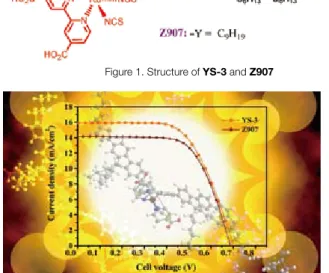
1. Toward optimization of oligothiophene antennas: new ruthenium sensitizers with excellent performance for dye-sensitized solar cells.
2. Through modification of metal nanoparticle surfaces to achieve the fabrication of highly efficient organic transistor/ memory devices.
Institute of Chemistry
886-2-2782-1889 886-2-2783-1237 http://www.chem.sinica.edu.tw
↑ Novel materials for high-performance dye-sensitized solar cells.
↑ Self-assembled arrays of single-walled metal– organic nanotubes.
↑ Personalized cancerous tissue membrane proteomics strategy.
Academia Sinica
Foreword
Research Projects
Study of the structure, dynamics and constitution of the Earth’s interior, crustal deformations, origin of earthquakes, hydrology and neotectonics of Taiwan, early history of the solar system, genesis and evolution of the continental crust, petrogenesis of magmatic rocks, paleo-environmental change in Asia.
Significant Research Achievements
Seismological studies include: Research on the rotational motion caused by far-field seismic waves; research on the great 2011 Tohoku earthquake in Japan including a quick waveform inversion for the slip distribution of the main shock and follow-up investigations of the source kinematic properties (Fig.1); development of an automatic system to provide real-time focal mechanism and ground motion estimations for earthquakes in Taiwan.The Manila trench is the convergent boundary wherein the Sunda plate subducts eastward underneath the Philippine Sea plate. The convergence rate of about 91 mm/yr in the NW direction at the northern tip of Luzon continuously decreases southward to 55 mm/yr north of Mindoro. The oblique convergence has resulted in the Philippine Fault (PHF), a primary left-lateral strike-slip fault with a fault length of about 1200 km. Using the 12-year survey-mode GPS data in Luzon and an elastic dislocation model, the inferred slip-deficit rate falls in the range of 22~40 mm/yr on the PHF and decreases from north to south. The slip deficit rates are close to the inferred long-term fault slip rates of 24-40 mm/yr, suggesting the PHF is fully locked. The Philippine fault is likely to consume most of accumulated strike-slip motion along the plate boundary. On the other hand, the thrust-slip motion is possibly taken up by seismic or aseismic fault slip on the Manila subduction zone. We use GPS data, trench parallel gravity anomaly and bathymetry to infer plate coupling along the Manila subduction zone (Fig.2). Aseismic sip is predominately at latitudes 14°-18°N. The partially locked fault zone near 15°-16.5°N may be associated with the subducted Scarborough Seamount wherein oceanic floor is highly fractured. The great subduction zone earthquake propagates beneath the Scarborough Seamount seems to be unlikely.
The new volcaniclastic studies indicated that the Tatun Volcanic Group (TVG) in metropolitan Taipei had at least 3 obvious eruptions approximately 20 kyrs-10 kyrs. Further, the youngest dome collapse eruption happened around 6 kyrs. The results strongly suggest that the Tatun volcano is a definitely active volcano. The airborne particles (mineral) were found on the surface of TVG. This key-note record will become an extreme and unique case to establish the paleo-wind and rain system in northern Taiwan.
In 2011, the application of in situ Hf isotope analysis on single zircons recently developed at IES has further produced substantial amounts of exciting published results on the crustal signatures
from the Central Asia Orogenic Belt in Mongolia and Russia and the genesis of jadeitite worldwide and gabbro from Emeishan in China.
The Ca isotopes were studied for a suite of differentiated meteorite clans and we have successfully identified for the first time a rare type of neutron rich Type IA supernova components present in the solar system. Studying the evolution of Cd in modern seawater by analyzing the Cd isotopes in seawater profile, the aerosals and the sinking particles collected at the SEATS in the South China Sea and the data suggested that the observed Cd isotopic fractionations were controlled by the aerosol inputs, instead of the commonly believed preferential uptake by phytoplankton in the surface water. Lastly, we have just started to analyze Fe, Zn, Cd and Mo isotopes in the leachates of samples from a gravity core in the Lake Baikal, in order to test if these stable isotopes can be used as environmental proxies to study the past climate changes in the Lake Baikal region.
Founded in 1982, the IES currently has 30 staff scientists and approximately 20 postdoctoral fellows and an engineering team that make up the main research workforce, with strong support provided by the administrative and logistic personnel. IES conducts research in two major disciplines: geophysics and geochemistry, for global as well as regional Taiwan studies.
Institute of Earth Sciences
886-2-2783-9910 886-2-2783-9871 http://www.earth.sinica.edu.tw
↑ Fig.1 Map view of spatial slip distribution of the 2011 Tohoku-Oki earthquake. The slip values are shown in the color scale indicated at the bottom. The vectors indicate slip directions. The red star is the hypocenter reported by the JMA. The hypocenter of March 9, 2011 M7.2 foreshock reported by USGS is presented by open blue star. Aftershocks occurred within 2 months after the main shock are shown by solid circles. The beach balls show the USGS W-phase focal mechanisms (Lee et al. 2011).
↑ Fig.2 Slip deficit rate and plate coupling ratio derived from GPS inversion (a) Black and blue vectors indicate GPS observed and predicted interseismic velocities with respect to the Sunda Plate. Error ellipses indicate 95% confidence intervals of GPS velocities. Color scale indicates slip deficit rate. (b) Black vectors show residuals of horizontal velocities in (a). Color scale indicates plate coupling ratio.
Division of Mathematics and Physical Sciences
Foreword
16
Institute of Information Science
886-2-2788-3799 886-2-2782-4814 http://www.iis.sinica.edu.tw
Research Projects
The mission of IIS is to conduct fundamental but high quality research in the area of information science, and to develop advanced application-driven systems that utilize and enhance cutting-edge technologies. Our research focuses on eight main categories that include Bioinformatics, Computer Systems, Data Management and Information Discovery, Multimedia Technology, Natural Language and Knowledge Processing, Network System and Service, Programming Languages and Formal methods, Theory and Algorithms.
Significant Research Achievements
1. Multiple Kernel Learning for Dimensionality Reduction: In solving complex visual learning tasks, adopting multiple descriptors
to more precisely characterize the data has been a feasible way for improving performance. The resulting data representations are typically high dimensional and assume diverse forms. Thus finding a way to transform them into a unified space of lower dimension generally facilitates the underlying tasks, such as object recognition or clustering. To this end, the proposed approach (termed as MKL-DR) generalizes the framework of multiple kernel learning for dimensionality reduction and distinguishes itself with the following three main contributions. First, our method provides the convenience of using diverse image descriptors to describe useful characteristics of various aspects about the underlying data. Second, it extends a broad set of existing dimensionality reduction techniques to consider multiple kernel learning and consequently improves their effectiveness. Third, by focusing on the techniques pertaining to dimensionality reduction, the formulation introduces a new class of applications with the multiple kernel learning framework to address not only the supervised learning problems but also the unsupervised and semisupervised ones.
2. Design Strategies for Improving System Performance of Human Computation Systems: We investigate an emerging human
computation system, called Games with a Purpose (GWAP), which outsources certain steps of the computational process to humans in a form of computer games and solve the problems that are intuitive to humans but computer technologies cannot solve completely so far. We posit that, in order to collect human intelligence more efficiently, GWAP systems must be designed and played with strategies. We have developed a set of design strategies to improve the performance of GWAP systems in terms of efficiency and data quality and verified the designed strategies in real-world GWAP systems. In addition to publishing research papers in the top international conferences and journals, we have released the source codes and the experiment dataset to facilitate the development and research of future GWAP systems.
3. Cloud Storage and Data Management: With the growth of data size in many
application domains, the needs for data and storage management systems are continuously increasing. We develop a data management system for cloud, named SQLMR. SQLMR compiles SQL queries to a sequence of MapReduce jobs. Existing SQL-based applications are compatible seamlessly with SQLMR and users can manage Tera to PataByte scale of data with SQL queries instead of writing MapReduce codes. We also devise a number of optimization techniques to improve the performance of SQLMR. The experiment results demonstrate both performance and scalability advantage of SQLMR compared to MySQL and two NoSQL data processing systems, Hive and HadoopDB. In addition, we develop a distributed file system called GFS. GFS allows an user to deploy and harness distributed storage without any OS kernel changes, special privileges or attention from the system administrator. Such property allows an end user to rapidly deploy GFS in a Cloud/Grid and access data transparently and securely.
The Institute of Information Science (IIS) was formally established in September 1982 after a five-year preparation period and is one of the eleven institutes and research centers within the Division of Mathematics and Physical Sciences. The IIS presently has 37 full-time research fellows, 29 postdoctoral research fellows and over 300 full-time information technology specialists and part-time research assistants supporting research and development in information science and engineering. These are exciting and challenging times for IT research and the IT industry in Taiwan. Many emerging technologies and opportunities are on the horizon. The IIS, in working with the newly established CITI, looks forward to making concerted efforts in leading the fundamental and practical research in this important field. All members of the IIS prescribe to the motto, “Every job is a self-portrait of those who did it; autograph your work with quality,” emphasizing excellence and synergistic teamwork effort.
↑A snapshot of the ESP Lite game.
↑ System Architecture, Mannagement Tool Interface and Performance Comparison of SQLMR
↑ Performing multiple kernel learning (MKL) for dimensionality reduction can transform the various feature spaces of high dimensions into a unified space of lower dimensions.
Academia Sinica
Foreword
In July 1980, during the 14th Convocation of Academicians of Academia Sinica, a group of twenty-one academicians,
including Professors Yuan-Shih Chow, George C. Tiao and Ching Chun Li, drafted a resolution calling for the establishment of an Institute of Statistics. On July 1, 1982, the Preparatory Office was founded with Dr. Min-Te Chao as the director. Five years later, on August 3, 1987, the Institute of Statistical Science was officially established and Dr. Chao served as the founding director from 1987 to 1993. The successive directors were Dr. Ching-Zong Wei (August 1993-August 1999), Dr. Chen-Hsin Chen (August 1999- December 2002) and Dr. Ching-Shui Cheng (January 2003-December 2005). Since January 2006, Dr. Gwo Dong Lin served as acting director from January to June 2006. Dr. Ker-Chau Li has assumed the directorship since July 2006.
Institute of Statistical Science
Research Projects
The Institute of Statistical Science conducts fundamental research related to statistics and probability. The Institute currently has 38 research fellows, 26 postdoctoral fellows and approximately 61 research assistants. Major research areas include probability and its applications, mathematical statistics, biostatistics, bioinformatics and genetics, functional brain images, educational and behavioral statistics, mathematical finance, time series, spatial and environmental statistics, experimental designs, statistical machine learning, generalized association plots (GAP) and social networks.
Significant Research Achievements
In the past 3 years, researchers of the institute have published some 174 articles in SCI journals. In addition, 228 other articles and monographs have been published.The international journal Statistica Sinica published by the institute has won the Outstanding Journal Award conferred by NSC for 8 successive years and has become one of the major statistical journals in the world.
886-2-2783-5611 886-2-2783-1523 http://www.stat.sinica.edu.tw 2 4 6 8 10 Y β2x ' β1x
↑ The institute hosted the Joint Meeting of the 2011 Taipei International Statistical Symposium and 7th Conference of the Asian Regional Section
of the IASC (Joint2011) from December 16th to 19th, 2011. Joint2011 attracted more than 500 participants from 27 countries who delivered more than 250 presentations. This is by far the largest and most successful statistical conference ever held in Taiwan.
↑ Sites of differential CNA found in EGFR-activating mutation status comparisons. The sites of probe-blocks displaying the differential CNA in three comparisons, the EGFR-activating mutant group versus the wild-type group, the L858R mutant group versus the EGFR wild-type group and the exon-19 in-frame deletion group versus EGFR wild-type group are shown on the right side of each chromosome ideogram. A zoom-in version of chromosome 7p is given on the right, along with the locations of some notable genes.
Division of Mathematics and Physical Sciences
Foreword
18
Research Projects
The Institute of Atomic and Molecular Sciences (IAMS) was established to be an advanced institution for fundamental research related to atomic and molecular sciences. The ultimate goal is to improve our understanding of the chemical and physical principles relevant to the development of applied sciences, such as biophysical analysis, material science, energy research and laser technology. At present, there are thirty-nine principal investigators (including 9 adjunct PIs) in four research groups: 1.Chemical Dynamics and Spectroscopy, 2.Advanced Materials and Surface Science, 3.Biophysics and Bio-analytical Technology and 4.Atomic Physics and Optical Science.
Significant Research Achievements
IAMS has made significant progress in the following areas during the last few years:1. Fabricated nanomaterials for energy applications in fuel cells and solar cells.
2. Proved fluorescent nanodiamonds FND is an ideal probe for long-term tracking and imaging in vivo with good temporal and spatial resolution.
3. Using a fluorescent dye that binds to the G-quadruplex structure of human telomeric structure, a common feature of several different cancers, a microarray for detecting cancerous cells was developed and manufactured.
4. Precisely measured the photo-dissociation cross sections of ClOOCl by using molecule-beam technique to clarify ozone degradation models.
5. Using the crossed-molecule beam technique to discover that exciting the C-H stretching mode in the F+CHD3 reaction leads
to unexpected slow down producing of the DF+CHD2 reaction.
6. Significant steric control was demonstrated in the chemical reaction of Cl atom with CH stretch-excited CHD3 molecules.
7. By manipulating the phase and amplitude of the harmonics of a laser beam instantaneous optical fields of various shapes were produced by Fourier synthesis of a series of optical harmonics. 8. Developed a dual function biochip that not only effectively
captures bacteria in human blood but also enhances the Raman signals of the bacteria, allowing their analysis by surface enhanced Raman spectroscopy (SERS).
↑ A dual function biochip was developed that can not only effectively capture bacteria in human blood but also enhance the Raman signals of the bacteria, allowing for their analysis by surface enhanced Raman spectroscopy (SERS). This new technology was reported in the 15-November-2011 issue of Nature Communications (DOI: 10.1038/ ncomms1546).
↑ Steric Control of the Cl + CHD3 Reaction: experimental setup and CD3
product images detected as the function of the IR laser polarization direction [published in Science 331, 900-903 (2011)].
Institute of Atomic and Molecular Sciences
886-2-2362-0212 886-2-2362-0200 http://www.iams.sinica.edu.tw
In July 1982 during the 15th Convocation of Academia Sinica, fifteen academicians led by Dr. Y. T. Lee recommended
that an institute of atomic and molecular sciences be founded. After the proposal was approved, a preparatory office was inaugurated on September 23, 1982 to lay the foundation for the new institute. An Advisory Board, headed by Dr. Y. T. Lee, was organized to provide guidance for its future development. On December 11, 1982 Dr. C. T. Chang was appointed Director of the Preparatory Office. Later, in July 1993, Dr. S. H. Lin replaced him as Director of the Preparatory Office. In April 1995 the Institute was formally established and Dr. S. H. Lin became the first Director. In October of 2001, Dr. K. Liu took the helm. From October 2004 to December 2010, Dr. Y. L. Wang assumed the directorship. Since January 2011, Dr. M. Y. Chou became the sixth director.
Academia Sinica
Foreword
The Institute of Astronomy and Astrophysics (ASIAA) Preparatory Office was established in 1993, with Frank H. Shu chairing the Advisory Panel and with Typhoon Lee as the first director. Succeeding directors of the Preparatory Office are Dr. Chi Yuan, Dr. Kwok-Yung Lo, Dr. Sun Kwok and Dr. Paul T. P. Ho. ASIAA has become the full institute from June 1, 2010, with Dr. Paul T. P. Ho as the first and the current Director.
Institute of Astronomy and Astrophysics
Research Projects
Research topics carried out at the ASIAA range from solar system studies to cosmology, with our staff utilizing many of the frontier ground-based and space-borne observing facilities.
Significant Research Achievements
1. The Submillimeter Array (SMA)
The SMA is a joint project between the Smithsonian Astrophysical Observatory (SAO) and ASIAA. Two of the eight 6-meter radio telescopes were built by the ASIAA in collaboration with universities and industry in Taiwan. Dedicated on Mauna Kea, Hawaii in November 2003, SMA is the first submillimeter array in the world. As of Dec 2011, some 380 papers have been published, about 170 of which have Taiwanese co-authors.
2. The Taiwan-America Occultation Survey (TAOS) and Trans-Neptunian Automated Occultation Survey (TAOS-2)
The TAOS consists of four 0.5-meter optical telescopes located on Lulin Mountain in Taiwan. They automatically monitor 1,000 stars every clear night to search for Trans-Neptunian objects (TNOs) through stellar occultations. By studying the TNOs, we can better understand the early history of our solar system. The ASIAA has also started the TAOS-2 project, to be sited in San Pedro de Martir Observatory in Mexico, to improve the sensitivity by 100 times. This will consist of three 1.3-meter telescopes which will be installed starting in 2012.
3. The Yuan Tseh Lee Array for Microwave Background Anisotropy (AMiBA)
The AMiBA is a platform-mounted interferometer sited on Mauna Loa in Hawaii to measure the properties of the cosmic microwave background and to detect clusters of galaxies at high redshift. It is designed, constructed and operated by the ASIAA, in major collaboration with National Taiwan University. The initial 7-element interferometer was dedicated in October 2006 and science operations have started since then. An expansion to the 13-element configuration was completed in 2009. Scientific studies continue to study the dark matter distribution in distant clusters of galaxies via the Sunyaev-Zeldovich Effect.
4. The Optical and Infrared (OIR) Instrumentation Program
To support follow-up observations of high-redshift clusters, the ASIAA negotiated for the observing time on international optical and infrared telescopes from 2003. Through participating in the
development of the Wide Field Infrared Camera (WIRCam) on CFHT and the HyperSuprime Cam (HSC) project on the Subaru Telescope, Taiwan has gained access to CFHT and the Subaru Telescope. ASIAA continues to collaborate in the development of the next generation instruments on these telescopes, the Infrared Spectropolarimeter (SPIRou) on CFHT and the Prime Focus Spectrograph (PFS) on Subaru Telescope.
5. Theoretical Institute for Advanced Research in Astrophysics (TIARA)
TIARA was established in 2004 to provide an integrated program of research and education in theoretical astrophysics. Forefront theoretical research is carried out at TIARA in a cooperative effort with the National Tsing Hua University. TIARA has organized a winter/summer school and 2-4 workshops or topical programs each year and facilitated interactions among researchers in the East Asian region via its active visitors program. Together with the forefront observational facilities being developed by ASIAA, the TIARA programs stimulate interest in astronomy by graduate students at universities and academic institutions, thus building and maintaining the human resources for future initiatives in theoretical and observational astronomy.
6. Atacama Large Millimeter/submillimeter Array - Taiwan (ALMA-T)
The ALMA, the largest ground based astronomical telescope ever built, is an international project of Europe, North America and East Asia. Taiwan has been invited to participate both by East Asia and North America. The array, composed of 66 high precision telescopes operating as an interferometer, is under construction in the Atacama desert in Chile and is scheduled to start the full operation in 2013. Early Science already begins in 2011. The ASIAA operates the East Asian Front End Integration Center, which is assembling and testing 22 of the front end receiver systems.
7. Submillimeter Very Long Baseline Interferometer (submm VLBI)
Submm VLBI will combine the SMA and ALMA and add a third station for intercontinental baselines. A promising site has been found in Greenland. Collaborating with SAO, the ASIAA has been awarded to take over and redeploy the ALMA-NA prototype 12m telescope. The scientific target is to prove directly the existence of black hole by imaging the shadow of a Super Massive Black Hole (SMBH) at the center of an Active Galactic Nucleus. This Greenland telescope will also pursue frontier science in the THz frequencies.
886-2-3365-2200 886-2-2367-7849 http://www.asiaa.sinica.edu.tw
↑ Two of the eight elements of the SMA were built by Taiwan. (Picture credit: ↑ Eight 12m antennas of ALMA. (Picture credit: The Joint ALMA
Observatory)
↑ AMiBA has been upgraded to its new 13-element 1.2m reflector configuration in 2009 and resumed operations on Mauna Loa in Hawaii. (Picture credit:
20
Division of Mathematics and Physical Sciences
Foreword
Research Center for Applied Sciences
886-2-2652-5200 886-2-2782-6672 http://www.rcas.sinica.edu.tw
Research Projects
The center will pursue fundamental and pioneering research with potential for scientific and engineering applications in collaboration with industries, government institutions and universities. Currently, “nanotechnology” is the major research area. The subjects of interest include: bio sensors and tags, nano electronic and photonic devices, nanometrology, multiscale mechanics, biomedical mechanics, electronic structure calculations, electron transport, near- and far-filed optics simulation, etc.
Significant Research Achievements
1. The Nano-biotechnology Group
We have utilized nanocontact printing and super-resolution microscopy to investigate the behavior of cells on the protein nanoarrays. It was found that the cell behavior was governed by the diameter of the protein nanoarrays and the density of focal adhesion molecules increases as the diameter of the protein nanoarrays decreases. It was also found that there exists a characteristic distance between focal adhesion molecules, vinculin, which was measured to be around 50 nm.
2. The Mechanics and Engineering Science Group
The three-dimensional morphology of bulk heterojunction polymer solar cell is the key toward enhancing the efficiency of solar cells. However, experimental characterization of the morphology of the bulk heterojunction layer is never trivial. We constructed a multiscale molecular simulation framework combining coarse-grained molecular dynamics simulation and spatial-discretization scheme to estimate relevant morphological properties such as specific interfacial area. Our results for the P3HT:PCBM blends are in excellent agreements with available experimental results. Hence, the molecular simulation framework we developed is a powerful tool in aiding the development of novel polymer solar cells.
3. The Optoelectronics and Advanced Materials Group
The development of Type-II GaSb/GaAs Nano-structure optoelectric devices on the work of novel optoelectronic devices, we have already demonstrated the device applications of type-II GaSb/GaAs quantum dots (QDs) in (a) room-temperature operation light-emitting diodes, (b) microdisk lasers and (c) high-temperature operation QD infrared photodetectors. Since dot-to-ring transition is observed with the presence of As atoms, ring formation through the control of background As/Sb flux ratios has also been established. GaSb quantum rings (QRs) have exhibited better optical characteristics than QDs. The results would be the room-temperature operation GaSb QR LEDs and QR solar cells with better device performances. Therefore, besides the light-emitting devices and detectors based on the GaSb nano-structures, GaSb QR or quantum-well (QW) solar cells can be an alternate application for this material system.
4. The Advanced Computation and Modeling Group
We have made advances in the framework of the time-dependent density-functional theory (TDDFT). We have established a relation between the scalar and tensor exchange-correlation (xc) kernels of TDDFT which facilitates construction of nonlocal xc kernels accurately accounting for many-body effects. We have included the full dielectric screening and band-structure effects in the calculation of low-energy photoemission in solids. We have also worked out the high-frequency (antiadiabatic) limit of xc kernel of an arbitrary quantum-mechanical system, which is complementary to conventionally used adiabatic regime. We have further developed a method based on meta-GGA exchange-correlation (xc) functional which is simple and efficient to handle the excitonic effect in semiconductors.
The Institute of Applied Science and Engineering was inaugurated in June 1999. In 2003, Academia Sinica passed a by-law for establishing research centers. In February 2004, the Institute was renamed as Research Center for Applied Sciences (RCAS). Currently, the RCAS is an interdisciplinary research center, containing four research groups: Nano biotechnology, Optoelectronics, Mechanics & Engineering Science and Advanced Computation & Modeling. The center will continue to hire prominent research fellows, set up core facilities and carry out interdisciplinary research projects.
↑ Publications: V.U.Nazarov and G. Vignale, Phys. Rev. Lett. 107, 216402 (2011).
↑ The formation of focal adhesion o n m i c r o / n a n o p a t t e r n e d substrate was investigated by super-resolution microscopy.
↑ Publications: Cheng-Kuang Lee, Chun-Wei Pao*, Chih-Wei Chu (2011), "Multiscale molecular simulations of the nanoscale morphologies of P3HT:PCBM blends for bulk heterojunction organic photovoltaic cells", Energy & Environmental Science 4, 4124.
↑ The AFM and STM images of GaSb/GaAs quantum dots quantum rings.
Academia Sinica
Foreword
Since the rapid economic development in the 1970’s, the environment in Taiwan has deteriorated severely. Per unit area emissions of air pollutants in Taiwan are now among the highest in the world. Air and water pollutants are health hazards and can adversely affect the entire ecosystem. In addition, air pollutants and land use changes can perturb regional climate significantly. The environmental impacts and scientific questions involved are multi-disciplinary, region-specific and complex. In order to effectively address these questions, Academia Sinica initiated an Environmental Change Research Project hosted by the Institute of Earth Sciences in November 1999. After about four years of development, the Research Center for Environmental Changes (RCEC) was officially established on January 1, 2004.
Research Center for Environmental Changes
Research Projects
The major research projects of the RCEC are focused on atmospheric chemistry, air quality, biogeochemical cycles of fresh water systems in Taiwan and surrounding oceans, water resources and regional climate changes.
Significant Research Achievements
1. Changes of Extreme Weather in a Warming Globe
Scientists from the Research Center for Environmental Changes successfully quantify the relation between precipitation extremes and global temperature changes. The top 10% bin of precipitation intensity increases by about 110% for each degree increase in global temperature, while 30%-60% bins decrease by about 20%, about one order of magnitude greater than results from the latest climate models. Global warming has a greater effect on Taiwan’s extreme rain falls. The top 10% bin of rain intensity almost doubled in the last 45 years and will keep increasing with temperature, resulting in more floods. Droughts due to reduced light rain will also increase. New national strategies for land-use, flood control and water resource management are imperative.
2. Urban Ozone Formation and Ozone Trends in East Asia
An observation constrained 3-dimensional photochemical-transport model should be able to use the measurements at Mauna Loa to “invert-model” the trends of background ozone in Asia. 3-dimensional OBM plots of Ox (O3+NO2) vs. initial
VOC and NOx show that the concentration of O3+NO2 will
decrease significantly when VOC is reduced. When NOx is
reduced, O3 will INCREASE. Therefore, we conclude that O3
levels in southern Taiwan are VOC-limited, but more data are needed.
3. Enhanced burial of fossil organics in the Okinawa Trough since the LGM: Implying humid climate in Taiwan
Sea level rise and/or cotemporaneous climate change may account for substantial changes in the burial of terrestrial organic carbon in the Okinawa Trough, of which fossil organic matter is an important component. Sedimentary rock erosion from the highlands of Taiwan is the most likely source of the FOC. A wetter climate with higher runoff and bedrock incision on land are inferred for the Holocene. This is the first report of global climate-driven variations in the relative burial rates of fossil and modern organics, thus providing new insight into the carbon biogeochemical cycle over the glacial-interglacial timescale.
886-2-2653-9885 886-2-2783-3584 http://www.rcec.sinica.edu.tw
↑ 3-dimensional depiction of the relationship between ozone and its precursors
↑ Enhanced burial of fossil organics in Okinawa Trough since LGM: Implying humid climate in Taiwan
Division of Mathematics and Physical Sciences
Foreword
22
Research Center for Information Technology Innovation
886-2-2787-2300 886-2-2787-2315 http://www.citi.sinica.edu.tw
Research Projects
CITI has four thematic centers: Digital Content & Technology Center, Grid & Scientific Computing Center, Taiwan Information Security Center, Intelligent & Ubiquitous Computing Center.
CITI also supports several mission-oriented projects, including Open Source Software Foundry (OSSF), Research Program on Open Content and Open Data-Creative Commons Taiwan, PLASH for location-based services and Open ID.
Significant Research Achievements
The Digital Content and Technology Center is positioned to creatively promote the national digital archives and to facilitate the development of Taiwan’s culture and society in digital archives. The Grid and Scientific Computing Center is one of leading high performance computing and communication centers in Taiwan and provides advanced and progressive grid computing services to scientists from various domains and countries in the Asia-Pacific region. The Taiwan Information Security Center integrates domestic security resources of universities/research institutes and is positioned to develop cutting-edge technology to sustain secure computing and counter rampant cyber-crime in the interconnected world. The establishment of the Intelligent & Ubiquitous Computing Center is motivated by the fast increasing demand for intelligent and ubiquitous computing. This thematic center is expected to conduct pioneering research on cloud computing, wireless networks, multimedia content processing and streaming, mobile data mining and embedded system, as well as to promote the collaborations between industrial and academic organizations. Research accomplishments of research fellows in CITI have been recognized by several important awards, including Academic Award from MOE, Distinguished Research Award from NSC, Champion in major technical contests and best paper awards from prestigious international conferences.
By conducting pioneering research work in information technology, CITI promotes collaborations between academic and industrial organizations and ultimately provides valuable research achievements to our society.
The Research Center for Information Technology Innovation (CITI) at Academia Sinica was founded in February 2007 to integrate the research and development activities in information technologies among various organizations in Academia Sinica and also to further promote IT-related multi-disciplinary research.
Academia Sinica
Foreword
Division of Life Sciences
The forerunner of the Institute of Plant and Microbial Biology was the Natural History Museum of Academia Sinica, founded in Nanking in 1929. In 1934, the Natural History Museum was renamed the Institute of Botany and Zoology. In 1962, the Institute of Botany was formally reinaugurated in Taipei, with Dr. Hsien-Wen Li as its Director. After Dr. Li's retirement in 1972, succeeding Directors included: Drs. Tsung-Teh Kuo, Hong-Pang Wu, Ching-San Chen, Chang- Hung Chou, Shang-Fa Yang, Jei-Fu Shaw, Tuan-hua David Ho and Na-Sheng Lin. The current Director is Dr. Anthony Hwoonchung Huang. The institute’s name was changed to the Institute of Plant and Microbial Biology in May 2005.
Research Projects
The research work at the Institute is mostly basic in nature; however, some applied research is also conducted, including agriculture and biotechnology.
In light of the importance of multidisciplinary approaches in modern life science research, the research in the Institute of Plant and Microbial Biology is organized into two major intellectual foci:
1. Mechanisms of Plant Functioning 2. Plant-Microbial Interactions
The former research area can be divided into the emphases Arabidopsis Genetics and Development, Biochemistry and Cell Biology, Bioresources and Cereal Genomics.
These focused research programs will not only address challenging problems in plants, but also allow a proper balance between basic research and the development of potential biotech applications. Ultimately, all the research efforts in the future will be centered on the main theme of “Discovery, Utilization and Preservation of Unique Plant Resources in Taiwan”.
Currently, there are 27 PIs, 6 Research Specialists, 32 administrators and technicians, with a total staff of around 300 (including postdoctoral fellows, graduate students and research assistants). The PIs engage in a diverse spectrum of research projects mainly supported by Academia Sinica, National Science Council and the Council of Agriculture.
Significant Research Achievements
More than a decade ago, IPMB fellows made landmark scientific discoveries in rice breeding and genomics, regeneration via tissue cultures, virus satellite RNA and microbial circadian rhythm. Recently, several tremendous achievements in biologically significant issues such as “Arabidopsis circadian clock”, “Ubiquitin/26S proteasome”, “RNA long-distance trafficking”, “Viral protein trafficking” and “Agrobacterium tumefaciens type VI secretion membrane protein” have been addressed by our colleagues and published in high-tier journals. In addition, the Institute has been granted many patents based on the research discoveries. Botanical Studies, formerly Botanical Bulletin of Academia Sinica, an international journal, published by the Institute of Plant and Microbial Biology and co-published by the Research Center for Biodiversity and Agricultural Biotechnology Research Center, has been recognized by the National Science Council fifteenth times as one of the top three international journals published in Taiwan.
During the past 5 years, IPMB has sponsored major international symposia and other high-profile seminars. In November 7-9, 2011, IPMB hosted a major International Symposium on Functional Rice Genomics with over 500 attendees from 17 different countries.
In addition to conducting research and education, IPMB has been actively engaging in extension of knowledge to the Taiwan community. We have been working closely with the Council of Agriculture, Forestry Bureau and regional farm commodity boards on many practical projects, including rice germplasm enhancement, reforestation and disease prevention and extermination. We have contributed our knowledge to the world community as well. For example, IPMB has assisted the planting of disease-resistant banana varieties in Uganda, as reported by Nature News in 2010 and CNN News in 2011.
Institute of Plant and Microbial Biology
886-2-2789-9590 886-2-2782-7954 http://ipmb.sinica.edu.tw
↑ A plant virus hitches a ride to cross the cell boundary
↑ The defective proteasome but not substrate recognition function is responsible for the null phenotypes of the Arabidopsis proteasome subunit RPN10
↑ The 9th International Symposium of Rice Functional Genomics:
The International Rice Functional Genomics Meeting is one of the world’s biggest and most important rice genome research conferences. The 9th meeting was hosted by the Institute of
Plant and Microbial Biology, Academia Sinica at November 7-9, 2011. More than 500 attendees from 17 countries participated this important event.