
狄更斯狂潮:論維多利亞時期狄更斯廣受喜愛之原因 - 政大學術集成
74
0
0
全文
(2) 立. 政 治 大. ‧. ‧ 國. 學. n. er. io. sit. y. Nat. al. Ch. engchi. i n U. v.
(3) Dickensian Cult: The Popularity of Dickens in the Victorian Age. A Master Thesis Presented to Department of English National Chengchi University. 立. 政 治 大. ‧. ‧ 國. 學 er. io. sit. y. Nat. al. n. In Partial Fulfillment v i of theC Requirements for thenDegree of U h eMaster i n g cofhArts. by Kuo Hui-Ching June 2012. i.
(4) 立. 政 治 大. ‧. ‧ 國. 學. n. er. io. sit. y. Nat. al. Ch. engchi. i n U. v.
(5) 立. 政 治 大. ‧. ‧ 國. 學. n. er. io. sit. y. Nat. al. Ch. engchi. i n U. v.
(6) 立. 政 治 大. ‧. ‧ 國. 學. n. er. io. sit. y. Nat. al. Ch. engchi. i n U. v.
(7) Acknowledgement. I owe many thanks to those who constantly support me through this task, which is a significant milestone in my life. Professor Chen Chao-Ming, with his friendly care and teaching, encourages me to go through all the hindrances occurred within this year. I’m very glad to have him as my teacher, who is not only a thesis supervisor but a mentor, stimulating me to reflect on both my thesis and other issues deeply. I. 政 治 大 I’m always refreshed and inspired by his energetic, humorous, and wise life 立. especially thank him for being very patient with my growth, for being a student of his,. philosophy. My gratitude also goes to the committee members, including Professor. ‧ 國. 學. Yang Li-Min, Professor Chen Yin-Yi, and Professor Lin Mao-Sung; for without their. ‧. advises I can never improve this much.. sit. y. Nat. I would like to thank my friends for accompanying me for these three years as. io. er. well, especially Joyce, Lilith, and Violette. Having you guys to share everything in my life is such a wonderful thing that I believe the wonderful memories we have will. n. al. be cherished for life long.. Ch. engchi. i n U. v. I owe greatly to my family. Thank you for supporting me to chase after my dream, giving me comforts and necessary aids whenever I’m in need. I hope what I have accomplished will make you feel proud, that finally, finally I reach the expectations laid upon our shoulders. Last but not the least; I give my special thanks to Adam Tseng, who is always with my side. Great thanks for your willing to share the burdens of mine, great thanks for your willing to endure my tempers when I feel upset, and great thanks for you to trust in my ability to go through the challenges. Most important of all, great, great thanks for bringing happiness to me, unselfishly.. iii.
(8) Table of Contents Acknowledgement…………………………………………………………..……….iii 碩士論文提要…………………………………………….……………….…………v Abstract………………………………..…………………………………..…………vii Chapter One Dickensian Phenomena…………………………….…………….………...1 Two Orali and Intertextuality……………………………..….….……..………13 Three Situational Thinking and Modern Consciousness………..………..…….25 Four Aesthetic Value and Functional Value…………..…….….…….….……..37 Five Conclusion………………………………………………….……….…….49 Appendixes A. The Original Ending of Great Expectation…………….……………….……..57. 政 治 大. B. The Manuscript of Great Expectations………………….…….……….………58 Works Cited………………………………………………………...……….……….62. 立. ‧. ‧ 國. 學. n. er. io. sit. y. Nat. al. Ch. engchi. iv. i n U. v.
(9) 國立政治大學英國語文學系碩士班 碩士論文提要 論文名稱:狄更斯狂潮:論維多利亞時期狄更斯廣受喜愛之原因 指導教授:陳超明教授 研究生:郭惠菁 論文提要內容:. 政 治 大 在閱覽有關狄更斯的研究的過程中,我發現大多數的學者通常都很有默契的 立. ‧ 國. 學. 迴避一個事實:狄更斯不但是個名作家,同時也是個成就顯著的表演者。其中只 有米勒(Melvin H. Miller)堅稱狄更斯的雙領域成就其實是缺一不可的。. ‧. 然而米勒的發言並未引起其他學者的注意,即便後來柯林斯(Philip Collins). sit. y. Nat. 稍稍提到狄更斯雙領域的關聯,多數學者依舊保持沉默。但我認為柯林斯的論點. io. er. 實在太過草率,所以我轉向昂格(W. J. Ong)的口述理論,希望能藉由昂格的理論. al. 發掘狄更斯雙成就的關聯。. n. v i n Ch 一如我所預期,狄更斯有意圖地結合口述傳統與文學性:一方面,狄更斯小 engchi U. 說中的口述傳統幫助讀者更快適應新的故事表現方式;另一方面,文字所帶來的 抽象思考形成了狄更斯所有作品的架構主幹。最後,狄更斯有意圖地演出他的作 品,這三者的結合便使狄更斯能夠隨心所欲地游走在文字及口語表現之中。 接著,費娜根(Ruth Finnegan)的口述理論提醒了我所有文本的功能性的重要。 我有點驚訝的發現狄更斯對於口說力量的強烈信仰和世界上其他地方的口語文 化不謀而合。藉著費娜根的協助,我指出狄更斯作品中的高度互文性是造成維多 利亞大眾無從意識到狄更斯所做的偉大嘗試,也就是試圖結合口述性及文學性。 最後,藉著福洛克(Deborah Vlock)的觀點「狄更斯的小說能夠視覺地、口語地、. v.
(10) 及敘述地被表現」,我相當有信心地作結:狄更斯結合口述性及文學性的意圖正 是他深受維多利亞大眾喜愛的主因。. 關鍵字:狄更斯、口述性、文學性、情境思考、抽象思考、流行. 立. 政 治 大. ‧. ‧ 國. 學. n. er. io. sit. y. Nat. al. Ch. engchi. vi. i n U. v.
(11) Abstract In reviewing papers related to Charles Dickens, I find that scholars tend to avoid the truth that Dickens is not only a famous writer but a very distinguished performer; only Melvin H. Miller, a contemporary of Dickens, asserts that Dickens’s two careers are indispensible to each other. After Miller’s remarks there’s a long-lasting silence until Philip Collins slightly touches this issue. Yet, not very satisfied with Collins’s hasty judges, I turn to W. J. Ong’s oral theory in order to figure out what is the connection between Dickens’s. 政 治 大 As I expected, Dickens’s 立 writing is a combination of orality and literacy: on the. writing career and speaking achievement.. ‧ 國. 學. one hand, orality in Dickens’s novels familiarizes the reader with the new style of story-telling; on the other hand, modern consciousness, the product of writing. ‧. technology, frames Dickens’s texts with logic and lineal thinking. Dickens’s intention. sit. y. Nat. to enact his texts finally results in his ability to freely present a text with either written. n. al. er. io. words or spoken words.. i n U. v. Later, Ruth Finnegan’s theory reminds me of the significance of functional value. Ch. engchi. of texts. I’m kind of surprised to find that Dickens’s strong belief in oral power is very identical with other oral people’s in the globe. With Finnegan’s great help, I’m encouraged to conclude that it is the intertexuality that makes the Victorian unaware of Dickens’s combining his writing, acting, and speaking. Finally, Deborah Vlock’s remark that Dickens’s novels are “visually, vocally, and narratively written” strengthens my confidence in concluding that the combination of orality and literaty is the secret Dickens’s popularity. Keywords: Charles Dickens, Orality, Literacy, Situational Thinking, Modern Consciousness, Popularity. vii.
(12) 立. 政 治 大. ‧. ‧ 國. 學. n. er. io. sit. y. Nat. al. Ch. engchi. i n U. v.
(13) Chapter One Dickensian Phenomena. “[Charles Dickens] was a publishing phenomenon who cuts across the usual lines of literary decorum.” –Charles Buller, London and Westminster Review. 政 治 大 soon topped himself on many writers and became one of the Victorian best sellers. 立. Since Charles Dickens published his first novel The Pickwick Papers in 1836, he. Publishers always took the advantages of Charles Dickens’s serial writings. It was. ‧ 國. 學. pretty common that “up to 24 pages of closely packed and tightly printed. ‧. advertisements” were inserted in the author’s thirty-paged text, making the famous. sit. y. Nat. green little book a collection of advertisements (Fenstermaker, 11).. io. the next year,. er. Quite amazed at Dickens’s commercial effects, Abraham Hayward declared in. al. n. v i n The popularity of C this writer is one of theUmost remarkable literary hengchi. phenomena of recent times…for it has been fairly earned without resorting to any of the means by which most other writers have succeeded in attracting the attention of their contemporaries. (Rodensky, 592) Later Hayward stated in Quarterly Review again, that “…a new and decidedly original genius had sprung up…that, in his own peculiar walk, Mr. Dickens is not simply the most distinguished, but the first” (Rodensky, 592). Literally the Victorian society was overwhelmed with an indescribable craze for Charles Dickens’s growing popularity. However, G. H. Lewes was not as indiscreet as Hayward was. Seeing the readers 1.
(14) were suddenly all in favor of Charles Dickens, Lewes doubted whether the author’s works would be able to endure the market’s volatile taste: It is a difficult thing to distinguish between popularity and fame…This is ever the effect of popularity without true fame: the adventitious circumstances by which a man attains popularity are no longer in action in a succeeding age; and if his popularity in the main depended on them, he is naturally forgotten. (Rodensky, 1) Nevertheless, instead of being malicious, Lewes was indeed expecting for someone to. 政 治 大 A series of fervent debates were soon started by Lewes’ question. Among 立. defend Charles Dickens’s genius with solid argument.. numerous critics, Charles Buller provided the most persuasive answer. She argued, it. ‧ 國. 學. is Charles Dickens’s alliance with the common and his care for the poor that wins him. ‧. a tremendous readership. “[Charles Dickens] is a publishing phenomenon who cuts. sit. y. Nat. across the usual lines of literary decorum1,” she emphasized. Since then all of the. io. answer to Lewes’ query.. er. disagreements were conciliated, and Buller’s argument seemed to be the standardized. al. n. v i n Interestingly, Buller’s remarksC seemed to have a stronger h e n g c h i U influence than she. expected. As Charles Dickens was constantly invited to give speeches, the audience was very fond of him. After attending the author’s charity speech, another observer reported with excitement: “it was not mere applause that followed, but a passionate outburst of love for the man” (Collins, xxii). Furthermore, when Charles Dickens adventured to be a charged public reader, which was a daring “experiment”, proofs show that Dickens was very welcomed. A reviewer remarked with over-joy, after. 1. It is Dickens’s canceling the dichotomy of high art and low art that Buller amazes at. The crossing brings several side effects, especially releasing literature to the middle class and drawing a huge amount of readers from all classes. To Buller, Dickensian phenomenon almost equals to elevate vulgarism into an art form. 2.
(15) listening to Dickens’s public reading: An immense chord of feeling has been touched and sounded by Charles Dickens. In thirty years of literary life…he has created immortal works of art and has won in equal measure the homage and the love of his generation…It is a better world because of him. (Collins, liii) Again, Charles Dickens was adored by people to an unimagined degree; yet the critics remain silent at this time. It seemed that after Buller’s remarks guaranteed the author’s importance in the circle of literature, Charles Dickens’s popularity was so. 政 治 大 Nonetheless, it is this silence that baffles me: if Charles Dickens’s “cut[ting] 立. well-explained that the audience’s welcome for him was taken for granted.. across the usual lines of literary decorum” is a phenomena worth studying, how could. ‧ 國. 學. the author’s unusual attempt to cut the line between literature and public performance. ‧. lead to no discussion? Since her viewpoint is limited in the field of literature, Buller’s. sit. y. Nat. argument is apparently unsuitable to this question.. io. er. I suppose, the Victorian people must be charmed with a spell that makes them unaware of the significance of Charles Dickens’s daring breakthrough. Hence I expect. al. n. v i n Cthat myself to be a second Lewes, “howU Charles Dickens cuts the usual line h ebynasking i h gc. between writing and public speaking while maintaining high popularity”, I would be able to break the spell, as well as the long-lasting silence. After reviewing theories related to Charles Dickens, I find it quite a pity that. though researches on Charles Dickens are many, most of them are restricted in either Dickens’s writing or Dickens’s public speaking career. It seems Philip Collins is the only scholar who discerns the connection between Dickens’s two careers with the viewpoint of Victorian soloist tradition; however, not providing any concrete analysis on Dickens’s works, Collins’ theory is still far from completion. To prepare a solid base for my argument, I manage to grasp several common 3.
(16) points respectively in Dickens’s writings and public speaking, and manage to find the relations. In the end of my reviewing, I find the interaction between two communication modes—oral communication and literal expression—is the key to my Dickensian phenomena; hence W. J. Ong’s oral theory is decided to be my main approach. In “Popular Dickens”, Lisa Rodensky documents critics’ attempt to define Dickens’s popularity. Opinions varied on the definition of “popular”2: whether being popular means to be commonly liked by “the people”, or to embody spirits of “the. 政 治 大 of the varied viewpoints, most critics came to an agreement with the word “middle 立. folk”, or to stand for the “the ancient”, or to represent things “of the people”? In spite. class”. One of the reasons is, since the middle class consisted the majority of. ‧ 國. 學. Victorian society, the middle class, who were leisure enough and wealthy enough to. ‧. purchase novels for entertainment, naturally provides the best explanation for. sit. y. Nat. Dickens’s tremendous readership.. io. er. However, the middle class theory proves to be insufficient in explaining how Charles Dickens managed to sell his books to the half-literate Victorian society3.. al. v i n C h provides a strong observation back-up to the engchi U. n. Supportively, John Forster’s insufficiency:. 4. Thousands read the book because it places them in the midst of scenes and characters with which they are already themselves acquainted; and thousands read it with no less avidity because it introduces them to passages 2. Similar to defining “the people,” defining “popular” is also incredibly complicated. A check on Bob Ashley’s The Study of Popular Fiction and Scott McCracken’s Pulp: Reading popular fiction would help to clarify. Dustin Kidd provides a much contemporary reflection on that word, though. He separates popular into three meaning, including “the people,” “the idea of fame or widespread enjoyment,” and “widely shared values and beliefs” (71-72). Here I adapt Kidd’s first and third definition of popular. 3 Although publishing factory has prospered in Victorian age, the Victorian society is not highly literate. There’s only about “sixty-seven percent of male and fifty-one percent of females” who are “partially literate” by 1845 (Fenstermaker, 9) 4 A biographer of Charles Dickens. 4.
(17) in nature and life of which they before knew nothing, but of the truth of which their own habits and senses suffice to assure them. This is a test which only a man of genius could bear. (Rodensky, 592) Apparently real life experience plays a significant role in the reader’s reading process. On the one hand, real life experience provides enough background knowledge for the reader to get familiar with the text; on the other hand, similar lived experience enables the reader to be in the shoes of characters. Once the reader identify themselves with characters in a text, the reader’s pathos would be raised to the maximum, conducting. 政 治 大 the spirit of the people” that makes Charles Dickens so welcomed, Rodensky 立. to a widely spreading readership. It is this “shared reading experience…that expresses. concludes from Foster.. ‧ 國. 學. Sharing a similar viewpoint with Foster, Wilfred P. Dvorak argues in “Dickens. ‧. and Popular Culture” that the real life experience indeed is a very efficient device. y. Nat. used to create connections:. er. io. sit. [I]t is an indication of Dickens’s particular genius as a popular artist that he is able so clearly to capture the attention and enrich the understanding of his. al. n. v i n C hshaping this familiar readers by artistically and popular ballad material into engchi U. an important thematic statement about his own times: in effect, he manages to ‘teach’ his readers important moral truths, while engaging them in the delightful parade of many of his and their favourite musical tunes. (142) Apart from creating familiarity, Dvorak believes, lyrics corresponding to particular scenes help to reveal the connotations between lines. Instant understandings would not only enlighten the readers but also build a strong connection among those who grasp the device. Nevertheless, not all literati approved of Dickens’s “vulgarism”. As a supporter of the eighteenth-century literature tradition, Doctor Johnson accused Dickens of 5.
(18) disgracing the nobility of art with his “vulgarism”. Considering the size and range of Charles Dickens’s readership, Lewes finally wrote a long paragraph to defend for Dickens: Readers to whom all the refinements of Art and Literature are as meaningless hieroglyphs, were at once laid hold of by the reproduction of their own feelings, their own experiences, their own prejudice, in the irradiating splendor of this imagination; while reader whose cultivated sensibilities were alive to the most delicate and evanescence touches were,. 政 治 大 pictures and suggestions. The cultivated and uncultivated alike were 立. by virtue of their common nature, ready to be moved and delighted at his. affected by his admirable mise en scene, his fertile invention, his striking. ‧ 國. 學. selection of incident, his intense vision of physical details. Only the. ‧. cultivated who are made fastidious by cultivation paused to consider the. sit. y. Nat. pervading commonness of the works, and remarked that they are wholly. io. er. without glimpses of a nobler life; and that the writer presents an almost unique example of a mid of singular force in which, so to speak, sensations. n. al. Ch. never passed into ideas. (Rodensky, 602). engchi. i n U. v. Lewes approves that, Dickens’s respect to the universality of human beings5 indeed encourages people to experience the beauty of life. Sweetness of loving, bitterness of losing, and happiness of living are all valuable treasures in life. It is this point that makes the public believe in Dickens’s alliance with them. Charles Dickens’s respect to people soon made him one of the most prominent figures in Victorian society. Apart from the aristocracy, “public figures such as Dickens rate a close second” welcomed hosts for charity speeches to raise funds for. 5. Ian Watt’s Rise of the Novels provides a very detailed discussion on the new-born nineteenth-century individualism, especially on its effects on novels. 6.
(19) social purposes, Melvin H. Miller emphasizes in “Charles Dickens at the English Charity Dinner” (144). It is said that the author’s eloquence, humor, and persuasiveness often led to a profitable subscription. About £12,687 was collected with published subscription list from fourteen charity dinners hosted by Charles Dickens, not including incalculable unpublished subscriptions. Charles Dickens is “the best after dinner speaker now alive,” Daily News reported (Miller, 143). One of Dickens’s contemporaries, FitzGreene Halleck, observed that Charles Dickens’s persuasiveness “was not in the words…but in the manner of saying them”. 政 治 大 instant connection to the topic. In a speech for the urgent need of children’s hospitals, 立 (Miller, 143). A typical Dickensian after-dinner speech was often started with an. Charles Dickens related his opening to the desperate condition: “I have observed since. ‧ 國. 學. we sat down here that we are quite in a childlike state altogether, representing an. ‧. infant institution, and not even yet a grown-up company…” (Miller, 146). Then he. sit. y. Nat. continued, quoting statistics from hospital reports and borrowing lines from famous. io. er. writers, to present the harsh circumstances the street children living in to the audience. With “his remarkable rapport with his audience,” the attendance often found the. al. n. v i n Cthem speech full of pathos, making obligated to donate (Miller, 146). h efeel ngchi U. Dickens’s talent in speaking also showed in his private readings. Selected friends. and intimate families were often invited to the author’s place to hear him read his recently-finished stories, selected plots or adjusted versions of his novels. The event was so welcomed that the speaker was encouraged to make it a career. After an extraordinarily successful private reading of Dombey and Son in 1848, Dickens wrote to Foster, “It was a great pleasure to read…in these days of lecturing and readings, a great deal of money might possibly be made…by one’s having Reading of one’s own books. It would be an odd thing” (Collins, Dickens, xix). After another impressive reading of Christmas Carol, Dickens finally adventured to be a charged public reader 7.
(20) in 1858. During his seventeen years as a public reader, over four hundred readings were given with records (Willims, 145). Indeed, signs suggest that Charles Dickens’s plan for his second career was under strict considerations. Before each public reading, Dickens must spend hours to revise his text: deletions, additions, alterations, and devised acting marks were used to reassure the logic of plot development as well as the drama effects (Collins, “Dickens”, 174-176). Moreover, Dickens rehearsed millions of times until he was able to perform fluently. It is said that Dickens always laid his book on the speech. 政 治 大 performance” (Emlyn Williams, 35). Charley Dickens, the eldest son of the author, 立 desk but “never consult[ed] it once and read throughout an uninhibited dramatic. was so convinced with his father’s talent that he once claimed, “if ever a man seemed. ‧ 國. 學. to have been born for one particular pursuit, it was my father in connection with the. ‧. stage. He was, indeed, a born actor” (Collins, Dickens, xviii).. sit. y. Nat. Though being heavily interested in Charles Dickens’s public readings, Philip. io. er. Collins pays little attention on Dickens’s discreet preparation for his second career. Instead Collins takes Dickens’s daring advance as a product of Victorian soloist. al. n. v i n C h mentions that itUis Charles Mathews, a tradition. In The Public Readings, Collins engchi. Victorian actor, started the Victorian soloist tradition. Often inviting a small group of imitators, actors, and musicians to his place, Mathews’s “At Homes” gatherings were originally artistic activities. Some attendances went to do monopolylogue to display their talents; others went to be entertained. Somehow this event grew to be very popular with Victorian literati. Famous actors and writers, such as Frederick Yates and John Parry, were regular participants of “Evening Gatherings” and “Evening Parties”. Later the gatherings were broadened: actors and writers desired for more audiences started seeking for public stages. They volunteered, or were invited, to 8.
(21) speak to the public. Among all the public speakers, Thackeray, a competitive Victorian fiction-writer, was always the pioneer. His inspiring lectures paved a smooth way for his followers since 1851. German Reeds, Edmund Yates, Fanny Kemble, and other famous authors were noticeable successors. “All our literati seem inclined to become ‘oral instructors,’” the Illustrated London News remarked in 1858 (Collins, Dickens, xiviii). Later, Thackeray uses literary works as his new sources of his lectures, making his public reading a second inspiring shot. The public felt so pleasant to hear “new. 政 治 大 their own works in public. The simple fashion of bardic times is past, and the 立. stories” of the era: “It is an unprecedented thing now-a-days to hear authors reading. fastidiousness of modern ideas finds or fancies something egotistical in such displays. ‧ 國. 學. (Collins, Dickens, lii). ‧. Although many literati attempted to imitate Thackeray, few of them were gifted. sit. y. Nat. enough to reach the height of Thackeray. Most of them were limited by their talent:. io. er. they were either good lectures, or welcomed public readers. Apparently the lectures and public readings were two specialties that were hard to master; nevertheless,. al. n. v i n C h to master bothUand acquire an unprecedented somehow Charles Dickens managed engchi. success after Thackeray:. Hear Dickens, and die; you will never live to hear anything of its kind so good…He is a story-teller; a prose improvisatore; he recites rather than reading; acts rather than lectures. His powers of vocal and facial expression are very great; he has given them conscientious culture. (Collins, Dickens, xivi-xivii). However, Collins called a stop to his research. It seems that in his viewpoint Charles Dickens was only a talented writer who happened to take the advantage of Victorian soloist tradition and succeeded. As to Dickens’s ability to surpass many other 9.
(22) competitors, Collins comments nothing on it. Inspired by Collins, I notice a significant connection between Dickens’s two careers. As a writer, Dickens used written words to present a text; while as a public speaker, Dickens used spoken words and body languages to perform a text. In other words, the major task of Charles Dickens had never changed. He was always in search of the best way to display a text: In public speaking he could find a rapport not possible with either his writing or his acting…One cannot help but notice that his career as a. 政 治 大 discovered there was a way in which he could combine his writing, his 立 professional reader came in the last dozen years of his life after he had. acting, and his speaking to give him the recognition he constantly craved. ‧ 國. 學. and which was financially profitable. (Miller, 148). ‧. Miller’s viewpoint indeed strengthens my confidence that there does exist a key point,. sit. y. Nat. which enables Charles Dickens to cut the usual line between literature and public. io. er. performance. Yet some more questions need to be answered: if Miller is right to claim that it is the combination of writing and acting that leads Dickens to his success, then. al. n. v i n C writing by what means Dickens combines his acting? U Furthermore, how does this h e nand i h gc combination enable Dickens to cut the line between writing and public speaking? What are the related effects of this combination? Last but not the least; is this combination powerful enough to support Dickens’s popularity? To answer these questions, I decide to turn to oral theories, the studies concentrate on the interactions between oral communication and literal communication. Since W. J. Ong is the pioneer of this field, I confidently believe that W. J. Ong’s oral theory will be helpful to support my argument. In the next chapter, I shall focus on the oral traditions only. After explaining the main idea of Ong’s oral theory, I will demonstrate how oral traditions were brought into Dickens’s written 10.
(23) texts to structure his story and to prepare readers to get accustomed to the reading action. Also, I will show how oral traditions haunt in the reader’s reading experience. To avoid the insufficiency of lacking concrete analyses in Collins’s theory and Miller’s viewpoint, I would like to use four of Charles Dickens’s representative works, including Little Dorrit, Great Expectations, Oliver Twist, and David Copperfield, as my study materials. Effects of writing technology will be the major point of the third chapter. I intend to analyze how literal communication alters people’s thinking mode with the aid of. 政 治 大 the product of writing technology, frames the narration of Dickens. Several textual 立. Ong’s oral theory. Later, I will continue to demonstrate how modern consciousness,. analyses from Great Expectations and Oliver Twist will be used to back up my. ‧ 國. 學. viewpoint. In addition, Dickens’s prompt copies, taking David Copperfield as. ‧. instance, will be used to show the advantages writing technology brought to. sit. y. Nat. Dickens’s public readings. Written marks on the margins of prompt copies prove to be. io. er. the key evidence that reveals Dickens’s intention to combine his writing, speaking, and acting. Other traces will be found in Oliver Twist to testify that Dickens was. n. al. Ch. under the impact of the intended combination.. engchi. i n U. v. Nevertheless, W. J. Ong’s aesthetic viewpoint neglects the functional value of a text, making his theory powerless to support Dickens’s popularity with the audience. Hence I borrow Ruth Finnegan’s viewpoint, another well-known researcher in the field of oral study, as a supplement to Ong’s oral theory as well as a backup to my argument. After closely examining Finnegan’s functional viewpoint, I find that the belief in the power of oral speech proves to be the common ground of oral cultures and Collins’s Victorian soloist tradition, suggesting that orality still plays a significant role in Victorian society. With several records demonstrating Charles Dickens’s strong belief in the oral power, I confidently conclude that Charles Dickens is fully 11.
(24) aware of the predictable success of combining writing, speaking, and acting, which is the very decisive reason that encourages him to be a public speaker. The last chapter is used to conclude my argument. It is not hard to imagine a society being blind to a constant change, if the change is always in progress. Since it takes centuries for oral communication and writing technology to mature, the transition from the former to the latter could never happen in a minute. The Victorian people, who were born in the transiting period, are naturally less aware of the change. Hence, Charles Dickens’s sharp discernment in the different advantages of orality and. 政 治 大 discussing. I believe the combination of writing and public speaking is only one of the 立 writing technology is rarely valuable. Yet, there’re still so many related issues worth. many good explanations for Dickens’s unprecedented popularity. His humor, for. ‧ 國. 學. example, is hard to be imitated; not to mention being replaced. After displaying how. ‧. deep Charles Dickens’s popularity means, I hope my argument will inspire some. sit. y. Nat. Dickens-lovers to dig out more significant meanings of the author’s popularity to pay. io. n. al. er. respects to Charles Dickens.. Ch. engchi. 12. i n U. v.
(25) Chapter Two Orality and Intertextuality. When industrialization accelerated civilization and fastened the dissemination of knowledge and information, the Victorian society was expected to transform into a civilized society. Yet immature education system failed to fully advance the Victorian’s literacy, making the society a hibridity of oral communication and literal expression.. 政 治 大. Born in the same era, the oral study prospers with the development of the. 立. Victorian society. W. J. Ong, who especially emphasizes the influence of historical. ‧ 國. 學. progress on the transiting communication modes, turns to be more persuasive than other contemporaries. Furthermore, as a contemporary of Charles Dickens, Ong’s. ‧. observation of the Victorian society is more convincing than the latest researchers’. y. Nat. io. sit. observations due to his familiarity with the social conditions. Hence, I believe a. n. al. er. perfect answer to Dickens’s combination of writing with public speaking will be dig. i n U. v. out with the aid of Ong’s theory. My first step is to explain Ong’s oral theory and. Ch. engchi. show the influence of orality in Dickens’s novels.. Discerning the publishing industry is enhancing writing technology’s influence on changing people’s cognitive process, a number of researchers started a series of studies on the relation between writing effects and cognitive process around 1960; Walter J. Ong was one of the pioneers. Yet while others continued concentrating on the influence of writing technology only, decades later Ong broadened his research to the most primitive communication mode, the oral communication, for a more comprehensive understanding on the interactions between communication modes and cognitive processes. 13.
(26) W. J. Ong’s comprehensive viewpoint soon led to a change in oral study and made him a respected figure in the circle with his convincing handbook Orality and Literacy. As the title suggests, Ong strongly believes that the oral communication is much more prior to literal communication. Emphasizing that “Oral expression can exist and mostly has existed without any writing at all [while] writing never without orality,” Ong insists the best approach for oral study is returning to “the [essential] nature of sound” (31), treating oral communication as voices with information. According to Ong, the most primitive oral communication is a very rough one,. 政 治 大 brought in to make listeners understand the information tried to be expressed. The oral 立 with meaningless sounds only. Gestures and body movements are unavoidably. communication is made more dynamic as language system develops. Tones and facial. ‧ 國. 學. expressions become more informative in utterances and decisive in sentences.. ‧. Since sounds are transient, information carried by spoken language tends to lost. sit. y. Nat. easily. Therefore how to store information becomes the major difficulty in oral. io. er. communication through the maturing process; yet the spoken language is the only tool that oral people have to store information. Under this circumstance, the lived. al. n. v i n C hdirect and reliableUsource of knowledge, which experience naturally becomes the most engchi is crystallized in patterned phrases to be memorable. Apart from this, the oral people are apt to repeat the phrases constantly to ensure the sayings will remain circular in their life. As circular sayings are confirmed, they grow into traditions. Life of oral cultures hereinto remains highly homeostatic: whenever something is about to change, dominating traditions ceases the possibility. Accordingly, the oral people tend to think situationally and regard the lived experience as answers to every question. For example, when an illiterate is asked to explain what a tree is, he feels baffled to answer: “Everyone knows what a tree is, they don’t need me telling them” (Ong, 86). 14.
(27) In another case of Aleksandr Romanovich Luria’s field study, when a partially literate man is asked to explain what a bus is, he struggles to define that “buses have four legs, chairs in front for people to sit one, a roof for shade and an engine…,” yet fails to finish the definition. “If you get in a car and go for a drive, you’ll find out,” the man finally gives up (Ong, 72). Reflected in oral literature6, this particular living style brings out two features. W. J. Ong finds that “stories of human action” are often the content of Greek epics, which “store, organize, and communicate much of what [people] know” (140). As to the. 政 治 大 For example, oral bards rehearse to perform fluently: 立. form, repetitions are frequently used as devices to lessen the burden of memorizing.. An oral poet needs time to let the story sink into his own store of themes. ‧ 國. 學. and formulas, time to ‘get with’ the story. In recalling and retelling the story,. ‧. he has not in any literate sense ‘memorized’ its metrical rendition from the. sit. y. Nat. version of the other singer-a version long gone forever when the new singer. io. er. is mulling over the story for his own rendition. (Lord, 24) Similar to writers, repetitive reflections enable bards to be familiarized with textual. al. n. v i n C hAs familiarity enhances structures and themes of a text. bards’ comprehension on a engchi U. text, bards are capable to control and freely rearrange story lines. Retelling a story. then becomes a recalling of memory rather than deliberately memorizing a text word by word. Yet very different from writing, the oral bards tend to use themes to structure a text. They often begin with the very core of a story (in medias res), and then spread the story line, ensuring that themes would circulate a text. Since each bard has his own understanding of a text and relies on his flowing memory to tell a story, each text. 6. Ruth Finnegan starts her study with this particular question: “what is an oral literature?", which I save to the fourth chapter to introduce. 15.
(28) is told once and for all with minute alterations. A bard’s “mulling over the story of his own rendition” often conducts to a wide flexibility in the length of a text. A piece of texts can be as short as lines or as lengthy as volumes. To make texts more memorable, stories are often told in heavily rhythmic, balanced patterns, in repetitions or antitheses, in alliterations and assonances, in epithetic and other formulary expressions, in standard thematic settings…in proverbs which are constantly heard by everyone so that they come to mind readily and which themselves are. 政 治 大 It comes as no surprise that the rhythmic, balanced patterns would formulize the 立. patterned for retention and ready recall, or in other mnemonic form. (34). wordings and become traditional usages in oral texts as traditional thoughts to the oral. ‧ 國. 學. people. It is this formulized form that Ong particularly interested in.. ‧. Ong analyses, there are at least nine oral traditions could be concluded from. sit. y. Nat. Greek epics. I manage to categorize these nine rules into three categorizations,. io. er. including traditions related to orality (addictive, aggregative, redundant, conservative), traditions related to intertextuality (close to the human lifeworld,. al. n. v i n agonistically toned, empathetic andC participatory, homeostatic) h e n g c h i U and tradition related. to thinking style (situational). The following analysis will concentrate on the previous two categorizations, while the third one will be kept to the next chapter. Perhaps it is because of the influence of situational thinking, the oral people are very obsessed with describing objects. Adjectives are almost necessarily used to emphasize a state of something: “the brave soldier”, “the beautiful princess”, and “the sturdy oak” are very common phrases. One of the advantages is that these aggregative phrases lessen the burden of memorizing with catchy rhymes and rhythms; yet, as these formulary expressions are constantly used, they start to standardize people’s viewpoints. 16.
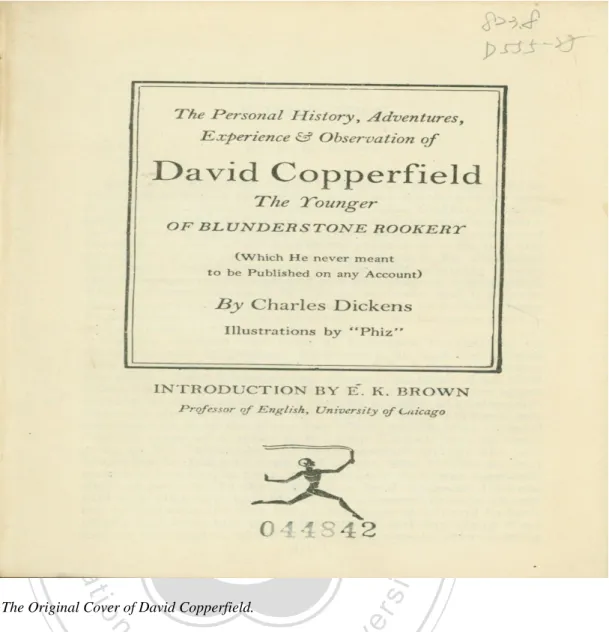
(29) Apart from the states of objects, the oral people are very aware of the conditions of a particular situation as well. They tend to describe as detailed as possible by adding up. An addictive narration hence reads like Genesis of Douay’s version (1610): In the beginning God created heaven and earth. And the earth was void and empty, and darkness was upon the face of the deep; and the spirit of God moved over the waters. And God said: Be light made. And light was made. And God saw the light that it was good; and he divided the light from the. 政 治 大 was evening and morning one day. (37; my italics) 立. darkness. And he called the light Day, and the darkness Night; and there. Preposition Ands on the one hand are used to compose the sentences into a paragraph;. ‧ 國. 學. on the other hand are expected to reveal the implied causality between sentences. Yet. ‧. it is not hard to see that though the speaker tries hard to provide details, his. sit. y. Nat. comprehension on the situation is as fragmented as the sentences. No particular part. io. er. of this paragraph is emphasized to suggest the speaker’s viewpoint, not to mention the significance of the situation.. al. n. v i n C hbards always have U While telling a story, oral to deal with the transiency of voice. engchi. They need to run over their minds for the next sentence before the sentence in their. mouths is about to vanish, or the silence will soon cool down the audience’s interests. It then turns to be very advantageous for bards to recapitulate on previous episodes frequently, not only to avoid the vacancies but to track the coming-and-going audience on the story. The oral narration thus progresses very slowly, especially with many redundant recapitulations. Finally, the oral people’s life philosophy is brought into texts, making the stories conservative. The great influence of traditions have been mentioned before: once a famous saying is constantly confirmed generation after generation, it becomes a 17.
(30) convincing tradition. People who grow up with this tradition then tend to rely on it heavily, for the tradition saves them from troubles, strongly making them feel secured that it seems the future will remain under control. The oral people naturally incline to expect that the power of traditions shall be reassured in texts as well. Reflected in written texts, these four oral traditions to some degrees are modified. Addictiveness and aggregations are cancelled to ensure the smoothness of reading (which I’ll explain more in the next chapter); contrarily, redundancy and conservativeness are kept in written texts.. 政 治 大 Charles Dickens particularly makes chapters of his novels independently readable in 立 Due to many reasons, the Victorian novels are often published in installments.. consideration of readers’ financial condition. Recapitulations are often hided in the. ‧ 國. 學. openings and closures of each chapter so that random readers are enabled to pick up. ‧. the story lines. For example, starting with a letter written to Peggotty, the opening of. y. sit. io. er. previous chapters:. Nat. chapter seventeenth informs the reader that Miss Betsey has already adopted David in. It has not occurred to me to mention Peggotty since I ran away; but, of. al. n. v i n course, I wrote her a letterCalmost as soon as I was h e n g c h i U housed at Dover, and. another and a longer letter containing all particulars fully related, when my aunt took me formally under her protection. (David Copperfield, 240) The letter indeed is a recapitulation in disguise, which is used to help the reader reviewing the previous plots. In addition, a similar predictive device is used to prepare the reader for the following plot developments, especially for those who may miss some of the chapters. As the second chapter of David Copperfield opens with David’s departure from his mother Clara, the description throws an ominous atmosphere upon the text: “The first objects that assume a distinct presence before me, as I look far back, into the blank of 18.
(31) my infancy, are my mother with her pretty hair and youthful shape, and Peggotty with no shape at all” (David Copperfield, 12). The melancholy continues to haunt through the following chapters whenever Clara is mentioned, especially when a second departure occurs in chapter eight: I was in the carrier’s cart when I heard her calling to me. I looked out, and she stood at the garden-gate alone, holding her baby up in her arms for me to see…So I lost her. So I saw her afterwards, in my sleep at school—a silent presence near my bed—looking at me with the same intent. 政 治 大 Finally, with the disclosure of Clara’s death, the ominous atmosphere stops in the end 立 face—holding up her baby in her arms. (David Copperfield, 116). of chapter nine. This reviewing-and-predicting mechanism, as the oral tradition. ‧ 國. 學. redundancy, is frequently used to track readers on particular story line. It is thus. ‧. reasonable to relate the influence of redundancy to Dickens’s written texts.. sit. y. Nat. Since the lived experience is the very source of knowledge and understandings of. io. er. the world in oral cultures, the textual world unavoidably is very close to the human lifeworld. Characters’ languages, thoughts, and behaviors in oral literature are highly. al. n. v i n C hRelated to this point, consistent with those in reality. the textual world in oral engchi U. literature is as homeostatic as the real world is, for the long-lasting, changeless living style created by situational thinking and traditions is brought into oral texts as lived experience is. Ong names this particular connection between textual world and reality “intertextuality”: Intertextuality refers to a literary and psychological commonplace…a text cannot be created simply out of lived experience. A novelist writes a novel because he or she is familiar with this kind of textual organization of experience. (133) 19.
(32) In Ong’s viewpoint, the most significant advantage of intertextuality is familiarizing the reader with the textual world; authenticity especially powerfully makes a text read “real”. In the context of oral world, intertextuality helps bards to speak vividly as if the story did happen. As facial expressions, body gestures, and music instruments are often brought in a performance to strengthen drama effects of a bard’s performance, an agonistically toned style naturally is formed. The distance intertexuality shortens between the audience and the performance often makes people feel involved in the text. The convinced audience unsurprisingly. 政 治 大 bard to modify the text in order to satisfy the audience. As Ong observes, “Interaction 立. is wishful to see that stories shall end with their expectations, which often pressure the. with living audiences can actively interfere with verbal stability: audience. ‧ 國. 學. expectations can help fix themes and formulas” (67).. ‧. Charles Dickens’s intention to create intertextuality is discernible. Many of his. sit. y. Nat. buildunsromans’s titles are used as a device to produce authenticity; take David. io. n. al. er. Copperfield as an instance:. Ch. engchi. 20. i n U. v.
(33) 立. 政 治 大. ‧. ‧ 國. 學. io. sit. y. Nat. n. al. er. Fig. 1. The Original Cover of David Copperfield.. i n U. v. The full title “The Personal History, Adventures, Experience and Observation of. Ch. engchi. David Copperfield—The Younger of Blunderstone Rookery” pretends that the buildunsroman is indeed a biography in disguise. The parenthetic sentence “Which He never meant to be Published on any Account” pretends that the privacy problem originally stops the biography from being published. Then, with many detailed introduction to David’s birth, David’s family, and David’s living conditions in the opening of the novel, the authenticity is created. Moreover, Dickens’s writing style strengthens authenticity. The languages Dickens uses in novels often vary with a character’s social status. For instance, at the first time David visits the Poggotty, Mr. Peggotty welcomes David with high spirit: 21.
(34) “Yon’s our house, Mas’r Davy!” (David Copperfield, 28). Though the sentence is short, the heavy accent is convincing enough to present Mr. Peggotty’s humble birth. Here another example: MI DEER JO i OPE U R KRWITE WELL i OPE i SHAL SON TEEDGE U. B HABELL 4 2. JO AN THEN WE SHORL B SO GLODD AN WEN I M. PRENGTD 2 U JO WOT LARX AN BLEVE ME INF EN PIP.. (Great Expectation, 41) In this letter wrote to Joe, Dickens deliberately mimics a child’s hand writing and. 政 治 大 different talking style and wordings of these two cases prove that Dickens is very 立 inaccurate spelling to suggest that little Pip has just learned how to write. The. Dickens’s novels are always very authentic.. 學. ‧ 國. aware of language’s power. By using the real language people use in real life,. ‧. Meanwhile, intertextuality is created with the backgrounds settled in the present. sit. y. Nat. reality. Scholars agree that Little Dorrit is clearly an “absorb[ed]…a crucially. io. er. representative Victorian public event [which] in fact [was] used so frequently in the 1840s and ‘50s that anyone told in advance of Dickens…might have thought he was. al. n. v i n flogging a dead horse” (Smith, 131,C 134). Though CharlesU h e n g c h i Dickens insists not. adopting from that representative Victorian public event, the high similarity between Little Dorrit and a millionaire’s crush in reality is hard to support Dickens’s innocence. It is imaginable that the novel is broadly disseminated as the event is. Similar to the audience’s expectations to the bard, the reader’s expectations are influential to the writer as well; Great Expectation is the best example. The original ending of Great Expectation is an unhappy one: Pip runs into Estella, who suffers in a wretched marriage. Though both of them feel inclined to comfort each other, they. 22.
(35) depart farewell for the unchangeable past is too miserable to be comforted7. Nevertheless, since the depressed public reject to accept this ending, Dickens has no choice but to revise. In the revision, Pip runs into Estella, who turns to be a sad yet friendly person after an unhappy marriage. Feeling desired to make up for the past; the two decide to accompany each other in the following life. Due to the public’s great satisfaction, the revision is regarded as the “officially right” ending of Great Expectation afterward. Indeed, the reader’s objection against the sad ending can be traced back to the. 政 治 大 conservativeness lingers into Victorian society, otherwise many other Dickens’s 立 oral people’s desire for the feeling of security. It is because the oral tradition. novels, such as David Copperfield, Great Expectation and Oliver Twist, would not. ‧ 國. 學. end with happy endings to secure the reader that fortunes will eventually come to. ‧. those who work hard for their lives.. y. Nat. As Ong insists that “Oral expression can exist and mostly has existed without. er. io. sit. any writing at all [while] writing never without orality,” the written text is influenced by oral traditions in many aspects. Basically the oral narration is kept in Dickens’s. al. n. v i n Ch novels with the reviewing-and-predicting devices; while the intertexuality found in engchi U. the oral world is fully transplanted in the form, style, and content of Dickens’s novels. Even the reader’s interaction with Dickens reflects the intimate relation between the audience and the bard in the oral world, so as the reader’s strong desire for the recovery of traditional endings. In the next chapter, I continue to introduce Ong’s theory. I’ll focus on the development of writing technology and its influences on Dickens’s texts. The left three oral traditions, addictive, aggregative, are situational, will be explained as I display how writing technology influence on both Dickens’s novels. While 7. For the original text, see Appendix A. 23.
(36) demonstrating how writing technology is used in Dickens’s oral performances, Dickens’s combining the powers of writing and orality will be demystified.. 立. 政 治 大. ‧. ‧ 國. 學. n. er. io. sit. y. Nat. al. Ch. engchi. 24. i n U. v.
(37) Chapter Three Situational Thinking and Modern Consciousness. As W. J Ong emphasizes, the transition from oral world to literal world is a long-termed process, not to mention the transformation of thinking style. Although the modern consciousness writing technology brings accelerates civilianization, not all of the ordinary are benefited from the progressions. It is more common that the public is lost in the interaction between oral communication and literal expression that. 政 治 大. they can neither speak well nor read well.. 立. Under this circumstance, how to lessen the burden of reading becomes the major. ‧ 國. 學. task of Victorian writers. In this chapter I intend to focus on the interaction between oral communication and literal expression in Dickens’s texts. On the one hand, I will. ‧. demonstrate how writing technology are brought in Dickens’s novels and public. y. Nat. n. al. er. io. thinking styles.. sit. readings; on the other hand, I will show how Dickens struggles between these two. i n U. v. Like oral communication, writing technology takes long to develop as well.. Ch. engchi. Drawings are originally used to remind the drawer of something, though the meanings of drawings are easily forgettable. Paintings are later used to indicate particular objects or events with colors and specific figures. Then, as a milestone, the writing technology starts with pictographs. “A coded system of visible marks” (Ong, 84) finally is developed as language systems matures. In consideration that human beings are born to speak and learn to write, Ong regards speaking as a natural ability and writing as an artificial skill: The process of putting spoken language into writing is governed by consciously contrived, articulable rules: for example, a certain pictogram 25.
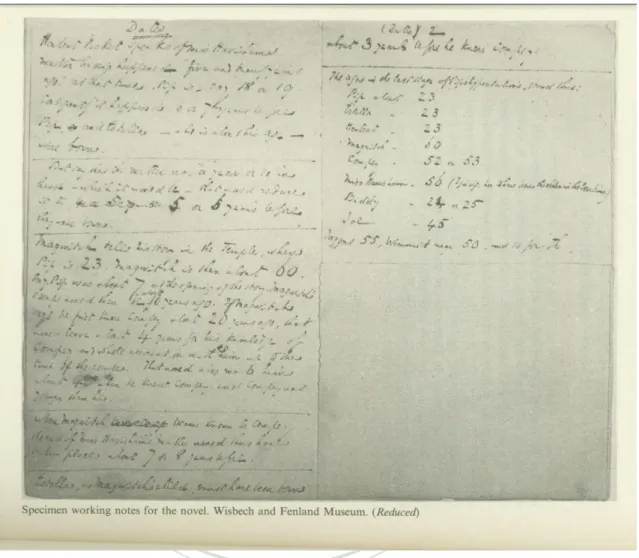
(38) will stand for a certain specific word, or a will represent a certain phoneme, b another, and so on. (82) Moreover, the process of learning to write is essentially cultural because language system works only when a society has reached consensus on the shape, meaning, usage, and pronunciation of written words. Since writing technology is highly related to the society, writing technology’s influences are easily spread; the most significant influence is the change of thinking style:. 政 治 大 good for us and indeed is in many ways essential for full human life. To live 立 Writing heightens consciousness. Alienation from a natural milieu can be. and to understand fully, we need not only proximity but also distance. This. ‧ 國. 學. writing provides for consciousness as nothing else does. (82). ‧. In Ong’s point of view, it is the detachment that enables people to reflect deeper. With. y. Nat. the written words to record the thinking process, it’s easier for the modern people to. er. io. sit. grasp a more comprehensive understanding on things. Take one of Luria’s field works as example, when a man capable of literacy is asked to explain what a train is, he uses. al. n. v i n C h uses fire and U jargons to define: “It’s made in a factory...It steam. We first have to set engchi the fire going so the water gets steaming hot-the stem gives the machine its power”. Compared to the situational thinking of the oral people, the modern consciousness enables people to think more abstractly. This abstract thinking, which is also called “modern consciousness”, is so influential that it is regarded as the origin of civilization. Marshall McLuhan once declares: Until WRITING was invented, we lived in acoustic space, where all. backward peoples still live: boundless, directionless, horizonless. The clash of the mind, the world of emotion, primordial intuition, mafia-ridden…A 26.
(39) goose quill put an end to talk, abolished mystery…It was the basic metaphor with which the cycle of CIVILAZATION began the step from the dark into the light of the mind. (Finnegan, 154) McLuhan may exaggerate a little; yet his attitude is so firm that makes it hard to ignore writing technology’s importance. As least it is reasonable to infer that the higher literacy a society obtains; the higher civilization a society develops. Compared to situational thinking, the abstract thinking is relatively modern; therefore Ong uses the term “modern consciousness” to indicate many kinds of. 政 治 大 As written texts enable the reader to halt and pick up his reading from time to 立. abstract thinking, especially lineal thinking and logical thinking.. time, it is instantly discernible that the oral tradition aggregation is no longer. ‧ 國. 學. necessary because writing technology has already lessened the burden of memorizing.. ‧. Literal narration therefore tends to be more prosaic rather than poetic. In addition,. sit. y. Nat. abstract thinking prompts the writer to heighten causality; take New American Bible. io. er. (1970) as an instance:. In the beginning, when God created the heavens and the earth the earth was. al. n. v i n C hand darkness covered a formless wasteland, the abyss, while a mighty wind engchi U. swept over the waters. Then God said, ‘Let there be light,’ and there was. light. God saw how good the light was. God then separated the light from the darkness. God called the light ‘day’ and the darkness he called ‘night’. Thus evening came, and morning followed—the first day. (Ong, 37) Compared to the Douay example in previous chapter, time adverbs (in italic) in this passage present the process of God’s creating a world chronologically, while maintaining detailed explanation for each process. Information is orderly presented, enabling readers to comprehend on the passage easily. As a result the oral tradition addictiveness is modified in written texts. 27.
(40) Sometimes lineal narration is used to create drama effects. Oliver observes on funerals: For instance; when Sowerberry had an order for the burial of some rich old lady or gentleman, who was surrounded by a great number of nephews and nieces, who had been perfectly inconsolable during the previous illness, and whose grief had been wholly irrepressible even on the most public occasion; they would be as happy among themselves as need be—quite cheerful and contented: conversing together, with as much freedom and gaiety, as if. 政 治 大. nothing whatever had happened to disturb them. (Oliver Twist, 42, my italics). 立. It is not hard to see that the subject in this passage has changed twice. With the aid of. ‧ 國. 學. relative pronouns, the original subject Sowerberry is replaced with the death, then. ‧. again with the descendents of the death. Smooth transitions embodies the flow of. sit. y. Nat. seeing, vividly presenting a scene. In addition, a changed tone is brought out after the. io. er. semicolon with descriptions displaying the attendances’ joyful conversations, creating a contradiction to the solemn funeral. The drama effect is especially heightened while. al. n. v i n C hdifferent scenes in aUparagraph. lineal writing connects these two very engchi. In other times, lineal writing presents the experience of a character: They crossed from the Angel into St. John’s-road; struck down the small street which terminates at Sadler’s Well Theatre; through Exmouth-street and Coppice-row; down the little court by the side of the workhouse; across the classic ground which once bore the name of Hockley-in-the-Hole; thence into Little Saffron-hill; and so into Saffron-hill the Great: along which, the Dodger scudded at a rapid pace: directing Oliver to follow close at his heels. (Oliver Twist, 59, my emphasis). It is not hard to imagine that this passage would be cut into many short sentences in 28.
(41) oral literature, with many “and”s used to present the turnings. Yet, with the aid of suitable prepositions (in italic), the reader is always tracked on the reading process so well that Jack Dawkins’s familiarity with the twisty paths is smoothly displayed. Apart from lineal thinking, logical thinking is essential in modern consciousness:. 立. 政 治 大. ‧. ‧ 國. 學. n. er. io. sit. y. Nat. al. Ch. engchi. i n U. v. Fig. 2. The Manuscript of Great Expectations. (Charles Dickens: Great Expectations. Margaret Cardwell Ed.). The left page, entitled “Dates”, records Dickens’s pre-arrangements on the plots8, with some deduction to infer the reasonable ages of characters: Magwitch tells his story in the Temple, when Pip is 23. Magwitch is then about 60. Say Pip was about 7 at the opening of the story. Magwitch’s escape would then be ^ 16 years ago. If Magwitch says he first knew 8. Please see Appendix B to check the complete transcription. 29.
(42) Compey about 20 years ago, that would leave about 4 years for his knowledge of Compey and whole association with him up to the time of the escape. That would also make him about 40 when he knew Compey, and Compey was younger than he. Accordingly, ages of main characters are written on the right page: Pip. about. 23. Estella. “. 23. Magwitch. “. 60. “ 52 or 53 政 治 大 It is explicit that the novel is strictly based on logical thinking, which not only ensures 立 Compey. the rationality of the story but creates authenticity. All in all the manuscript shows the. ‧ 國. 學. story Great Expectation is under logical consideration to make itself reasonable.. ‧. Traces of logical arrangement can be also found in Charles Dickens’s prompt. y. Nat. copies9, which “usually bear the author’s notes and cues, usually marked in blue ink. er. io. 61).. sit. and serving the purpose of containing the text and directing its oral delivery” (Vlock,. al. n. v i n C h Copperfield, Dickens Having only two hours to read David compresses the engchi U. original sixteen-four chapters into six chapters by only focusing on the story lines of Steerforth and Emily’s elopement and Copperfield’s first marriage. Collins outlines Dickens’s prompt copy: Chapter I.10 [Childhood memories of the Peggotty family, from ch.311] David Copperfield takes Steerforth to Mr. Peggotty’s place and introduces Steerforth to the Peggotty family, especially Little Emily [ch.21]. It is. 9. For convenience’s sake, Charles Dickens always asks the publisher for a private copy to modify his public reading before a performance is given, which is later called “prompt copies”. 10 Chapters in italic indicate the new chapter in prompt copy. 11 Chapters written in [ ] indicates the original chapter in book version. 30.
(43) foreshadowed that Steerforth admires Little Emily and starts to set plans on her [ch. 28, with interpolations from ch.16, 27, and 36].. Chapter II. After Little Emily and Ham’s engagement is announced, David Copperfield goes to the old boat alone for solitude. Later Copperfield goes back right at the moment when Ham suddenly discovers Little Emily has been eloped with Steerforth. Mr. Peggotty is heart-broken yet still sets forth for Little Emily “through the world” right away [ch.31].. 政 治 大 Chapter III. David Copperfield describes his love for Dora [ch. 26, 28] and 立. the dinner with Micawber couple and Traddles [ch. 28, with interpolations. ‧ 國. 學. from ch.16, 27, 36].. ‧. y. Nat. Chapter IV. [David Copperfield’s mind keeps haunted by Mr. Peggotty’s. er. io. sit. quest (ch.32).] Mr Peggotty returns without Emily’s news, describing his long journey.. n. al. Ch. engchi. i n U. v. Chapter V. David Copperfield relates his proposals [ch.33, 37, 41], marriage [ch.43], and married life with Dora [ch.44, 48].. Chapter VI. David Copperfield discloses Ham’s accidence and Steerforth’s death [ch.55]. Mr. Peggotty finally finds Little Emily and takes her overseas for a new life [ch.50, 51]. David Copperfield takes his final trip to Yarmouth [ch.51, 55] and ends his story. (Collins, Dickens, 215) Apparently many irrelevant characters and plots, such as Miss Besty’s adaption of 31.
(44) David Copperfield, David Copperfield’s second marriage with Agens, and Uriah Heep’s vengeance on Mr. Wickfield, are omitted in prompt copy to highlight the elopement and marriage. Since the prompt copy begins with David’s returning to Yarmouth with Steerforth, Dickens particularly adds a line to explain the relationship between David and Steerforth to rationalize Steerforth’s appearance. The particular line of course does not appear in the original novel: “Towards this old boat, I walked one memorable night, with my former schoolfellow and present dear friend, Steerforth”. 政 治 大 distinguished as additional. A similar revision occurs to the end of prompt copy. In 立 (Collins, Dickens, 220); the italic is double-underlined by Charles Dickens to be. book version, Dickens uses three chapters to present David and Mr. Peggotty’s. ‧ 國. 學. reunion with Emily with Martha’s help; nevertheless, the same plot is revised in. ‧. prompt copy:. y. Nat. I HEARD a footstep on the stairs one day. I knew it to be Mr.. er. io. sit. Peggotty’s. It came nearer, nearer, rushed into the room.. ‘Mas’r Davy, I’ve found her! I thank my Heavenly Father for having. n. al. Ch. guided of me in His own ways to my darling!’. engchi. i n U. v. ‘You have made up your mind as to the future, good friend?’ ‘Yes, Mas’r Davy, theer’s mighty countries, fur from heer. Our future life lays over the sea.’” (Collins, Dickens, 244) Apparently it is for the convenience’s sake that Mr. Peggotty displaces Martha to disclose Emily’s return. On the one hand, it saves troubles not mentioning Martha; on the other hand, it saves time to end Emily’s elopement. The idea is, the added lines and revised plots are traces of Dickens’s logical thinking, which is the rule that used to frame a text. While rehearsing on a text, Dickens uses marginal marks such as “low,” “leaning 32.
(45) on table,” and “looking up occasionally with a sneer” to remind himself of particular actions to enhance drama effect. In the scene that Ham and Emily’s engagement is disclosed, Dickens “modified Steerforth’s tone of voice, and hand-grip, as he ‘turned’ from Peggotty to Ham” (Collins, Dickens, 222, note 2). This minute movement arouses an “Ah-a!” from a French audience when the reading is given in Paris and an explosion of cheers and applauses from the audience in another performance. Apparently the audience instantly understands Steerforth’s jealousy on Ham with Dickens’s body language, which leaks out the connotations of a scene.. 政 治 大 with David, who promises to cherish their friendship no matter how Steerforth has 立. Following this scene, Steerforth for some reasons changes a weird conversation. changed. After Steerforth dies in a tempest, David recalls of the conversation:. ‧ 國. 學. I was up, to go away alone, next morning with the dawn, and, having. ‧. dressed as quietly as I could, looked into his room. He was fast asleep;. sit. y. Nat. lying, easily, with his head upon his arm, as I had often seen him lie at. io. er. school.. The time came in its season, and that was very soon, when I almost. al. n. v i n C h troubled his repose, wondered that nothing as I looked at him then. But he engchi U. slept—let me think of him so again—as I had often seen him sleep at school; and thus, in this silent hour I left him. —Never more, O God forgive you, Steerforth! to touch that passive hand in love and friendship. Never, never, more!” (Collins, Dickens, 224). “Solemnly, slowly, measuredly, and with feeling,” Dickens reads this passage, as the marginal notes suggests. The performance arouses the deepest sorrows of the audience, winning the author great admirations. His last sign on the final words “Never…never…more” is claimed to be uncompetitivable by Kate Field. With the 33.
(46) various tones, facial expressions, and body language, Dickens is performing a text but not only reads. It seems that Dickens is very aware of his double identities, being a writer or being a performer, and masters both. Yet, there are some traces showing that sometimes Dickens mixes both. Ong writes, Composition in writing…in eleventh-century England…could be done in a psychological setting so oral that we find it hard to imagine. The eleventh-century Eadmer of St Albans says that, when he composed in. 政 治 大 write down a poem by imagining himself declaiming it to an audience. 立. writing, he felt he was dictating to himself…Similarly, an early poet would. (Ong, 95). ‧ 國. 學. Similarly, Charles Dickens sometimes writes as he is dictating to someone. His novels. ‧. usually open with the protagonist introducing to himself: “My father’s family name. sit. y. Nat. being Pirrip, and my Christian name Philip, my infant tongue could make of both. io. er. names nothing longer or more explicit than Pip. So, I called myself Pip, and came to be called Pip” (Great Expectations, 1). Oliver Twist begins with the same way:. al. n. v i n C hin a certain town…and Among other public buildings to which I will assign engchi U no fictitious name…in this workhouse was born: on a day and date which I need not trouble myself to repeat, inasmuch as it can be of no possible consequence to the reader, in this stage of the business at all events: the item of mortality whose name is prefixed to the head of this chapter. (Oliver Twist, 1, my italic). Yet, the word reader in Oliver Twist’s opening reflects Oliver’s awareness of addressing to the reader; on the contrary Pip seems to be less aware of being dictation to the audience or to the reader. Situation gets more obscured when a second narrator intrudes from time to time. 34.
(47) Though Oliver is the first person narrator, a second narrator suddenly interrupts in chapter VI: “That Oliver Twist was moved to resignation by the example of these good people, I cannot, although I am his biographer, undertake to affirm with a degree of confidence….” (Oliver Twist, 42, my italic); and once more right after the paragraph: And now I come to a very important passage in Oliver’s history; for I have to record and act: slight and unimportant perhaps in appearance: but which indirectly produced a material change in all his future prospects and. 政 治 大 Again, in chapter VII, when Oliver is about to be punished for his violence to Noah, 立 proceedings. (Oliver Twist, 43, my italic). the same narrator appears:. ‧ 國. 學. If [Mr. Bumble] had hesitated for one instant to punish Oliver most severely,. ‧. it must be quite clear to every experienced reader that he would have been,. y. Nat. according to all precedents in disputes of matrimony established, a. er. io. sit. brute…and various other agreeable characters too numerous for recital within the limits of this chapter. (Oliver Twist, 52, my italic).. al. n. v i n C hsecond narrator’s identity Indeed the exaggeration of the (Oliver’s biographer) and engchi U mentioning to the reader’s reading experience is too frequent to be natural, that it. seems the second narrator purposively emphasizes that he is writing for the reader rather than addressing to the audience. This exaggeration actually reflects that Dickens is wavering between his two identities to compromise the power of writing technology and the power of orality. It is undeniable that writing technology benefits both Dickens’s novels and public readings a lot. With the aid of modern consciousness, especially lineal thinking, logical thinking, and causality, plots developments in Dickens’s texts are always reasonable, making the texts authentic and convincing. Also, the combination of 35.
(48) writing technology and body language enables Dickens to perform powerfully. Written marks in prompt copies are traces of Dickens’s manipulating modern consciousness. However, it must be emphasized that although writing technology is beneficial to Dickens’s texts, the power of orality is not weakened. Examples in previous chapter are powerful evidences to prove orality’s influences on Dickens’s texts. Also, the second narrator in Dickens’s novels proves that sometimes Dickens manages hard to compromise the power of writing with the power of orality. It is better to say that. 政 治 大 texts to readers; especially oral traditions are used to familiarize the reader with texts. 立. Dickens works hard to preserve the advantages of both to create powerful yet friendly. It seems that Ong’s oral theory is powerful enough to support my argument that. ‧ 國. 學. it is the combination of writing power and oral power that makes Dickens so popular. ‧. with the public; nevertheless, how Dickens’s speeches are admired by the public is. sit. y. Nat. still a question. Since Ong’s theory mainly deals with the form of texts, it is too weak. io. al. n. answer.. er. to answer this question. Ruth Finnegan’s oral theory, instead, comes to be the suitable. Ch. engchi. 36. i n U. v.
數據
Outline
thence into Little Saffron-hill; and so into Saffron-hill the Great: along which, the Dodger scudded at a rapid pace: directing Oliver to follow close
lying, easily, with his head upon his arm, as I had often seen him lie at school
Expectation prove that Dickens very carefully arranges the backgrounds to ensure that the novel will read logically. Apart from the prearrangement, the chronological
相關文件
- promoting discussion before writing to equip students with more ideas and vocabulary to use in their writing and to enable students to learn how to work in discussion groups and
• School-based curriculum is enriched to allow for value addedness in the reading and writing performance of the students. • Students have a positive attitude and are interested and
In the third paragraph, please write a 100-word paragraph to talk about what you’d do in the future to make this research better and some important citations if any.. Please help
The objects on orange orbits (Mercury, Venus, Mars, Jupiter, and Saturn) rotate around the sun.. Johannes Kepler, Weil, Württemberg
● Using canonical formalism, we showed how to construct free energy (or partition function) in higher spin theory and verified the black holes and conical surpluses are S-dual.
Sunya, the Nothingness in Buddhism, is a being absolutely non-linguistic; so the difference between the two "satyas" is in fact the dif- ference between the linguistic and
the composition presented by T101 〉, “ First, the style of writing: by and large, these s ū tras are translated into prose.. Even though there are some verse-like renderings,
maintenance and repair works should be carried out by school and her maintenance agent(s) to rectify defect(s) as identified in routine and regular inspections. Examples of works
