地理研究 第 71 期 民國 108 年 11 月
Journal of Geographical Research No.71, November 2019 DOI: 10.6234/JGR.201911_(71).0006
越南中部之森林保護的利益分享機制及生計:
兩個原住民社群團體的觀察研究
Benefit Sharing Mechanism in Forest Protection and Livelihoods in
Central Vietnam: Empirical Insights into Two Indigenous Communes
莫家俊
aMucahid Mustafa Bayrak
摘 要
森林退化、貧窮與森林保育之間的關係一直不清楚。本研究選定越南中部的Huong Hiep 及 Thuong
Nhat,目標為找出利益分享機制(BSM),森林保育與對原住民社群權力下放的影響。研究方法為永 續生計法並將生計影響細分為金融,自然,物理,社會,文化與人力資本;這些資本之間相互影響並 且不斷變動。本研究進行家庭生計問卷(n=85),半結構式訪談,並有家庭及其他利害關係人的焦點 團體討論。研究期間為2013 與 2014 年的夏天,為期共四個月。Thuong Nhat 的 BSM 與社區林業計畫 充分發展;Huong Hiep 則仍在發展中。由於各個家庭森林巡護的費用相對較低,因此 BSM 經濟影響 極小。另一方面,BSM 加劇 Huong Hiep 所得不均,因為只有部分選定的菁英家庭能夠得到森林保育
的經濟利益。BSM 和權力下放讓 Thuong Nhat 的原住民能夠透過所謂社群 Red Books 的方式合法擁有
社群森林土地。Thuong Nhat 的家庭能在他們的森林收取非木材林產品(NTFPs)並砍樹蓋房。BSM
和森林保育強化政府在社群森林使用的影響。這也破壞了傳統森林分類並禁止遊墾農業。由於 BSM
與社區林業,傳統機構與森林分類與生計對Thuong Nhat 的影響大幅降低。然而,Huong Hiep 的家庭
仍沿用傳統方式管理森林。最後,本研究找出影響 BSM 在越南成功與失敗的內在與外在因素。這些 因素包括:家庭生計的多元發展能力、社群和傳統機構的參與、土地運用和信用貸款、人力與社會資 本的累積、復原能力的增加。 關鍵詞:越南、森林保育、利益分享機制、永續生計、原住民社群 a 國立臺灣師範大學地理學系助理教授,通訊作者(email: [email protected])
Abstract
The relationship between forest degradation, poverty and conservation has been unclear. The objective of this study was to identify the impacts of benefit sharing mechanism (BSM), forest conservation and devolution on indigenous communities in two selected communes (sub-district level units) in Central Vietnam: Huong Hiep and Thuong Nhat. To do this, we adopted a sustainable livelihoods approach and subdivided livelihood impacts into financial, natural, physical, social, cultural and human capitals. These types of capital are interconnected and continuously subjected to change. For this study, we conducted livelihood surveys on household level (n=85), and semi-structured interviews and focus group discussions with households and other stakeholders. The research has been conducted in the summers of 2013 and 2014 for four months in total. Thuong Nhat was a commune with a fully developed BSM and community forestry scheme. Huong Hiep, on the other hand, was still in the process of developing a similar scheme. The financial impact of BSM was minimal as the fee for forest patrolling for individual households was relatively small. On the other hand, BSM exacerbated income inequality in Huong Hiep as only selected elite households were eligible for receiving financial benefits for forest conservation. BSM and forest devolution allowed communities to legally own community forestland in Thuong Nhat through so-called community Red Books. Households in Thuong Nhat were able to collect non-timber forest products (NTFPs) and cut trees for housing in their forest. BSM and forest conservation consolidated the influence of the formal institutions on forest use in the communities. This led to the deterioration of customary forest classifications and a ban on swidden agriculture. Whereas in Thuong Nhat the influence of customary institutions, forest classifications and livelihoods was largely diminished as a result of BSM and community forestry, households in Huong Hiep still adhered to their customary ways of managing the forest. Lastly, this study identified internal and external drivers for success and failure of BSM in Vietnam. These drivers included: the ability for households to diversify their livelihoods; involvement of the community, and customary institutions and arrangements; access to land and credit; human and social capital accumulation; and increased resilience.
Keywords: Vietnam, Forest conservation, Benefit sharing mechanism, Sustainable livelihoods, Indigenous communitiesa
Introduction
In order to respond to global deforestation and forest degradation, new forms of forest management and governance have emerged. These new forms include: community-based forest management, benefit sharing mechanism (BSM) in forest protection, payment for environmental services (PES), and devolution of forest tenure and rights (Agrawal et al., 2011; Wang et al., 2015). There is a general consensus that in order to protect forests, livelihoods of forest-dependent local and indigenous communities should be addressed (Sunderlin et al., 2005). In other words, forest conservation objectives need to be in line with local livelihood needs in order for any conservation program in the Global South or anywhere else to succeed. Even though it
is generally acknowledged that poverty, livelihoods and environmental degradation are linked and interconnected, the ways how they are related remains contested among scholars and policy makers (Burgers, 2004; Sunderlin et al., 2005).
Until recently, indigenous and other local communities were rarely considered in academic, policy and public discourses on forest management. This is striking as indigenous peoples often reside in economically and politically marginal areas, and fragile ecosystems (Salick and Byg, 2007). Any conservation initiative will likely be deemed to be unsustainable on the longer term without their effective involvement (Agrawal et al., 2008). Through utilizing the ecological, social and cultural aspects of their customary management systems, local and indigenous communities have the ability to achieve meaningful participation and empowerment in conservation and development projects and programs. In order to achieve this, there is a need to analyze how current forest conservation programs affect indigenous and/or forest-dependent communities and their livelihoods. Therefore, what are the livelihood impacts of forest conservation, devolution of forest tenure, and BSM on indigenous forest-dependent communities? This is investigated among two forest-dependent and indigenous communes in Vietnam.
There are several reasons why Vietnam was chosen for this study. First of all, Vietnam consists of more than fifty ethnic groups, of whom many are indigenous to the region and dependent on natural resources (Salemink, 2003). Secondly, current forest governance trends (Agrawal et al., 2008) are also found in Vietnam, including devolution of forest management, forestland allocation to households and communities (the so-called forestland allocation (FLA) program), community-based forest management, BSM, PES, and the Reducing Emissions from Deforestation and Forest Degradation program (REDD+) (McElwee, 2016; Bayrak, 2019). Lastly, Vietnam is expected to be amongst the countries that are most affected by global climate change in Asia. With a pre-dominantly rural society, Vietnam faces and already experiences severe climate change caused perturbations, stresses, and shocks, such as floods, droughts, and natural hazards (ISPONRE, 2009).
Two communes (sub-district level units) in Central Vietnam were chosen for this study, namely: Huong Hiep and Thuong Nhat. Both communes had benefit sharing mechanisms (BSM) and forest protection, in some sort, implemented. Whereas BSM in Huong Hiep was still in its implementation phase, BSM in Thuong Nhat was almost fully implemented and developed. Therefore, Huong Hiep could be seen as a pre-BSM commune and Thuong Nhat as a BSM commune. Both communes were not selected randomly, but they were purposively selected because it allowed a comparison between a BSM and pre-BSM commune. Both communes also consisted of a primarily indigenous population and were accessible for research (i.e. we could obtain the necessary research permits). Therefore, the findings of this research are not representative of the whole BSM situation in Vietnam, but it can deepen our current understanding of the livelihood impacts of BSM and forest conservation. The central question of this study is: What are the livelihood impacts of Benefit Sharing Mechanisms (BSM) in forest conservation on the research communes and what are the lessons learned for BSM implementation? This study is a continuation of a study of Bayrak et al. (2014).
However, the livelihood impacts in this study are backed by quantitative findings and a more extensive qualitative analysis.
The main approach used in this study is the sustainable livelihoods approach (Chamber and Conway, 1991). The sustainable livelihoods approach acknowledges that development is a complex and dynamic process influenced by both internal and external factors (Chambers and Conway,1991; Scoones, 1998). This approach gradually transformed from perceiving people to have access to different types of capital (financial, human, natural, physical, social, and cultural) to the ‘capabilities’ of people to have access or lay claim to these six types of capital (Sen, 1985). A livelihood does not only include material wellbeing (having access to money, land, natural resources, equipment, and so on) but also non-material wellbeing, such as happiness and cultural empowerment. It perceives poverty not only as an economic, but also as a social, political and cultural problem. This approach has been mainly a response to the neoliberal and technocratic ways of defining poverty, which was mainly limited to economic factors while ignoring the wider context (Chambers and Conway, 1991; Ellis, 1998; Zoomers, 2014). Having access to capital allows households to formulate livelihood strategies and goals, but at the same time the external context (vulnerability and institutional context) restricts or enables households to achieve their livelihood strategies and subsequent goals.
The six types of capital as well as the vulnerability and institutional context are interconnected and continuously subjected to change. Hence, in the literature attention has been shifted from sustainable livelihoods to livelihood trajectories (see: De Haan, 2017). Nevertheless, the six interconnected types of capital are operationalized as follows. Natural capital is defined as those components of the natural environment which provide long-term benefits to individuals, households and to society as a whole (Costanza et al., 2006). Physical or produced capital is an essential element in achieving livelihood strategies. It refers to basic infrastructure (roads, medical facilities, etc.), equipment, technology, and means which enable people to pursue their livelihood goals. Financial capital refers to income and other monetary resources. Sunderlin et al. (2005) state that forest resources could play an important role in poverty alleviation and income generation. Income can be derived from conversion to agriculture, timber exploitation, non-timber forest products (NTFP) collection, environmental services, employment in the forestry sector, and indirect benefits, such as local multiplier effects related to forest products, and trickle down effects of economic benefits (Dam et al., 2014).
Human, social and cultural capitals are intangible types of capital. Human capital refers to knowledge, perceptions and dissemination of knowledge. Social capital concerns social relations, trust, institutions, and social structures (Bourdieu, 1986; Coleman, 1988). Cultural capital is in this study operationalized as worldviews, traditional ecological knowledge and customary or traditional forest classifications, such as sacred forest (Agrawal, 1995; Berkes, 2008). The research communities still adhere to customary forest classifications, having them divided into ghost/spirit, watershed and shifting cultivation forests (Bayrak et al., 2013; Århem, 2009). Lastly, the concept of vulnerability consists of exposure to shocks, stress and risk; and internal means to deal with loss. Loss includes: being physically weaker, economic impoverishment, and
being socially dependent, humiliated or psychologically harmed (Chambers, 1995). It is important to mention that the concept of vulnerability has evolved significantly over the past decades (see for example: Adger, 2006), but this study is primarily concerned with livelihood impacts and trajectories.
This study adopts an empirical approach to investigating the livelihood impacts of BSM and forest conservation. The following three research questions were used to answer the central question of this study: (1) What is the impact of BSM/forest conservation on the tangible assets (financial, natural and physical capitals) of the households? (2) What is the impact of BSM/forest conservation on the intangible assets (social, human and cultural capitals) of the households? (3) What are the drivers of success or failure of BSM/forest devolution in both communes? The next section describes the methodology and research context. The results section shows how the different types of capital and livelihood strategies were positively and negatively affected by BSM. Particular attention will be paid to what extent customary forest classification and institutions were integrated in BSM. The discussion and conclusion section identify the main internal and external drivers contributing to the success of failure of BSM, and it concludes the study.
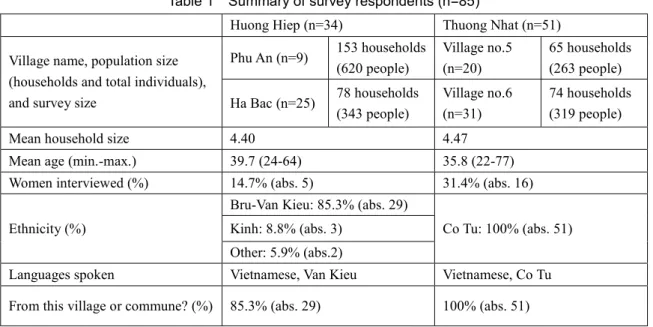
Table 1 Summary of survey respondents (n=85)
Huong Hiep (n=34) Thuong Nhat (n=51)
Village name, population size (households and total individuals), and survey size
Phu An (n=9) 153 households (620 people) Village no.5 (n=20) 65 households (263 people)
Ha Bac (n=25) 78 households (343 people) Village no.6 (n=31) 74 households (319 people)
Mean household size 4.40 4.47
Mean age (min.-max.) 39.7 (24-64) 35.8 (22-77)
Women interviewed (%) 14.7% (abs. 5) 31.4% (abs. 16)
Ethnicity (%)
Bru-Van Kieu: 85.3% (abs. 29)
Co Tu: 100% (abs. 51) Kinh: 8.8% (abs. 3)
Other: 5.9% (abs.2)
Languages spoken Vietnamese, Van Kieu Vietnamese, Co Tu
From this village or commune? (%) 85.3% (abs. 29) 100% (abs. 51)
Methods and research context
1. Research methods, summary of survey respondents and data analysis
The research was conducted in the summers of 2013 and 2014 for four months in total. In each commune, two villages were visited and interviewed (Table 1). These villages were randomly selected. The methods in Huong Hiep consisted of six semi-structured interviews in ‘Phu An village’ and two semi-structured interviews in ‘Ha Bac village’. Furthermore, a focus group discussion was carried out with the village headman and community forest management board (CFMB) of Phu An. In addition, a household
survey was conducted (n=34). Various institutions were interviewed in Huong Hiep, such as village headmen, a commune forest ranger, village patriarchs (gia lang), village police and poor and non-poor households. In Thuong Nhat, six semi-structured interviews were conducted, as well as focus group discussions with the Thuong Nhat Commune People’s Committee (CPC) and the CFMBs of ‘village no.5’ and ‘village no.6’. Moreover, a survey (n=51) among the households of village no.5 and no.6 was carried out. Similar to Huong Hiep, various formal and customary institutions were interviewed, as well as members of unions. The surveys represented 150 people in Huong Hiep and 228 people in Thuong Nhat.
The households were selected randomly using household registration lists from the respective villages. The interview questions and questionnaires can be found in Bayrak (2015). One-way analysis of variance (ANOVA), correlation and descriptive analysis, and qualitative methods have been employed in the analysis of the data. Results were considered to be statistically significant at 0.1, 0.05 or 0.01 levels.
Figure 1 Location and land cover of Huong Hiep Commune (Source land cover: FAO, 2010)
2. Research context of Huong Hiep
Huong Hiep commune is located in Da Krong district in Quang Tri province (Figure 1). It consisted of ten villages and 4,442 people in 2011. Most people (71.6%) in the commune belonged to the Bru-Van Kieu ethnic group. In Huong Hiep, 42.2% of the population were considered to be poor (having a monthly income of less than 400,000 VND a month). During the Vietnam War, Quang Tri province, including Huong Hiep, had been largely targeted by heavy air raids and Agent Orange. As of today, many domestic and international non-governmental organizations (NGOs) operate in the commune to clear unexploded ordinances (EXOs). Main livelihood activities in the commune were: wet-rice cultivation; swidden agriculture; cultivation of annual and perennial crops, collecting forest products; livestock rearing; aquaculture; and non-agro/forestry
activities (CPC Huong Hiep, 2012).
Forestland in the commune was highly degraded and consisted of former swiddens, degraded or barren land and land targeted for reforestation (Figure 1). The total forestland in the commune covered an area of 14,075 ha (covering 60.0% of the total area), of which 1,718 ha was designated as protection forests, 7,096 ha as production forest, and 5,261 ha as barren or degraded land. Non-forestland in the community comprised of agricultural land (435.31 ha), land for aquaculture (2.1 ha), and residential land (32.16 ha). Some households in the commune owned, through a land-use certificate (a so-called Red Book), production forestland for Acacia and, to lesser extent, rubber plantations. Natural forestland was planned to be allocated to households and communities, but this had at the time of the research not happened yet. This was due to a lack of capacity of the commune, district and provincial governments (CPC Huong Hiep, 2012).
In Huong Hiep some villagers were contracted to protect the natural forest belonging to their village for an amount of 200,000 VND (around 258.20 NT$) per hectare a year (according to District plan 38a). These villagers were selected by the village headman, a formal representative of the government. How these villagers were selected was not clear as the headman proclaimed to select the villagers based on good health and a good reputation. Households were only allowed to collect NTFPs and cut trees for housing. Additionally, poor households received 15 kg of rice a month from the government in order to support them to grow rice paddies or plant Acacia trees on former swiddens. As swidden agriculture is formally banned in Vietnam, the government incentivizes all villagers to grow plantation forests. They received food support, subsidies or low-interest loans for fertilizers and seedlings (Bayrak et al., 2014).
3. Research context of Thuong Nhat
Thuong Nhat commune is located in Nam Dong district in Thua Thien-Hue province (Figure 2). It consisted of seven villages and 1,930 people in 2010. Most people in the commune belonged to the Co Tu ethnic group. The main livelihoods activities in Thuong Nhat were similar to Huong Hiep, which were: wet-rice and shifting cultivation, NTFPs collection, growing rubber and Acacia, and intensive cultivation. In Nam Dong district, there were also several eco-tourism projects implemented.
Thuong Nhat’s total forestland covered 15,424 ha including special-use forests (7,801 ha), protection forests (5,947 ha) and production forests (1,676 ha). The latter consisted of rubber plantations (350 ha) and Acacia plantations (700 ha). The CPC was responsible for allocating the forestland to the communities. Local communities already received 888 ha of forestland. Bach Ma National Park (BMNP) extended its buffer-zone in the commune in 2008 and managed 7,801 ha of natural forestland. The total agricultural area in Thuong Nhat was composed of water paddy fields (28 ha) and swidden fields (254 ha). The villagers also cultivated crops such as (industrial) cassava, corn, fruit, vegetable, and sweet potato (Huong and Matusch, 2012).
Figure 2 Location and land cover of Thuong Nhat Commune (Source land cover: FAO, 2010)
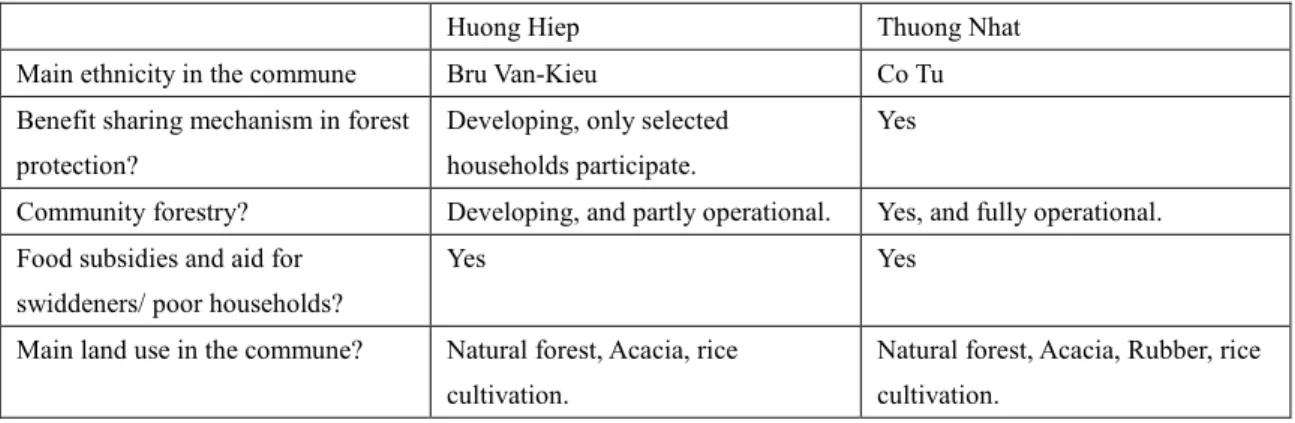
Households received a legal title or Red Book for a community forest since 2008. In these forests (usually comprising of a few hundred hectares) villagers were allowed to collect NTFPs, log for housing and they received a fee for forest patrolling. Additionally, households were selected and paid to patrol BMNP. Through their community forestry management board (CFMB), villagers formed groups and patrolled the community forest and BMNP once or twice a month. Like Huong Hiep, villagers were also stimulated through financial and food assistance means to grow Acadia, rubber, Hopea trees, and other cash crops. Unlike Huong Hiep, Thuong Nhat’s BSM was fully developed and local households owned forestland as a community. Some households also individually owned production and natural forestland for agroforestry and/or conservation (Bayrak et al., 2014). The main similarities and differences of both research communes are highlighted in Table 2.
Table 2 Main similarities and differences between Huong Hiep and Thuong Nhat
Huong Hiep Thuong Nhat
Main ethnicity in the commune Bru Van-Kieu Co Tu Benefit sharing mechanism in forest
protection?
Developing, only selected households participate.
Yes
Community forestry? Developing, and partly operational. Yes, and fully operational. Food subsidies and aid for
swiddeners/ poor households?
Yes Yes
Main land use in the commune? Natural forest, Acacia, rice cultivation.
Natural forest, Acacia, Rubber, rice cultivation.
(a)
(b)
(c)
Figure 3 (a) On-Farm, (b) Off-Farm, and (c) Non-Farm Livelihood Activities (%)1
1 The percentages refer to how many households claimed to partake in this livelihood activity either permanently or seasonally.
74.5 47.1 58.8 80.4 60.8 74.5 85.3 55.9 50.0 58.8 82.4 8.8 0.0 20.0 40.0 60.0 80.0 100.0 Wet-rice Shifting cultivation Intensive cultivation Livestock rearing Acacia plantation Rubber plantations
Huong Hiep Thuong Nhat
37.3 2.0 13.7 19.6 3.9 62.7 50.0 0.0 0.0 11.8 0.0 2.9 0.0 20.0 40.0 60.0 80.0 100.0 Land worker Logging for housing Logging for selling Collecting NTFPs Hunting Forest monitoring
Huong Hiep Thuong Nhat
31.4 11.8 3.9 14.7 14.7 0.0 0.0 20.0 40.0 60.0 80.0 100.0 Government job Business and services Other
Results
1. Financial Capital
Figure 3 describes the on, off, and non-farm livelihood activities of the research communes. On-farm refers to all activities in which seedlings and/or fertilizers are needed. It also involves livestock rearing. It requires input (seedlings, fertilizers, fodder, etc.) to get output (crops, trees, rubber, richer soil, etc.). Off-farm activities also depend on the natural environment, but include activities with no significant input, such as logging or collecting NTFPs. Off-farm activities do not necessarily have to take place on a household’s land plot. Non-farm activities refer to all other livelihood activities–such as small businesses or government jobs. Households in Thuong Nhat were more active in growing rubber, forest monitoring, and livestock rearing than their counterparts in Huong Hiep. Around half of the interviewed villagers in Huong Hiep worked as temporary land workers on other households’ farms or mining. Highway no. 9, which passes through Huong Hiep, connects Huong Hiep to nearby Dong Ha, the provincial capital, and Laos. This offered the villagers of Huong Hiep the opportunity to have small businesses along the road side; selling forest or farm products to passerby vehicles.
Table 3 shows the mean income of the villagers of both research communities. The mean income of Huong Hiep was relatively high (4,022,581 VND), even though almost half of all households in the commune earned 400,000 VND or less a month (CPC Huong Hiep 2012). Due to the relatively small sample size and the fact that at the time of research (dry season) many villagers engaged in seasonal land work, the average income was higher than during other seasons. Around 84.9% of the land workers stated that their job was either seasonal or temporal in nature. During other months they would earn less from land work. Assuming that each poor household in Huong Hiep would earn 400,000 VND a month and the poverty rate stood at 42.2%, and the average income for non-poor households was 4,022,581 VND, the weighted mean monthly income in Huong Hiep was 2,562,846 VND over the whole year.
Table 3 Monthly income (VND) for the research communities
Note: ** = sig. <0.05, one-way ANOVA.
Wet-rice cultivation in the research communes was mainly subsistence based. In Huong Hiep planting Acacia and being a land worker were the most profitable on- and off-farm livelihood activities, whereas villagers in Thuong Nhat earned most from cultivating rubber trees (Table 4). Shifting cultivation was for many households a significant source of income. It even contributed to a higher annual income than intensive cultivation in Thuong Nhat. In addition, collecting NTFPs and catching or hunting for animals were livelihood activities for both subsistence and commercial purposes (selling). NTFPs and animals were mainly
Abs. Mean** S.D. Minimum Maximum
Huong Hiep 31 4,022,581 2171283.75 400,000 9,000,000
Ta b le 4 Live liho od a ct iv itie s an d its an nu al b ene fits 1 2 1 2 Note: re triev ed f ro m liv elihood su rv eys, focus gr oup discussions and s em i-str uctured inter views . Huong Hiep Thuong Nh at Des cri pt ion
% of people stating an income
Mean inco me (V N D )
% of people stating an income
Mean inco me (V N D ) Subsistence or f or comme rc ial purpose? Financi al benefits ( V ND)? Duration? Other feat ur es? W et-rice 0 0 0 0 Sub si stence. Shi fti ng c ulti va tion 15.8 4,400,00 0 95.8 4,004,34 8 Su bs is
tence and comm
ercial Both dry rice an d maize. For m al ly prohibited by the govern ment. Intensive cul tivation 100 5,294,1 18 100 3,092,25 8 15-20 m illio n/ha for (indu strial c assava). I ntercro pped with Acaci a. Livest ock r eari ng 20.0 8,000,00 0 97.6 4,296,25 0 Su bs is
tence and comm
ercial A veragely sold for 50,00 0/kg. Acacia 14.3 12,750,0 00 96.8 3,740,00 0 A fter 5-6 y ears. 15 m illio n/ha. R ubb er ? ? 100 9,856,52 6 A fter 7 y ears. 15,000/kg o r 2 mill ion VND/ ha. Land w ork er 100 12,764,7 06 100 5,642,10 5 M ainly of f-farm based and seaso nal or temp orary . Loggi ng f or commer cial pur poses - -100 4,571,42 9 A veragely , 200,000-30 0,000 pe r log. Collecting NTFPs 75.0 666,66 7 100 2,884,00 0 -Only consu m pti on: firewood. -Con su mpti on a nd comme rcial: bamb oo s hoot s ( 2,500/kg ); me di cine (mixed ). -Co m mercial: Honey (200,000/6 50 m l); hat leaves (10,0 00/10 0 leaves); malva nuts ( 70,000/ kg) ; mu shro om s ( 20 0,000/kg ); rattan (3,700/k g). Hunting/Catchi ng Ani m als -100** 1,750,00 0 -Con su mpti on a nd comme rcial: Fish (70,0 00/kg ); frogs (100,0 00/ kg). -Comm ercial: Snails (9,000/k g) ; wild pig s (10 0,0 00/kg). F or est mo nit or ing 100 2,500,00 0 100 855,31 3 M ainly
used to cover patrollin
g cost s. Governme nt jo b 100 15,040,0 00 93.8 10,693,3 33 V illage head m an , sub-head m an, secretar y, police, etc. Bus in ess and s ervices 100 8,800,00 0 83.3 4,012,00 0 Selling NT FPs, sm all sho ps, etc.
sold to other villagers or outsiders, i.e. passerby vehicles or middlemen.
BSM exacerbated the income inequalities in Huong Hiep commune. Only a few elite households were able to receive financial benefits for forest patrolling. For example, four villagers in Phu An were able to receive 20 million VND a year for forest patrolling. They could freely use this money without spending it on communal interests. Even though forest monitoring was the second-smallest source of income of all livelihood activities (Table 4) in Huong Hiep, its amount was equal to 50% of the annual income of poor households.
Forest monitoring in Thuong Nhat was paid from different sources. First of all, BMNP paid each patrolling group 500,000 VND a day for forest patrolling. Each trip, which was done on monthly basis, took four to five days to complete. As part of a social-forestry project of the Ministry of Agriculture and Rural Development (MARD), which ended in 2011, each household received 40-60,000 VND a day to patrol and monitor the community forest. Even though the project ended and the villagers did not receive financial benefits for patrolling anymore, the villagers stated that they still patrolled their community forest for a day on a (bi-)monthly basis. NGOs also paid villagers to participate in reforestation activities. A project of the Interchurch Organization for Development Cooperation (ICCO) offered the households of Village no.6 30,000 VND/day to plant 7000 native Hopea trees and 1000 bamboo trees in their community forest. These amounts, however, were just barely enough to buy food and water and did not really contribute anything to the financial capital accumulation of the communities. As shown in Table 4, forest monitoring was the smallest source of income for the households of Thuong Nhat.
Table 5 Land tenure in Huong Hiep and Thuong Nhat
Huong Hiep Abs. % Average
Size Average Length (year) Land title/Red Book? (%) Wet-rice fields (m2)* 30 88.23 910.73 3.94 85.19
Garden and house plot (m2)*** 32 94.12 476.25 4.02 82.76
Swidden land (m2)** 24 70.59 11979.16 4.06 77.27
Other (m2) (such as fish ponds) 1 2.94 50.00 ? 0.00
Rubber (ha)** 3 8.82 1.33 0.71 0.00
Acacia (ha)** 27 79.41 1.23 4.38 90.91
Thuong Nhat
Natural forest (ha) 4 7.84 314.53 3.86 83.33
Wet-rice fields (m2)* 38 74.51 542.42 7.45 58.97
Garden and house plot (m2)*** 50 98.04 1046.76 6.48 74.51
Swidden land (m2)** 27 52.94 3589.78 6.56 59.26
Other (m2) 16 31.37 247.50 ? 14.29
Rubber (ha)** 42 82.35 0.84 6.23 95.12
Acacia (ha)** 32 62.75 0.81 4.96 78.79
2. Natural capital
Table 5 shows the land tenure arrangements in both communes. The villagers of Huong Hiep mainly owned garden and house plots (94.12%), wet-rice fields (88.23%) and Acacia fields (79.41%). The villagers of Thuong Nhat had similar land tenure arrangements but also owned rubber plantations (82.35%). Interestingly, only 7.84% of the villagers of Thuong Nhat stated to own natural forestland, even though their village either had a community forest Red Book or was in the process of having one. Furthermore, households who conducted shifting cultivation owned a significantly smaller plot of land for Acacia (0.58 ha) than the people who did not conduct it (1.04 ha). This was not the case for Huong Hiep or for households owning rubber plantations. A Pearson’s correlation test was run to determine the relationship between Acacia and shifting cultivation in Thuong Nhat. There was a moderate-strong positive correlation between Acacia land-size and not practicing shifting cultivation, which was statistically significant (r = .442; p = .005). Households from both Huong Hiep and Thuong Nhat stated that wet-rice cultivation was not enough for food security. Many villagers were therefore compelled to continue to conduct swidden agriculture even though it was banned in the communes. The banning of swidden agriculture on the other hand could lead to more food insecurity in both communes.
Over the past decades, villagers in both communes were restricted in entering and exploiting their natural capital—the natural forests (Figure 4). The freedom of access was closely related to the enforcement of rules and regulations, and the quality of the forests. In both communes the villagers were still able to conduct ‘environmentally degrading’ activities. However, in Thuong Nhat local authorities seemed to have a tighter grip on its communities due to BSM and forestland allocation. Villagers were more active in forest monitoring and started practicing less and less ‘environmentally degrading’ livelihood activities. The choice for practicing ‘environmentally degrading’ livelihood activities in Huong Hiep was mainly depended on the availability of land work and not necessarily government policy. If there was no work available, villagers would continue to conduct swidden agriculture.
(a) 0 10 20 30 40 50 60 70 80 90 100
More Same Less D.K.
Before 1986 (or: 30 years ago) 1993 (or 20 years ago) 2004 (or 10 years ago)
Before the BSM project (or 4-5 years ago)
(b)
Figure 4 Access to the natural forest in the past as opposed today (%) in (a) Huong Hiep and (b) Thuong Nhat (note: D.K. = don’t know)
3. Physical capital
The villagers were asked what kind of physical capital their villages needed to improve their livelihoods. The villagers in Huong Hiep stated that their villages needed clean/fresh water (70.6%), housing (20.6%) and better irrigation (17.6%). In Thuong Nhat, households also stated that they needed better irrigation (47.1%) and clean/fresh water (17.6%) as well as more roads (29.4%). Thuong Nhat is located 70 km from Hue city, but is not connected to Provincial Road 14b leading to the city. Highway no.9, on the other hand, passes through Huong Hiep and connects the commune to Dong Ha city (34 km) and Laos (56 km). It should therefore not come as a surprise that Highway no.9 significantly improved the livelihoods of the villagers of Huong Hiep.
Generally, the villagers of both communes stated that they have enough seedlings, fertilizers and equipment to conduct their livelihood activities as opposed to twenty years ago. However, this was not the case for forest monitoring: 41.2% of the villagers of Thuong Nhat proclaimed that they did not have enough equipment for forest monitoring and patrolling. The headman of Village no.5 stated that the villagers needed tools such as rain coats, torches, and hammocks to monitor the forests. They furthermore wanted to have clothes with a logo or badge that would identify them as staff. In case they caught a violator, they needed handcuffs or other tools to be able to handover the person to forest officials or the commune police. The CFMBs of Thuong Nhat were evidently willing to actively monitor the forest and to enforce its rules.
0 10 20 30 40 50 60 70 80 90 100
More Same Less D.K.
Before 1986 (or: 30 years ago)
1993 (or 20 years ago)
2004 (or 10 years ago)
Before the BSM project (or 4-5 years ago)
(a)
(b)
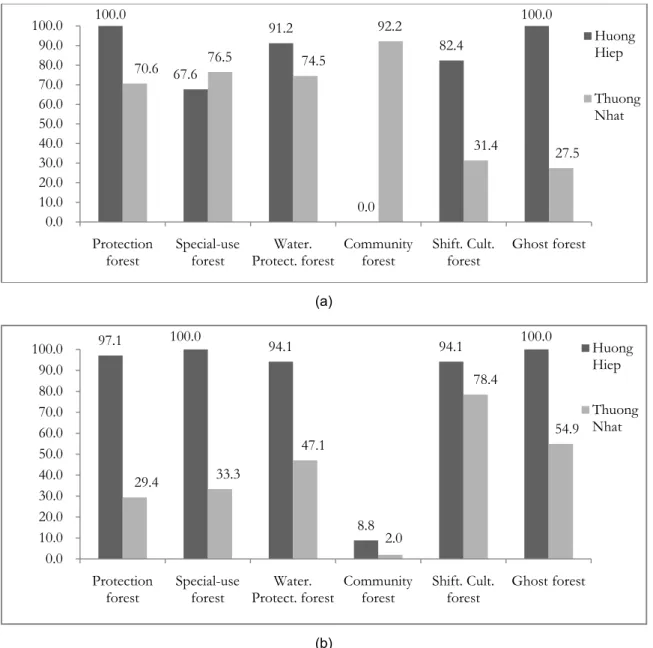
Figure 5 Customary and formal forest classifications (a) Present and (b) Twenty years ago (%)23
4. Cultural capital
The role of forests in the communes is intangibly represented by customary forest classifications and cultural customs such as festivals and funerals. Formal forest management had a tighter grip in Thuong Nhat than Huong Hiep (Figure 5). Formal forest classifications are protection, special-use and community forests. Customary forest classifications include: shifting cultivation and ghost forest. Watershed protection forests could be both formal and customary. Customary forest classifications in Huong Hiep have been well
2
3 The percentages refer to how many households recognized this forest classification.
100.0 67.6 91.2 0.0 82.4 100.0 70.6 76.5 74.5 92.2 31.4 27.5 0.0 10.0 20.0 30.0 40.0 50.0 60.0 70.0 80.0 90.0 100.0 Protection
forest Special-use forest Protect. forestWater. Community forest Shift. Cult. forest Ghost forest
Huong Hiep Thuong Nhat 97.1 100.0 94.1 8.8 94.1 100.0 29.4 33.3 47.1 2.0 78.4 54.9 0.0 10.0 20.0 30.0 40.0 50.0 60.0 70.0 80.0 90.0 100.0 Protection
forest Special-use forest Protect. forestWater. Community forest Shift. Cult. forest Ghost forest
Huong Hiep
Thuong Nhat
preserved—100% of the villagers identified ghost forests, which are old natural forest, in their commune. Even though the villagers of Huong Hiep formally did not participate in forest monitoring, each village had 2-6 ghost forests. The village patriarch of Phu An, stated that their ghosts forests were called Khe Meo and Bo Ho. If people illegally exploited these forests, they had to sacrifice a pig or buffalo as a fine. The village patriarch and elderly were in charge of this fining system.
The villagers of Thuong Nhat, however, did not really recognize a ghost forest (27.5%), but more than half of the villagers (54.9%) recognized a ghost forest in the past (Figure 5). Some villagers of Thuong Nhat revealed that they did not dare to enter their ghost forest, which was called Cr Lau and located in BMNP, but a majority of the villagers stated that the ghost forest was something from the old and ‘superstitious’ times. The existence of customary forest classification systems seems, therefore, to be related to the level of integration of local villagers in the formal forest management and BSM arrangements. When the villagers were asked what caused the forest classifications to change in the past twenty years, 82.4% of the villagers of Thuong Nhat identified state policy as a main driver of change as opposed to 35.3% in Huong Hiep. Furthermore, 13.7% of the villagers of Thuong Nhat claimed that the forest classifications changed due to cultural change, as opposed to 5.9% in Huong Hiep. Therefore, there was a positive relationship between the disappearance of ghost forest classification and the integration of government policies, such as BSM, in the communes.
5. Human capital
In terms of human capital, the villagers stated during the interviews and focus group discussions that they were trained on how to plant and maintain plantation forests, how and when to collect NTFPS, and how to protect and monitor the natural forest. In the future, they will most likely receive training on how to measure the carbon stocks in their forests. The households furthermore stated that their village headman organized monthly meetings in the village to discuss village affairs.
The villagers of Huong Hiep affirmed that they needed more training on: setting up plantation forests (47.1%), intensive cultivation (23.5%), and livestock rearing (20.6%). Households of Thuong Nhat needed more training on intensive cultivation (51.0%) as well as more information on market prices (76.5%) and market products (31.4%). As seen in their higher preference for obtaining market-related knowledge, the villagers of Thuong Nhat had more ambitions to further integrate in the market economy, whereas the villagers of Huong Hiep started to consolidate their process of market integration. As shown in Table 5, the villagers of Huong Hiep owned their Acacia plantation for only 4.38 years on average as opposed to 6.23 years for rubber plantations in Thuong Nhat.
In the formal forest management process, customary knowledge seemed not to be utilized. In banning shifting cultivation, knowledge and institutions arrangements related to shifting cultivation systems will also be most likely lost in the near future. Nevertheless, the patriarchs of both communes stated that they actively advised villagers not to practice shifting cultivation anymore, since it was perceived to be environmentally degrading. This view was also shared by the government officials. This shows that traditional institutions are
not static and/or unalterable. They are adaptive, like other institutions, to a changing environment and economy. It was, however, unclear to what extent shifting cultivation really contributed to forest degradation and deforestation in the respective communes.
6. Social capital
Villagers expanded their network within the formal circles. They also learned how to get access to loans, credit and subsidies. However, there was a real risk that poor households have not been able to expand their social network at the same pace as non-poor households. In Huong Hiep, a lack of having a broad social network resulted in a situation in which only a few households could financially benefit from forest protection. When a (non-poor) member of the CFMB of Huong Hiep was asked why he was chosen to be paid for BSM, he claimed: “I live here so I have knowledge on the village and forests. Everyone knows me, I have power and prestige” (semi-structured interview). Therefore, paying villagers to engage in forest protection in Huong Hiep was rather pro-power than pro-poor.
Other key components of social capital are customary institutions and actors. As seen in the previous section, customary rules and punishments were still enforced in Huong Hiep, because the local authorities had a lesser grip on its communities. This resulted in a double fining-system in the commune. If villagers illegally exploited the forest they would be punished by both formal and customary institutions. The commune ranger of Huong Hiep furthermore stated: “The patriarch has more power than the village headman [in Huong Hiep]. The traditions of the village are still intact. So the patriarch can ban people from the village or fine them, or let them kill a pig of buffalo if they cut trees in the forest” (semi-structured interview).
Therefore, there was a relationship in Huong Hiep between enforcement of customary rules and power of customary institutions. While the patriarch was not noted as an educator in the survey, he continued to be a central institution in the village. In Thuong Nhat, on the other hand, the status of the village patriarch had been reduced to a ceremonial one. One villager of Thuong Nhat said during an in-depth interview: “The village patriarch teaches us about how to conduct weddings, festivals and burials, but the village headman tells us how to make use of the forest”. The villagers were less likely to consult the patriarch on forest management, BSM or livelihood affairs.
In the formal BSM processes of both communes, customary institutions and actors, such the village patriarchs, were hardly involved. Figure 6 shows a Venn-Diagram on the importance of actors in BSM and community forestry in Thuong Nhat. Three observations stand out. First, the village patriarch does not play a role in decision-making in BSM or community forestry (being ranked as least important V). In the survey, only 17.6% of the villagers stated that the patriarch involved them in BSM or community forestry. Second, the village, which is supposed to be the central unit in community forestry, does not have much decision-making power in BSM either (being ranked as second-least important IV). Third, the village headman is the most important person in BSM, even though his main responsibility is to implement government (provincial, district and commune government) policies in the village. For this reason, it can be concluded that BSM and community forestry in Thuong Nhat have been mainly top-down processes
implemented by formal institutions. Similar observations have also been made in Huong Hiep regarding stakeholder involvement. However, as Huong Hiep was still a pre-BSM commune, the roles of stakeholders did not take shape yet.
Figure 6 Venn-Diagram on community forestry and BSM in Thuong Nhat Note: I = very important and V = not important at all
Table 6 Attitudes towards BSM in Thuong Nhat
Statements: Completely
disagree
Disagree Neutral Agree Fully agree Don't know 1. BSM gives me a higher
income from forest protection.
15.7 23.5 21.6 25.5 2.0 11.8
2. BSM doesn't allow me to make use of the natural forests anymore.
0.0 35.3 5.9 35.3 9.8 13.7
3. BSM is better for our natural
forests. 2.0 0.0 5.9 31.4 47.1 13.7
4. BSM is important for our
next generation. 0.0 2.0 7.8 29.4 49.0 11.8
5. BSM allows me to have a better understanding of the forests.
0.0 5.9 15.7 39.2 23.5 15.7
6. Our village patriarch supports
BSM completely. 3.9 13.7 7.8 29.4 31.4 13.7
7. Our village headman
supports BSM completely. 0.0 5.9 0.0 43.1 37.3 13.7
8. The BSM forest is located in
our ghost forest. 41.2 29.4 3.9 2.0 0.0 23.5
How did the villagers of Thuong Nhat feel about the BSM arrangements in their villages? This is elucidated in more detail in Table 6, which shows the responses of the villagers to various statements on BSM. Results for Huong Hiep were omitted due to the low response rate on the statements (n=2). The statements were divided into benefits of BSM (statements 1 and 2); relevance of BSM (3, 4 and 5); institutions and BSM (6 and 7); and customary forest classifications and BSM (8). In terms of financial benefits, 39.2% of the households did not think that BSM gave them a higher income as opposed to 27.5% thinking they could get a higher income. Strictly speaking, the villagers did get a higher income, but as shown in this study, the financial benefits were minimal. Opinions were also divided about BSM and access to the natural forest—35.3% disagreed and 45.1% agreed with Statement 2. The majority of the villagers felt that they had less access to the natural forest due to BSM. In terms of the relevance of BSM, the villagers generally agreed with statements about BSM being better for the natural forest, important for the next generations and allowing the villagers to have a better understanding of the forests. The villagers also generally agreed with the village headman and patriarch supporting BSM. However, still 17.6% of the villagers thought that their patriarch did not support BSM. As shown in the previous section, the patriarch was not really involved in BSM (Figure 6). Finally, with the community forest being located in the buffer-zone of BMNP and not in its core-area; BSM did not affect people’s ghost forests. An absolute majority of the villagers (70.6%) stated that BSM activities did not take place in the ghost forest.
7. Vulnerability context
Averagely in the past ten years, the villagers of both communes have been affected three times by extreme weather and natural hazards (Table 7). The villagers of Thuong Nhat claimed to be very much (8.2%) and much (42.9%) affected by extreme weather as opposed to the villagers of Huong Hiep claiming to be much (23.5%) and not so much (64.7%) affected. The reason why the households of Thuong Nhat claimed to be more severely affected was related to plantation forests. In the past ten years, 76.5% of the villagers of Thuong Nhat stated that their plantation forests were partly or completely destroyed by natural hazards. Having fewer plantation forests, only 11.8% of the households Huong Hiep stated the same. Therefore, owning plantation forest made people more vulnerable to natural hazards. The financial damage for the villagers of Thuong Nhat was therefore considerably higher than for the villagers of Huong Hiep—288.9% of the average monthly income for the former and 37.9% for the latter (Table 7).
Table 7 Occurrence and financial damage of natural hazards in both communes in the past ten years
How often affected by extreme weather? (times) Mean SD min max
Huong Hiep 3.03 2.43 0 10
Thuong Nhat 2.90 2.06 0 12
How much was the damage? (VND) Mean SD min max
Huong Hiep (n=33) 5,943,939 7492055.8 250,000 30,000,000
Huong Hiep borrowed money from family/friends (20.6%) or the bank (17.7%) or they sold their livestock/other possessions (17.7%). They also received money from the government (17.7%) or NGOs/Red Cross (14.7%). The villagers in Thuong Nhat mainly claimed to receive money from the government (39.2%) or they sold their livestock/other possessions (13.7%). Therefore, the villagers of both communes had access to various financial channels to deal with natural disasters, but both groups primarily depended on the government. Apart from this, still 27.5 % of the villagers in Thuong Nhat claimed that they not do anything after being struck by a disaster, showing that many households lacked effective financial coping mechanisms. Most households of both communes thought that forest protection was important for dealing with natural hazards. Only 17.7% and 5.9% of the households of Huong Hiep and Thuong Nhat respectively thought that forest protection was not important. Furthermore, households of Thuong Nhat felt that BSM was either very important (15.7%) or important (52.9%) in preventing natural disasters.
The villagers were asked why forest protection was important (Figure 7). Both groups mentioned reasons related to natural hazard prevention, climate regulation, future generations and environmental protection. Most villagers attached ecosystem values to forest protection, but the only mentioned cultural value was ‘future generations’. Villagers stated that they wanted to invest in the community forest because they wanted their children to be able to reap the benefits from it. Forest protection was therefore not necessarily only because of monetary benefits. A community Red Book gave the households of Thuong Nhat security in the sense of that all activities done in the community forest would eventually be beneficial to them and their children.
Figure 7 Reasons to protect the forest according to the villagers (%)
Discussion and Conclusion
The villagers in Huong Hiep and Thuong Nhat commune were affected by BSM in various ways. In 5.88 2.94 11.76 5.88 8.82 14.71 2.94 1.96 13.73 3.92 43.14 3.92 54.90 15.69 0 10 20 30 40 50 60 70 80 90 100 Don't know Others Climate regulation Environmental protection Future generations Storm buffers/Disaster prevention Reduces droughts Reduces floods/Water protection
Prevent erosion Thuong
Nhat Huong Hiep
Huong Hiep, there was no real BSM; the local government had just chosen an elite group of villagers to protect the forests for a fee. Elite capture of benefits remains an important issue in Vietnam’s forest governance (Coe, 2016). In Thuong Nhat, on the other hand, the villagers owned a community forests through a Red Book or were in the process of having one, and the whole village was involved in forest patrolling. Besides that, Bach Ma National Park also allowed villagers to have access to the Park and to be able to collect NTFPs, in exchange for villagers to patrol and protect the Park. However, the following main conclusions related to the impact of BSM, from a sustainable livelihoods approach could be drawn.
First of all, the direct financial aspects (i.e., fees for forest protection) of the BSM arrangements turned out to play a marginal role. These fees were mainly used to cover the expenses of patrolling the forests. However, the co-benefits turned out to be more important. Villagers in Thuong Nhat could legally collect NTFPs and sell them on the market. The villagers in Thuong Nhat also received a community Red Book, allowing them to reap the long-term benefits of their conservation and reforestation efforts. Furthermore, the villagers in both communes received loans, material and training to be able to plant plantation forests and cash crops. This has also been confirmed in the studies of Huynh et al. (2016) and Haas et al. (2019).
Secondly, some villagers faced food insecurity, since they were not officially allowed to conduct shifting cultivation anymore. This was not always reinforced as this study has shown. Even though they were given rice, they were still more vulnerable to food insecurity. The villagers were also more vulnerable to natural hazards, since they invested a lot of money in establishing plantation forests. However, past natural disasters have shown that plantation forests, especially rubber, in the area could easily be destroyed, making the villagers nowadays more vulnerable to external shocks. Dao (2015) concluded that food security continued to be a significant issue for rubber farmers and other smallholders.
Thirdly, the local government tended to eliminate customary forest arrangements, such as shifting cultivation or the maintenance of ghost forests. BSM arrangements were also implemented through the formal institutions, represented by the village headman, whereas the village patriarch saw his/her role diminishing to merely a ceremonial one. Our previous study on community forestry in Vietnam underlined that formal institutions continued to have more say than their customary counterparts (Bayrak and Marafa, 2020).
Fourthly, the main internal drivers of success of BSM in the commune include: the ability for households to diversify their livelihoods; involvement of the community, customary institutions and arrangements; access to land and credit; human and social capital accumulation; and increased resilience (Table 8). Households with a low income or without land were more likely to engage in environmentally degrading activities. Furthermore, customary institutions have been most important in regulating customary forest classifications by enforcing customary laws and fines. The opposite has been found for formal classifications, arrangements and institutions. This could be both an opportunity and a threat: formal institutions could work within existing socio-cultural structures (Casse et al., 2019) or an overlap could result in deterioration of customary social and cultural capital. Lastly, the external drivers contributing to the
success and failure of BSM deal with devolution, infrastructure, external ecological, social, and ecological shocks, legislation, and true community involvement (Table 8).
Table 8 Drivers of success or failure for BSM
Dimensions: For success For failure
Internal drivers
Alternative livelihood strategies. Livelihood diversification. Involvement of the community.
Involvement of customary institutions and arrangements.
Land tenure and access to credit. Human and social capital accumulation. Increased resilience.
Food insecurity.
Unregulated integration in the market economy.
Land conflicts.
Deterioration of customary arrangements. Physical constraints.
Vulnerability to external shocks.
External drivers
Devolution.
Clear legislation on land tenure True community consultation Context-specific implementation.
Uncontrolled infrastructural development. External shocks.
Price fluctuations.
Overlaps between formal and customary forest classifications.
This study has provided empirical insights into two indigenous communes regarding the livelihood impacts of BSM, forest devolution and conservation initiatives. A sustainable livelihood approach has been adopted to identify these impacts. The limitations of this study are that its results are not representative for the entire situation of Vietnam. Future studies could adopt this study’s methodology in order to investigate aforementioned themes on the national context of Vietnam. Other limitations of this study are that its results are rather descriptive than explanatory. Due to the small sample size, only relatively simple statistical tests have been conducted. Therefore, this study adopted a mixed-methods approach, combining quantitative research with qualitative inquiry. Future studies could investigate how livelihood capitals overlap. Possible questions include: are ghost forests more biodiversity rich than other types of forest? How effective are customary institutions in governing the commons? Does BSM lead to income inequality? These questions are important as livelihoods are continuously adapting to a changing environment. Lastly, this study attempted to identify possible drivers of failure and success for BSM. This framework needs to be further developed, and tested empirically in multiple research sites.
Acknowledgements
This study has been conducted at the Department of Geography and Resource Management of the Chinese University of Hong Kong as part of the doctoral research of the author. My sincere gratitude to Professor Lawal Marafa. Hue University of Agriculture and Forestry and Hue University facilitated the research. I am grateful to the student helpers, local communities and government officials of Huong Hiep and
Thuong Nhat as well as Tropenbos International Vietnam. Special thanks to Renée Wei Bayrak-Hsu for the English-to-Chinese translation. I would also like to thank the anonymous reviewers and editor for their feedback. All views and opinions expressed in this manuscript are my own and do not represent the organizations mentioned here. I have furthermore no conflict of interest to disclose.
References
Adger, W. N. (2006). Vulnerability. Global environmental change, 16(3): 268-281.
Agrawal, A. (1995). Dismantling the divide between indigenous and scientific knowledge. Development and change, 26(3): 413-439.
Agrawal, A., Chhatre, A., and Hardin, R. (2008). Changing governance of the world's forests. Science, 320(5882): 1460-1462.
Agrawal, A., Nepstad, D., and Chhatre, A. (2011). Reducing Emissions from Deforestation and Forest Degradation. Annual Review of Environment and Resources, 36(1): 373-396.
Århem, N. (2009). In the sacred forest: Landscape, livelihood and spirit beliefs among the Katu of Vietnam. SANS Papers in Social Anthropology. Göteborg: Goteborg University.
Bayrak M.M. (2019). State of Forest Governance in Vietnam: Where Are the Local Communities? In: James, H. (Ed.) Population, Development, and the Environment. Singapore: Palgrave Macmillan, pp 273-295. Bayrak, M. M., and Marafa, L. M. (2020). REDD+ as a Vehicle for Community-Based Forest Management?
Critical Insights from Vietnam. Small-scale Forestry, 1-25 (in press).
Bayrak, M. M., Tran N. T., and Burgers, P. P. M. (2013). Restructuring space in the name of development: the socio-cultural impact of the Forest Land Allocation Program on the Indigenous Co Tu people in Central Vietnam. Journal of Political Ecology, 20: 36-52.
Bayrak, M.M. (2015). Rethinking Livelihoods, Forest Governance and Socio-ecological Systems: The State of REDD+ in Vietnam. Hong Kong: The Chinese University of Hong Kong PhD Dissertation.
Bayrak, M.M., Tran, T.N, and Marafa L.M. (2014). Creating Social Safeguards for REDD+: Lessons Learned from Benefit Sharing Mechanisms in Vietnam. Land, 3(3): 1037-1058.
Berkes, F. (2008). Sacred Ecology. New York and London: Routledge.
Bourdieu, P. (1986). The forms of capital. In: Richardson, J. (Ed.) Handbook of Theory and Research for the Sociology of Education. Westport, CT: Greenwood.
Burgers, P. (2004). Resource Management under Stressed Livelihood Conditions: Changing livelihoods and management practices in the bufferzone of the Kerinci Seblat National Park, Kerinci District, Sumatra. Utrecht: Utrecht University PhD Dissertation.
Casse, T., Milhøj, A., Nielsen, M. R., Meilby, H., & Rochmayanto, Y. (2019). Lost in implementation? REDD+ country readiness experiences in Indonesia and Vietnam. Climate and Development, 11(9): 799-811.
Chambers, R. (1995). Poverty and livelihoods: whose reality counts? Environment and urbanization, 7(1): 173-204.
Chambers, R., and Conway, G.R. (1991). Sustainable Rural Livelihoods: Practical Concepts for the 21st Century, IDS Discussion Paper 296. Brighton, UK: University of Sussex.
Coe, C. A. (2016). The allocation of household-based forest protection contracts in Tam Dao National Park, Vietnam: Elite capture as a bureaucratic impulse against community capture. Journal of sustainable forestry, 35(2): 89-118.
Coleman, J. S. (1988). Social capital in the creation of human capital. American journal of sociology, 94: S95-S120.
Commune Peoples Committee Huong Hiep—CPC Huong Hiep, (2012). Statistical Yearbook. Dakrong, Vietnam: CPC Huong Hiep.
Costanza, R., Wilson, M. A., Troy, A., Voinov, A., Liu, S., and D'Agostino, J. (2006). The value of New Jersey's ecosystem services and natural capital. New Jersey: Department of Environmental Protection. Dam, B. V., Catacutan, D. C., and Ha, H. M. (2014). Importance of National Policy and Local Interpretation
in Designing Payment for Forest Environmental Services Scheme for the Ta Leng River Basin in Northeast Vietnam. Environment and Natural Resources Research, 4(1): 39 - 53.
Dao, N. (2015). Rubber plantations in the Northwest: rethinking the concept of land grabs in Vietnam. Journal of Peasant Studies, 42(2): 347-369.
De Haan, L. (2017). Livelihoods in development. Canadian Journal of Development Studies/Revue canadienne d'études du développement, 38(1): 22-38.
Ellis, F. (1998). Household strategies and rural livelihood diversification. The Journal of Development Studies, 35(1): 1-38.
Food and Agriculture Organization of the United Nations—FAO. (2010). Global Forest Resources Assessment: Global Tables. Available at: <http://www.fao.org/forestry/fra/fra2010/en/> [accessed 10.05.2019]
Haas, J. C., Loft, L., and Pham, T. T. (2019). How fair can incentive-based conservation get? The interdependence of distributional and contextual equity in Vietnam's payments for Forest Environmental Services Program. Ecological economics, 160: 205-214.
Huong, N. Q., and Matusch, T. (2012). Human Activity Impact in Buffer Zones of Protected Areas in Vietnam, A Case Study of Bach Ma National Park. International Symposium on Geoinformatics for Spatial Infrastructure Development in Earth and Allied Sciences, Ho Chi Minh City, Vietnam.
Huynh, H. T. N., Bruyn Lobry de, L., Prior, J., and Kristiansen, P. (2016). Community participation and harvesting of non-timber forest products in benefit-sharing pilot scheme in Bach Ma National Park, Central Vietnam. Tropical Conservation Science, 9(2): 877-902.
Institute of Strategy and Policy on Natural Resources and Environment—ISPONRE. (2009). Viet Nam Assessment Report On Climate Change (VARCC). Hanoi, Vietnam: Kim Do Publishing House.
McElwee, P. D. (2016). Forests are Gold: Trees, People, and Environmental Rule in Vietnam. Seattle, Washington: University of Washington Press.
Salemink, O. (2003). The ethnography of Vietnam's Central Highlanders: a historical contextualization, 1850-1990. Honolulu, HI: University of Hawaii Press.
Salick, J., and Byg, A. (2007). Indigenous peoples and climate change. Oxford: Tyndall Center for Climate Change Research.
Scoones, I. (1998). Sustainable Rural Livelihoods: A Framework for Analysis. IDS Working Paper 72. Brighton, UK: University of Sussex.
Sen, A. (1985). Commodities and Capabilities. Amsterdam, The Netherlands: Elsevier Science.
Sunderlin, W. D., Angelsen, A., Belcher, B., Burgers, P., Nasi, R., Santoso, L., and Wunder, S. (2005). Livelihoods, forests, and conservation in developing countries: an overview. World development, 33(9): 1383-1402.
Wang G.Y., Mang S., Krzyzanowski J., Guo F.T., Wang T.L., Riehl B., Kang H.J., Li Q.L., and Innes J.L. (2015). Climate change and forest adaptation in the Asia-Pacific. Journal of Geographical Research, 63: 73-110.
Zoomers, A. (2014). Rural livelihoods in a context of new scarcities. In: Desai, V., and Potter, R.B. (Eds.) The Companion to Development Studies. Oxon and New York: Routledge.
投稿日期:108 年 10 月 05 日 修正日期:108 年 11 月 06 日 接受日期:108 年 11 月 30 日