義守大學管理學院管理博士班
Postgraduate Program in Management
I-Shou University
博 士 論 文
高績效工作系統自相矛盾特質之解密:
工作要求資源模式觀點
Disentangling the Paradoxical Nature of High
Performance Work Systems: A Perspective of the
Job Demands-Resources Model
指導教授: 高月慈 博士
林鉦棽 博士
研 究 生: 陳媛玲
i
In memory of my dearest father
Ching-Huei Chen
who lived his life as a hero and a role model for the principles of kindness, integrity, and persistence.
ii
Acknowledgements
Six Years’ Worth of ThanksSo many people deserve a note of thanks for making this dissertation possible, rewarding, and (I hope) successful. First and foremost, I give incalculable thanks to Professor Julia Lin, Professor Cheng-Chen Timothy Lin, and Professor Yueh-Tzu Kao, incalculable thanks. Not only are they talented scholars and dedicated advisors, but they have also become a family to me. Our time together was simply the best. I thank them for saying yes, for caring as deeply about the research as I do, for their giving, and for being such a super league of mentors and friends. I also thank Karen Liu and S. J. Chuang for proofreading the survey items as well as my committee members especially Professor Shyh-Jer Chen and Professor Hsi-An Shih, whose innovative and inspirational expertise and spirit lend sophistication to this research.
Finally, I am enormously appreciative of the eager willingness of Sean Huang, Joanne Chen, Helen Lien, and my beloved family to devote some of their valuable time to accompany me on my great and grand PhD adventure, and for all they have done—and still do—for me.
iii
Abstract
In the 21st century industrial environment, human resource management (HRM) has been widely recognized as the key determinant of organizational competitive advantage. Recently, high performance work systems (HPWS) have received considerable attention from scholars and practitioners who value a bundled system of HR practices that will benefit organizations in promoting employee value and performance. However, there exist both positive and negative effects of HPWS-employee outcomes linkages. Thus, this study aims to explore the possible mechanisms and boundary conditions of HPWS implementation. First, relying on the job demands and job resources perspectives, this study proposes a cross-level moderated-mediation framework to disentangle the paradoxical nature of HPWS. Second, drawing on the job demands-resources (JD-R) theory, this study elucidates how work engagement and burnout, two opposing mechanisms, mediate the relationships between HPWS and employee outcomes. Simultaneously, employee proactive behaviors matter as organizations enact HPWS. Third, through seeking resources, seeking challenges, and reducing demands, employees are able to reshape HPWS. Job crafting theory provides the theoretical underpinning for depicting HPWS and job crafting moderated-mediation effects on employee well-being, eventually leading to both positive and negative employee working attitudes and behaviors. Overall, based on an integrated comprehensive perspective taken from the JD-R theory and job crafting theory, this study brings insights in answering above three research issues. Data were obtained from 240 employees and 45 supervisors in Taiwan. The HPWS data was aggregated to the group level, testing (1) the mediating effects of work engagement and burnout on the relationships between HPWS and employee attitudinal and behavioral outcomes, respectively; and (2) the
iv
moderated-mediation effects between HPWS and employee job crafting behaviors on HPWS-employee outcomes relationships via work engagement and burnout, respectively. No supports has been found for the mediating hypotheses. Yet the empirical results lend strong support to the moderated-mediating hypotheses, showing that (1) job crafting moderates the mediating effect of the cross-level relationship between HPWS and employee job satisfaction, affective commitment, and person-job fit through work engagement; and (2) the mediating effect of the cross-level relationship between HPWS and employee intention to leave, work-family conflict, and self-handicapping through burnout, such that the mediating effect is stronger when the level of job crafting is high rather than low. Theoretical, practical implications as well as limitations and future research directions are discussed.
KEYWORDS: high performance work systems (HPWS), job demands-resources (JD-R) theory, work engagement, burnout, job crafting
v
摘 要
在二十一世紀的產業環境中,人力資源管理已成為企業創造競爭優勢的關鍵。近 年來,高績效工作系統受到學者與實務工作者的高度重視,認為透過一套高績效 人力資源管理系統有助於組織提高員工的價值與績效。然而,高績效工作系統與 員工績效間之關聯存在著正反兩面的結果。爲此,本研究旨在剖析高績效工作系 統運作中可能的中介機制與影響因素。本研究目的有三:首先,以工作要求-資 源的觀點,提出一個跨層次調節式中介的研究架構與方法,從而深入探討高績效 工作系統自相矛盾的特質。其次,基於工作要求-資源理論,本研究提出兩個對 立的員工健康幸福中介機制,討論工作投入及精疲力竭對於高績效工作系統與員 工的工作態度與行為之間的關係。在組織推動高績效工作系統時,員工積極主動 的行為也自有其重要性,員工透過尋找資源、追求挑戰及減輕要求來重新評估聚 積於個人身上之高績效工作系統。藉由工作形塑之立論,本研究也同時討論工作 形塑與高績效工作系統交互作用後,透過工作投入及精疲力竭的中介歷程,進一 步影響員工的工作態度與行為。因此,本研究以一個獨特且完整性的角度,以工 作要求-資源及工作形塑的立論,對上述的三個研究課題做出回答。本研究對象 來自於台灣 240 位員工與 45 位主管。高績效工作系統資料彙整到團隊層次來檢 驗:當工作投入及精疲力竭為中介變數,檢視高績效工作系統是否分別透過工作 投入及精疲力竭而影響員工的工作態度與行為;工作形塑與高績效工作系統調節 式中介的交互作用是否分別透過工作投入及精疲力竭而影響高績效工作系統與 員工工作態度與行為間之關聯性。研究結果顯示,工作投入及精疲力竭中介之假 說沒有得到支持。工作形塑調節假說達顯著水準,說明在員工展現較高的工作形 塑行為情形下,工作形塑調節了高績效工作系統透過工作投入的中介歷程而影響vi 員工的情感性認同、工作滿意度及個人工作適配度;又,工作形塑調節了高績效 工作系統透過精疲力竭的中介歷程而影響員工的離職傾向、職家衝突及自我設限。 最後,本研究說明理論面及管理實務的意涵,並依據研究結果加以討論本研究之 限制與未來的研究方向。 關鍵詞:高績效工作系統、工作要求資源理論、工作投入、精疲力竭、工作形塑
vii
Table of Contents
List of Tables
... ixList of Figures
... xChapter 1 INTRODUCTION
... 1Chapter 2 LITERATURE REVIEW AND HYPOTHESES
DEVELOPMENT
... 62.1 High Performance Work Systems (HPWS): A Glance at the Past and a New Light for the Future ... 6
2.1.1 Attributes of HPWS ... 7
2.1.2 Theoretical Perspectives Related to HPWS Literature ... 9
2.1.3 The Value of HPWS on Employees: Enrichment vs. Exploitation ... 10
2.2 Job Demands-Resources Theory ... 13
2.2.1 The Impacts of HPWS on Job Demands and Job Resources ... 15
2.2.2 Mediation: The Mechanisms of HPWS’s Influence as Reflected in Work Engagement ... 17
2.2.3 Mediation: The Mechanisms of HPWS’s Influence as Reflected in Burnout ... 19
2.3 Job Crafting Theory ... 21
2.3.1 Job Crafting Framed in the Job Demands-Resources Model ... 24
2.3.2 Moderation: The Boundary Condition of HPWS’s Influence as Reflected in Job Crafting ... 26
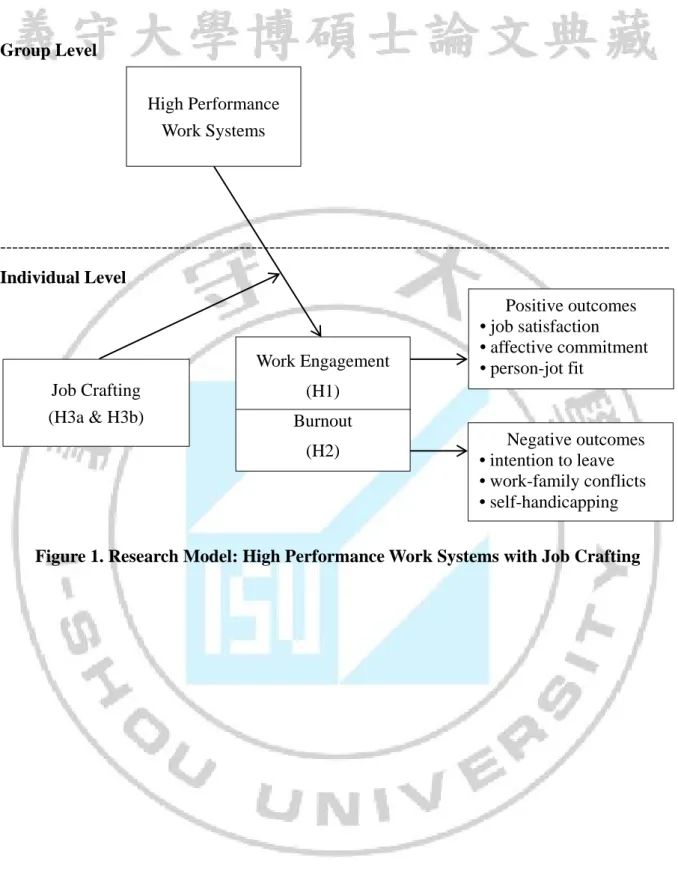
2.4 Research Model ... 30
Chapter 3 METHODS
... 323.1 Sample and Procedures ... 32
3.2 Measures ... 33
3.3 Analytical Techniques... 36
Chapter 4 RESULTS
... 384.1 Confirmatory Factor Analyses ... 38
viii
4.3 Hypothesized Structural Model ... 41
4.4 The Mediating Effects and an Integrated Moderated-Mediation Model of Work Engagement ... 44
4.5 The Mediating Effects and an Integrated Moderated-Mediation Model of Burnout ... 53
Chapter 5 DISCUSSION
... 635.1 Theoretical Contributions and Implications ... 64
5.2 Practical Implications ... 67
5.3 Limitations and Directions for Future Research ... 69
5.4 Conclusions ... 71
REFERENCES
... 73ix
List of Tables
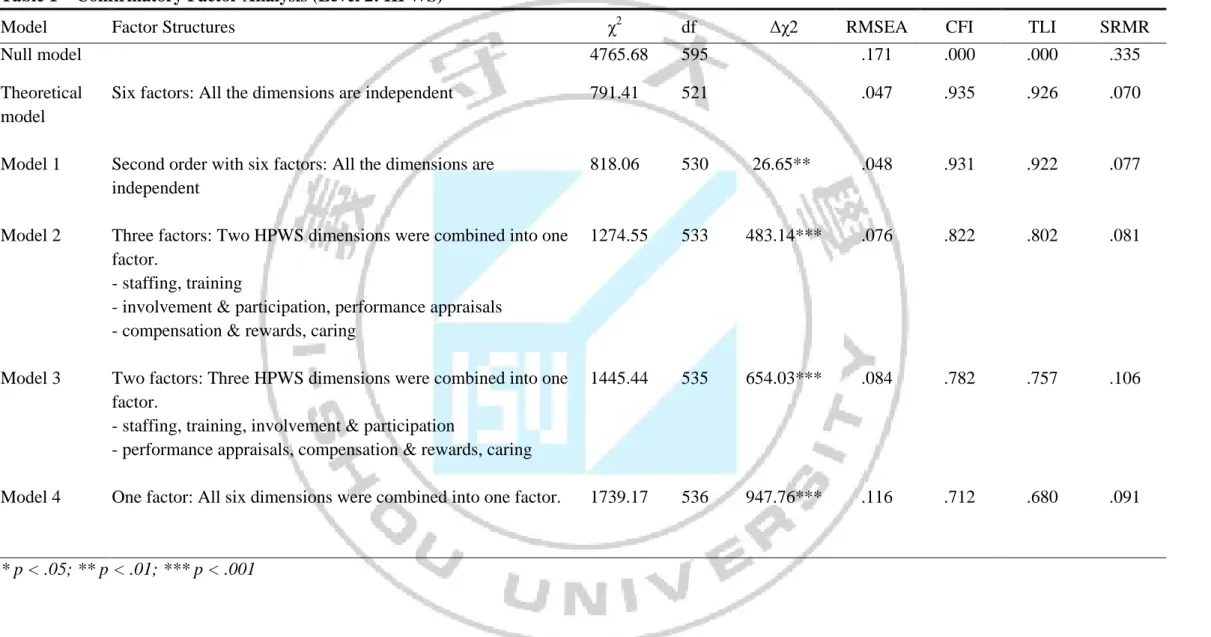
Table 1 Confirmatory Factor Analysis (Level 2: HPWS) ... 39
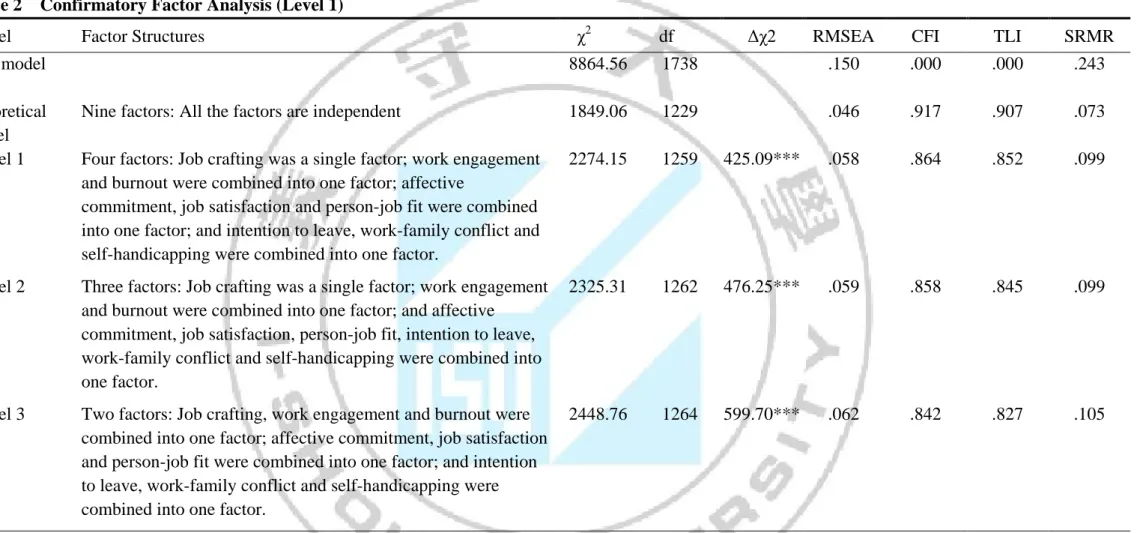
Table 2 Confirmatory Factor Analysis (Level 1) ... 40
Table 3 Means, Standard Deviations, and Correlations of the Study Variables ... 42
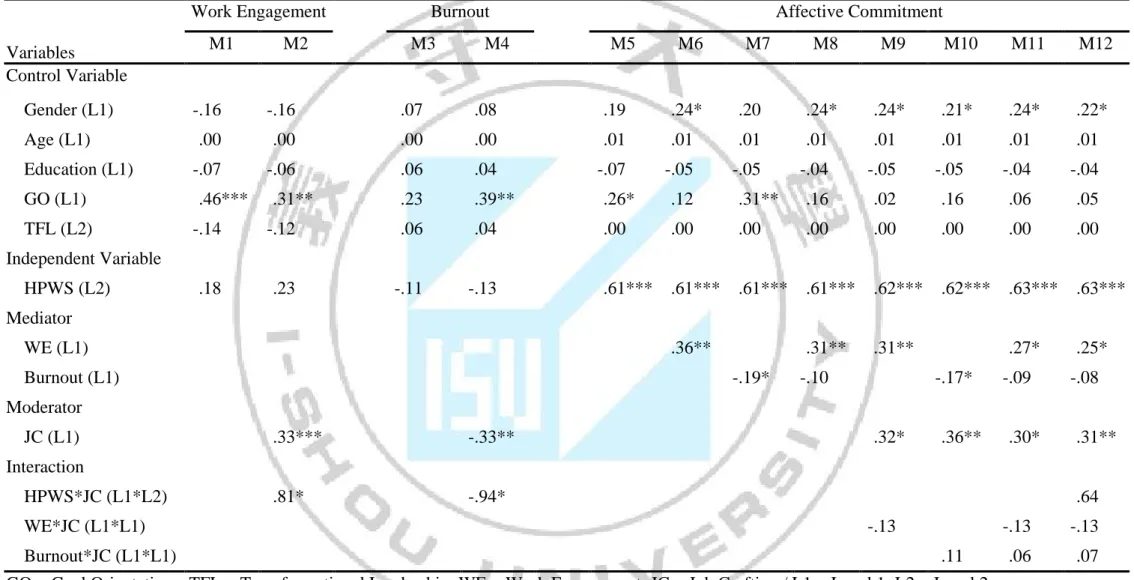
Table 4 Results of Hierarchical Linear Modeling Models (Affective Commitment) .... 47
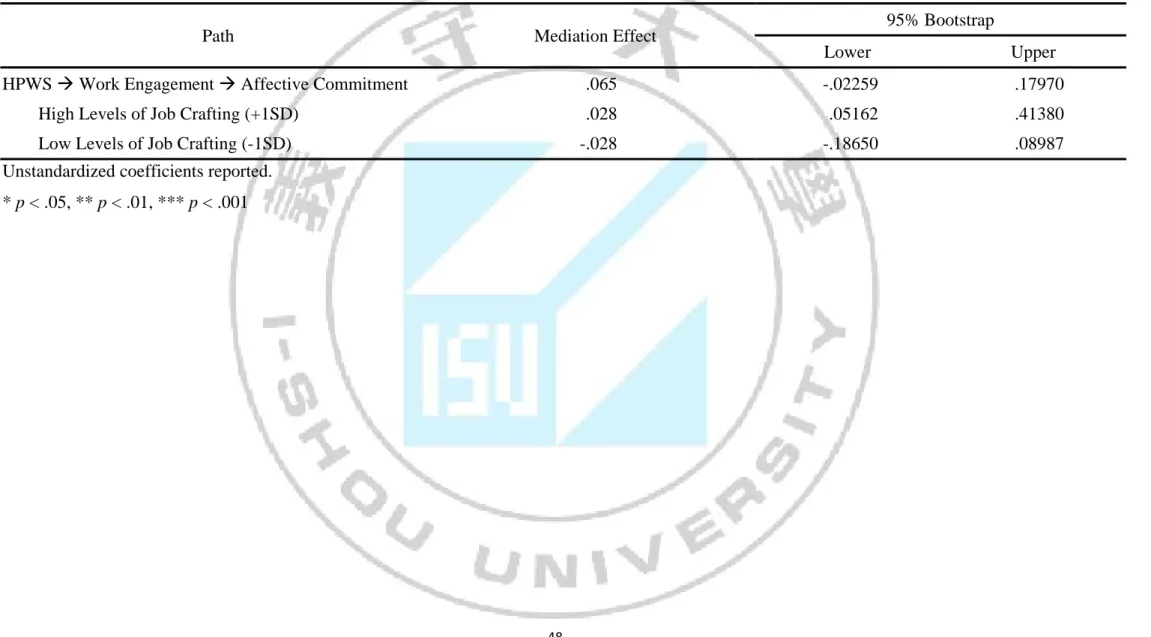
Table 5 Bootstrap Analysis on the Moderated-Mediation of HPWS on Affective Commitment ... 48
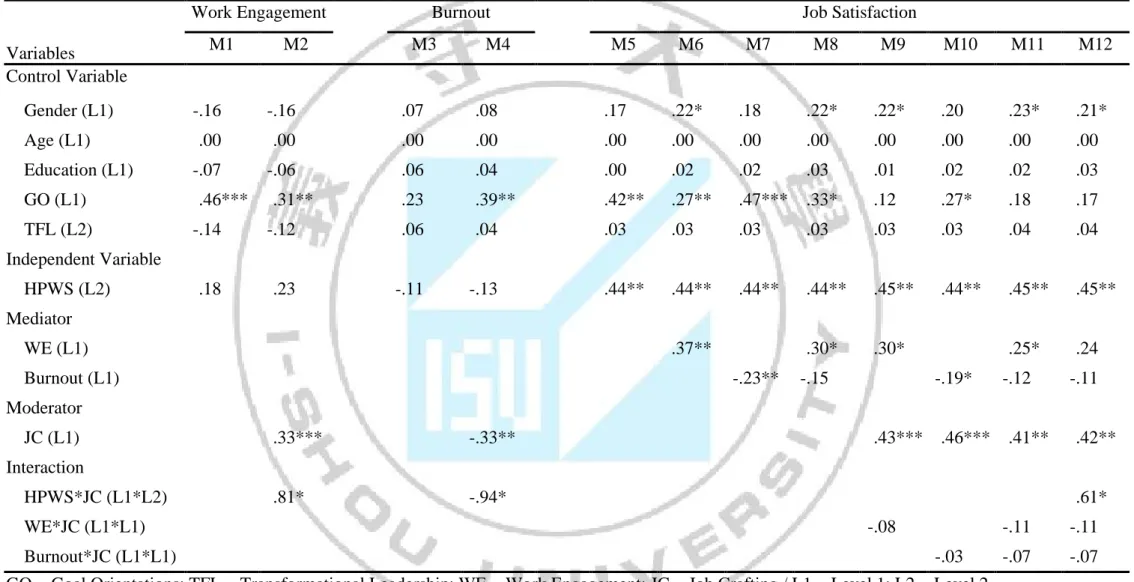
Table 6 Results of Hierarchical Linear Modeling Models (Job Satisfaction) ... 49
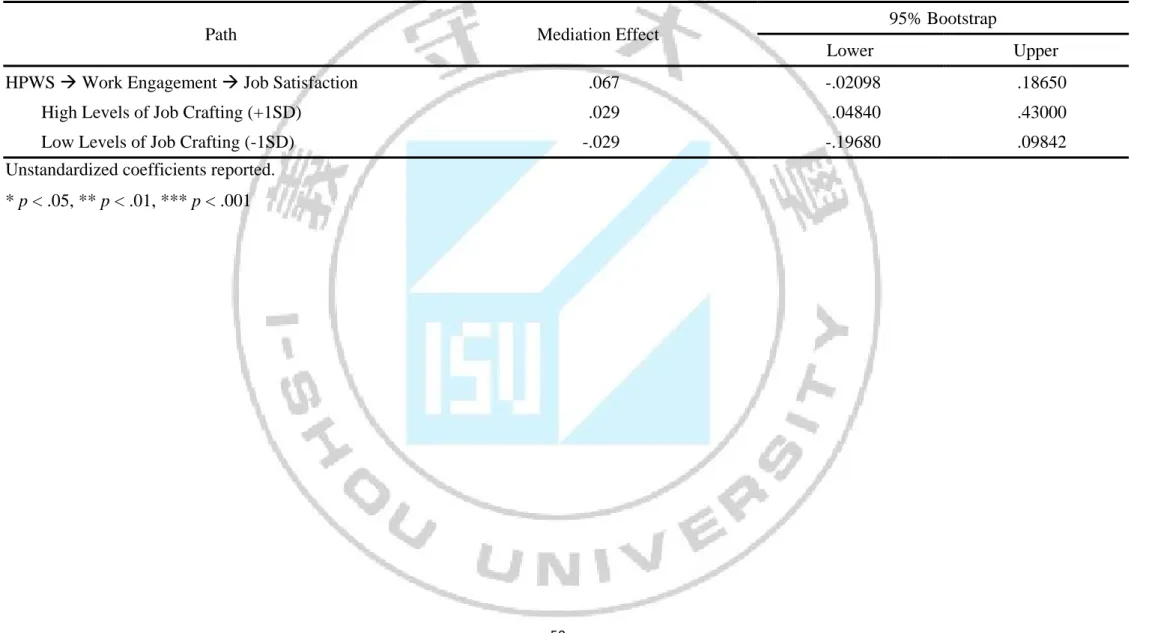
Table 7 Bootstrap Analysis on the Moderated-Mediation of HPWS on Job Satisfaction ... 50
Table 8 Results of Hierarchical Linear Modeling Models (P-J fit) ... 51
Table 9 Bootstrap Analysis on the Moderated-Mediation of HPWS on P-J Fit... 52
Table 10 Results of Hierarchical Linear Modeling Models (Intention to Leave) ... 56
Table 11 Bootstrap Analysis on the Moderated-Mediation of HPWS on Intention to Leave ... 57
Table 12 Results of Hierarchical Linear Modeling Models (Work-Family Conflict) .... 58
Table 13 Bootstrap Analysis on the Moderated-Mediation of HPWS on Work-Family Conflict ... 59
Table 14 Results of Hierarchical Linear Modeling Models (Self-Handicapping) ... 60
Table 15 Bootstrap Analysis on the Moderated-Mediation of HPWS on Self-Handicapping ... 61
x
List of Figures
Figure 1 Proposed Model: High Performance Work Systems with Job Crafting ... 31 Figure 2 The Interactive Effect of HPWS and Job Crafting on Work Engagement ... 53 Figure 3 The Interactive Effect of HPWS and Job Crafting on Burnout ... 62
1
CHAPTER 1 INTRODUCTION
Organizations today are increasingly utilizing systems of human resource (HR) practices to develop a workforce in improving organizational performance via enhancing employee competences, knowledge, motivation, skills, and opportunities (Appelbaum, Bailey, Berg, & Kalleberg, 2000; Huselid, 1995; Jiang, Lepak, Hu, & Baer, 2012; Patel, Messersmith, & Lepak, 2013). Numerous studies (e.g., Arthur, 1994; Bae & Lawler, 2000; Datta, Guthrie, & Wright, 2005; Guest, 2001; Huselid, 1995; Patel & Conklin, 2012; Ramsay, Scholarios, & Harley, 2000; Sun, Aryee, & Law, 2007; Way, 2002) have exemplified that organizations adopting high performance work systems (HPWS) are able to exert employees to contribute to superior organizational outcomes, including increased employee productivity, lower turnover rates, and improved financial performance. Such work systems are also labeled as 'high involvement work systems' (Bae & Lawler, 2000; Vandenberg, Richardson, & Eastman, 1999), or 'high commitment work systems' (Arthur, 1994; Whitener, 2001). Rather than emphasizing HR systems as a competitive advantage and an inimitable resource in achieving organizational operational goals (Becker & Huselid, 1998), HPWS stress a series of separate yet mutually reinforcing HR practices (Takeuchi, Lepak, Wang, & Takeuchi, 2007) and work in a way that gives employees the latitude to participate in decision making, to improve skills and motivation, and to seize opportunities to contribute effectively (Appelbaum, 2002; Harley, Sargent, & Allen, 2010).
Within this perspective, theoretically, by granting more opportunities, latitude, and discretion vis-à-vis enhancing skills to improve employee performance (Snape & Redman, 2010), HPWS have emphasized the effects of influencing employee attitudes and behaviors (Kehoe & Wright, 2013; Takeuchi, Chen, & Lepak, 2009). Empirically speaking, HPWS have been shown to improve employee attitudes, such as commitment (e.g., Ang, Bartram, McNeil, Leggat, & Stanton, 2013; Macky & Boxall, 2007; Takeuchi et al., 2009), engagement (e.g.,
2
Bal, Kooij, & De Jong, 2013), job satisfaction (e.g., Harley et al., 2010; Zhang, Zhu, Dowling, & Bartram, 2013; Wu & Chaturvedi, 2009), and to decrease turnover intentions (e.g., Alfes, Shantz, & Truss, 2012; Boon, Den Hartog, Boselie, & Paauwe, 2011; Jensen, Patel, & Messersmith, 2013). They have also been shown to increase employee helping behaviors (e.g.,
Chuang & Liao, 2010), job performance (e.g., Butts, Vandenberg, DeJoy, Schaffer, & Wilson, 2009; Chang & Chen, 2011; Ehrnrooth & Björkman, 2012; Kuvaas, 2008; Sun & Pan, 2008), service performance (e.g., Aryee, Walumbwa, Seidu, & Otaye, 2012; Liao, Toya, Lepak, & Hong, 2009), and organizational citizen behaviors (OCB) (e.g., Alfes et al., 2012; Kehoe & Wright, 2013; Snape & Redman, 2010; Uen, Chien, & Yen, 2009).
Despite these benefits, begging the question of whether there are two sides to HPWS, that is, if HPWS have both bright- and dark-side effects on employee outcomes. As evidenced, conventional accounts of HPWS show the connection between HPWS and positive employee attitudes and behaviors. However, the existing HPWS literature remains incomplete as little is known about how HPWS might negatively affect employees' attitudes and behaviors—the so-called 'dark side' effects of HPWS. Drawing on labor process theory (Braverman, 1974),
Ramsay et al. (2000) have suggested that HPWS may provoke stress or work intensification, thus endangering the psychological health of employees despite improving organizational performance. Furthermore, looking at things from an 'exploitation' perspective, Kroon, van de
Voorde, and Van Veldhoven (2009) found a positive association between HPWS and
emotional exhaustion via job demands. Closely related to the essence of above perspectives,
Godard (2001, 2004) has depicted the skepticism of HPWS effects on employees, observing an increased stressfulness associated with HPWS in which employees capture the subjective feeling of being languished. Empirically, White, Hill, McGovern, Mills, and Smeaton (2003)
found that employees do not always benefit from HPWS; long working hours and certain practices are more strongly related to negative job-to-home spillover. In addition, several
3
studies have also lent supports for these and related concerns, finding that employees tend to respond more negatively than positively to HPWS, as they perceive them to consist of a set of manipulative job demands or as a form of work intensification resulting in anxiety, role overload (Jensen et al., 2013), stress, and dissatisfaction (Wood, Van Veldhoven, Croon, & de Menezes, 2012), and workload (Ehrnrooth & Björkman, 2012).
As can be seen, there is disparate empirical evidence about how HPWS affect employees. While a plethora of research has found that HPWS are beneficial in terms of positive employee working attitudes and behaviors as a result of positive mediating mechanisms (e.g.,
Boxall, Ang, & Bartram, 2011; Kehoe & Wright, 2013; Liao et al., 2009; see review article,
Jiang, Takeuchi, & Lepak, 2013), few studies have examined negative employee work experiences, attitudes, and behavior related to HPWS in detail (e.g., Kroon et al., 2009). Above all, the paradoxical research findings regarding the effects of HPWS on employee outcomes may be due to the 'black box' of underlying processes embedded in HPWS that has not been fully explored (Takeuchi et al., 2007). Clearly, there are theoretical and empirical oversights to consider in terms of how and why HPWS engender bright- and dark-side effects on employees. To the best of my knowledge, no research has simultaneously explored the positive and negative employee working experiences, attitudes, and behaviors relating to HPWS. From this vantage point, within an overarching theoretical perspective, it would be helpful to have a synthesis of what we know about two opposing intermediary routes to map the contours of HPWS for both organizations and employees.
Having introduced the juxtaposition of two opposing mechanisms that mediate the effects of HPWS on employee outcomes, going forward, this study focuses on employees in HPWS research, thus echoing the research call of bringing more employees center-stage HPWS studies (Boselie, Dietz, & Boon, 2005). Rather than assuming that all employees in organizations using HPWS are managed in the same way, however, do HPWS work in a way
4
that affects all employees in a similar manner? When do HPWS lead to positive employee outcomes? When do HPWS lead to the other way? For good or for evil? The potential of 'bright side' and 'dark side' of HPWS effects may depend upon how individual factors manifest vis-à-vis work. By integrating employee factors into HPWS research, this study aims to provide theoretical and empirical explanations for the paradoxes of HPWS and the boundary conditions of HPWS studies.
To sum up, the intent of this study is to answer the following major questions in respect of the managerial effects of HPWS on employees: Why might HPWS simultaneously involve negative effects on employees in addition to positive ones? How do HPWS work differently on employees? When do HPWS characterize a higher possibility of evoking positive or negative performance effects on employees? To answer these questions, this study seeks to disentangle the paradoxical nature of HPWS. Consistent with past theories about HPWS effects on positive employee outcomes, I suggest that both positive and negative effects of HPWS as manifested by employees' psychological work experiences (i.e., well-being) affect employee outcomes. Based on the overarching perspective of the JD-R model (Bakker & Demerouti, 2007, 2008; Demerouti, Bakker, Nachreiner, & Schaufeli, 2001), I suggest HPWS are associated with two types of job characteristics—demands and resources (Bakker & Demerouti, 2007, 2008; Brenninkmeijer, Demerouti, Le Blanc, & Van Emmerik, 2010). In particular, this study explores the moderating effect of job crafting (JC; Wrzesniewski & Dutton, 2001), which refers to self-initiated behaviors whereby employees seek to alter the parameters of their jobs in terms of resources, challenges, and demands to better suit their interests and abilities in order to make their work more meaningful and with preferred work identities (Petrou, Demerouti, Peeters, Schaufeli, & Hetland, 2012). Although the moderating effect of job crafting has not been tested, this study intends to situate job crafting in relation to existing HPWS research as it can have an impact on how employees help to redesign
5
HPWS. Accordingly, this study examines two opposite employee psychological experiences as the underlying mechanisms to illustrate the dynamics of HPWS, while also taking into account the role of employee job crafting in the effects of HPWS. The purpose of this is to build a JD-R model of HPWS.
Speculating on possible explanations for paradoxical HPWS effects, this study develops a new theoretical framework with a provision of three contributions. First, in considering bright- and dark-side HPWS effects, this study extends and refines the HPWS literature by incorporating novel perspectives (Guest, 2013)—the JD-R theory (Bakker & Demerouti, 2014) and job crafting theory (Wrzesniewski & Dutton, 2001)—in relation to the effects of HPWS to improve the understanding of the consequences of HPWS. Second, this study examines how HPWS impact employees via JD-R theoretical mechanisms, particularly employee well-being, work engagement, and burnout (Langelaan, Bakker, van Doornen, & Schaufeli, 2006; Schaufeli & Bakker, 2004). The main focus is on incorporating JD-R mediating processes as they unfold over time. Third, in considering the moderating impact of employee job crafting, this study presents a more integrated model of the effects of HPWS by considering how employee job crafting interacts with HPWS to influence employee outcomes. This study presents a cross-level moderated-mediation model of the linkages between HPWS and employee outcomes (Guest, 2013), in which HPWS influence employee working attitudes and behaviors via a reflection of employee well-being and as moderated by employee job crafting. Overall, in doing so, this study extends the HPWS literature by providing a more refined examination of the HPWS black box issue and boundary conditions by better testing various theories and providing stronger theoretical and practical implications.
6
CHAPTER 2 LITERATURE REVIEW AND
HYPOTHESES DEVELOPMENT
2.1 High Performance Work Systems (HPWS): A Glance
at the Past and a New Light for the Future
For more than two decades, a vast amount of transcendent HPWS research has casted in demonstrating the positive impacts via the improvements of employee competence, attitudes, and motivation relating to organizational, departmental, and individual performance outcomes. The literature is replete with different HR best practices, HPWS, developmental HR systems, high commitment HR systems, high involvement work systems (HIWS), human capital enhancing HR systems, etc. These studies have suggested that 'bundles' of HR practices are designed and used to reinforce additive and synergistic effects on several performance outcomes (Subramony, 2009). For example, HR practices are mainly designed to manage and empower an organization's human resources and to motivate, satisfy, and inspire employees (Way, 2002). In this way, organizations are not only able to experience superior performance (e.g., Bae & Lawler, 2000; Guthrie, 2001; Sun et al., 2007; Way, 2002) but employees benefit via meaningful performance, attitudes, and behaviors (cf. Boxall et al., 2011; Jensen et al., 2013; Kehoe & Wright, 2013; Macky & Boxall, 2007; Wu & Chaturvedi, 2009). However, the outcomes of HPWS have been inconsistent and contingent (Paauwe, 2009). While HPWS researchers have utilized different theoretical lenses, to date, the empirical research has not sufficiently addressed the duality of HPWS. Indeed, HPWS from an employee perspective differs from HPWS from a managerial one (e.g., Boselie, Brewster, & Paauwe, 2009). Thus, there remain paradoxes and deficiencies in this research area.
A new direction in terms of understanding the effectiveness of HPWS can be explored by advancing theoretical and practical research on HPWS that relies on a more complete
7
model to elucidate the critical processes revealed by employees. In line with the HRM research call to study employee well-being (Guest, 2002) and the active work orientation and proactive role of employees within the context of HPWS (Evans & Davis, 2005), this study, in building on employee perceptions of HPWS, argues that a set of opposite mechanisms of employee well-being, together with an acknowledgement of employee proactive behaviors, influences employee outcomes. Thus, a JD-R model of HPWS is presented as an alternative way of understanding the effectiveness of HPWS, proposing that employees correspond with job demands and job resources to reinforce the structures, processes, and functions of organizations. In other words, this study attempts to take a closer look at how employees utilize intended HPWS along with job crafting, and how these two different instruments work together to reveal either positive or negative employee psychological processes leading to attitudinal and behavioral outcomes. By elucidating the 'why', 'what', and 'how' issues in HPWS, this study seeks to enhance the methods and literature of HPWS (Guest, 2013) by analyzing HPWS paradoxes. Uncovering mechanisms and contextual factors will help HRM researchers to reconsider the core values of HPWS, which has been an important yet inadequately theorized research stream in the literature.
2.1.1 Attributes of HPWS
It is vital that any research on HRM includes an analysis of the HR practices and attributes that constitute HPWS. HPWS are based on specific coordinated HR practices that aim to maximize employee commitment, knowledge, motivation, skills, and satisfaction and to combat burnout and turnover (Bayo-Moriones & Galdón-Sánchez, 2010). They build a particular human capital of aggregate knowledge, skills, and abilities (Lepak, Liao, Chung, & Harden, 2006) to encourage personal effort to increase organizational effectiveness and efficiency (e.g., Huselid, 1995; Wright, Gardner, Moynihan, & Allen, 2005; Zacharatos,
8
Barling, & Iverson, 2005). Building on existing HPWS research streams and logic, I target a broader scope of separate but interconnected practices, namely, 'staffing', 'training', 'involvement and participation', 'performance appraisals', 'compensation/rewards', and 'caring' (Chuang & Liao, 2010).
Staffing encompasses the HR activities designed to secure high-quality employees at
the right time (Delaney & Huselid, 1996). Training programs are designed to help employees meet organizational skill requirements and to actualize their knowledge, skills, and abilities to the maximum (Takeuchi et al., 2007; Youndt & Snell, 2004). Involvement and
participation programs empower employees to make decisions, share information, and
strengthen employee relatedness to organizations (Meyer & Herscovitch, 2001). Organizations implement HR practices directly and indirectly by employing performance
appraisals to assess how well employees perform their jobs in relation to organizational
strategies (Cabello-Medina, Lopez-Cabrales, & Valle-Cabrera, 2011; Yang & Lin, 2009). Performance appraisals are important to align individual performance with established organizational standards (Zhang & Li, 2009). Compensation and rewards encourage employees to devote energy to certain productive behaviors in order to receive payment and rewards from organizations (Sheppeck & Militello, 2000). Caring involves the areas of work–home balance, occupational health and safety, coping with stress, and grievance procedures (Chuang & Liao, 2010).
Bundling various HR practices into an HR system represents a composite score approach (Wall & Wood, 2005). Most HRM studies have grouped various HR practices into an overall HR system in which individual practices reinforce each other to drive employee performance (Van De Voorde, Paauwe, & Van Veldhoven, 2012). Indeed, research has shown that when high performance HR practices are in alignment, the effectiveness of HPWS is
9
greater (Combs, Liu, Hall, & Ketchen, 2006). Therefore, this study recognizes HPWS as whole HR systems instead of differentiating individual components.
2.1.2 Theoretical Perspectives Related to HPWS Literature
The positive side of HRM has been examined from different perspectives. Based on the
resource-based view (RBV) of firms (Barney, 1991; Huselid, 1995), some HRM researchers have postulated that HPWS link a firm's strategies with its valuable, rare human capital, imperfectly imitable employee outputs, and non-substitutable internal resource pool to create a sustained firm-specific competitive advantage (Huselid, 1995; Delery & Shaw, 2001). Others use arguments derived from contingency theory (Delery & Doty, 1996; Schuler & Jackson, 1987; Snell & Youndt, 1995), suggesting that by aligning strategies and HR practices, organizations are able to achieve superior performance (Youndt, Snell, Dean, & Lepak, 1996). Another theoretical perspective, the ability-motivation-opportunity (AMO)
model (Appelbaum et al., 2000), states that employees are able to adequately delineate bundles of HR practices and highlight abilities, motivation, and opportunity in linking employee activities to organizational performance (Gardner, Moynihan, Park, & Wright, 2001).
Employee-focused behavioral theory (Jackson, Schuler, & Rivero, 1989) focuses on employee behaviors in linking strategy with firm performance, based on the assumption of eliciting and controlling employee attitudes and behaviors that serve the competitive needs of the business (Wright & McMahan, 1992). Other HR researchers have incorporated human
capital theory (Becker, 1964; Coff, 1997; Flamholtz & Lacey, 1981; Schultz, 1971) in explaining that investing in human capital will improve employee skills, knowledge, experiences, and abilities that will be actualized in the form of economic returns via higher individual productivity and better firm performance (Lepak & Snell, 1999). Building on
10
social exchange theory (Blau, 1964), HPWS stimulate employee trust in HRM and induce commitment, involvement, and satisfaction, serving as a driving force to reciprocate efforts to improve organizational performance (Allen, Ericksen, & Collins, 2013; Gong, Chang, & Cheung, 2010; Gong, Law, Chang, & Xin, 2009; Messersmith, Patel, Lepak, & Gould-Williams, 2011; Takeuchi et al., 2007). The effects of HR practices have been suggested by social exchange theory and norm of reciprocity in explaining the HRM black box issue by which employee perceptions, attitudes, and behaviors are shaped (e.g., Purcell & Hutchinson, 2007).
However, the value of HRM may provoke negative effects for employees. In terms of the labor process theory (Braverman, 1974; Ramsay et al., 2000), HPWS can be seen as a form of work intensification, bringing higher stress levels to employees. From an HRM
process perspective (Ehrnrooth & Björkman, 2012), psychological empowerment mechanisms stimulate the generic process qualities of HR practices both in terms of employee performance and work intensification. The focus on burnout research (Schaufeli, 2006) in combination with social exchange theory shows that HPWS, aiming at creating a competitive advantage for the organization at the costs of employee work intensification, can be viewed as exploitation in terms of job demands (Godard, 2001; Kroon et al., 2009).
2.1.3 The Value of HPWS on Employees: Enrichment vs.
Exploitation
In the following, this study explains the paradoxical nature of HPWS vis-à-vis the influences of HR practices on employee enrichment and exploitation. HPWS are the intended HR practices assigned by organizations, making sense at business-unit, divisional, group levels, leading to actual HR practices. The goals of these actual HR practices are to develop valuable, rare, hard-to-imitate, and non-substitutable human resources that support
11
organizational competitiveness (e.g., Delery & Shaw, 2001; Kepes & Delery, 2007). However, not all employees in an organization may accept the HR practices aligned with organizational goals. Reasonably, individual employees in different occupational contexts may recognize or perceive HR practices differently and respond in reactive or proactive ways, thus reflecting their working attitudes and behaviors. However, from an employee's perspective, do HPWS enrich or exploit employees? Associating with advocacy of positive impacts of HRM, HPWS aim to exert employee motivations, and endow discretions along with positive management relations to fully foster two types of employee-level outcomes. The first is working attitudes such as commitment, engagement, job satisfaction, lower turnover intentions (Ang et al., 2013; Bal et al., 2013; Boon & Kalshoven, 2014; Boon et al., 2011; Butts et al., 2009; Harley et al., 2010; Jensen et al., 2013; Kooij, Jansen, Dikkers, & de Lange, 2010; Kuvaas, 2008; Macky & Boxall, 2007, 2008; Takeuchi et al., 2009; Wu & Chaturvedi, 2009; Zhang et al., 2013). These employee working attitudes are encouraged by the fact that HPWS utilize human capital in accordance with workable HR practices to encourage employee ability, motivation and opportunity (AMO model; e.g., Jensen et al., 2013), and in exchange employees make individual contributions to establish long-term reciprocity with organizations (social exchange theory; e.g., Wu & Chaturvedi, 2009). Through empowerment (e.g., Bonias, Bartram, Leggat, & Stanton, 2010; Butts et al., 2009), perception of fit (e.g.,
Boon et al., 2011), and trust in management (e.g., Macky & Boxall, 2007), high performance HR practices not only advance employee skills, knowledge, and competence but also positive organizational commitment, job satisfaction, engagement, and lower intentions to leave.
The second employee-level outcome propelled by HPWS are the proactive or productive behaviors that boosts OCB, creativity and enriches in-role, job, service, task, and work performance (Alfes et al., 2012; Aryee et al., 2012; Boxall et al., 2011; Butts et al., 2009; Ehrnrooth & Björkman, 2012; Kehoe & Wright, 2013; Kuvaas, 2008; Liao et al., 2009; Snape
12
& Redman, 2010; Sun & Pan, 2008; Uen et al., 2009). Drawing on the notion of an AMO model, HPWS trigger employee motivation, which encourages employees in exchanging skills, knowledge, information or other resources and leads to enhanced employee OCB (e.g.,
Alfes et al., 2012; Kehoe & Wright, 2013) and core performance (e.g., Snape & Redman, 2010). HPWS' investment in employees helps foster employee OCB and in-role, job, service, task, and work performance. This includes higher commitment, empowerment (e.g., Boxall et al., 2011), individual human capital (e.g., Liao et al., 2009), and psychological contract (e.g.,
Uen et al., 2009), which all certainly contribute to nurturing social exchange relationships. The above-mentioned empirical evidence consistently shows that HPWS directly or indirectly enrich employee social exchange, engagement, ability-motivation-opportunity endowment, and performance enactment via positive working attitudes and behaviors. In contrast, it is increasingly being argued that HPWS may simultaneously have negative consequences for employees (Boxall & Macky, 2009; Grant & Shields, 2002; Janssens & Steyaert, 2009). By integrating contingency theory, labor-process theory, the demand-control model, and the psychological empowerment perspective, the research findings have revealed a major problem concerning the influence of HPWS on the intensification of work (e.g.,
Ramsay et al., 2000), authoritative control (e.g., Barker, 1993), and manipulative job demands that increase employee work stress (e.g., Guerrero & Barraud-Didier, 2004; Kroon et al., 2009).
According to the studies by Guest (2002) and Conway (2004), the greater experience of HR practices, the more job-induced stress. Macky and Boxall (2008) indicated that high involvement work processes reflect a form of work intensification, resulting in employee fatigue, work-related stress, and work-life imbalance. Kroon et al. (2009) pointed out that HPWS disguised as job demands have significant negative impacts on employee emotional exhaustion. Ehrnrooth and Björkman (2012) found a significant linkage between experience
13
of HRM processes and workload via psychological empowerment. In Jensen et al.'s study (2013), HPWS were to some extent related to individual-level anxiety and employee role overload. Using social exchange perspective, Zhang et al. (2013) reported that HPWS leads to lower job satisfaction due to employees' emotional exhaustion. In other words, these studies have associated HPWS with employee exploitation in the form of work intensification, workload, and stress.
2.2 Job Demands-Resources Theory
Theoretically speaking, the JD-R model ( Bakker & Demerouti, 2007, 2008; Demerouti et al., 2001) considers work motivation and job strain simultaneously. First, the JD-R model captures the notion that there are two main types of work characteristics, 'job demands' and 'job resources', inherent in every occupation through dual psychological processes—'a health
impairment process' and 'a motivational process' (Bakker & Demerouti, 2007, 2008; Brenninkmeijer et al., 2010). Second, the JD-R model states that these dual psychological processes are elicited by either job demands or job resources. Through the health impairment
process, high job demands deplete employees' energy reservoir, triggering negative outcomes.
On the other hand, the motivational process allows employees to strive to accomplish goals in line with job resources, eventually leading to positive outcomes (Schaufeli & Bakker, 2004).
Many different job demands and job resources (see Schaufeli & Taris, 2014) may influence employee well-being (Bakker, Demerouti, De Boer, & Schaufeli, 2003a)—burnout (Demerouti et al., 2001) and work engagement (Petrou et al., 2012; Schaufeli & Bakker, 2004). Job demands, primarily related to burnout (Demerouti et al., 2001), necessitate individual effort that is associated with certain aspects of physiological and/or psychological
14
costs (Bakker & Demerouti, 2014; Demerouti et al., 2001; Petrou et al., 2012). Examples are interpersonal conflict, work-home conflict, role conflict, role ambiguity, workload, work overload, high work pressure, time pressure, emotional demands, emotional dissonance, organizational changes, and poor environmental conditions. Nevertheless, these demands are not all job stressors unless they produce negative effects, such as depression, anxiety, or burnout (Schaufeli & Bakker, 2004).
On the contrary, job resources are primarily related to work engagement (Schaufeli & Bakker, 2004; Xanthopoulou, Bakker, Demerouti, & Schaufeli, 2007), including 'vigor', 'dedication', and 'absorption' (Schaufeli, Salanova, González-Romá, & Bakker, 2002), and help individuals achieve job goals and stimulate personal growth by reducing the demands and costs related to social, psychological, physical, and organizational aspects of jobs (Bakker & Demerouti, 2014; Demerouti et al., 2001). Resources may be at the organization level (e.g., financial rewards, job security, opportunities for professional development); in the form of interpersonal and social connections (e.g., coaching, social support from supervisors and coworkers, team cohesion); assigned work (e.g., open communication, participation in decision making, trust in management); or at the task level (e.g., job control, performance feedback, task variety). When employees utilize resources adequately, not only are they able to deal with high job demands (Schaufeli & Bakker, 2004), but they can also fulfill basic psychological needs (Deci & Ryan, 2000). In addition, they tend to craft their jobs based on personal initiatives (Wrzesniewski & Dutton, 2001).
Empirical evidence supports the proposition of dual pathways in promoting employee well-being and outcomes. Demerouti et al. (2001) applied the JD-R model using a series of structural equation analyses and showed job demands and exhaustion are positively related, whereas job resources and work disengagement are negatively related. The study by Bakker, Demerouti, and Schaufeli (2003b) examined call center employees with self-reported
15
absenteeism and turnover intentions and found that job demands led to health problems, which in turn predicted absenteeism, and dedication and organizational commitment evoked by job resources predicted turnover intentions. Bakker et al. (2003a) used the JD-R model to investigate future absenteeism among employees using self-reported data. Consistent with the dual processes hypotheses, burnout partially mediates the effect of job demands on absence duration, whereas organizational commitment mediates the effect of job resources on absence frequency. Further, Schaufeli and Bakker (2004) tested the JD-R model with a multi-sample cross-sectional design. Job demands are the antecedents of burnout, which in turn lead to health impairment issues; job resources are the primary predictors of engagement, which in turn reduces turnover intention. Hakanen, Bakker, and Schaufeli (2006) found support for the dual processes being involved in teachers' work related well-being. Results have confirmed that the health impairment process reveals relationships between job demands and burnout and ill health, and the motivational process reveals relationships between job resources and work engagement and organizational commitment. In addition, burnout also mediates the relationship between lacking resources and poor engagement. Finally, Hakanen, Schaufeli, and Ahola (2008) used a cross-lagged panel analysis to examine the relationships among job demands, job resources, work engagement, burnout, organizational commitment, and depression, lending supports to both health impairment process and motivational process. Taken together, these findings are supportive of the dual processes proposed in the JD-R model that eventually affect individual and organizational outcomes.
2.2.1 The Impacts of HPWS on Job Demands and Job
Resources
In terms of the work environments where HPWS are implemented, job resources can be motivators that stimulate employee engagement, while job demands can be stressors that
16
induce employee burnout (Peters, Poutsma, Van der Heijden, Bakker, & De Bruijn, 2014). Drawing upon the JD-R theory (Bakker & Demerouti, 2014), the central idea here is that HPWS exemplify organizational goals and assign employees the active jobs to facilitate motivation, to improve skills, and to provide opportunities for learning and promotion. Such notion, in turn, integrates with AMO model and empowerment-focused HRM to the extent that HPWS are seen as valuable 'job resources'. Job resources implications embedded in HPWS help employees not only to learn and develop but also to cope with job demands in terms of developing positive attitudes and behaviors both on and off the job. Particularly important in this respect are employee perceptions about HRM goals in implementing HPWS, which shape employee outcomes. Previous HRM research has also demonstrated the positivity of HR practices via which organizations offer resources and empowerment to improve employee motivation, skills, attitudes, and behaviors (Collins & Smith, 2006), including organizational commitment, job satisfaction (Allen, Shore, & Griffeth, 2003; Takeuchi et al., 2009), employee turnover (Allen et al., 2003), and employee service performance (Liao et al., 2009).
However, it is increasingly being disputed that HPWS also represent job demands to employees and are closely linked to the work intensification perspective (Ramsay et al., 2000), which focuses on the negative influence of HPWS on employees. In line with the labor process theory (Braverman, 1974; Ramsay et al., 2000), HPWS are interpreted as highly demanding for employees and associated with challenges or hindrances imposed by high work pressure. Therefore, highly exacting HPWS become stressful and impose greater levels of intensification and more demands on workers. This is the case if employees experience HPWS practices as being implemented primarily to increase organizational competitiveness rather than to promote employee benefits (Kroon et al., 2009; Jensen et al., 2013). Research has shown that HRM practices tend to be a disguised form of coercion and
17
exploitation, resulting in decreased employee well-being and increased stress (White et al., 2003).
Whether HPWS symbolized as the embodiments of either job demands or job resources depends on how employees interpret these HR practices. Apparently, job resources connote enhancement and inspiration. As long as inspired employees believe in their ability to perform, are motivated to perform, and have opportunities to perform, they are able to cope with stress successfully using the job resources in place. In contrast, employees' perceptions of HPWS as job demands rely on how they recognize HPWS in terms of work intensification, frustration, and extra burdens placed on them. Drawing upon theoretical perspectives such as the AMO model (Appelbaum et al., 2000), the behavioral approach, and the process model (Nishii & Wright, 2008), HPWS embody as job resources or job demands can result in employee well-being—work engagement or burnout—the representation of the overall quality of employees’ perceptions, experiences, and functioning in the HRM-employee outcomes linkages (Appelbaum, 2002; Guest, 2002; Van De Voorde et al., 2012). To sum up, such notions fit JD-R dual pathways (Hakanen et al., 2006), with which HPWS encompass three stages, namely high performance HR practices perceived as either job demands or job resources, employee well-being, and employee outcomes.
2.2.2 Mediation: The Mechanisms of HPWS's Influence as
Reflected in Work Engagement
Employees' 'perceptions' of HPWS determine whether they view HPWS as being pertinent to organizational goals and as being compatible with their own goals. These perceptions affect the extent to which they are likely to meet performance expectations in accordance with inspired motivation, deployed ability, and identified opportunities (Bowen & Ostroff, 2004). Regarding the link between HPWS and positive outcomes, the AMO
18
perspective (Appelbaum et al., 2000; Moynihan, Gardner, & Wright, 2002) suggests that employees may perceive a more direct effect of HPWS on their motivation, ability, or opportunities for improvement. This, in turn, should strengthen employees' energy and commitment to perform well.
According to the JD-R theory (Bakker & Demerouti, 2014), employees view HPWS as providing the important job resources (Peters et al., 2014) that stimulate their development and learning; consequently, a critical psychological state of 'work engagement' is likely to occur (Bakker & Demerouti, 2007; Christian, Garza, & Slaughter, 2011; Schaufeli & Salanova, 2007). Work engagement is a motivational work-related state of mind constituted by 'vigor', 'dedication' and 'absorption' (Schaufeli et al., 2002). Vigor excites motivation and entails feelings of being proactively energized, having mental endurance, and having perseverance to perform at work. Dedication invokes high levels of willingness, experienced significance, enthusiasm, and challenge. Absorption indicates a sense of complete concentration and being happily immersed in one's work. Consistent with the fulfilling, motivational state of mind relating to job resources, the research has revealed that when the implementation of HPWS aligns with employees' espoused HR practices, HPWS encourage greater engagement (Bal et al., 2013; Zhang et al., 2013), indicating a positive relationship between HPWS and work engagement.
Regarding the link between work engagement and positive outcomes, the JD-R theory (Bakker & Demerouti, 2014) predicts that employees who engage actively in work will demonstrate positive attitudes and behaviors based on their work engagement (Bakker, Demerouti, & Sanz-Vergel, 2014). This engenders employees' willingness to dedicate their efforts and abilities to these assigned HR practices and tasks. In alignment with work engagement, employees who are psychologically attached to their roles, who are willing to invest effort in their work, and who are highly committed to fulfill performance expectations
19
should engage proactively with their work (Bakker & Leiter, 2010).
Adhering to the motivational process of the JD-R theory (Bakker & Demerouti, 2014), this study therefore argues that HPWS represent an attempt to drive employees into a state of engagement, increasing vigor, dedication, and absorption based on motivation, ability, and opportunity to achieve positive outcomes. HPWS can have significant effects, such as enhancing human capital by increasing employee engagement, which results in increased job satisfaction (Macky & Boxall, 2008) and greater organizational commitment (Kehoe & Wright, 2013). Empirically, work engagement clearly elucidates the theorized mechanisms of HPWS effectiveness, particularly as a result of how employees perceive HPWS (e.g., Ang et al., 2013; Wood et al., 2012; Zhang et al., 2013). In essence, work engagement links increased ability, motivation, and opportunities to perform empowered by HPWS and positive employee outcomes, such as employee job satisfaction, affective commitment, and person-job fit. Following the above lines of reasoning, this study posits that:
Hypothesis 1. Work engagement mediates the cross-level relationships between HPWS
and employee affective commitment, job satisfaction, and person-job fit.
2.2.3 Mediation: The Mechanisms of HPWS's Influence as
Reflected in Burnout
Notwithstanding the above, HPWS should not be characterized as only having positive effects on employees; sometimes, the effectiveness of HPWS is achieved at the expense of employees (Boxall & Macky, 2009). As noted in the introduction, Guest (2002) has called for more research dealing with employee well-being specifically related to stress, work intensification, and workload. Regarding negative outcomes of HPWS, I suggest that HPWS enacted as the manipulative management of job demands (Kroon et al., 2009; Ramsay et al.,
20
2000) that increases control, stress, and employee effort (Pil & MacDuffie, 1996; Guerrero & Barraud-Didier, 2004) leads to turnover intentions (Jensen et al., 2013), work-family conflicts (White et al., 2003), and self-handicapping (Bakker, 2014).
To be more specific, the labor process theory (Braverman, 1974; Ramsay et al., 2000) states that HPWS sometimes build up organizational performance at the expense of employee well-being, especially when employees interpret HPWS in terms of stress or as work intensification (Boxall & Macky, 2009). In terms of the link between HPWS and burnout, the logic of this study is that individual employees cognitively experience HR practices as antecedents of burnout, leading them to behave in ways that reflect their burnout. Burnout is defined as "a state of mental and physical exhaustion caused by one's professional life" (Freudenberger, 1974) and is characterized by 'exhaustion' and 'cynicism', especially with "a low level of energy and poor identification with one's work" (see Demerouti et al. 2001). Empirically, HPWS provoke a critical exploitation perspective of employees, resulting in negative effects on well-being, such as burnout (Godard, 2001). Furthermore, Van Veldhoven (2005) suggests that compensation is associated with strain. Rewards for increased effort and job involvement are related to work pressures, based on the notion of management by stress (Wood et al., 2012).
Regarding the link between burnout and negative outcomes, the conservation of resource (COR) theory (Hobfoll, 1989; Hobfoll & Shirom, 2000) predicts that those individuals who are more likely to experience increased resource loss and job stress attempt to limit additional resource expenditure through energy conservation and reciprocate with negative attitudes and behaviors to limit further depletion. Podsakoff, LePine, and LePine (2007) found that hindrance stressors had positive relationships with turnover intentions, turnover, and withdrawal behavior. Further, JD-R evidence has suggested that burnout is positively related to absenteeism and negatively related to organizational commitment and job satisfaction
21 (Schaufeli, Bakker, & Van Rhenen, 2009).
Central in the health impairment process of the JD-R theory (Bakker & Demerouti, 2014), organizations' continuous efforts in utilizing employee potentials excessively describes in a way that is compatible with such burnout process. For instance, the stress-retention model (Schaubroeck, Cotton, & Jennings, 1989) in part, elucidates that particular stressors (i.e., job demands) account for turnover intention, and withdrawal behavior through job strain. Overall, the theorized mechanisms through which HPWS influence employee working attitudes and behaviors are also likely to explain why employees suffer heavier work-related burnout. Summing up the above arguments, the proposed model is based on the JD-R theory (Bakker & Demerouti, 2014) assumptions that HPWS, as work-intensified forms of job demands, indirectly affect employees' intention to leave, work-family conflicts, and self-handicapping via the effects on burnout. Thus, the following hypothesis is formulated:
Hypothesis 2. Burnout mediates the cross-level relationships between HPWS and
employee intention to leave, work-family conflicts, and self-handicapping.
2.3 Job Crafting Theory
Job crafting theory (Wrzesniewski & Dutton, 2001) is based on job descriptions and job designs and emphasizes how employees actively shape boundaries in tasks, social relationships, and cognitive aspects to build up the meaning of work and work identities. Job crafting involves both 'physical changes' in the form, scope, or number of job tasks and 'cognitive changes' in how an individual sees his or her job (Wrzesniewski & Dutton, 2001). Job crafting differs from job design/job re-design concepts in which personal initiative and proactive behavior (Grant & Ashford, 2008) are used to change one's job with or without
22
negotiating with supervisors (Wrzesniewski & Dutton, 2001). In addition, job crafting is not always aligned with organizational goals. In the end, proactive behaviors are necessary to achieve personal goals and benefits. Thus, in the relatively new concept of job crafting, employees may actively choose tasks, alter job descriptions, and assign personal meaning to their jobs in order to achieve individual well-being and positive work outcomes.
Job crafting involves an action, a behavior, and a means by which individual employees customize their jobs and interactions with others in the workplace. Those who engage in job crafting typically employ three different practices. First, 'changing task boundaries' occurs as employees take more or fewer tasks or create new jobs. Employees actively enlarge or narrow their job scope, changing how they complete projects or tasks. Second, 'changing
relational boundaries' entails changing the quality of interactions with others by altering the
essence of those interactions and by integrating others into the workflow. Job crafters can decide the beneficiaries, the frequency, and the quality of interactions. Third, 'changing
cognitive task boundaries' involves taking different views of jobs by changing the way of
seeing the work as a whole or the individual aspects.
Job crafting is a specific scheme of proactive behavior to change levels of job demands and job resources (Tims & Bakker, 2010). The job crafting in this stream of research is the driver of engagement in resourcefulness, active jobs, and psychological capital (Bakker, 2010). Considering job crafting an extended model of work engagement (Bakker, 2010), scholars have tested a hypothesis that states proactive personality can be a factor in predicting work engagement, which further affects job performance (Bakker, Demerouti, & Ten Brummelhuis, 2012; Bakker, Tims, & Derks, 2012). Petrou et al. (2012) have explored the contextual impacts of job crafting on work engagement and confirmed a three-factor structure of job crafting, involving 'seeking resources', 'seeking challenges', and 'reducing demands' at both the general and day levels, with a moderate fit for general-level job crafting and an
23 excellent fit for day-level job crafting.
Tims, Bakker, and Derks (2012) developed and validated a 21-item job crafting scale that includes 'increasing social job resources', 'increasing structural job resources', 'increasing challenging job demands', and 'decreasing hindering job demands'. Further, Tims, Bakker, and Derks (2013a) discussed the impacts of job crafting on employee well-being by shaping job resources and job demands. In addition, Tims, Bakker, Derks, and Van Rhenen (2013b) tested a cross-over relationship among job crafting, work engagement, and performance, revealing an isomorphism of the job crafting construct at both the individual and team levels.
Based on job redesign theory, Demerouti and Bakker (2014) conceptualized job crafting as a process in which employees proactively engage in balancing job demands, job resources, personal abilities, and needs (cf. Tims & Bakker, 2010) and developed a nomological network of job crafting with antecedents (i.e., decision latitude, job autonomy, proactive personality, job control, task interdependence, discretion to craft a job, job demands, task complexity, and job challenges) and outcomes (i.e., job satisfaction, organizational commitment, self-image, perceived control, and readiness to change). They have also stated that job crafting, one of the proactive behaviors, consists of 'seeking resources', 'seeking
challenges', and 'reducing demands', which is in line with Petrou et al. (2012) and Petrou (2013).
Job crafting basically emphasizes core values in setting job boundaries, the meaning of work, and work identities based on which individual employees shape their own tasks to achieve improved job performance, work engagement (Bakker et al., 2012; Tims et al., 2013a, 2013b), resilience (Barker Caza, 2007), and wellbeing (Tims et al., 2013a). This means that the conceptualizations of job crafting as 'seeking resources', 'seeking challenges', and 'reducing demands' (Petrou et al., 2012) that have been merged in the companion discipline
24
of job demands and job resources are able to be integrated into HRM process models (Peters et al., 2014; Tims & Bakker, 2013).
2.3.1 Job Crafting Framed in the Job Demands-Resources
Model
In addition to answering calls for more 'black box' HPWS research, research focusing on the dynamics of boundary conditions in the HPWS-performance relationships fits with recent trends in practice (Allen & Wright, 2006). The main emphasis of the contingency theory is on how HR practices fit organizational strategies and on how HRM will improve organizational performance (i.e., labor productivity). Underlying this assertion, some studies have identified a variety of strategic postures or moderators (i.e., market segmentation, industry capital intensity, growth, product differentiation, dynamism, and group culture) of the relationships between HR practices/systems and organizational performance (Batt, 2002; Datta et al., 2005; Patel & Conklin, 2012). In addition, researchers adopting the RBV have suggested that the proper industry type (Chi & Lin, 2011), organizational strategy (Delery & Doty, 1996), and manufacturing strategy (Youndt et al., 1996) can strengthen the relationships between HPWS and organizational, financial, and operational performance, respectively. In addition to the moderating roles of business strategies, researchers have also explored how an institutional environment enables a firm to build dynamic capabilities by having HPWS fit external conditions to achieve better financial performance (Wei & Lau, 2010).
Apart from environmental factors, individual factors are also at work. There is growing research interest in acknowledging individual proactive approaches in line with environmental factors. In essence, employees process the experiences resulting from the implementation of HPWS and form some individual discretionary behaviors to cope. This highlights the variation across employees that exists (Wright & Nishii, 2007). However,
25
actively defining work roles or going beyond job assignments (Evans & Davis, 2005) should be aimed at benefiting both employees and organizations within task, relational, and cognitive task boundaries (i.e., job crafting; Wrzesniewski & Dutton, 2001).
COR theory (Hobfoll, 1989) suggests that employees reinvest task proficiency or reengage in work after experiencing organizational resources (i.e., high-commitment HR practices) or coping with work inadequacy (i.e., low-commitment HR practices) to ensure that resource depletion is not threatened, leading to organizational commitment (Boon & Kalshoven, 2014). When examining employee behaviors, researchers have incorporated social exchange theory to explicate the perceptions of economic and social exchanges that are expected to shape the degree of reciprocations in the HPWS-job satisfaction relationship (Zhang et al., 2013). Drawing upon the AMO framework, researchers have implied that employees trust in employers modifies the impact of HRM practices on employees' ability, motivation, and opportunity to perform in terms of their wellbeing, task performance, OCB, and turnover intentions (Alfes et al., 2012).
Another challenge for HPWS research is to put more efforts in testing contextual factors situated in individual proactive behaviors. To gain a deeper understanding of relevant contextual factors that promote the effectiveness of HPWS, this study suggests understanding the influence of 'job crafting' in HPWS domain. As such, framing job crafting into a HPWS JD-R model is worthwhile to explore how job crafting affects individual outcomes. Job crafting theory (Wrzesniewski & Dutton, 2001) puts much emphasis on how employees actively shape boundaries in tasks, social relationships, and cognitive aspects to build up the meaning of work and work identities. Indeed, the JD-R theory (Bakker & Demerouti, 2014) refers to a theoretical perspective for measuring the motivation potential of jobs and for guiding job crafting. Tims and Bakker (2010) framed JD-R theoretical perspectives in relation to job crafting which is conceptualized as 'increasing social job resources',
26
'increasing structural job resources', 'increasing challenging job demands', and 'decreasing
hindering job demands'. Based on proactive initiatives, employees may adapt to the demands
and resources associated with a job (Tims et al., 2012).
Petrou et al. (2012) conceptualized job crafting, aligned with the JD-R theory (Bakker & Demerouti, 2014), with dimensions of 'seeking resources', 'seeking challenges', and 'reducing
demands' as personal tactics to benefit personal needs, to meet personal goals, to cope with
stress, and to remain healthy. Individual employees undertake job crafting in fulfilling jobs for different reasons. The motives of individual employees determine which tasks to complete, how jobs are carried out, and how relational dynamics evolve. Individuals strive to do their jobs by changing certain aspects to suit a preferred work identity. They craft their jobs to fulfill their own needs, to benefit personal goals, to cope with stress, and to remain healthy (Tims & Bakker, 2010). Empirical evidence (Tims et al., 2013a) has shown that job crafting predicts future job demands and job resources, leading indirectly on employee well-being like work engagement, job satisfaction, and burnout.
Hence, using the JD-R theory (Bakker & Demerouti, 2014) as a foundation, HPWS may provide opportunities for employees to undertake job crafting as a success tactic in embracing HPWS as "redesigning". Putting differently, how employees reshaping, reinventing the job boundaries to suit one’s needs, growth, strength, and passions (Wrzesniewski, Berg, & Dutton, 2010) parallels to job crafting. Therefore, employees are able to cope with HPWS by seeking
resources, seeking challenges, and reducing demands on one hand and by redesigning their
tasks, altering their work meaning, and positioning their work identities on the other.
2.3.2 Moderation: The Boundary Condition of HPWS's
Influence as Reflected in Job Crafting
27
controlling effects on employee attitudes, behaviors, and performance (Combs et al., 2006). Indeed, the role of individual employee accounts (Wright & Nishii, 2007), and how individual employee manages HPWS matters (Evans & Davis, 2005). Experiencing HPWS as job resources or job demands may activate proactive coping strategies, such as redesigning HPWS, which is similar to the core tenets of job crafting (Aryee et al., 2012; Grant & Ashford, 2008; Lovelace, Manz, & Alves, 2007). A job crafting perspective helps explain why these various HR practices affect employees' performance and discretionary in terms of working attitudes and behaviors, and also how to renovate the effects of various HR practices. Thereby, this study proposes that job crafting has a role in examining HPWS-performance relationships when both assigned HR practices and individual employee personal initiatives are in flux.
At heart, there are two major reasons why this study suggests the effect of HPWS are varied when employees perceive the opportunities for crafting assigned HR practices (Wrzesniewski & Dutton, 2001). First, given that job crafting deals with types of proactive behaviors, employees should be able to align HR practices with personal abilities, motivations, knowledge, preferences and needs (Tims & Bakker, 2010). Similarly, Ghitulescu (2006) explored how employees use job crafting to handle complex and multiple task demands. Based on the JD-R theory (Bakker & Demerouti, 2014), job crafting has a more theoretically direct impact on employees to interplay the complexity of HR practices, allowing intervention to regulate employee work engagement or burnout (Tims et al., 2013a). A second reason, in line with the contingent HRM perspective (Delery & Doty, 1996; Schuler & Jackson, 1987; Snell & Youndt, 1995), is that employees realize job crafting in the utilization of job resources embedded in organization-assigned HR practices to cope with job demands. Job crafting takes into account the values of an individual worker's need to control their job, have a positive self-image, and positive interactions with others. By crafting task,
28
cognitive, and relational boundaries (Wrzesniewski & Dutton, 2001), employees are able to redesign HPWS, to change the social environment at work, to redefine the meaning of work, to create work identities, and to customize person-job fit. In addition, drawing upon organizational change literature (Verhaeghe, Vlerick, De Backer, Van Maele, & Gemmel, 2008), HR practices can be considered as changes in tasks and flexwork.
Indeed, HPWS require employee participations. Grounded in the JD-R theory (Bakker & Demerouti, 2014), employees with high levels of job crafting view HPWS as important job resources that cannot be fully realized unless these HR practices are aligned with how employees perceive the intentions behind them. In line with this argument, employees with high levels of job crafting will have the internal motivations to shape HPWS to fulfill their own needs, to benefit personal goals, to cope with stress, and to remain healthy (Tims & Bakker, 2010) by challenging themselves to review how their work can be modified or rethink how their jobs can be performed to meet their needs, growth, strengths, and interests.
Yet, for those who are with low levels of job crafting, they are possibly not able to reexamine HPWS to remold their work or think how their jobs can be recrafted. If the aim of HPWS is to make employees participate more or to base compensation, rewards, and performance appraisals based on individual employee effort and contributions, employees may view these HR practices as job demands, which is in line with the JD-R theory (Bakker & Demerouti, 2014). Accordingly, those who are not able to craft job demands and cope with stressful working conditions often experience cognitive and emotional exhaustion—a state of burnout. It is a sound argument that workplace demands tend to be much more threatening to those who do not believe themselves of being able to reshape, remold, and redesign their tasks. When experiencing job demands associated with HPWS, those who are with high levels of job crafting are less likely to suffer increased psychological stress compared to those who are with low levels of job crafting when taking advantage of opportunities for learning
29
and growth. It is also likely that employees who are better at job crafting will react better to HPWS in the form of greater work engagement. If employees craft their jobs well, they are able to engage proactively in seeking job resources and job challenges while reducing job demands.
Thus far, the moderating impact of job crafting on HPWS effects has not been empirically examined at the individual level; still, there is indirect evidence to support the theoretical expectations. Jensen et al. (2013) found that the relationships between HPWS and anxiety/role overload are strengthened when employees are given less rather than more job control. For those who demonstrate higher, rather than lower, levels of job crafting, the relationship between HPWS and work engagement will be strengthened while for those who show lower, rather than higher, levels of job crafting, the relationship between HPWS and burnout will be strengthened. Extending the arguments to the paradoxical effects of HPWS, I propose that the effect of HPWS on employee well-being should be considered in light of employee job crafting. Accordingly, this study examines job crafting as a moderator of the effects of HPWS on employee wellbeing, with the aim of further elucidating possibly HPWS-performance paradoxes. Therefore, this study predicts:
Hypothesis 3a. Job crafting moderates the mediating effect of the cross-level
relationship between HPWS and employee affective commitment, job satisfaction, and person-job fit through work engagement, such that the mediating effect is stronger when the level of job crafting is high rather than low.
Hypothesis 3b. Job crafting moderates the mediating effect of the cross-level
relationship between HPWS and employee intention to leave, work-family conflicts, and self-handicapping through burnout, such that the mediating effect is weaker when the level of job crafting is high rather than low.