行政院國家科學委員會專題研究計畫 成果報告
資本、殖民與跨文化研究: 比較上海月份牌廣告畫與日治
時期台灣廣告中的女性圖像
研究成果報告(精簡版)
計 畫 類 別 : 個別型 計 畫 編 號 : NSC 97-2410-H-004-082- 執 行 期 間 : 97 年 08 月 01 日至 98 年 07 月 31 日 執 行 單 位 : 國立政治大學廣告學系 計 畫 主 持 人 : 孫秀蕙 計畫參與人員: 碩士級-專任助理人員:陳儀芬 報 告 附 件 : 出席國際會議研究心得報告及發表論文 處 理 方 式 : 本計畫可公開查詢中 華 民 國 98 年 07 月 27 日
國科會研究計畫研究成果報告
題目:資本、殖民與跨文化研究: 比較上海月份牌廣告畫與日治時期
台灣廣告中的女性圖像
目錄 壹、前言 貳、文獻探討 參、研究取徑與步驟 肆、結果與討論 伍、研究計畫成果自評 參考書目壹、前言
二十世紀的華人廣告發展史與西方的資本及殖民主義的入侵密不可分。上海 廣告業始於二十世紀初期,於二○~三○年代時發展達於高峰,這一段期間也是 融合東方與西方、傳統與現代的上海文化活躍期(李天保,2003)。月份牌廣告 畫最早由洋商引進以促銷進口商品,而後也被一般(華人)商家普遍運用,作為 商品附贈物,以達宣傳效果,它不但是中國近代最早的現代商業海報,更是普遍 受到大眾歡迎的廣告形式。 二十世紀初期的台灣,才剛開始受到日本的殖民統治。與當時邁入工業化的 上海相比,尚處於農業社會的台灣,其廣告業的發展仍處於萌芽階段,消費市場 也非常有限。在台灣廣告發展的早期,無論是媒體編輯或廣告製作,幾乎都是由 日商一手包辦。以日人為主的廠商在台灣設立代理公司,販售日製商品,將風行 於日本的廣告設計圖樣直接輸入台灣。 比較上海與台灣現代廣告之發展,除了工業化腳步有別之外,那就是日本殖 民者對台灣牢不可破的政治與經濟之控制,對台灣的廣告形式與圖像表現留下了 深刻的影響。台灣在廣告業發展之始,明顯受到了總督府的掌控。無論是代表施 政官方的總督府、配合施政的商人組成的「商工會」、亦或是官方色彩濃厚,被 視為總督府喉舌的《台灣日日新報》,都是日治時期推動廣告業的重要角色。他 們不但引進了現代商業活動中的促銷特賣活動,更廣泛地運用報紙平面廣告、海 報、紀念明信片等工具,以收商品宣傳或宣傳教化之效。 在日治中期以後,為了促進台灣的工商發展,更由官方主導,舉辦各式各樣 的商業展覽,甚至以大型博覽會,全民動員的模式,宣揚日人治台之政績(呂紹 理,2005)。換言之,迥異於同時間的上海廣告畫,日治時期的「廣告」並不是 單純的商品宣傳工具,它更是日本統治者對台灣人的政令宣導,教化人心的利器,以社會及文化控制的方式,達成鞏固殖民統治的核心目標。 關於華人社會現代化的研究及殖民統治史,近年來蓬勃發展。然而,華人社 會廣告中的符號學研究應用,或是女性圖像的研究,其累積的研究成果仍然很 少。即使有少量的研究(例如:姚村雄,2002),也是以基礎性的分類方式為主。 現代廣告在華人社會中的發展已超過百年,我們如何從廣告圖像出發,建立一套 系統性的論述,探討廣告和政治、社會與文化的關係?比較中國上海的月份牌廣 告畫和日治時期台灣廣告中的「女性圖像」,我們如何理解在當時不同的地理區 域裡,女性在社會中扮演的角色、地位及處境?從跨文化的理論出發,我們如何 說明不同社會及文化脈絡中,性別形象再現的差異?本研究擬以圖像符號學為分 析方法,在探討廣告中女性形象再現的過程中,希望能掌握其中隱含的社會、文 化、政治權力鬥爭過程,重述華人廣告發展史。
貳、文獻探討
本研究回顧的研究文獻領域包含:符號學和圖像符號學的理論與發展、平面 廣告的圖像符號學分析模式、廣告、符號與女性形象、關於廣告中女性形象再現 的學術辯論、廣告性別形象的跨文化研究等。其中最重要的文獻探討,是蒐集並 整理媒體與性別形象再現的研究與相關辯論。透過對於性別與跨文化研究的耙 梳,重新關注歷史、政治與經濟脈絡對於廣告中性別再現差異的解釋。 大部分關於性別與廣告的研究,都是以廣告為文本,運用內容分類及統計 的方式,進行跨文化比較分析,研究結果則呈現了不同文化中性別形象再現的形 式及差異。雖然在不同文化之中,確實有再現形式比例分配高低的問題。但除了 極少數的研究之外,大部分的跨文化比較研究,幾乎都是將文化差異視為必然, 並根據計量統計的結果,將廣告中性別刻板化程度較低的國家視為「進步」地區, 卻很少跳脫形式比例分配的範疇,深入探討,究竟是何種結構性的因素,造成不 同文化之間的差異? 透過廣告內容的分類與統計,真的能針對廣告的溝通意圖,以即廣告與社 會文化互動的複雜過程,提供一套完整的分析與說明嗎?例如:在 Maynard & Taylor(1999)針對雜誌廣告「女孩氣質」建構的研究中,在雜誌廣告產品比例 分配表裡,美國版 Seventeen 雜誌刊登的化妝保養品廣告是日本版 Seventeen 的兩 倍。這究竟顯示了兩國的化妝產業雜誌廣告策略的差異,還是此類雜誌在兩地銷 售及目標對象有所差異?而來自廣告主的影響,對於女性形象再現的影響又是如 何?在其他的研究中,美國女性雜誌廣告的產品比例最高的卻是服飾,化妝品比 例僅佔四分之一(Frith, Shaw & Cheng, 2005),學者又應如何解釋這些實證數據 的差異對研究結果的影響?性別角色的差異隨文化而異,表現於廣告文本,其內容呈現與符號配置需 要更仔細的辯證與解釋。廣告內容差異如何與當下的社會脈絡對話?亦是需要更 有系統的論述。在全球化風潮之下,不同的研究或許普遍認可廣告中的性別刻板
化現象或問題的存在,但其內容表現上的差異,究竟怎麼連結到歷史、社會及文 化脈絡等問題?現有的廣告性別刻板研究,或許可以針對現況作一歸納式的描 繪,但對於藏在性別刻板印象化現象的背後,更深層的結構性解釋,仍缺乏細緻 的辯證過程。 再者,大部分以廣告性別形象比較為主的跨文化分析,大多停留在計量指 標上的比較,將性別再現視為「程度之別」的問題,而不去探討其「質」方面的 差異,實有簡化問題之傾向。此外,為了求其比較基礎而統一性別刻板量表,反 而無法看出不同文化中,廣告中的性別再現裡真正存在的個別或特殊問題。更無 法解釋(通常只是猜測或間接推論)廣告所展現的性別角色,如何與其所屬的社 會文化對話? 華裔比較文學學者史書美(Shih Shu-mei)(Shih, 1998)及印度婦女史學者 Sreenivas (2003)的論述雖然沒有直接觸及廣告文本中的性別形象再現,但她們的 研究關懷,聚焦於政治(國族論述)、經濟與殖民等因素對通俗文化建構的影響, 並從中觀察女性形象在媒體中的再現及其意涵,仍值得本研究參考。特別是史書 美的論文闡釋了華人地區的文化架構,有助於釐清本研究所欲進行的比較分析之 理論基礎,茲介紹兩篇文獻如左: 史書美(1998)從從九○年代中-港-台(也就是通稱的「大中華」地區 Greater China Area)的文化範疇出發,將大眾媒體視為文化「整合」的發展工具,探討 資本、地域與政治因素對於女性形象再現的影響。同時,史書美的分析關切的是:
性別(再現)、媒體與建立泛華人公共領域(pan-Chinese public sphere)之間的關
係及對話的可能性。史認為,從中-港-台的文化架構出發,三地人民確實分享了 (至少部分)相似的文化、語言與習俗。但在另一方面,由於政治關係的複雜性, 根據她針對雜誌報導及電影的內容分析,「中國女人」在港台的媒體裡,呈現了 各自有別,但同受貶抑(刻板印象,犯罪化,中下階級化)的形象。 根據後殖民女性主義的論述脈絡,接續殖民主義之後的國族主義與論述, 仍是具父權體制壓迫女性的效果。女性主義者理應破除疆界與國族神話,但由於 海峽兩岸之間的緊張關係,以及中國對台灣外交及政治地位持續地杯葛,台灣媒 體呈現的負面中國女人形象,不僅是政治因素使然,尤有甚者,媒體的再現方式, 充斥了父權主義運作色彩。例如:將女性視為慾望客體的新聞報導手法。台灣媒 體除了將中國女性視為擾亂治安的社會問題之外,更以煽色腥的手法「性化」中 國女性。根據史書美的分析,台灣與香港的女性主義者在現有的政治和資本架構 之下,並未撻伐此類充滿性別和階級歧視的再現手法,而「選擇與她們所屬的社 會中,文化與經濟本土運動(nativist movements)論述同一陣線」(Shih, 1998: 290)。 史書美論述之於本研究的參考價值,在於她並未如同大部分的計量取向研 究者,將「國家」視為一個單純、客觀的變項(如以地域、收入或階級來判斷其 文化相似或相異性),而是將「國家」與「跨國」的文化比較論述視為一個複雜 而需要仔細辯證的過程。再者,史書美指出文化與政治、社會之間糾葛不清的複
雜關係,而這樣的結構因素與其複雜的關係,影響了「女性」形象在媒體中的表 意過程(signification process)(Shih, 1998)。史書美的研究對於本研究最重要的 啟示,在於她的分析涉及了殖民及後殖民論述與女性地位的探討,做出了相當有 系統的跨文化差異的解釋。她比較了香港與台灣媒體如何再現女性形象,並指出 影響再現手法背後可能的結構性因素;分析結果指出,相對於台灣媒體將中國女 性社會問題化的傾向,作為一高度(從西方移植而來的)資本化的社會,香港的 媒體(電影)透露出運用資本主義的影響力「同化」中國的期望(Shih, 1998)。 根據史的分析,影響女性形象媒體再現差異的主因,溯源於台灣與香港結 構性的不同:香港一直為外人統治(相對缺乏自主機會,自治意識弱,亦缺乏有 系統的本土文化運動論述),而九○年代的台灣則積極建構有別於中國的文化論 述。所以,根據史的符號分析及結構因素辯證,最終仍是對媒體「整合」泛華人 文化的可能性提出了質疑。從現有「中-港-台」的文化架構出發,建立一個泛華 人的公共領域仍不可為。 而結構性因素如政治地域主義或是資本主義,扮演了 決定性的角色。 與史書美研究不同的是,Sreenivas (2003)的研究從殖民史的觀點分析 1890’s~1940’s 印度的女性英語雜誌內容。她的研究發現,歸納殖民時代的印度 女性雜誌中的論述,以構成「情感」典範(the paradigm of emotion)的論述為主。 婚姻關係中的「愛」(love)、「情感」(affection)與「愉悅」(pleasure)等概念不 但是女性雜誌的重要主題,更因為這些主題被深入探討,殖民時代的女性雜誌, 得以對印度女性被壓迫與不平等(買賣婚姻、嫁妝問題)的景況提出反思與批評。 Sreenivas 認為,殖民時代的印刷媒體發展可視為殖民現代化的過程中,被 殖民的中產階級如何建立認同的一套更廣闊的歷史。研究者關心的是,在殖民 化、現代化所帶來的變遷過程中,婦女雜誌如何提供一套關於婦女「社會、道德、 文化空間」的論述?Sreenivas 指出,婦女雜誌一開始提出的,是集中於西化與 都市化的「合宜家庭生活」(appropriate domesticity)的討論,以及婦女如何在家 庭中扮演適合於現代生活的角色。關於「合宜家庭生活」的討論,皆以育嬰、衛 生、家庭管理相關。 在這樣的討論脈絡中,女性扮演的是「能幹」(capable)及「有效率」(efficient) 的媽媽或家庭主婦,能夠將家庭打理得井然有序,並且符合西方資本主義現代性 的價值(Sreenivas,2003)。然而,隨著時間演變,婦女雜誌中的論述漸漸產生 改變,寫作者開始反思:何謂真正的情感關係?他們質疑婚姻及社會關係中的性 別歧視問題,並提出「伴侶式婚姻」的論述來對抗印度封建傳統的買賣或配對婚 姻,到了 1930 年以後,性別解放及情感關係的議題,已經與當時的國族主義論 述及新文化革命互相呼應了。換言之,從性別政治的觀點來看,殖民時代的印度 婦女雜誌論述,反映了殖民主義與國族主義的辯證過程中,女性問題的框架形 式,而女性形象展現方式,也從中得到了答案。 Sreenivas 研究的價值,在於提供了一個關於女性形象的歷史縱向分析,對 於殖民時代的亞洲女性問題及其變遷有深入探討。再者,她也關照了「殖民-現
代性-父權-資本-國族」等結構性因素,分析其對於印度婦女議題框架的影響。 Sreenivas 觀察到被殖民國從農業邁入工業,鄉村邁入都會化的現代化過程,對 殖民時代的亞洲(都會)文化,以及這樣的都會文化對於媒體閱聽眾(中上階級) 的影響,提出了深入的觀察。比較可惜的是,由於 Sreenivas 所分析的文本不是 廣告,較無商業力(廣告主與資本家)涉入的討論。另外,Sreenivas 對於殖民 國如何影響文化形成,以及西化風潮對印度文化具體的影響,說明仍不夠清楚。 而由於 Sreenivas 以「情感」典範為核心架構,關注媒體中,女性在婚姻關係及 兩性關係中的討論,女性形象建立及存在的價值,端賴男性觀點或婚姻關係賦予 的合法性,對於婚姻關係以外的討論範疇(例如:女性與勞動、女性與休閒)則 付之闕如,這是 Sreenivas 的研究受限之處。 綜合以上之文獻探討,本研究計畫提出三個研究問題: 1. 關於日治時期的台灣圖文廣告中的女性形象呈現,我們應如何建立一套適 切的研究史觀,以補充現有的台灣廣告或設計史論述之不足? 2. 日治時期台灣現代廣告的誕生及發展,與當時的統治政策、傳播環境、商 業市場、廣告主勢力、消費者特質……等均有密切關連。本研究擬以日治 時期的台灣圖文廣告中的女性圖像為例,說明這些廣告圖像反映了何社會 價值(例如:兩性互動、家庭及社會關係)與文化?而這些社會價值與文 化,是否隨著時間或其他因素而變遷?其變遷模式為何? 3. 在累積研究資料之後,本研究擬以日治時期台灣地區的平面廣告與上海老 月份廣告中的女性圖像作一比對。比較在資本化社會初期的上海與台灣地 區,同樣都是以女性為代言(或核心視覺符號)的廣告,從符號研究的觀 點而論,彼此究竟有何異同?若以新歷史主義理論為基調,我們又應如何 有系統地描述、詮釋「女性」符號運作與政治、社會、文化之間的關連?
參、研究取徑與研究步驟
本研究採取的是新歷史主義(New Historicism)的研究取徑。新歷史主義是 一個結合了馬克思主義(Marxism)與後結構主義(Poststructuralism)發展而成 的文學批評學派。一九八○年代的美國文學批評界,正是解構主義當道的時期。 解構主義者對於歷史真相的探索,多抱持懷疑。他們認為人類不可能客觀書寫歷 史;歷史的再現,意即記載歷史的相關文獻或文本,都不過是歷史真相的某種敘 述,而非真相本身。這樣的看法使得以追求與呈現過去真相為職志的史學研究陷 入困境,其研究價值也受到質疑。然而,在引進法國學者 Michel Foucault 的作品 後(如:Madness and Civilization、 The Birth of Clinic、 The Order of Things、 Discipline and Punish、The History of Sexuality 等),Foucault 的理論便開創了美國 的文學與歷史學者文本分析的新路線,那就是不再以追求真相為前提的歷史文本 研究形式(non-truth oriented form of historicist study of texts)(1986)。這樣的研 究取徑,不但促使英美兩地文學界對英國文藝復興及浪漫主義時期的作品與時代關係做出新解,也指出了社會人文及傳播學科,跨領域的文化研究新趨勢。 起初,新歷史主義者只是單純嘗試建立某一時代文學作品與一般文化的內 在關係連結。如 E. M. W. Tillyard 在 The Elizabethan World Picture 中所作的研究 指出,伊利莎白時期的文化是個天衣無縫的意義整合系統,其時代精神是以神聖 秩序(divine order)與存在鏈(chain of being)為中心思想來展現的。文學作品 的書寫與詮釋,也都以這樣的時代精神為主軸。就算某些文本可能呈現混亂 (disorder)與偏離(deviant)的意義,並不能撼動該時代穩固的世界觀與秩序 (1998)。這樣的做法,其實是延續了十九世紀以降,傳統歷史主義者視文學作 品為社會、政治、文化歷史環境下的產物,並且視文學史為一個國家進化精神的 展現。如 Thomas Carlyle 所言,一個國家的詩歌史,就是其歷史、政治、科學與 宗教的精髓 (1831)。 接下來,浸淫在後結構主義理論中,繼起的美國新歷史主義者,則進ㄧ步 批判並修正以上源自黑格爾唯心論(Hegelian idealism)與 Herbert Spencer 的自然 進化論(evolutionary naturalism)的傳統歷史主義,並為新歷史學派注入新的元 素,提出以下幾個看法: 1. 「歷史」有兩個意義:一是過去的事件,二是關於過去事件的敘事。後解構 主義者認為,「過去」不可能以純粹的形式被呈現出來,也不可觸及。只能夠以 再現的方式被敘述出來。事實上,歷史是被文本化的(textualized)。 2. 所謂的歷史並非一個具連續性的整體:唯一的大歷史並不存在,而只是不連 貫且互相矛盾的小歷史單位。以伊利莎白時期文學研究為例,他們否認 Tillyard 所稱單一的伊利莎白式的世界觀。他們認為,那統一且和諧的文化概念,是由統 治階級基於本身利益所傳播,並強加在歷史上的迷思。 3. 歷史學者不應再宣稱他們的研究是公平客觀的:我們並不能夠超越自身的歷 史情境,因為歷史研究並不能如同我們在科學概念中處理物質存在一般的超然。 而是基於我們自身特殊的歷史關懷去解析歷史文本,並從既有的各式書寫文本中 所建構出的研究對象 。 4. 學界應重新思考文學與歷史的關係:因為並沒有穩定的歷史可作為文學作品 的背景,同時讓文學成為前景。歷史就是,使用許多其他互設文本的過去敘事。 包含由律師、通俗作家、神學家、科學家、歷史學者所寫的“非文學“的文本, 也應一視同仁。文學作品不應被視為人類精神的崇美高尚表現,而應只是眾多文 本的其中之ㄧ罷了。外在社會文化不能再被視為偉大作家生存的背景環境而已。 至此,對「歷史」一詞與歷史研究,在二十世紀有了新的定義與態度(Levison, Butler, McGann, and Hamilton, 1986)。
以 Stephen Greenblatt 為首,Louis Montrose、 Jonathan Goldberg、 Stephen Orgel 以及 Leonard Tennenhouse 等人,開始帶著後解構主義色彩,重新解讀英國 都鐸王朝(Tudor Dynasty)時期作品。 發現王權仍是權力控制運作的軸心,就 算莎士比亞戲劇中可能提供具顛覆力量的發聲機會,這樣的顛覆意識仍會被限制 在穩固的社會秩序中。人類主體在社會機制中,似乎永遠處於被動與被限制的狀
態。這樣的歷史悲觀主義,在 Greenblatt 所著 Renaissance Self-Fashioning: from More to Shakespeare 中的結論達到極至。他認為在他所蒐集到的文本與資料中, 可以說找不到任何所謂單純而無束縛的自由主體;事實上,人類主體本身相當不 自由,它就只是特定社會中權力關係裡的意識形態產物罷了)(1980)。
這樣的歷史研究與悲觀態度,其實深受 Foucault 以及 Louis Althusser 的影 響。他們認為人類經驗是由社會機制與意識形態論述所型塑。對 Althusser 來說, 每一個個體皆由專為統治階級服務的各種意識形態論述所限制;Foucault 則進一 步指出,論述存在於社會機構中,而社會與政治力量皆是藉由論述來運作。例如, 某些瘋狂/理智、犯罪/正義、性變態/性常態等二分法等運作,都對社會組織有直 接的影響。論述運作並沒有永恆的正當性,但卻是控制、保持社會剝削關係的歷 史主導方式。 美國新歷史學派最後一波的發展,則始自美國解構主義者針對
浪漫主義文學研究學者(Bloom, de Man, Hartman 等人),提出的策略性挑戰。 除了以上所提到的 Foucault 與 Althusser 影響之外,美國的新歷史學派也受到 Pierre Macherey、Federic Jameson 以及 Terry Eagleton 的影響,且如 Levinson 所 言,非常唯物主義且解構。他們更試圖以歷史的想像力(historical imagination) 來重建作品中的當代意義,而這些意義是連原作者也沒能察覺到的意識形態疑點 (ideological “trouble-spots”)。新歷史學者認為研究者應有一種理解文本的特殊 能力,可以看出連作品本身、當時的讀者,甚至是作者都沒有察覺的部份(1986)。 雖然,新歷史學者認知到且承認他們所使用的歷史觀點、說法、事件,幾 乎都帶有偏見。如 Carl Rapp 所觀察到的,新歷史學者常表現得好像是在說,他 們是唯一願意承認所有的知識都被污染過,而且包括他們自己所要的傳播的知識 在內(Myers, 1989)。但不可否認地,新歷史學派在詮釋文本與歷史再現的範疇, 的確更謹慎,也更具創意。
不再是單純地並呈文本與其背景(text and context)的文學史研究,新歷史 學派透過細微詳盡的引述,策略性地閱讀文本發源的年代,並結合當代相關的政 治、文化等其他大眾文本,將作品文本重置於複雜的論述架構中。這樣的做法, 使隱身於文本背後的權力論述(discourse of power)與意識形態機器(ideological apparatus)加入了詮釋系統中;最後,研究者的當下閱讀空間,也被考慮進去, 從後設批判的角度(meta-critical perspective),不斷與文本、文本時空,甚至其 他研究者進行對話。 大眾傳播論述一直都帶有強烈的科際整合色彩。舉凡新聞學、社會學、政 治學、心理學、語言學與文學批評理論等,莫不被傳播科系學者援引使用。在思 考未來傳播史研究與研究途徑時,林麗雲指出三個可能途徑:歷史主義的、客觀 的與解釋的。其中,解釋的研究途徑(the interpretative approach)就呼應了新歷史 主義中所強調的詮釋空間與後設批判對話(2000)。另外,同時具有符號學與傳 播學術背景的 Thomas Streeter,在“The ‘New Historicism” in Media Studies”一文中
也提到,「詮釋歷史一直都是文化研究的中心課題」,而「廣泛地從詮釋人類學到
媒體於社群生活中所扮演角色的複雜性;在我們這個領域,本質上已造成影響。 而據我對博士班課程的觀察,這個影響在未來也只會越來越重要」(1996: 53; 54)。 本研究也將以此科際整合與詮釋歷史的基調進行,聚焦於平面廣告文本符 號與文化研究,討論並比較上海月份牌廣告畫與日治時期台灣廣告中的女性圖 像,並從女性角色與地位的切面,重述華人廣告史中的社會、文化、政治等權力 結構,研究步驟說明如左: 1. 辨識日治時期台灣地區平面廣告的圖像符號文本特性: 檢視文本的製碼形式(types of code)、傳播目的(goals)、傳播媒介(media)、文 本圖構(texture)。初步發現其製碼形式與傳播目的十分特殊,提供對於廣告中不 同種族的女性圖像進一步的詮釋空間。故在本計畫(即第二階段的研究)中,將 分別以漢族、大和民族、高砂族(當時對台灣原住民的稱呼)女性圖像做分析, 觀察其文化與社會的意義指涉。另外,廣告商品的不同也會牽涉到目標消費者與 傳播目的設定,本計畫亦會針對不同的商品類別做分析,以釐清其中的女性圖像 設計概念。 2. 分析目標文本的選擇: 在早期的明治時期中,現代廣告的表現形式已經隨著統治者進入台灣,伴隨 著傳播媒體的創設以及產業發展,社會大眾對於廣告的重要及意義也已經有了初 步的認識。欲瞭解日治時期的廣告發展情形及其視覺表現,報紙提供了非常重要 的題材可供分析及研究(林品章,2003)。本研究將以蒐集日治時期歷史最久、 規模最大的《台灣日日新報》上的女性圖像平面廣告,輔以其他同時期以女性為 視覺焦點的平面廣告,從新歷史學派注重文本互涉的概念出發,將之視為主要分 析標的。 針對上海老月份牌廣告畫與日治時期平面廣告的比對研究部份,本研究則計 畫同時以年代與廣告產品類別作為分析樣本的分類整理選項,以期兼顧斷代與主 題的意義詮釋空間。 3. 建構華人平面廣告的區域跨文化研究: 本計畫以資本主義進入華人社會初期時,平面廣告中的女性圖像為目標文 本,探索其中所反應出上海及台灣地區的女性處境,試圖解釋在相似的符號結構 (女性圖像為視覺核心的設計)之下,有何不同的政治、經濟、社會與文化的指 涉意涵。相對於中國(母國),台灣在軍國(父、天皇國)的殖民統治下,本計 畫將以中心與邊陲的辯證論述以釐清兩者的文化權力分布,打破以單純以年代或 因果影響論所呈現的兩者關係,凸顯區域文化特色,繪製華人女性觀點的廣告地 圖。
肆、結果與討論
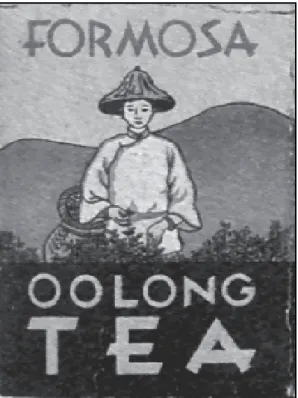
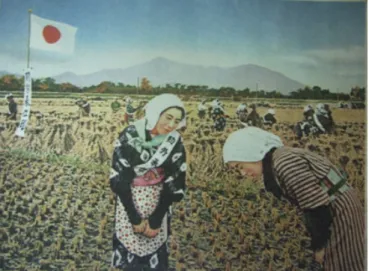
比較上海老月份牌廣告畫與日治時期的平面廣告,我們發現,由外國(西方與日本)引進的廣告畫,已不單純扮演促銷產品的作用,以上海月份牌廣告畫為 例,其所所展示的女性形象標示了中國邁向現代化過程中新話語的開始(李歐 梵,2000)。這樣的新話語挑戰了封建社會中男尊女卑、「女子無才便是德」的價 值觀,革命性地改變了「女性」被衡量的方式。月份牌廣告畫中的女性角色,以 及其指涉的獨特意涵,並非「物化」女性一說可輕易解釋、涵蓋。相反地,與都 會流行文化同步的廣告畫,其視覺核心從妓女到影星,從纏足的清末婦女到洋化 的都市女性,曇花一現地記錄了中國女性地位提升的輝煌歷史。 相較之下,從日治時期的廣告分析台灣女性形象與地位,則可觀察到台灣婦 女地位實受到總督府的統治方針,如中期的「殖民地內地化」政策,以及為推動 經濟生產而展開一連串的「現代化」措施等因素的影響。殖民當局利用各種體制 內教育或婦女團體來控制台灣女性,其目標則著重於透過教育及活動的方式培養 認同與生產力、涵養「日本國民性」與「日本女性美德」,將台灣女性塑造為勤 奮勞動、賢妻良母以及忠良愛國的角色(游鑑明,1987)。從茶葉廣告中勤奮勞 動的採茶女形象,觀察其符號(圖像與文字)配置,可知「採茶女」的形象不但 用於鼓勵(上層階級的日本與北美市場)消費,也說明了勞動女性作為經濟作物 生產者的重要性。 在日治後期,由於軍國主義盛行,台灣在「皇民化」風潮之下,被捲入了戰 爭,婦女被宣傳動員,除加強經濟生產之外,也投入了社會救助與救護行業,作 為戰爭之後援,此種戰爭後援角色,亦廣泛見於當時之廣告海報(楊翠,1993)。 曾有學者指出,在日治時期,日本統治者以國家力量動員台灣婦女,試圖塑造三 種角色典範,分別為:「皇國婦女」(真正的日本國婦女)、「軍國之母」(「日」軍 的母親與妻子)及「產業戰士」(戰爭後援的角色)等(楊雅惠,1993 & 1994; 張淑卿,1999)。不過,根據本研究的分析結果,以報紙廣告、廣告海報及雜誌 封面為例,除了上述三種代表「典範」的女性形象之外,廣告所描繪的女性角色 毋寧是更為多元化的。例如:採茶女的勤奮勞動生產、推銷茶葉,身穿傳統漢服 與和服的婦女、被稱之為「高砂族」(即今之原住民),著傳統服飾之部落婦女, 她們被統治者用來「推銷」台灣的農產品或觀光勝地。換言之,透過廣告的描繪, 日治時期的台灣女性,擔任的是農業生產、產品推銷和戰爭後援角色,展現了結 合和、漢傳統美德中所強調勤奮與服從。 因此,本研究指出,以上海月份牌廣告畫為例,資本主義的發達未必導致女 性形象的「商品化」,在這些廣告畫裡,上海女性反而展現其生機蓬勃,性別意 涵解放的一面。相對地,即使現代化帶來所謂的「進步」,台灣婦女受制於日本 總督府的控制,其地位並未見顯著提升,其廣告所反映的,反而是資本主義、父 權、種族歧視與殖民主義多重剝削之結果。透過廣告畫的女性形象的符號學分 析,「歷史」得以被重述,而廣告與其所處的社會、文化與經濟脈絡互動關係, 也在研究中詳細被闡述。
伍、研究計畫成果自評
本研究計畫已經改寫為會議論文,並以 A Comparative Analysis of the Female Images of Print Advertisements in Shanghai and Taiwan in the Early Twentieth
Century 為題,正式發表於 The Australia & New Zealand Communications
Association Conference 2009(Brisbane, Australia, July 8-10, 2009),會中並獲熱烈 討論,未來將會投稿至 SSCI 級英文期刊,爭取正式發表機會。
參考書目
王怡文(1997)。《中國月份牌美女海報圖像研究》。台南:成功大學藝術研究所 碩士論文。 王凱薇(2005)。《日治時期台灣地方意識的建立:以顔水龍美術,廣告與工藝創 作為例》。國立中央大學藝術學硏究所碩士論文。 衣若芬(2005)。〈「出塞」或「歸漢」--王昭君與蔡文姬圖像的重疊與交錯〉,《婦 研縱橫》,74:1-16。 吳友如、張志瀛、金蟾香、符節、田子琳、馬子明(2005)。《清末浮世繪:〈點 石齋畫報〉精選集》。台北:遠流。 呂紹理(2006)。《展示台灣:權力、空間與殖民統治的形象表述》。台北:麥田。 李天保(2003)。《上海流行文化變遷研究—以服裝、電影為例》。政治大學中山 人文社會科學研究所碩士論文。 李佳螢(2006)。《報紙廣告中之台灣庶民生活影像:1950-1999》。國立政治大學 廣告研究所碩士論文。 沈淑綺(1999)。《中國「月份牌」美女海報(1896-1945)之研究》。台南藝術學 院藝術史與藝術評論研究所。 沈淑綺(2005)。〈從性的觀點探討中國「月份牌廣告畫」美女圖像〉,《現代美術 學報》,9:25-49。 卓伯棠(1993)。〈月份牌畫的沿革—中國商品海報 1900-1940〉,《聯合文學》,10:7:93-105。 周兆良(2003)。〈戰爭與媒體—日治時期台灣國際廣播媒體「台北放送局」角色 變遷之初探研究〉,《傳播管理學刊》:4:1:53-61。 林品章(2003)。《台灣近代視覺傳達設計的變遷:1895-1990 之共進會、展覽會、 博覽會以及設計相關活動》。台北:全華科技。 林麗雲(2000)。〈為台灣傳播研究另闢蹊徑?:傳播史研究與研究途徑〉,《新聞 學研究》:63:35-54。 姚村雄(2001)。〈從記號學角度探討日治專賣時期台灣酒類標貼設計之視覺符號 運作〉,《設計研究》:1:121-140。 姚村雄(2002)。〈日治時期台灣美術設計中的「台灣女性圖像」研究〉,《設計學 報》:7:2:117-136。 姚村雄(2004)。《釀造時代─1895-1970 台灣酒類標貼設計》。台北:遠足文化。 姚村雄(2005)。《設計本事─日治時期台灣美術設計案內》。台北:遠足文化。 洪桂已(1957)。《台灣報業史的研究》。台北:國立政治大學新聞研究所。 孫秀蕙(1998)。〈台灣網際網路發展與問題初探〉,《廣播與電視》第十二集:1-20。 孫秀蕙(2000)。〈網路時代的企業公關--格魯尼模式的理論性重構〉,《廣告學研 究》第十五集:1-25。 孫秀蕙(2003)。 〈建立企業網頁公關效果評估指標—以 2002 年台灣五百大服 務業為例〉,《廣告學研究》第二十一集:1-28。 孫秀蕙(2003)。〈「鼓勵性別解放」或「與資本主義共謀」?反思《中國近代廣 告文化》提出的廣告效用問題〉,《廣告學研究》,20: 139-141。 孫秀蕙(2005a)。〈符號、敘事結構與公共關係中的「說服」:以九一一事件布希 演講稿為例〉,《關係管理研究》第一集:115-159。 孫秀蕙(2005b)。〈初探網路謠言中「女性」符號運作,以東森新聞台「網路追
追追」為例〉,《廣告學研究》第二十四集:1-29。 孫秀蕙(2007)。〈變動中的媒體環境對於公關教育課程規劃的影響:以『公共關 係理論專題:網路傳播』課程為例〉,《廣告學研究》第二十七集,頁 1-23。 孫秀蕙、陳儀芬(2007)。被框架的女性意象:上海月份牌廣告畫的圖像符號分 析,發表於「第十屆中華民國廣告暨公共關係學術與實務研討會」,台北: 國立政治大學。 徐坤泉(1998)。《靈肉之道》。 台北:前衛。 高錦惠(2000)。《明治時期「台灣日日新報」的版面編排設計之硏究》。國立台 灣科技大學設計研究所碩士論文。 張宏庸(2005)。《台灣茶廣告百年》。台北:遠足文化。 張淑卿(1999)。〈近來年台灣地區的「台灣婦女史」學位論文研究回顧 (1991-1998)〉,《近代中國婦女史研究》,7:193-209。 張燕風(1994)。《老月份牌廣告》。台北:漢聲雜誌。 許敏(1998)。〈士‧倡‧優—晚清上海社會生活一瞥〉,汪暉、余國良(編)《上 海:城市、社會與文化》,頁 113-126。香港:中文大學出版社。 游鑑明(1987)。《日據時期臺灣的女子教育》。國立臺灣師範大學歷史硏究所碩 士論文。 楊孟哲(1999)。《日治時代台灣美術教育》。台北:前衛。 楊雅惠(1993)。〈日據末期的台灣女性與皇民化運動〉,《台灣風物》,43:2:69-84。 楊雅惠(1994)。《戰時體制下的台灣婦女(1937-1945)--日本殖民政府的教化與 動員》。清華大學歷史所碩士論文。 楊翠(1993)。《日據時期台灣婦女解放運動:以〈台灣民報〉為分析場域 (1920-1932)》。台北:時報文化。 溫振華(1989)。〈日據時期的都市化:以台北市為例〉,《歷史月刊》,15: 135-138。
葉曉青(1998)〈點石齋畫報中的上海平民文化〉,汪暉、余國良(編)《上海: 城市、社會與文化》,頁 133-149。香港:中文大學出版社。 葉龍彥(1996)。〈台灣海報的由來〉,國立台灣藝術教育館(編)《世紀容顔回顧: 百年版畫海報精品展》。台北:台灣藝術教育館。 葉龍彥(1998)。《日治時期台灣電影史》。台北市:玉山。 趙琛(2002)。《中國近代廣告文化》。台北:大計文化事業。 劉芳如,張華芝(2003)。《群芳譜—女性的形象與才藝》。台北:國立故宮博物 院。 樓怡婷(2001)。《台灣日治時期商業市招及其構成元素設計形式之硏究》。國立 台灣科技大學設計硏究所碩士論文。 樊志育(1989)。《中外廣告史》。台北:著者發行,三民經銷。 戴維怡(2006)。《台灣報紙廣告風格之演變:1945-2005》。國立政治大學廣告研 究所碩士論文。 薛理勇(1996)。《上海妓女史》。香港:海峰出版社。 謝里法(1992)。《台灣美術運動史》。台北:藝術家。 鍾淑敏(1994)。〈館藏「台灣日日新報」的史料價值及其利用〉,中央圖書館台 灣分館(編)《館藏與台灣史研究論文發表研討會彙編》,台北:國立中央 圖書館台灣分館。 韓敏中、盛寧(2005)。《危險的逸樂:二十世紀上海的娼妓與現代性》。台北: 時英 。(原書:Hershatter, G. [1997]. Dangerous Pleasures: Prostitution and Modernity in Twentieth-Cantury Shangshai.. CA: The Regents of the
University of California.
Allen, P. G. (1986). The Sacred Hoop: Recovering the Feminine in American Indian Traditions. Boston: Beacon.
Francisco: Spinsters/Aunt Lute.
Barthes, R. (1972). Mythologies. New York: Hill and Wang.
Barthes, R. (1977). Image-Music-Text. New York: Hill and Wang.
Beasley, R. and M. Danesi (2002). Persuasive Signs: The Semiotics of Advertising. Berlin: Mouton de Gruyter.
Bhaba, H. K. (ed.) (1990). Nation and Narration. London: Routledge.
Browne, B. A.(1998). Gender stereotypes in advertising on children’s television in the 1990’s: A cross-national analysis. Journal of Advertising, 27, 1, 83-96.
Buker, E. A. (1996). Sex, sign and symbol: Politics and feminist semiotics. Women and Politics, 16, 1,31.
Carani, M. (1988). Sémiotique de la perspective picturale. In Protée, 16, 1-2, 171-181.
Carlyle, Thomas (1831). Characteristics. EDINBURGH REVIEW, 105.
Cheng, Hong (1994). Reflections of cultural values: A content analysis of Chinese magazine advertisements from 1982 and 1992. International Journal of Advertising, 13,167-183.
Cheng, Hong & John C. Schweitzer (1996). Cultural values reflected in Chinese and U. S. television commercials. Journal of Advertising Research, May/June, 27-45.
Cheng, Hong (1997a). Toward an understanding of cultural values manifest in advertising: A content analysis of Chinese television commercials in 1990 and 1995. Journalism and Mass Communication Quarterly, 74,4, 773-796.
Cheng, Hong (1997b). ‘Holding up half of the sky’? A sociocultural comparison of gender-role portrayals in Chinese and US advertising. International Journal
Coombs, W. T. (1998). The Internet as potential equalizer: New leverage for
confronting social irresponsibility. Public Relations Review, 24, 3, 289-303.
Dallmann, Katharina M. (2001). Targeting women in German and Japanese magazine advertising: A difference-in-differences approach. European Journal of
Marketing, 35, 11/12, 1320-1339.
Derrida, J. (1982). White mythology. In Alan Ball (trans.) Margins of Philosophy. Chicago: Chicago University Press.
Eco, U. (1976). A Theory of Semiotics. Bloomington: Indiana University Press.
Eco, U. (1977). The influence of Roman Jakobson on the development of semiotics. In D. Armstron and C.H. Van Schooneveld (eds.). Roman Jakobson. Echoes of his scholarship. Lisse: Peter de Ridder Press, 39-58.
Floch, Jean-Marie (1984). Petites mythologies de l’œil et l’esprit. Paris: Hadès
Floch, Jean-Marie (1986a). Les formes de l’empreinte. Périgueux: Pierre Fanlac.
Floch, Jean-Marie (1986b). entries. In A. J. Greimas and Hrsg J. Courtès (Eds). Sémiotique. Dictionnaire raisonné de la théorie du langage. Tome II. Paris: Hachette.
Foucault, Michel (1986). The Foucault Reader. Ed. Paul Rabinov. Harmondsworth: Penguin.
Fowles, J. (1996). Advertising and Popular Culture. Thousand Oaks, CA: Sage.
Frith, Katherine, Ping Shaw & Hong Cheng (2005). The construction of beauty: A cross-cultural analysis of women’s magazine advertising. Journal of
Communication, 55,1,56-70.
Fullerton, Jami A. & Alice Kendrick (2000). Portrayal of men and women in U.S. Spanish-Language television commercials. Journalism and Mass
Communication Quarterly, 77,1,128-142.
stereotyping in Hong Kong. Sex Roles, 42, 1/2, 57-81.
Furnham, Adrian & Bitar, Nadine (1993). The stereotyped portrayal of men and women in British television advertisements. Sex Roles, 29, 297-310.
Furnham, Adrian & Skae, Emma (1997). Changes in the stereotypical portrayal of men and women in British television advertisements. European Psychologists, 2, 44-51.
Furnham, Adrian and Twiggy Mak (1999). Sex-role stereotyping in television commercials: a review and comparison of fourteen studies done on five continents over 25 years. Sex Roles, 41, 5/6, 413-437.
Furnham, Adrian, Matte Babitzkow & Smerelda Uguccioni (2000). Gender stereotyping in television advertisements: A study of French and Danish
television. Genetic, Social and General Psychology Monographs, 126,1, 79-104.
Furnham, Adrian and Elena Farragher (2000). A cross-cultural content analysis of sex-role stereotyping in television advertisements: A comparison between Great Britain and New Zealand. Journal of Broadcasting and Electronic Media, 2, 415-436.
Genette, G. (1972). Narrative discourse. Trans. J. E. Lewin. New York: Cornell University Press.
Gilly, Mary C. (1988). Sex roles in advertising: A comparison of television
advertisements in Australia, Mexico and the United States. Journal of Marketing, 4, 75-85.
Gilroy, P. (1993). The Black Atlantic: Modernity and Double Consciousness. London: Verso.
Greenblatt, Stephen (1980). Renaissance Self-Fashioning: from More to Shakespeare. Chicago: Chicago University Press.
Group μ(1979). Iconique et plastique: sur un fondement de la rhétorique visuelle. In Revue d’ésthétique. 1-2, 173-192.
Group μ(1992). Traité du signe visuel. Pour une rhétorique de l’image. Paris: Seuil.
Goffman, E. (1979). Gender Advertisements. New York: Harper and Row.
Gorman, F. E. (2005). Advertising images of females in Seventeen: positions of power or powerless positions? Media Report to Women, 33, 1, 13-20.
Hall, S. (1990). Cultural identity and diaspora. In Jonathan Rutherford (ed.) Identity: Community, Culture, Difference. London: Lawrence & Wishart. 222-237.
Hall, S. (1996). Critical Dialogues in Cultural Studies. David Morley and Kuan-Hsing Chen (eds). London and New York: Routledge.
Hofstede, Geert H. (2001). Culture’s consequences, comparing values, behaviors, institutions, and organizations across nations. Thousand Oaks, CA: Sage.
hooks, bell. (1981). Ain’t I A Woman: Black Woman and Feminism. London: Pluto.
Horno-Delgado, Asunción & Eliana Ortega & Nina M. Scott & Nancy Saporta Sternbach (eds) (1989). Breaking Boundaries: Latina Writings and Critical Readings. Amherst: University of Massachusetts Press.
Jakobson, R. (1971). Closing statement: Linguistics and poetics. In T. A. Sebeok (ed.) Style in language. Cambridge: MIT Press, 350-377.
Ji, Hong (2005). Advertising appeals and gender images in “Shishang Csmopolitan” nd “Shishang Esquire”: A longitudinal and cross-cultural analysis. Unpublished doctoral dissertation.: Ohio University.
Karan, Kavita & Katherine T. Frith (2007). Commercializing Asian women: Images in media. Media Report to Women, 35, 13-18.
Kelmark, Kevin Ann (2007). Social context of sexual imagery in advertising: A comparison between Hispanics’ and non-Hispanics’ attitudes toward print ads.
Kodama, T. (1991). Rhetoric of the image of women in Japanese television
advertisement: A semiotic analysis. Australian Journal of Communication, 18, 2, 42-65.
Levinson, Marjorie (1986). Wordsworth’s Great Period Poems: Four Essays. Cambridge: Cambridge University Press.
Levison, Marjorie & Marilyn Butler & Jerome Mcgann & Paul Hamiltion (1989). Rethinking Historicism. Oxford: Blackwell.
Levi-Strauss, C. (1963). Structural Anthropology. Claire Jacobson & Brooke Crundfest Schoepf (Trans.). New York: Basic Books.
Lindekens, R. (1971). Eléments por une sémiotique de la photographie. Paris and Bruxelles: Didier.
Lindekens, R. (1976). Eléments de sémiotique visuelle. Paris: Klincksieck.
Lim, S. G. & Amy Ling (eds) (1992). Reading the Literatures of Asian America. Philadelphia: Temple University Press.
Maynard, Michael L. & Charles R. Taylor (1999). Girlish images across cultures: Analyzing Japanese versus U. S. Seventeen magazine ads. Journal of Advertising, 28,1, 39-45.
Moon, Young Sook, Kara Chan (2005). Advertising appeals and cultural values in television commercials: A comparison of Hong Kong and Korea, International Marketing Review,22,1,48-67.
Morris, Pamela K. (2006). Gender in print advertisements: A snapshot of
representations from around the world. Media Report to Women, 34,3,13-20.
Myers, D. G. (1989). The New Historicism in Literary Study. Academic Questions 2, 27-36.
Neto, Felix & Isabel Pinto (1998). Gender stereotypes in Portuguese television advertisements. Sex Roles, 39, 1, 153-165.
O’Toole, M. (1994). The Language of Displayed Art. London: Leicester University Press.
Page, J. T. (2005). The perfect host: indexical images of the female body as persuasive strategy in House
Beautiful. Media Report to Women, 33, 3, 14-20.
Peirce, C. S. (1931-1958). Collected papers. Vols.1-6. Charles Hartshorne and Paul Weiss (Eds); vols. 7-8. Arthur W. Burks (ed.). Harvard University Press.
Pollay, Richard W. (1986). The distorted mirror: Reflections on the unintended consequences of advertising. Journal of Marketing, 50, 18-36.
Rakow, L. F. (1992). “Don’t hate me because I’m beautiful”: Feminist resistance to advertising’s irresistible meanings. The Southern Communication Journal, 57, 2, 132-142.
Said, E. (1978). Orientalism. London: Routledge.
Saint-Martin, F. (1987). Les fondements topologiques de la peinture. Montréal: Hurtubise.
Saint-Martin, F. (1989). Sémiologies du langage visuel. Québec: Presse de l’Université du Québec.
Saint-Martin, F. (1990). La théorie de la Gestalt et l’art visuel. Québec: Presse de l’Université du Québec.
Saussure, F. (1966). Course in General Linguistics. C. Balley and A. Sechehaye (eds.). Wade Baskin (trans.). New York: McGraw-Hill.
Shih , Shu-mei (1998). Gender and a new geopolitics of desire: The seduction of mainland women in Taiwan and Hong Kong media. Signs, 23, 2, 287-391.
Signorielli, N., D. McLeod & Healy, E. (1994). Gender stereotypes in MTV
commercials: The beat goes on. Journal of Broadcasting and Electronic Media, 38, 1, 91-101.
Smith, B. (1997). Toward A Black Feminist Criticism. New York: Out and Out Press.
Sonesson, G. (1992). The semiotic function and the genesis of pictorial meaning. In Eero Tarasti (ed.). In the representations and institutions. Imatra:
International Semiotics Institute, 211-256.
Spivak, G. C. (1987). In other Worlds: Essays in Cultural Politics. London: Routledge.
Spivak, G. C. (1988). Can the subaltern speak? In C. Nelson and L. Grossberg (eds.). Marxism and the Interpretation of Culture, 271-313.
Sreenivas, Mytheli (2003). Emotion, identity, and the female subject: Tamil women’s magazines in colonial India, 1890-1940. Journal of Women’s History, 14, 4, 59-81.
Streeter, Thomas (1996). The “new historicism” in media studies. Journal of Broadcasting and Electronic Media, 40, 553-557.
Sun, H. H., T. Y. Lau & R. Kuo (2002). The Internet as a public relations medium: An exploratory study of PR professionals in Taiwan. Asia Pacific Media Educator, 12/13, 168-184.
Thülemann, F. (1982). Paul Klee. Analyse sémiotique de trios peintures. Lausanne: L’Age d’Hommes.
Thülemann, F. (1990). Vom Bild sum Raum. Beiträge zu einer semotischen Kunstwissenschaft. Kölin. DuMont.
Tillyard, E. M. W. (1998). The Elizabethan World Picture. London: Pimlico Books.
Williams, R. (1993) . Advertising:The magic system, in Simon During (ed.) The Cultural Studies: Reader. London, Routledge, 320-336.
出席國際學術會議心得報告
計畫編號 NSC 97-2410-H-004-082- 計畫名稱 資本、殖民與跨文化研究: 比較上海月份牌廣告畫與日治時期台灣廣告中 的女性圖像 出國人員姓名 服務機關及職稱 孫秀蕙,政治大學廣告系教授會議時間地點 Brisbane, Australia, July 8-10, 2009
會議名稱 The Australia & New Zealand Communications Association Conference 2009 發表論文題目 A Comparative Analysis of the Female Images of Print Advertisements in
Shanghai and Taiwan in the Early Twentieth Century 一、參加會議經過 筆者曾分別以總統演講詞、網路謠言、電視政論性節目等為符號文本分析對 象,在學術期刊與研討會發表論文。在〈符號、敘事結構與公共關係中的『說服』: 以九一一事件布希演講稿為例〉一文中,試圖建立一個分析宣戰文稿的範例,呈 現出符號、敘事結構研究與公關理論的對話可能,以及對戰爭宣傳發言策略的補 述。同時,針對檢驗說服效應的方法及步驟上提出建議。不但幫助開拓公關研究 視野,更提供公關從業人員在戰爭宣傳策略方面的修辭建議。 另有行政院研考會委託之政策建議書「社會互信與媒體責任」一案,以電視 政論節目為分析對象,結案報告已於 2007 年改寫成會議論文,發表於「第五屆 世界華文傳媒與華夏文明傳播學術研討會」,並針對會議評論人意見,進一步改 寫成〈台灣電視政論節目的議題論述策略與框架分析〉一文,送《中華傳播學刊》 (TSSCI 期刊)獲接受。研究發現,電視政論節目的製作是以製造對立為符號運 作的基本邏輯。政論性節目對於社會互信造成傷害之主因,在於節目中所充斥的 「不負責任的言論」,也是將「言論自由」與「合理推論」無限上綱的不良結果。 在政論節目與新聞惡質化難分難解的狀況下,針對討論的議題,「求證」幾乎不 可能存在於製作電視政論節目的過程中。公共議題討論中的所應呈現的理性與共 識的追求被犧牲,弱勢邊緣的意見被極端的意識形態所取代。對於社會互信的喪 失,媒體難辭其咎。 自 2006 年起,申請人以重新書寫華人廣告史為長程目標,取廣告中的女性 圖像研究為切面,分別進行上海租界時期和台灣日治時期的廣告符號研究。首 先,申請者執行為期一年(2006-2007)的國科會研究計畫「平面廣告的圖像符 號學分析:以上海老月份牌廣告畫為例」。針對以女性為主題的老月份牌廣告畫 進行圖像符號文本分析,意圖建構合於目標文本特性、適切性高的圖像符號分析 方法,並從文本訊息的表層出發,觀察其符號結構及功能,詮釋女性圖像再現的 社會、文化意涵。短期來說,希望能夠先提供一個符號學與廣告學門整合的研究
範例,對於文本分析及廣告文化等相關研究論述有所啟示,從而釐清廣告與社會 之間的關係,並豐富廣告史的研究內涵。研究成果先後於 2007 年「第十五屆中
華民國廣告暨公共關係學術與實務研討會」、2008 年「國際傳播學會年會」
(International Communication Association annual conference, Montreal, Canada, May 21-25th)發表,並針對評論意見改寫為學術期刊論文 " Framed female image: A pictorial semiotic analysis of classic Shanghai calendar posters of the 1910's-1930's,"目前正投稿 SSCI 級學術期刊審查中。研究中 不但建立了針對平面廣告的圖像符號學分析模式,更發現到透過圖像符號學的深 入觀察與詮釋,由洋商所引進的廣告畫已不單純扮演促銷產品的作用,畫中所展 示的女性形象,正標示了中國邁向現代化過程中新話語的開始。這樣的新話語挑 戰了封建社會中男尊女卑、「女子無才便是德」的價值觀,革命性地改變了「女 性」被衡量的方式。月份牌廣告畫中的女性角色,以及其指涉的獨特意涵,並非 「物化」女性一說可輕易解釋、涵蓋。相反地,與都會流行文化同步的廣告畫, 正曇花一現地記錄了中國女性地位提升的輝煌歷史。於今看來,「上海月份牌廣 告畫」不但是有價藝術收藏品,以圖像符號研究的角度觀之,它更是研究中國 1910's~1930's 年代女性形象與地位最重要的文本。 奠基於此平面圖像符號研究模式,申請人進而於 2007 年開始執行為期一年 的「日治時期平面廣告中的女性圖像」(2007-2008)研究,嘗試將前期所建立的 圖像符號分析法應用至日治時期的台灣廣告文本,並觀察其中所呈現的文本特性 與符號指涉結構。申請者將研究結果改寫成兩篇論文," The female images in the print advertisements during Japanese occupation of Taiwan"發表於 2008 年「國際大眾傳播研究學會年會」(The International Association for Media and Communication Research, Stockholm, Sweden July 20th - 25th
), 未來擬改寫為期刊論文,發表於英文期刊。另一篇〈在總督府陰影下:台灣廣告
史論述回顧、性別觀點的反思和研究芻議〉則刊登於《新聞學研究》(孫秀蕙、
陳儀芬,2009a)。
本次所參與之研討會所發表之論文"A Comparative Analysis of the Female Images of Print Advertisements in Shanghai and Taiwan in the Early
Twentieth Century"(附件一),係延續 2006, 2007 年所執行之研究。因為,
依照現階段所收集的資料與分析,研究者在 2008 的研究申請案中說明,應在原 本的文化研究架構上,除新歷史觀之外,加上殖民主義與跨文化研究的探討,才 能充分釐清老廣告中所呈現的資本、文化、種族、性別等多重剝削層次
(capitalistic, cultural, racial and sexual exploitations),觀察出在殖 民時期特殊的環境下,華人女性(包含上海與台灣)形象的呈現與歷史性變化, 作一深入的跨文化比較性分析。
The Australia & New Zealand Communications Association Conference 2009 為今年於亞太地區舉辦的規模最大國際傳播研討會,與會學者來自英、美、 紐、澳、台灣、香港、中國等地區,註冊人數有兩百四十人,與會人數則達三百
人以上。筆者共宣讀了兩篇論文,分別為上述之"A comparative analysis of the female images of print advertisements in Shanghai and Taiwan in the early twentieth century"(發表於 Intercultural Communication session),以及" Battling rumors on the Internet? An analysis of rhetorical patterns of using “the female" as a sign in the Internet rumors of ETTV's website “ETRumors" in Taiwan"(發表於 Public Relations session),兩篇論文均 獲得正面評價與回應。與會人士基於自身的文化與學術經驗,提出了對於研究論 文的寶貴看法,並期待未來東西方學者可從性別與跨文化的分析觀點,進行更深 入的學術對話。而筆者在未來也會參酌與會者之建議,將分析與結論部分寫得更 完整周全,投稿至國際學術期刊。
二、與會心得(及收穫)
綜合以上所述,參與本項會議(The Australia & New Zealand Communications Association Conference 2009)的心得及收穫有: 1. 將研究論述英語化,促進性別與廣告傳播領域的跨文化學術對話。 2. 申請人為本校補助期刊《廣告學研究》主編,由於《廣告學研究》同時接受 中、英文稿件,透過國際會議的參與,目前已邀請若干廣告相關領域學者及 研究人員投稿,同時擬成立英文網頁說明英文投稿事宜,以提升《廣告學研 究》學術水平,並促進《廣告學研究》國際化。 3. 會議論文將參酌與會學者之專業意見,改寫成期刊論文,並投至 SSCI 學術 期刊,以協助提升本校學術水平。 4. 此次參與之研討會,係於澳洲布理斯本市之 Queensland University of Technology(QUT)Kelvin Grove 校區創意學院所舉行。澳洲政府近年來大 力推動創意產業,QUT 亦獲得高額補助,致力於硬體與軟體建設,卓然有成。 除了原有的傳播、設計課程之外,亦設置了公關、行銷與廣告學士、碩士課 程,教師均相當年輕而有活力。QUT 的創意學院對於當地學生不但很有吸引 力,近年來更吸引了許多來自亞洲國家如韓國、印度、香港、中國與台灣的 學生。先進的辦學概念,推動校園 e 化並積極進行推銷,使得 QUT 這幾年來 在全世界的大學排行竄升至一百多名,值得本國傳播學界借鏡。未來筆者將 建議政大傳播學院與 QUT 創意學院進行交流,推動學生交換 program,俾能 培養學生之國際觀,掌握亞太地區創意產業之動態。
附件一 發表之 ANZCA 國際會議論文
A Comparative Analysis of the Female Images of Print
Advertisements in Shanghai and Taiwan
in the Early Twentieth Century
Hsiu-hui Sun [email protected];
Professor of Advertising at National Cheng-chi University, Taipei, Taiwan &
I-fen Chen
Fulbright scholar, independent researcher and English editor of the Journal of Advertising and Public Relations Research, Taipei, Taiwan
[email protected] [email protected]
Paper presented at the Intercultural Communication Division of Australia & New Zealand Communications Association Conference 2009, Brisbane, Australia, July 8-10, 2009
Abstract
For both Shanghai and Taiwan societies in the early twentieth century, advertisements are imported along with and by the colonialists. Comparing to the rich spectrum of advertisements developed in Shanghai, Taiwan’s mass media and advertising businesses, tightly controlled by the Japanese colonial government from the early stage, are more propaganda-oriented. By adopting the cross-cultural theories, the present research first analyzes the sex roles and social status of female images in advertisements of colonial Taiwan (1895-1945) and Classic Shanghai Calendar Posters (1910’s-1930’s). Based on the method of pictorial semiotics, the present research also seeks to explain the cultural, social and political power struggles embedded in the commercial advertising in both areas, colonial Taiwan and modern Shanghai. The study finds political and economic powers play tremendously important roles to affect the contemporary women status. However, in the cases of Shanghai and Taiwan, one can never assert that the lower the level of ad gender stereotype is, the higher the culture is more developed or civilized. In Shanghai, capitalism did not necessarily result in the commodification of women and gender stereotype as feminists point out. Neither did (colonial) modernization bring out higher women status in Taiwan. The history represented and retold by the female images of the print ads in the early twentieth century is rather dialectic than dogmatic as that of “his story.”
Keywords: Classic Chinese Calendar Posters, colonialism, cross-cultural studies, female images,
Introduction
For both Shanghai and Taiwan societies in the early twentieth century,
advertisements are imported along with and by the colonialists. Because Shanghai had been governed by multiple political and military powers, and it was industrialized relatively earlier than other areas in mainland China, the advertisements in Shanghai exhibit a rich view of cultural panorama, resulting in an unique genre of “Classic Shanghai Calendar Posters,” a once-significant urban feature of Shanghai.
Comparing to the rich spectrum of advertisements developed in Shanghai, Taiwan’s mass media and advertising businesses, tightly controlled by the Japanese colonial government from the early stage, are more propaganda-oriented. The government, the business associations organized by loyal businessmen and the officially-funded newspaper, all of which influenced the development of print advertisements in Taiwan during the Japanese-occupation period.
Advertisements are not merely vital tools promoting products or concepts; their visual representations and the sign system are actually closely related to social,
political and economic structures. Therefore, by adopting the cross-cultural theories, the present research will first analyze the gender roles and social status of female images in advertisements of colonial Taiwan (1895-1945) and Classic Shanghai Calendar Posters (1910’s-1930’s). Based on the method of pictorial semiotics, the present research will also seek to explain the cultural, social and political power struggles embedded in the commercial advertising in both areas, colonial Taiwan and modern Shanghai. Finally, a comparative study will be conducted. The present study will compare the print advertisements of two regions, Shanghai and Taiwan, composed of mostly Chinese-speaking people, and will clarify the similarities and differences of the signification process of female images at the earliest stage of colonial-capitalistic development in Asia.
Cross-cultural Studies of Advertisements
Due to the globalization, cross-cultural studies have been applied to the field of advertising research for the past two decades. Some of them focus on the issues of gender image, stereotype and cultural differences (Furnham & Bitar, 1993; Furnham & Skae, 1997; Neto & Pinto, 1998; Gilly, 1988). The samples of advertisements are mainly from American and European countries, and Australia. Besides, the rise of Asian developing countries calls for and urges the further comparative studies on the western vs. eastern cultural variations in terms of advertising. For instances, Japanese and American ads are the targets for Maynard and Taylor (1999); Frith, Shaw, and Cheng pay their attention to the ads of America, Taiwan, and Singapore. As for intra-Asia, Moon and Chan (2005) compare the ads of Hong Kong and Korea.
Basically, these cross-cultural studies on the gender image of ads can be divided into three catagories applying different theoretical models: (1) Hofstede’s “cultural diversions” (2001), (2) Pollay’s “cultural values” (1986), and (3) Feminist’s notions on gender stereotype and femininity (eg. Goffman, 1979; Ji, 2005). These studies use content categorization and statistics to analyze the advertisements in diverse cultures, and the results indeed show the discrepancy and various forms of
represented gender image of ads among countries or cultures. However, most of these cross-cultural studies have presupposed the existence of cultural diversity, as the status quo, in order to conduct the statistical analysis and try to explain this diversity quantitatively, indicating that the lower the level of ad gender stereotype is, the higher the culture or the country is developed. They seldom discuss the reason why and how gender image is represented so idiosyncratically in each culture or explore the structural factors in a society concerning the gender roles. Statistical method may
only a matter of degree, but also a matter of fact, a fact that involves in-depth explanations of social, economic, political, and historical context. Using the same scale of gender stereotype to measure the ads in different cultures often fails to observe the distinctive value systems embedded in the presentation of gender roles in ads, not to mention the dialectic relation between the ads and the very cultural context. Therefore, there lies this necessity to bring in qualitative concepts to the cross-cultural studies of gender image in ads. That is to say, social, economic, political, and
historical factors shall be taken into our consideration, so as to create a dialogue between the image-text and the social-cultural context. Not to take the differences between cultures/countries for granted, but to make clear the raison d'être of these cultural differences is the main purpose of this study.
Asian scholars, such as Shu-mei Shih (1998) and Mytheli Screenivas (2003), though not focusing on ads, provide distinguished examples for cross-cultural and (post)colonial studies of female image in media representation. Shih illustrates both the similarities and dissimilarities, in terms of culture, language, and custom, among China, Hong Kong, and Taiwan, as the Greater China Area. She points out, due to the complicated political struggles, the image of “Chinese women” are often
sexualized and related to crime and poverty in Taiwan and Hong Kong media.
Nationalism following the previous colonialism still exercises the oppressive power of patriarchy on Chinese women in 1990’s. According to Shih’s post-colonial feminist viewpoint, both Hong Kong and Taiwan, as highly developed capitalistic and
westernized societies in contrast to authoritarian communist China, fully express the desire in media, though in their own ways, to assimilate China by the power of capitalism. The entire complex of politics and cultures structurally affects the signification process of female image represented in media. Unlike quantitative
classify or value cultures. Her keen observation of the inter- and counter- relationship among these three political entities demonstrates a good example of cross-cultural studies which delicately elucidates the raison d’être of cultural differences.
Exploring further the influences of colonialism, Screenivas on the other hand analyzes English language women’s magazines in India during 1890’s--1940’s. She finds that topics of these magazines are mostly about “love,” “affection,” and
“pleasure” which together, in her opinion, compose “the paradigm of emotion” (2003). These discussions in women’s magazine, mainly based on a rather westernized and urbanized concept of “appropriate domesticity,” indeed challenge the Indian tradition of arranged and mercenary marriages. Although advertisement is not Screenivas’ target text, she nonetheless reminds us of that the development of feminist discourse and the way media frame the women issues or image are closely interwoven with colonialism, nationalism, and the revolution of new culture in India and in its history. Finally, female image in these women’s magazines becomes another form of the narrative of Indian history.
Actually, Screenivas and Shih separately demonstrate a historical and a
geographical approach toward cross-cultural studies in their articles. Tempro-spatial, cultural studies should be; and in our opinion, that is to present the dimension and the dynamic of cultures. In our case, especially, it is to re-represent the history by analyzing and studying the female image of the advertisements.
Four Essentials of Pictorial Semiotics on the Print Advertisements
Works of different schools and scholars provide various theoretical and analytical models to study image. However, from language to image, semioticians
study of image (Sun & Chen, 2008). Nevertheless, although the image is the target object of pictorial semiotics, the essential material and signifying system are still different whenever the composition of the object changes. It is still difficult to assert that there is a single theory or an analytical model suitable for all kinds of pictorial texts. Advertisements are different from pictures, not only because of the material element (photography or watercolor) but also because of the communication intention (commercial or aesthetical expression). Therefore, the dichotomous development of the pictorial semiotics, i.e. the semiotics of publicity and the semiotics of visual art, becomes inevitable. Actually, more and more scholars admit the necessity of adjusting and theorizing analytical tools for every individual visual object. Then there will not be too much emphasis on appropriating pertinent theory and
methodology to different types of advertisements (print ad, TV commercial or classified ad) according to their own characteristics and social context.
This study shares the same opinion rendered by Sonesson that pictorial semiotic analysis should pay more attention to the features of the target text (Sonesson, 1993). The four viewpoints—“rules of construction,” “effects which they intend to produce,” “the channels through which pictures circulate,” “the nature of the
configuration”—Sonesson proposes to differentiate the features of various pictorial texts pave the way for applying pictorial semiotics to the advertising studies
(Sonesson, 1993).
Sonesson’s terms like “the channels” and “the effects” can be understood as “media” and “goals” of communication of the ads, whereas the “rules of construction” and “the configuration” can be “types of code” and “textuality” of the composition of the ads.1 This study finds that these four essentials can depict the features of
1
different kinds of advertisement and help to efficiently complete a structural semiotic observation of the ads.
Pictorial-semiotic Features of the Female Images
In the case of Classic Shanghai Calendar Posters (CSCP), a color print
advertisement with not only the pictures but also the linguistic messages, its “goals” are obviously to attract the audience and sell products, and its “media” belong to the category of print advertisement. As for its “types of code,” they include (1) color painting of female characters, products and background in a realistic style;2 (2) stylish rectangular frames; (3) the company name and products in traditional Chinese or English characters; (4) Western and lunar calendars on two sides or at the bottom of the poster. In short, iconic messages and linguistic messages are juxtaposed on the posters.
“Textuality” is a particular way of constituting a text as a text generates
meanings. It is like “figures of speech” in rhetoric consisting of certain structure or rules. In advertising, the image of product can be placed together with or replaced by another object on the screen in order to create the effects of simile or metaphor (Forceville, 1996). Both the visual and the linguistic signs have their own textuality;
finds that Sonesson’s definition of these four viewpoints are more like an
announcement of departing from the linguistic tradition of semiotics than a practical analytical model that can be applied to the study of image. Therefore, this study directly appropriates four terms often used by Mass Communication scholars in order to efficiently theorize them and establish a research model.
2
The distinctive and popular technique of CSCP painters, tsapitantsaihuafa, a fusion of fusain and watercolor on paper, was first used by Man-tuo Cheng in 1910’s. This technique specializes in the description of facial features and the modulation of skin color.