行政院國家科學委員會專題研究計畫 成果報告
2006 語言學卓越營:意義與語法
研究成果報告(精簡版)
計 畫 類 別 : 個別型 計 畫 編 號 : NSC 95-2420-H-002-006- 執 行 期 間 : 95 年 04 月 01 日至 95 年 11 月 30 日 執 行 單 位 : 國立臺灣大學語言學研究所 計 畫 主 持 人 : 蘇以文 共 同 主 持 人 : 賴惠玲、黃居仁、安可思、張顯達、江敏華 計畫參與人員: 碩士班研究生-兼任助理:蕭季樺、賴舒伶、陳郁彬 處 理 方 式 : 本計畫可公開查詢中 華 民 國 96 年 01 月 23 日
第三屆語言學卓越營 心得報告
台灣大學語言所 蘇以文
∗ 邁向國際,推動國內語言學研究與國際學術社群接軌,將國內的語言學研究推向國際舞 台,正是 2006 年卓越營的主要目的。近十年來,意義與語法在語言學相關領域的研究, 顯現出其角色之重要性,從詞彙、句構到語法的建立,語意詮釋及語境的貢獻均呈現多 樣豐富的面貌。一. 計劃源起
語言學卓越營為國科會協助國內語言學門的學術活動之一,每兩年舉辦一次,目的在培 養語言學人才,蓬勃國內語言學界的發展。2002 年卓越營以南島語言為主題,成功地讓 國內外南島語言學者齊聚一堂,共同為語言學的學者、學生灌注了多面向且整合完善的 知識。2004 年以「語料庫與計算語言學」為主題,讓國內語言學相關研究的學者、學生 感受到科技領域知識的震撼,提升了參與者的科學計量層次,更促進國內從事語料庫與 計算語言學學者的國際學術合作。 2006 年卓越營由台大語言所主辦,結合台灣語言學會資源協辦。由本人及台灣語言學會 理事長暨中研院語言所黃居仁教授、副理事長暨政大英語系賴惠玲教授共同規劃,並由 學會祕書長暨中研院江敏華教授、台大語言所張顯達教授、台大語言所安可思教授協助 完成。內容規劃以「意義與語法」(Meaning and Grammar)為主題,舉辦一系列的研習活 動,對象設定為國內語言學相關領域的學者、學生。邀請的講者結合主辦單位的想法, 往三個方向努力,包含語言學學會代表、期刊主編、以及具學術前瞻性的研究機構主持 人。 美國語言學學會(LSA)是全球最重要也最有影響力的語言學組織,本卓越營系列活動之 一就是邀請現任會長Sally McConnell-Ginet來台就其專長的語境、語意的互動與語法做 主題演講,以增進台灣語言學學會與美國語言學學會的交流,期盼提升台灣語言學的研 究國際視野。其次,認知科學是興起於 1970 年代末期的一個跨領域之新知識發展,此 學門可說是集哲學、心理學、人類學、語言學、人工智慧以及神經科學之大成,利用這 ∗台大語言所蕭季樺同學擔任此計劃助理,全程參與本活動,多所協助,在此特別致謝。些學門領域之研究方法及理論基礎,對於人類之知識系統作一實證之探索。以語言學為 例,語言學家長期以來以研究語言本身的現象為主,但近年來學者深深體會到語言研 究,如果不兼及語言表達的社會、心理及文化因素,就難以把握語言行為的本質,語言 學也就無法達到其應有的深度及廣度。Cognitive Linguistics這本期刊即在認知科學研究 中享有盛名。本期刊的主編Adele E. Goldberg不但是此領域的主要知名學者,她的研究 重點「構式語法」(Construction Grammar)更是語言學界相當重要的研究方向之一,探討 語法及語意的互動。她的來訪不但會帶來「構式語法」的最新發展,亦可開拓國內學者 的研究在國際重要期刊發表的契機。另外,WordNet語料庫為帶動科技及跨領域的整合 研究之基礎架構,本次邀請的講者之一Christiane Fellbaum 正是美國長春藤名校
Princeton University WordNet計畫的負責人,也是Global WordNet Association的會長,藉 著他的來訪,可望讓國內WordNet的研究與國際的學術潮流結合,躋身國際多語研究的 行列。 上述三個方向是以三位頂尖的國際知名學者來訪為主軸,除了希望開拓國內研究之國際 視野之外,更希望能融入台灣研究的創新。國內有多位學者以「構式語法」1的相關理 論探討台灣的閩南語、客語及國語的各式結構,對檢視「構式語法」的普遍性及周延性 有極大的貢獻,不但為台灣的語言之語法、語意注入新的研究面貌,發掘研究議題,更 能挑戰、檢視並適度修正以西方語言出發的語法理論之普遍性,極具學術價值。因此, 此系列活動的第四場研習,即邀請國內相關研究領域的學者連金發教授、畢永峨教授及 賴惠玲教授擔任講座。三位學者研究經驗豐富,成果豐碩,以「構式語法」架構剖析閩、 客、國語,更是見解獨到,除了能讓參與的學者、學生從本土語言分析的角度來認識「構 式語法」之外,更希望能激盪出他們自己的研究想法,發掘更多有趣且值得探討的研究 課題。 前述以「拓展國際視野」及「關懷本土語言」雙軌並進的活動設計,念茲在茲的是台灣 語言學學術社群的延續與傳承,在接受了一系列知名學者的知識洗禮後,最後一場活動 即是希望驗收參與研習營之學員的學習成果。參加的學員利用上課後的學習成果勾勒出 自己的研究議題計畫書,經由國內的學者專家審查及與學員間的互動與腦力激盪,希望 發掘值得研究的議題,開發更多的研究之路。 1 這裡的「構式語法」是泛稱,包含所有與construction grammars相關的研究。其中,連金發教授討論的 構式語法概念偏向Jackendoff的支派,畢永峨教授著重Östman的路線,賴惠玲教授則是偏向Goldberg的 Construction Grammar.
綜言之,2006 年卓越營的主要目標為: 1. 訓練參與的學者、學生之語意語法及兩者互動的研究基礎。 2. 建立國內語意、語法研究的相關學者、學生與國際上知名學者之學術對話,促 進國內與國際學者的交流。 3. 強化國內研究與國際學術社群之連接,並提昇國內研究之國際能見度。 4. 建立重要研究議題庫,以為國內年輕學者與學生日後研究之參考。
二. 活動摘要
根據上述 2006 卓越營目標,本次卓越營研究課程以五場講習課程串連而成:(1)詞彙網 路,(2)語境對語意之影響,(3)構式語法:本土語言的分析,(4)構式語法理論最新發展, (5)學習成果驗收。五場活動分別在不同的時間舉行,全程參與五場講習課程的學員,可 獲得結業證書一紙。本系列活動除講座授課外,另安排授課老師與學員互動,討論研究 議題。詳細活動內容請見網址: http://corpus.ling.sinica.edu.tw/TSIL2006/home.htm 五場 活動內容敘述如下: <第一場>講師:Christiane Fellbaum,任教於 Princeton University 心理學系,研究領域為詞彙 意學、句法學以及計算機語言學。
時間:2006 年 05 月 19 日(星期五)9:30~16:20 地點:中央研究院
主題:詞彙網路─詞彙的意義與結構
講授內容:上午: “Semantic Relations: Design Features of WordNet” 下午: “Constructing WordNetPlus: Reflecting Human
“Evocation of Synsest”,並與從事 WordNet 相關研究的師生交流研究心 得。
相關聯結: http://wordnet.princeton.edu/
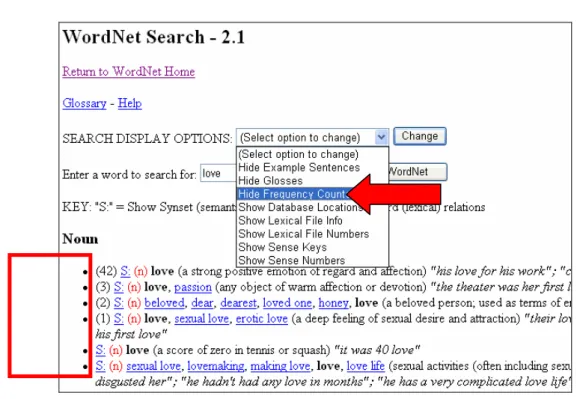
第一場講習於中央研究院舉行,主講者為 WordNet 計畫主持人 Christiane Fellbaum 教授, 其內容首先針對 WordNet 之構想與架構做簡短介紹。其計畫目前已經將英文中大部分的 動詞依詞意之間的對比與相似性,建構出一套有系統、階層性的語意網絡。進行中的部 分包含名詞與形容詞的語意網絡。最後,講者提出心理學的實驗證據來支持 WordNet 網絡結構可以模擬語言知識在人類大腦中的組織。
<第二場>
講師:Sally McConnell-Ginet,任教於 Cornell University 語言學系,研究領域 為句法學、語意學及社會語言學。 時間:2006 年 07 月 10 日(星期一)9:30~16:20 地點:福華文教會館 主題:語境與語意之互動 (Context-sensitivity in Semantics) 講授內容:上午: “Domain Restriction” 下午: “Comparison Classes”,並與參與之學員互動交流。
第二場講習於台北福華國際文教會館舉行,講者為 Cornell University 語言學教授 Sally McConnell-Ginet,其內容主要探討語意在不同情境中的轉變。以形容詞為例,通常形容 詞被用來限定某個名詞的指涉,但是其意義需要放在語境中做調節。例如,同樣一個形 容詞 tall 在指涉高樓大廈、孩童或樹時,聽話者對其意義的解讀必然需要不同的高度標 準。此外,講者提出一套邏輯形式模型,試圖解釋名詞組指涉的不定性與主題性之間的 關聯。 <第三場> 講師: 連金發教授,任職於清華大學語言所,研究領域為語意學、構詞學、方言學、 歷史語言學 畢永峨教授,任職於台灣師範大學英語系,研究領域為認知語言學、語料庫語 言學、語用學 賴惠玲教授,任職於政治大學英語系,研究領域為認知語意學、詞彙語意學、 隱喻與轉喻 時間:2006 年 07 月 11 日(星期二)9:00~17:00 地點:輔仁大學 主題:構式語法(Construction Grammar):本土語言之分析
講授內容:上午: 賴惠玲教授 “Construction Grammar: Historical and Intellectual Background”
"Argument Realization in Constructions: Cases from English and Hakka"
下午: 連金發教授 “Construction after Construction: Jackendoffian Approach and Building Constructions in
Taiwanese Southern Min”
畢永峨教授 “Constructions in Language Use: Cases from English and Mandarin Chinese”
第三場課程「構式語法⎯本土語言之分析」於 2006 年 7 月 11 日在輔仁大學百鍊展演中 心舉行。本場活動包含四場課程,上午課程由政治大學賴惠玲教授負責講授,先介紹構 式語法發展之脈絡,主要涵蓋構式語法理論產生之時代背景、認知面向、跨語言應用之 潛力以及以構式語法觀點分析語言之優點等。隨後,賴老師進入主題,探討論元角色在 構式(construction)之體現,並且討論英語的內隱客體結構(implicit theme construction)之使
用動機、內具性附加狀語(obligatory adjunct)之語用功能以及客語之 LAU 字句、「緊 X 緊
Y」結構、「NP1 V NP2 V 毋 X」等結構之句法與語意特徵。下午第一場課程由清華大 學連金發教授講授,首先介紹 Jackendoff 等學者對於構式之看法與分析,接著呈現構式 語法在台灣閩南語的應用,包括存在句、感受動詞句式、中間結構、以及其他特例格式。 下午第二場課程由台灣師範大學畢永峨教授從英語與漢語的例子,探討語構與語用之關 係,說明構式語法除了在句法、語意介面之運用外,亦可應用於互動語境以及語言改變 等面向,個案研究呈現了英語的「I think」結構以及漢語的「V 一個 N」結構、「有一點 X」構式以及「是」、「好了」等語詞之語法化現象。四場課程結束後有一段綜合討論時 間,開放讓參與的學員與三位老師互動,提出想法與問題與老師以及現場其他學員討論 交流。 <第四場>
講師: Adele E. Goldberg,任教於 Princeton University,專長為句法學、語意 學、心理語言學及認知語言學。 時間: 2006 年 8 月 30 號 (星期三) 9:00~17:00 地點: 福華文教會館 主題: 構式語法 (Construction Grammar)之理論與發展 講授內容: 上午: “Generalization” 下午 “Learning”,並與學者及學員做深度訪談 相關聯結: http://www.constructiongrammar.org/ 構式語法近年來受到普遍關注,是因為語言學家漸漸意識到語言中有許多形式和意義的 對應,無法用傳統的衍生理論來解釋,稱為「語構」。上午場的演講著重探討的,是語 構所代表的認知意義和語用意義。語構的研究來自於傳統語言學的一些不足之處。以往 認為論元結構和語法結構有對應性,也就是施事者和受事者通常會對應到語法裡的主詞 和受詞。雖然「主詞」和「受詞」的概念因語言的不同而有差異,但是在跨語言中,施 事者和受事者在語言的表現上確實傾向於出現在「顯著」或「重要」的語法位置上。語 言學家因此提出許多事件和語法對應的學說,並以此作為普遍語法(Universal Grammar) 的證據。事實上,這個現象可以用心理學研究來解釋:施事者和受事者在感知的過程中 獲得比較多的關注。
然而,在某些句構裡,論元的數目和事件角色的數目並無一致的對應,其關鍵就在於語 用因素的加入,特別是 Gricean Maxims 裡的「相關原則」。在情境中最相關的論元,才 會表現在語法層次上。有時為了一些語用的因素,例如強調動作本身的習慣性,或是迴 避某些不雅的詞語,因此不甚相關的論元,或是情境中對話者可以自行補缺的角色,會 在語法上省略,形成了一些傳統理論無法解釋的句構,例如所謂 Implicit Object Construction。每一個語構,都會歸納出一個普遍的結構,也有一些語意上的限制,但是 這些限制不見得反應普遍語法的存在,或許用人類認知的共同性,以及對話互動的共同 規則,甚至用語構本身的語意和語用特性來解釋,會更為合宜。 下午場的課程則著重在兒童語言習得的實驗研究,試探語構的本質和其形成的過程,並 探討心理學實驗如何幫助我們發掘語構的學習過程。語言使用者是如何學習這些語構, 又為何需要這些語構?在實驗設計時,所考慮到的一個根本的問題就是:若沒有明確的 「教育」過程,語言使用者是不是能靠著接觸一些實例,進而建構出一個歸納式的語構 結構。以兒童作為實驗對象,結果發現,語構的學習過程相當的迅速,即使是兒童所講 的是英語中不存在的虛擬語構,兒童也可以很快的歸納出所給予的實例之間的類似性, 進而將這個語構應用在新的情境之下。此外,若是在不同的情境中,大量使用同一個虛 構動詞,兒童使用這個虛擬句構的正確度越高。比照實驗的結果和母親對兒童的實際語 料統計,發現母親所說的話中,同一個語構所使用的動詞確實也有不平均分配的狀況出 現,意即一個特定的句構中,往往有一個動詞所佔的出現頻率不尋常的高出其他動詞。 實驗的設計模擬了句構發展的過程,也證明了句構的存在確實可以用認知或使用的證據 證明之。最後必須關注的問題就是:語言的使用者為何要學習這些語構呢?或許實際日 常對話中大量的實例刺激使用者歸納出其普遍的語構,除此之外,有一個因素也是可能 的答案:學習語構可以幫助我們快速的了解整個句子的意義。換言之,語構的產生可能 是因應對話的需要。 構式語法除了援用認知語言學的理論之外,近來更強調語用和對話的因素,希望在解釋 人類學習和理解語言的過程中,更貼近真實的樣貌。
<第五場> 講師: 黃居仁教授,任職於中研院語言所,研究領域為句法學、語意學、計算機語言學 安可思教授,任職於台大語言所,研究領域為語意學、心理語言學 張顯達教授,任職於台大語言所,研究領域為心理學、兒童語言學 江敏華教授,任職於中研院語言所,研究領域為方語言言學、歷史語言學 賴惠玲教授,任職於政治大學英語系,研究領域為認知語意學、詞彙語意學、隱 喻與轉喻 蘇以文教授,任職於台大語言所,研究領域為句法學、語用學、認知語言學 時間: 2006 年 10 月 14 號 (星期六) 8:30~17:00 地點: 中研院 主題: 學習成果驗收 講授內容:上午:學員發表研究議題計劃書 下午: 黃居仁教授 “WordNet 發展及運用” 安可思教授 “語料庫的發展” 張顯達教授 “語言習得” 江敏華教授 “語法化”: 以方語為例 賴惠玲教授 “語意研究”: 以方言為例 蘇以文教授 “語用學” 第五場的講習亦安排了全日的研習,為學員與講座教授們的互動,於中研院人文社會科 學館舉行。此次研習活動的一大特點,即是請學員繳交研究提案,在第五場的講習中, 由主辦單位挑選較優良的提案與其他學員分享,並且由幾位參與的教授們講評。此次參 與活動的提案都相當別出心裁,可以見到許多研究開始跳脫傳統的領域分別,而走入跨 領域的研究範圍。提案報告中包括了心理語言學和語料庫語言學的介面研究、語意和語 用的介面研究、法律語言學、構詞與語意介面研究、語法和語意介面研究、語法和語料 庫語言學介面研究、語法與語言教學的研究等新穎的研究走向。我們可以由此看出國內 目前的研究趨勢,在在都呈現了國內語言學研究的活力,並且也能夠和國際間跨領域研 究的流行趨勢相接軌。此外,這些新的研究也反映出:語言和人類生活是息息相關的, 並不像早期的語言學研究一樣,刻意將語言和人類的活動及認知能力做出切割。新的研 究趨勢正是將人類心智、社會活動和人類語言行為的互動納入一個整體的處理,並尋求 合理的解釋。
三. 綜合回顧
回顧本次卓越營,有 Christiane Fellbaum 教授講授 WordNet 之構想、架構及應用發展; 有 Sally McConnell-Ginet 教授探討語意在不同情境中的轉變;有三位台灣的語言學者賴 惠玲教授、連金發教授以及畢永峨教授介紹「構式語法」理論以及如何應用於台灣本土 語言學的研究;及還有「構式語法」創始者之一 Adele Goldberg 教授,討論了整個理論 的架構以及相關的心理實驗。最後,學員繳交研究提案並由參與的教授們擇優數篇發表 並講評,給學員與教授的互動機會,這些主題不同的研習活動反應出本卓越營的特點。 學員們的提案都相當別出心裁,可以見到許多研究開始跳脫傳統的領域分別,而走入跨 領域的研究範圍。台灣語言學會更提供獎學金鼓勵特優研究提案,獎勵分別由下列三位 表現特優的學員獲得:中研院語言所的陳永祥、台灣大學語言所的鍾曉芳、以及政治大 學語言所的強舒媺。其他的許多研究提案,都在傳統領域的介面之間找尋發展的方向, 顯現出台灣新一代的語言學生不僅能夠和國際的研究趨勢相接軌,更具有學術創作的活 力。 共同策劃本次卓越營內容的教授們也都對未來語言學研究發展分別提出其看法。黃居仁 教授強調 multiface 的重要性,提醒學員們在紮實學好基礎專長學科之餘,務必要多加涉 獵其它相關知識。目前的國際潮流皆是跨領域、跨語言的合作模式,做為一個語言學家, 我們的研究應該要與現代生活有關,而非獨立於社會之外,也就是說現在整個社會或是 語言學家要面對的問題就是,這是一個多語的社會。既然語言一直就是一個複雜的行 為,因此,更需要多方合作方能達到更高的理想成果。 許多學員的提案也涉及了語料庫的研究。對此,安可思教授肯定 corpus-based linguistics 的研究走向。安可思教授認為,不論從哪一個角度分析語言現象,語料庫的分析始終很 重要,因為語料庫提供了大量而且多人共享的語言使用資料,對語言研究是相當可靠的 根據。即使是心理語言學的研究,語料庫也提供了質量俱佳的語料來源。 語言習得的研究在台灣也相當蓬勃,張顯達老師提到:「如果我們去展望未來,大概語 言習得研究裡比較重要的議題是怎樣去思考 production 和 comprehension 之間的關係。」 設想一個兩歲多的小孩,他所說的話跟理解之間,是否存在等號的關係呢?在 80 年代 Lise Menn 提出 “Two-lexicon hypothesis”,認為我們在說話及發音的時候有一個辭彙的 系統做發音的工作,理解及聽辨的時候有另外一個系統。如果回到語構的概念,就是小 孩如何掌握人類的溝通意圖,然後透過意圖連接理解與說話。在未來十年內,這個方向 可能會在語言習得的研究中佔很重要的一部份。
這幾年來方言研究也受到相當的矚目,卓越營的第三場研習課程即安排了本地語言的個 案研究及討論。江敏華教授認為,卓越營舉辦的目的就是希望能激發新的議題。意義及
語法的研究,如果能結合歷史或語言類型的觀點,一定會帶來相當的啟發性。比如說, 從事親屬語言的語法比較時,我們常常會發現一個功能詞或是語法結構在不同的親屬語 言當中,會有不同的功能和意義。此時,若以構式語法來解釋,這些不同的語意可能是 由功能詞和格式中的其他成分互動而產生的,語言研究的工作除了要能夠闡述某一個語 言內部的現象,更應該要能夠解釋其親屬語言中類似的語法現象。如果從歷史語言學的 觀點來看,親屬語言有一個歷史發展的過程:甲語言的現象可能是乙語言的前身,或是 相反。同時關照這兩種不同的觀點,我們就可以從歷時的「語法化」和共時的「構式語 法」中得到啟發,找出二者應該如何區隔或相容,進而整合成更具有解釋力的論述的方 法。因此,意義和語法的研究,如果能夠結合歷史語言學、語言類型比較,甚至整合構 式語法、語法化、及語料庫這些不同的解釋觀點,必定能激發出更多的議題和方向。 賴惠玲教授則談到目前方言研究的兩種主要觀點:一派是從形式(formalism)出發,而另 一派則會強調方言的獨特性。前者看到的是親屬語言或方言之間的『共相』,所以會認 為如果某種理論可以解釋漢語,那客語閩語中的類似現象應該也可以解釋。而後者看到 的是親屬語言或方言的『殊相』。然而,平衡這兩種似乎極端的說法,我們應該充分利 用不同的學理理論,用更紮實的基本功來處理語言,才能找出更精確的解釋,不但可以 描述漢語與其親屬語言之間的語法關係,甚至可以進而反思這些理論的周延性和普遍 性。 本人亦在本次卓越營的最後,重申大家的研究呈現了國內語言學活力,不只跨領域而且 結合不同研究的界面,也就是說,研究句法外,要兼談句法與語意的介面研究,或者句 法、語意跟語用的互動。我也與在場學員分享多年來的研究心得,即語用學在語言學研 究中的重要性,無論是哲學家或是語言學家長久以來都有此共識。Wittgenstein 在 1964 的作品 Philosophical Investigation 中表示:「The meaning of a word is its use in the language。」而類似的概念 Fillmore 也曾經提過。語用學大師 Leech 的 Pragmatics 是一 本相當經典的著作,書中詳述語用學在語言研究的定位。我也提醒年輕學者勿陷入「權 威」之迷思,「只有勇於挑戰質問,你的問題才會得到解答,才能有新發現。」如果真 理只有一個的話,那麼我們不管是從哪一個角度切入,我們希望看到的是那個真相,所 以研究議題的創新也許不如方法及切入點的創新那麼值得期待。
四. 展望與期許
本次卓越營得以順利舉行,特別感謝國科會以及台灣語言學會的幫助,提供了國內語言 學界年輕學子一個難得的學習機會。語言學研究正走向一個跨領域的趨勢,以不同次領 域的介面為研究主流。這次卓越營的講師陣容正是這樣的呈現,整體課程極為多元,由 詞庫、語法、語意、走向語用。參與的講師與議題皆與國際潮流接軌: Christiane Fellbaum是國際知名的電腦語言學家,所開創的 WordNet 激發許多國家相繼建立屬於自己語言的 語意網語料庫; Sally McConnell-Ginet 是現今美國語言學會會長,其研究指出未來語言學 分析的重點,也就是「情境」對語意和語法研究的影響; Adele E. Goldberg 是構式語法的 知名專家,著作等身,她 2006 年最近出版的新書 Constructions at work: the nature of
generalization in language 中,更將句法、語意、語用及心理語言學等領域成功地結合。 身為領導先驅的指標性人物,這些講師的研究精彩豐碩,未來的發展值得繼續關注。而 事實上,參與本次卓越營的主持群教授們,早已投入這些議題的研究有相當的時日,顯 示了台灣學界與國際脈動的緊密結合。 對學員而言,這次卓越營採取的新模式— 由五場研習營串連而成,豐富而有系統,從 安排的場次及內容看來,脈絡清晰可見。許多學員反應,五場主題相連、長時間延續的 研習營帶領他們主動且深入地學習。與前兩屆密集兩週式的課程相較之下,本次課程設 計更有彈性,使學員有充分的時間回味咀嚼每位大師級講師的授課。另外,這些講師的 風采也讓學員印象深刻,他們的智慧、親切、幽默為學員提供了良好的學習典範。 這次的卓越營為台灣的語言學研究注入了新的活水,同時也象徵著台灣語言學新一代活 力研究的開始。我們期待這次活動所帶來的不僅僅是五場研習活動的知識饗宴,更期待 這樣的系列活動可以啟發語言學研究的新觀點。我們希望學員在收獲充實之餘,更能培 養長遠的視野:強化基礎訓練、廣觸多元知識、邁向創新的研究平台。國內語言學門的 未來固然靠許多資深及中生代學者的累積,更重要的是新生後輩學子的努力。類似的活 動,目的在於提供國內語言學界新的視角,在國際潮流中,注入本土的特色,尋求最具 特色且又能引領風騷的切入點。語言學門如果能在這樣的思維及氛圍下蓬勃發展,可 大,可長,可久。
課程講議
第一場 Christiane Fellbaum <詞彙網路─詞彙的意義與結構>
Lectures on Lexical Semantics
Christiane FellbaumPrinceton University Taiwan, May 2006
Types of relations
• paradigmatic relations: related terms aresubstitutable for each other (same POS) • syntagmatic relations: related terms
co-occur in a context (different POS)
ß
Semantic relations
Modeling the lexicon
A (critical) look at WordNet
Are relations real?
Traditional dictionary definitions reflect relations: an X is a kind/type of (a) Y an X is a part of (a) Y X: not Y etc. Semantic Relations
• Lexicon: labeling of concepts • Labeled concepts are salient • Concepts differ in systematic ways:
contrasts and similarities
• Consistent differences = relations
AI/KR
• KR must be economical!
• Humans “know” tens of thousands of concepts
• Knowledge encompasses lexical (word) knowledge and encyclopedic (world) knowledge
AI/KR
Minimal knowledge about concepts: • X is a kind of Y
• X Ys/people Y X • X is Y/has property Y
• These types of knowledge are encoded by nouns, verbs, and adjectives, respectively
• WordNet builders focused on these 3 major POS
Linguistic Assumptions
• Lexicon can be mapped as giant matrix • Rows are sets of synonyms• Columns are distinct senses of the same word form
• Matrix is sparsely populated
Psycholinguistic Evidence for
Relations
• Word association norms (robust!) • Co-occurrence patterns in text (esp.
antonymy)
• Patterns of loss and sparing in aphasia
Focus on Verbs
• Approx. twice as polysemous as nouns • Interesting class-based behavior • Relate arguments
Starting WordNet
• Separate wordnets for each POS--a good idea?
• Psycholinguistic evidence is inconclusive • --association norms show approx. 50%
cross-category responses
• --some aphasias (but not all) affect one POS only
Relations
Semantic-conceptual: link entire synsets Lexical: link single lexemes (esp. antonyms) Morphological: link single lexemes across
POS (run-runner, demonstrate-demonstration, demonstrative, demonstrable,...)
Choosing relations for WordNet
• Choice of encoded relations was guided by---traditional dictionary definitions --experimental evidence (Chaffin & Fellbaum)
--textual co-occurrence patterns like “x’s and other y’s”
“Manner” as a semantic feature
• Long believed to be a primitive (Wierzbicka,Jackendoff, Levin & Rappaport Hovav, Krifka, et al.)
• Believed to be part of LCS of many verbs • Believed to affect syntax
• But: never analyzed or explicated!
Experimental evidence for
“manner” relation (troponymy)
Four experiments:(1) When presented with pairs of verbs that experimenters had selected as
exemplifying troponyms and asked to formulate the relation, subjects
overwhelmingly mentioned “manner/way of”
No further distinctions!
“Manner” in Talmy (1985)
• Claim: virtually all human languages encode motion verbs in one of two patterns: English, Chinese,..conflate fact of motion and
manner; express path in adjuncts (I ran/walked into the room)
Romance, Greek, Semitic,...conflate fact of motion with path; express manner in adjuncts (I entered the room running/walking)
These facts point to the salience of “motion”
(2) Subjects sorted verbs written on cards into pairs based on troponymy
(3) Subjects were given verbs and asked to respond with the first verb that comes to mind: overwhelming response were troponyms (4) Analogy task: given pairs or verbs related in
various ways, create new pairs. Best performance for troponymically related pairs.
But: troponymy is polysemous
Different kinds of semantic elaboration depending of semantic field/domain Motion verbs elaborate features like speed (walk-run)
means (truck, bike, train) medium (fly, swim)
• Communication verbs elaborate features like
--intention (examine, confess, preach) --medium (fax, e-mail, phone)
Type vs. Role nouns
• Types are stable, roles are dependent oncontext, indidividual, time
• WordNet(s) should not conflate types and roles but distinguish these two kinds of hyponymy relations!
Evidence for an additional
relation
Proposal for an analogical
relation in the verb lexicon
• Two distinct types of manner relations: Manner and purpose/functionType-role distinction among
nouns
Pet, customer, husband, laundry, groceries,.. Current WordNet treatment:
(1) a husky is a kind of dog (2) a husky is a kind of working dog What’s wrong?
(2) is defeasible, (1) is not: *This husky is not a dog This husky is not a working dog
Examples
(1) jog/swim/bike/run...are manners of moving
(2) jog/swim/bike/run..are manners of exercising
(3) lecturing is a manner of talking (4) lecturing is a manner of teaching
(1) and (3) are necessarily true; (2) and (4) are not
Examples
Similarly, scrub, wipe,..are necessarilymanners of touching/manipulating but not necessarily manners of cleaning:
She wiped/scrubbed the table but she didn’t clean it
*She wiped/scrubbed the table but she didn’t touch it
How to represent the distinction?
• One possibility: two superordinates: onetype, one purpose
• Result (undesirable?): tangled hierarchy • Better: distinguish relations and encode as
such
• Result: parallel hierarchies
Just as one recognized huskies as dogs, but not necesssarily as pets, so one recognizes a running/walking/biking event as a moving event, but not necessarily as an exercising event The “working dog/exercise” component is notionally
dependent and does not provide an identity criterion
Characterizing Purpose Verbs
• Cruse cites “expectation” for type/role distinction among nouns
• But: how is expectation characterized? How quantified?
Context is important in building expectation: My car is in the repair shop, so I biked to
work (not exercise)
The boat capsized and they swam to the shore
• Hypernyms with defeasible troponyms (clean, treat, protect, exercise,..) can be called “purpose” or “function” verbs, since they always encode a purpose or goal. (They are telic!)
Characterizing Purpose Verbs
For some verbs, purpose component is more salient (jog)
Purpose component may be strong in some cultures, not others (are orchids house plants in Brazil?)
Purpose and COS verbs
• Purpose verbs can for middles: The lawn mower controls easily Naive customers cheat easily Old paintings don’t protect easily Difference:Middles “affect”; COS verbs “change”
Open questions:
• How many purpose verbs are there? • Where/how are they distributed throughoutthe lexicon?
Purpose verbs
Select for “telic” adverbs/adverbials: John exercised with good results Peter cheated successfully
Mary treated the patient efficaceously
Finding purpose verbs
Look for text patterns in corpora: befriending, listening and other ways of
helping
Walking and other exercise
..and then spraying withWD-40 is not cleaning
Purpose verbs and adverbs
• Polysemous adverbs are disambiguated:
• John ran quickly (move? run for President?) • John ran unsuccessfully
Network is (too) sparsely connected
• Why not encode/find links among ALL synsets?
• Recent work with Boyd-Graber, Osherson, Schapire (2006)
Overcome WN’s shortcoming:
• overcome sparseness of connections • both intra- and intercategorial • attach weights to arcs • direct arcsAdd to WordNet
• Cross-POS links (traffic, congested, stop) • More relations: Holland-tulip, sweater-wool,axe-tree, buy-shop, red-flame,... • Relations need not be labeled
• Arcs are directed:dollar-green/*green-dollar • Arcs are weighted
Goal of most Wordnet
applications: semantic
disambiguation
• Needed: annotated training corpora • Manual tagging is time-consuming,
expensive, and unrealiable
• Fellbaum & Grabowski: overall tagger agreement was 74%; much less for highly polysemous (frequent) words and verbs
Evocation
“How strongly does concept A evoke concept B in people’s minds?”
NOT: similarity (pear-apple) association (dress-button)
Solution (?)
• Augment WordNet with relations among all synsets
• Dense network can be exploited to find related/unrelated words and concepts • Less training data needed
• Algorithms relying on net structure will yield better results
Procedure
Identify 1K “core”synsets • highly frequent (BNC) • highly salient • 500 N, 250 V, 250 Adj
Experiment
• Collected 120K judgments for randomly chosen synsets (subset of 1K)
• Designed interface for ratings • Wrote rating manual
• Strength of evocation ranged from 0-100 • Five anchor points
Results
• 67% of evocations were rated “zero”(expected)
• High consistency for zero ratings
Human Ratings
• Raters were warned not to use personal, idiosyncratic evocations (dog-grandmother) • Avoid evocation of word form (rhyme,
same initial letter, etc.)
• Raters were tested for consistency with themselves and agreement with others
Comparison with other similarity measures
• Lesk (overlap of words in glosses) • Paths in WN (verbs, nouns)
• Latent semantic indexing (strings not necessarily senses)
• Lack of correlation of our results with each measure!
• Evocation captures something similarity doesn’t!
Results
• Median correlation on test set for the 24 annotators was .72
• lowest correlation was .64
• Average correlation with themselves: .70
Next task
• Completely fill in net of 1K synsets • Too much for human ratings • Machine learning!Machine Learning
Input features:• major similarity measures
• context vectors from British National Corpus (tagged for POS; eliminates some polysemy)
Learn evocations
• Apply boosting techniques (Schapire) • Divide data into 5 categories of evocation
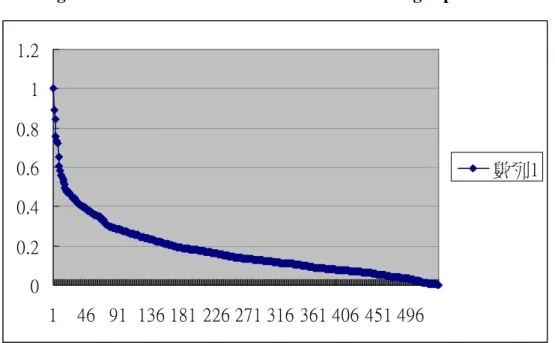
strengths (0 is its own category) • 80% training data, 20% testing • Results: incorrect assignments ~25% • More work is ongoing...
第二場 Sally McConnell-Ginet <語境與語意之互動>
Context-sensitivity of
meaning
TSIL Lecture 1: Domain restriction Sally McConnell-Ginet Cornell University [email protected]10 July, 2006 TSIL1: Context-sensitivity: Domain restriction
4 Domain restriction: Some data
But is an individual’s not counting just a matter of ‘loose’ speaking? Pragmatic?
Consider my uttering everyone’s listening to me in a full 50-person lecture room in Taipei
Compare 1 non-listener in that lecture room (pedant’s objection--this is pragmatic) to 1 (or indeed many) non-listeners in Ithaca, NY (insane person’s objection--this is semantic)
Pedantry vs. insanity--we want to stay sane!
10 July, 2006 TSIL1: Context-sensitivity: Domain restriction
2 Plan for TSIL tutorials
• Domain restriction
– Some data
– Semantics for quantifiers – Universe of model as restrictor – Ellipsis vs. covert variables – Why variables? – Location – Type – Alternatives
• Comparison classes
10 July, 2006 TSIL1: Context-sensitivity: Domain restriction
5
Domain restriction: Some data
Examples that are even harder to treat as cases of “non-literality” involve what looks like an “antecedent” for restrictor
– The dinner guestshad rhubarb pie for dessert. Everyonedeveloped a rash. If I was not among the dinner guests, my
failure to develop a rash seems not just an ignorable exception but totally irrelevant to the literal truth of the second sentence. That sentence literallysays that every one of the dinner guestsdeveloped a rash.
10 July, 2006 TSIL1: Context-sensitivity: Domain restriction
3 Domain restriction: Some data
• Suppose someone utters everyone is listening
There seem to be some people whose listening is quite irrelevant.
10 July, 2006 TSIL1: Context-sensitivity: Domain restriction
6 Domain restriction: Some data
But just making some property salient is not enough to effect restrictions
– Lisa is a phonologist. I think that every linguistwould agree with what she said. Kratzer 2005 points out that just mentioning phonologist will not restrict linguist to those who are phonologists--i.e., it does not render the semanticists and syntacticians irrelevant to every linguist
10 July, 2006 TSIL1: Context-sensitivity: Domain restriction
7 Domain restriction: Some data
• It is not that we do not sometimes interpret
every linguist as if we were restricting linguists
to those specializing in the study of sounds • A:Speech scientists are overly dependent on
computers these days. Those speech pathologists in here the other day had no idea how to read IPA transcriptions and the psychologists had never even seen them. • B:Lisa knows the IPA. Every linguist knows
the IPA.
The puzzle is how such restrictions can get established. Topicality?
10 July, 2006 TSIL1: Context-sensitivity: Domain restriction
10 Domain restriction: Semantics for quantifiers
a. Some genius smokes.
D A B
b. ∃x(genius x & smoke x) c. λQ∃x(genius x & Qx) (smoke) d. λQ∃x(genius x & Qx) = possible translation of some genius
e. [some genius] = {B: [genius] ∩ B ≠ Ø}
f. [some A] = {B: A ∩ B ≠ Ø}
g. [some] = {<A,B>: A ∩ B ≠ Ø} Defined for A, B ⊆U, universe of model M
10 July, 2006 TSIL1: Context-sensitivity: Domain restriction
8 Domain restriction: Semantics for quantifiers Model-theoretic semantics assumes a universe
of discourse, U,from which we get referential values of expressions in language L. Suppose U = {a,b,c,d,e}, where a is denoted by
the name Asya, b by Benita, c by Carlos, d by Dan, and e by Edith.
Predicates are assigned subsets of U as their values--e.g., V(smokes) relative to M = {u in U: u smokes}
If Asya, Carlos, and Edith smoke but Benita and Dan do not then V(smokes) = {a,c,e}
10 July, 2006 TSIL1: Context-sensitivity: Domain restriction
11 Domain restriction: Semantics for quantifiers a. Every genius smokes.
D A B
b. ∀x(genius x & smoke x) c. λQ∃x(genius x → Qx) (smoke) d. λQ∃x(genius x → Qx): every genius e. [every genius] = {B: [genius] ∩ B = [genius] } = {B: [genius] ⊆ B}
f. [every A] = {B: A ⊆ B} g. [every] = {<A,B>: A ⊆ B}
Defined for A, B ⊆ U, the universe of model M
10 July, 2006 TSIL1: Context-sensitivity: Domain restriction
9
Domain restriction: Semantics for quantifiers Suppose language L contains quantifying
expressions like everyone or someone. Someone smokes is true iff U∩ V(smoke)
≠ ∅ (false otherwise)
∃x(smoke x) [Values of x all in U] Everyone smokes is true iff U⊆ V(smoke)
(false otherwise)
∀x(smoke x) [Values of x all in U]
10 July, 2006 TSIL1: Context-sensitivity: Domain restriction
12
Domain restriction: Universe of model as restrictor
Model-theoretic semantics for quantifiers brings universe as automatic restrictor
Can we get the restrictions we need by using the universe of the model?
10 July, 2006 TSIL1: Context-sensitivity: Domain restriction
13
Domain restriction: Universe of model as restrictor
We could let Taiwan delimit the universe for the model or draw the boundaries more locally But consider Westerståhl’s 1985 example:
Sweden is a funny place. Every tennis player looks like Björn Borg, and more men than women watch tennis on TV. But most people really dislike foreign tennis players.
In interpreting the last sentence, we would have to shift our universe from Sweden to a wider world--and for foreign need both!
Not good
10 July, 2006 TSIL1: Context-sensitivity: Domain restriction
16
Domain restriction: Why variable?
Can be valued deictically--look at picture, e.g. Can get value from antecedent--e.g., dinner
guests and rhubarb pie story or perhaps Sweden and tennis players
And here are more examples
• In my class this morning, everyone looked sleepy. • When we arrived in the village, several houses were
abandoned.
• A herd of elephants was visible from our vehicle. Many females were nursing their babies.
10 July, 2006 TSIL1: Context-sensitivity: Domain restriction
14
Domain restriction: Ellipsis vs. covert variables
Would it work to say that surface forms are elliptical for Ss containing overt restrictors? Consider again
Sweden is a funny place. Every tennis player [in Sweden] looks like Björn Borg, and more men [in Sweden] than women [in Sweden] watch tennis on TV. But most people [in Sweden] really dislike foreign [to Sweden] tennis players.
But why not [from Sweden] or [born in Sweden] or [in that country] or … ? And what about the final restrictor?
10 July, 2006 TSIL1: Context-sensitivity: Domain restriction
17
Domain restriction: Why variable?
Finally, domain restrictors can covary with a quantifying expression--they seem to show bindingeffects.
Some examples (based on von Fintel)
• In most countries I visit, many tennis players want to be like Monica Seles.
• No class was so bad that no student passed the exam.
• Whenever we have a party, everybody brings something.
Restrictors thus seem a lot like variables.
10 July, 2006 TSIL1: Context-sensitivity: Domain restriction
15
Domain restriction: Ellipsis vs. covert variables
Ellipsis raises the question of just what is deleted
A more widely pursued strategy is to posit an unpronounced contextually-sensitive variable somewhere in LF
Questions raised Why variable?
Where is variable located?
Over what type of entities does it range? Alternatives
10 July, 2006 TSIL1: Context-sensitivity: Domain restriction
18
Domain restriction: Where is variable?
Restrictions affecting quantifying Ds seem plausibly located in the D node
Westerståhl 1985 associates the restrictor with the Det (D) node
Let C be the contextually supplied restrictor set and define DC(A,B) = D(C∩A,B)
Suppose focus on Taiwanese, then C = {x: Taiwanese x} = [Taiwanese] and
everyCgenius smokes is True iff
10 July, 2006 TSIL1: Context-sensitivity: Domain restriction
19 Domain restriction: Where is variable?
von Fintel 1998 is more explicit about syntax than Westerståhl
most (countries I visit) λx
DP want to be like Monica
D NP
many tennis players f x
10 July, 2006 TSIL1: Context-sensitivity: Domain restriction
22 Domain restriction: Where is variable?
On the other hand, Delia Graff (reported in Stanley 2002) observes that if superlatives combine with NPs before the restrictor provided by D comes into play we do not get the right results. Suppose, e.g., we are talking about New York State geography.
• The highest mountain is under 2000 meters tall.
If we just apply highest to mountain we get Mount Everest at 8848 meters (29,028 feet) rather than Mount Marcy, 1629 meters (5344 feet) and highest in New York State
10 July, 2006 TSIL1: Context-sensitivity: Domain restriction
20
Domain restriction: Where is variable? Stanley and Szabó 2000 argue instead that the
restrictor is an index under the N node. So on their view we would have something like
DP
D NP
N many tennis players <f,i>
10 July, 2006 TSIL1: Context-sensitivity: Domain restriction
23
Domain restriction: Where is variable?
Stanley acknowledges that there are other ways to handle superlatives (e.g., associate the superlative degree morpheme with the D node) but objects to locating the restrictor element higher than what it restricts, the N or perhaps NP (fake philosopher) on grounds of compositionality. Like the standard
semantics of quantifiers in propositional logic, which needs access to internal structure of constituents to vary assignment functions, this approach is not strictly compositional.
10 July, 2006 TSIL1: Context-sensitivity: Domain restriction
21
Domain restriction: Where is variable?
Why might we want to associate the restrictor with the D rather than have it originate with the N or the NP?
Breheny 2003 points out that the restrictor is not in the scope of adjectives like fake:
• Every fake philosopher is from Idaho.
If restrictor is Americans, not equivalent to
• Every fake American philosopher is from Idaho.
but to
• Every American fake philosopher is from Idaho.
10 July, 2006 TSIL1: Context-sensitivity: Domain restriction
24
Domain restriction: Where is variable?
We also have domain restriction where the quantifying expression is not a D but some kind of adverbial:
• If a letter is from a friend, I alwaysanswer it. • When it is hot, Juana oftendrinks iced mint tea. • Yu-Ping usuallywalks to school.
It is by no means clear that restriction works the same way for D-quantifiers and for A-quantifiers but both need eventually to be considered.
10 July, 2006 TSIL1: Context-sensitivity: Domain restriction
25 Domain restriction: What type is variable?
Variable location is related to variable type Some suggestions
• Sets of individual entities • Properties
• Situations
• Complex functors (that may combine arguments of any of the preceding)
Early work (e.g. Westerståhl) assumed sets but encountered problems
10 July, 2006 TSIL1: Context-sensitivity: Domain restriction
28
Domain restriction: What type is variable?
But do situations fully determine domain?
• Whenever I go to a dinner party everyone comments on my haircut [von Fintel] • Everyone is asleep and being monitored by a
researcher [Soames] • Everyone is looking at me
Don’t seem to do whole job--last example is prime case where utterance situation might seem relevant but whoever is denoted by I is surely part of that situation yet is not included in everyone.
10 July, 2006 TSIL1: Context-sensitivity: Domain restriction
26
Domain restriction: What type is variable?
Moving from individuals to properties helps when restrictor might be imported into intensional context with no de re import
• John studied Czech before he went to Prague. It was quite possible nobody would speak English.
Example is due to von Fintel who notes that the intended property relevant for restricting
nobody is something like being someone with whom John interacts in Prague but there is
no reason to think the extension of that property is fixed at the time of utterance
10 July, 2006 TSIL1: Context-sensitivity: Domain restriction
29
Domain restriction: What type is variable?
Perhaps we need more complex types--e.g., functions from situations to individuals von Fintel suggests some kind of choice
function, noting that we might want to consider the so-called “specific indefinite” a case of a singleton set serving as domain Still have questions, however, on how
restrictions established and constraints on the process
10 July, 2006 TSIL1: Context-sensitivity: Domain restriction
27 Domain restriction: What type is variable?
Situation variables have been proposed for other reasons--e.g., to give location for it is
raining and similar sentences.
10 July, 2006 TSIL1: Context-sensitivity: Domain restriction
30 Domain restriction: Alternatives?
Apparent binding effects do not force us to posit covert variables (which do not seem to show up though Kratzer argues that situation variables are sometimes pronounced) Jacobson 2005 argues for applying
variable-free semantics to the problem of domain restriction, an approach that bans variables but makes heavy use of type-shifting And there may be more pragmatic approaches
10 July, 2006 TSIL1: Context-sensitivity: Domain restriction
31
References
von Fintel, Kai. The semantics and pragmatics of quantifier domains. Lecture Notes from Vilem Mathesius Lectures, Prague, March 1998. [available online at http://web.mit.edu/fintel/; it is #28 on list] Breheny, Richard. A lexical account of implicit (bound)
contextual dependence. SALT 13, 2003.
Jacobson, Pauline. Variable free semantics: The case of quantifier domain restrictions, Institut Jean Nicod, June 2005
Kratzer, Angelika. Covert quantifier restriction in natural languages. Handout, “Context & content,” LSA 2005
10 July, 2006 TSIL1: Context-sensitivity: Domain restriction
32
References, continued
Stanley, Jason. Nominal restriction, Logical form and language, ed. G. Peters & G. Preyer, Oxford Univ. Press, 2002.
Stanley, Jason & Zoltán Gendler Szabó. On quantifier domain restriction, Mind & Language 16, nos. 2 &3 (April/June 2000), 219-261. (Issue also includes comments by Kent Bach & Stephen Neale) Westerståhl, Dag. Determiners and context sets,
Generalized quantifiers in natural language, ed. J van Benthem & A. ter Meulen (1985), 45-71.
Context-sensitivity of
meaning
TSIL Lecture 2: Comparison classes Sally McConnell-Ginet Cornell University [email protected]10 July, 2006 TSIL2: Context-sensitivity: comparison classes
4 Comparison classes: some data
For most attributive adjectives, there is an entailment from Adj+Nom to Nom as in
• That is an octagonal house ⇒ That is a house • That is a green dress ⇒ That is a dress • That is a tall tree⇒ That is a tree
Such adjectives are called subsective: they truly modifythe Nom by picking out a subset of what the Nom denotes
There are a few exceptions • That is a fake flower/alleged thief …
10 July, 2006 TSIL2: Context-sensitivity: comparison classes
2 Plan for TSIL tutorial
• Domain restriction • Comparison classes – some data – head N – extensional or intensional – ‘for a N’ – measure functions – domains revisited
10 July, 2006 TSIL2: Context-sensitivity: comparison classes
5
Comparison classes: some data
For some attributive adjectives, there is a further entailment from Adj+Nom to Nom is Adj as in
• That is an octagonal house ⇒ That house is octagonal
• That is a green dress ⇒That dress is green
Such adjectives are called intersective: they seem to work by intersecting the denotation of the Nom with the Adj denotation, with the Adj+Nom picking out things that satisfy both the Adj and the Nom
10 July, 2006 TSIL2: Context-sensitivity: comparison classes
3
Comparison classes: some data
Most English adjectives occur in both • prenominal (attributive) position
• that’s a tall tree
• that’s an octagonal building
and
• post-copular (predicate) position
• that tree is tall. • that building is octagonal
For many languages, predicate position (with no copula) is primary
10 July, 2006 TSIL2: Context-sensitivity: comparison classes
6
Comparison classes: some data
But for many attributive adjectives that do occur in predicate position it seems undefined in isolation whether something satisfies the Adj.
• That is a tall three-year-old. ??? That three-year-old is tall. • That is a large ant.
??? That ant is large. • That is a small elephant.
??? That elephant is small. • Chara is a good pickpocket.
10 July, 2006 TSIL2: Context-sensitivity: comparison classes
7 Comparison classes: some data
For these adjectives applicability seems relativeto some kind of contextually providedstandardfor assessing ranking of individuals.
10 July, 2006 TSIL2: Context-sensitivity: comparison classes
10 Comparison classes: head N
The c-class is not a new idea:
Suppose that someone says 'That is a good one'. We can then always ask (1) 'Good what--sports car or family car or taxi or example to quote in a logic-book?' … To ask [this] question is to ask for the class within which evaluative comparisons are being made. Let us call it the class of comparison [italics added].
R. M. Hare (1952) in The Language of Morals
10 July, 2006 TSIL2: Context-sensitivity: comparison classes
8 Comparison classes: some data
Whether or notit/that is tall is true depends not
just on height but on such factors as the kind of thing indicated.
Are we speaking of skyscrapers, toddlers, or trees?
One way to approach this is to say that what matters is the relevant comparison class: Ithaca, NY is large if we are speaking of municipalities in rural upstate NY but small if we compare it to cities like NYC or Taipei.
10 July, 2006 TSIL2: Context-sensitivity: comparison classes
11 Comparison classes: head N
Ludlow 1989 argued that a null operator could be coindexed with a post-adj N-bar, as in above exs, or in subject position, to give c-class
• That building is tall. • That toddler is tall. • That tree is tall.
He contrasted
• That is a large glass of orange juice. • That is a large glass with orange juice in it.
Claim: glass of oj can set c-class but not glass
with oj in it
10 July, 2006 TSIL2: Context-sensitivity: comparison classes
9
Comparison classes: head N
When a relative adjective occurs prenominally it often seems to be the case that the
denotation of the head N provides the relevant comparison class.
• That is a tall building. • That is a tall toddler. • That is a tall tree.
It is natural to assume that buildings, toddlers, and trees determine the comparison class of interest, which, following Ludlow 1989, I’ll shorten to c-class.
10 July, 2006 TSIL2: Context-sensitivity: comparison classes
12
Comparison classes: head N
The N-bar is more readily available than the higher nominal to set c-class and there do seem to be constraints on overt linguistic indicators of c-class.
Are these genuinely syntactic constraints or reflexes of more semantic/pragmatic constraints?
For prenominal Adj, does the head N (or N-bar) always set c-class?
10 July, 2006 TSIL2: Context-sensitivity: comparison classes
13 Comparison classes: head N
Consider
• She is a tall blonde. • She is an intelligent woman.
In the first case we probably don’t take blonde, a hair color, to indicate a c-class for height In the second case, we might or might not take
being a woman (rather than a man) to indicate a c-class for assessing intelligence. That would depend on gender ideologies. Sometimes focal stress on N tips the balance.
10 July, 2006 TSIL2: Context-sensitivity: comparison classes
16 Comparison classes: extensional or intensional?
Even assuming we have a c-class--e.g., contemporary Taiwanese women--we still have questions. Suppose an awful chemical accident produces a toxic cloud hovering somewhat above the ground in Taipei, leading to the rapid death of everyone, both women and men, over 1.5 meters (4 feet, 11 inches). Is the c-class now just those surviving shorter women who were lucky enough to be below the poison gases? (McConnell-Ginet 1973)
10 July, 2006 TSIL2: Context-sensitivity: comparison classes
14
Comparison classes: head N
There are also cases where the head N seems to provide just part of what is needed. An example from Kamp & Partee 1995
• That’s a big snowman
If the snow figure in question is built by college students the size standards are far larger than if it is built by a couple of six-year-olds. Stanley 2004 observes that this does not mean
that the nominal is irrelevant but just that it may need supplementation.
10 July, 2006 TSIL2: Context-sensitivity: comparison classes
17
Comparison classes: extensional or intensional?
We can have particular individuals comprise a c-class
• Compared to Sandy and Joan, Sally is tall.
More usually, however, what we really want is a comparison-relevant property--being a 21st-century Taiwanese woman, being a tree, being a basketball player.
Frequent proposal: to be tall is to be tall relative to others of one’s “kind”. But most individuals belong to a number of different “kinds” that might be relevant!
10 July, 2006 TSIL2: Context-sensitivity: comparison classes
15 Comparison classes: head N
When we speak of tall
woman, do we have Scandinavian women in mind or Japanese? Are we comparing her to contemporaries or to women of bygone eras? Woman is not enough.
10 July, 2006 TSIL2: Context-sensitivity: comparison classes
18 Comparison classes: ‘for a N’
In English, we have seen that head N does not necessarily determine a c-class. But English has a construction that does unambiguously say something about the intended c-class.
• She is tall for a Taiwanese woman. • Kim is short for a basketball player. • That car was expensive for a Honda.
If the N-complement of for does not provide a comparison-relevant property, it’s odd.
• ???She is tall for a blonde. • ???He is fat for a linguist.
10 July, 2006 TSIL2: Context-sensitivity: comparison classes
19 Comparison classes: ‘for a N’
Notice that ‘for a N’ presupposes that the entity to which it is applied itself has the property contributed by N.
• #That Mercedes is expensive for a Honda. • #Hillary Clinton is tall for a Taiwanese woman. • #My cousin Lloyd is old for a dog.
These imply that a Mercedes is (really) a Honda, Hillary Clinton (really) a Taiwanese woman, and my cousin (really) a dog. And the implications remain if we negate or interrogate them--they are presupposed, not simply asserted.
10 July, 2006 TSIL2: Context-sensitivity: comparison classes
22 Comparison classes: measure functions
Kennedy 2005 develops Graff’s proposal, drawing on his work on relative (and more generally, gradable) adjectives as measure functions that take an entity as argument and return a degree, a point on a scale, a set of degrees totally ordered wrt some dimension. "adj(x) abbreviates 'degree on adjective scale that measures the extent of x's 'adj-ness'".
Tall maps entities onto a scale containing
abstract degrees of height: 1.5 meters and 4 feet 11 inches measure the same degree.
10 July, 2006 TSIL2: Context-sensitivity: comparison classes
20
Comparison classes: ‘for a N’
Head Ns that (optionally) indicate a c-class for an Adj do not presuppose but assert that the individual to which Adj is applied is an N
• That Mercedes is an expensive Honda. • Hillary Clinton is a tall Taiwanese woman. • My cousin Lloyd is an old dog.
Sentences like these are just plain false, and their negations are true. When the relevant c-class is not explicitly indicated, is membership in it asserted or presupposed?
10 July, 2006 TSIL2: Context-sensitivity: comparison classes
23 Comparison classes: measure functions
K’s inventory of semantic types
• e entities • d degrees
• g (gradable) measure function t truth values
A measure function, g, is thus of type <e,d>. But consider sentences like
• Huang Chu-Ren is tall. • Yushan (Jade Mountain) is tall.
These seem to require that tall be type <e,t> as, e.g., taller than Andrew or very tall are.
10 July, 2006 TSIL2: Context-sensitivity: comparison classes
21
Comparison classes: ‘for a N’
Graff 2000 proposes that relative adjectives require more than just comparison to some c-class
• Juana is tall for a Nicaraguan woman
is roughly equivalent on Graff’s account to
• Juana’s height is significantly more than some norm of heights determined by the property of being a Nicaraguan woman (a “typical” or “average” height achieved by Nicaraguan women in the absence of disease or other disasters)
The real work here is done by significantly: what counts as significant depends on interests.
10 July, 2006 TSIL2: Context-sensitivity: comparison classes
24
Comparison classes: measure functions
Kennedy reports that in Mandarin one would probably not say
• Huang Chu-Ren gao • Yushan gao
to convey what the two English sentences about the man and the mountain conveyed. Instead one might say
• Huang Chu-Ren hen gao • Yushan hen gao
English differs from Mandarin in that what K calls the pos morpheme is unpronounced.
10 July, 2006 TSIL2: Context-sensitivity: comparison classes
25 Comparison classes: measure functions
So the English sentences are really
• Huang Chu-Ren is pos tall. • Yushan (Jade Mountain) is pos tall.
where pos is a silent degree morpheme that converts a measure function into a property. Roughly,
||[degpos]|| = λgλx.g(x) ≥ s(g)
Applying pos to measure function tall yields the property of being tall to a degree at least as great as s, the contextually determined standard of “significant” tallness.
10 July, 2006 TSIL2: Context-sensitivity: comparison classes
28 Comparison classes: domains revisited
The for-phrase (which may have an empty complement for for) only restricts the domain of the measure function. In so doing, however, it has a substantial impact on what standard s can be delivered. The standard s must be one that might in the context be suitable for assessing whether or not individuals in that domain possess a “significant” degree of whatever is being measured.
Can c-class determination of domains illumine other cases of domain restriction? Perhaps.
10 July, 2006 TSIL2: Context-sensitivity: comparison classes
26 Comparison classes: domains revisited
What happened to c-classes? As K puts it, “there is no reason to assume that comparison classes have any
representational status at all: comparison
classis merely a descriptive label for whatever property [class, kind] is used to compute the standard of comparison.” (21) What about the for-phrase modifiers, which
seem to force comparison restricted to something like a c-class indicated by the complement of for?
10 July, 2006 TSIL2: Context-sensitivity: comparison classes
29 References
Graff, Delia. Shifting sands: An interest-relative theory of vagueness. Philosophical Topics 28.1 (2000).
Kamp, Hans & Barbara Partee. Prototype theory and compositionality. Cognition 57 (1995), 129-191.
Kennedy, Chris. Vagueness and grammar: The semantics of relative and absolute gradable predicates. Draft ms. (June 25, 2005), U Chicago. [available at
http://home.uchicago.edu/~ck0/prose.html]
10 July, 2006 TSIL2: Context-sensitivity: comparison classes
27 Comparison classes: domains revisited
K’s proposal is that what the for-phrase does is restrict the domainof the relative adjective--i.e. of the measure function that adjective denotes.
The phrase tall for a Taiwanese woman denotes a measure function whose domain is Taiwanese women but whose values are the same degrees assigned by the unmodified
tall. K speaks as if we have a different function but that is wrong: we just have a subset of our original function.
10 July, 2006 TSIL2: Context-sensitivity: comparison classes
30 References, continued
Ludlow, Peter. Implicit comparison classes.
Linguistics and Philosophy 12 (1989):
519-532.
McConnell-Ginet, Sally. Comparative constructions in English: A syntactic and semantic analysis. U of Rochester PhD, 1973. Stanley, Jason. Semantics in context,
Contextualism, ed. G. Preyer (Oxford Univ.
第三場 賴惠玲教授 ,連金發教授,畢永峨教授,
<構式語法(Construction Grammar):本土語言之分析>
Construction Grammar: Historical and Intellectual Background
賴惠玲 (Huei-ling Lai) National Chengchi University
Four general requirements on Construction Grammar
• proposed by Fillmore and his students and colleagues at the University of California at Berkeley in the early 1980s)
– It should be a generative grammar and thus formalizable
– It should integrate different domains or ‘components’ of grammar (phonology, morphology, syntax, semantics, pragmatics) – It should be a grammar with universal impact – It should be consistent with what we know
about cognition and social interaction
References
• Goldberg, Adele E. 1995. Constructions: A Construction Grammar Approach to Argument Structure. Chicago: The University of Chicago Press.
• Goldberg, Adele E. 2006. Constructions at Work: The Nature of Generalization in Language. Oxford: Oxford University Press.
• Östman, Jan-Ola, and Mirjam Fried. 2004. Historical and intellectual background of Construction Grammar. Construction Grammar in a Cross-Language Perspective, ed. by Mirjam Fried and Jan-Ola Östman, 1-10. Amsterdam: John Benjamins.
• Östman, Jan-Ola, and Mirjam Fried. 2005. The cognitive grounding of Construction Grammar. Construction Grammars, ed. by Jan-Ola Östman and Mirjam Fried, 1-13. Amsterdam: John Benjamins.
• Construction Grammar is taken as a model in which we can describe, analyze, and generate all the linguistic constructs of a language, incorporating both the ‘core’ and the ‘periphery’ in a single grammatical system.
• The relationship between form and meaning is taken as basic and inherent in any grammatical description.
Four general requirements on Construction Grammar (cont’)
Preamble
• The denotation of the term ‘construction’ has become quite unclear and fuzzy.
– traditional and general sense: “structure” – linguistic objects: “idiom” or “formulaic
phrase”
– concrete expressions: “phrases”, “sentences”, or ‘patterns”
A brief history of Construction Grammar • Figure 1 A brief history of Construction Grammar
1960 1970 1980 1990 2000 Construction Grammar HPSG Case Grammar Relational Grammar Generative Semantics X