行政院國家科學委員會補助專題研究計畫成果報告
期末報告
綠色品牌的理論建構和衡量:消費者知覺與公司策略
計 畫 類 別 : 個別型計畫 計 畫 編 號 : NSC 101-2410-H-004-006- 執 行 期 間 : 101 年 08 月 01 日至 102 年 10 月 31 日 執 行 單 位 : 國立政治大學企業管理學系 計 畫 主 持 人 : 洪順慶 報 告 附 件 : 出席國際會議研究心得報告及發表論文 處 理 方 式 : 1.公開資訊:本計畫涉及專利或其他智慧財產權,2 年後可公開查詢 2.「本研究」是否已有嚴重損及公共利益之發現:否 3.「本報告」是否建議提供政府單位施政參考:否中 華 民 國 103 年 02 月 18 日
中 文 摘 要 : 近年來,由於全球性的環境汙染問題日趨嚴重,企業面臨到 需改變作為來順應整體社會對環境的關注。在環境意識的趨 勢之下,全球企業得以藉由綠色品牌的發展來獲得競爭優 勢。然而,雖然品牌在企業競爭優勢中的重要性,長期以來 已受到產、官、學界的重視,關於綠色品牌的知識,特別是 從消費者觀點下的綠色品牌定位議題,卻鮮少受到討論與重 視。缺乏紮根於台灣消費者觀點的綠色品牌定位知識,對於 台灣企業而言,無異是因此喪失了以「綠色意識的社會責 任」作為獲得競爭優勢的契機。有鑒於此,本研究嘗試發展 有關「台灣消費者對於綠色品牌定位知覺」的理論來彌補此 缺口。此理論亦將進行量表發展與驗證,並與公司網站端所 公開揭露的策略觀點進行比較,以進一步勾勒出對於台灣企 業重要的實務意涵。透過結合質性與量性多重的方法途徑(包 含: 紮根理論、內容分析、隱喻誘引技術 ZMET、以及問卷調 查等),本研究將能提供台灣本地的品牌經理與相關的實務專 家,有關綠色品牌定位決策的實證觀點;對於台灣企業在發 展綠色品牌以及全球化品牌之路上,亦有重要的貢獻與實務 意涵。 中文關鍵詞: 綠色品牌
英 文 摘 要 : In recent years, owing to the enormous amount of environmental pollution which directly connects with industrial manufacturing in the world, companies are forced to change their behaviors with regard to
compliance with the society's environmental concern. The trend of environmental awareness leaves global companies a branding opportunity to achieve
competitive advantage. Nevertheless, although the importance of branding in corporate competitive advantages has been recognized by Taiwanese
government, practitioners, and academic researchers, little knowledge is known about green branding, especially positioning from the perspectives of consumers. The lack of the grounded knowledge about Taiwanese consumer perceptions toward green brand positioning results in less opportunities for
Taiwanese firms to gain competitive advantage via CSR with environmental awareness. This research attempts to close this gap and develop a grounded theory about Taiwanese consumer perceptions toward green brand positioning. The theory developed will be empirically
examined by scale development and confirmatory, and compared to corporation-level perspectives from the text of green positioning in corporate web sites. Through multiple approaches of qualitative and quantitative methods (including grounded theory, content analysis, deep-interviews as Zaltman Metaphor Elicitation Technique, and survey), the results will contribute to provide local brand managers and
advertising professionals with empirically-based insights for making sound green positioning decisions and has significant implications for Taiwanese
enterprises in developing green branding and shifting to international branding.
NSC 101 2410 H 004 006-
101
8
1
102
10
31
(
)
102 12 31
Theory Construction and Measurement of Green Branding:
Consumer Perception vs. Corporate Strategies
( : ZMET
)
Abstract
In recent years, owing to the enormous amount of environmental pollution which directly connects with industrial manufacturing in the world, companies are forced to change their behaviors with regard to compliance with the society’s environmental concern. The trend of environmental awareness leaves global companies a branding opportunity to achieve competitive advantage. Nevertheless, although the importance of branding in corporate competitive advantages has been recognized by Taiwanese government, practitioners, and academic researchers, little knowledge is known about green branding, especially positioning from the perspectives of consumers. The lack of the grounded knowledge about Taiwanese consumer perceptions toward green brand positioning results in less opportunities for Taiwanese firms to gain competitive advantage via CSR with environmental awareness. This research attempts to close this gap and develop a grounded theory about Taiwanese consumer perceptions toward green brand positioning. The theory developed will be empirically examined by scale development and confirmatory, and compared to
corporation-level perspectives from the text of green positioning in corporate web sites. Through multiple approaches of qualitative and quantitative methods (including grounded theory, content analysis, deep-interviews as Zaltman Metaphor Elicitation Technique, and survey), the results will contribute to provide local brand managers and advertising professionals with empirically-based insights for making sound green positioning decisions and has significant implications for Taiwanese enterprises in developing green branding and shifting to international branding. Keywords: green branding
1. Introduction
In recent years, owing to the enormous amount of environmental pollution which directly connects with industrial manufacturing in the world, companies are forced to change their behaviors with regard to compliance with the society’s environmental concern. More and more companies are willing to act in socially responsible and environmentally aware ways via undertaking strategic initiatives of introducing eco-friendly products and reducing environmental impact of existing products. By doing so, companies can gain a branding opportunity to further achieve competitive advantage.
The importance of branding in corporate competitive advantages has been recognized by Taiwanese government, practitioners, and academic researchers. Ministry of Economic Affairs of Taiwan has authorized Interbrand Company to conduct brand evaluation for Taiwanese international brands since 2003. Branding Taiwan, a seven-year plan from 2006-2012, is developed by Taiwanese government for facilitating Taiwanese enterprises in shifting to international branding. In 2011, HTC has become the first Taiwanese firm to be one of the world's top 100 brands, as ranked by Interbrand Company. All of these efforts reveal that Taiwanese government has put much emphasis on development of branding and generated remarkable progress.
A considerable amount of domestic researchrelated to branding has centered on antecedents of international branding performance among Taiwanese enterprises (e.g., C. Horng, 2004; S.-C. Horng & Wu, 1999, 2000; Wu & Horng, 2006), and measurement of brand equity (e.g., C.-H. Chen & Horng, 1998). In foreign studies, green related issues in enterprises have been an important academic research topic for at least three decades; however, they are limited to green marketing (Bigné, 1997; Calomarde, 2000; Coddington, 1993; Fuller, 1999; Hopfenbeck, 1993; Stavros P. Kalafatis, Pollard, East, & Tsogas, 1999; Kassarjian, 1971; Kinnear, Taylor, & Ahmed, 1974; Meffert & Kirchgeorg, 1993; Ottman, 1994; K. Peattie, 1995; Polonsky & Mintu-Wimsatt, 1995; Schlegelmilch, Bohlen, & Diamantopoulos, 1996), and green consumer behavior (Li, 1997; Roozen & De Pelsmacker, 1998; Schwepker & Cornwell, 1991; Stone, Barnes, & Montgomery, 1995;
Synodinos, 1990). In conclusion, few studies, including domestic research, have focused specifically on green branding.
A key concern in building a strong corporate brand appears in the alignment of an organization’s strategy (Hatch & Schultz, 2001). Brand positioning is regarded a key tool for brand implementation in competitive markets (D. A. Aaker, 1996; Hooley, Saunders, & Piercy, 1998; Kotler, 2000). The positioning decision is often the crucial strategic decision for a brand because the brand position is central to stakeholders’ perceptions and choice decisions (D. Aaker & Shansby, 1982). In this process, leaders – and founders in particular – play important roles in shaping and crafting organizational culture (Quick, 1992; Schein, 1983, 1990). This can nurture the organization to perform according to its ethical standards and ambitions, and achieve trustworthiness in its strategic efforts and communicated visions and values, thereby impacting the company’s reputation, especially as regards corporate social responsibility (CSR).
CSR is considered an important dimension in building a strong corporate brand (Bansal & Roth, 2000; Porter & Kramer, 2006). Environmental awareness is one of the most common and heavily emphasized approaches to CSR (Egri & Ralston, 2008). As firms face stiff competition and strive to obtain a unique market position that can differentiate them from competitors in the minds of the consumers due to global environmental trends, CSR can play a role in building customer loyalty based on distinctive ethical values.
Although perception of corporate stakeholders and leaders plays an important role regarding brand positioning, positioning models based on consumer perceptions have been also an invaluable tool for marketers due to their diagnostic capabilities as well as their ability to visually portray the competitive marketplace (Desarbo, Kim, & Spaulding, 2002). In general, a well-positioned brand should appeal to the particular needs of a customer segment because a differential advantage/value proposition is created (Keller, 1993; Wind, 1982), since consumers’ needs are more exactly satisfied (Day, 1984). Despite the importance of brand positioning in branding strategies, however, little empirical attentions have been paid to green branding, especially positioning from the
perspectives of consumers. Specifically, the lack of the grounded knowledge in Taiwan about consumer perceptions toward green brand positioning leaves less opportunity for Taiwanese firms to gain competitive advantage through CSR with environmental awareness.
The study aims to close this gap and develop a grounded theory about Taiwanese consumer perceptions toward green brand positioning. The results contribute to providing local brand managers and advertising professionals with empirically-based insights for making sound green positioning decisions through multiple approaches of qualitative and quantitative methods, including grounded theory, content analysis, deep-interviews as Zaltman Metaphor Elicitation Technique (ZMET, a photo elicitation-like methodology), and survey. More importantly, the study is significant for Taiwanese enterprises in developing green branding and shifting to international branding.
The research questions, accordingly, are preliminarily developed below:
1. What characteristics of green positioning strategies are perceived by green brand consumers? 2. What are the prevalent characteristics of green positioning strategies differentiating green
brands among diverse industries in terms of consumer perceptions?
3. Are there gaps of green positioning strategies that might exist between the declaration on corporate web sites and consumer perceptions? If so, what are the prevalent characteristics of variations? In which what practical implications toward corporate strategies can be drawn? In the next section, we provide a brief background on the notion of green awareness and CSR, green marketing strategy, green consumer behavior, green branding research, and green brand positioning, followed by the introduction to ZMET method. Next, the research design and methods are presented. We conclude the paper with expected items, results and contribution of the current research.
2. Previous Work
2.1 Green awareness and corporate social responsibility
Corporate Social Responsibility (CSR) has currently emerged as a significant global trend with both pragmatic and theoretical implications. According to Vaaland et al. (2008), CSR is defined as “management of stakeholder concern for responsible and irresponsible acts related to environmental, ethical and social phenomena in a way that creates corporate benefit.” CSR is regarded as an important dimension in building a strong corporate brand (Bansal & Roth, 2000; Porter & Kramer, 2006).
Substantially, CSR is the deliberate inclusion of public interests into corporate decision making, and the honoring of a triple bottom line – people, planet, and profit (Wood, 1991). In this process, companies are able to gain a unique market position that can differentiate them from competitors in the minds of the consumers mainly based on distinctive “ethical values.” With more demanding and value-driven in consumers’ choices, CSR plays a critical role in building customer loyalty via the values of the companies they patronize.
Environmental awareness is one of the most common and heavily emphasized approaches to CSR (Egri & Ralston, 2008). The centrality on environmental awareness is a result of the global concern with pollution and the greenhouse effect, caused by all industries that exploit scarce natural resources, and are energy-intensive. Accordingly, a company can be environmentally aware by engaging in various environmental activities and corporate communication (Van Riel, 1995), usually integrated as important dimensions of a company’s business strategy.
According to recent literature on corporate branding, strategy and CSR, the reason why companies can benefit from acting in socially responsible and environmentally aware ways are explicitly revealed. First, companies can achieve competitive advantage, build a strong corporate brand, and win the war for talent (Bhattacharya, Sen, & Korschun, 2008; Porter & Kramer, 2006). More specifically, companies may benefit by finding their own innovative approach to environmental awareness that can be useful both for branding and differentiation purposes, and for
the development of unique and valuable business models, skills and operations. Such innovative approaches towards environmental awareness can contribute to trustworthiness and a green reputation, and may furthermore stimulate technology development (Hillestad, Xie, & Haugland, 2010).
Recently, more and more companies are making efforts to brand positioning of environmental awareness in conducting CSR, differentiating corporate value of branding. These efforts can be explicitly disclosed via statements of branding positioning and corporate commitment on companies’ websites. Obviously, brand positioning of environmental awareness is not merely an approach to CSR but bring companies great competitive advantages in building strong green brands. In fact, it is the specificity that gives this research value.
2.2 Green marketing strategy
The term “green” has diverse definitions and typically are used interchangeably with “pro-environmental.” Some authors (e.g., Shrum, McCarty, & Lowrey, 1995) use the term “green” simply to indicate concern with the physical environment (air, water, land), while other authors have made finer distinctions in classifying different types of greenness (e.g., Iyer, Banerjee, & Gulas, 1994). The elusive concepts of green have generated a broad range of green brand positions signified by a master symbol of being green, involving: environmental, eco-friendly, energy efficient, organic, as well as other concepts. Accordingly, a class of “green brands” exists that are something more than just pro-environmental brands; rather, green brands represent an unknown number of positions because of the unclear nature of the green symbol (Shrum, et al., 1995).
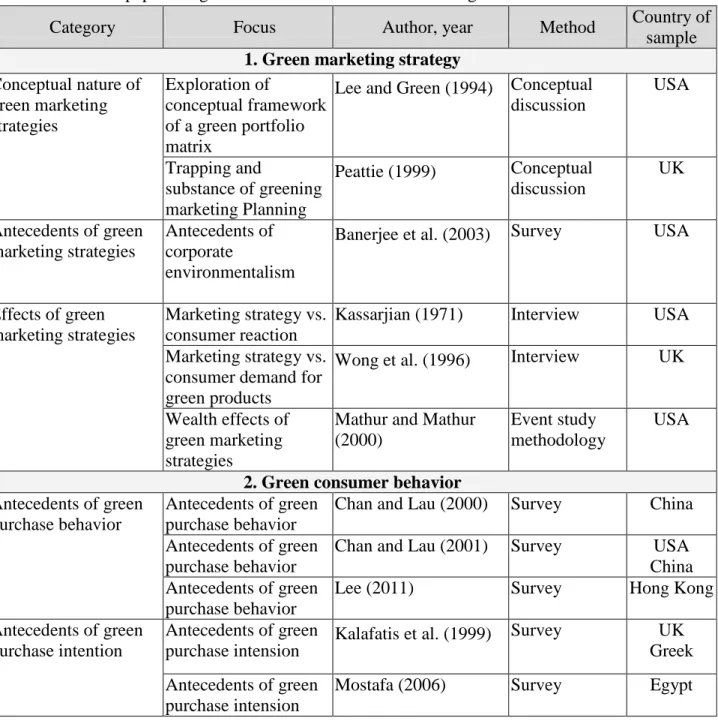
Green or pro-environmental issues have been an important academic research topic for at least three decades in area of business management. Nevertheless, the nature of green brand concept is ambiguous and has not been centered yet, resulting in less knowledge about what actually constitutes a green brand positioning. The emphasis of previous work is grouped into three main categories: green marketing strategy, green consumer behavior, and green branding (see Table1).
Firstly, in the area of green marketing strategy, some researches have explored conceptual nature of green marketing related strategies (e.g., B. W. Lee & Green, 1994; Ken Peattie, 1999); while some studies have focused on antecedents (e.g., Banerjee, Iyer, & Kashyap, 2003) and effects of green marketing strategies (e.g., Mathur & Mathur, 2000), especially the impacts of marketing strategies on consumers (e.g., Kassarjian, 1971; Wong, Turner, & Stoneman, 1996).
For example, among the studies of conceptual nature of green marketing related strategies, Lee and Green (1994) examines the strategic framework and options available for product strategy towards commercial and environmental excellence. The environmental dimension is defined as a “moving target”, explores a conceptual framework to integrate commercial and environmental dimensions and elaborates a “green portfolio matrix”. Peattie (1999) further examines the process of developing more sustainable marketing strategies and argues that the lack of progress to date reflects fundamental incompatibilities between sustainability and conventional marketing, both in terms of the managerial practicalities of the marketing planning process, and the conventional marketing “mindset”.
In discussing the antecedents of green marketing strategies, Banerjee et al. (2003) introduce and operationalize the concept of corporate environmentalism in an effort to answer these questions. Using stakeholder theory, the authors identify four important antecedents to corporate environmentalism, namely, public concern, regulatory forces, competitive advantage, and top management commitment. They find that corporate environmentalism is related to all hypothesized antecedents and that industry type moderates several of those relationships.
As for the effects of green marketing strategies, Kassarjian (1971) reports the results of a study, completed six weeks after the introduction of the new product. The study examined consumer reaction toward the product and uncovered some of the marketing correlates of attitudes toward air pollution. Wong et al.(1996) also examine the influence of the marketing strategies on consumers, particularly on consumer demand for green products. They find that in the absence of clarity of green products’ environmental benefits, product performance and other attributes, not green
benefits, remain the main determinants of product preference and choice. In a study by Mathur and Mathur (2000), event study methodology is used to examine the wealth effects, or stock price reactions, to corporate announcements of green marketing activities. The results show that the market value for the average firm in the sample declines by 3.14% during the period from 10 days prior to 10 days after the news is announced. Announcements related to green products, recycling efforts, and appointments of environmental policy managers result in insignificant stock price reactions. However, announcements for green promotional efforts produce significantly negative stock price reactions.
Table 1: Research papers on green related issues in business management
Category Focus Author, year Method Country of sample
1. Green marketing strategy
Exploration of
conceptual framework of a green portfolio matrix
Lee and Green (1994) Conceptual discussion USA Conceptual nature of green marketing strategies Trapping and substance of greening marketing Planning Peattie (1999) Conceptual discussion UK Antecedents of green marketing strategies Antecedents of corporate environmentalism
Banerjee et al. (2003) Survey USA
Marketing strategy vs. consumer reaction
Kassarjian (1971) Interview USA Marketing strategy vs.
consumer demand for green products
Wong et al. (1996) Interview UK Effects of green
marketing strategies
Wealth effects of green marketing strategies
Mathur and Mathur (2000)
Event study methodology
USA
2. Green consumer behavior
Antecedents of green purchase behavior
Chan and Lau (2000) Survey China Antecedents of green
purchase behavior
Chan and Lau (2001) Survey USA China Antecedents of green
purchase behavior
Antecedents of green purchase behavior
Lee (2011) Survey Hong Kong Antecedents of green
purchase intension
Kalafatis et al. (1999) Survey UK Greek Antecedents of green
purchase intention
Antecedents of green purchase intension
Green purchase intension
D’Souza et al.(2007) Survey Australia Green
Brand positioning and green purchase
intension
Haung et al.(2008) Survey Taiwan
Green consumer perceptions
Green consumer perceptions
McDonald and Oates (2006)
Interview UK
Measurement development of consumer concern
Kinnear et al. (1974) Survey Canada
Dimensions of environmental concern/ consciousness
Zimmer et al. (1994) Survey USA
Green consumers’ environmental consciousness vs. purchasing decisions Schlegelmilch et al. (1996) Survey UK Environmental concern vs. ecologically conscious consumer behavior
Roberts and Bacon (1997) Survey USA Green consumer concerns/consciousness Perceived consumer effectiveness (PCE) vs. ecologically conscious consumer behavior
Straughan and Roberts (1999)
Survey USA
3. Green branding
Green brand equity Antecedents of green brand equity
Chen (2010) Survey Taiwan Environmental association vs. brand performance Montoro-Rios et al. (2008) Experiment Spain Green brand association and perceptions Consumer perceptions of green brands
Parker et al.(2010) Focus groups USA Green branding vs. attitude Hartmann et al.(2005) Experiment Spain Green brand positioning Green brand
positioning and green purchase intension
Haung et al.(2008) Survey Taiwan
Green brand competitiveness
Green branding vs. competitive
distinction
Darnall (2008) Case study USA
2.3 Green consumer behavior
antecedents of green purchase behavior (e.g., Ricky Y.K. Chan & Lau, 2000; Ricky Y. K. Chan & Lau, 2001; K. Lee, 2011) and intension (Stavros P. Kalafatis, et al., 1999; Mostafa, 2006), green brand positioning and green purchase intension (Haung, et al., 2008), and green consumer perceptions or concerns / consciousness related issues (Kinnear, et al., 1974; McDonald & Oates, 2006; Roberts & Bacon, 1997; Schlegelmilch, et al., 1996; Straughan & Roberts, 1999; Zimmer, et al., 1994).
In exploring the antecedents of green purchase behavior, Chan and Lau (2000) examine the influence of cultural values, ecological affect and ecological knowledge on the green purchasing behavior of Chinese consumers. The results demonstrate that a strong positive relationship exists. However, other important findings suggest that Chinese people’s level of ecological knowledge is low and actual green purchase behavior minimal. Yet in contrast, Chinese consumers express a positive ecological affect and green purchase intention. Similarly, Chan and Lau (2001) examine the applicability of the Theory of Planned Behavior to green purchasing behavior in the Chinese and American cultural settings. They find the cross-group variances that both subjective norm and
perceived behavioral control exert stronger influences on Chinese consumers’ behavioral intention
than on American consumers. Moreover, the translation of green purchasing intention to corresponding behavior is found to be more effective in the American sample. More recently, Lee (2011) examines the possible contextual and individual factors that affect green purchase behavior in young consumers in Hong Kong. Hierarchical regression analyses indicate that six factors predict the green purchase behavior of Hong Kong adolescents in the following descending order: peer
influence, local environmental involvement, concrete environmental knowledge, parental influence, environmental awareness, and media exposure to environmental messages.
The antecedents of green purchase intension are also discussed by researchers. For example, Kalafatis et al.(1999) examine the determinants that influence consumers' intention to buy environmentally friendly products. Ajzen's Theory of Planned Behavior (TPB) provides the conceptual framework of the research and the appropriateness of the theory and is tested in two
distinct market conditions (UK and Greece). The results show the model fitting elements of the UK sample are superior to the corresponding ones obtained from the Greek sample. Moreover, Mostafa (2006) investigates the influence of various attitudinal and psychographic factors on the green purchase behavior of Egyptian consumers. The findings from the hierarchical multiple regression model confirm the influence of the consumers’ ecological knowledge, concern, attitudes, altruism,
and perceived effectiveness, among other factors, on their intention to purchase green products.
Results show that skepticism towards environmental claims is negatively related to consumers’ intention to buy green products. Recently, Haung et al.(2008) attempt to examine the effect of green brand positioning and green brand attitude on green purchase intension. They integrate the concept for the planned behavioral theory of Ajzen (1985) to explore the relationship among these three variables by multi-regression analysis, in which positive effect of the former two on green purchase intension are found, including mediating effects.
In the issues of green consumer perceptions or concern/consciousness, several studies have put emphases on scale development or identification of green concern/consciousness. For instances, Kinnear et al.(1974) attempt to improve on the social responsibility scale as a measure of consumer concern by developing a new scale, which incorporates behavioral and attitude measures relating to socially conscious purchasing patterns. The concern measure used here contained behavioral purchasing measures and attitudes specifically related to socially conscious purchasing. In addition, Zimmer et al.(1994) identify several dimensions of environmental concern, including concern for waste, wildlife, and health. Results show that environmental concern is an umbrella concept that is multifaceted. Similarly, Roberts and Bacon (1997) concern about the dimensionality of the NEP (New Environmental Paradigm) scale and examine the relationship between the subscales of the NEP measure and a variety of ECCBs (Ecologically Conscious Consumer Behavior). Furthermore, Straughan and Roberts (1999) indicate that perceived consumer effectiveness provides the greatest insight into ecologically conscious consumer behavior than past profiles that have relied primarily on demographic criteria.
Finally, several studies have also discussed causal relationship around the issues about consumer perceptions and decisions. For example, Schlegelmilch et al.(1996) ascertain whether measures of environmental knowledge, attitudes and behavior are linked to two conceptualizations of the purchasing domain, namely green purchasing decisions in general and the specific purchasing habits of five green product categories. McDonald and Oates (2006) also investigate a wide range of 40 sustainability activities with 78 consumers, who placed each activity on a matrix according to perceived effort and perceived difference to the environment. The results offer marketers the information to consider marketing strategies that positively influence consumers’ perceptions of such activities.
Relative to these much efforts in green consumer behavior issues, little attention has been paid to “green branding”, described next.
2.4 Green Branding
The terms “green brand”, “pro-environmental brand”, and other related concepts are being used interchangeably, although they are not necessarily identical. According to Grant (2008), a green brand refers to “one that offers a significant eco-advantage over the incumbents and which hence appeals to those who are willing to making green a high priority.” Eco-advantage mentioned here, manifest the significance of ecology that is ultimately concerned with the interrelationships between organisms and their environment. Thus, a green brand may represent a product that does not harm the natural environment (e.g., an organic product, or one without artificial components), or based or associated with sustainable corporate activities.
In previous studies, little knowledge is known about green branding, in which only few issues have been tapped, such as antecedents of green brand equity (Y.-S. Chen, 2010), consumer perceptions of green brands (Parker, et al., 2010), green brand positioning and green purchase intension (Haung, et al., 2008), green brand positioning and attitude (Hartmann, et al., 2005), and green branding and competitive distinction (Darnall, 2008).
In exploring the antecedents of green brand equity, Chen (2010) proposes four novel constructs– green brand image, green satisfaction, green trust, and green brand equity, and explored the positive relationships between green brand equity and its three drivers –green brand image, green satisfaction, and green trust. The results show that investing on resources to increase green brand image, green satisfaction, and green trust is helpful to enhance green brand equity. As for consumer perceptions of green brands, Parker et al.(2010) aim to elicit consumer perceptions, understandings and feelings toward the greenbrand concept. They also explore different dimensions of the green brand image based on participants’ opinions of what constitutes a “green brand” and, thereby determine if the green brand image is distinguishable from other related brand images such as pro-environmental. The theoretical and practical usefulness of the present results are further expanded by looking at two variables theoretically related to brand associations: brand loyalty and perceived brand quality.
In addition, in the research of green branding and competitive distinction, Darnall (2008) examines the question of how an environmentally proactive hotel can gain competitive distinction by way of ‘green’ branding. It demonstrates that not all green branding options are created equal. The two most widely recognized options, unilateral commitments and participation in voluntary environmental programs, have significant variations in their ability to inform relevant constituencies, achieve external legitimacy and add firm value. This study develops a framework that other companies can use to assess their green branding options.
Finally, the studies about the main issue that this research concerns−green brand positioning−are detailed in the following section.
2.5 Green Brand Positioning
Arnott (1994) defines positioning as “management’s attempt to modify the tangible characteristics and the intangible perceptions of a marketable offering in relation to the competition.” The author’s comments appear to be explained in terms of managerial/organizational
strategies and consumer perspectives. Positioning is not only conceived as an iterative process which consists of deliberate and proactive actions (S.P. Kalafatis, Tsogas, & Blankson, 2000), conducted via marketing communication strategies; the attempt of this process is also mainly based on the definition of distinct consumer perceptions. As Koltler (2000) suggested, positioning is the act of designing an organization’s offering and image to occupy a distinctive place in the target market’s mind.
Few researches have been focused on related issues about green brand positioning, and limited to the type of green positioning strategies and their effects on consumers. For example, Fuchs and Diamantopoulos (2010) summarize main positioning bases commonly discussed in the literature, in which the positioning is categorized based on different levels of abstraction as features (concrete
attributes), abstract attributes, direct (functional) benefits, indirect (experiential/ symbolic) benefits,
and surrogate positioning. The authors suggest that the type of positioning strategy used affects the positioning success of a brand. Similar classifications of positioning are revealed in green brand positioning strategies. Hartmann et al.(2005) have classified green brand positioning strategies as functional or emotional. They point out that a green positioning strategy based on functional brand attributes aims to “build brand associations by delivering information on environmentally sound product attributes,” such as production processes, product use and/or product elimination are referred in literature (e.g., K. Peattie, 1995). Further, the authors address as an alternative or complementary strategy, at least three conceptually different types of emotional brand benefits are included in green positioning, involving: 1) a feeling of well-being (“warm glow”) associated with acting in an altruistic way (Ritov & Kahnemann, 1997); 2) auto-expression benefits through the socially visible consumption of green brands (Belz & Dyllik, 1996); and 3) nature-related benefits stemming from sensations and feelings normally experienced through contact with nature (Stavros P. Kalafatis, et al., 1999).
The two types of green brand positioning are related to the impact on the consumer perceptions about the brand being good for the environment in several studies. In a test of a two-dimensional
functional/emotional green brand model, Hartmann et al.(2005) show that functional positioning results in a strong cognitive perception of an environmentally friendly brand, while an emotional position suggests a brand association with nature. Results show that ultimately, a combined strategy has the most significant results on generating positive brand attitudes, while the most successful green brands are either associated with alternative technology or a green corporate philosophy. Similarly, Hartmann et al.(2005) indicate an overall positive influence of green brand positioning on brand attitude. The authors also suggest highest perceptual effects are achieved through a green positioning strategy that combined functional attributes with emotional benefits. More recently, an empirical study by Haung et al.(2008) has further identified the relationship between green brand positioning and green purchase intension, especially when using green brand attitude as a mediating variable.
According to previous studies, positioning is aimed to shape the preferences of consumers and lead to high consumer loyalty, consumer-derived brand equity, and willingness to search for the brand (e.g., Kalra & Goodstein, 1998; Keller, 2003; Schiffman & Kanuk, 2007), due to its centrality to consumers’ perceptions (D. Aaker & Shansby, 1982; Pham & Muthukrishnan, 2002). The marketing literature has established that brand perceptions (e.g. attitudes and preferences) are strongly associated with brand choices, market share (Achenbaum, 1972; Assael & Day, 1968; Lutz, 1977), and long-term business-customer relationship (Fournier, 1998). More significantly, building strong brand perceptions has been seen as a strategic priority (Morris, 1999).
All of these past efforts offer this research a rationale for exploring green brand positioning in terms of consumer perceptions, particularly the distinction of ZMET methodology from past studies of survey, experiment, and focus group in exploring consumer perceptions. Through ZMET and grounded theory approach, seldom applied in brand management area, deep consumer perceptions toward green brand positioning can be elicited and used as a critical reference for green positioning strategies among current green brands. Because ZMET has not gained much attention from brand management researchers, the next section will introduce more details about it.
2.6 Zaltman Metaphor Elicitation Technique (ZMET)
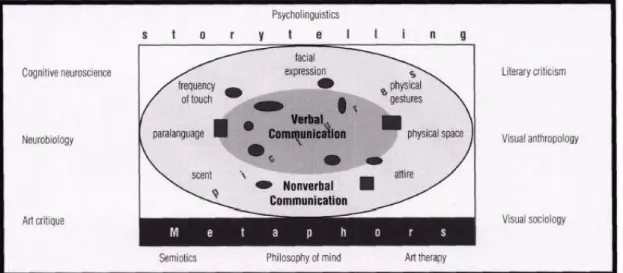
Zaltman Metaphor Elicitation Technique (ZMET) originated around 1990, a qualitative research tool, developed by Gerald Zaltman to use visual and sensory images eliciting the metaphors, constructs and mental models of human. It is designed to “surface the mental models that drive consumer thinking and behavior” (Zaltman & Coulter, 1995). It can be used for understanding consumers’ thoughts about brands and product categories (Zaltman & Coulter, 1995). The key concepts used in ZMET comprise metaphors, photoanalysis, and narrating (see Figure 1).
Figure 1: Zaltman Metaphor Elicitation Technique (Source: Catching-Castello, 2000, p.10)
Metaphors
A metaphor is “a definition of one thing in terms of another,” and they can be used to represent thoughts that are tacit, implicit, and unspoken (Coulter & Zaltman, 1994). The importance of metaphors in cognition functioning is highlighted by several premises. Rindfleisch (1996) suggests metaphors result from our interaction with our physical and cultural surroundings, and are the foundation of our entire conceptual system. They serve a functional and useful purpose in our daily lives, and systematically transfer entire domains of experience from a source to a target. Partial experience are emphasized while minimizing others altogether, which further shapes thought, action,
and have the ability to create a new reality.
Photoanalysis
Photoanalysis, using pictures to represent human thought, has been used as a research tool for more than 50 years. Although its validity has been questioned, its use is nevertheless well established in sociology, psychology, and anthropology (Catching-Castello, 2000). The use of pictures in marketing research is increasing, and many consumer behavior researchers have used photographs to elicit consumer thought and develop theories. Pictures, according to Coulter and Zaltman (1994), are the entry points to understanding the customer because they are “basic, information-rich and attribute-laden.” They are the tools for the technique in that they provide a natural and efficient mechanism for customers to communicate.
Narrating
“Human memory and communication is story-based (Coulter & Zaltman, 1994).” From cave art by our earliest ancestors to today's immensely popular talk shows, it is evident humans have the natural tendency to organize their experiences in story form and relate them to others. As Lieber (1997) contends, “true-life anecdotes” are able to help reveal what customers really want and help researchers understand what drives consumer behavior.
The above core concepts uncover several unique characteristics distinguishing ZMET from other research methods such as surveys, questionnaires, and focus groups. First, ZMET is based on concepts of mental images as described by the social and biological sciences and the humanities.
Second, it involves using the linkages formed between perceptual (sensory) systems and cognition. Third, individuals’ ideals are explored and expressed using computer-imaging techniques. Through
ZMET, classified as “nontraditional market research,” the current study is able to surface unique metaphor-based insights that consumers consider important. Metaphors which consumers express can help us to understand their unconscious thoughts, feeling, and elicit cognitive processes beyond
the literal meaning of language and uncover important mental states that literal language might be altogether misunderstanding or underrepresented.
3. Methodology
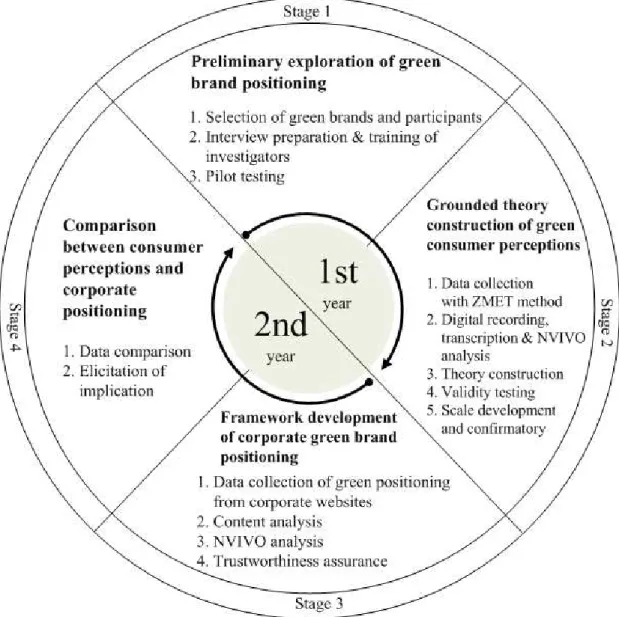
The complete research flow is provided in Figure 2, with four stages across a two year period. Each stage focuses on one aspect of project development because of the exploratory nature of this project. The first stage is mainly preliminarily exploration, centering on selection of green brands and participants, interview preparation and training of investigators, and pilot testing. This is followed by grounded theory construction and confirmatory of consumer perceptions, and framework development of corporate dimension respectively. Thereafter, the two perspectives of green brand positioning will be compared in final stage, in which several significant implications for green branding management will be drawn. The four stages are described in detail next.
3.1 Year 1: green brand positioning from green consumer perceptions
The emphasis of this research is mainly on exploring green brand positioning from consumer perceptions. In order to accomplish this, the first year plan aims to construct a grounded theory of consumer perceptions toward green brand positioning, involving two stages with different focuses as follows:
3.1.1 Stage1: preliminary exploration of green brand positioning
Initial emphases on selection of green brands and participants aim to generate green brands, which is essential for eliciting consumer perceptions toward green brands in next stage. Particularly, a method of ZMET has never been tested in green branding research before. A thorough pilot study is required to examine the applicability of ZMET approach. During this stage, therefore, three main emphases are focused: selection of green brands and participants, interview preparation and training of investigators, and pilot testing of green consumers.
Selection of green brands and participants
Green brands vary in terms of country of origin and industrial classification for brands. The current study is of purposes to explore the characteristics of green positioning strategies perceived by consumers, and the prevalent features that differentiate green brands among diverse industries. Thus, this research focuses on the industrial classifications that are common for consumers in Taiwan, identified via survey in which example green brands are yielded.
In survey, a list of thirteen industrial classifications for green brands is given, based on Interbrand Company1, including: computer software, energy, home furnishings, transportation, beverages, restaurants, sporting goods, business services, diversified, FMCG (Fast Moving Consumer Goods), automotive, financial services, and electronics. A method for generating example green brands is based on top-of-mind awareness. The participants are asked to list as many typical green brands fitting the thirteen classifications as possible. The familiarity of the classifications to participants is
also examined by the questionnaire. After the green brand names are collected, the investigator will choose the most frequently mentioned green brand names to elicit brand perceptions. During this process, the example green brand names and their industrial classifications are identified for further comparison.
On the basis of theoretical sampling (Christensen & Olson, 2002; Strauss & Corbin, 1998) related to the research topic, the consumers who have purchasing experiences of green brands will be recruited as the study participants. The sample size depends on the degree to which the research achieves theoretical saturation. As (Minichiello, Aroni, Timewell, & Alexander, 1995) suggests, qualitative data collection will continue until the point at which “no additional data can be found that would add to the categories being developed and examined.” The current study chooses the data saturation point as the cutoff point for data collection. That is, the interview will stop when no new constructs are elicited. However, due to the exploratory nature of this study, it is estimated that there will approximately be at least forty-five participants in three industrial classifications recruited in current study, in which fifteen participants for the each classification.
Interview preparation and training of investigators
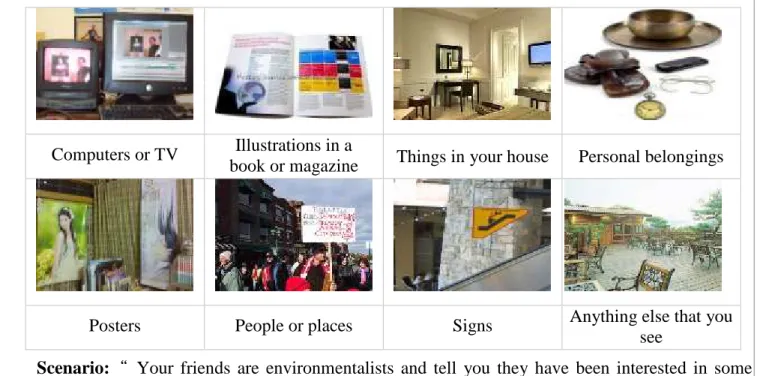
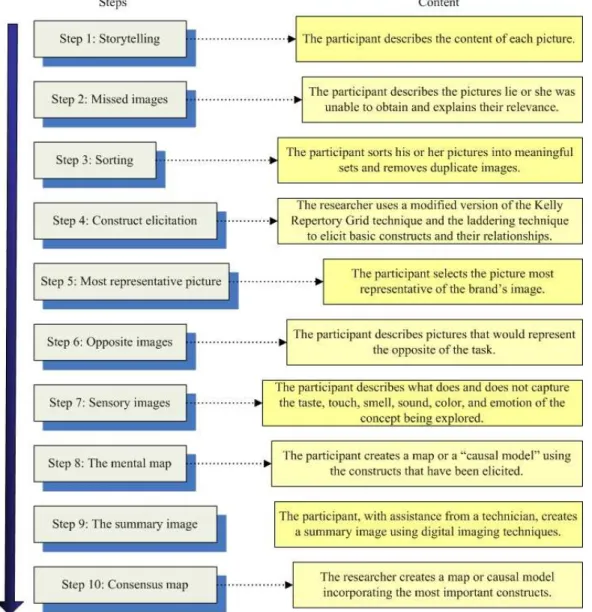
The ZMET process, as used in the current study, begins with a package given to each participant that contains a single use camera, instruction sheet, and a scenario to consider while taking photos (see Figure 3). The participants will be asked to take at least twenty photos according the feeling with regard to the scenarios of the cases instructions. After a week, cameras will be returned and interview times will be arranged, followed by gift certificates (approximately NTD $500). Camera and interview instructions, as well as the interviews, are in Mandarin Chinese.
In addition, due to the complexity of ZMET method, training of investigators is essential for enhancing quality of the research. Therefore, before the interview begins, the investigators will be asked to review research paper about ZMET method. An experienced instructor will be also hired to give investigators some examples of how to practically conduct a research with ZMET method.
Pilot-testing
After camera and interview instructions are prepared, pilot-testing will be conducted to examine the following concern: is this scenario common enough that it does not generate unusual thoughts? To elicit the real perceptions toward green brand positioning and avoid the unnatural thoughts of participants, the study has to assure that the scenario designed is able to trigger familiar thoughts of green brand positioning without personalizing or framing response. Accordingly, the results of pilot-testing will offer an essential base for adjusting wording of interviewee instruction sheet.
Purpose: Please take photographs to express your feelings and impressions.
Please keep in mind the key words and concentrate on taking photos of anything you feel connects to the words and the scenario that follows. Please focus on: Your feelings and impressions. It would be best to keep an open mind (do not focus too closely on the following images). Feelings and impressions can be represented by everyday objects, so you may take photos of these.
Computers or TV Illustrations in a
book or magazine Things in your house Personal belongings
Posters People or places Signs Anything else that you see
Scenario:“ Your friends are environmentalists and tell you they have been interested in some
green brands like “Toyota (example)”…
They are to think of the sentence and if they see any image that expresses some idea that connects to their thoughts about the sentence, they are to photo document the idea.
3.1.2 Stage 2: grounded theory of green consumer perceptions
Building on the preliminary exploration in stage 1, the stage 2 attempts to construct a grounded theory of green consumer perceptions toward green brand positioning, centering on four aspects below: data collection with ZMET method, digital recording, transcription & NVIVO analysis,
theory construction, validity testing, and scale development and confirmatory.
Data collection with ZMET method
Data collection in this stage is in-depth interview, involving ten steps outlined by Zaltman (1994) to implement the ZMET procedure. Approximately forty-five participants come prepared to “tell their stories” during two-hour interview. These individual stories then are compiled into one big story relative to the topic being discussed. The procedure of interview is shown in Figure 4.
Digital recording, transcription & NVIVO analysis
During the interviews, audio will be recorded for easier processing. After finishing the interviews, the respondents’ record is transcribed and the pictures of interviewees’ mental maps are summarized and drawn to precede following data analysis. Each transcript will be reviewed to identify key constructs and themes based on emotion theory (Izard, 1977) and categorization theory (Rosch, 1978), which have been particularly valuable in the analysis of ZMET. This process is facilitated by using the software of NVIVO.
NVIVO is a customized qualitative research tool for market researchers to systematically analyze and organize the data, and avoid the waste of time on distilling unstructured data. It allows multiple thick description data and artifacts to be combined with field notes and photos in order to uncover underlying constructs. By using it, concepts and component relationships between concepts will be coded, showing a hierarchical order that what constitutes what in the network of relationships leading to the respondents’ mental maps.
Theory construction
Data analysis was often concomitant with data collection as with much qualitative research. The research used grounded theory developed by Glaser and Strauss (1967) to classify categories and concepts that emerge from the collected data itself. The goal of grounded theory is to create a theory describing reality accurately. Through grounded theory approach, the current research will be able to uncover green consumers’ perceptions toward green brand positioning, involving three analysis steps: open coding, axial coding, and selective coding.
Open coding examines text for low-level categories and interactively examines how other data
fit into the categories, an interactive process described as the constant comparative method by Glaser and Strauss (1967). Axial coding combines categories in a scheme or paradigm, where the phenomenon is contextualized and new data tested against the developing paradigm, with contradictory observations incorporated to bring depth of understanding (Strauss & Corbin, 1998).
Selective coding identifies a small number of core categories that act as the framework for the
grounded theory, for later testing and elaboration in a deductive research approach (Priest, Roberts, & Woods, 2002). These three stages in grounded theory are contributive to analyze the data from interview and observation in detail, and facilitate the understanding of consumers’ perceptions that have been little explored in green brand positioning research.
Validity testing
A constant comparative method (Strauss & Corbin, 1998) was adopted in the above three analysis steps. After theory construction begins, developments are constantly checked against existing theory and observation. Accuracy increases when the theory aligns with existing theory and expands through corroboration with real world evidence. Accordingly, data collection for the current study will depend on when the data reach saturation. As Glaser and Strauss (1967) pointed out, “data collection” continued as long as new insights on important topical areas are being generated, namely until the researcher achieves theoretical saturation—the point at which “no additional data can be found that would add to the categories being developed and examined” (Minichiello, et al., 1995).
Scale development and confirmatory
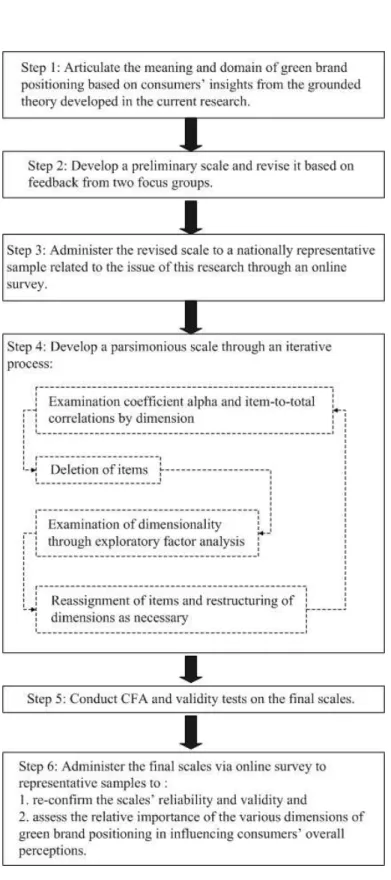
Based on the framework of grounded theory yielded in prior steps, the “top-down” approach will be also conducted for assuring the generalization of the theory through scale development and confirmatory. Following the steps by Parasuraman et al. (2005), the constructs of the grounded theory will be statistically examined via coefficient alpha and item-to-total correlations by dimensions, exploratory factor analysis, and confirmatory factor analysis and validity test. Six steps involved are shown in Figure 5 in more details.
Figure 5: Process employed in developing the scale to measure consumer perceptions toward green brand positioning (Adapted from Parasuraman et al., 2005)
3.2 Year 2: Variation between consumer perceptions and corporate positioning
Building on the first year plan, this research further attempts to depict how consumer perceptions distinct from current corporate green positioning. The second year plan, accordingly, centers on two stages to accomplish this: framework development of corporate green brand
positioning, and comparison between consumer perceptions and corporate positioning respectively.
The two stages are detailed next.
3.2.1 Stage 3: framework development of corporate green brand positioning
The stage 3 mainly aims to develop a framework that describes the various green positioning manifested in corporate websites of green brands. The emphasis of this stage encompasses: data
collection of green positioning in corporate websites, content analysis, NVIVO analysis, and trustworthiness assurance, described below.
Data collection of green positioning from corporate websites
After the preliminary exploration of survey in stage 1, the websites of sample firms yielded will be focused for following content analysis. The URL addresses related green brand positioning for the sample companies are generated by search engines. Each of the corporate websites will be accessed and viewed to ascertain what text they contain that might be perceived as brand positioning.
Content analysis
The method of content analysis, used in this research, is defined as “a research technique for the objective, systematic and quantitative description of the manifest content of communication (Krippendorff 1980).” This ‘bottom-up’ approach enables the definition of components and measurement of their occurrence in the sample. During the analysis, the code evolves when each new code entered prompts the review of the previously coded themes. Codes vary between each other, recognized as mutually exclusive and separate themes. Theory serves as a guide to interpretation of latent meaning, not used to construct themes. The arising of the themes continues
until no additional data can be found and added to the categories being developed and examined. This type of analysis is rather intuitive, using terms which are defined by the analyst (Riessman 1993). Once the thematic coding is completed, a quantitative analysis will be carried out using the themes as categories. By following this approach, flexibility in the exploratory process and higher inclusivity during quantification will be allowed.
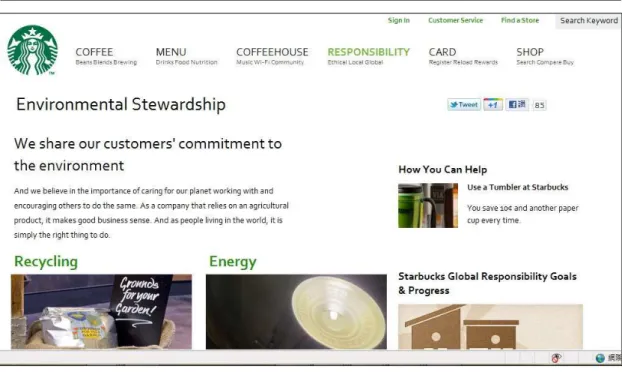
The attention of this research given to the arising themes on corporate websites will be measured to build the exploratory model. The websites are used to pull out recurring common themes, which constitute the green brand positioning components researched. The units of analysis are subjects and themes arising from the text of green commitment or corporate responsibility in websites (e.g., Figure 6), which is a more interpretative approach that focuses on not just manifest content but latent content as well as Bryman (2001) claims. Of the text related to green positioning, the meaning is not difficult to be discerned and interpreted that the codes could be explicit or implied, shown in the quote in Table 2 and Table 3.
The differences between explicit and implied positioning interpreted in this research lie in weather the text of green positioning is explicitly classified and focused in more details, disclosed in corporate websites. Companies such as McDonald’s (Table 2) and Starbucks (Figure 6) have clear classifications of focused area in announcement of green commitment and corporate responsibility. On the contrary, the green positioning of some corporations is embedded in the description of corporate commitment to the environment without explicit and detailed emphases and categories, which is well evidenced by the website of AVON company (Table 3).
It is common that different manifestations of text for green positioning implicate the same meaning. Accordingly, the text with same connotation is categorized into an identical concept in this research. Such as a similar positioning is revealed in Table 2 and Table 3, including: waste
management, and reducing waste respectively. The two concepts will be interpreted and coded into
a same category− waste reduction. This type of analysis is rather intuitive, using terms which are defined by the analyst (Riessman 1993).
Table 2: Example of explicit green positioning
“At the restaurant level, we are focused on three areas:
Energy conservation – Find further ways to increase energy efficiency in our restaurants in order to
save money and reduce our environmental impacts
Sustainable packaging and waste management – Continue exploring ways to reduce the
environmental impacts of our consumer packaging and waste in our restaurant operations
Green building design – Enhance our strict building standards to incorporate further opportunities for
environmental efficiencies and innovation in the design and construction of our restaurants
On all of these priorities, we continue to engage with experts and NGOs like World Wildlife Fund, Conservation International, Environmental Defense Fund, the U.S. Green Building Council and similar organizations around the world to get their best thinking on how we can improve our environmental performance.”
----by McDonald’s
(http://www.aboutmcdonalds.com/mcd/csr/about/environmental_responsibility.html)
Table 3: Example of implied green positioning
“Our commitment to the environment has been deeply rooted in Avon’s principles for more than a century. At our locations worldwide, we remain committed to reducing our global environmental footprint, including the issue of climate change, by recycling, reducing waste, conserving energy
and water, and monitoring and reducing greenhouse gas emissions. New Avon facilities are
developed using green building standards, and we are proud of recent LEED, BREEAM and equivalent certifications in countries including Brazil, the US and the UK, where Avon received a “Green Apple Award” for the Northampton facility. We are dedicated to ensuring compliance with environmental regulations around the world, and we strive to continuously improve our environmental performance by setting and achieving measurable goals….”
----by AVON
(http://www.avoncompany.com/corporatecitizenship/corporateresponsibility/whatwecareabout/e nvironment/index.html)
Figure 6: green positioning revealed in Starbucks website
NVIVO analysis
The process of content analysis is combined with the application of NVIVO software. As aforementioned, systematically classification of multiple thick description data is allowed in NVIVO. More importantly, the frequencies of individual cases are automatically revealed during the coding without manually calculating in tabulation as traditional ways. This allows the objectivity and reliability in analysis.
Trustworthiness assurance
For ensuring trustworthy interpretation, a second coder was employed to assess the dependability and confirmability of the findings. The interpretation of the themes requires no particular experience of green branding in academic or practical areas; however, the coder’s background as a practitioner in the green brand industry may reduce the risk of misinterpretation or data omission. To further substantiate the coding process, accordingly, the research will recruit a second coder with pragmatic experiences related to green brands to review the coding scheme, reducing the risk of misinterpretation and conducting a trustworthy research.
3.2.2 Stage4: comparison consumer perceptions with corporate positioning
Building on the performance of prior stages, the difference between consumer perceptions and corporate positioning in the online environment will be drawn in final stage. Stage 4 involves two main focuses: data comparison, and elicitation of implication. The latter will shed light on final research question in this research− namely the understanding of the gap and varied characteristics that exist between the declaration on corporate web sites and consumer perceptions toward green brand positioning.
Data comparison
Owing to systematical classification and analysis of prior phases, two conceptual frameworks regarding consumer and corporation perspectives are yielded and allow for conducting the further comparison. The comparison will be made on the basis of the conceptual connotation through the
application of NVIVO. The results will be given to the second reviewer for assuring the trustworthiness of research.
Elicitation of implication
After the comparison, the research will center on the green brands which have variations of green positioning strategies between corporation and consumer aspects. The differentiated characteristics will be elicited and draw significant implications for the marketing strategies and management of current green branding in Taiwanese firms. Particularly, no matter similar or distinct features among consumer perceptions and corporate positioning, the results will be a crucial reference for Taiwanese companies in conducting corporate responsibility with environmental awareness.
4. Results
This chapter provides the results of 1st year project. The study firstly reports the characteristics about the participants, followed by the results of the ZMET interviews.
4.1 Characteristics of the participants
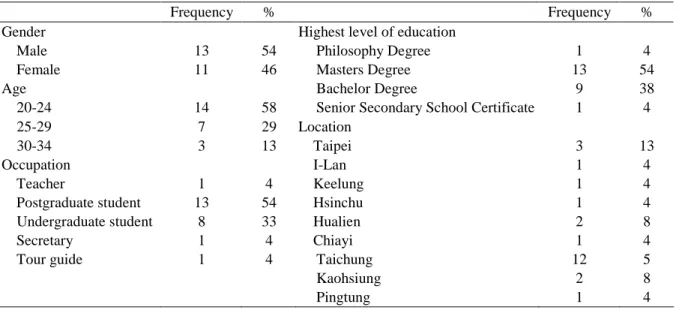
The current study chooses the data saturation point as the cutoff point for data collection. The study interviewed 24 participants in total. Table 4 summarizes five demographics of 24 participants, including: gender, age, highest level of education, current occupation, and location. There were 13 males and 11 females. The participants’ ages ranged from 21 to 34 years, with a mean of 29.5, a median of 27, and a standard deviation of 11.1. The participants’ highest level of education included 1 Philosophy Degree, 13 Masters Degrees, 9 Bachelor Degree, and 1 Senior Secondary School Certificate. The participants’ occupations were also varied. They included 1 teacher, 13 postgraduate students, 8 undergraduate students, 1 secretary in language learning company, and 1 tour guide. All of the participants were residents of 9 different cities in Taiwan, including Taipei, I-Lan, Keelung, Hsinchu, Hualien, Chiayi, Taichung, Kaohsiung, and Pingtung. The characteristics of the participants were varied, which allows this study to maximize opportunities for exploring emerging concepts and uncover a broad range of perspectives.
Table 4: Sample description
Frequency % Frequency %
Gender Highest level of education
Male 13 54 Philosophy Degree 1 4
Female 11 46 Masters Degree 13 54
Age Bachelor Degree 9 38
20-24 14 58 Senior Secondary School Certificate 1 4
25-29 7 29 Location
30-34 3 13 Taipei 3 13
Occupation I-Lan 1 4
Teacher 1 4 Keelung 1 4
Postgraduate student 13 54 Hsinchu 1 4
Undergraduate student 8 33 Hualien 2 8
Secretary 1 4 Chiayi 1 4
Tour guide 1 4 Taichung 12 5
Kaohsiung 2 8
4.2 The results of ZMET interviews
The research selects three green brands in food & restaurant service industry as the sample brands among ten classifications: MOS Burger, Starbucks, and McDonald’s. The interviews for this study were conducted in private offices where participants could talk without interruption. All of the interviews were audio-taped with the participants’ permission, and later transcribed to provide accurate records for analysis. Standard procedures were followed to maintain the confidentiality of the interview data and the anonymity of the participants. Participants took an average of 10 photos and interviews totalled 36 hours and 26 minutes, with the longest interview taking almost 150 minutes and the shortest 53 minutes; average time was 91 minutes.
For the thought to be considered an element, it must be mentioned by more than one-third of the participants. There were 24 participants in this study, an elements of brand positioning included was mentioned by at least 8 participants. The results reveal 74 positioning elements perceived for three green brands, listed in Table 5.
Table 5 shows that the number under each green brand indicated the total number of the participants mentioned toward specific elements. Among the three green brands, MOS BURGER had a total of 42 different brand positioning elements elicited, followed by Starbucks (n=38), and McDonald’s (n=27).
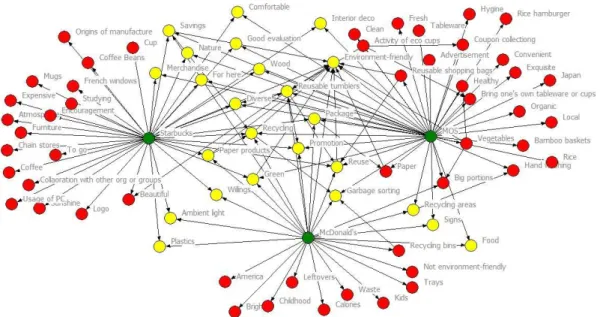
Brand positioning elements that most participants mentioned for MOS BURGER were “environment-friendly (n=24)”, followed by “savings (n=21)”, “reuse (n=19)”, “vegetables (n=17)”, and “reusable shopping bags (n=20)”. For Starbucks, the mostly mentioned brand positioning elements were its “environment-friendly (n=24)”, “reusable tumblers (n=22)”, “paper products (n=21)”, “savings (n=21)”, and “reuse (n=20)”. In MacDonald’s, the “paper products (n=24)”, “recycling (n=24)”, and “environment-friendly (n=24)” were particularly mentioned by all participants, followed by “savings (n=21)”, and “garbage sorting (n=19)”. There were two elements that were simultaneously mentioned by most participants across three brands, namely “environment-friendly (n=24 for three brands)” and “savings (n=21 for three brands)”. Figure 7
uncovers an aggregate consensus map for three brands, consisting of 74 elements in total.
Table 5: Association elements of three green brands
McDonald's MOS BURGER Starbucks
Logo 0 0 12 Big portions 10 9 0 Not environment-friendly 12 0 0 For here 0 10 9 Convenient 0 8 0 Japan 0 12 0 Wood 0 8 8 Package 8 9 9 To go 0 0 10 Vegetables 0 17 0 External collaboration 0 0 14 Recycling 24 12 16 Recycling areas 9 8 0 Recycling bins 14 0 0 Local 0 8 0 Diverse 0 10 12 Organic 0 11 0 Bamboo baskets 0 9 0 Rice 0 8 0 Rice hamburger 0 10 0
Bring one's own tableware or cups 0 8 0
Nature 0 11 10 Sunshine 0 0 8 Usage of PC 0 0 9 Childhood 8 0 0 Kids 15 0 0 Coffee 0 0 18 Coffee Beans 0 0 8 Garbage sorting 19 11 0 Expensive 0 0 13 Bright 8 0 0 Cup 0 0 18 Atmosphere 0 0 11 Chain stores 0 0 8 Interior deco 0 9 9
Hand washing 0 11 0
Activity of eco cups 0 12 0
Beautiful 0 0 10 America 10 0 0 Reuse 13 19 20 Food 12 13 0 Furniture 0 0 8 Waste 10 0 0 Paper 0 13 0 Paper products 24 0 21 Mugs 0 0 13 Clean 0 13 0 Healthy 0 12 0 Merchandise 0 10 8 Origins of manufacture 0 0 8 Comfortable 0 8 10 Good evaluation 0 13 8 Coupon collecting 0 8 0 Plastics 13 0 9 Willing 8 0 9 Fresh 0 9 0 Savings 21 21 21 French windows 0 0 8 Encouragement 0 0 9 Exquisite 0 8 0 Green 10 8 8 Leftovers 8 0 0 Advertisement 0 13 0 Signs 8 9 0 Calories 8 0 0 Hygiene 0 8 0 Ambient light 10 0 9 Tableware 0 8 0 Trays 10 0 0 Promotion 11 14 18 Environment-friendly 24 24 24 Reusable tumblers 10 10 22
Reusable shopping bags 0 20 0