屏師特殊教育
【專 論】
1987)。Broadwin的描述如下: 「兒童不到學校一段時期,從數月 到一年。家長知道兒童在那裏,在母親 或家的附近。家長和學校對兒童逃學的 原因難以理解,兒童可能會說是害怕上 學、害怕老師、或不知道不去上學的原 因」。 稍後Partridge認為一群被標記為精 神心理病的逃學兒童其實是家長和兒童 情緒聯結、過度依附和保護的受害者。 一九四一年Johnson等人使用「懼學症」 (school phobia)來說明這種逃學行為, 他們認為分離焦慮(separation anxiety) 是懼學問題的根本原因(Blagg, 1987)。 Johnson等 人 的 描 述 如 下 ( Johnson, Falstein, Szurek, & Svendsen, 1941. 引自
究者使用,而有的研究者認為懼學症只 用在對學校內特定事物恐懼的兒童,而 非分離焦慮;有的研究者則將懼學症泛 指一般不上學的問題行為;也有研究者 認為拒學症包括懼學症和典型的逃學 (Blagg, 1987)。 雖然逃學、懼學症、和拒學症都是 不上學的問題行為,近年來,多數學者 會將懼學症和拒學症視為同一種問題行 為,並將這種問題行為和逃學行為區分 ( Heyne, King, Tonge, & Cooper, 2001)。如Bools等人(Bools, Foster, & Brown, 1990. 引自Heyne et al., 2001)認 為拒學症的標準應包括:(1)當要上學 時,或家長給予某些上學的壓力時,兒 童表現出嚴重的情緒不安或生理上的抱 怨;(2)兒童通常留在家裏;(3)沒有 嚴重的反社會行為或品性疾患。而Berg (1997)則將拒學症定義為:「拒學症是 兒童不願意,並且通常明白拒絕去上學 的一種狀況。兒童會有以下反應:(1) 尋求家的舒適和安全,喜歡留在具家長 角色的人物旁邊,尤其是在校期間;(2) 當面臨要去上學時,表現出情緒不安的 現象,這種現象也可能只以無法解釋的 生理癥狀的形式呈現;(3)除了當嘗試 強迫兒童去上學時可能會出現暴力外, 沒有表現出嚴重的反社會傾向;及(4) 不會對家長隱瞞問題。」雖然多數學者 認為拒/懼學症和逃學行為是可以區分 的,但是Kearney & Silverman(1993)則 從功能性分類的觀點仍將逃學列為拒學 行為的一種類型。
討,因此先將拒學/懼學症和逃學行為之 間的差異說明如表一(林正文,民82; Berg, 1997; Berry & Injejikian, 1993;
心理 身體 反應 *情緒困擾,家人分離或學校特 定情境的焦慮或恐懼。 *轉化的身體生理疼痛。 *依賴性強、缺乏獨立、社會能 力成熟、自我評價低。 *怕面對新情境。 *不自認有行為問題或其他困擾。 *以身體疼痛為藉口逃避上學。 *叛逆或反社會行為,少有責任感。 喜歡刺激。 家庭 *家庭大多完整。 *家長過度保護,親子過份依賴。 *較會出現在破碎家庭。 *多為親子衝突、家庭不合諧、家長 疏於管教或不一致管教、體罰等。 受輔 意願 和未 來結 果 *較受到家長或教師的鼓勵。 *預後不一,視接受療育狀況而 定。 *長期言,通常有很好的後果, 可能會有輕微焦慮或/和憂鬱。 *抗拒。 *輔導成效差。 *規範約束力弱時,對人格發展影響 大。 *是成人反社會傾向的強烈指標。
貳、出現率
拒/懼學症的出現率本來就難以推 估,研究結果又依研究者對這種行為的 定義而可能有所差異,歐美研究結果的 出現率約在1%~8%間,而多數研究推估 約有1%學齡兒童會有拒/懼學症,在臨床31-50頁。 林正文(民 82)。兒童行為觀察與輔導: 行為治療的輔導取向。臺北:五南 曾瑞真(民 89a)。兒童拒學症的評估與 輔導(上)。諮商與輔導,169 期, 31-34頁。 曾瑞真(民 89b)。兒童拒學症的評估與 輔導(下)。諮商與輔導,170 期, 34-38頁。
Berg, I. (1997). School refusal and truancy. Archives of Disease in Childhood, 76(2), 90-91.
Berry, G. L., & Injejikian, A. M. (1993). The school phobic child and the counselor: Identifying, understanding and helping. Education, 114(1), 37-44.
Blagg, N. (1987). School phobia and its treatment. New York: Croom Helm. Carr, A. (1999). The handbook of child
and adolescent clinical psychology: A contextual approach. New York: Routledge.
Cerio, J. (1997). School phobia: A family
School Guidance and Counseling, 31(3), 180-191.
Cooper, M., & Mellors, M. (1990). Teachers’ perceptions of school refusers and truants. Educational Review, 42(3), 319-326.
Evans, L. D. (2000). Functional school refusal subtypes: Anxiety, avoidance, and malingering. Psychology in the School, 37(2), 183-191.
Heyne, D., King, N., Tonge, B. J., & Cooper, H. (2001). School refusal: Epidemiology and management. Paediatric Drug, 3(10), 719-732. Iwamoto, S., & Yoshda, K. (1997). School
refusal in Japan: The recent dramatic increase in incidence is a cause for concern. Social Behavior and Personality, 25(4), 315-320. Jenni, C.B. (1997). School phobia: How
home-school collaboration can tame this frightful dragon. School
Counselor, 44(3), 206-217. Jongsma, A. E., Peterson, L. M., &
McInnis, W. P. (2003). The child psychotherapy treatment planner. Hoboken, N J: John Wiley & Sons Inc.
S., Pritchard, M., Young, D., Rollings, S., Myerson, N., & Ollendick, T. H. (2001). Cognitive-behavioral
treatment of school-refusing children: Maintenance of improvement at 3- to 5-year follow-up. Scandinavian Journal of Behavior Therapy, 30(2), 85-89.
Leckman, J. F. (2002). Tourette’s syndrome. The Lancet, 360(16), 1577-1586.
Lee, M. I., & Miltenberger, R. G. (1996). School refusal behavior:
Classification, assessment, and treatment issues. Education and Treatment of Children, 19(4), 474-486.
McShane, G., Walter, G., & Rey, J. M. (2001). Characteristics of adolescents with school refusal. Australian and New Zealand Journal of Psychiatry, 35, 822-826.
McIntyre, T. (1989). A resource book for remediating common behavior and learning problems. Needham Heights, MA: Allyn & Bacon.
Salemi, A. T., & Brown, K. M. (2003). School phobia: Implications for school health educators. American Journal of Health Education, 34(4), 199-205.
Stickney, M. I., & Miltenberger, R. G.
schools’ response. Education and Treatment of Children, 21(2), 160-170.
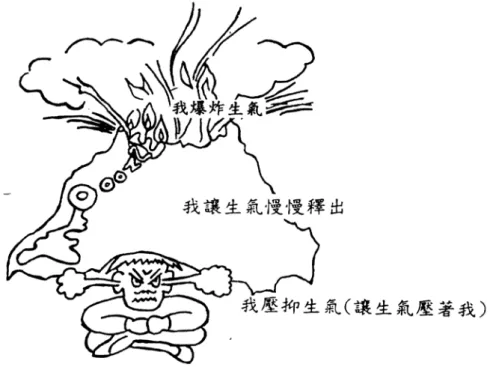
圖 2 『火山』作業單
參考資料:Gelderd & Geldevd (1997)
喻,對於一般人或許能輕而易舉學會, 然而對特殊學生,卻必須特別設計相關 課程,加以教導訓練,以積極介入的方 式來協助日後的人際互動,尤其是在回 歸主流、融合教育的聲浪中,特殊學生 與正常同儕相處的生活勢必大為增加, 如何安排適當的課程,施以合宜的技 能,提升生活品質,將是特教工作者亟 需努力的方向!
參考書目:
何華國(民 85):啟智教育研究。台北: 五南。 許天威、徐享良、張勝成(民 89):新特 殊教育通論。台北:五南。 洪儷瑜、陳芬芳、黃裕惠、許尤芬(民 91)社會技巧訓練課程實例彙編。國 立台灣師範大學教育學系。 黃月霞(民 87)。兒童輔導與諮商。台北: 桂冠。 Geishardt,C.,&Munsch,J(1996).Coping with school stress: a comparison of adolescents with and without learnihg disabilities. Journal of研究;獨立思考與解決問題等十項基本 能力。 教育部進一步於九十二年一月廿二 日公布「國民中小學九年一貫課程正式 綱要」,語文和社會領域增加重視台灣文 化及認識台灣主體性內容;英語領域明 訂必須優先聘請通過教育部檢核的師 資。新修訂課程綱要預計於九十三學年 度全面於一到九年級同步實施,國中小 教科書一律依據正式課程綱要編審(中國 時報,920123)。九年一貫課程堪稱我國 教育史上最劇烈的變革,本文先分析資 源方案比較、我國現況、經營困境與對 策,限於篇幅,九年一貫之影響與對策, 將於下文陳述。
一、資源方案之比較
資源班經營形態以服務對象區分有 單類資源班(categorical resource room)、 跨類資源班(cross categorical room)、不分 類 資 源 班 (non-categorical resource room)、特定能力資源班(specific skills resource room)等 (Wiederholt, Hammill &相似性。許多學者認為不同障礙的學 生,仍具有非常相似的行為與成就風 格,因此,這群學生的介入方式仍要考 慮 其 相 似 處 而 非 相 異 處 (Epstein & Cullinan, 1983; Yesseldyke, Algozzine, Shinn, & McGun, 1982)。但上述爭議較會 發生在已被鑑定為輕度到中度的學習障 礙、情緒障礙、智能障礙,及未被鑑定 為身心障礙,但需輔導其特定能力的資 源班學生,通常較不會發生在需要特殊 班服務的聽障、視障生及重度障礙生 上,因為視聽障及重障生之服務需求是 截然不同的。
中的實例,分別說明了透過語言經驗法 來引起學生對語文學習的動機以及藉由 筆者改良後的結合學習策略教導的集中 識字的教學方式,讓學生在逐漸熟稔中 文字的特性下,發展出自己的識字策 略。當然,本文並不企圖去比較「由上 而下」的閱讀指導方式,以及「由下而 上」的閱讀指導上,兩者的優劣,而只 是透過實例來說明,如何運用兩種策略 各自的優點於適當的時機中使用,希望 筆者所提供的經驗分享,將有助於讀者 在面對語文學習困難的學生教學上能有 所裨益。
參考書目
鄭昭明(1997)。認知心理學 : 理論與 實踐。臺北: 桂冠。 黃秀霜(2001)。中文年級識字量表。心 理出版社。自然能在彼此協商、模仿的過程中,學 習多方面的知識和能力,且互動中所獲 得到的學習成果也會較為穩固(陳昱 宏,民88)。
學策略可引導學生主動建構知識,並在 認知、情意和技能上有別於傳統教學的 正面成效。 曾育豐(民87)以國小六年級學生 為對象比較建構教學法與講述教學法對 數學成就和學習態度之影響,結果發 現,建構教學法對學生在數學學習成就 和學習態度上有正面的提昇效果。 綜合上述實證研究顯示運用建構教 學對學障學生、輕度智能障礙學生及一 般生在學習方面有正向的提昇效果,對 學習的成就、動機和態度也有增進的作 用,對知識的概念和缺失的修正也有其 成效。從針對學習障礙學生的研究中, 也證實運用建構教學有其效果存在,因 此建構教學對增進學障學生的學習效果 是值得探究與嘗試的。 就整體而言,建構教學對提昇學習 具有成效,對學習態度及討論互動的情 形也有正向的效果,學生本身認為學習 較為有趣,學習態度也較積極,對自己 較有信心,對上課有參與感,也願意與 別人分享經驗,這些是其值得考慮的優 點。以下則就實際進行建構主義教學時 的有關因素來加以說明,作為參考:
Mercer & Miller(1994)綜合研究者內 容歸納出下列幾項影響教學成效的因素 (引自Mercer & Miller, 1994):
學在教學成效上之研究。台北市立 師範學院學報,31,347-356。 郭金美(民 88)。建構主義教學方法─ 影響學童光學概念學習教學模式 的研究。嘉義師院學報,13, 157-201。 曾育豐(民 87)。國小六年級數學科建 構式教學法與講授式教學法之比 較。國立高雄師範大學數學系碩士 論文(未出版)。 潘世尊(民 88)。根本建構主義及其教 學意含。教育研究,7,203-216。
二、英文部分
Gersten, R., & Domino, J. (1993). Visions and Revisions: A Special Education Perspective on the Whole Language Controversey. Remedial & Special
Education, 14(4), 5-13.
Hutchinson, N. L. (1993). Effects of
adolescents with learning disabilities.
Learning Disability Quarterly, 16,
34-63.
Mercer, C. D., & Miller, S. P. (1994). Implications of constructivism for teaching math to students with moderate to mild disability. The
Journal of Special Education, 28(3),
290-306.
Montague, M. (1992). The effects of cognitive and matecognitive strategy instruction on the mathematical problem solving of middle school students with learning disabilities.
Journal of Learning Disabilities, 25,
230-248.
Von Glastersfeld, E.(1995). Radical
Constructivism: A Way of Knowing and Learning. Washington, D. C.:
The Falmer Press.
Vygotsky, L. S. (1978). Mind in school:
the development of higher
psychologycal processes. Cambridge,
後雖也有進步,其進步速率慢很多 (Fryauf-Bertschy, Tyler, Kelsay & Gantz, 1992;Enerstvedt, 1999;林寶貴、韓福榮, 民86)。 Geers及Brenner(1994)發現人工電 子耳植入者較使用傳統助聽器者在語言 的接收上有較大的進步;Staller等人(1991) 則認為人工電子耳植入的年紀與聽力損 失的年紀扮演一個重要的角色,他們發 現若是在2至4歲間失去聽力的人工電子 耳植入者,有50%可獲得語言接收能力; 但在2歲前即喪失聽力的人工電子耳植 入者則只有25%可獲得語言接收能力。 Rubinstein(2002)指出在植入三年 後的評量,2-5歲的植入兒童比5歲 後的植入兒童分數顯著地高;在語言的 發展上,越早植入對減少英語語言的延 遲有幫助;在閱讀發展上,以往都認為 語言前聾童通常無法超越四年級的閱讀 水準,在以閱讀理解測驗來作比較40個 耳蝸植入的樣本和控制組的差異時,植 入兒童的進步超越四年級的障礙,而他 們的閱讀年級智商(測驗的閱讀年級除 以學校年級)為0.74,聽常兒童閱讀智商 為1.0,沒有植入的語言前聾童0.2。 英國在1988之後, 植入人工電子耳 最多的團體是在三歲的時候植入,在 Nottingham植入人工電子耳方案的進步 報告中陳述,87%的孩子植入人工電子 耳於三年之後有達到功能性說話的語言 (Lynas & Bennett, 2001)。
韓福榮,民86)。而國內聽障生接受人工 電子耳植入術的原因以助聽器效果不好 為最多,其次為聽能訓練效果不好,再 其次為聽能訓練效果不好(林寶貴、韓 福榮,民86)。
Archbold, Nikolopoulos, Lutman 和
Donoghue(2002)的研究指出,學齡前 就接受植入的極重度聽障兒童,其學齡 後安置在普通班的比率顯著高於配助聽 器的極重度聾童,而接近於配助聽器之 重度聾童,所以年齡對於植入之聾童而 言,是決定其口語知覺及表達結果的重 要因素,能用於預測其後的教育安置。 聽障始於何時、聽障問題已持續多 久、及植入人工電子耳的年齡,這些因 素都被認為與人工電子耳孩童的語音聽 覺能力有關;植入後的一些變數對於聽 語發展具有關鍵性的角色,包括聽覺復 健課程是否重視聽覺與說話能力的發 展、父母的參與、聽力師操作軟體的技 巧、教育安置的型態等(陳小娟,民87)。 植入後時間的長短也是很重要的因素, 植入時間越長效果越好(Enerstvedt, 1999)。
Fryauf-Bertschy, Tyler, Kelsay 與
覺障礙者接受人工電子耳植入術 現況及溝通能力之研究。特殊教育 研究學刊,15,131-149。 陳小娟(民 87):臺灣人工電子耳孩童 聽覺復健現況。特殊教育研究學 刊,16,315-328。 陳小娟(民 89):人工電子耳孩童聽覺 說話長期發展之研究。特殊教育學 報,14,65-92。 黃俊生(民 88):基金會背景及宗旨-董 事長的話。財團法人黃俊生電子耳 基金會刊,創刊號,2-3。 黃俊松(民 91):「亞太地區聽覺障礙學 術會議」之我觀Ⅱ。聲暉雙月刊,8 (5),11-12。 蔡昆瀛(民 90):人工電子耳植入的術 前評估與教師角色。國小特殊教 育,31,14-18。 蘇芳柳(民 85):耳蝸移入之訓練成效 及其影響因素。特殊教育季刊, 59,25-30。 Archbold, S. M., Nikolooulos, T. P., Lutman, M. E., & O’Donoghue, G. M.(2002). The educational settings of profoundly deaf children with cochlear implants compared with age-matched peers hearing aids: implications for management.
International Journal of Audiology, 41, 57-161.
Easterbrooks, S. R. & Mordica, J. A. (2000). Teachers’ ratings of functional communication in students with cochlear implants. America
Annals of The Deaf, 145(1), 54-59.
Enerstvedt, R. T.(1999). New medical technology:To what does it lead?
American Annals of The Deaf, 144
Geers, A.(1999). The benefits of Oral
Education for Children Implanted under Five. Research in progress
reported to the DELTA Conference in Wolverhampton.
Geers, A., & Brenner, C.(1994). Speech perception results:Audition and lipreading enhancement. Volta
Review, 96, 97-108.
Lynas, W. & Bennett, E.(2001). The provision of local mainstream education for young pupils who have cochlear implants. Deafness and Education International , 3(1), 1-14. Miller, K. R., & Wheeler-Scruggs, K.
(2002). Entertainment Television and Hearing students attitudes regarding the pediatric cochlear implant. American Annals of the
Deaf, 147(3), 20-24.
Peter, E.(2000). Our decision on a Cochlear Implant. America Annals of
The Deaf, 145(3), 263-267.
Rose, D. E., Vermon, M., & Pool, A. F.
(1996). Cochlear implants in prelingually deaf children. American
Annals of the Deaf, 141, 258-261.
Rubinstein, J. T.(2002). Paediatric cochlear implantation:prosthetic hearing and language development.
Lancet, 360 , 483-485.
Staller, S., Beiteer, A., Brimacombe, J., Mecklenburg, D., & Arndt, P.(1991). Pediatric performance with the
Nucleus-22 channel cochlear implant system. American Journal of
造成情緒上的困擾;因此,許多國內外 學者(莊妙芬,民89;莊妙芬,民90; Prochasks, 1997;Charlop-Christy, 2002; Beck, 2002;Fossett,2002;Tina, Annabelle, Bonnie & James,2002)均強調以替代性溝 通系統(alternative Communication)協助 身心障礙者溝通或是學業上學習。
擴 大 性 及 替 代 性 溝 通 系 統 (Augmentative and Alternative Communica-tion ,簡稱AAC) 由符號(symbol)、輔具設 備(aids)、策略(strategies)及技術 ( t e c h n i q u e s ) 四 個 成 分 所 組 成 (Beukelman & Mirenda,1998),而其中符 號就其明確度(transparent)則可分成明 確性的符號(tangible symbols)、表徵性 符號(representational symbols)及抽象符 號(abstract symbols),圖形符號則屬於 表徵性符號其中之一,圖形符號在過去 常被探討其中括圖形溝通符號(Picture Communication Symbols,簡稱PCS)、畫 謎符號(rebus symbols)、Picsyms及布列 斯符號(Blissymbolics)。根據Bloomberg, Karlan, 和 Lloyd(1990)及Mizuko (1987)研究顯示以PCS符號學習是最容 易且明確度最高,應用範圍也是最為廣 泛(引自Beukelman & Mirenda, 1998)。
製成有隨意貼方式的標籤、或圖章形式 等,皆能依需求及使用者的優勢管道而 選用之(Mayer-Johnson Inc.,,2003b)。
筆 者 們 採 用 Mayer-Johnson 公 司 (2003a)之Writing with Symbol 2000 (v2.5)(簡稱WWS2000)軟體中所編製 簡單句型如圖一: 圖一 Mayer-Johnson 公司圖形溝通符號 (取自 WWS2000(V2.5)彩色圖文庫) 而國內,由財團法人科技輔具基金 會所出版的彩色溝通圖形庫,收集與編 製常用的溝通語彙並繪製成線條畫圖 形,是目前國內最具規模的本土化語彙 庫與圖形庫,適合各年齡層的使用。語 彙內容共分為七大類,分別為(1)名詞; (2)名詞-人物(3)名詞-食物;(4) 動詞;(5)形容詞;(6)社交和(7)雜 項(楊國屏,民84)。筆者們也針對財團 法人科技輔具基金會所研發「整合型無 障礙電腦系統(簡稱U1)」軟體中圖形庫 簡略編製如圖二之簡單句型。 圖 二 整 合 型 無 障 礙 電 腦 系 統 之 彩色溝通圖形符號 藉由圖片符號的使用可以提供使用 者一個學習與世界接軌的機會,而一個 人所學會的字彙會愈多,他日後可施展 之能力也就愈多(Beukelman & Mirenda,
1998)。因此,使用圖形溝通符號其最終
民90;Prochasks, 1997)為居多,其他如
肢體障礙(以腦性麻痺居多)(Prochasks,
能 。 透 過 寫 作 過 程 - 預 先 試 寫 (prewriting)、草擬(composing a draft)、 編輯及修正(editing and revising),再透 過適當的教學策略,增進學生的寫作 技能(Beukelman & Mirenda, 1998)。
Beck(2002)曾對發展遲緩的幼童運用 各種替代性(alternative)設備,包括 圖形符號及相關電腦軟體的介入。發 展遲緩幼童在寫作技能表現上有著極 大進步。 綜合上述相關文獻可以發現,圖形 溝通符號系統搭配應用範圍,可分成兩 部分: 1.圖形溝通符號系統所搭配的策略 特殊教育教師運用圖形溝通符號所 搭 配 的 策 略 包 括 : 提 示 策 略
片、溝通簿和屬於高科技(high
technique)由電腦所設計的輔助學
則 越 高 ( Beukelman & Mirenda,
1998),對嚴重語言障礙或是肢體障
礙學生而言,由於外在機能限制而 無法抒發情感時,教師則可輔以圖 形符號完成短篇的記敘文或是抒情 文(Mayer-Johnson Inc., 2003a)。
行為之影響。特殊教育與復健學 報,9,181-212。 陳明聰、李天佑、王華沛、楊國屏(民 89)。應用電腦輔具結合刺激褪除 教導國小中重度智能障礙學生識 字之研究。中華民國特殊教育學會 主編:e 世代的特殊教育,251-261。 葉耀明(民 91)。身心障礙者電腦化溝 通系統之設計與應用-溝通障礙 者之遠距擴大性溝通系統的研究 (三)。(國科會專題研究計劃成果 報告編號 NSC90-2614-H-003-005- F20)。台北:中華民國行政院國家 科學委員會。 楊國屏 (民 84)。溝通學習圖形庫。財團 法人科技輔具基金會。 廖芳碧(民 91)。圖形溝通訓練對低功 能自閉症者溝通能力影響之研 究。國立台中師範學院國民教育研 究所碩士論文(未出版)。 謝淑珍(民 91)。發展遲緩幼兒溝通教 學成效之研究。國立彰化師範大學 特殊教育研究所碩士論文(未出 版)。 蘇振輝(民 90)。輔助溝通系統訓練對 重度智能障礙兒童溝通行為效果 之研究。國立嘉義大學國民教育研 究所碩士論文(未出版)。
Beck, J. (2002). Emerging literacy trough assistive technology. TEACHING
Exceptional Children, 35(2), 44-48.
Beukelman, D. R., & Mirenda, P. (1998).
Augmentative and alternative communication disorders in children and adults.(2 nd ed.). Baltimore:P.H.
Brookes Pub. Co.
autism: assessment of PECS acquisition, speech,
social-communicative behavior, and problem behavior. Journal of applied
behavior analysis, 35, 213-231.
Cook, A. M., & Hussey, S. M. (2002).
Assistive technologies. (2nd ed.).Missouri:Mosby.
Lasker, J. L., & Bedrosian J. B. (2001). Promoting acceptance of
augmentative and alternative communication by adults with acquired communication disorders.
AAC augmentative and alternative communication, 17, 141-153.
Fossett, B. (2002). Visual support strategies for literacy development. Retrieved April 24,2003 from the World Wide Web:
www.internationalsped.com/magazin es_artices.
Mayer-Johnson Inc. (2003a). Writing with symbol 2000 (v2.5) .
Mayer-Johnson Inc. (2003b). start Page [online]. Retrieved April 28, 2003 from the World Wide Web: www.mayer-johnson.com
Prochasks, R. (1997). Using augmentative
communication system to enable
to participate in inclusive settings.
Advancement of Assistive Technology. 1-4.
Rupal, P. (2002). Phonatory control in adults with cerebral palsy and severe dysarthria . AAC Augmentative and
Alternative Communication, 18, 2-10
Tina, T. D., Annabelle, D., Bonnie, R. L., & James, R. Y. (2002).
Generalization of skills using pictographic and voice output communication devices. AAC
服務,目的即在希望家長接受專業的指 導與協助後,能在智障者未來生活中扮 演支援者的角色。畢竟,家長透過協助 與訓練,便能學得以專家的角度來面對 智障子女的教養問題,如此,面對孩子 未來生活的規劃,家長便是永遠堅強的 支持及守護者。
未來生活的藍圖。
參、影響家長對其智障子女未來生
活需求的因素
Hanley-Maxwell et al(1995)、 Mutua & Miller & Mwavita (2002)、 Mutua & Dimitrov (2001) 1.愈是鄉村的父 母,對其智障 子女的未來生 活需求種類愈 簡單,且需求 程度也不高。 2.而居住在都市 的父母則對其 子女充滿較多 的 不 安 與 焦 慮,因此對其 未來生活需求 的 種 類 也 較 多,並主動為 子女規劃未來 生活。 居住 地區
肆、結語
家庭是使孩子順利進入職場、成功 適應成人社會與人際生活的重要支持來 源,其中,家長的需求是主要的決定因 素(Lustig, 2002)。此外,父母抱持的信 念與期望,對孩子的未來生活發展具有 決 定 性 的 影 響 ( Hastings & Taunt, 2002;Hornby, 1994;Mutua & Dimitrov, 2002;Masino & Hodapp, 1996;Paul &young children with disabilities. American Journal on Mental Retardation, 97(1), 1-10.
Council for Exceptional Children(1988). Position paper on definition and identification of students with behavioral disorders. Behavioral
disorders, 13(1), 9-19.
Cooney, B.F.(2002). Exploring perspective on transition of youth with disabilities: Voice of young adults, parents, and professionals. Mental Retardation, 42(6)425-435. Dettmer, P., Thurston, L. P., & Dyck, N.
(2002). Consultation,
collaboration and teamwork for students with special needs. Boston: Allyn and Bacon.
Everson, J. M., & Moon, M. S.(1987). Transition services for young adults with severe disabilities: defining professional and parental roles and responsibilities. Journal of the Association for Person with Severe
(2), 87-95.
Fong, L., Wilgosh, L., & Sobsey, D. (1993). The experience of parenting an adolescent with autism. International Journal of Disability, Development and Education, 40(2), 105-113.
Gallivan-Fenlon, A. (1994). “Their senior year”: Family and service provider perspectives on the transition from school to adult life for young adults with disabilities. Journal of the Association for Persons with Severe Handicaps, 19, 11-23.
Hanley-Maxwell, C., Whitney-Thomas, J., & Pogoloff, S. M.(1995). The second shock: A qualitative study of parents’ perspectives and needs during their child’s transition from school to adult life. The Journal of the Association for Persons with Severe Handicaps, 20(1), 3-15. Hasting, R.P., & Taunt, H.M.(2002).
Positive perceptions in families of children with developmental disabilities. American Journal on
Hornby, G.(1994). Effects of children with disabilities on fathers: A review and analysis of literature.
International Journal of Disability, Development and Education, 41, 171-184.
Lehmann, J. P., & Roberto, K.A. (1996). Comparison of factors influencing others’ perceptions about the futures of their adolescent children with and without disabilities. Mental
Retardation, 34, 27-38. Lowitzer, A. C.(1989). Family
demographics, family functioning, and parent involvement. Washington, D.C.: US Department of Education. (ERIC Document for Research Service No. ED311669). Lustig, D.C. (2002). Family coping in
families with a child with a disability. Educational and Training in Mental Retardation and Developmental Disabilities, 37(1), 14-22.
Masino, L.L., & Hodapp, R.M.(1996). Parental educational expectations for adolescents with disabilities.
Exceptional Children, 62, 515-523. &
Turnbull Ⅲ, H. R.(1995). Whatdo students with disabilities tell us about th eimportance of family
involvement in the transition from school to adult life? Exceptional Children, 62(3), 249-260. Mutua, N. K., Miller, J. W. & Mwavita,
M.(2002). Resource utilization by children with developmental
disabilities in Kenya: discrepancy analysis of parents’ expectation-to- importance appraisals. Research in Developmental Disabilities, 23, 191-201.
Mutua, N. K., & Dimitrov, D. M.(2001). Parent’s expectations about future outcomes of children with MR in Kenya: Differential effects of gender and severity of MR. Journal of Special Education, 35(3), 172-181. Paul, A. S., & Frea, W. D.(2002). The
importance of understanding the goals of the family. Journal of Positive Behavior Interventions, 4, 61-63.
Facilitating future planning for ageing adults with intellectual disabilities using a planning tool that incorporate quality of life domains. Journal of Gerontological Social
Work, 37(3-4), 105-119.
代背景、國家立法,以及經濟、人口、 醫療等方面的改變之下而興起的一個理 念 ( The center for universal design,
1997),此理念是為所有人設計可共用之 產品,而「全方位課程設計」即是由全 方位設計的理念所衍生的。全方位課程 設計是指設計一套所有學生皆可使用的 課程,在IDEA(1997)法案的支持下,美 國所有學生須儘可能地接受普通教育課 程,因此教師需為每位學生設計適性之 課程。而全方位課程設計即是在融合教 育環境下,依不同個體所做的課程調 整,使每位學生皆能達成有效學習的目 標。
二、全方位課程設計的理論依
據
全方位設計之理論依據有二,一為 神經學家的相關研究,另一則為Vygotsky 的近側發展區(zone of proximal develop- ment, ZPD)(Meyer & Rose,2002)。茲 分述如下:(一)神經學家的相關研究
Meyer與Rose(2002)指出神經學家對
何素華(民 91)。如何為身心障礙兒童 編選教材。上課講義。 吳亭芳、陳明聰、王華沛(2000)。運用 輔助性科技實踐融合教育 。中華 民國特殊教育年刊,33-46。台北: 中華民國特殊教育學會。 邱上真(民 91a)。特殊教育導論-帶好 班上每位學生。台北:心理。 邱上真(民 91b)。從特殊教育課程設計 理念的演變談如何幫助特殊需求 學生在普通課程中進行有效學 習。載於國立台灣師範大學特殊教 育系主編,2003特殊教育學術研討 會會議手冊(19-28 頁)。國立台灣 師範大學特教系。 林淑玟(民 90)。e 世代的無障礙觀。特 殊教育季刊, 78, 8-16。 陳明聰(民 89):融合式教育安置下課 程的發展。特殊教育季刊,76, 17-23。 張春興(民 87)。教育心理學。台北: 東華。 黃光雄、蔡清田(民 90)。課程設計- 理論與實際。台北:五南。 教育部(民 86):特殊教育法。台北市, 教育部。
CUD(1997). History and Background.
The center for universal design. Retrieved
September 12,2002 from the World Wide Web:
www.ncsu.edu/www/ncsu/design/sod 5/cud/univ_design/princ_overview.h tm
CAST(2000). Providing Support. Retrieved Sep. 15, 2002 from the World Wide Web:
www.cast.org/udl/index.cfm?i=52
CAST(2001). Student make progress with universal design for learning. Retrieved Sep. 15, 2002 from the World Wide Web:www.cast.org/
ncac/index.cfm?i=2200
CAST(2001).Universal design for learning. Retrieved Sep. 30, 2002 from the World Wide Web:
www.cast.org
Gordon, D.T.(2002). Curriculum Access in the Digital Age. Retrieved Jan. 10, 2003 from the World Wide Web:
edletter.org/past/issues/2002-jf/digita lage. Shtml
Hitchcock, C., Meyer, A., Rose, D., & Jackson, R.(2002) Technical Brief:Access, Participtation, and Progress in the General Curriculum.
World Wide Web:
www.cast.org/ncac/index.cfm? I=2830#downloadoptions
Orkwis, R., & Mclane. K.(1998). A curriculum every student can use: Design principles for student access. Retrieved Jan. 10, 2003 from the World Wide Web:
www.cec.sped.org/osep/ud-secl.html
O’Neill, L.M.(2001). Helping teachers and parents find accessible electronic learning materials for students with disabilities. Exceptional Parent, 31 (9), 56-59.
O’Neill, L.M.(2000). Moving Toward the Vision of the Universally Designed Classroom. Retrieved Sep 15, 2002 from the World Wide Web:
www.cast.org/udl/index.cfm?i=623
Rose, D. H., & Meyer, A. (2002).
Teaching every student in the digital age:Universal design for learning.
Rose, D. H,. & Dalton, B. (2002). Using Technology to Individualize Reading Instruction. Retrieved Jan. 13, 2003 from the World Wide Web:www.cast.org
/udl/index.cfm?I=3096
Vygotsky, L.S.(1978).Mind in society:
The development of highter psychological processes.
Cabbridge,MA:Harvard University Press.
附註:CAST 的大寫確定,其全名為 Center for Applied Special Technology
CUD的大寫確定,其全名為 The