
差異化教學對國中生文法學習之效益 - 政大學術集成
97
0
0
全文
(2) The Effects of Differentiated Instruction on English Grammar Learning of Junior High School Students. A Master Thesis Presented to Department of English,. 政 治 大. National Chengchi University. 立. ‧. ‧ 國. 學 In Partial Fulfillment. y. sit. io. Master of Arts. n. al. er. Nat. of the Requirements for the Degree of. Ch. engchi. by Yi-Lun Lee July, 2015. i n U. v.
(3) 立. 政 治 大. ‧. ‧ 國. 學. n. er. io. sit. y. Nat. al. Ch. engchi. i n U. v.
(4) ACKNOWLEDGEMENTS First and foremost, I would like to express my best appreciation to my advisor, Dr. Shu-Chen Huang, for all her continuous guidance and advice during my years as a graduate student at NCCU. She always kindly encouraged me to involve in serious thinking and advised me to revise my weakness in research, which enable me to reflect on myself with a different eye. In addition, I would also like to show my gratitude to Dr. Chieh-Yue Yeh and Dr. Hsin-Chou Huang, the committee members of my oral defense. Their insightful. 政 治 大 I am also grateful 立 to all the professors who taught me during my graduate school. questions, comments and suggestions have improved the quality of my thesis.. ‧ 國. 學. years at NCCU. These summer days at NCCU were wonderful memories for me. Special thanks to my dear friends and classmates for their support and encouragement.. ‧. In particular, I want to thank Joyce Yang and Daisy Peng for those toughest days in. Nat. sit. y. my graduate program. Moreover, I want to thank my old friends, Mimi Hou, Lenny. n. al. er. io. Su and Amigo Hsu for accompanying me and listening to my problem. I am fortunate. i n U. v. to have them around. I also thank all the participants, my dearest students of this study.. Ch. engchi. This thesis could not have been completed without their special contributions. Finally, I owe an enormous debt to my family and my husband, Vince Tsai. I am grateful for their love and spiritual support during my life.. iii.
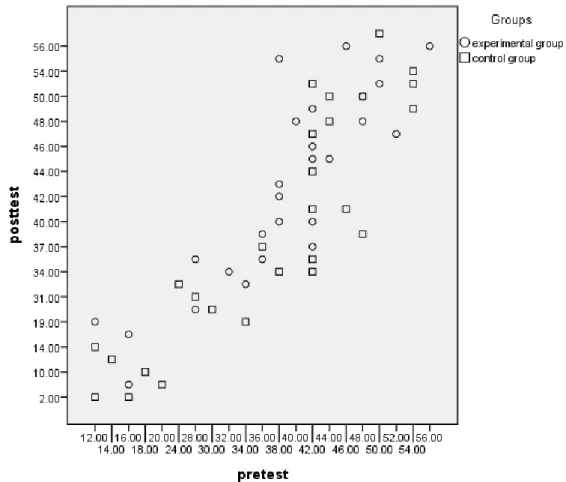
(5) TABLE OF CONTENTS ACKNOWLEDGEMENTS ......................................................................................... iii 中文摘要.................................................................................................................... viii ABSTRACT ................................................................................................................... x CHAPTER 1 .................................................................................................................. 1 1.1 Background of the Study .............................................................................. 1 1.2. Statement of the Problem .............................................................................. 2. 1.3. Purpose of the Study ..................................................................................... 4. 1.4 Significance of the Study .............................................................................. 5 1.5 Definition of Terms ....................................................................................... 5 CHAPTER 2 .................................................................................................................. 7. 政 治 大 Differentiated Strategies .................................................................... 9 立 Tiered Task ........................................................................................ 9. 2.1 Differentiated Instruction .............................................................................. 7 2.1.1. 學. ‧ 國. 2.1.2. 2.2 Empirical Evidence of Differentiated Instruction in L1 Contexts .............. 10 2.3 Studies on Differentiated Instruction in Taiwan ......................................... 21. ‧. 2.4 Grammar Education in Taiwan ................................................................... 24 2.5 Summary ..................................................................................................... 25. y. Nat. sit. CHAPTER 3 ................................................................................................................ 27. er. io. 3.1 The Context of the Problem ........................................................................ 27. al. v i n Instruments .................................................................................................. 29 Ch U i e h n g c ............................................................. 30 3.3.1 The Pretest and the Posttest n. 3. 2 Participants ................................................................................................. 27 3.3. 3.3.2 The Han-Lin iEnglish Book 1 .......................................................... 36 3.3.3 Tiered Task--the Three Differentiated Worksheets .......................... 37 3.3.4 Focus Group Interview .................................................................... 38 3.4 Design and Procedures ................................................................................ 39 3.5. Data Analysis .............................................................................................. 43. CHAPTER 4 ................................................................................................................ 45 4.1 Comparisons of the Participants' Performance in the Pretest and Posttest . 45 4.2 HPL Performance in the Pretest and Posttest.............................................. 47 4.3. IPL Performance in the Pretest and Posttest ............................................... 49. 4.4. LPL Performance in the Pretest and Posttest .............................................. 51 iv.
(6) 4.5 Data from the Focus Group Interview after the Differentiated Instruction 52 4.6 Summary of Results .................................................................................... 56 CHAPTER 5 ................................................................................................................ 59 5.1 Discussion ................................................................................................... 59 5.1.1 Tiered Task ....................................................................................... 61 5.1.2 Flexible Grouping ............................................................................ 62 5.2 Pedagogical Implications ............................................................................ 63 5.3. Limitations of the Study.............................................................................. 64. 5.4 Suggestions for Future Study ...................................................................... 64 REFERENCES ............................................................................................................ 65 APPENDICES ............................................................................................................. 72. 治 政 大 Appendix B .......................................................................................................... 73 立 Appendix C .......................................................................................................... 76 Appendix A .......................................................................................................... 72. ‧ 國. 學. Appendix D .......................................................................................................... 79 Appendix E .......................................................................................................... 80. ‧. Appendix F........................................................................................................... 81 Appendix G .......................................................................................................... 82. y. Nat. n. al. er. io. sit. Appendix H .......................................................................................................... 83. Ch. engchi. v. i n U. v.
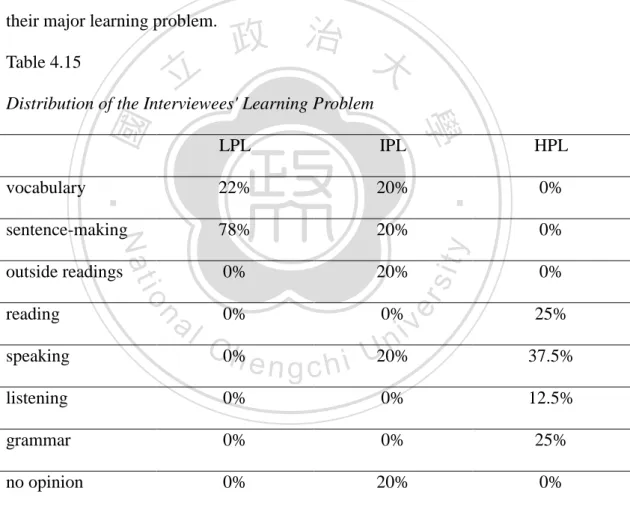
(7) LIST OF TABLES Table 2.1. Empirical Evidence Supporting DI ......................................................... 12. Table 2.2. Empirical Evidence Against DI............................................................... 15. Table 3.1. Comparison of the Average Scores of the Entrance IQ test Between Glass. A and Class B (Before the Treatment) ......................................................................... 29 Table 3.2. Distribution of the Participants in Three Proficiency Levels .................. 29. Table 3.3. Two-way Specification Table of Grammar Points from Starter to Unit 5. ...................................................................................................................................... 34 Table 3.4. Content of 3 Tiered Tasks and Flexible Grouping .................................. 41. Table 3.5. The Operation of the Experimental Group and the Control Group ........ 41. Table 3.6. The Procedure of the Main Study ........................................................... 42. Table 4.3. Table 4.6. Mean Raw Scores and Standard Deviations for HPL ............................. 48 ANCOVA Results for HPL on the Posttest ............................................. 48. ‧. Table 4.5. ANCOVA Results of the Posttest ............................................................ 47. T-test results for HPL Performances on Each Subsection of the Posttest. Nat. y. Table 4.4. 學. Descriptive Statistics for the Experimental Group and the Control Group. ‧ 國. 治 政 大 45 ...................................................................................................................................... 立 Table 4.2 T-test Results of the Pretest Performance ............................................... 47 Table 4.1. sit. ...................................................................................................................................... 49. Table 4.8. ANCOVA Results for IPL on the Posttest ............................................... 50. Table 4.9. T-test Results for IPL Performances on Each Subsection of the Posttest. n. al. er. Mean Raw Scores and Standard Deviations for IPL ............................... 49. io. Table 4.7. Ch. engchi. i n U. v. ...................................................................................................................................... 50 Table 4.10 Mean Raw Scores and Standard Deviations for LPL ............................. 51 Table 4.11. ANCOVA Results for LPLs on the Posttest ............................................ 51. Table 4.12 T-test Results for LPL Performances on Each Subsection of the Posttest ...................................................................................................................................... 52 Table 4.13 Percentages of the Interviewees Who Liked the Process of DI .............. 53 Table 4.14 Percentages of the Interviewees Who Thought DI Was Helpful ............. 54 Table 4.15 Distribution of the Interviewees' Learning Problem ............................... 55 Table 4.16 Percentages of the Interviewees Who Thought DI could Solve Their Learning Problem......................................................................................................... 56. vi.
(8) LIST OF FIGURES Figure 1. The user interface of the item pool ............................................................ 31 Figure 2. The main structure of the English item pool ............................................. 31 Figure 3. The presentation of the sentence pattern in Han-Lin iEnglish Book 1...... 37 Figure 4.. Bivariate distribution of pretest and posttest for the experimental and. control groups .............................................................................................................. 46. 立. 政 治 大. ‧. ‧ 國. 學. n. er. io. sit. y. Nat. al. Ch. engchi. vii. i n U. v.
(9) 國立政治大學英國語文學系碩士在職專班 碩士論文摘要 論文名稱:差異化教學對國中生文法學習之效益 指導教授:黃淑真博士 研究生:李宜倫 論文摘要內容: 本研究旨在探討國中英文文法課堂中使用差異化教學之成效,主要的研究目. 政 治 大. 標分別是: (一)差異化教學是否能提升學生的文法學習成效。 (二)差異化教學. 立. 在能提升低中高三組學生的文法學習成效上是否有差異。(三)學生對差異化教. ‧ 國. 學. 學的看法。. ‧. 本研究採準實驗研究法,教師以差異化教學策略中的階梯式任務和彈性分組. sit. y. Nat. 法進行文法教學。在暖身階段,教師以全班式教學講授文法重點後,低中高成就. n. al. er. io. 學生分別接受不同的階梯式任務和彈性分組法進行練習;低成就學生須以小組形. i n U. v. 式完成文法選擇題練習,中成就組學生兩人一組完成文法填空題練習,高成就組. Ch. engchi. 學生獨立完成文法看圖造句練習。針對七年級學生進行 11 週差異化教學後,使 用教師自編文法測驗前後測成績進行獨立樣本 t 檢定和共變數分析,並以焦點團 體法瞭解低中高成就三組學生接受差異化教學之後的想法。 研究結果顯示:(一)接受差異化教學的學生在前後測結果上有顯著性差異 (p<.05);(二)進一步針對低、中、高成就組學生進行分析,發現除了低分組在 文法測驗選擇題中有顯著的學習進步之外,其他兩組與控制組無明顯差異。 (三) 高成就組學生對於差異化教學喜好度比中、低成就組學生低;(四)高成就組學 生認為差異化教學材料對他們的幫助程度較低;(五)低成就組學生反應他們的 viii.
(10) 學習困難為單字和造句;中成就組學生為單字、造句及口說;高成就組則為閱讀、 口說、聽力及文法。低、中成就組學生皆認為差異化教學有助於他們克服學習困 難。. 立. 政 治 大. ‧. ‧ 國. 學. n. er. io. sit. y. Nat. al. Ch. engchi. ix. i n U. v.
(11) ABSTRACT This current study investigated the effects of integrating differentiated instruction into grammar teaching in junior high school English classes. The main purposes were to explore whether or not differentiated instruction improved the students' grammar achievements in general, whether students, when divided into, low, intermediate and high proficiency levels, respectively benefited from such instruction on grammar learning, and what students' experiences and thoughts were after receiving differentiated grammar instruction.. 治 政 大weeks. The researcher adopted received differentiated instruction for a total of eleven 立 The participants of this quasi-experimental study were 54 seven graders who. two differentiated instructional strategies, tiered tasks and flexible grouping, to teach. ‧ 國. 學. grammar. In the warm-up stage, the instructor taught grammar points in the whole. ‧. class model. After the instruction, low, intermediate and high proficiency learners. sit. y. Nat. received different tiered tasks and flexible grouping respectively to do the grammar. io. er. exercises. Low proficiency learners (LPL) were required to finish multiple choice. al. exercises in small groups, intermediate proficiency learners (IPL) had to complete. n. v i n fill-in exercises in pairs and C high h proficiency i U (HPL) did the sentence making e n g c hlearners exercises with picture cues independently. Their performance on the pre- and posttest designed by the researcher was. analyzed by independent t-test and ANCOVA. Their thoughts about experiencing DI were collected through focus group interviews. And the findings of the study were summarized as follows: 1.. Students in the experimental group outperformed those in the control group significantly (p<.05).. 2.. When students in the experimental group were divided into three subgroups, only x.
(12) LPL improved their performance on the multiple choice section, and the other two groups showed no significant differences in comparison to their counterparts in the control group. 3.. HPLs' preferences for DI were lower than those of LPL and IPL.. 4.. The learning difficulties of LPL were vocabulary and sentence-making; of IPL were vocabulary, sentence-making, and speaking, and of HPL were reading, speaking, listening and grammar. Both LPL and IPL thought DI was beneficial for them to overcome the learning difficulties.. 立. 政 治 大. ‧. ‧ 國. 學. n. er. io. sit. y. Nat. al. Ch. engchi. xi. i n U. v.
(13) CHAPTER 1 INTRODUCTION This chapter gives an outline of the thesis. It is further divided into five sections. The first section introduces the background of the study. The following section presents the problem. The third section reports the purpose as well as states the research questions that are to be answered in this current study. The fourth section reports the significance of the study. The last section introduces the definition of terms. 1.1. 政 治 大. Background of the Study. 立. With the educational reforms in the past decades, the learning materials for. ‧ 國. 學. students have became more various and attractive, so did the teaching methods of instructors. In the past, most teachers employed lecture method as the main way to. ‧. deliver the uniform learning content to the whole class, which ignored the truth that. y. Nat. sit. students go to school with diverse abilities, backgrounds, preferences, learning styles. n. al. er. io. and personalities. The analogy “One size doesn’t fit all” has been used to describe the. Ch. i n U. v. difficulty in implementing a standard curriculum to cater to different learners. engchi. (Gregory & Chapman, 2007). To solve this problem, the idea of “differentiated instruction” was proposed. The underlying philosophy of differentiated instruction is that teachers value the uniqueness of every student and strive to offer opportunities for them to succeed. According to Tomlinson (2001), the teachers who adopt differentiated instruction consider and design varied approaches to content, process and products in response to student differences in readiness, interests and needs . Differentiated Instruction (DI) has captured many educators’ attention across the US because they try to ensure that all children will make progress to meet the requirements of No Child Left Behind 1.
(14) Legislation (NCLB) (Dahlman, Hoffman, & Brauhn, 2008). President George W. Bush signed NCLB into a law on January 8, 2002. It mandates raising the educational performance by setting higher educational standards, requiring annual testing of children to measure their progress toward achieving the higher standards and providing rewards/penalties to the schools where students make/do not make adequately yearly progress. NCLB has forced schools to pay close attention to their curriculum and the instruction provided by their teachers. Under the circumstances, DI was widely adopted across the US to meet the requirements of NCLB and has. 治 政 that students exposed to differentiated instruction strategies大 consistently outperform 立. proven to be successful in the general education context where researches have shown. the other students (Baumgartner et al., 2003; Dangelo, 2006; Johnson, 2010; King,. ‧ 國. 學. 2010; McCullough, 2012; Parker, 2011). Statement of the Problem. ‧. 1.2. sit. y. Nat. In Taiwan, English is regarded as a foreign language. Under such a condition,. io. er. classroom teaching is the major and sometimes the only resource that provides. al. students access to English particularly in some remote areas. Thus, formal instruction. n. v i n Clearners plays a key role for helping language to master the target language. h e ningTaiwan chi U Communicative Language Teaching (CLT) approach has been promoted in English classes in junior high schools in Taiwan since the English curriculum reform of 2001. Contrasted with the traditional English teaching approaches which focus on learners' knowledge of grammatical rules, CLT emphasizes on cultivating students' ability of using language appropriately and naturally. With the rise of CLT, the role of grammar instruction in second language acquisition was downplayed. However, according to Nassaji (2000), recent studies have indicated the importance of formal instruction for learners to acquire higher accuracy. Ellis (2002) 2.
(15) also argued that formal instruction is effective in developing explicit knowledge of grammatical features which lead to higher levels of grammatical knowledge. Harvey (1985) proposed that understanding the grammatical system of a language is extremely essential for some learners, often especially for speakers of different languages. In Taiwan, grammar learning was found to be one of the English academic adjustment problem for the first-graders in junior high school (Tseng, 2008). Although students received formal English instruction from schools in their elementary stage, they were not asked to memorize or apply grammar rules in these classes. However,. 治 政 learn specific rules in each lesson; there was usually大 a section called "grammar 立. in junior high English classes, grammar played a more crucial part. Students had to. choice" on exams and grammar rules were often adapted into the items of cloze tests.. ‧ 國. 學. In order words, grammar learning has become required and demanding to junior high. ‧. school students. Thus, grammar instruction has been a challenging task to many. sit. y. Nat. English teachers as well as the researcher of this present study.. io. er. Furthermore, another serious problem that English teachers encounter is the. al. bipolar distribution of students' performance. According to Chang (2006), the low. n. v i n achievers' average scores onC Basic Test (BCT) was 15, which was merely h eCompetence ngchi U one fourth of the total score and BCT is a standardized exam for enrollment in high or vocational schools student in Taiwan. It meant that more and more junior high school students gave up learning English grammar at this stage. The latest result of Comprehensive Assessment Program (CAP) for junior high school students, which took the place of BCT in 2014, also showed the similar consequence. The bipolar distribution of students' English performance still exhibited and 33.20% of the test takers got Grade C which meant nearly 1/3 junior high graduates need English remedial instruction. 3.
(16) Rural-Urban gap, socio-economic status, learning resources, the numbers of qualified teachers and students' motivation and interests may be the explanation for the situation. The linkage between elementary school phase and junior high school phase could be another possible cause of students' maladjustment in their English learning. Grade 7 students are not total beginners of English and their previous learning experiences need to be considered when planning new curriculum for them. 1.3. Purpose of the Study While a substantial body of research currently exists, based on the successes and. 治 政 大 learning, such as determine whether a differentiated instruction design for grammar 立 failures of DI programs as a whole, relatively little research has been conducted to. tiered task and flexible grouping, would be a viable and effective solution.. ‧ 國. 學. In short, the present study had three specific purposes. The first one was to. ‧. examine the effects of employing DI in grammar learning on junior high school. sit. y. Nat. students' learning outcomes. The second one was to investigate whether DI was. io. al. n. explore the participants' perception towards DI.. Ch. Specific research questions are as follows: 1.. engchi. er. helpful for the students with different language proficiency. The last one was to. i n U. v. Were both “differentiated instruction” and “non-differentiated instruction” equally beneficial for students on their grammar learning?. 2.. Did high-, intermediate- and low proficiency learners benefit to different extent from "differentiated instruction" and "non-differentiated instruction" respectively?. 3.. What were the learners’ opinions after they had experienced differentiated instruction?. 4.
(17) 1.4. Significance of the Study It is hoped that this study can contribute to the understanding of the relationship. between DI and junior high students' grammar learning. Rather than debating the pros and cons of incorporating DI into grammar learning in an EFL classroom, this study has shown that one EFL teacher's attempts to implement the appropriate aspects of various differentiated strategies into the grammar learning process, and then gradually and incrementally assess what worked and what did not. In addition, it is hoped that insights can be gained by investigating the effects of DI on different proficiency. 治 政 大more studies and more Meanwhile, it is hoped that this study can encourage 立. learners; from this educators could better design grammar lessons through DI.. practitioners to explore the possibilities of DI and provide practical examples as. ‧ 國. 學. reference materials for teaching grammar in junior high schools. Definition of Terms. ‧. 1.5. sit. y. Nat. The following terms were used in the current study. Operational definitions were. io. er. incorporated to provide clear and concise understanding for readers.. al. differentiated instruction: Defined as the process whereby the teachers understand the. n. v i n C hprocess to facilitateUthe needs of the wide range of entire spectrum of the learning engchi. learners in the classroom. As a result, the student's possibility for academic growth and success will increase during the learning process (Tomlinson & Eidson, 2003). No Child Left Behind Legislation (NCLB): The NCLB Act, initially authorized in 1965 as the Elementary and Secondary Education Act (ESEA), was signed into law on January 8, 2002 as a means of holding states, school districts and schools more accountable for improving the academic performance of each student regardless of economic status, race, ethnicity, proficiency in English or disability (King, 2010).. 5.
(18) tiered task: Tiered task allowed the same objective to be obtained at various levels and modalities. The teachers created tasks that appealed to the multiple intelligences ranging from simple to complex (Danzi, Reul, & Smith, 2008). flexible grouping: It acknowledges that all grouping patterns like large groups, small groups, teams, partners, and individuals are valuable because they all offer the learners slightly different experiences with different outcomes. The basis of the grouping may be students' interests or needs (Ford, 2005). 立. 政 治 大. ‧. ‧ 國. 學. n. er. io. sit. y. Nat. al. Ch. engchi. 6. i n U. v.
(19) CHAPTER 2 LITERATURE REVIEW In this chapter, the major issues associated with differentiated instruction are reviewed to set up a theoretical framework for the present study. First, the basic concepts regarding differentiated instruction were elaborated. The second section provided empirical evidence of differentiated instruction. After that, differentiated instruction in the local context in Taiwan was specifically introduced. The final part briefly summarizes the current situation of grammar instruction in junior high school,. 政 治 大. where this present DI study was implemented.. 立. Differentiated Instruction. 學. ‧ 國. 2.1. The importance of differentiating education for students with different learning capabilities and requirements has been addressed for many years. Since early 1980s,. ‧. the advocators of inclusive education proposed to modify curriculum and instruction. y. Nat. io. sit. to meet students' diverse learning needs in the classroom (Hoover, 2004). Even. n. al. er. though the terminology for such concept varied from modification or adoption to. Ch. i n U. v. differentiation, the underlying essence is that teachers have to recognize each student's. engchi. needs, readiness, preferences and interests in order to plan strategically to foster success for all students. Differentiation is a two-step process which (1) analyzes the degree of the content in instructional planning and (2) modifies, adapts or designs new approaches to meets students needs, interests and learning preferences (Heacox, 2012). Tomlinson and Eidson (2003) described differentiated instruction as "a systematic approach to planning curriculum and instruction for academically diverse learners." However, differentiation should not be considered as individualized learning plans for each student which may overwhelm teachers. Baecher, Artigliere, 7.
(20) Patterson, and Spatzer (2012) suggested differentiation should be viewed as variation on a theme, beginning with a simple project, task or learning goal. The variation mainly consists of four important elements: (a) content, (b) process, (c) product, and (d) learning environment (Tomlinson, 2001). When planning to differentiate content to be learned, Tomlinson (1999) suggests that a teacher should make decisions about the essential content, principles and skills which all learners will master and at the same time provide opportunities for advanced students to work on more complicated concepts or problems as well as for slower learners to focus on. 治 政 大information through both books or chapter books at various reading levels, presenting 立. the very basics. Some examples of ways to differentiate content include: using picture. whole group and small group approaches, re-teaching the students who may not have. ‧ 國. 學. mastered the skill, using a variety of reading grouping to support and challenge. ‧. students, and using various types of books, computer software, books on tape and. y. sit. io. er. 8).. Nat. videos as ways of enhancing individual student learning (Tomlinson & Allan, 2000, p.. al. As for process which is known as the "activity", it includes how teachers teach. n. v i n C hprovide the activities and how students learn. Teachers must e n g c h i U that address different. student abilities, learning styles and interests. Teachers have to adjust their teaching to reflect the needs of the students by finding where the students are when they come into the classroom and build on their previous knowledge to proceed (Levy, 2008). Drapeau (2004) also indicated teachers can create activities that support students preference and strengths for learning while designing assignments that provided remedies for students' weaknesses. Products, according to Hall, Strangman, and Meyer (2003), are the initial and on-going assessment of student readiness and growth. Assessments can be formal or 8.
(21) informal, including interviews, surveys, performance assessments and more formal evaluation procedures. Tomlinson (2001) added, product assignments should aid students who work individually, or in groups, rethink, use, and extend what they have learned over a long period of time. Meanwhile, a well-designed product for students allows various expression and alternative choices which offers varied degrees of difficulty, types of evaluation and scoring. The last component of DI is the learning environment. Smutny and Fremd (2009) mentioned DI emphasizes the learning environment as a medium for learning, and is. 治 政 大 Differentiated Strategies 立. responsive to the distinctive needs of the individual students. 2.1.1. Tomlinson (1999) proposed an organizer for thinking about DI (see Appendix A).. ‧ 國. 學. The first three components--content, process and product--can be differentiated. ‧. according to students’ readiness, interests or learning profiles through a range of. sit. y. Nat. instructional and management strategies. The strategies developed based on students'. io. er. readiness include tiered tasks, compacting, think-aloud, highlighted text, small group. al. instruction and so on. These strategies are recognized to be effective by English. n. v i n C h a, Vogt, and Short language experts such as Echevarrí e n g c h i U (2008). 2.1.2 Tiered Task. Tiered task is a differentiated instructional strategy in which all students receive the same content and objective; however the process and the product vary because students have different readiness levels. Adams and Pierce (2006) mentioned that when a teacher tiers lessons based on the readiness of students, this implies that the teacher understands the needs of the students and the tiers are designed to meet those specific needs. Tiered tasks focus on several levels of instructional interventions that are based on the gaps in student skills (Stuart & Rinaldi, 2009). Lessons are designed 9.
(22) according to instructional levels of complexity, abstractness, and open-endedness. According to Tomlinson (1999), when students have opportunities to complete assignments at different degrees of complexity, this maximizes the possibility that all students acquire essential skills and understanding, and they are properly challenged. Tiered task typically presents three levels which graduate in depth and complexity and offers opportunities for students to actively learn the same concept (Benjamin, 2014). The top tier gives the most support and the least freedom for error which is a good task for weaker learners. The middle tier is for intermediate learners.. 治 政 大 stronger learners (Richards & Renandya, 2002). 立. The bottom tier provides the least support and the most freedom to experiment for. Empirical Evidence of Differentiated Instruction in L1 Contexts. 學. ‧ 國. 2.2. Many researchers have carried out studies to explore the effectiveness of DI.. ‧. This section of literature review mainly examined the keyword "differentiated. sit. y. Nat. instruction" in Digital Dissertation Consortium to provide supports from empirical. io. er. studies. Some studies from the search results were not qualified to be reviewed based. al. on two reasons: a) case studies or b) focused on curriculum reforms which were not. n. v i n C h study. Thus, twelve directly related to the theme of the current e n g c h i U empirical studies which applied DI were chosen to be reviewed in this section. Some of the study results supported the effect of DI but some did not. These two categories of empirical evidence are summarized in Table 2.1 and 2.2 respectively and will be discussed in more detail later in this section. Generally speaking, there are two main ways of incorporating DI as the treatment in this type of study. First, DI was employed for narrowing down the students' academic achievement gap or specifically for solving their reading problems. Secondly, the focus was placed on realizing teachers' perceptions which affected their decisions on whether to utilize DI in their classrooms 10.
(23) or not. Not only the ways of incorporating DI differed, researchers administered diversified methods to collect data while they aimed at understanding different functions of DI. All the researchers analyzed their data using a quantitative approach when they were dealing with the effects of DI. A few researchers, however, designed both quantitative and qualitative methods to answer their research questions. Quantitative approaches involved analyzing data gathered from students' test results and questionnaires. On the other hand, with qualitative approach, data collected from. 治 政 大attitudes toward DI was shown. and interpreted, from which teacher and learner their 立 teachers' surveys, interviews, or focus groups of teachers or students, were classified. ‧. ‧ 國. 學. n. er. io. sit. y. Nat. al. Ch. engchi. 11. i n U. v.
(24) Table 2.1 Empirical Evidence Supporting DI Researchers. Research contexts. Participants. Baumgartner. non-specified. primary and middle school students in. 政 治 大 increasing reading. 立. two communities in northern Illinois. abilities, b). effects on reading in the. (tests,questionnaires). quantitative. y. sit. urban elementary school. al. setting. n. independent reading. io. abilities: a). 118 fourth graders. er. comprehension. students. ‧. (2006). quantitative. 學. reading. achievement of primary. Data analysis. and middle school. Nat. Dangelo. ‧ 國. et al. (2003). Issues. Ch. engchi. instructional reading. 12. i n U. v. (the Burns & Roe Informal Reading Inventory).
(25) abilities, and c) frustration reading levels. 立. factors associated with. from regular and. teachers. teachers' implementation. quantitative. y. (questionnaires). sit. n. al. 60 seventh and eighth graders: 30 in. Ch. er. io. non-specified. of DI. Nat. Tennessee. (2010). ‧ 國. 220 surveys from 10 high schools. ‧. grade 9-12 teachers. special education in. Johnson. 學. King (2010). 政 治 大. v ni. improving students. e n g c h i Uacademic achievement. quantitative (tests). the experimental and 30 in the control. qualitative (a survey,. group. interview ,weekly meetings). 13.
(26) ESL / English. one classroom from grade 3, one. closing the achievement. quantitative. Language Learners. classroom from grade 4 or 5, two. gap for elementary. (tests, the teacher professional. volunteered teachers. English language learners. self- assessment survey, DI. comprehension. quantitative. achievement for. (tests). struggling second grade. Nat. readers. y. reading. effects of DI on academic. io. sit. (2012). 98 second grade student. ‧. vocabulary and. 學. McCullough. best practice checklist) qualitative (focus group). ‧ 國. 立. 政 治 大. n. al. er. Parker (2011). Ch. engchi. 14. i n U. v.
(27) Table 2.2 Empirical Evidence Against DI Researcher. Research contexts. Participants. Burns (2005). non-specified. 91 volunteered teachers from. 立. Issues. 政 治 effects 大 of DI on curriculum. middle and high schools. ‧ 國. (2009). (questionnaire). achievement. about 1000 students and 120. mandated implementation of. quantitative (tests). teachers did online surveys,. DI effects examined. qualitative (interview,. ‧. literature, science and math. quantitative. 學. Graham. content and student. Data analysis. y. Nat. n. al. students joined a focus group. i n U. Ch. engchi. v. Hartnell. a course called American. 187 students from grade. effects of DI on content. (2011). Government. 9,10, 11&12. mastery and test scores. 15. surveys, focus group). er. io. an individual interview, 20. sit. 12 faculty members accepted. quantitative (tests).
(28) Cummings. reading comprehension. 50 fourth graders. (2011). includes recalling details,. achievement of selected. story elements, fact and. fourth graders. opinion and author's. 立. questionnaires). y. al. effects of DI on EFL learners' quantitative (tests) proficiency gains. n. (2013). 47 EFL freshmen. io. Sadeghi. vocabulary. effects of DI on students' achievement. Nat. Alavinia and. quantitative (tests,. sit. (2012). teachers' practice of DI,. ‧. Humpert. 162 teachers, 1180 students. er. mathematics and German. 學. Smit and. quantitative (tests). 政 治 大. ‧ 國. purpose. effects of DI on reading. Ch. engchi. 16. i n U. v.
(29) The impacts of employing DI have been studied over the past decade and the results were summarized chronologically in Table 2.1 and Table 2.2 and were discussed as below. Baumgartner et al. (2003) conducted an action research to improve primary and middle school students’ reading achievement. It was found the DI strategies such as flexible grouping, student choice on a variety of tasks, increased self-selected reading time, and access to a variety of reading materials are effective on improvement of student achievement and attitude.. 治 政 大 classroom methodology reading comprehension. In order to determine the effective 立 Dangelo (2006) also tried to find out the impact of DI on elementary students'. for reading comprehension acquisition, the researcher developed three instructional. ‧ 國. 學. treatments for three groups of students. In the first treatment, students were taught as a. ‧. single large group. The second treatment featured a fully differentiated setting known. sit. y. Nat. as ability grouping. The third was a flexible group model in which the classrooms. io. er. were structured to have a portion of the period as a whole group instruction and. al. another portion as an ability-grouping model. It was worth noting that the result. n. v i n C h difference in gains revealed that there was a significant e n g c h i U for students in a flexible differentiated method of reading instruction when compared with traditional ability grouping instruction. McCullough (2012) also investigated the effect of DI but focused on improving struggling 2nd graders' vocabulary and reading comprehension. The experimental group received three differentiated instructional strategies: read-aloud, small-flexible grouping, and tiered assignments as the treatment for a period of 30 minutes 4 days per week during the years 2009 and 2010. The research data showed positive gains in students' vocabulary and reading comprehension performance after the 17.
(30) implementation of DI. The finding of this study revealed that when DI was effectively and appropriately implemented, it can assist in resolving reading problems for struggling readers. Even though the three studies reviewed above adopted different DI strategies as the intervention, they all provided evidence that DI was effective in improving students' reading comprehension. However, the result of another study, that of Cummings' (2011), illustrated a somewhat different scenario. The researcher focused on exploring the impact of DI on the reading achievement for the fourth graders. The. 治 政 by a standardized test named Georgia CRCT Coach pretest大 and posttest for reading. 立 reading performance of the experimental group and the control group was collected. By comparing the changes in students' pretest and posttest scores between the two. ‧ 國. 學. groups, the results of this study indicated no differences in CRCT reading. ‧. performance were detected. The current study failed to provide the evidence that DI. sit. y. Nat. could contribute significant academic gains on reading, so the researcher. io. al. er. recommended future research might be conducted in a middle school or a high school. n. setting or other academic areas like science or math for better indication of student academic performance.. Ch. engchi. i n U. v. The similar result was shown in Burns' (2005) study as well. Burns found that the implementation of DI in middle school seemed to indicate a negative effect on student achievement as well. There were three items in the achievement test: Language Arts Literacy, Science and Mathematics. The pretest results divided students into three categories: partially proficient, proficient, and advanced. By analyzing the posttest data after two-year-intervention of DI, the result suggested only the number of lower achieving students increased in the area of Language Arts Literacy and Science, the rest of the students showed no improvement and the 18.
(31) advanced students even scored less. Although the result was beyond the researcher's expectation, he claimed the drop couldn't be directly attributed to the implementation of DI because there was no counterpart receiving non-DI in this study to be compared with. Like Burns, Hartnell (2011) also examined the effect of DI on assessments at the end of a course. He found the subjects who accepted DI and standard-based curriculum for 18 weeks did not perform better than those who received traditional instruction. However, his study didn't examine DI and the adoption of standard-based. 治 政 大 that DI was not helpful scores. With this variable, it was hard to come to a conclusion 立 curriculum separately to find out which variable specifically failed to yield higher. for students to improve their learning.. ‧ 國. 學. With utilizing DI differently, researchers analyzed the benefits of DI from. ‧. different aspects. For example, Graham (2009) addressed the effectiveness of DI as. sit. y. Nat. well as differences in achievement between high schools that mandated the use of DI. io. er. and the other one that did not. After comparing the passing rates of students prior to. al. and after the implementation of DI for the core subjects of Math, Science and. n. v i n C h End-of-Course U Literature on a test called Georgia e n g c h i Test, it revealed that there was a lack of significant difference between the passing rates between the two schools. Graham offered one explanation for the result that teachers in the control group could be differentiating the curriculum as well although not mandated to do so. Johnson (2010) also intended to probe the application of DI as a means of closing the achievement gap in Chicago Public School System because the gap that existed between the minority and low-income students and their White and Asian counterparts seemed to be widening. Although the result was not significantly different in the achievement tests between students who were taught using DI and 19.
(32) those who were taught in a traditional way, the researcher thought DI had a direct impact on student growth. Because of the actual practices of DI strategies based on each student's learning style, teachers could effectively teach to a variety of learning styles, causing academic growth. Alavinia and Sadeghi (2013) also probed the potential effect of DI via recognizing the learning styles of students. The subjects were assigned to be visual learners, auditory learners and kinesthetic learners based on a learning styles self-assessment questionnaire before the treatment. The treatment for the learners in. 治 政 mode while the control group received instruction without 大 exerting any differentiation 立. the experimental group was given based on DI through tailoring the input presentation. based on the students' varied learning styles. The findings obtained by comparing. ‧ 國. 學. TOFEL scores of each group revealed no significant difference existed between the. ‧. experimental group and the control group. Furthermore, the subjects in the. sit. y. Nat. experimental group didn't statistically perform better compared with their pretest. io. er. scores after the intervention of DI.. al. DI could be employed to help improve teaching culture in small schools facing. n. v i n C h (2012) conducted demographic declines. Smit and Humpert e n g c h i U a research in the rural. areas of Switzerland which suffered from dwindling student numbers. The decreasing population led to mixed-age classes and the heterogeneity of the learners required a heightened emphasis. They employed DI to improve the teaching situation but found DI showed no significant effect on either mathematics or their mother tongue of German. One possible reason for the result may be that the standardized tests "the Klassencockpit" which the study administered were not directly related to the actual lessons being taught using DI strategies. Therefore, the researcher suggested the best research design to test for the effects of DI is an experimental design with a control 20.
(33) group. Parker (2011) tried to develop an understanding of the relationship between differentiated instructional strategies and the literacy achievement of elementary English language learners. By comparing student literacy achievement prior to the intervention with the post achievement status, it showed a significant impact of DI on the literacy performance of elementary English language learners. Besides, the teacher interviewees who had been trained in DI and were knowledgeable about the process still expressed a need for further staff development as it related to evaluating English. 治 政 大academic subject, King (2010) Instead of exploring the effects of DI on a certain 立. language learners performance.. examined high school teachers' knowledge as well as their perceptions regarding DI.. ‧ 國. 學. The researcher also wanted to know what factors teachers perceived as barriers when. ‧. they implemented DI in their classrooms. The findings from the study indicated. sit. y. Nat. teacher-student-ratio, time and state standards and assessments were the strongest. io. al. er. factors affect teachers' decision for using DI. Consequently, the researcher suggested. n. that teachers need more training to become more knowledgeable and adept in implementing DI.. Ch. engchi. i n U. v. In the cases reviewed above, it revealed DI was mostly incorporated to solve the academic achievement problem in L1 context. 2.3. Studies on Differentiated Instruction in Taiwan While there is a scarcity of empirical studies of DI and how it supports student. achievement, there are several recent dissertations that have germinated some empirical data. These existing studies discussed the adoption of DI from many aspects. Cheng (2006) examined the effects of DI on EFL learners' motivation, interest and anxiety in the setting of a university freshmen’s English reading class. The result 21.
(34) showed that DI significantly increased EFL learners’ motivation and interest toward language learning but did not yield a significant decrease in anxiety. The researcher suggested one possible explanation to the result that Taiwanese students were unfamiliar with DI which involves much group work and they had been accustomed to the teacher-directed lecture mode. Thus, they could not relieve their anxiety when they were required to do most of the talking. Another study aimed at understanding Taiwanese ESL teachers' beliefs about DI. Lee (2007) launched a case study which involved eight volunteered middle school. 治 政 questions about beliefs toward DI after they watched video大 clips about a target school 立 teachers. They were required to compose short essays to answer the predesigned. that implemented DI. By analyzing the content of the essays, the result showed these. ‧ 國. 學. participants’ beliefs about DI conformed to the principles of effective differentiation. ‧. (Tomlinson et al.,2003) which meant that the participants had considerable. sit. y. Nat. understanding of DI. They believed student interest, readiness level, and learning. io. er. profiles are three critical components of DI. However, the study revealed that the participants tended to differentiate their instruction by identifying students’ readiness. al. n. v i n level rather than students’ interest orClearning because readiness level had h e nprofiles gchi U more direct relationship with students' academic performance than the other two.. Kang (2008) conducted a study aimed at exploring the implementation of DI in elementary school settings. He distributed a survey questionnaire to 337 elementary school teachers in Taipei County. By analyzing the questionnaires, Kang found most of the participants had adjusted their teaching content for the heterogeneous learners but the adjustment still did not fully meet students’ individual needs. Thus, most participants agreed upon the needs for supportive resources to go on further learning of DI. 22.
(35) In a quite recent study, Chien (2012) also focused on the implementation of DI in elementary school context. She employed three intertwined components of DI: content, process and product to deliver word instruction in an elementary school EFL classroom. In order to know students' readiness, she asked the students to provide different feedback according to their previous knowledge about the vocabulary. For example, students who knew the word and could use it in a sentence were required to color the word green, who know the word but didn't know what it meant were asked to color the word yellow, and who didn't know the word at all had to color the word red.. 治 政 大 After checking students' understanding of the vocabulary, Chien differentiated 立. her teaching content by leading the whole class in reading through the words colored. ‧ 國. 學. green and then using word cards and phonics rules to teach the whole class words. ‧. marked in yellow and red.. sit. y. Nat. She differentiated the teaching process by offering various tasks as well. First,. io. er. she had every student make word cards of the vocabulary she just taught. While. al. students were engaged in the task, she gave those students who had marked words in. n. v i n C hinstruction by usingUword cards and phonics rules. yellow and red additional word engchi Once students finished making word cards, she tested their learning product. based on their proficiency. For beginning-level learners, they were required to point to words for recognition. For advanced students, the researcher not only asked them to recognize and spell words, but also challenge them with new words. The benefit of Chien's integrating DI into EFL lessons was that differentiation makes the instruction more accessible to all students. There is much documentation of positive effects of differentiated instruction abroad. But the research is not conclusive and there are no studies on differentiation 23.
(36) as a whole model to support its effect in the junior high school setting in Taiwan. 2.4. Grammar Education in Taiwan In an English as a foreign language (EFL) environment, like Taiwan, grammar. instruction has been an indispensible component. Many researchers have conducted studies about this issue and found out that most teachers and students agreed that grammar should be taught in English classes (Wu, 2003). Furthermore, the studies indicated that grammar instruction significantly improved students' English learning (Yang, 2013). However, grammar instruction is challenging for junior high school. 治 政 大the primary school secondary school students are rather different from those for 立. teachers because the teaching goal and the teaching activity design of English for the. classes (Chang, 2006). In primary school English classes, the teaching goal is to. ‧ 國. 學. enhance students' learning motivation, to enhance their listening and speaking and to. ‧. develop their self-learning ability. By contrast, the major teaching goal of the. sit. y. Nat. secondary English classes is to help students to deal with the high school entrance. io. al. er. exam. Such a gap in teaching goal between primary school and secondary school has. n. caused a devastating impact on the transition of English learning for the secondary students (M. Q. Wu, 2004).. Ch. engchi. i n U. v. Tseng (2008) studied the academic adjustment problem with learning English for junior high student in Taiwan and found out grammar learning was one of them. According to him, students would attempt to produce their message in English by directly translating a Chinese sentence into English one based on their limited grammar knowledge. In order to solve the adjustment problem, Li (2012) reviewed the evolution of Taiwan's English education in the past century and proposed the most effective English education requires professional teachers not only with excellent four 24.
(37) skills-listening, speaking, reading, and speaking but also with the concept to address diverse students' needs in an innovative, practical and passionate way. Yang (2013) also heightened the importance of the considerations concerning students' needs and errors' before learning new grammar concepts in her research on improving elementary school students' grammar learning. The current study was to find out the effective way to teach grammar in junior high school based on these suggestions. 2.5. Summary The aforementioned studies have showed various results of differentiated. 治 政 大 performance in some helping close the achievement gaps or improving students' 立. instruction (DI). There are many studies focused on exploring the effects of DI on. certain subjects especially in reading. According to some researchers, DI has the. ‧ 國. 學. potential to teach to students' different strengths based on the various DI strategies.. ‧. However, some researchers questioned the effect of DI because they thought. sit. io. er. DI.. y. Nat. standardized tests could not truly reflect students' progress after the intervention of. al. Although DI hasn't been adopted to improve students' grammar learning,. n. v i n CDIhas a way to address learning theories that support e n g c h i U the myriad of needs of students were found in second language acquisition (Gusman, 2004). Synthesis of scientific education studies within and outside the U.S. has opened discourse among educators. Reviewing the components of DI and these actions taken by former researchers ensure DI have the potential to help English language learners to improve their learning performance. Gaps do exist in the literature on how differentiated instruction could help learners overcome their learning difficulties in grammar. This deficiency has given credence to the research questions posed for the investigation in this current study. 25.
(38) 立. 政 治 大. ‧. ‧ 國. 學. n. er. io. sit. y. Nat. al. Ch. engchi. 26. i n U. v.
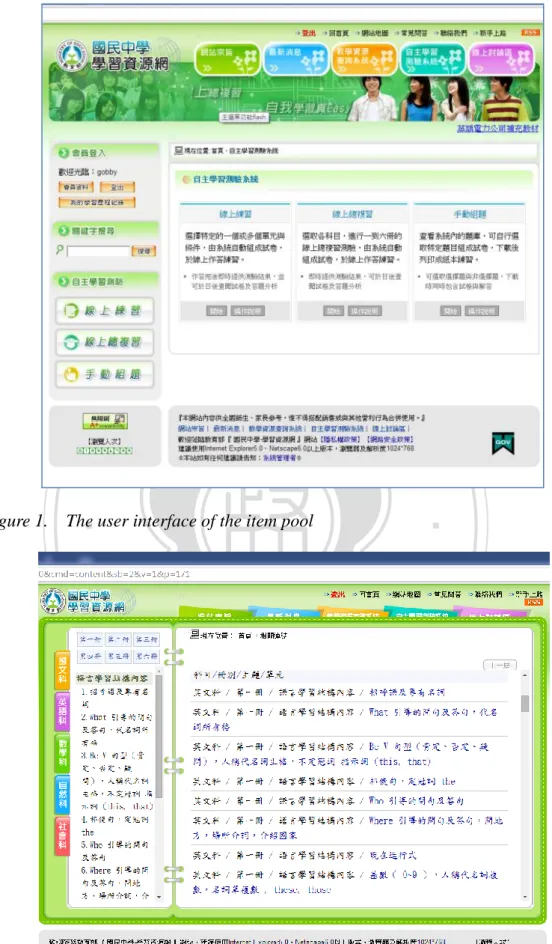
(39) CHAPTER 3 METHODOLOGY This quasi-experimental research intends to determine the effects of differentiated instruction on junior high school students’ grammar learning. The issue was addressed from three aspects: whether or not the students who received the differentiated instruction improved their test scores, whether both “differentiated instruction” and “non-differentiated instruction” were equally efficient for high, intermediate and low proficiency learners respectively, and what the learners’. 治 政 大 The Context of the Problem 立. thoughts of differentiated instruction were. 3.1. The researcher decided to implement DI in the context of grammar teaching in. ‧ 國. 學. the study. According to Chang’ s (2006) survey of English language education in. ‧. Taiwan, there is a bipolar distribution of junior high graduates’ English scores on the. sit. y. Nat. Basic Competence Test (BCT), not only reflecting the learners’ varying degrees of. io. er. proficiency among different cities but also among towns, and even classrooms. Chang. al. pointed out that the content of English learning, vocabulary and sentence structures in. n. v i n Cinhjunior high schoolUphase compared with those in particular, has increased a lot engchi elementary school phase and the slow learners' maladjustment led to the issue of. underachievement. Therefore, how to create a learning environment for learners with diverse needs becomes an important concern for junior high school teachers. Based on previous studies, DI has the potential to help teachers attend to learning needs of students at different proficiency levels. Thus in this study of DI, the researcher designed a DI specifically for grammar instruction in junior high school. 3. 2 Participants Two classes of seventh-grade junior high school students in a public school in 27.
(40) northern Taiwan, 54 students in total, were recruited as the participants in this study. The subjects have very similar background. First, they were all native speakers of Mandarin Chinese with an average age of 13. Second, they all studied English for at least four years through formal instruction in elementary school before participating in this study. Third, they were divided into different class groups according to a normal s-type distribution of their performance in an entrance IQ test. Table 3.1 shows that there is no significant difference between the two classes before the treatment, p>.05. Therefore, in terms of general intelligence, students are evenly distributed. 治 政 大into the control and administratively there is no room to assign students randomly 立 among different groups. Even with the above-mentioned homogeneity,. experimental group. This study thus adopted a quasi-experimental design (Creswell,. ‧ 國. 學. 2011). A quasi-experimental design involves nonrandom assignment of research. ‧. participants, because the researcher cannot artificially create groups for the. sit. y. Nat. experiment. On the other hand, if random assignment was used, it would have. io. er. disrupted the formal classroom arrangement. Furthermore, quasi-experimental design. al. can utilize a pretest and posttest approach. Creswell outlined the procedure indicating. n. v i n C hthe experimental and that the researcher assigns two groups: e n g c h i U control treatments. Both groups are administered a pretest, however, the experimental group receives the treatment given by the researcher. In the end, the researcher administers a posttest to assess the differences between the two groups (Creswell, 2011). According to the research design, subjects from both the control and experimental group were divided into three subgroups respectively based on their. scores of the pretest which was introduced in 3.3.1 later. Those whose average scores ranked at the top 33% of all the subjects were grouped into the "High Proficiency Learners" (hereinafter HPL), while others who ranked from 34% to 67% were the 28.
(41) "Intermediate Proficiency Learners" (hereinafter IPL) and the rest 33% were placed in the "Low Proficiency Learners" (hereinafter LPL) by the researcher. In addition, the subjects of each subgroup would be 9 if divided evenly. However, the IPL should work in pairs based on the research design of DI. Thus, 8 students were put in the subgroup of HPL and given the codes of H1, H2, H3,H4, H5, H6, H7 and H8, 10 students of IPL with the codes of I1, I2, I3, I4, I5, I6, I7, I8, I9 and I10. The LPL remained 9 because they learned the grammar in a small group rather than pairs and they were given code of L1, L2, L3, L4,L5, L6, L7, L8 and L9. Table 3.2. 政 治 大. illustrates the distribution of the subjects Table 3.1. 立. Comparison of the Average Scores of the Entrance IQ test Between Glass A and Class. Glass A (n=27). Class B (n=27). df. SD. M. SD. Total. 74.96. 20.02. 74.51. 19.34. p-Value. n. al. sit. 52. .083. .696. er. io Table 3.2. t-Value. y. M. Nat. Item. ‧. ‧ 國. 學. B (Before the Treatment). Ch. engchi. i n U. v. Distribution of the Participants in Three Proficiency Levels Group. HPL. IPL. LPL. No. of subjects. Experimental Group. 8. 10. 9. 27. Control Group. 8. 10. 9. 27. Note: HPL: High Proficiency Learners; IPL: Intermediate Proficiency Learners; LPL: Low Proficiency Learners 3.3 Instruments To perform the present study, the researcher made use of a couple of instruments 29.
(42) and materials. First, in order to achieve the purposes of the study, the researcher adopted two tests: a pretest and a posttest to collect quantitative data for exploring the effects of DI on junior high EFL students' grammar learning. Besides, iEnglish Book 1 by Hanlin (翰林) Publisher was selected as the main teaching material for the subjects during the semester. Due to the aim of exploring the effects of DI on grammar, the treatment was based on one differentiated instructional strategy called tiered tasks to design three differentiated worksheets of every grammar unit. Furthermore, the researcher also applied one DI grouping strategies flexible. 政 治 大 In addition to the quantitative data, a list of focus group interview questions was 立. grouping to provide the best learning experience for different proficiency learners.. ‧ 國. 學. designed to help the researcher probe into learners’ thoughts regarding their DI. experiences in a qualitative approach. Each of these instruments had unique study. ‧. focuses and thus needed further explanation in the following subsections.. sit. y. Nat. The Pretest and the Posttest. io. er. 3.3.1. al. v i n C h from an item poolUset up by Minister of The content of the two tests was selected engchi n. The pretest and the posttest were both grammar tests compiled by the researcher.. Education (Figure 1). All the items were chosen from the item pool based on the grammar focus covered from Starter to Unit 5 in iEnglish, the participants’ textbook. The item pool was an open resource and the questions there were designed by in-service teachers and the experts of National Academy of Education Research (Figure 1). All the questions were categorized by subjects and volumes. In English, the items were compiled according to the content of language learning structure which was also known as grammar (see Figure 2).. 30.
(43) 立. ‧. ‧ 國. 學. Figure 1.. 政 治 大. The user interface of the item pool. n. er. io. sit. y. Nat. al. Figure 2.. Ch. engchi. i n U. v. The main structure of the English item pool. The pretest (Appendix B) was made up of 30 multiple choice questions and 31.
(44) administered in both classes in order to collect the data of their initial ability on grammar before receiving formal instruction. The participants got 2 points for each correct answer. It meant that the total score ranged from 0 to 60 points. Then the two classes were randomly assigned to be the experimental group and the control group. The test result was also utilized to divide the participants of each class into three proficiency levels: HPL, IPL and LPL. As Gregory and Chapman (2007) have suggested, more levels of readiness may be identified and adjusted, but when first starting the process of DI, three levels are complicated enough to manage. The posttest (Appendix C) was administered in the 14th week of the semester.. 治 政 Unlike the pretest, the posttest comprised three sections: 10大 multiple choice questions, 立 10 fill-in blank questions and 10 sentence making questions which served to test. ‧ 國. 學. whether DI catered to students with different proficiency levels. Each correct answer. ‧. was worth 2 points in each section, and every mistake in fill-in blank or sentence. sit. y. Nat. making questions was deducted by 1 point with 2-point deduction as the maximum of. io. er. each item. The result of the posttest was used to compare the performance of two. al. groups on grammar learning after the treatment to answer the research question one.. n. v i n Cinhthe experimental U In the meanwhile, HPL, IPL and LPL e n g c h i group compared their scores with their counterparts in the control group to answer the research question two. In view that the pre- and posttests aimed at testing grammar points taught in the 6 units, each of them contained 30 questions with 5 questions for each unit respectively. To make sure of the content validity of the pre- and posttests, a two-way specification table of the grammar points was employed (See Table 3.3). Moreover, a pilot study was conducted prior the formal study to test the pretest and the posttest in the early September of 2013. The participants in the pilot study was one class that did not join the main study. There were a total of 27 participants in the pilot study. The 32.
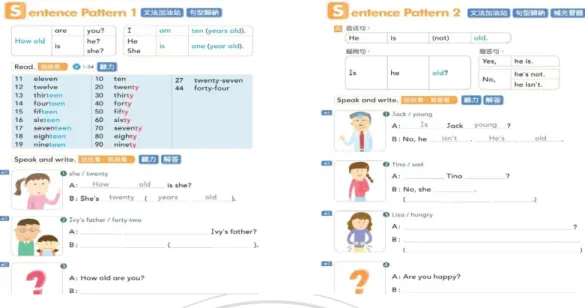
(45) pretest and the posttest were piloted by their homeroom teacher respectively. The two tests required approximately forty minutes to complete. The test results were evaluated for effectiveness and for validity by the researcher and two colleagues who were also the English teachers of the seventh graders. An item analysis was performed on the 30 items of the pretest and the posttest to establish their reliability. Reliability is the consistency with which a measurement instrument yields a certain result when the entity being measured has not changed. It is an estimate of the internal consistency of the instrument (Leedy & Ormrod, 2001).. 治 政 大 consistency of the instrument. Reliability Coefficient was used to estimate the internal 立 Because a test-retest reliability was not feasible in this study, Cronbach's Alpha. An acceptable range for the reliability coefficient is from .70 to .90. The value. ‧ 國. 學. obtained in the pilot study, based on the 30-item of the pretest and posttest , was a. ‧. Cronbach Alpha of .749 and .913 respectively. As a result, both the two tests were. n. al. er. io. sit. y. Nat. found to be reliable in the pilot study.. Ch. engchi. 33. i n U. v.
(46) Table 3.3 Two-way Specification Table of Grammar Points from Starter to Unit 5 1. 2. 3. 4. 5. 6. 7. 8. 9. 10. Posttest. 26. 27. 28. 29. 30. 1. 2. 3. 4. 5. 立. Grammar Points. 15. 16. 17. 18. 19. 20. 21. 22. 23. 24. 25. 26. 27. 28. 29. 30. 6. 7. 8. 9. 10. 11. 12. 13. 14. 15. 16. 17. 18. 19. 20. 21. 22. 23. 24. 25. 政 治 大. . . Nat. determiners (my,. sit. al. v ni . n. . io. Question form of. . er. your, his, her, its). Unit 1. 14. y. . and be V. be verb. 13. ‧. Starter. 12. 學. Personal pronouns (I, you, he, she, it). 11. ‧ 國. Unit. Pretest. Ch. Wh-question . engchi U. (who….). 34. . .
(47) Wh-question (how . . old….?) . Adjectives . Plurals (-s,-es,-ies). 立. . . . Nat. y. There is/ are…. io. n. al. . . . ‧. Unit 5. . Ch. . 學. Prepositions. ‧ 國. Unit 4. 政 治 大 . Wh-question (where…?). . sit. Unit 3. . er. Unit 2. engchi. 35. i n U. v. . .
(48) 3.3.2 The Han-Lin iEnglish Book 1 At the end of every academic year, English teachers are required to choose an appropriate textbook version suitable for the junior high school students' cognitive levels. The members of English Teaching Committee in this school voted the Han-Lin iEnglish Book 1 for seven graders at the subjects’ school in 2013 for several reasons. First, the textbook was edited based on the Nine-Year Integrated English Curriculum Guidelines of Elementary and Junior High Schools (Ministry of Education, Republic of China, 2008). Second, the publisher of the textbook could provide many useful. 治 政 大 content of the textbook could reflect the authenticity and appropriateness of the 立. supplementary teaching materials, such as posters, CDs and newspaper. Third, the. language, and the trends of the latest topics. Fourth, the four skills are integrated in a. ‧ 國. 學. balanced way and there was no cultural bias in it. Fifth, the format of the textbook. ‧. was characterized by the clarity of typesetting, good quality and clarity of illustration. sit. y. Nat. and editing. According to these practical criteria, the Han-Lin iEnglish was chosen as. io. er. the instructional material for the seven graders in 2013 academic year.. al. There are nine units in the textbook, starting from Starter to Unit 8. Each unit at. n. v i n Csentence least covers one grammar focus with The presentation of the h e n patterns. gchi U sentence pattern in each unit usually follows the following structure: tables of examples first, and then some grammar practices such as gap-fills or making sentences with picture cues (Figure 3).. 36.
(49) Figure 3.. The presentation of the sentence pattern in Han-Lin iEnglish Book 1. 治 政 3.3.3 Tiered Task--the Three Differentiated Worksheets 大 立 Heaton (1990) mentions that assessments designed by the teachers are the most ‧ 國. 學. useful because teachers understand their students’ strengths and weaknesses as well as. ‧. the skills and language areas needed to be focused on. Classroom assessment, such as writing worksheets, can help teachers assess learners’ performance, enhance teachers’. y. Nat. er. io. sit. effectiveness and benefit students (Hsieh, 2011). Additionally, Gower and Walters (1983) pointed out four main approaches for teachers to use self-designed worksheets:. al. n. v i n 1) to copy the materials which to students, 2) to make cards for C aren’t h e navailable h gc i U. communication activities, 3) to make the teacher’s own exercises and 4) to adapt published materials. In this study, the last two approaches were adopted. The researcher adapted the grammar materials in the textbook and designed three differentiated worksheets for grammar exercise based on the same grammar points of the unit. In other words, the participants who were grouped by their performance on the pretest would be assigned to different tiered tasks. Tomlinson's tiered tasks were used as the framework to construct the 37.
(50) differentiated worksheets in this study. Tomlinson (1999) described a "tiered task" as a differentiated strategy that addresses a particular standard, key concept and generalization, but allows several pathways for students to arrive at an understanding of these components based on students' interests, readiness, or learning profiles. Among the important reasons for choosing Tomlinson's work are that this work addresses the needs of all learners at different levels. In this study, the focus is not only on advanced learners, but also on average and below anticipated level learners. This work emphasizes effective instruction in heterogeneous settings. Because a. 治 政 大of this study. mixed-ability students, Tomlinson's work fits the population 立 typical EFL classroom at junior high school in Taiwan is comprised with. A whole set of tiered tasks presented three tasks for learners to produce different. ‧ 國. 學. linguistic output. In this study, Task A for LPL was multiple-choice questions with. ‧. three possible answers on the worksheet (Appendix D). Task B for IPL was gap-fill. sit. y. Nat. questions which were slightly different from Task A, in that the subjects had to write. io. er. down answers on their own, without possible choices provided to them (Appendix E).. al. Task C included 10 sentences-making exercises with picture cues. Task C provided no. n. v i n extra support except picture cues inC order HPL (Appendix F). h etonchallenge gchi U 3.3.4 Focus Group Interview. A group interview is essentially a qualitative data gathering technique (Denzin & Lincoln, 2011). Evidence from focus group interviews suggests that attitudes and perceptions associated with concepts are developed in part by interaction with other people (Krueger & Casey, 2009). Blumer (1969) commented that a group interview has the potential to bring a small individuals together as a discussion and resource group and works better than a one-on-one interview in promoting self-disclosure among participants. The intention of using focus group interview in this study was to 38.
(51) understand participants’ perceptions, feelings, attitudes and motivation towards DI. Edmunds (2000) recommends a full-sized focus group with eight to ten participants when the participants are teens. This size allows interaction while not requiring each individual participant to constantly speak which will create a more comfortable environment and will be more conducive to a successful discussion. Therefore, the researcher conducted three focus group interviews with the interviewees from LPL, IPL and HPL in the experimental group respectively in order to gather data for research question three.. 治 政 大help you prepare for an interview. Based on Hatch (2002), a protocol is only a guide to 立 These questions were used as a guide for the interview process (Appendix G).. Because a researcher never knows what data a participant will provide, the researcher. ‧ 國. 學. should allow the participants' responses to guide the interview process. Since this was. ‧. the basis of the qualitative portion of this research, these questions were a valid way. sit. y. Nat. to start a interview. The questions are listed as follows and translated into Chinese. io. er. version for the subjects. Questions 1 and 2 required the interviewees to describe the. al. process of grammar learning, state their reasons why they can/can't keep up with the. n. v i n C hthe interviewees whether process and . Question 3 asked e n g c h i U they liked the process or not. Questions 4 and 5 focused on realizing the interviewees' opinions about the learning materials. Question 6 collected the data of the participants' learning difficulties in English and question 7 asked if DI was helpful to solve the difficulties they mentioned in question 6. The last question encouraged the interviewees to share their thoughts with others. 3.4 Design and Procedures A lesson plan was proposed to describe the design for the differentiated instruction. There were three stages in the lesson plan as follows. 39.
數據

+3

相關文件
In different gender、time for study、time for cram、the parents education level and household income of junior high school students , some aspects of the academic stress were
The purpose of this study was to explore the effects of learning organization culture on teachers’ study and teaching potency in Public Elementary Schools.. The research tool of
The research objectives lie in the effects of real situated mobile learning on local culture education for students.. Methodologically speaking, 23 students at an elementary school
The purpose of the study aims at discussing the important factors of affecting junior high school students in aboriginal areas in terms of learning mathematics.. The research
This purpose of study was to realize, as well as the factors of influence of information technology integrated in teaching by junior high school special education teachers in
假說 H3-1 不同「服務年資」對「學生學習成效」有顯著差異。 支持 假說 H3-2 不同「教師職稱」對「學生學習成效」有顯著差異。 支持 假說
This study was conducted to understand the latest situation between perception of principal‘s leading role and school effectiveness in junior high schools, and
It aims to understand the authentic English learning adjustment of junior high school students in remote area and to compare the difference between the family background and
