行政院國家科學委員會專題研究計畫 期中進度報告
我國基因科技相關智財法制之決策與國際參與(2/3)
計畫類別: 整合型計畫
計畫編號: NSC93-3112-H-011-001-
執行期間: 93 年 05 月 01 日至 94 年 04 月 30 日
執行單位: 國立臺灣科技大學共同科目教學委員會通識組
計畫主持人: 林瑞珠
共同主持人: 范建得,陳李魁
報告類型: 完整報告
處理方式: 本計畫可公開查詢
中 華 民 國 94 年 3 月 2 日
行政院國家科學委員會專題研究計畫期中報告
計畫編號:NSC 93-3112-H-011-001 執行期限:93 年 6 月 1 日至 94 年 2 月 28 日
主持人:林瑞珠
計畫參與人員:范建得、陳曉慧、陳李魁、李子聿、鄭菀瓊、胡明怡 執行機構及單位名稱:國立台灣科技大學
一、中文摘要
本計畫自 2003 年 6 月起開始執行以來,依第一年之計畫目標而言,主要在:
研究能量之養成(Capacity Building) 。至於第二年之中期目標,主要在研究成果 之自我定位與國際參與(Self Evaluation & International Contribution) ;是以,初步 的研究方向在: (一)配合總計畫之執行,嘗試就台灣在東亞國家間之研究水平 與優劣之處加以評價,並以此為基礎作為與歐洲研究團隊互動之條件。 (二)針 對國際間發展中之高度爭議性問題採取專題性的深度研究,並嘗試提出台灣兼具 新興工業國家與華人地位的觀點。於茲試說明計畫目前進度如下:
(一)就我國台灣生技產業智慧財產權政策與產業發展成效而言:
若將我國近年來主要推動之科技產業按細項分為通訊與光電、機械與航太、
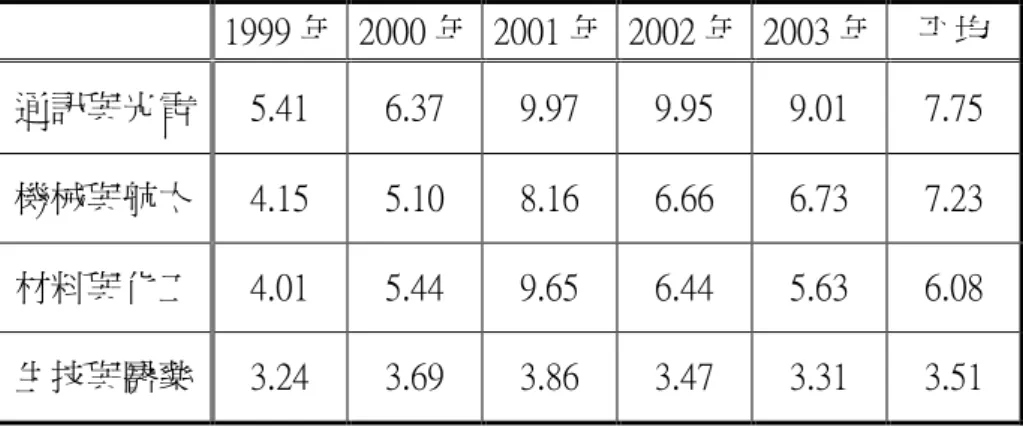
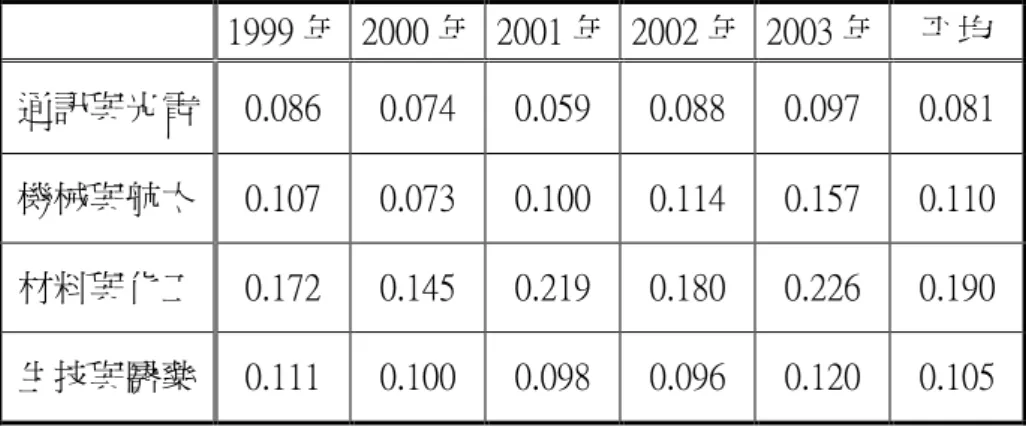
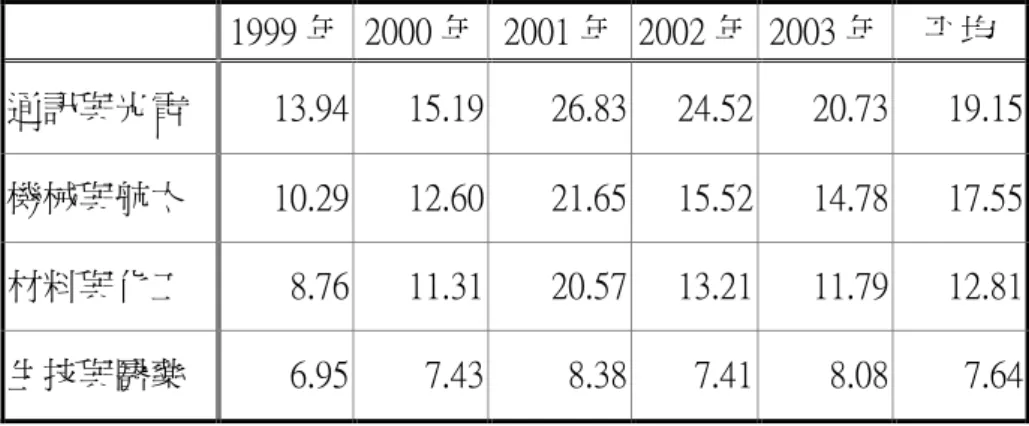
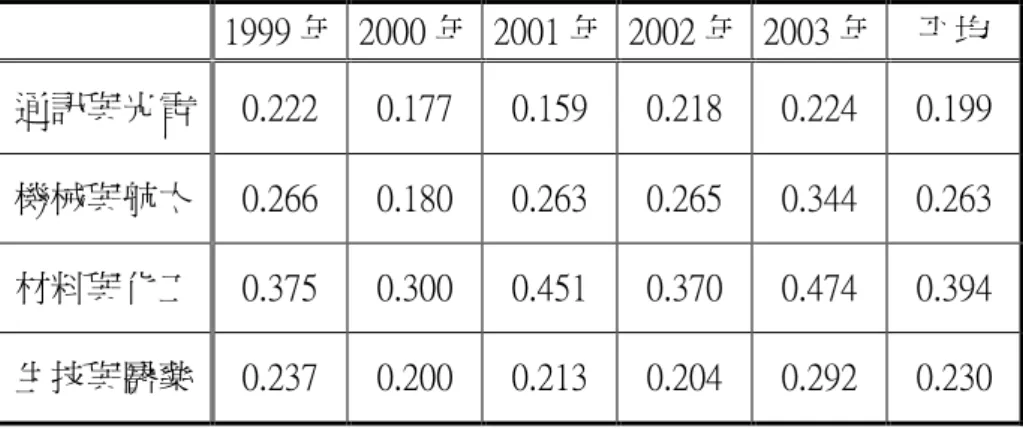
材料與化工、生技與醫藥四大類;不論研發經費投入或研發人力投入,材料與化 工、生技與醫藥等生技相關產業,相對其他產業投入較為積極,近年來皆呈現上 升之趨勢。就資源配置,以投入產出的觀點來看,通訊與光電業每花一單位研發 經費與人力所創造出的專利數最多,而生技與醫藥業最低,但五年中生技與醫藥 業卻呈現平穩成長。在技術移轉件數、投資件數及論文發表件數上,每花一單位 研發經費與人力所創造之件數仍以材料與化工業最高,生技與醫藥業排第三,通 訊與光電業最低。整體而言,台灣生技與醫藥業的專利發明呈現平穩發展的狀 態,即政府的輔導獎勵措施或有部分成效,尚未促使台灣的生技產業大步邁進。
綜上,台灣生技產業在政府努力下已完成了基本建設,除了政府政策應持續
支持外,建立有效的智慧財產管理機制,將研發成果商品化,並掌握法律資訊以
保護自身權益以獲取較高的利潤,將是生技產業未來發展的重點。 【詳參附件一】
(二)針對國際間發展中之高度爭議性問題採取專題性的深度研究部分:
1、與 WTO 有關部份
(1)早在 2001 年 WTO 在 Doha 部長會議中提出與智慧財產權有關議題之聲明 時,即強調智慧財產權與生物科技之關係。其主要重點,大致上可區分為: (A)
促進既有醫藥專利品之使用與新藥品之研發,以維護公共衛生; (B)專利權與 生物多樣性之關係。聲明中,表示 TRIPS Council 的工作必須在客觀以及綜合考 量所有發展層面的的情況下進行。
http://www.wto.org/english/thewto_e/minist_e/min01_e/mindecl_e.htm)
(2)基此,第三世界國家使用醫藥專利品之需求,得以透過「促進公共衛生」 , 取得正當化之基礎。後於 2003 年,WTO 會員國更進一步同意,如果第三世界國 家無法自行生產的醫藥專利品,可以進口以強制授權所製作者。
(
http://www.wto.org/english/news_e/pres03_e/pr350_e.htm)
(3)此項變革為非洲集團(即所有非洲 WTO 會員國)運作之成果。23 個已 開發國家聲明不使用此項進口制度;而我國、港、澳、韓國、新加坡、以色列、
墨西哥、卡達、土耳其與阿拉伯聯合大公國,則聲明僅在緊急狀況下使用。由此 可見各國對醫藥品專利產製能力與保護觀點之差異。值得討論的是,為何我國採 取與韓、新、港澳同步之策略?此項政策考量是否適用於 WTO 即將繼續進行之 其他生技議題之討論?此為繼續研究目標之一。
2、與 WIPO 有關部份
(1)早於 1998 年 WIPO 世界智慧財產權組織,即開始關注傳統知識(簡稱 TK) 、基因資源(簡稱 GR) 、文化資產與智慧財產權之關係。嗣於 2000 年大會 中,各國代表均要求成立特別委員會來處理此一議題。為此於 2001 年 4 月召開 intergovernmental committee on intellectual property and genetic resources, traditional knowledge and folklore (簡稱 IGC) 。值得注意的是,IGC 允許地區性或國家性的 非政府組織以觀察員身份與會;由於我國並非 WIPO 會員國,如何建立適當的組 織,藉此身份,進入觀察國際發展,即屬重要。
(2)於 2003 年 ICG 第五次會議中,針對 Biopiracy 的問題,美國認為揭露專 利申請案,是否基於 TK 或 GR 並無益於達成生物多樣性公約的利益分享目標,
而採取契約方式(WIPO/GRTKF/IC/5/15,para.118) 。而歐盟雖支持揭露資訊以利國 際追蹤,但是對於揭露之範圍認為應限制,且認為不應使之成為取得專利的條件 之一,而認為應採取對不實揭露者採取民事損害賠償或行政罰來處理
(para.114) 。第三世界國家如伊朗則認為對此問題之法律制度設計必須以 GR 之
來源國能夠完全控制該國的 GR 為考慮,不應以開發中國家無資力、能力管理
GR 而正當化在對國家所進行之 Biopiracy。該國認為應採取受行政管制之授權制
度 (para.119)。此項爭議涉及到 GR 使用國常為已開發國家,而來源國則為開發
中國家。我國固然以已開發國家身份加入 WTO,但是對 Biopiracy 之管制,應採 取何種態度,與我國屬於 GR 之來源國或消費國背景有密切關係,此處必須以總 計畫項下之子計畫二之產業調查結果為事實基礎,方能進一步判斷。
(3)此外,WIPO 就基因智財保護也積極與其他國際組織合作。2002 年與 UPOV 舉辦專利與植物轉殖保護制度諧和研討會,希望在 UPOV 協約允許自由轉殖與專 利保護間取得平衡。2003 年 10 月 24 日此二國際組織亦邀請世界各國報告植物生 物技術發展與保護的情況。此項會議結果,值得注意
(http://www.upov.int/en/documents/Symposium2003/WIPO_UPOV%20SYM_INF_1_Prov.pdf)。
3、地區發展
(1)歐盟對於生物科技智慧財產保護甚為積極,關於生物科技專利,在 1998 年即公布 Directive 98/44/EC on the legal protection of biotechnological inventions,排除 生物技術可專利性之限制。現階段,則針對專利授權與醫藥品專利之使用,有相 關草案處理中。
(2)針對基因資源的接觸、使用、利潤分享,有澳洲等國家完成立法,其立法 方向,值得後續研究(資料來源
http://www.wipo.int/globalissues/laws/index.html)。
(3)有關生物技術專利之保護現況,記載於 WIPO 之調查報告
http://www.wipo.int/documents/en/meetings/2001/igc/pdf/grtkfic1_6.pdf。關於此部份,
未來應與我國現狀進行比對。
4、發展中議題
(1)基因技術可專利性,初步以為在國際上已無爭議。如何使專利之基因技術 與產品透過授權、使用、接觸,以達成保護人權 Human Right、維持公共衛生、
促進技術發展等多重目標,為現階段各國努力的重點。
但由於基因科技常與傳統知識、文化資產之使用密切相關。因此,第三世界 國家,或者明確地說,有古老傳統的國家,透過建立傳統知識保護制度,得以切 入原由北方國家主控的專利遊戲市場。利潤分享、技術公開、強制授權為幾個常 被討論的政策工具。我國不是開發中國家,有相當專利技術生產能力,也有豐富 的文化資產,因此,無論是生產方或使用方的觀點對於我國都具有重要性。 【詳 附件二】
關鍵詞:生物科技、產業政策、智財政策、國際參與
Abstract
This project had been executed since June, 2003. The established goal for the first year was mainly to build up the research capacity. The aim of medium term for the second year was self-evaluation for the research results and international
participation. Thus, the direction for the preliminary research was: (1) In accordance with the execution of the main project (ELSI), this project tries to evaluate the research standard, advantage and disadvantage between Taiwan and other Eastern Asian countries. Furthermore, our team plans to communicate with other European research teams under the foundation of this evaluation. (2) For those highly disputing and developing issues internationally, we will take a profound research method for those specified issues. In the meantime, we try to propose Taiwan’ s viewpoints for those issues at the standing of a developing and Chinese society country. The current progression for this project was reported as the followings:
I. The aspects of intellectual property law policies for developing biotech industry and outcomes of the development this industry in Taiwan:
The major high-tech industries promoted by Taiwan government during recent years could be classified individually as communication & photo-electricity, mechanical & aviation, materials & chemical engineering and biotech & medicine.
The budget, expenses and manpower devoted to materials & chemical engineering and biotech & medicine related industries are much more aggressive and steadily increasing recently compared with the other industries. For resources disposition, from the viewpoint of investment with production, communication &
photo-electricity related industries created the maximum items of patents per unit of research expenses and manpower spent. The patents created from biotech & medicine related industries were the lowest, but the development of biotech & medicine related industries grew up gradually and steadily during recent 5 years. Materials & chemical engineering related industries created the maximum items of technique transfer, investment and papers publication per unit of research expenses and manpower spent.
The items created from biotech & medicine related industries were the third and from
communication & photo-electricity related industries were the last. In general,
contribute to the policies of assistance and promotion from Taiwan government, the
patent innovation in Taiwan biotech & medicine related industries developed
gradually and steadily recently. There are maybe some partial effects from those
policies and actions, but the progressions of biotech & medicine related industries in
Taiwan are still slow and not so significant.
In brief, biotech industry in Taiwan has finished the fundamental construction.
Except the consistent and continuing support from government policies, how to build up an efficient mechanism for intellectual property management, how to commercialize the R & D (research & development) products and how to control the legal information and strategy in order to protect self right & interest and get higher profit will be the key points for Taiwan to develop biotech industries in the near future.
II. Taking the profound research method for those specified, highly disputing and developing issues internationally:
1. The Parts related to issues of WTO:
(1) In 2001, Doha proposed an announcement related to intellectual property issues at WTO ministry conference and he especially emphasized the relationship between intellectual and biotech industry. The major points in his announcement could be classified as : (a)Promote the usage of existed biomedical patents and R & D for new drugs, for the maintenance and advancement of public health and hygine. (b) The relationship between patentability with biological diversity or patent right with biological diversity. In that announcement, it is clearly expressed that the work of TRIP Council should be developed and conducted objectively and under the situiation of considering every aspect for the development.
(
http://www.wto.org/english/thewto_e/minist_e/min01_e/mindecl_e.htm)(2) Accordingly, throught the mechanism of“ promoting public health & hygine„
as the foundation to get the legitimacy for the third world countries to use the generic drugs instead of patented drugs. In 2003, furthermore, the member countires of WTO agreed the third world countries could enforce patented drugs manufactuers to
authorize the import of those patented drugs, if those third world countries could not produce these patented drugs by themselves.
(3) This mechanism and reform was the effort promoted by all African WTO
member countries. 23 developed countries had announced not to use this enforced
drug-importing system. Taiwan, Hong Kong, Macao, Korea, Singapore, Israel,
Mexico, State of Qatar, Turkey and United Arab Emirates had also announced to use
this system only under emergency condition. Thus this shows the differences of
production capacity of patented medicines and protection viewpoints among different
countries. We still have to discuss and evaluate why Taiwan should adopt the same
How about the policies for future and on going Biotech issues to be discussed in WTO?
Should Taiwan still continue the same policy with Korea, Singapore, Hong Kong and Macao? We are going to continue our study and evaluation.
2. The parts related to WIPO:
(1) In 1998, world intellectual property organization (WIPO) had begun to pay close attention to the relationships among traditional knowledge (TK), genetic resources (GR), cultural asset (CA) and intellectual property (IP). During the general assembly in 2000, every delegate from different countries all requested to establish a special committee to take care of this issue. Thus, intergovernmental committee on intellectual property and genetic resources, traditional knowledge and folklore (IGC) was held in April, 2001. Special attention should be taken that IGC permit regional or country-like non-government organizations to take part in the conference or assembly meeting as the identity of observing members. Taiwan was not the member country of WIPO. How to establish a proper non-government organization to get into and
involved to WIPO for watching and evaluating the international development of IGC as an observing member was very important for Taiwan at present.
(2) In 2003, during the ICG 5
thmeeting, for the Biopiracy issues, American proposed to adopt contract method (WIPO/GRTKF/IC/5/15, para.118) to enforce the information disclosure in patent application cases. American thought that there should be no conflict or argument between the enforcement of information disclosure and the benefit and interest sharing goals of Convention of Biological Diversity (CBD) based on TK or GR regulations. European Union supported the enforcement of information disclosure in patent application cases for the benefit of international follow-up and examination, but the scope of information disclosure should be limited. European Union also thought the enforcement of information disclosure should not be acknowledged as the one of the criteria to get the patent. For those unfaithful information disclosure cases Damage compensation in civil laws or punishment in administration laws should be taken and adopted. (para.114)
The third world countries like Iran thought that to design the legal system for this
issue should consider whether the GR origin countries may completely control GR
belonged to those countries as the first priority. The Biopiracy activities for those GR
origin countries should not be legitimated, just because those developing countries
have no capital and capacity to manage their GR. Iran proposed to adopt the licensing
or authorizing system through administrative channels (para.119). This disputing issue
was derived because most GR applying countries are developed countries and on the
contrary, most GR origin countries are developing countries. Taiwan had taken part in
WTO as the developed country identity. What kind of attitude or policy should Taiwan government take for the regulation of GR Biopiracy issues will closely be related to or depended on Taiwan should belong to GR origin country or GR expense country. For the further judgment and decision making, the results of Biotech industry investigation in the two sub-projects of main project (ELSI) should be evaluated and examined as the fact and the foundation.
(3) Besides, for the intellectual property protection issues, WIPO is going to seek for the cooperation with other international organizations. In 2002, WIPO cooperated with UPOV to hold a conference related to the harmonization between patents and transgenic plants protection systems. They hoped that the agreement and compromise between WIPO and UPOV could get the balance between permitting transgenic plants freely and patents protection. On 24
th, Oct, 2003, these two international organizations also invited many countries all over the world to report the current status of
biotechnology development and protection for plants. Taiwan should pay special attention to the reports and results of this conference.
3. Regional development:
(1) The attitude of European Union for the Biotech intellectual property protection is very aggressive. In 1988, European Union had made an announcement related to Biotech patents –“ Di r e c t i ve 98/ 44/ EC on t he l e ga l pr ot e c t i on of
bi ot e c hnol ogi ca l i nve nt i ons ” . That announcement had excluded the limitations for the patentability of biotechnology. At present status, the drafts related to biotech patent licensing system and the usages of medical patents are still under constructed in EU.)
(2) For the issues of contacting, using and benefit sharing of Genetic Resources (GR), some countries, like Brazil had completed the legislations. Taiwan should evaluate and follow up the directions and goals for those legislations persistently.
(3) The protection status for Biotechnology patents was documented in WIPO investigation reports. About this part, we should make the compare with the current status in Taiwan.
4. The issues under developing:
In the beginning, many countries thought there should be no argument or dispute
about the issues for the patentability of genetic technology. But how to achieve the
multiple goals of protecting human right, maintaining public health & hygiene and
promoting biotech development through the mechanism of licensing, using and
contacting the patented genetic technologies and products was the key point for every
According to the close relationship among the usages of genetic technology, traditional knowledge (TK) and cultural assets, the third world countries or those old traditional countries should build up a perfect mechanism to protect their heritage TK not to be monopolized or dominated by other northern countries in the market of patent games. The mechanisms or policies of benefit sharing, technology disclosure publicly and enforced licensing systems were discussed or issue often recently.
Taiwan is identified not a developing country in WTO, but not a real developed country for biotech industry in fact. Taiwan has the producing capacity for those patented biotechnologies and also has fruitful cultural assets and heritages. Thus the viewpoints and issues for the TK and GR from both the expense countries (using side) and origin countries (donating side) will be very important for Taiwan to develop Biotech industry.
Keywords: Biotechnology; Industrialization Policies; Intellectual Property Policies;
International Participation.
二、緣由與目的
面對基因科技的快速發展,所有科技先進國家均在快速調整其智慧財產政策 或制度,以爭取國際競爭優勢,例如,長久以來側重傳統產業發展模式的德國,
便在近年來快速調整其國家研發資源之配置體系,希望讓其研發成果之累積與擴 散能更滿足科技變遷之多樣需求;另一方面,生物倫理的高度爭議性,則迫使具 備高度法治傳統的德國政府不得不嘗試在法規限制之下,設計容納產業發展所須 之胚胎幹細胞研究空間。同樣的,重商的英美法系國家,更是早在研發與生物醫 藥社群中之規範措施有所著墨,除英國快速的制定出所謂的 7 天原則用以區隔胚 胎與生命外,美國 NIH 開啟生命科技專利歸屬之爭,更是一貫的顯示出當前資 本主義市場原則所主導出的主流智慧財產觀點。德、英、美三國對於科技發展、
產業願景及國家競爭力之關切,正顯示出當前基因科技相關智慧財產權制度發展 背後的不同政治經濟思考,而這些先進國家試圖透過法律體制來落實其基本政策 理念之模式則一。
相對於單純的內國思維,這些工業先進國家也積極的在國際社會推動與基因
科技智慧財產相關之制度或規範,除了已在 WIPO 架構下推動之「智慧財產、基
因資源及傳統習知技藝」之關聯性研究外,EU 本身自 1988 年左右開始推動的綱
要研究(Framework Research)更是有系統的將生物科技發展所牽涉之相關議題(包
括智慧財產)納入研究。此外,極端重視智慧財產保護的美國,卻是一方面在生
物安全議定書的發展過程中,抗拒民族遺產理念之發展,另一方面則在聯合國推
動對於關鍵性胚胎幹細胞研究之規範。納入了這些國際發展背景,我們驚见到了
基因科技智慧財產議題的複雜,更對於國人迄今十分狹隘的思維角度感到憂慮。
綜上,本計畫希望能自國際政治經濟之角度來探討基因研發成果私有化之問 題,並側重自既有智慧財產制度應如何調適以因應新興科技之發展的著墨;其 次,更嘗試將這些上位研究成果直接轉換為探討我國所應關切之智慧財產制度實 務課題以及我國參與國際組織活動之依據
。三、結果與討論
(一)就我國台灣生技產業智慧財產權政策與產業發展成效而言:
根據統計資料顯示,在一連串的政府獎勵措施帶動下,近年來台灣生技產業 有逐漸擴張發展的趨勢,而從投入產出分析的結果顯示:
(1)不論研發經費投入或研發人力投入,材料與化工業及生技與醫藥業最積極。
(2)近五年來,通訊與光電業的專利數最多,生技與醫藥業的專利數最少,但 生技與醫藥業的成長最平穩。
(3)就技術移轉與投資件數來說,仍以材料與化工業件數最多,生技與醫藥業 件數最少。
(4)材料與化工業的國內外論文發表篇數最多,生技與醫藥業最少。但就成長 率而言,以生技與醫藥業的成長率最高。
(5)通訊與光電業每花一單位研發經費與人力所創造之專利數最多,而生技與 醫藥業最低。但就成長趨勢而言,近五年生技與醫藥業平穩成長。
(6)在技術移轉件數、投資件數及論文發表篇數上,每花一單位研發經費與人 力所創造之件數,以材料與化工業最高,而生技與醫藥業排名第三,通訊 與光電業最低。
因此,整體而言,生技與醫藥業的專利件數、技術移轉件數、投資件數及論 文發表篇數呈現平穩發展的狀態,亦即政府的輔導獎勵措施有部分的成效,但尚 未使台灣的生技產業大步向前邁進。是故,台灣政府應思考台灣生技產業之全球 定位,更切合的找出適合台灣生技產業發展之重點方向。
(二)針對國際間發展中之高度爭議性問題採取專題性的深度研究,並嘗試提出 台灣兼具新興工業國家與華人地位的觀點部分:
TRIPS協定與WIPO所管轄之智慧財產權條約,併列國際智慧財產權二大主要
論壇;由於我國並非WIPO之會員,故TRIPS係我國參與國際智慧財產權制度形成
的唯一正式管道。本計畫希望透過觀察我國在TRIPS的表現探討,我國國際智慧
展方向。探討方向,將先說明我國參與TRIPS之現狀;其次,說明我國參與WTO 農業談判之模式,作為對照,凸顯TRIPS談判過程與政策上的問題;最後,提出 認為適當的TRIPS參與目標、議題與方式,並做成結論。 【參附件三】
四、計畫成果自評
本年度之首要工作在於研究成果之自我定位與國際參與,就具體之研究進程 包括: (一)配合總計畫之執行,嘗試就台灣在東亞國家間之研究水平與優劣之 處加以評價,並以此為基礎作為與歐洲研究團隊互動之條件。 (二)針對國際間 發展中之高度爭議性問題採取專題性的深度研究,並嘗試提出台灣兼具新興工業 國家與華人地位的觀點。
(一)台灣生技產業智慧財產權政策與產業發展成效而言:
本研究以為,在全球化時代,將原料、研發、製造與銷售作跨國專業化分工,
已是企業的普遍性作法。台灣的製藥工業基礎薄弱,生技產業相關的法規制度不 夠完善,使得發展生技醫藥產業遇到阻礙,因此台灣必須儘速完成法規的建制,
尋找適合台灣發展的目標產品,藉由本身或尋求國際合作的方式投入開發,才能 發展出具台灣特色及優勢之生技產業。
(二)在以 TRIPS 參與現況看我國生物科技產業之智慧財產政策部分:
臺灣目前採取較為侷限性的、靜態的、被動的與雙向的國際智慧財產權參與 態度。與國家積極發展生技產業,尋求國際合作之智財政策目標,並非相符。
本研究建議未來宜改採開放的、以亞洲為基礎、世界為目標積極的參與態 度。在此政策目標下,協助我國貿易友好之國家,以及在醫藥議題上與亞洲國家 合作,在農業生技上與小農市場國家合作,在生物多樣性議題上,維持永續發展。
在參與方式上,建議應建立智庫,並積極參與國際會議,累積對相關議題的 國內產業知識與國際發展趨勢之認識。在談判決策上,若無法提升智慧財產權主 管機關之層級,則宜儘量選派人員常駐觀察會議發展,且應派遣不同專業者與 會,以提升會議現場的應變能力。
(三)配合總計畫之執行,與其他地區或國家進行相關議題之研討會。目前已進 行者:
1.2004.08,芬蘭瑞典經濟學院,發展中的生物科技相關智慧財產制度--歐亞觀 點研討會中發表兩篇論文:Property Right Issues in Bio Bank Development;
Commercialization of Government-sponsored R & D – A Taiwan Perspective。
2.2004.09,北京中國社會科學院,知識產權與公共健康和社會發展學術研討會
中發表三篇論文:展望後坎昆時代之 TRIPS 發展及其對知識產權擴張趨勢之
影響;基因科技所涉安全性議題之發展及因應;專利法應表彰之公共利益與 局限。
3.2005.02,日本北海道法學院,生物倫理與生技醫療學術研討會中發表三篇論 文:基因治療的倫理、法律與社會意涵—台灣觀點【詳附件四】 、當前台灣 對基因醫藥受試者權益之保護【詳附件五】與由 TRIPS 參與現況看我國生物 科技產業之智慧財產政策【詳附件三】。
綜上,本計畫執行迄今,目前計畫參與人員已將現有成果形成研討會論 文(有八篇)或學術論文(一篇已發表、一篇審稿中、兩篇專書出版審查中)
之發表,故本計畫之執行當有助相關法制之建制。此外,囿於我國之特殊國 際地位,如何建構一套符合產業利益與國家立場之智財政策並經由適當之管 道尋求國際參與之機會,亦是吾等應加以思考之方向,基此,本計畫之執行 除有助於生技產業之發展外,亦可為將來國際參與奠基。
五、參考文獻
(一) 英文部分
◎ Alice Hsieh, A Nation's Genes for a Cure to Cancer: Evolving Ethical, Social and Legal Issues Regarding Population Genetic Databases, 37 Columbia Journal of Law and Social Problems 359 (2004).
◎ Amit Gupta, Patent Rights on Pharmaceutical Products and Affordable Drugs:
Can TRIPS Provide a Solution?, 2 Buffalo Intellectual Property Law Journal 127 (2004).
◎ Anupam Chander & Madhavi Sunder, The Romance of the Public Domain, 92 California Law Review 1331 (2004).
◎ Atif I. Azher, Antitrust Regulators and the Biopharmaceutical Industry:
Compulsory Licensing Schemes Ignoring Gene Therapy Patients' Need, 25 University of Pennsylvania Journal of International Economic Law 383 (2004).
◎
Bruce N. Kuhlik, The Assault on Pharmaceutical Intellectual Property, 71 University of Chicago Law Review 93 (2004).◎ Burrill, G. Steven Burrill, State of the Biotechnology Industry Circa 2004, BIO 2004 (June 8, 2004).
◎
Chander, Anupam & Sunder, Madhavi, The Romance of the Public Domain, 92 Calif.L. Rev. 1331 (2004).
◎ Charles R. McManis, Symposium: Traditional Kknowledge, Intellectual Property, and Indigenous Culture: Article: Intellectual Property, Genetic Resources and Traditional Knowledge Protection: Thinking Globally, Acting Locally, 11 Cardozo
◎
Colleen Chien, Cheap Drugs at What Price to Innovation: Does the Compulsory Licensing of Pharmaceuticals Hurt Innovation?, 18 Berkeley Technology Law Journal 853 (2003).◎ Commission of the European Communities/Brussels, Report from the Commission to the European Parliament and Council- An assessment of the implications for basic genetic engineering research of failure to publish, or late publication of, papers on subjects which could be patentable as required under Article16(b) of Directive 98/44/EC on the legal protection of biotechnological inventions, COM(2002) 2 final, 14.01.2002
◎ Commission of the European Communities/Brussels, Report from the Commission to the European Parliament and Council, Development and implications of patent law in the field of biotechnology and genetic engineering, COM(2002) 545 final, 07.10.2002
◎ Czmus, Akim, Biotechnology Protection in Japan, Europe and the U.S, 8 Temp. Int'l &
Comp. L.J. 435 (1994).
◎ Donna M. Gitter, The Conflict in the European Ccommunity Between Competition Law and Intellectual Property Rights: A Call for Legislative Clarification of The Essential Facilities Doctrine, 40 American Business Law Journal 217 (2003).
◎ Erik B. Bluemel, Substance Without Process: Analyzing TRIPS Participatory Guarantees in Light of Protected Indigenous Rights, 86 Journal of the Patent and Trademark Office Society 671 (2004).
◎ EU seeks to break the current deadlock on WTO access to medicines: a multilateral solution is needed, 9 January 2003,
http://europa.eu.int/comm/trade/csc/pr090103_en.htm
◎
Fellmeth, Aaron Xavier, Secrecy, Monopoly, and Access to Pharmaceuticals in International Trade Law: Protection of Marketing Approval Data Under the TRIPs Agreement, 45 Harv. Int'l L.J. 443 (2004).◎
Firestone, Laurel A., You Say Yes, I Say No; Defining Community Prior Informed Consent under the Convention on Biological Diversity, 16 Geo. Int'l Envtl. L. Rev. 171 (2003).◎ Gewerbliches Eigentum: Klage gegen acht Mitgliedstaaten wegen Nichtumsetzung der Richtlinie uber den rechtlichen Schutz biotechnologischer Erfindungen, IP/03/991, 10.
Juli 2003,
http://europa.eu.int/rapid/pressReleasesAction.do?reference=IP/03/991&format=HTM L&aged=0&language=DE&guiLanguage=en
◎ Gewerbliches Eigentum: Kommission fordert neun Mitgliedstaaten auf, die Richtlinie
uber den rechtlichen Schutz biotechnologischer Erfindungen umzusetzen, IP/02/1928 ,
19. Dezember 2002,
http://europa.eu.int/rapid/pressReleasesAction.do?reference=IP/02/1928&format=HTM L&aged=0&language=DE&guiLanguage=en
◎ Ghosh, Shubha, Globalization, Patents, and Traditional Knowledge, 17 Colum. J.
Asian L. 73 (2003).
◎
Godshall, Lauren E., Making Space for Indigenous Intellectual Property Rights Under Current International Environmental Law, 15 Geo. Int'l Envtl. L. Rev. 497 (2003).◎
Gupta, Amit, Patent Rights on Pharmaceutical Products and Affordable Drugs: Can TRIPs Provide a Solution?, 2 Buff. Intell. Prop. L.J. 127 (2004).◎ Heather Hamme Ramirez, Defending the Privatization of Research Tools: An Examination of The "Tragedy of The Anticommons" in Biotechnology Research and Development, 53 Emory Law Journal 359 (2004).
◎ Helfer, Laurence R., Regime Shifting: The TRIPs Agreement and New Dynamics of International Intellectual Property Lawmaking, 29 Yale J. Int'l L. 1 (2004).
◎ Homere, Jean Raymond, Intellectual Property Rights Can Help Stimulate the Economic Development of Least Developed Countries, 27 Colum. J.L. & Arts 277 (2004).
◎
Jean Raymond Homere, Intellectual Property Rights Can Help Stimulate the Economic Development of Least Developed Countries, 27 Columbia Journal of Law & the Arts 277 (2004).◎
Kuhlik, Bruce N., The Assault on Pharmaceutical Intellectual Property, 71 U. Chi. L.Rev. 93 (2004).
◎ Kunin, Stephen G. & Therkorn, Linda S., Workshop on Future Public Policy and Ethical Issues Facing the Biotechnology Industry: Patent Issues Likely to Directly Affect The Development Of The Agricultural and Microbial Biotech Industry Over The Next Five Years, 86 J. Pat. & Trademark Off. Soc'y 501 (2004)
◎ Laurel A. Firestone, You Say Yes, I Say No; Defining Community Prior Informed Consent under the Convention on Biological Diversity, 16 Georgetown
International Environmental Law Review 171 (2003).
◎ Lauren. Godshall, Making Space for Indigenous Intellectual Property Rights Under Current International Environmental Law, 15 Georgetown International Environmental Law Review 497 (2003).
◎
Laurie L. Hill, The Race to Patent the Genome: Free Riders, Hold Ups, and the Future of Medical Breakthroughs, 11 Texas Intellectual Property Law Journal 221 (2003).◎
Longacre, Elizabeth, Advancing Science While Protecting Developing Countries from Exploitation of Their Resources and Knowledge, 13 Fordham Intell. Prop. Media &Ent. L.J. 963 (2003).
Genetics and Benefit-Sharing, 11 Health Law Journal 89 (2003).
◎
McManis, Charles R. Symposium: Traditional Knowledge, Intellectual Property, and IndigenousCulture:Article:Intellectual Property, Genetic Resources and Traditional Knowledge Protection: Thinking Globally, Acting Locally, 11 Cardozo J. Int'l & Comp.L. 547 (2003).
◎ Michael R. Taylor, Jerry Cayford, American patent policy, biotechnology, and African agriculture: the case for policy change, 17 Harv. J.L. & Tech. 321, Spring (2004)
◎
Michelle Cai, Madey v. Duke University: Shattering the Myth of Universities' Experimental Use Defense, 19 Berkeley Technology Law Journal 175 (2004).◎ Ministry of International Trade and Industry, Fiscal 2000 Priority Trade and Industry Policies, August 1, 1999,
http://www.meti.go.jp/english/information/data/cIP9982e.html
◎
Paul J. Heald,Symposium: Traditional Kknowledge, Intellectual Property, and Indigenous Culture: Article:The Rhetoric of Biopiracy, 11 Cardozo Journal of International and Comparative Law 519 (2003).◎ Ramirez, Heather Hamme, Comment: Defending the Privation of Research Tools: AN Examination of the "Tragedy of the Anticommons" in Biotechnology Research and Development, 53 Emory L.J. 359 (2004).
◎ Rechtsschutz biotechnologischer Erfindungen: Kommission erortert Fortschritte mit den Mitgliedstaaten und richtet Expertengruppe ein, IP/03/127, 28. Januar 2003,
http://europa.eu.int/rapid/pressReleasesAction.do?reference=IP/03/127&format=HTM L&aged=0&language=DE&guiLanguage=en◎ Reichman, J. H. & Uhlir, Paul F., The Public Domain: A Contractually Reconstructed Research Commons for Seientific Data in a Highly Protectionist Intellectual Property Environment, 66 Law & Contemp. Prob. 315 (2003).
◎
Sheremeta, Lorraine & Knoppers, Bartha Maria, Beyond the Rhetoric: Population Genetics and Benefit-Sharing, 11 Health L.J. 89 (2003).◎ Silke von Lewinski, Symposium: Traditional Knowledge, Intellectual Property, and Indigenous Culture: Article: The Protection of Folklore, 11 Cardozo Journal of International and Comparative Law 747 (2003).
◎
Sonia M. Suter, Disentangling Privacy from Property: Toward a Deeper Understanding of Genetic Privacy, 72 George Washington Law Review 737 (2004).◎
Taylor, Michael R. & Cayford, Jerry, American Patent Policy, Biotechnology, and African Agriculture: The Case for Policy Change, 17 Harv. J. Law & Tec 321 (2004).◎ WTO-Document IP/C/W/339, 04.03.2002,
http://www.patent.gov.uk/about/ippd/issues/tripspaper.pdf
(二)中文部分
◎ 王素珍,人體組織之保障與管制-財產權與人格權結合的另類思考,輔仁大 學法律學研究所碩士論文,民國九十一年。
◎ 王凱玲,生物技術發明之專利保護,台灣大學法律研究所碩士論文,中華民 國 88 年 6 月。
◎ 安惠盈、施煥旭、劉萬鈞,研發機構如何利用產業聯盟推廣技術─以工研院 電通所 IP-VPN 產業聯盟為例,全國科技法律研討會論文集,國立交通大學科 技法律研究所出版,民國 90 年 11 月,頁 527-536。
◎ 朱柏松,德國商品製造人責任論﹣﹣侵權行為責任法的分析 (上),法學叢 刊,第 36 卷第 1 期,民國 80 年 1 月,頁 42-67。
◎ 朱柏松,德國商品製造人責任論﹣﹣侵權行為責任法的分析 (中),法學叢 刊,第 36 卷第 2 期,民國 80 年 4 月,頁 25-41。
◎ 朱柏松,德國商品製造人責任論﹣侵權行為責任法的分析(下),法學叢刊,
第 36 卷第 3 期,民國 80 年 7 月,頁 67-97。
◎ 李幸懋,生物技術相關專利實務(1)DNA 片段(ESTs)專利實務與範例分析,智 慧財產權,14 期,民國 89 年 2 月,頁 25-33。
◎ 李幸懋,生物技術相關專利實務(1)DNA 片段(ESTs)專利實務與範例分析,智 慧財產權,14 期,民國 89 年 2 月,頁 25-33。
◎
李素華,第三世界必要藥品近用爭議與 TRIPS 協定專利強制授權決議之最新進展,科技法律透析,第 16 卷第 1 期,民國 93 年 1 月,頁 39-45。
◎
李素華,落實 WTO 醫藥專利強制授權決議--加拿大研礙專利法修正,科技法 律透析,第 16 卷第 2 期,民國 93 年 2 月,頁 8-12。
◎ 李森煙,從 WTO「TRIPS 協定與公眾健康宣言」談藥物專利與強制授權,智 慧財產權管理,第 32 卷, 民國 91 年 3 月,頁 12-16。
◎ 林志六,將醫療行為排除消費者保護法的解決之道,台灣醫學,41 卷 6 期,
民國 87 年 6 月,頁 39-40。
◎ 林彩瑜,WTO TRIPS 協定下醫藥專利與公共健康之問題及其解決方向,政大 法學評論,第 78 卷,民國 93 年 4 月,頁 267-342。
◎ 邱創汎,生物晶片技術分析與策略規劃,工業技術研究院,化學工業研究所,
中華民國 88 年 3 月。
◎ 施煥旭、許仁杰,以工研院電通所為標的之研究機構推廣模式研究,全國科 技法律研討會論文集,國立交通大學科技法律研究所出版,民國 90 年 11 月。
◎ 范建得、胡均立、邱永和,自經濟分析觀點論生物科技之財產法制,基因科 技之法律管制體系與社會衝擊研究研討會,台北:國立台灣大學法律學系,
民國 89 年。
◎ 倪貴榮,WTO 智慧財產權保護與公共健康議題之發展趨勢,經社法制論叢,
第 31 卷,民國 92 年 1 月, 頁 129-158。
究,貿易調查專刊,第 9 卷, 民國 92 年 6 月,頁 275-334。
◎ 許瑞青,生物技術專利侵害分析,東吳大學法律研究所碩士論文,中華民國 86 年 7 月。
◎ 許瑞青,生物技術專利侵害分析,東吳大學法律研究所碩士論文,中華民國 86 年 7 月。
◎ 陳文吟,從美國 NIH 申請人體基因組序列專利探討我國專利制度對生物科 技發展的因應之道,國立中正大學法學集刊,1 期,民國 87 年 7 月,頁 111-140。
◎ 陳文吟,探討因應醫藥品專利之合理措施,國立中正大學法學集刊,第 8 卷,
民國 91 年 07 月,頁 67-112。
◎ 陳文吟,探討修改「進步性」專利要件以因應生物科技發展的必要性--以美 國法為主,華岡法粹,27 期,民國 88 年 12 月,頁 271-299。
◎ 陳忠五,醫療事故與消費者保護法服務責任之適用要件(下) ,台灣本土法學,
18 期,民國 90 年 1 月,頁 39-56。
◎ 陳忠五,醫療事故與消費者保護法服務責任之適用要件(上) ,台灣本土法學,
17 期,民國 89 年 12 月,頁 75-111。
◎ 陳明群,基因治療之發明專利保護,國立政治大學法律學研究所碩士論文,
民國九十一年。
◎ 陳益亭,醫療行為適用消費者保護法無責任規定之商榷,台灣醫學,41 卷 6 期,民國 87 年 6 月,頁 45-46。
◎ 黃仁德、姜樹翰,我國生物科技產業的展望與區位選擇,經濟情勢暨評論季 刊,第 7 卷第 1 期,民國 90 年 6 月,
http://www.moea.gov.tw/~ecobook/season/9006/7-1-4.htm
◎ 黃立,消費者保護法對醫療行為之適用,律師雜誌,217 期,民國 87 年 10 月,頁 70-84。
◎ 經濟部工業局,2003 生技產業白皮書,民國 92 年 10 月。
◎ 董青純,探討台灣生物技術政策:以國家創新系統觀點看生物技術政策,清 華大學科技管理研究所碩士論文,民國 92 年。
◎ 廖文孜,生物遺傳資源之智慧財產權保護,國立台灣大學法律學研究所碩士 論文,民國八十九年。
◎ 趙晉枚、蔡坤財、周慧芳、謝銘洋、張凱娜合著,智慧財產權入門,月旦出 版社出版,中華民國 87 年 11 月出版。
◎ 趙晉枚、蔡坤財、周慧芳、謝銘洋、張凱娜合著,智慧財產權入門,月旦出 版社出版,中華民國 87 年 11 月出版。
◎ 劉江彬、孫遠釗、耿筠, 「美國法院對生物科技發展之專利醫療用產品之非顯 著性的見解」 ,智慧財產權,23 期,民國 89 年 11 月,頁 12-26。
◎ 劉承慶 ,生物科技智慧財產權歸屬之研究-以人體組織所衍生之權利為中 心,國立成功大學法律學研究所碩士論文,民國九十二年。
◎ 劉銀良、李樺佩,由美國及國際法之觀點談生物技術發明的可專利性及其道
德限制,東吳法律學報,12 卷 2 期,民國 89 年 12 月,頁 327-344。
◎ 蔡明誠,專利法解讀,國立台灣大學法學叢書,中華民國 86 年出版。
◎ 鄧曉芳,從 SARS 疫情的危機處理談醫藥品專利與強制授權,科技法律透析,
第 15 卷第 12 期,民國 92 年 12 月,頁 26-30。
◎ 謝銘洋,智慧財產權基本問題研究,國立台灣大學法學叢書,中華民國 89 年 出版。
◎ 鍾順昌、廖啟成、陳玉芬, 「美國專利早期公開制度對生物科技專利的影響」,
智慧財產權,24 期,民國 89 年 12 月,頁 1-8。
【附件一】
台灣生技產業智慧財產權政策與產業發展成效
邱永和
陳玉涓
壹、前言
2000 年人類基因組序的基本完成,讓原本已是熱門新興產業的生物技術再 度掀起波瀾,成為全世界熱門討論的焦點話題。根據經濟部工業局的資料,2003 年全球生物技術產業的產值為 740 億美元,預計 2008 年產值將增加至 1,250 億美 元,2013 年將達到 2,100 億美元,亦即未來十年生物科技產業產值將成 3 倍成長,
無疑的,生物科技產業將是 21 世紀的新興重點產業之一。生物技術產業的屬性 特殊,其範圍廣泛並與其他產業連動性高,屬於知識密集型產業,因此在產業發 展初期除需大量資金及人才外,尤需政府的積極輔導及協助,而在推動生物技術 產業發展的過程中,政府扮演最重要且無法替代的角色在於:塑造良好的創新及 研發環境,給予研發與專利保護,是促進產業發展的重點工作。
生物技術為運用生命科學方法為基礎,進行研發或製造產品或提升產品品 質,以改善人類生活素質之科學技術。關於生物科技的定義,經濟部工業局於 1997 年對生化科技提出的定義為: 「利用生物程序、生物細胞或其代謝物質來研 發、製造產品及改進人類生活素質之科學技術。」也就是利用生物本體或其產物,
來生產對人類醫學、農業、經濟等方面有用的生物或物質。國科會科學技術資料 中心則將之定義為: 「生物科技是利用生物程序、生物細胞或其代謝物質來製造
邱永和為東吳大學經濟系教授暨商學院院長。E-mail:[email protected]
陳玉涓為東吳大學經濟系博士班研究生。
產品,改進傳統程序,以提昇人類生活素質之科學技術」 。
1台灣對生物技術重視的起源,源由於 1982 年頒佈的「科學技術發展方案」,
方案中明定生物技術為八大重點科技之一。而後,於 1984 年成立財團法人「生 物技術開發中心」 。1995 年通過「加強生技產業推動方案」,全面推動生技產業 發展,經濟部並成立「生物技術產業推動指導小組」 ,積極扮演部會之聯繫、配 合及規劃之角色,此外自 1997 年起行政院已陸續舉辦五次國家生物技術產業策 略(Strategic Review Board,SRB)會議,期能匯集國內外專家智慧,提升台灣生 技產業水準。1998 年台灣再度將生技產業列為十大新興產業之一,由經濟部工 業局推動生物技術發展五年計畫,將於五年期間投資新台幣 200 億元於生技產 業。2002 年更提出『兩兆雙星產業發展計畫』作為產業發展重點,勾勒出台灣 新興產業政策方向,並積極推動生技產業之發展,期能在全球佔有領先地位。其 中,在 1995 年頒佈的「加強生技產業推動方案」中,特別提到加強智慧財產權 的保護措施。而因應生物技術產業的特殊屬性,經濟部智財局亦委託個研究機構 研擬陸續修正相關法令,期使專利制度必須要在符合國情的前提下,以促進科學 技術與經濟的發展作為目標,同時兼顧發明人的利益。生物技術專利保護的重要 關鍵在於:若是過早授與專利權給尚有發明空間產業(如基因測序之基礎研究開 發工作),可能造成對最終產品(如藥品)產業化的阻礙;但是,如果不能及早 給予具實際應用前景的科技專利權保護,過度提高專利審查的門檻,也可能因此 而減損人們積極從事前期開發的研究動機。因此如何取得二者的平衡乃是一大課 題。
在智財權政策有助於研發的保護下,生技產業的專利數應該會持續增加,
若進一步將專利商品化,則生技產業也將因此而蓬勃發展,同時在知識經濟時代
中,專利與專利商品化也成為產業競爭力指標之一。因此智財權政策對生技產業
發展息息相關,故本文從生技產業智財權政策來了解此政策對生技產業之影響。
本文章節安排如下:第二部分說明全球及台灣生技產業發展現況。第三部份說明 台灣生技產業的智財權政策及相關獎勵措施。第四部分說明台灣生技產業發展成 效。第五部分為結論。
貳、生技產業發展現況
一 、 全 球 生 技 產 業 發 展
全球經濟在電腦和通訊的熱門科技帶動成長之後,乘勢崛起的熱門科技就是 生物科技產業,它提供了特殊的經濟利益,創造工作機會,以及提供健康、安全、
環境保護方面的服務,以改善人類的生活品質。
生 物 技 術 應 用 領 域 廣 泛,在 各 產 業 應 用 領 域 中 以 生 技 醫 藥 產 業 所 佔 的 比 值 最 重 , 2003 年 其 產 值 約 佔 整 體 生 技 產 業 的 60% , 其 次 為 生 技 製 程 與 量 測 系 統 佔 整 體 產 值 15% 。 由 表 2-1 可 知 , 2000 年 全 球 生 技 市 場 產 值 為 540 億 美 元,2003 年 達 到 740 億 美 元,成 長 率 達 37%,而 至 2013 年 預 估 全 球 生 技 產 業 產 值 將 擴 大 至 2,100 億 美 元 , 較 2000 年 成 長 近 3 倍 之 多 。
表 2-1 全 球 生 技 產 業 發 展 概 況
單 位 : 億 美 元
領 域 別 2000 年 2003 年 2008 年 2013 年
生 技 醫 藥 324 444 688 1,155
生 技 化 學 38 52 100 168
生 技 環 保 32 44 87 147
生 技 食 品 27 37 75 126
生 技 能 源 11 15 37 63
生 技 農 業 27 36 75 126
生 技 製 程 與 量 測 系 統 81 111 188 315
總 計 540 740 1250 2,100
註 : 2013 年 為 預 測 值 。
資 料 來 源 : OEC D a nd C onsulting R e sour ce s C or pora tion, 2003.
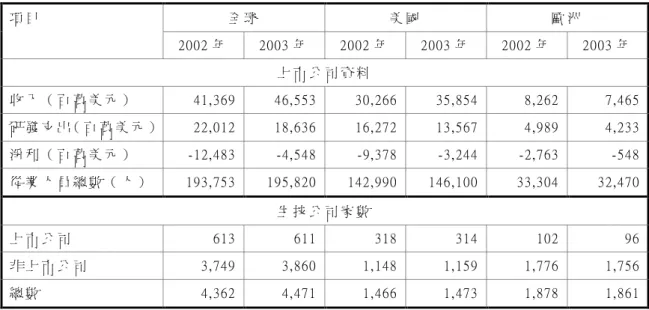
依 據 Ernst & Young 的 統 計 , 2003 年 全 球 生 技 產 業 的 營 業 額 為 465 億 美 元 , 較 2002 年 成 長 12% , 其 中 以 美 國 生 技 公 司 的 營 業 額 佔 最 大 比 例 佔 全 球 營 業 額 的 77% 。 全 球 生 技 廠 商 的 淨 損 失 由 2002 年 的 124 億 美 元 減 少 至 45 億 美 元,減 少 幅 度 為 63%。全 球 生 技 產 業 2003 年 研 發 支 出 為 186 億 美 元 , 較 2002 年 減 少 約 15% , 其 中 歐 洲 的 研 發 支 出 較 2002 年 相 去 不 多 。
2003 年 總 計 全 球 共 611 家 生 技 上 市 公 司 , 其 中 約 有 50% 在 美 國 上 市 ; 非 上 市 公 司 共 3,860 家 , 其 中 歐 洲 約 佔 45% , 美 國 約 佔 30% , 由 此 可 知,美 國 及 歐 洲 是 目 前 全 球 生 技 產 業 發 展 之 重 鎮。而 全 球 生 技 產 業 從 業 人 員 總 數 將 近 有 20 萬 人 。
美 國 生 技 產 業 2003 年 的 營 業 額 為 358 億 美 元 , 較 2002 年 成 長 15
% , 總 計 有 314 家 生 技 公 司 上 市 , 較 2002 年 減 少 4 家 , 從 業 人 員 持 續
成 長 , 目 前 總 人 數 將 近 15 萬 人 。 歐 洲 生 技 產 業 2003 年 的 營 業 額 事 74
億 美 元 , 較 2002 年 減 少 11% , 總 計 有 96 家 生 技 公 司 上 市 , 較 2002 年
減 少 6 家,從 業 人 員 由 2002 年 的 33,000 人 減 少 到 2003 年 的 32,000 人 。
整 體 而 言 , 歐 洲 生 技 產 業 2003 年 呈 現 衰 退 現 象 , 與 美 國 生 技 產 業 持 續
成 長 的 現 象 相 左 。
表 2-2 全 球 生 技 廠 商 概 況
全 球 美 國 歐 洲
項 目
2002 年 2003 年 2002 年 2003 年 2002 年 2003 年 上 市 公 司 資 料
收 入 ( 百 萬 美 元 ) 41,369 46,553 30,266 35,854 8,262 7,465 研 發 支 出( 百 萬 美 元 ) 22,012 18,636 16,272 13,567 4,989 4,233 淨 利 ( 百 萬 美 元 ) - 12,483 - 4,548 - 9,378 - 3,244 - 2,763 - 548 從 業 人 員 總 數 ( 人 ) 193,753 195,820 142,990 146,100 33,304 32,470
生 技 公 司 家 數
上 市 公 司 613 611 318 314 102 96
非 上 市 公 司 3,749 3,860 1,148 1,159 1,776 1,756
總 數 4,362 4,471 1,466 1,473 1,878 1,861
資 料 來 源 : Er nst& Young, 2004.
美 國 的 生 技 產 業 有 政 府 的 大 筆 資 金 抑 注 , 並 擁 有 完 善 的 智 財 權 保 護、健 全 的 管 理 制 度、發 達 的 學 術 研 究、及 相 關 人 才 豐 富 等 優 勢 條 件 下,
已 成 為 全 球 第 一 大 的 生 技 市 場。由 於 美 國 嬰 兒 潮 時 代 的 人 口 逐 漸 老 化 ,
因 此 老 年 人 口 的 相 關 用 品 及 老 人 疾 病 相 關 藥 品 為 陸 續 開 發 之 重 點 。 由
2003 年 美 國 生 技 產 業 的 產 品 銷 售 額 得 知,美 國 生 技 市 場 的 產 業 結 構( 圖
4-1) 可 知 人 用 治 療 用 藥 品 佔 74% 為 美 國 生 技 市 場 之 大 宗 , 人 用 檢 驗 試
劑 佔 13% , 農 業 生 技 產 品 佔 7% , 特 用 化 學 產 品 佔 4% , 非 醫 用 檢 驗 試
劑 佔 2% 。
人用治療藥品 74%
人用檢驗試劑 13%
農業生技產品 7%
特用化學產品 4%
非醫用檢驗試劑 2%
資 料 來 源 : 經濟部工業局,「2004 生技產業白皮書」,經濟部生物技術與醫藥工業發展推動小組整理。
圖 2-1 美 國 生 技 產 業 結 構 概 況
日 本 政 府 積 極 推 動 生 技 產 業 之 發 展,其 重 視 基 礎 研 究、獎 勵 研 發 與
投 資、引 進 國 外 技 術 及 人 才 培 育 等 措 施,已 使 日 本 為 全 球 第 二 大 生 技 市
場 , 且 居 於 亞 洲 之 冠 , 產 值 佔 全 球 市 場 20﹪ 。 2003 年 生 技 相 關 產 品 和
生 技 服 務 業 的 營 業 額 約 150 億 美 元,較 2002 年 成 長 9.3%。日 本 生 技 市
場 產 業 結 構 中 , 生 技 醫 藥 產 品 約 佔 生 技 市 場 規 模 32% ; 其 次 為 生 技 農
產 品 , 約 佔 生 技 市 場 規 模 28% ; 第 三 為 生 技 化 學 約 佔 市 場 規 模 25% 。
2003 年 日 本 生 技 創 新 公 司 總 數 為 387 家, 較 2002 年 成 長 約 16%, 且 日
本 政 府 發 展 具 地 方 特 色 的 生 技 產 業,因 此 不 同 產 業 特 性 之 生 技 廠 商 有 其
個 別 之 聚 落 , 例 如 關 東 地 區 生 技 創 新 公 司 家 數 約 佔 全 國 生 技 總 數 的
1/2, 為 日 本 政 府 研 究 機 構 與 大 學 進 行 基 因 分 析 的 重 要 地 區 ; 北 海 道 則
主 要 為 大 學 所 衍 生 的 生 技 公 司 。
生技醫藥 32%
生技農產品 28%
生技化學 25%
生技服務 15%
資 料 來 源 : 經濟部工業局,「2004 生技產業白皮書」,經濟部生物技術與醫藥工業發展推動小組整理。
圖 2-2 日 本 生 技 產 業 結 構 概 況
二 、 台 灣 生 技 產 業 發 展
為 推 動 台 灣 生 技 產 業 之 發 展 , 台 灣 政 府 於 1982 年 將 生 技 產 業 列 為 八 大 重 點 科 技 之 一,並 陸 續 成 立 相 關 的 研 究 及 發 展 中 心,期 能 藉 由 政 府 的 投 入 帶 動 民 間 相 關 投 資。近 年 全 球 各 國 政 府 紛 紛 積 極 投 入 生 技 產 業 之 開 發 , 台 灣 政 府 亦 展 開 推 動 一 連 串 的 促 進 生 技 產 業 發 展 政 策 。
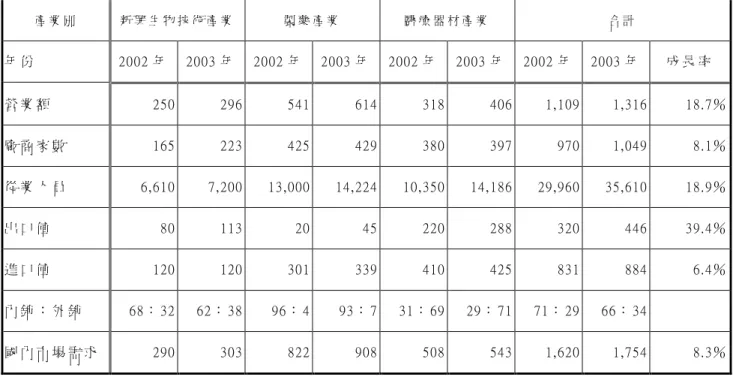
根 據 經 濟 部 資 料,2003 年 台 灣 生 技 產 業 總 營 業 額 約 新 台 幣 1,316 億 元,較 2002 年 成 長 約 18%。其 中 2003 年 製 藥 產 業 營 業 額 佔 總 營 業 額 約 47% 為 最 大 宗 , 其 次 為 醫 療 器 材 產 業 營 業 額 佔 總 營 業 額 約 31% , 而 新 興 生 物 技 術 產 業 營 業 額 佔 總 營 業 額 約 22.5%。內 外 銷 比 由 2002 年 的 71:
29 到 2003 年 的 66: 34, 而 2003 年 國 內 市 場 需 求 較 2002 年 增 加 8% , 顯 見 台 灣 生 技 產 業 除 了 國 外 市 場 的 開 發 逐 漸 發 展,國 內 市 場 亦 有 成 長 。
新 興 生 技 產 業 營 業 額 約 新 台 幣 296 億 元 , 較 2002 年 成 長 約 18% ;
廠 商 約 223 家 , 較 2002 年 成 長 約 35% ; 平 均 每 家 營 業 額 約 新 台 幣 1.33 億 元。2003 年 出 口 值 為 113 億 新 台 幣,進 口 值 為 120 億 新 台 幣,逆 差 較 2002 年 減 少 約 87% ; 內 外 銷 比 為 62: 38, 從 業 人 員 有 7,200 人 。
製 藥 產 業 營 業 額 約 新 台 幣 614 億 元 , 較 2002 年 成 長 約 14% ; 廠 商 約 429 家 , 較 2002 年 多 出 4 家 ; 平 均 每 家 營 業 額 約 新 台 幣 1.43 億 元 。 2003 年 出 口 值 為 45 億 新 台 幣,進 口 值 為 339 億 新 台 幣;內 外 銷 比 為 93:
7, 從 業 人 員 有 14,224 人 。
另 外 比 2002 年 增 加 28%的 醫 療 器 材 產 業 , 2003 年 營 業 額 約 新 台 幣 406 億 元 ; 廠 商 397 家 , 較 2002 年 增 加 17 家 , 平 均 每 家 營 業 額 約 新 台 幣 1.02 億 元。2003 年 出 口 值 為 288 億 新 台 幣,進 口 值 為 425 億 新 台 幣 ; 內 外 銷 比 為 29: 71, 從 業 人 員 有 14,186 人 。
從 1997-2003 年 , 台 灣 生 技 公 司 依 營 業 類 別 ( 圖 2-3), 國 內 屬 於 生 技 醫 藥 的 公 司 最 多 , 約 占 生 技 公 司 總 數 的 27%; 醫 療 /檢 測 類 約 占 生 技 公 司 總 數 的 21.6%。其 餘 則 為 食 品 生 技、生 技 /製 藥 支 援 服 務 業、農 業 生 技 、 環 保 生 技 及 特 用 化 學 生 技 等 。
台 灣 投 入 生 技 相 關 產 業 的 投 資 金 額 自 1997 年 起 開 始 穩 定 成 長 ( 表
2-4), 在 2001 年 度 創 歷 年 紀 錄 , 達 到 最 高 峰 , 投 資 額 為 新 台 幣 215 億
元 。 2002 年 生 物 技 術 相 關 投 資 額 約 新 台 幣 204 億 元 , 2003 年 生 技 投 資
金 額 總 計 約 新 台 幣 213 億 元 。
表 2-3 台 灣 生 技 產 業 概 況
產 業 別 新 興 生 物 技 術 產 業 製 藥 產 業 醫 療 器 材 產 業 合 計
年 份 2002 年 2003 年 2002 年 2003 年 2002 年 2003 年 2002 年 2003 年 成 長 率
營 業 額 250 296 541 614 318 406 1,109 1,316 18.7%
廠 商 家 數 165 223 425 429 380 397 970 1,049 8.1%
從 業 人 員 6,610 7,200 13,000 14,224 10,350 14,186 29,960 35,610 18.9%
出 口 值 80 113 20 45 220 288 320 446 39.4%
進 口 值 120 120 301 339 410 425 831 884 6.4%
內 銷 : 外 銷 68: 32 62: 38 96: 4 93: 7 31: 69 29: 71 71: 29 66: 34
國 內 市 場 需 求 290 303 822 908 508 543 1,620 1,754 8.3%
資 料 來 源 : 經 濟 部 工 業 局 , 「 2004 生 技 產 業 白 皮 書 」 , 經 濟 部 生 物 技 術 與 醫 藥 工 業 發 展 推 動 小 組 整 理 。
生技醫藥 26%
醫療檢測 22%
食品生技 18%
生技/製藥 支援性服
務 16%
農業生技 11%
環保生技 5%
特用化學 生技
2%
資 料 來 源 : 經濟部工業局,「2004 生技產業白皮書」,生技中心 ITIS 計畫。
圖 2-3 1997-2003 年 台 灣 成 立 生 技 公 司 之 類 別
表 2-4 台 灣 生 技 產 業 歷 年 投 資 金 額
單 位 : 億 新 台 幣
年 份 1997 年 1998 年 1999 年 2000 年 2001 年 2002 年 2003 年
投 資 金 額 92 123 57 121 215 204 213
資 料 來 源 : 經濟部工業局,「2004 生技產業白皮書」,經濟部生物技術與醫藥工業發展推動小組整理。
台灣的生技發展,在政府的努力下已完成了初步的基本建設,未來台灣發 展生物科技產業,除政府政策的持續支持外,廠商對於其他的全球資源,都應尋 求策略聯盟的對象。目前台灣的生技產業還是著眼於談技術、產品開發與代工 等,在研發經費遠比歐美國家少的情況下,台灣的生技產業將落後歐美國家的生 技產業。台灣發展生技產業,必須在技術與代工之外,考量「市場」的定位,建 立有效的智慧財產管理機制,將研發成果進一步商品化,掌握充分的法律資訊以 保護自身的專利,以獲取較高的利潤。
叄、台灣生技產業的智財權政策及研發獎勵政策
一、
台灣生技產業的智財權政策
生物技術為台灣政府推動的八大重點科技之一,其特徵有二: (1)生物科技 是一門跨學門(Interdisciplinary)的尖端科技綜合體,係由微生物學、免疫學、
分子生物學、遺傳學、生物化學及化學工程等等學門組合而成的新學門。 (2)生 物科技兼具學術性及實用性,目前已應用在醫藥、農業、食品工業及防治污染上。
此外,生物技術所使用的原料以再生性資源為主(如酵素、植物性纖維) ,不受
一般性工業原料之影響與限制,且所需能源較小而需要高級人力較多,其屬性為
腦力密集的精密工業。
2此外,為顧及台灣生技產業的推動,特別將與生物技術相關的醫藥業(包括 製藥業、醫療器材業等) 、農業(含食品業) 、環保、海洋、能源、生物資源及服 務業(含醫藥服務業及研發服務業)等包括在台灣生物技術產業的範疇內,生技 產業之範圍如表 3-1。若將生物技術產業以發展時程來區分,一般可分為傳統與 新興生技工業,新興生技工業有別於傳統生技工業在於使用新發展的關鍵技術,
如基因工程技術、蛋白質工程技術及細胞工程技術等
3。
表 3-1 台灣生物技術產業之範圍
產業(大類) 運用範圍
農業 1.基因轉殖 2.天然藥材 3.生技種苗花卉
食品 1.生技保健食品 2.基因改良食品 3.生技飼料添加劑 資源環保 1.生技環保 2.土壤復育 3.能源生技
材料化工 1.生醫材料 2.藥品原料 3.生技製程
機電資訊 1.生物晶片 2.生醫資訊 3.結構運算 4.生物微機電 醫療保健服務 1.健保資訊 2.臨床試驗 3.遠距醫療
藥品 1.藥物製造 2.新藥開發 3.疫苗製劑 4.藥物劑型 5.臨床醫學 6.中藥藥劑 生物 1.基因工程 2.蛋白抗體 3.基因治療 4.器官再生 5.檢驗試劑 6.工業酵素 醫療器材 1.醫療電子 2.醫學影像 3.分子診所 4.醫療儀器 5.生醫光學
資料來源:行政院科技顧問會議資料。
根據「加強生物技術產業推動方案」,目前台灣生技產業政策推動主要有 五大方向:1、法規及查驗體系。2、研究發展及應用。3、技術移轉及商業化。4、
2 生物科技之所以被認為是未來高科技產業升級後,最有希望發展的新興產業,乃是因為生物技 術本身具有原料再生性、消耗能源少、污染性較低、技術密集、特別重視科技整合、初期投資金 額少、附加價值高、及應用範圍廣等良好特點。黃仁德/姜樹翰,我國生物科技產業的展望,
http://www.moea.gov.tw/~ecobook/season/9006/7-1-4.htm.
3 經濟部工業局,「2004 生技產業白皮書」。