中小學校長培訓與評鑑制度之跨國研究-
以臺灣、新加坡、韓國為例
A Cross-National Study of Preparation and Evaluation
of Principals in Elementary and Middle Schools—
Cases in Taiwan, Singapore and South Korea.
孫敏芝、吳宗立、林官蓓 著
校長的專業發展,有時數規定,也包括海外參訪。
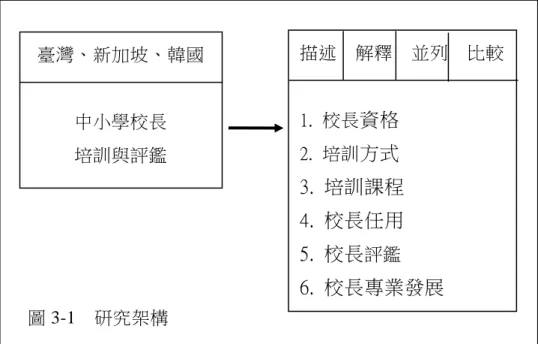
最後,本研究以亞太地區新加坡、韓國等國家的推展經驗進行跨 國比較,根據結論提出建議以提供我國中小學校長培訓與評鑑制度之 參考。
A Cross-National Study of Preparation and Evaluation
of Principals in Elementary and Middle Schools—
Cases in Taiwan, Singapore and South Korea.
Abstract
This study examines the preparation and evaluation of elementary and middle school principals in Asia-Pacific region countries, taking Taiwan, Singapore and South Korea as examples. Data were collected from in-depth interviews and documents. Theories in comparative education were used to describe, interpret, juxtapose and compare the research data.
screening, training and selection while Singapore and South Korea recruit principals by recommendation, training and appointment. Fifthly, Taiwanese principals and school affairs are evaluated by committee members once a year whereas principals in Singapore and South Korea are regularly evaluated by superintendents. Sixthly, compare to the lack of scheme for principals’ professional development in Taiwan, Singapore emphasizes the importance of principals’ professional development which is promoted by studies and overseas visits.
This study, through a comparative educational research methodology, provides some implications for the policy of training and evaluation of principals in elementary and middle schools.
(四)臺灣、新加坡、韓國中小學校長如何任用? (五)臺灣、新加坡、韓國中小學校長如何評鑑(或績效評鑑)? (六)臺灣、新加坡、韓國如何實施中小學校長專業發展?課程及 方式為何? 為跨國研究至新加坡、韓國訪談之順利進行,另擬訂英文訪談 大綱如下:
(一)What qualifications are needed for being a Head teacher in primary (or secondary) schools in Singapore (Korea)?
(二)Do you have any system that has been running for past 5years for preparation and training of newly selected head teachers in Singapore (Korea)?
(三)How does the government plan and administer the training courses for prepared head teachers? Can you elaborate that? For example, the content of courses, the length of training, the trainer, the fund and mechanism of accreditation.
(四)Once they finish taking the training courses, would they be appointed by the government to be the head of the school? (五)Do they have to be evaluated on the effectiveness of the school
or on their professional performance? What are the standards and indicators of that evaluation?
學校經營與領導的能力。
儲訓合格後,成為國民中小學候用校長,經縣市政府教育局 (處)遴選後,即聘為校長,肩負起綜理校務的責任。
(二)新加坡
新加坡國立教育學院 (National Institute of Education, Nanyang Technological University, Singapore,以下簡稱 NIE)校園佔地 200 公頃,坐落在新加坡西南部翠綠的南洋理工大學校園內,其前身是 成立於 1950 年的師資訓練學院。1973 年,師資訓練學院升格為教 育學院。1991 年 7 月,教育學院和體育學院合並成為國立教育學院。 同年,國立教育學院也正式附屬於南洋理工大學。目前,新加坡國 立教育學院擁有超過 360 名來自世界各地的教師及專業研究人員。 中小學師資培育是其重要的特色外,更是肩負新加坡中小學校長培 訓的重要使命。 NIE 是新加坡的中小學教師養成及校長培育的機構,包含 12 個學術單位,如:亞洲語言與文化系、課程與教學學系、幼兒及特 殊教育學系、英語語言文學系、人類和社會教育學系、學習科學與 技術學系、數學教育學系、自然科學教育學系、體育運動科學系、 政策與領導學系、心理研究學系、視覺藝術學系,另外還設有教育 研究中心(office of education research),從事相關的教育研究。
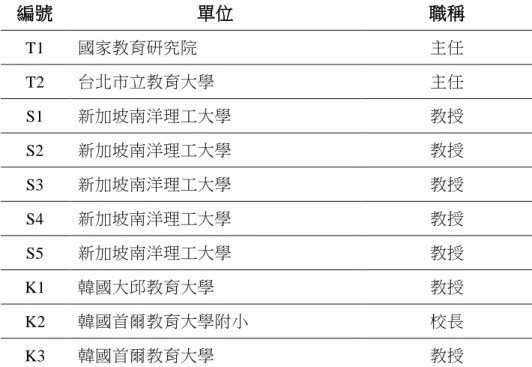
及介聘辦法辦理甄選。經由縣市政府教育局(處)辦理甄選,甄選 的方式大致經由筆試及口試篩選,在中小學擔任主任,具有一定的 服務年資及服務績效,依其積分排序,在錄取校長員額的 3~4 倍之 主任,則可進入校長甄試,通過校長甄試(筆試及口試),參加儲訓 合格,則成為中小學候用校長。 2.新加坡 新加坡中小學校長為推薦制,從最基本的教師開始,之後做生 涯分流,一為教師,一為領導層級,每一層級都會由上一層主管做 觀察與推薦,由教師(teacher)、學科主任(subject head)、學門主 任(department head)、副校長(vice-principal) 到校長(principal) 都是如此,和臺灣的考試制度不同。 受訪者 S1、S2、S5 都談到,新加坡校長甄選的制度是一個由 政府高度控管的過程,擔任校長之前,先由基層教師做起,由學科 主任觀察,若發現某教師有領導能力又有意願,便推薦成為學科主 任,接著由學年主任來觀察,若該學科主任能力夠好又有意願,便 推薦成為學年主任,以此類推,從教師、學科主任、學年主任、副 校長、到校長的過程皆是如此,整個選擇的過程非常嚴謹,學校對 領導者的潛力是非常注意的,從教學到領導,一路上來,愈有潛力 的老師,責任就會愈多,如受訪者 S2 過去曾任中小學校長,現在 則為首席師傅校長(principal master teacher)。受訪者 S2 談到:
鑑的工作(IN0411S2)」。
市。。 謝富榮(2009)。問題本位之國民小學校長專業發展課程設計研究 (未出版之博士論文)。國立中正大學育研究所,嘉義縣。 蘇錦麗、吳德業(2002)。校長辦學檔案在校長評鑑中之用。初等 教育學報,8,289-316。 蘇錦麗、鄭淑惠(1997)。發展完善中小學校長評鑑制度應有之思維 -人員評鑑標準第二版草案之觀點。北縣教育,62,28-36。
二、中文部份
Anderson, M. E. (1991). Principals: How to train, recruit, select, and
evaluate leaders for America’s. University of Oregon : Eric
Cleaninghouse on Education Management.
Bereday, George Z. F. (1964). Comparative education: Contemporary
issues and trends. New York: Holt, Rinehart & Winston.
Jane, D. (2002). Preparation of school leaders in Singapore. In Wen-liuh Lin (Ed.),Proceedings of international conference on
principals’ center management and principals’ professional development(pp.307-310). Taipei: National Taipei Teachers
College Principals’ Center.
Low, G. T., Joy, C., & Ng, P.T. (2002). Preparation of school leaders in Singapore. In Wen-liuh Lin (Ed.),Proceedings of international
conference on principals’ center management and principals’ professional development(pp.289-298). Taipei: National Taipei
Madaus, G. F., Scriven, M. S., & Stufflebeam, D. L. (1983). Evaluation
model: Viewpoints on educational and human services evaluation.
Boston: Kluwer-Nijhoff Publishing.
NIE (2011). Leaders in education programme 2011 handbook for
participants. Singapore: Nanyang University.
Lin, T.B. (2010). Professional development programme for school leaders in Singapore. 國立屏東教育大學主辦,2010 年亞太地區 教師進修與終身學習國際學術研討會,2010 年 10 月 22-23 日。 Sergiovanni, T.J. (2009). The principalship: A reflective practice
附錄:新加坡 LEP (Leaders in Education Programme 2011)手冊摘錄
NIE 未來校長培育學習方案---創新的教育領導者
Towards Leadership Excellence
學校領導者是我國的重要資產,學校領導者的價值觀、知識與技能, 是我國教育系統成功與否的基石,NIE 對學校領導者的發展提供促 進其卓越能力的平台。
The Leaders in Education Programme 教育領導方案簡介
如何運用心智能力到其角色上,這是一個持續性、不斷反思的學校 領導者旅程,在旅程中葛以協助學校領導人在日漸複雜的學校環境 中欣賞不同的路徑、歸納不同的解決方案、以及管理多變的人際關 係。 Sergiovanni(2009)的五項領導人力量(與領導角色有關)與 Gardner (2007)的五項香智模式對領導人調整其角色與心智來說非常實用, 因此,5R5M(5 角色 5 心智)的概念架構就能呈現學校領導發展的一 個創新取向,可以結合校長多變的角色與心智模式需求,5R5M 架 構已經調整為適合新加坡學校領導的內容。 在這概 念架 構中, 學 校領導 人將 實踐其 5 種領導角色:教育的 (Educational)、技術的(Technical)、人文的(Human)、符號的 (Symbolic)、以及文化的(Cultural)。根據 Sergiovanni(2009),E、 T、H 的實踐可以帶來有效的學校但不保證優秀,要帶領學校達成 卓越,校長必須實踐 S 與 C。
8. 論壇 9. 企業界學習 10. 教育部重要命令與規則的學習 學習型聯合組織 LEP 的學習與之式建構主要是依據社會建構取向的學習型聯合組 織,學習型組織包括 5-6 參與者為一團體,由 NIE 成員來當團體領 導者,參與者會固定見面,可能是在 NIE 或可能在學校現場,來討 論課程中出現的想法、對目前關注議題的辯論、閱讀或反思,以達 成彼此互相支持的密集學習,雖然此聯合組織是之是建構的重要動 力,但參與者亦會與其他學習型組織的成員在課程中有所互動。 學習日誌 每一位參與者被要求要寫學習日誌來反應在 LEP 學習過程中,其對 領導、管理、教學、學習等概念的信念、價值觀、與目標的想法, 寫作的風格可以自行選擇,以便其發現他們在學習中個別的「聲 音」。
管理對話的課程(Management Dialogue Sessions)
LEP 課程 Course Code
Course Title Instructors
1 LEP201 5R5M 概念架構簡介 Ng Pak Tee Low Guat Tin 2 LEP202 學校領導、願景、文化 James Ong 3 LEP203 複雜情境下之教育領導 Ng Pak Tee 4 LEP204 當代策略管理 Jonathan Goh
David Ng 5 LEP205 人力資源發展 David Ng
6 LEP206 設計思考:創新與價值 Wong Yew Leong Jude Chua
7 LEP207 人員評估與發展 Lim Lee Hean 8 LEP208 學校領導人之倫理與價值觀 Benjamin Wong
Jude Chua
9 LEP209 課程與教學領導 Christina Ratnam 10 LEP210 評鑑與測驗 Kelvin Tan 11 LEP211 ICT( 資 訊 溝 通 科 技 ) 之 使 用 以
及教學 & 學習的強化